


Search results
Search for "Al2O3" in Full Text gives 71 result(s) in Beilstein Journal of Organic Chemistry.
Solvent-free copper-catalyzed click chemistry for the synthesis of N-heterocyclic hybrids based on quinoline and 1,2,3-triazole
- Martina Tireli,
- Silvija Maračić,
- Stipe Lukin,
- Marina Juribašić Kulcsár,
- Dijana Žilić,
- Mario Cetina,
- Ivan Halasz,
- Silvana Raić-Malić and
- Krunoslav Užarević
Beilstein J. Org. Chem. 2017, 13, 2352–2363, doi:10.3762/bjoc.13.232
- under reduced pressure and residue was purified by column chromatography on silica gel and Al2O3 with dichloromethane as eluent. We used here dichloromethane as an eluent as it is commonly used in similar systems, but it was shown that other mixtures, such as n-hexane/ethyl acetate (50:1) could also be
- temperature. The reaction mixture was stirred for 3.5 h. The solvent was removed under reduced pressure and the residue was purified by column chromatography on silica gel and Al2O3 with dichloromethane as eluent. General procedure for the mechanochemical click reactions of 1,2,3-triazole–quinoline
- to dryness under vacuo, and the closed vessel was positioned in the IST500 mill. The mixture was ground for 3.5 h at 30 Hz and then purified by column chromatography on silica gel and Al2O3 with dichloromethane as eluent. Method 2b: In one half of the reaction vessel we weighed azide (0.49 mL, 0.24

Graphical Abstract

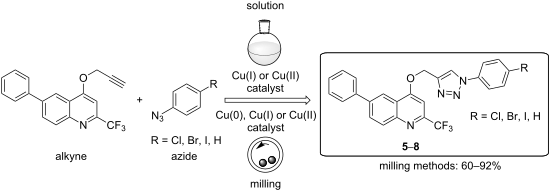
Scheme 1: Synthetic procedures for preparation of p-halogen-substituted and non-substituted phenyl-1,2,3-tria...

Figure 1: Experimental Raman spectra of the alkyne 4 and triazole products 5–8. Bands attributed to the vibra...

Figure 2: In situ Raman monitoring of a) mechanochemical formation of triazole 5 using copper(II) acetate mon...
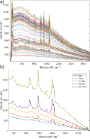
Figure 3: a) In situ Raman monitoring for mechanochemical synthesis of 5 using brass balls and PMMA reaction ...

Figure 4: ESR spectra of samples obtained after milling by methods 2a (black), 2b (red) and 2c (blue). The in...
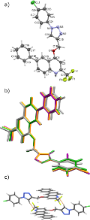
Figure 5: X-ray structure of the triazole compounds. (a) Molecular structure of 5, with the atom-numbering sc...
Dialkyl dicyanofumarates and dicyanomaleates as versatile building blocks for synthetic organic chemistry and mechanistic studies
- Grzegorz Mlostoń and
- Heinz Heimgartner
Beilstein J. Org. Chem. 2017, 13, 2235–2251, doi:10.3762/bjoc.13.221
- presence of Al2O3·KF in acetonitrile at room temperature (rt) [9]. Another efficient method for the preparation of dialkyl esters E-1 relies on the usage of alkyl bromo(cyano)acetates 3, which upon treatment with potassium thiocyanate in aqueous acetonitrile at room temperature are converted into the

Graphical Abstract

Figure 1: Dialkyl dicyanofumarates E-1 and dicyanomaleates Z-1.

Scheme 1: Methods for the synthesis of dialkyl dicyanofumarates E-1 from alkyl cyanoacetates 2.

Scheme 2: Methods for the synthesis of dialkyl dicyanofumarates E-1 from alkyl bromoacetates 3.

Scheme 3: Reaction of dimethyl dicyanofumarate (E-1b) with dimethoxycarbene [(MeO)2C:] generated in situ from...

Scheme 4: Cyclopropanation of diethyl dicyanofumarate (E-1a) through reaction with the thiophene derived sulf...

Scheme 5: Cyclopropanation of dimethyl dicyanofumarate (E-1b) through a stepwise reaction with the in situ ge...

Scheme 6: The [2 + 2]-cycloadditions of dimethyl dicyanofumarate (E-1b) with electron-rich ethylenes 20 and 22...

Scheme 7: The [2 + 2]-cycloaddition of isomeric dimethyl dicyanofumarate (E-1b) and dicyanomaleate (Z-1b) wit...

Scheme 8: Non-concerted [2 + 2]-cycloaddition between E-1b and bicyclo[2.1.0]pentene (27).

Scheme 9: Stepwise [3 + 2]-cycloadditions of some thiocarbonyl S-methanides with dialkyl dicyanofumarates E-1...

Scheme 10: Stepwise [3 + 2]-cycloadditions of dimethyl dicyanofumarate (E-1b) and dimethyl dicyanomaleate (Z-1b...

Scheme 11: [3 + 2]-Cycloaddition of diazomethane with dimethyl dicyanofumarate (E-1b) leading to 1H-pyrazole d...

Scheme 12: Reversible Diels–Alder reaction of fulvenes 36 with diethyl dicyanofumarate (E-1a).

Scheme 13: [4 + 2]-Cycloaddition of 9,10-dimethylanthracene (39b) and E-1a.

Scheme 14: Stepwise [4 + 2]-cycloaddition of dimethyl dicyanofumarate (E-1b) with electron-rich 1,1-dimethoxy-...

Scheme 15: Formal [4 + 2]-cycloaddition of 3,4-di(α-styryl)furan (47) with dimethyl dicyanofumarate (E-1b).

Scheme 16: Acid-catalyzed Michael addition of enolizable ketones of type 49 to E-1.

Scheme 17: Reaction of diethyl dicyanofumarate (E-1a) with ammonia NH3.

Scheme 18: Reaction of dialkyl dicyanofumarates E-1 with primary and secondary amines.

Scheme 19: Reaction of dialkyl dicyanofumarates E-1 with 1-azabicyclo[1.1.0]butanes 55.

Scheme 20: Formation of pyrazole derivatives in the reaction of hydrazines with E-1.

Scheme 21: Formation of 5-aminopyrazole-3,4-dicarboxylate 65 via heterocyclization reactions.

Scheme 22: Reactions of aryl- and hetarylcarbohydrazides 67 with E-1a.

Scheme 23: Multistep reaction leading to perhydroquinoxaline derivative 73.

Scheme 24: Synthesis of ethyl 7-aminopteridin-6-carboxylates 75 via a domino reaction.

Scheme 25: Synthesis of morhpolin-2-ones 80 from E-1 and β-aminoalcohols 78 through an initial aza-Michael add...

Scheme 26: Reaction of 3-amino-5-arylpyrazoles 81 with dialkyl dicyanofumarates E-1 via competitive nucleophil...

Scheme 27: Heterocyclization reaction of thiosemicarbazone 86 with E-1a.

Scheme 28: Formation of diethyl 4-cyano-5-oxotetrahydro-4H-chromene-3,4-dicarboxylate (90) from E-1a via heter...

Scheme 29: Reaction of dialkyl dicyanofumarates E-1 with cysteamine (92).

Scheme 30: Formation of disulfides through reaction of thiols with E-1a.

Scheme 31: Formation of CT salts of E-1 with Mn2+ and Cr2+ metallocenes through one-electron transfer.

Scheme 32: Oxidation of diethyl dicyanofumarate (E-1a) with H2O2 to give oxirane 101.

Scheme 33: The aziridination of E-1b through nitrene addition.
Phosphonic acid: preparation and applications
- Charlotte M. Sevrain,
- Mathieu Berchel,
- Hélène Couthon and
- Paul-Alain Jaffrès
Beilstein J. Org. Chem. 2017, 13, 2186–2213, doi:10.3762/bjoc.13.219
- develop bone targeting which was assessed for therapy [96] and imaging [97][98]. Finally, the phosphonic acid group was also employed to immobilize organic or organometallic molecules on the surface of metal oxide [99][100] (Al2O3 [101], TiO2 [102][103], SnO2 [104], Fe3O4 [105], ZnO [106]), CdSe quantum

Graphical Abstract

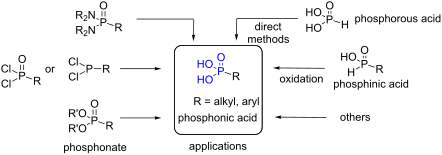
Figure 1: Summary of the synthetic routes to prepare phosphonic acids detailed in this review. The numbers in...

Figure 2: Chemical structure of dialkyl phosphonate, phosphonic acid and illustration of the simplest phospho...

Figure 3: Illustration of some phosphonic acid exhibiting bioactive properties. A) Phosphonic acids for biome...

Figure 4: Illustration of the use of phosphonic acids for their coordination properties and their ability to ...

Figure 5: Hydrolysis of dialkyl phosphonate to phosphonic acid under acidic conditions.

Figure 6: Examples of phosphonic acids prepared by hydrolysis of dialkylphosphonate with HCl 35% at reflux (16...

Figure 7: A) and B) Observation of P–C bond breaking during the hydrolysis of phosphonate with concentrated H...

Figure 8: Mechanism of the hydrolysis of dialkyl phosphonate with HCl in water.

Figure 9: Hydrolysis of bis-tert-butyl phosphonate 28 into phosphonic acid 29 [137].

Figure 10: A) Hydrolysis of diphenyl phosphonate into phosphonic acid in acidic media. B) Examples of phosphon...

Figure 11: Suggested mechanism occurring for the first step of the hydrolysis of diphenyl phosphonate into pho...

Figure 12: A) Hydrogenolysis of dibenzyl phosphonate to phosphonic acid. B) Compounds 33, 34 and 35 were prepa...

Figure 13: A) Preparation of phosphonic acid from diphenyl phosphonate with the Adam’s catalyst. B) Compounds ...

Figure 14: Suggested mechanism for the preparation of phosphonic acid from dialkyl phosphonate using bromotrim...

Figure 15: A) Reaction of the phosphonate-thiophosphonate 37 with iodotrimethylsilane followed by methanolysis...

Figure 16: Synthesis of hydroxymethylenebisphosphonic acid by reaction of tris(trimethylsilyl) phosphite with ...

Figure 17: Synthesis of the phosphonic acid disodium salt 48 by reaction of mono-hydrolysed phosphonate 47 wit...

Figure 18: Phosphonic acid synthesized by the sequence 1) bromotrimethylsilane 2) methanolysis or hydrolysis. ...

Figure 19: Polyphosphonic acids and macromolecular compounds prepared by the hydrolysis of dialkyl phosphonate...

Figure 20: Examples of organometallic complexes functionalized with phosphonic acids that were prepared by the...

Figure 21: Side reaction observed during the hydrolysis of methacrylate monomer functionalized with phosphonic...

Figure 22: Influence of the reaction time during the hydrolysis of compound 76.

Figure 23: Dealkylation of dialkyl phosphonates with boron tribromide.

Figure 24: Dealkylation of diethylphosphonate 81 with TMS-OTf.

Figure 25: Synthesis of substituted phenylphosphonic acid 85 from the phenyldichlorophosphine 83.

Figure 26: Hydrolysis of substituted phenyldichlorophosphine oxide 86 under basic conditions.

Figure 27: A) Illustration of the synthesis of chiral phosphonic acids from phosphonodiamides. B) Examples of ...

Figure 28: A) Illustration of the synthesis of the phosphonic acid 98 from phosphonodiamide 97. B) Use of cycl...

Figure 29: Synthesis of tris(phosphonophenyl)phosphine 109.

Figure 30: Moedritzer–Irani reaction starting from A) primary amine or B) secondary amine. C) Examples of phos...

Figure 31: Phosphonic acid-functionalized polymers prepared by Moedritzer–Irani reaction.

Figure 32: Reaction of phosphorous acid with imine in the absence of solvent.

Figure 33: A) Reaction of phosphorous acid with nitrile and examples of aminomethylene bis-phosphonic acids. B...

Figure 34: Reaction of carboxylic acid with phosphorous acid and examples of compounds prepared by this way.

Figure 35: Synthesis of phosphonic acid by oxidation of phosphinic acid (also identified as phosphonous acid).

Figure 36: Selection of reaction conditions to prepare phosphonic acids from phosphinic acids.

Figure 37: Synthesis of phosphonic acid from carboxylic acid and white phosphorus.

Figure 38: Synthesis of benzylphosphonic acid 136 from benzaldehyde and red phosphorus.

Figure 39: Synthesis of graphene phosphonic acid 137 from graphite and red phosphorus.
Solvent-free and room temperature synthesis of 3-arylquinolines from different anilines and styrene oxide in the presence of Al2O3/MeSO3H
- Hashem Sharghi,
- Mahdi Aberi,
- Mohsen Khataminejad and
- Pezhman Shiri
Beilstein J. Org. Chem. 2017, 13, 1977–1981, doi:10.3762/bjoc.13.193
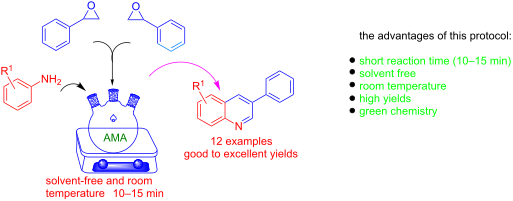
- been developed in the presence of Al2O3/MeSO3H via one-pot reaction of anilines and styrene oxide. This methodology provides very rapid access to 3-arylquinolines in good to excellent yields under solvent-free conditions at room temperature in air. Keywords: 3-arylquinolines; Al2O3; MeSO3H; one-pot
- anilines with styrene oxide via C–C cleavage is the efficient synthetic route to quinolones [1]. The reaction was performed using FeCl3 as catalyst in 1,4-dioxane as solvent at 110 °C for 12 h. According to the significance of this progress, we have decided to re-optimize it. The mixture of Al2O3 and
- optimized conditions for the synthesis of quinolines, the reaction of 3,4-dimethylaniline (1, 1.0 mmol) and styrene oxide (2, 2.0 mmol) in an open atmosphere was chosen as a model reaction (Table 1). Control experiments showed that in the absence of Al2O3 and MeSO3H, no quinoline 3a was observed (Table 1

Graphical Abstract

Scheme 1: Synthesis of 3-arylquinolines from anilines and styrene oxide. AMA = Al2O3/methanesulfonic acid

Figure 1: Investigation of the reusability of Al2O3.
Mechanochemical synthesis of small organic molecules
- Tapas Kumar Achar,
- Anima Bose and
- Prasenjit Mal
Beilstein J. Org. Chem. 2017, 13, 1907–1931, doi:10.3762/bjoc.13.186
- triazole moiety (Scheme 37a) using benzyl halides, sodium azide and a terminal alkyne via an alumina-supported copper catalyst. Using 10 mol % of Cu/Al2O3, differently substituted phenyl acetylenes and aliphatic alkynes led to 70–96% yield of triazoles [152]. Phenyl boronic acids were also used to
- dialkyl carbonates [90]. Mechanochemical transesterification reaction using basic Al2O3 [91]. Mechanochemical carbamate synthesis [92]. Mechanochemical bromination reaction using NaBr and oxone [96]. Mechanochemical aryl halogenation reactions using NaX and oxone [97]. Mechanochemical halogenation

Graphical Abstract

Scheme 1: Mechanochemical aldol condensation reactions [48].

Scheme 2: Enantioselective organocatalyzed aldol reactions under mechanomilling. a) Based on binam-(S)-prolin...

Scheme 3: Mechanochemical Michael reaction [51].

Scheme 4: Mechanochemical organocatalytic asymmetric Michael reaction [52].

Scheme 5: Mechanochemical Morita–Baylis–Hillman (MBH) reaction [53].

Scheme 6: Mechanochemical Wittig reactions [55].

Scheme 7: Mechanochemical Suzuki reaction [56].

Scheme 8: Mechanochemical Suzuki–Miyaura coupling by LAG [57].

Scheme 9: Mechanochemical Heck reaction [59].

Scheme 10: a) Sonogashira coupling under milling conditions. b) The representative example of a double Sonogas...

Scheme 11: Copper-catalyzed CDC reaction under mechanomilling [67].

Scheme 12: Asymmetric alkynylation of prochiral sp3 C–H bonds via CDC [68].

Scheme 13: Fe(III)-catalyzed CDC coupling of 3-benzylindoles [69].

Scheme 14: Mechanochemical synthesis of 3-vinylindoles and β,β-diindolylpropionates [70].

Scheme 15: Mechanochemical C–N bond construction using anilines and arylboronic acids [78].

Scheme 16: Mechanochemical amidation reaction from aromatic aldehydes and N-chloramine [79].

Scheme 17: Mechanochemical CDC between benzaldehydes and benzyl amines [81].

Scheme 18: Mechanochemical protection of -NH2 and -COOH group of amino acids [85].

Scheme 19: Mechanochemical Ritter reaction [87].

Scheme 20: Mechanochemical synthesis of dialkyl carbonates [90].

Scheme 21: Mechanochemical transesterification reaction using basic Al2O3 [91].

Scheme 22: Mechanochemical carbamate synthesis [92].

Scheme 23: Mechanochemical bromination reaction using NaBr and oxone [96].

Scheme 24: Mechanochemical aryl halogenation reactions using NaX and oxone [97].

Scheme 25: Mechanochemical halogenation reaction of electron-rich arenes [88,98].

Scheme 26: Mechanochemical aryl halogenation reaction using trihaloisocyanuric acids [100].

Scheme 27: Mechanochemical fluorination reaction by LAG method [102].

Scheme 28: Mechanochemical Ugi reaction [116].

Scheme 29: Mechanochemical Passerine reaction [116].

Scheme 30: Mechanochemical synthesis of α-aminonitriles [120].

Scheme 31: Mechanochemical Hantzsch pyrrole synthesis [121].

Scheme 32: Mechanochemical Biginelli reaction by subcomponent synthesis approach [133].

Scheme 33: Mechanochemical asymmetric multicomponent reaction[134].

Scheme 34: Mechanochemical Paal–Knorr pyrrole synthesis [142].

Scheme 35: Mechanochemical synthesis of benzothiazole using ZnO nano particles [146].

Scheme 36: Mechanochemical synthesis of 1,2-di-substituted benzimidazoles [149].

Scheme 37: Mechanochemical click reaction using an alumina-supported Cu-catalyst [152].

Scheme 38: Mechanochemical click reaction using copper vial [155].

Scheme 39: Mechanochemical indole synthesis [157].

Scheme 40: Mechanochemical synthesis of chromene [158].

Scheme 41: Mechanochemical synthesis of azacenes [169].

Scheme 42: Mechanochemical oxidative C-P bond formation [170].

Scheme 43: Mechanochemical C–chalcogen bond formation [171].

Scheme 44: Solvent-free synthesis of an organometallic complex.
Scheme 45: Selective examples of mechano-synthesis of organometallic complexes. a) Halogenation reaction of Re...

Scheme 46: Mechanochemical activation of C–H bond of unsymmetrical azobenzene [178].

Scheme 47: Mechanochemical synthesis of organometallic pincer complex [179].

Scheme 48: Mechanochemical synthesis of tris(allyl)aluminum complex [180].

Scheme 49: Mechanochemical Ru-catalyzed olefin metathesis reaction [181].

Scheme 50: Rhodium(III)-catalyzed C–H bond functionalization under mechanochemical conditions [182].

Scheme 51: Mechanochemical Csp2–H bond amidation using Ir(III) catalyst [183].

Scheme 52: Mechanochemical Rh-catalyzed Csp2–X bond formation [184].

Scheme 53: Mechanochemical Pd-catalyzed C–H activation [185].

Scheme 54: Mechanochemical Csp2–H bond amidation using Rh catalyst.

Scheme 55: Mechanochemical synthesis of indoles using Rh catalyst [187].

Scheme 56: Mizoroki–Heck reaction of aminoacrylates with aryl halide in a ball-mill [58].

Scheme 57: IBX under mechanomilling conditions [8].

Scheme 58: Thiocarbamoylation of anilines; trapping of reactive aryl-N-thiocarbamoylbenzotriazole intermediate...
Solvent-free sonochemistry: Sonochemical organic synthesis in the absence of a liquid medium
- Deborah E. Crawford
Beilstein J. Org. Chem. 2017, 13, 1850–1856, doi:10.3762/bjoc.13.179
- presence of KCN/Al2O3, is an example of organic synthesis employing ultrasound [17]. Interestingly, the conventional solution method results in the alkylation of the toluene aromatic ring, however, when sonication is employed, a reaction between benzyl bromide and KCN occurs producing PhCH2CN, indicating

Graphical Abstract

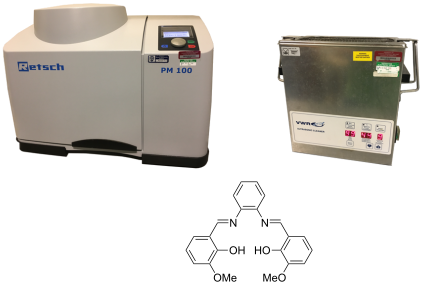
Figure 1: Typical laboratory employed planetary ball mill and ultrasonic bath.

Scheme 1: Reaction between o-vanillin and 1,2-phenylenediamine by ultrasonic irradiation for 60 minutes.

Figure 2: o-Vanillin in its flake form and 1,2-phenylenediamine in its bead form.

Figure 3: Clear separation of the reagents observed, with orange coated beads of 1,2-phenylenediamine residin...

Figure 4: Chemical structures of the products obtained from the reaction between o-vanillin and 1,2-phenylene...

Figure 5: Reaction mixture before and after ultrasonic irradiation for 60 minutes.

Figure 6: 1H NMR spectrum of diimine 1 in CDCl3/EtOD.

Scheme 2: Aldol reaction between ninhydrin and dimedone to form 2.

Figure 7: 1H NMR spectrum of 1,3-indandione 2 in DMSO-d6.
Encaging palladium(0) in layered double hydroxide: A sustainable catalyst for solvent-free and ligand-free Heck reaction in a ball mill
- Wei Shi,
- Jingbo Yu,
- Zhijiang Jiang,
- Qiaoling Shao and
- Weike Su
Beilstein J. Org. Chem. 2017, 13, 1661–1668, doi:10.3762/bjoc.13.160
- silica gel is considered as the most effective choice for the reaction (Table 2, entry 1), but MgAl-LDHs gave also a good result (Table 2, entry 5). With NaCl, α-Al2O3 and γ-Al2O3, the yields were unsatisfactory (Table 2, entries 2–4). Increasing or decreasing the amount of silica gel would led to a

Graphical Abstract

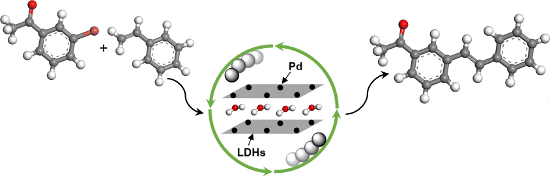
Scheme 1: Supported catalysts in cross-coupling reactions. MM represents mixer mill; PM represents planetary ...

Figure 1: The XRD patterns for the samples of MgAl-LDHs, MgAl-LDHs-PdCl42− and Pd/MgAl-LDHs.

Scheme 2: Selected model reaction.

Figure 2: Examination of the milling-ball filling degree (ΦMB) and milling-ball sizes on the yield of 3aa. Re...

Figure 3: Examination of ball-milling time and rotation speed on the yield of 3aa. Reaction conditions: 1a (1...

Figure 4: Substrate scope of Pd/MgAl-LDHs catalyzed Heck reactions. Reaction conditions unless otherwise note...

Scheme 3: Pd/MgAl-LDHs catalyzed Heck reactions of heteroaryl bromides. Reaction conditions unless otherwise ...

Figure 5: Recycling studies of the Pd/MgAl-LDH catalyst for Heck reactions. Reaction conditions: 1i or 1m (1....
Sugar-based micro/mesoporous hypercross-linked polymers with in situ embedded silver nanoparticles for catalytic reduction
- Qing Yin,
- Qi Chen,
- Li-Can Lu and
- Bao-Hang Han
Beilstein J. Org. Chem. 2017, 13, 1212–1221, doi:10.3762/bjoc.13.120
- or embed the AgNPs into a supporting matrix. The loading of AgNPs on different substrates has been reported, for instance, SiO2 [23], TiO2 [24], Al2O3 [25], porous carbon [26], carbonaceous matrix [27], carboxymethyl chitosan [28], zeolite [29], cellulose [30], ZnO paper [31] and polymers such as PVP

Graphical Abstract
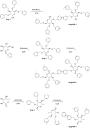
Scheme 1: Preparation of polymers SugPOP-1–3 (FDA: formaldehyde dimethyl acetal).

Figure 1: 13C CP/MAS NMR spectrum of SugPOP-3.
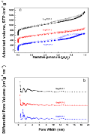
Figure 2: (a) Nitrogen adsorption–desorption isotherms of SugPOP-1–3 measured at 77 K. For clarity, the isoth...

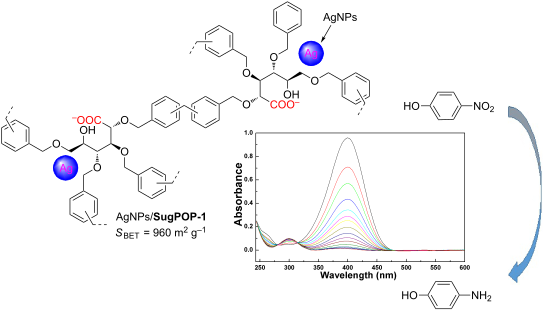
Scheme 2: The preparation of AgNPs/SugPOP-1 composite by the in situ production of AgNPs.
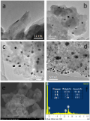
Figure 3: TEM images of the AgNPs/SugPOP-1 composite taken at different reaction times: (a) 0 h, (b) 8 h; (c)...

Figure 4: Nitrogen sorption isotherm at 77 K and the pore size distribution profile calculated by NLDFT analy...
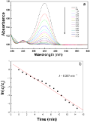
Figure 5: Catalytic performance of the AgNPs/SugPOP-1 composite. Time-dependent UV–vis spectral changes (a) a...
Continuous-flow processes for the catalytic partial hydrogenation reaction of alkynes
- Carmen Moreno-Marrodan,
- Francesca Liguori and
- Pierluigi Barbaro
Beilstein J. Org. Chem. 2017, 13, 734–754, doi:10.3762/bjoc.13.73
- ” 1% Pd@Al2O3 (Table 1, entry 5) showed to be poorly selective (67%), resulting in considerable amounts of oligomers and over-hydrogenated product 1b [121]. The performance of the above systems was compared with that of a single-site catalyst based on Pd atoms confined into the “six-fold cavities” of
- rate for 1a (0.9 mol gPd−1 h−1) (Table 1, entry 9) [124], that confirms the effectiveness of the strategy. The continuous flow partial hydrogenation of 1-heptyne (2) to 1-heptene (2a), an additive for lubricants and a surfactant [125], was also reported using packed 2% Pd@Al2O3 catalyst, showing 49
- was investigated in detail by comparing the selectivity of diverse Pd packed-bed catalysts at the same substrate conversion level (30%). The study confirmed the efficiency of the catalysts to decrease in the order Pd(HHDMA)@C > Pd(HHDMA)@TiS > Lindlar > Pd@Al2O3 (from 100 to 67%) [121]. This

Graphical Abstract

Scheme 1: Common reaction pathways for alkyne hydrogenation reactions.

Figure 1: Schematic representation of most common reactor types for batch and continuous-flow partial hydroge...
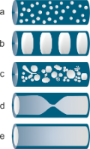
Figure 2: Schematic representation of flow regimes in microchannels; (a) bubbly flow, (b) slug/Taylor or segm...

Figure 3: Sketch of typical continuous flow apparatus for liquid-phase catalytic alkynes hydrogenation reacti...
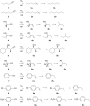
Scheme 2: Hydrogenation reactions of terminal alkynes with potential products and labelling scheme.

Figure 4: Structure of Pd@mpg-C3N4 (a), Pd(HHDMA)@C (b), Pd(Pb)@CaCO3 (c) and Pd@Al2O3 (d) catalysts. The str...

Figure 5: Sketch of composition (left) and optical image of Pd@MonoBor monolithic reactor (right). Adapted wi...

Figure 6: X-ray tomography 3D-reconstruction image of MonoBor [133]. Unpublished image from the authors.
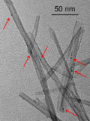
Figure 7: Representative TEM image of titanate nanotubes with immobilized PdNP (arrows). Adapted with permiss...

Figure 8: Conversion and selectivity vs. time-on-stream for the continuous-flow hydrogenation of 6 over Pd@Mo...
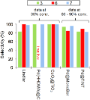
Figure 9: Continuous-flow hydrogenation of 3, 6 and 7 over different catalytic reactor systems. Data from ref...

Scheme 3: Hydrogenation reactions of internal alkynes with potential products and labelling scheme.

Figure 10: Continuous-flow hydrogenation of 11 over Pd@MonoBor catalyst. a) Conversion and selectivity as a fu...

Figure 11: Conversion and selectivity vs time-on-stream for the continuous-flow hydrogenation of 11 over Pd@Mo...

Figure 12: Continuous-flow hydrogenation reaction of 11 over packed-bed catalysts. Adapted with permission fro...

Figure 13: Images of the bimodal TiO2 monolith with well-defined macroporosity: (a, b) optical; (c) X-ray tomo...
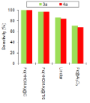
Figure 14: Selectivity of the continuous-flow partial hydrogenation reaction of 3 and 4 over packed-bed Pd cat...
Continuous N-alkylation reactions of amino alcohols using γ-Al2O3 and supercritical CO2: unexpected formation of cyclic ureas and urethanes by reaction with CO2
- Emilia S. Streng,
- Darren S. Lee,
- Michael W. George and
- Martyn Poliakoff
Beilstein J. Org. Chem. 2017, 13, 329–337, doi:10.3762/bjoc.13.36
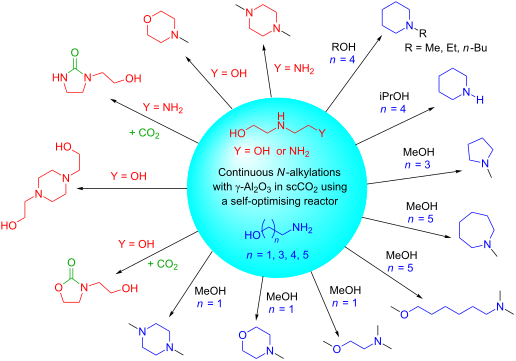
- 10.3762/bjoc.13.36 Abstract The use of γ-Al2O3 as a heterogeneous catalyst in scCO2 has been successfully applied to the amination of alcohols for the synthesis of N-alkylated heterocycles. The optimal reaction conditions (temperature and substrate flow rate) were determined using an automated self
- alcohols using γ-Al2O3 with scCO2 as the solvent and employed self-optimisation [45][46] to explore the defined parameter space to effectively identify the highest yielding and optimal conditions in a relatively short timeframe. Results and Discussion To investigate our hypothesis that γ-Al2O3 with scCO2
- (Scheme 3b, 380 °C at 1 mL min−1), and no imidazolidinone 16 was detected. Conclusion Using a self-optimising reactor and a simple heterogeneous catalyst, γ-Al2O3, moderate to high yields of several alkylated cyclic amines, formed in a two-step intramolecular cyclisation/N-alkyation reaction, using amino

Graphical Abstract

Scheme 1: Target reaction – intramolecular cyclisation of 1 followed by N-methylation with methanol to yield ...

Figure 1: Simplified schematic demonstrating a self-optimising reactor [34,35,37,44]. The reagents are pumped into the sys...

Figure 2: Result of the SNOBFIT optimisation for N-methylpiperidine (2b) with and without CO2 showing yields ...

Scheme 2: Cyclisation and N-alkylation of 1,4- and 1,6-amino alcohols.

Scheme 3: a) Reactions highlighting the incorporation of CO2 in to 16. b) High temperature reaction of 15 yie...

Scheme 4: Summary of products obtained from the reactions of amino alcohols over γ-Al2O3 in scCO2.
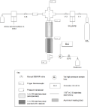
Figure 3: Diagram of the high pressure equipment used in the experiments.
The reductive decyanation reaction: an overview and recent developments
- Jean-Marc R. Mattalia
Beilstein J. Org. Chem. 2017, 13, 267–284, doi:10.3762/bjoc.13.30
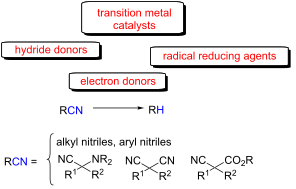
- second part of their work, they developed adequate conditions to carry out the decyanation reaction without olefin isomerization [18]. They explored several methods for the preparation of 12-butyltricosa-1,22-diene 3 (R = n-C4H9). The reaction was carried out in a slurry of K/Al2O3 in hexane, hexane
- -BuOH could act as a proton donor and so prevent the olefin isomerization. Alkali metals can also be used in suspension. As mentioned above, highly dispersed potassium over neutral alumina (K/Al2O3) in hexane is able to effect the reductive cleavage of alkylnitriles [18][34]. Zárraga et al. described an

Graphical Abstract

Scheme 1: Mechanism for the reduction under metal dissolving conditions.

Scheme 2: Example of decyanation in metal dissolving conditions coupled with deprotection [30]. TBDMS = tert-buty...

Scheme 3: Preparation of α,ω-dienes [18,33].

Scheme 4: Cyclization reaction using a radical probe [18].

Scheme 5: Synthesis of (±)-xanthorrhizol (8) [39].

Scheme 6: Mechanism for the reduction of α-aminonitriles by hydride donors.

Scheme 7: Synthesis of phenanthroindolizidines and phenanthroquinolizidines [71].

Scheme 8: Two-step synthesis of 5-unsubstituted pyrrolidines (25 examples and 1 synthetic application, see be...

Scheme 9: Synthesis of (±)-isoretronecanol 19. DBU = 1,8-diazabicyclo[5.4.0]undec-7-ene [74].

Scheme 10: Proposed mechanism with 14a for the NaBH4 induced decyanation reaction (“BH3” = BH3·THF) [74].

Scheme 11: Reductive decyanation by a sodium hydride–iodide composite (26 examples) [81].

Scheme 12: Proposed mechanism for the reduction by NaH [81].

Scheme 13: Reductive decyanation catalyzed by nickel nanoparticles. Yields are given in weight % from GC–MS da...

Scheme 14: Decyanation of 2-cyanobenzo[b]thiophene [87].

Scheme 15: Simplified pathways involved in transition-metal-promoted reductive decyanations [93,95].

Scheme 16: Fe-catalyzed reductive decyanation. Numbers in square brackets represent turnover numbers. The TONs...

Scheme 17: Rh-catalyzed reductive decyanation of aryl nitriles (18 examples, 2 synthetic applications) [103].

Scheme 18: Rh-catalyzed reductive decyanation of aliphatic nitriles (15 examples, one synthetic application) [103].

Scheme 19: Ni-catalyzed reductive decyanation (method A: 28 examples and 2 synthetic applications; method B: 3...

Scheme 20: Reductive decyanation catalyzed by the nickel complex 58 (method A, 14 examples, yield ≥ 20% and 1 ...

Scheme 21: Proposed catalytic cycle for the nickel complex 58 catalyzed decyanation (method A). Only the cycle...

Scheme 22: Synthesis of bicyclic lactones [119,120].

Scheme 23: Reductive decyanation of malononitriles and cyanoacetates using NHC-boryl radicals (9 examples). Fo...

Scheme 24: Proposed mechanism for the reduction by NHC-boryl radicals. The other possible pathway (addition of ...

Scheme 25: Structures of organic electron-donors. Only the major Z isomer of 80 is shown [125,127].

Scheme 26: Reductive decyanation of malononitriles and cyanoacetates using organic electron-donors (method A, ...

Scheme 27: Photoreaction of dibenzylmalononitrile with 81 [128].

Scheme 28: Examples of decyanation promoted in acid or basic media [129,131,134,135].

Scheme 29: Mechanism proposed for the base-induced reductive decyanation of diphenylacetonitriles [136].

Scheme 30: Reductive decyanation of triarylacetonitriles [140].
Benzothiadiazole oligoene fatty acids: fluorescent dyes with large Stokes shifts
- Lukas J. Patalag and
- Daniel B. Werz
Beilstein J. Org. Chem. 2016, 12, 2739–2747, doi:10.3762/bjoc.12.270
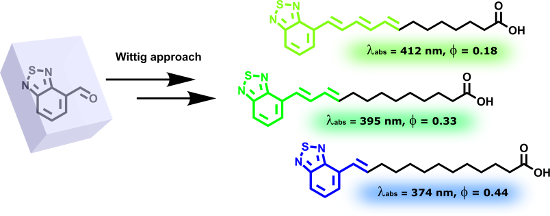
- , 192.03573; found, 192.03451. (10E,12E)-13-(Benzo[c][1,2,5]thiadiazol-4-yl)tridec-10,12-dienoic acid (7): To a solution of alcohol 6 (160 mg, 0.832 mmol, 1.0 equiv) in DCM (8 mL) was added MnO2 (1.5 g, 16.6 mmol, 20 equiv) at rt. Stirring was continued for 45 min. A mixture of SiO2/Al2O3 (1:1) was added and
- , 0.183 mmol, 1.0 equiv) in DCM (1.5 mL) was added MnO2 (318 mg, 3.66 mmol, 20 equiv) at rt. Stirring was continued for 45 min. A mixture of SiO2/Al2O3 (1:1) was added and the solvent removed to obtain the adsorbed crude product. A short column filtration (20% EtOAc in pentane) gave 34 mg of the
- freshly prepared aldehyde dissolved in THF (1 mL) was added and stirring continued for 1 h at 0 °C. The reaction was quenched with HCOOH (3 equiv) and directly adsorbed on silica/Al2O3 (1:1). Column chromatography (10% EtOAc in pentane to remove rests of aldehyde, then 5% EtOAc, 0.1% HCOOH → 6% EtOAc

Graphical Abstract

Figure 1: Examples for previously prepared fluorescent fatty acids and our present work.

Scheme 1: Synthesis of fatty acid 3 with one olefinic unit.

Scheme 2: Synthesis of fatty acid 7 with two olefinic units.

Scheme 3: Synthesis of fatty acid 11c with three olefinic units.

Figure 2: Absorption spectra of fatty acids 3, 7 and 11. Solid lines show the UV absorption while dashed line...

Figure 3: Frontier orbital energies (DFT) and their pictorial representation for the chromophoric cores (cc) ...
Selective synthesis of thioethers in the presence of a transition-metal-free solid Lewis acid
- Federica Santoro,
- Matteo Mariani,
- Federica Zaccheria,
- Rinaldo Psaro and
- Nicoletta Ravasio
Beilstein J. Org. Chem. 2016, 12, 2627–2635, doi:10.3762/bjoc.12.259
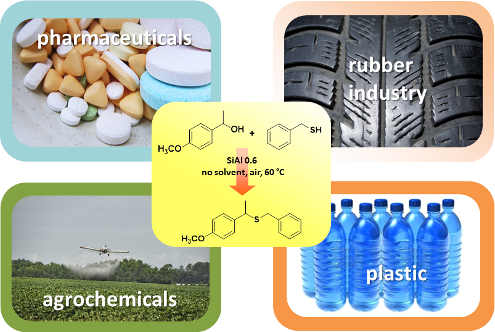
- acids, namely 13% Al2O3 on silica (SiAl 13), 4.7% ZrO2 on silica (SiZr 4.7), 2.3% TiO2 on silica (SiTi 2.3) and 0.6% Al2O3 on silica (SiAl 0.6) whose textural properties are summed up in Supporting Information File 1, Table S1. Results are reported in Table 1. It is worth underlining that under these
- . They allow us to set up very selective processes without producing any waste and avoiding the use of toxic substrates or metals. In particular a 0.6% Al2O3 on silica, can be conveniently used for the green synthesis of thioethers starting from aromatic alcohols and aromatic or aliphatic thiols. The

Graphical Abstract

Figure 1: Overview of the structures of the alcohols 1a–i used in the present work.

Figure 2: Structures of thiols 2a–f used in the present work.

Figure 3: Structures of thioethers 3a–p synthesized.

Figure 4: Product distribution during reaction of 5b and 2a over a solid acid catalyst.

Figure 5: Product distribution during reaction of 1c and 2e.

Scheme 1: Racemization of (R)-1-phenylethanol during the reaction with benzylmercaptan (2a) in the presence o...

Scheme 2: Reaction of cinnamyl alcohol 1i and benzylmercaptan (2a).

Figure 6: Recyclability test of SiAl 0.6 catalyst in the reaction of 1a and 2a.
A new and expeditious synthesis of all enantiomerically pure stereoisomers of rosaprostol, an antiulcer drug
- Wiesława Perlikowska,
- Remigiusz Żurawiński and
- Marian Mikołajczyk
Beilstein J. Org. Chem. 2016, 12, 2234–2239, doi:10.3762/bjoc.12.215
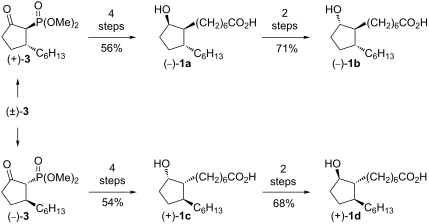
- methyl 5-formylpentanecarboxylate was carried out. The use of a mixture of Al2O3 and KOH as a base in this reaction afforded the corresponding olefination products (−)-(R)-5 and (+)-(S)-5 in high yields. Both of them were formed as mixtures of E and Z-isomers. Although these mixtures were directly used
- cyclopentanone 3. Reagents and conditions: (a) Al2O3, SiO2, MS 5 Å, DCM, rt, 5 d; (b) cation exchanger Dowex 50WX4, MeOH/H2O 5:1, rt, 3 N HCl (drops), column chromatography. Synthesis of rosaprostol stereoisomers 1a and 1c. Reagents and conditions: (a) KOH/Al2O3, OHC(CH2)5CO2Me, C6H6, 3 h rt; (b) Te, NaBH4, EtOH

Graphical Abstract

Figure 1: Structure of rosaprostol (1) and numbering system.

Figure 2: The structures of stereoisomers of rosaprostol (1).

Scheme 1: Synthesis of stereoisomeric rosaprostols 1a and 1b from (−)-2a.

Scheme 2: Synthesis of racemic rosaprostol (±-1).
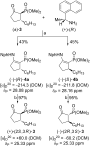
Scheme 3: Resolution of racemic cyclopentanone 3. Reagents and conditions: (a) Al2O3, SiO2, MS 5 Å, DCM, rt, ...
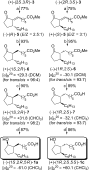
Scheme 4: Synthesis of rosaprostol stereoisomers 1a and 1c. Reagents and conditions: (a) KOH/Al2O3, OHC(CH2)5...

Scheme 5: Conversion of methyl ester (+)-6 into rosaprostol (−)-1a. Reagents and conditions: (a) L-Selectride...
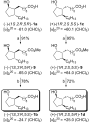
Scheme 6: Synthesis of rosaprostol stereoisomers 1b and 1d. Reagents and conditions: (a) CH2N2, Et2O, −30 °C;...
Enantioselective carbenoid insertion into C(sp3)–H bonds
- J. V. Santiago and
- A. H. L. Machado
Beilstein J. Org. Chem. 2016, 12, 882–902, doi:10.3762/bjoc.12.87
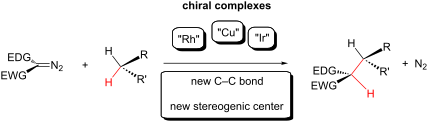
- to perform an enantioselective insertion of the carbenoid into benzylic C(sp3)–H bonds and similar results were observed [49]. In 2011, the same research group developed a new heterogeneous copper catalyst for carbenoid insertion into C(sp3)–H bonds [50]. The solid support was based on SiO2/Al2O3 and

Graphical Abstract

Figure 1: Singlet carbene, triplet carbene and carbenoids.

Figure 2: Classification of the carbenoid intermediates by the electronic nature of the groups attached to th...

Figure 3: Chiral bis(oxazoline) ligands used in enantioselective copper carbenoid insertion.

Scheme 1: Pioneering work of Peter Yates on the carbenoid insertion reaction into X–H bonds (where X = O, S, ...

Scheme 2: Copper carbenoid insertion into C(sp3)–H bond of a stereogenic center with full retention of the as...

Scheme 3: Carbenoid insertion into a C(sp3)–H bond as the key step of the Taber’s (+)-α-cuparenone (8) synthe...

Scheme 4: First enantioselective carbenoid insertion into C–O bonds catalyzed by chiral metallic complexes.

Figure 4: Chemical structures of complexes (R)-18 and (S)-18.

Scheme 5: Asymmetric carbenoid insertions into C(sp3)–H bonds of cycloalkanes catalyzed by chiral rhodium car...

Scheme 6: First diastereo and enantioselective intermolecular carbenoid insertion into tetrahydrofuran C(sp3)...

Scheme 7: Simplified mechanism of the carbenoid insertion into a C(sp3)–H bond.

Scheme 8: Nakamura’s carbenoid insertion into a C(sp3)–H bond catalytic cycle.

Scheme 9: Investigation of the relationship between the electronic characteristics of the substituent X attac...

Scheme 10: Empirical model to predict the stereoselectivity of the donor/acceptor dirhodium carbenoid insertio...

Scheme 11: Asymmetric insertion of copper carbenoids in C(sp3)–H bonds to prepare trans-γ-lactam.

Figure 5: Iridium catalysts used by Suematsu and Katsuki for carbenoid insertion into C(sp3)–H bonds.

Scheme 12: Chiral porphyrin iridium complex catalyzes the carbenoid insertion into bis-allylic C(sp3)–H bonds.

Scheme 13: Chiral porphyrin iridium complex catalyzes the carbenoid insertion into tetrahydrofuran C(sp3)–H bo...

Scheme 14: Chiral porphyrin–iridium complex catalyzes the intramolecular carbenoid insertion into C(sp3)–H bon...

Scheme 15: Chiral bis(oxazoline)–iridium complex catalyzes the carbenoid insertion into bis-allylic C(sp3)–H b...

Scheme 16: New cyclopropylcarboxylate-based chiral catalyst to enantioselective carbenoid insertion into the e...

Scheme 17: Regio- and enantioselective carbenoid insertion into the C(sp3)–H bond catalyzed by a new bulky cyc...

Scheme 18: Regio and diastereoselective carbenoid insertion into the C(sp3)–H bond catalyzed by a new bulky cy...

Scheme 19: 2,2,2-Trichloroethyl (TCE) aryldiazoacetates to improve the scope, regio- and enantioselective of t...

Scheme 20: Sequential C–H functionalization approach to 2,3-dihydrobenzofurans.

Scheme 21: Enantioselective intramolecular rhodium carbenoid insertion into C(sp3)–H bonds to afford cis-disub...

Scheme 22: Enantioselective intramolecular rhodium carbenoid insertion into C(sp3)–H bonds to afford cis-2-vin...

Scheme 23: First rhodium porphyrin-based catalyst for enantioselective carbenoid insertion into C(sp3)–H bond.

Scheme 24: Rhodium porphyrin-based catalyst for enantioselective carbenoid insertion into benzylic C(sp3)–H bo...
Effective immobilisation of a metathesis catalyst bearing an ammonium-tagged NHC ligand on various solid supports
- Krzysztof Skowerski,
- Jacek Białecki,
- Stefan J. Czarnocki,
- Karolina Żukowska and
- Karol Grela
Beilstein J. Org. Chem. 2016, 12, 5–15, doi:10.3762/bjoc.12.2
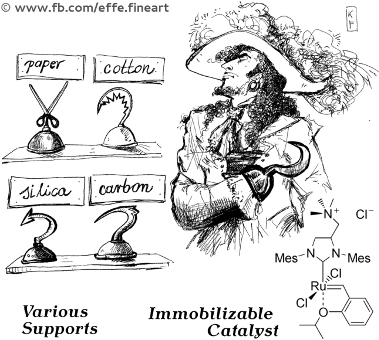
- ease of handling and product purification. Lower efficiency was observed in the case of catalyst supported on neutral aluminium oxide (8-Al2O3) which provided product 10 in diminished yield. On the other hand, the catalyst supported on unmodified silica gel (8-SiO2) showed the fastest initiation rate

Graphical Abstract

Figure 1: Selected classical and heterogeneous ruthenium complexes.

Figure 2: Applications of NHC ammonium-tagged catalysts.

Scheme 1: Synthesis of ammonium-tagged complex 8.

Scheme 2: Model RCM reaction.

Figure 3: Influence of temperature and concentration on RCM of 9. Conditions: 1 mol % of 8-C* (5 wt % on C*),...

Figure 4: Presentation of various Ru-based catalysts. From the left: 20 mg of Gre-II powder, 20 mg of 8 as fi...

Figure 5: Influence of the support type on the metathesis outcome. Conditions: 1 mol % 8, toluene 80 °C; [9] ...

Figure 6: Filtration of the reaction mixture after RCM of 9 catalysed by 1 mol % of 8-powder.

Figure 7: Split test during RCM of 9 (1 mol % cat, toluene 80 °C, [9] = 0.2 M). The reaction mixtures were fi...

Scheme 3: Model metathesis reactions used in tests.

Figure 8: RCM of 9 catalysed by 8 and 8-Fe. Conditions: 1 mol % catalyst, toluene 80 °C, [9] = 0.2 M.

Figure 9: Removal of 8-Fe and subsequent recovery of 8. A: stirred reaction mixture containing 8-Fe, B: the s...

Scheme 4: Supported catalyst 8 in sequential cross metathesis and reduction.
Cu(I)-catalyzed N,N’-diarylation of natural diamines and polyamines with aryl iodides
- Svetlana P. Panchenko,
- Alexei D. Averin,
- Maksim V. Anokhin,
- Olga A. Maloshitskaya and
- Irina P. Beletskaya
Beilstein J. Org. Chem. 2015, 11, 2297–2305, doi:10.3762/bjoc.11.250

- the literature. One of them employs an iridium-based catalyst with amidophosphonate as the ligand which allows to convert aminoalcohols into N-monoaryl-substituted diamines by the reaction with arylamines [20]. Another method uses a bimetallic catalyst (Pt–Sn/γ-Al2O3) in the reactions of diols with

Graphical Abstract

Figure 1: Diamines and polyamines studied in Cu(I)-catalyzed amination reactions.

Scheme 1: N,N’-Diarylation of the diamines 1 and 2.

Scheme 2: Arylation of the diamines 1 and 2.

Scheme 3: Arylation of the diamines 3 and 4.

Scheme 4: Arylation of the diamines 1, 3, 4 with 2-fluoroiodobenzene.

Scheme 5: Arylation of the triamines 5 and 6.

Scheme 6: Arylation of the tetraamines 7 and 8.
Selected synthetic strategies to cyclophanes
- Sambasivarao Kotha,
- Mukesh E. Shirbhate and
- Gopalkrushna T. Waghule
Beilstein J. Org. Chem. 2015, 11, 1274–1331, doi:10.3762/bjoc.11.142
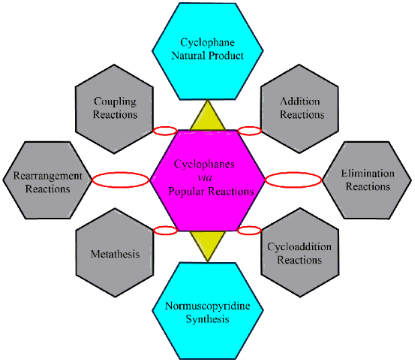

Graphical Abstract

Figure 1: General representation of cyclophanes.

Figure 2: cyclophanes one or more with heteroatom.

Figure 3: Metathesis catalysts 12–17 and C–C coupling catalyst 18.

Figure 4: Natural products containing the cyclophane skeleton.

Figure 5: Turriane family of natural products.

Scheme 1: Synthesis of [3]ferrocenophanes through Mannich reaction. Reagents and conditions: (i) excess HNMe2...

Scheme 2: Synthesis of cyclophanes through Michael addition. Reagents and conditions: (i) xylylene dibromide,...

Scheme 3: Synthesis of normuscopyridine analogue 37 through an oxymercuration–oxidation strategy. Reagents an...

Scheme 4: Synthesis of tribenzocyclotriyne 39 through Castro–Stephens coupling reaction. Reagents and conditi...

Scheme 5: Synthesis of cyclophane 43 through Glaser–Eglinton coupling. Reagents and conditions: (i) 9,10-bis(...

Scheme 6: Synthesis of the macrocyclic C-glycosyl cyclophane through Glaser coupling. Reagents and conditions...

Scheme 7: Synthesis of cyclophane-containing complex 49 through Glaser–Eglinton coupling reaction. Reagents a...

Scheme 8: Synthesis of cyclophane 53 through Glaser–Eglinton coupling. Reagents and conditions: (i) K2CO3, ac...

Figure 6: Cyclophanes 54–56 that have been synthesized through Glaser–Eglinton coupling.

Figure 7: Synthesis of tetrasubstituted [2.2]paracyclophane 57 and chiral cyclophyne 58 through Eglinton coup...

Scheme 9: Synthesis of cyclophane through Glaser–Hay coupling reaction. Reagents and conditions: (i) CuCl2 (1...

Scheme 10: Synthesis of seco-C/D ring analogs of ergot alkaloids through intramolecular Heck reaction. Reagent...

Scheme 11: Synthesis of muscopyridine 73 via Kumada coupling. Reagents and conditions: (i) 72, THF, ether, 20 ...

Scheme 12: Synthesis of the cyclophane 79 via McMurry coupling. Reagents and conditions: (i) 75, decaline, ref...

Scheme 13: Synthesis of stilbenophane 81 via McMurry coupling. Reagents and conditions: (i) TiCl4, Zn, pyridin...

Scheme 14: Synthesis of stilbenophane 85 via McMurry coupling. Reagents and conditions: (i) NBS (2 equiv), ben...
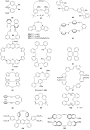
Figure 8: List of cyclophanes prepared via McMurry coupling reaction as a key step.

Scheme 15: Synthesis of paracyclophane by cross coupling involving Pd(0) catalyst. Reagents and conditions: (i...

Scheme 16: Synthesis of the cyclophane 112 via the pinacol coupling and 113 by RCM. Reagents and conditions: (...

Scheme 17: Synthesis of cyclophane derivatives 122a–c via Sonogoshira coupling. Reagents and conditions: (i) C...

Scheme 18: Synthesis of cyclophane 130 via Suzuki–Miyaura reaction as a key step. Reagents and conditions: (i)...

Scheme 19: Synthesis of the mycocyclosin via Suzuki–Miyaura cross coupling. Reagents and conditions: (i) benzy...

Scheme 20: Synthesis of cyclophanes via Wurtz coupling reaction Reagents and conditions: (i) PhLi, Et2O, C6H6,...

Scheme 21: Synthesis of non-natural glycophanes using alkyne metathesis. Reagents and conditions: (i) G-I (12)...

Figure 9: Synthesis of cyclophanes via ring-closing alkyne metathesis.

Scheme 22: Synthesis of crownophanes by cross-enyne metathesis. Reagents and conditions: (i) G-II (13), 5 mol ...

Scheme 23: Synthesis of (−)-cylindrocyclophanes A (156) and (−)-cylindrocyclophanes F (155). Reagents and cond...

Scheme 24: Synthesis of cyclophane 159 derivatives via SM cross-coupling and RCM. Reagents and conditions: (i)...

Scheme 25: Sexithiophene synthesis via cross metathesis. Reagents and conditions: (i) 161, Pd(PPh3)4, K2CO3, T...

Scheme 26: Synthesis of pyrrole-based cyclophane using enyne metathesis. Reagents and conditions: (i) Se, chlo...

Scheme 27: Synthesis of macrocyclic derivatives by RCM. Reagents and conditions: (i) G-I/G-II, CH2Cl2, 0.005 M...

Scheme 28: Synthesis of enantiopure β-lactam-based dienyl bis(dihydrofuran) 179. Reagents and conditions: (i) ...

Scheme 29: Synthesis of a [1.1.6]metaparacyclophane derivative 183 via SM cross coupling. Reagents and conditi...

Scheme 30: Synthesis of a [1.1.6]metaparacyclophane derivative 190 via SM cross coupling. Reagents and conditi...

Scheme 31: Template-promoted synthesis of cyclophanes involving RCM. Reagents and conditions: (i) acenaphthene...

Scheme 32: Synthesis of [3.4]cyclophane derivatives 200 via SM cross coupling and RCM. Reagents and conditions...
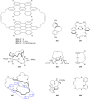
Figure 10: Examples for cyclophanes synthesized by RCM.

Scheme 33: Synthesis of the longithorone C framework assisted by fluorinated auxiliaries. Reagents and conditi...

Scheme 34: Synthesis of the longithorone framework via RCM. Reagents and conditions: (i) 213, NaH, THF, rt, 10...

Scheme 35: Synthesis of floresolide B via RCM as a key step. Reagents and conditions: (i) G-II (13, 0.1 equiv)...

Scheme 36: Synthesis of normuscopyridine (223) by the RCM strategy. Reagents and condition: (i) Mg, THF, hexen...

Scheme 37: Synthesis of muscopyridine (73) via RCM. Reagents and conditions: (i) 225, NaH, THF, 0 °C to rt, 1....

Scheme 38: Synthesis of muscopyridine (73) via RCM strategy. Reagents and conditions: (i) NaH, n-BuLi, 5-bromo...

Scheme 39: Synthesis of pyridinophane derivatives 223 and 245. Reagents and conditions: (i) PhSO2Na, TBAB, CH3...

Scheme 40: Synthesis of metacyclophane derivatives 251 and 253. Reagents and conditions: (i) 240, NaH, THF, rt...

Scheme 41: Synthesis of normuscopyridine and its higher analogues. Reagents and conditions: (i) alkenyl bromid...

Scheme 42: Synthesis of fluorinated ferrocenophane 263 via a [2 + 2] cycloaddition. Reagents and conditions: (...

Scheme 43: Synthesis of [2.n]metacyclophanes 270 via a [2 + 2] cycloaddition. Reagents and conditions: (i) Ac2...

Scheme 44: Synthesis of metacyclophane 273 by a [2 + 2 + 2] co-trimerization. Reagents and conditions: (i) [Rh...

Scheme 45: Synthesis of paracyclophane 276 via a [2 + 2 + 2] cycloaddition reaction. Reagents and conditions: ...

Scheme 46: Synthesis of cyclophane 278 via a [2 + 2 + 2] cycloaddition reaction. Reagents and conditions: (i) ...

Scheme 47: Synthesis of cyclophane 280 via a [2 + 2 + 2] cycloaddition. Reagents and conditions: (i) [(Rh(cod)(...

Scheme 48: Synthesis of taxane framework by a [2 + 2 + 2] cycloaddition. Reagents and conditions: (i) Cp(CO)2 ...

Scheme 49: Synthesis of cyclophane 284 and 285 via a [2 + 2 + 2] cycloaddition reaction. Reagents and conditio...

Scheme 50: Synthesis of pyridinophanes 293a,b and 294a,b via a [2 + 2 + 2] cycloaddition. Reagents and conditi...

Scheme 51: Synthesis of pyridinophanes 296 and 297 via a [2 + 2 + 2] cycloaddition. Reagents and conditions: (...

Scheme 52: Synthesis of triazolophane by a 1,3-dipolar cycloaddition. Reagents and conditions: (i) propargyl b...

Scheme 53: Synthesis of glycotriazolophane 309 by a click reaction. Reagents and conditions: (i) LiOH, H2O, Me...

Figure 11: Cyclophanes 310 and 311 prepared via click chemistry.

Scheme 54: Synthesis of cyclophane via the Dötz benzannulation. Reagents and conditions: (i) THF, 100 °C, 12 h...

Scheme 55: Synthesis of [6,6]metacyclophane by a Dötz benzannulation. Reagents and conditions: (i) THF, 100 °C...

Scheme 56: Synthesis of cyclophanes by a Dötz benzannulation. Reagents and conditions: (i) THF, 65 °C, 3 h; (i...

Scheme 57: Synthesis of muscopyridine (73) via an intramolecular DA reaction of ketene. Reagents and condition...

Scheme 58: Synthesis of bis[10]paracyclophane 336 via Diels–Alder reaction. Reagents and conditions: (i) DMAD,...

Scheme 59: Synthesis of [8]paracyclophane via DA reaction. Reagents and conditions: (i) maleic anhydride, 3–5 ...

Scheme 60: Biomimetic synthesis of (−)-longithorone A. Reagents and conditions: (i) Me2AlCl, CH2Cl2, −20 °C, 7...

Scheme 61: Synthesis of sporolide B (349) via a [4 + 2] cycloaddition reaction. Reagents and conditions: (i) P...

Scheme 62: Synthesis of the framework of (+)-cavicularin (352) via a [4 + 2] cycloaddition. Reagents and condi...

Scheme 63: Synthesis of oxazole-containing cyclophane 354 via Beckmann rearrangement. Reagents and conditions:...

Scheme 64: Synthesis of cyclophanes 360a–c via benzidine rearrangement. Reagents and conditions: (i) 356a–d, K2...

Scheme 65: Synthesis of cyclophanes 365a–c via benzidine rearrangement. Reagents and conditions: (i) BocNHNH2,...

Scheme 66: Synthesis of metacyclophane 367 via Ciamician–Dennstedt rearrangement. Reagents and conditions: (i)...

Scheme 67: Synthesis of cyclophane by tandem Claisen rearrangement and RCM as key steps. Reagents and conditio...

Scheme 68: Synthesis of cyclophane derivative 380. Reagents and conditions: (i) K2CO3, CH3CN, allyl bromide, r...

Scheme 69: Synthesis of metacyclophane via Cope rearrangement. Reagents and conditions: (i) MeOH, NaBH4, rt, 1...

Scheme 70: Synthesis of cyclopropanophane via Favorskii rearrangement. Reagents and conditions: (i) Br2, CH2Cl2...

Scheme 71: Cyclophane 389 synthesis via photo-Fries rearrangement. Reagents and conditions: (i) DMAP, EDCl/CHCl...

Scheme 72: Synthesis of normuscopyridine (223) via Schmidt rearrangement. Reagents and conditions: (i) ethyl s...

Scheme 73: Synthesis of crownophanes by tandem Claisen rearrangement. Reagents and conditions: (i) diamine, Et3...

Scheme 74: Attempted synthesis of cyclophanes via tandem Claisen rearrangement and RCM. Reagents and condition...

Scheme 75: Synthesis of muscopyridine via alkylation with 2,6-dimethylpyridine anion. Reagents and conditions:...

Scheme 76: Synthesis of cyclophane via Friedel–Craft acylation. Reagents and conditions: (i) CS2, AlCl3, 7 d, ...

Scheme 77: Pyridinophane 418 synthesis via Friedel–Craft acylation. Reagents and conditions: (i) 416, AlCl3, CH...

Scheme 78: Cyclophane synthesis involving the Kotha–Schölkopf reagent 421. Reagents and conditions: (i) NBS, A...

Scheme 79: Cyclophane synthesis involving the Kotha–Schölkopf reagent 421. Reagents and conditions: (i) BEMP, ...

Scheme 80: Cyclophane synthesis by coupling with TosMIC. Reagents and conditions: (i) (a) ClCH2OCH3, TiCl4, CS2...

Scheme 81: Synthesis of diaza[32]cyclophanes and triaza[33]cyclophanes. Reagents and conditions: (i) DMF, NaH,...

Scheme 82: Synthesis of cyclophane 439 via acyloin condensation. Reagents and conditions: (i) Na, xylene, 75%;...

Scheme 83: Synthesis of multibridged binuclear cyclophane 442 by aldol condensation. Reagents and conditions: ...

Scheme 84: Synthesis of various macrolactones. Reagents and conditions: (i) iPr2EtN, DMF, 77–83%; (ii) TBDMSCl...

Scheme 85: Synthesis of muscone and muscopyridine via Yamaguchi esterification. Reagents and conditions: (i) 4...

Scheme 86: Synthesis of [5]metacyclophane via a double elimination reaction. Reagents and conditions: (i) LiBr...

Figure 12: Cyclophanes 466–472 synthesized via Hofmann elimination.

Scheme 87: Synthesis of cryptophane via Baylis–Hillman reaction. Reagents and conditions: (i) methyl acrylate,...

Scheme 88: Synthesis of cyclophane 479 via double Chichibabin reaction. Reagents and conditions: (i) excess 478...

Scheme 89: Synthesis of cyclophane 483 via double Chichibabin reaction. Reagents and conditions: (i) 481, OH−;...

Scheme 90: Synthesis of cyclopeptide via an intramolecular SNAr reaction. Reagents and conditions: (i) TBAF, T...

Scheme 91: Synthesis of muscopyridine (73) via C-zip ring enlargement reaction. Reagents and conditions: (i) H...

Figure 13: Mechanism of the formation of compound 494.

Scheme 92: Synthesis of indolophanetetraynes 501a,b using the Nicholas reaction as a key step. Reagents and co...

Scheme 93: Synthesis of cyclophane via radical cyclization. Reagents and conditions: (i) cyclododecanone, phen...

Scheme 94: Synthesis of (−)-cylindrocyclophanes A (156) and (−)-cylindrocyclophanes F (155). Reagents and cond...

Scheme 95: Cyclophane synthesis via Wittig reaction. Reagents and conditions: (i) LiOEt (2.1 equiv), THF, −78 ...

Figure 14: Representative examples of cyclophanes synthesized via Wittig reaction.

Scheme 96: Synthesis of the [6]paracyclophane via isomerization of Dewar benzene. Reagents and conditions: (i)...
Intermolecular addition reactions of N-alkyl-N-chlorosulfonamides to unsaturated compounds
- Gerold Heuger and
- Richard Göttlich
Beilstein J. Org. Chem. 2015, 11, 1226–1234, doi:10.3762/bjoc.11.136

- ], which produced the corresponding N-chloro compounds 2a and 2b in quantitative yield (Scheme 1). Other procedures for the synthesis of these compounds including N-chlorination with an fivefold excess of Oxone® in the presence of NaCl/Al2O3 [35] or deprotonation and reaction with NCS [36][37] did not lead

Graphical Abstract

Scheme 1: Preparation of the chloroamides.

Scheme 2: First experiments for the intermolecular radical addition.

Scheme 3: Reaction of sterically hindered N-chlorosulfonamides.

Scheme 4: Proposed mechanism of the chlorination.

Scheme 5: Ring opening in the case of cationic or radical intermediates.

Scheme 6: Addition to unsaturated alcohols prone to halocyclization.
Indolizines and pyrrolo[1,2-c]pyrimidines decorated with a pyrimidine and a pyridine unit respectively
- Marcel Mirel Popa,
- Emilian Georgescu,
- Mino R. Caira,
- Florentina Georgescu,
- Constantin Draghici,
- Raluca Stan,
- Calin Deleanu and
- Florea Dumitrascu
Beilstein J. Org. Chem. 2015, 11, 1079–1088, doi:10.3762/bjoc.11.121
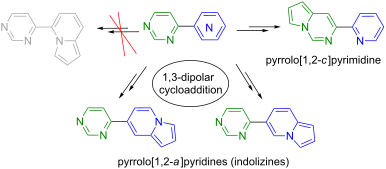
- acetylenic dipolarophiles 10 (3.5 mmol) were stirred under reflux in 20 mL 1,2-epoxybutane for 24 h. The products were precipitated with ethanol and removed by filtration. Further purification was made by crystallization from ethanol or by column chromatography on Al2O3 using methylene chloride as eluent. 3
- . The products were precipitated with ethanol and removed by filtration. Further purification was performed by crystallization from ethanol or column chromatography on Silicagel-60 (Merck) or neutral Al2O3 by using methylene chloride as an eluent. 1-Acetyl-3-benzoyl-7-(4-pyrimidinyl)indolizine (16a

Graphical Abstract

Figure 1: Examples of hybrid heteroarenes from the class of indolizines.

Figure 2: Starting 4-pyridylpyrimidines 6–8.

Scheme 1: The synthesis of new pyrimidinium bromides 11 and pyrrolo[1,2-c]pyrimidines 12.

Figure 3: The 1H NMR spectra (DMSO-d6) of 4-(2-pyridyl)pyrimidine (6) and the corresponding bromides 11a–e (t...

Scheme 2: The synthesis of new pyridinium bromides 13a,b and indolizines 14a–f.

Scheme 3: The synthesis of the new pyridinium bromides 15 and 7-pyrimidylindolizines 16a–f.

Scheme 4: Reaction mechanism.

Figure 4: Molecular and crystal structures of 6 (a,b) and 8 (c,d). The molecules are located on centers of in...
Functionalized branched EDOT-terthiophene copolymer films by electropolymerization and post-polymerization “click”-reactions
- Miriam Goll,
- Adrian Ruff,
- Erna Muks,
- Felix Goerigk,
- Beatrice Omiecienski,
- Ines Ruff,
- Rafael C. González-Cano,
- Juan T. Lopez Navarrete,
- M. Carmen Ruiz Delgado and
- Sabine Ludwigs
Beilstein J. Org. Chem. 2015, 11, 335–347, doi:10.3762/bjoc.11.39
- for several days). Acetonitrile (Alfa Aesar, supergradient HPLC grade (far-UV), +99.9%) was stored over neutral Al2O3 (activated under vacuum at 120 °C for 24 h) under an argon atmosphere. DMSO was distilled in vacuum, crystallized at 4 °C and the mother liquor was removed. After melting of the

Graphical Abstract

Scheme 1: Polymer constitutions of the electropolymerized films.
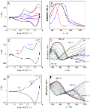
Figure 1: Cyclic voltammograms in 0.1 M NBu4PF6/MeCN (A) and vis–NIR spectra (B) of electropolymerized films ...

Figure 2: A: Raman spectra of electrodeposited films of the homopolymer P3T and PEDOT, PEDOT/P3T-blend, a sim...

Figure 3: A: Modification of the copolymer films P(EDOT-N3-co-3T) with 1-hexyne and alkyne sulfonate with [Cu...
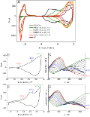
Figure 4: Cyclic voltammograms of films deposited under potentiostatic control on gold-coated glass substrate...

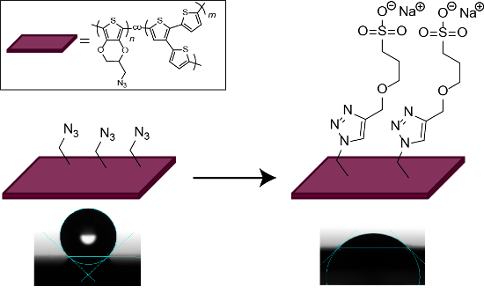
Figure 5: Water contact angle (CA) of the films of P(EDOT-N3-co-3T) (left), P(EDOT-clickHex-co-3T)-1:1 (middl...
Cross-dehydrogenative coupling for the intermolecular C–O bond formation
- Igor B. Krylov,
- Vera A. Vil’ and
- Alexander O. Terent’ev
Beilstein J. Org. Chem. 2015, 11, 92–146, doi:10.3762/bjoc.11.13
- with low-molecular-weight alcohols was performed in the presence of heterogeneous catalysts, such as Au/TiO2 [98][99][100], Au/β-Ga2O3 [101], Au/polymer [102], and AuNiOx/SiO2-Al2O3-MgO [103]. In all the above-mentioned processes in the presence of heterogeneous catalysts, low-molecular-weight alcohols

Graphical Abstract

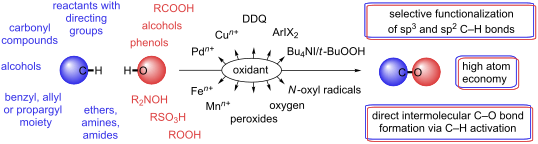
Scheme 1: Cross-dehydrogenative coupling.

Scheme 2: Cross-dehydrogenative C–O coupling.

Scheme 3: Regioselective ortho-acetoxylation of meta-substituted arylpyridines and N-arylamides.
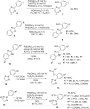
Scheme 4: ortho-Acyloxylation and alkoxylation of arenes directed by pyrimidine, benzoxazole, benzimidazole a...

Scheme 5: Cu(OAc)2/AgOTf/O2 oxidative system in the ortho-alkoxylation of arenes.
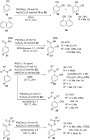
Scheme 6: Pd(OAc)2/persulfate oxidative system in the ortho-alkoxylation and acetoxylation of arenes with nit...
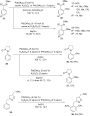
Scheme 7: ortho-Acetoxylation and methoxylation of O-methyl aryl oximes, N-phenylpyrrolidin-2-one, and (3-ben...

Scheme 8: Ruthenium-catalyzed ortho-acyloxylation of acetanilides.

Scheme 9: Acetoxylation and alkoxylation of arenes with amide directing group using Pd(OAc)2/PhI(OAc)2 oxidat...

Scheme 10: Alkoxylation of azoarenes, 2-aryloxypyridines, picolinamides, and N-(1-methyl-1-(pyridin-2-yl)ethyl...

Scheme 11: Acetoxylation of compounds containing picolinamide and quinoline-8-amine moieties using the Pd(OAc)2...

Scheme 12: (CuOH)2CO3 catalyzed oxidative ortho-etherification using air as oxidant.

Scheme 13: Copper-catalyzed aerobic alkoxylation and aryloxylation of arenes containing pyridine-N-oxide moiet...

Scheme 14: Cobalt-catalyzed aerobic alkoxylation of arenes and alkenes containing pyridine N-oxide moiety.

Scheme 15: Non-symmetric double-fold C–H ortho-acyloxylation.

Scheme 16: N-nitroso directed ortho-alkoxylation of arenes.

Scheme 17: Selective alkoxylation and acetoxylation of alkyl groups.

Scheme 18: Acetoxylation of 2-alkylpyridines and related compounds.
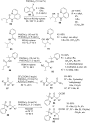
Scheme 19: Acyloxylation and alkoxylation of alkyl fragments of substrates containing amide or sulfoximine dir...

Scheme 20: Palladium-catalyzed double sp3 C–H alkoxylation of N-(quinolin-8-yl)amides for the synthesis of sym...

Scheme 21: Copper-catalyzed acyloxylation of methyl groups of N-(quinolin-8-yl)amides.

Scheme 22: One-pot acylation and sp3 C–H acetoxylation of oximes.

Scheme 23: Possible mechanism of oxidative esterification catalyzed by N-heterocyclic nucleophilic carbene.

Scheme 24: Oxidative esterification employing stoichiometric amounts of aldehydes and alcohols.

Scheme 25: Selective oxidative coupling of aldehydes with alcohols in the presence of amines.

Scheme 26: Iodine mediated oxidative esterification.

Scheme 27: Oxidative C–O coupling of benzyl alcohols with methylarenes under the action of Bu4NI/t-BuOOH syste...

Scheme 28: Oxidative coupling of methyl- and ethylarenes with aromatic aldehydes under the action of Bu4NI/t-B...

Scheme 29: Cross-dehydrogenative C–O coupling of aldehydes with t-BuOOH in the presence of Bu4NI.

Scheme 30: Bu4NI-catalyzed α-acyloxylation reaction of ethers and ketones with aldehydes and t-BuOOH.

Scheme 31: Oxidative coupling of aldehydes with N-hydroxyimides and hexafluoroisopropanol.

Scheme 32: Oxidative coupling of alcohols with N-hydroxyimides.

Scheme 33: Oxidative coupling of aldehydes and primary alcohols with N-hydroxyimides using (diacetoxyiodo)benz...

Scheme 34: Proposed mechanism of the oxidative coupling of aldehydes and N-hydroxysuccinimide under action of ...

Scheme 35: Oxidative coupling of aldehydes with pivalic acid (172).

Scheme 36: Oxidative C–O coupling of aldehydes with alkylarenes using the Cu(OAc)2/t-BuOOH system.

Scheme 37: Copper-catalyzed acyloxylation of C(sp3)-H bond adjacent to oxygen in ethers using benzyl alcohols.

Scheme 38: Oxidative C–O coupling of aromatic aldehydes with cycloalkanes.

Scheme 39: Ruthenium catalyzed cross-dehydrogenative coupling of primary and secondary alcohols.

Scheme 40: Cross-dehydrogenative C–O coupling reactions of β-dicarbonyl compounds with sulfonic acids, acetic ...

Scheme 41: Acyloxylation of ketones, aldehydes and β-dicarbonyl compounds using carboxylic acids and Bu4NI/t-B...

Scheme 42: Acyloxylation of ketones using Bu4NI/t-BuOOH system.

Scheme 43: Cross-dehydrogenative C–O coupling of β-dicarbonyl compounds and their heteroanalogues with N-hydro...

Scheme 44: Cross-dehydrogenative C–O coupling of β-dicarbonyl compounds and their heteroanalogues with t-BuOOH....

Scheme 45: Oxidative C–O coupling of 2,6-dialkylphenyl-β-keto esters and thioesters with tert-butyl hydroxycar...

Scheme 46: α’-Acyloxylation of α,β-unsaturated ketones using KMnO4.

Scheme 47: Possible mechanisms of the acetoxylation at the allylic position of alkenes by Pd(OAc)2.

Scheme 48: Products of the oxidation of terminal alkenes by Pd(II)/AcOH/oxidant system.

Scheme 49: Acyloxylation of terminal alkenes with carboxylic acids.

Scheme 50: Synthesis of linear E-allyl esters by cross-dehydrogenative coupling of terminal alkenes wih carbox...

Scheme 51: Pd(OAc)2-catalyzed acetoxylation of Z-vinyl(triethylsilanes).

Scheme 52: α’-Acetoxylation of α-acetoxyalkenes with copper(II) chloride in acetic acid.

Scheme 53: Oxidative acyloxylation at the allylic position of alkenes and at the benzylic position of alkylare...

Scheme 54: Copper-catalyzed alkoxylation of methylheterocyclic compounds using di-tert-butylperoxide as oxidan...

Scheme 55: Oxidative C–O coupling of methylarenes with β-dicarbonyl compounds or phenols.

Scheme 56: Copper-catalyzed esterification of methylbenzenes with cyclic ethers and cycloalkanes.

Scheme 57: Oxidative C–O coupling of carboxylic acids with toluene catalyzed by Pd(OAc)2.

Scheme 58: Oxidative acyloxylation at the allylic position of alkenes with carboxylic acids using the Bu4NI/t-...

Scheme 59: Cross-dehydrogenative C–O coupling of carboxylic acids with alkylarenes using the Bu4NI/t-BuOOH sys...

Scheme 60: Oxidative C–O cross-coupling of methylarenes with ethyl or isopropylarenes.

Scheme 61: Phosphorylation of benzyl C–H bonds using the Bu4NI/t-BuOOH oxidative system.

Scheme 62: Selective C–H acetoxylation of 2,3-disubstituted indoles.

Scheme 63: Acetoxylation of benzylic position of alkylarenes using DDQ as oxidant.

Scheme 64: C–H acyloxylation of diarylmethanes, 3-phenyl-2-propen-1-yl acetate and dimethoxyarene using DDQ.

Scheme 65: Cross-dehydrogenative C–O coupling of 1,3-diarylpropylenes and 1,3-diarylpropynes with alcohols.

Scheme 66: One-pot azidation and C–H acyloxylation of 3-chloro-1-arylpropynes.

Scheme 67: Cross-dehydrogenative C–O coupling of 1,3-diarylpropylenes, (E)-1-phenyl-2-isopropylethylene and is...

Scheme 68: Cross-dehydrogenative C–O coupling of alkylarenes and related compounds with N-hydroxyphthalimide.

Scheme 69: Acetoxylation at the benzylic position of alkylarenes mediated by N-hydroxyphthalimide.

Scheme 70: C–O coupling of methylarenes with aromatic carboxylic acids employing the NaBrO3/NaHSO3 system.

Scheme 71: tert-Butyl peroxidation of allyl, propargyl and benzyl ethers catalyzed by Fe(acac)3.

Scheme 72: Cross-dehydrogenative C–O coupling of ethers with carboxylic acids mediated by Bu4NI/t-BuOOH system....

Scheme 73: Oxidative acyloxylation of dimethylamides and dioxane with 2-aryl-2-oxoacetic acids accompanied by ...

Scheme 74: tert-Butyl peroxidation of N-benzylamides and N-allylbenzamide using the Bu4NI/t-BuOOH system.

Scheme 75: Cross-dehydrogenative C–O coupling of aromatic carboxylic acids with ethers using Fe(acac)3 as cata...

Scheme 76: Cross-dehydrogenative C–O coupling of cyclic ethers with 2-hydroxybenzaldehydes using iron carbonyl...
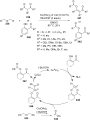
Scheme 77: Cross-dehydrogenative C–O coupling of ethers with β-dicarbonyl compounds and phenols using copper c...

Scheme 78: Cross-dehydrogenative C–O coupling of 2-hydroxybenzaldehyde with dioxane catalyzed by Cu2(BPDC)2(BP...

Scheme 79: Ruthenium chloride-catalyzed acyloxylation of β-lactams.

Scheme 80: Ruthenium-catalyzed tert-butyl peroxydation amides and acetoxylation of β-lactams.

Scheme 81: PhI(OAc)2-mediated α,β-diacetoxylation of tertiary amines.

Scheme 82: Electrochemical oxidative methoxylation of tertiary amines.

Scheme 83: Cross-dehydrogenative C–O coupling of ketene dithioacetals with carboxylic acids in the presence of...

Scheme 84: Cross-dehydrogenative C–O coupling of enamides with carboxylic acids using iodosobenzene as oxidant....

Scheme 85: Oxidative alkoxylation, acetoxylation, and tosyloxylation of acylanilides using PhI(O(O)CCF3)2 in t...

Scheme 86: Proposed mechanism of the oxidative C–O coupling of actetanilide with O-nucleophiles in the presenc...

Scheme 87: Three-component coupling of aldehydes, anilines and alcohols involving oxidative intermolecular C–O...

Scheme 88: Oxidative coupling of phenols with alcohols.

Scheme 89: 2-Acyloxylation of quinoline N-oxides with arylaldehydes in the presence of the CuOTf/t-BuOOH syste...

Scheme 90: Cross-dehydrogenative C–O coupling of azoles with primary alcohols.

Scheme 91: Oxidation of dipyrroles to dipyrrins and subsequent oxidative alkoxylation in the presence of Na3Co...

Scheme 92: Oxidative dehydrogenative carboxylation of alkanes and cycloalkanes to allylic esters.

Scheme 93: Pd-catalyzed acetoxylation of benzene.
Modification of physical properties of poly(L-lactic acid) by addition of methyl-β-cyclodextrin
- Toshiyuki Suzuki,
- Ayaka Ei,
- Yoshihisa Takada,
- Hiroki Uehara,
- Takeshi Yamanobe and
- Keiko Takahashi
Beilstein J. Org. Chem. 2014, 10, 2997–3006, doi:10.3762/bjoc.10.318
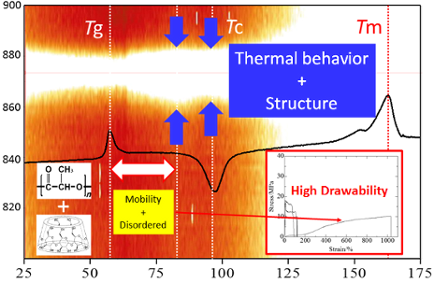
- mg samples placed in an open Al2O3 pan. For the stability test and accuracy of complex mass ratio, the measurements were carried out from 25 to 800 °C. MeCD was used as received. Tensile drawing test Tensile drawing of samples was carried out at 25, 60, and 100 °C using a Tensilon RTC-1325A tensile

Graphical Abstract

Figure 1: Thermo-gravitometry for PLLA, PL-MCD83, PL-MCD67, PL-MCD50 and MeCD.

Figure 2: Observed weight loss and stoichiometric line.

Figure 3: DSC curves for PLLA, PL-MCD83, PL-MCD67 and PL-MCD50.

Figure 4: Stress-Strain curve for PLLA, PL-MCD50, 67 and 83 at a) 100 °C, b) 60˚C and c) 25 °C.

Figure 5: Temperature dependence of tanδ for PLLA, PL-MCD50, PL-MCD67 and PL-MCD83.

Figure 6: Raman spectra for PLLA, PL-MCD83, 67, 50 and MeCD at room temperature.

Figure 7: Temperature dependence of Raman spectrum of PL-MCD83.

Figure 8: Stacked line profiles of Raman spectra of PL-MCD83 for the characteristic peak of PLLA at 873 cm−1.

Figure 9: PCA results of PLLA at 2955 cm−1, 1760 cm−1, 1452 cm−1, 1385 cm−1, 1292 cm−1, 1129 cm−1, 873 cm−1, ...

Figure 10: PCA results of PL-MCD83 at 2955 cm−1, 1768 cm−1, 1452 cm−1, 1385 cm−1, 1294 cm−1, 1128 cm−1, 873 cm...
Multicomponent reactions in nucleoside chemistry
- Mariola Koszytkowska-Stawińska and
- Włodzimierz Buchowicz
Beilstein J. Org. Chem. 2014, 10, 1706–1732, doi:10.3762/bjoc.10.179
- min; ii. CuSO4·5H2O, Al2O3, microwave irradiation (90 °C), 3–3.5 min. Reagents and reaction conditions: i. PhI(OAc)2 (3 mol %), microwave irradiation (45 °C), 6–9 min. Reagents and reaction conditions: i. 117, ethyl pyruvate, TiCl4, dichloromethane, −78 °C, 1 h; then 118, −78 °C, 1 h; then 23 °C, 1 h

Graphical Abstract

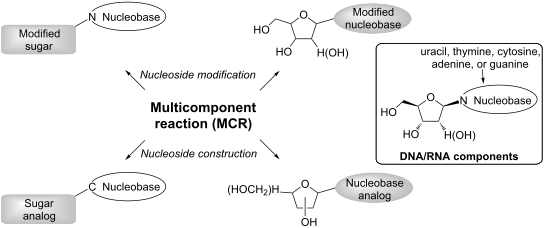
Figure 1: Selected chemical modifications of natural ribose or 2'-deoxyribose nucleosides leading to the deve...

Scheme 1: (a) Classical Mannich reaction; (b) general structures of selected hydrogen active components and s...

Scheme 2: Reagents and reaction conditions: i. H2O or H2O/EtOH, 60–100 °C, 7 h–10 d; ii. H2, Pd/C or PtO2; ii...

Scheme 3: Reagents and reaction conditions: i. H2O, 90 °C, overnight.

Scheme 4: Reagents and reaction conditions: i. AcOH, H2O, 60 °C, 12 h-5 d; ii. AcOH, H2O, 60 °C, 8 h.

Scheme 5: Reagents and reaction conditions: i. CuBr, THF, reflux, 0.5 h; ii. n-Bu4NF·3H2O, THF, rt, 2 h.

Scheme 6: Reagents and reaction conditions: i. [bmim][PF6], 80 °C, 5–8 h.

Scheme 7: Reagents and reaction conditions: i. EtOH, reflux, 24 h.

Scheme 8: Reagents and reaction conditions: i. NaOAc, H2O, 95 °C, 1–16 h; ii. NaOAc, H2O, 95 °C, 1 h.

Scheme 9: Reagents and reaction conditions: i. a. 37% aq HCl, MeOH; b. NaOAc, 1,4-dioxane, H2O, 100 °C, overn...

Scheme 10: Reagents and reaction conditions: i. DMAP, DCC, MeOH, rt, 1 h.

Scheme 11: The Kabachnik–Fields reaction.

Scheme 12: Reagents and reaction conditions: i. 60 °C, 3 h; ii. 80 °C, 2 h.

Scheme 13: The four-component Ugi reaction.

Scheme 14: Reagents and reaction conditions: i. MeOH, rt, 2–3 d, yields not given.

Scheme 15: Reagents and reaction conditions: i. MeOH/CH2Cl2 (1:1), rt, 24 h, yield not given; ii. 6 N aq HCl, ...

Scheme 16: Reagents and reaction conditions: i. MeOH/H2O, rt, 26 h; ii. aq AcOH, reflux, 50%; iii. reversed ph...

Scheme 17: Reagents and reaction conditions: i. MeOH, rt, 24 h; ii. HCl, MeOH, 0 °C to rt, 6 h, then H2O, rt, ...

Scheme 18: Reagents and reaction conditions: i. DMF/Py/MeOH (1:1:1), rt, 48 h; ii. 10% HCl/MeOH, rt, 30 min.

Scheme 19: Reagents and reaction conditions (R = CH3 or H): i. CH2Cl2/MeOH (2:1), 35–40 °C, 2 d; ii. HF/pyridi...

Scheme 20: Reagents and reaction conditions: i. MeOH, 76%; ii. 80% aq TFA, 100%.

Scheme 21: Reagents and reaction conditions: i. EtOH, rt, 72 h; ii. Zn, aq NaH2PO4, THF, rt, 1 week; then 80% ...

Scheme 22: Reagents and reaction conditions: i. EtOH, rt, 48 h, then silica gel chromatography, 33% for 57 (30...

Scheme 23: Reagents and reaction conditions: i. [bmim]BF4, 80 °C, 4 h; ii. [bmim]BF4, 80 °C, 3 h; iii. [bmim]BF...

Scheme 24: Reagents and reaction conditions: i. [bmim]BF4, 80 °C.

Scheme 25: Reagents and reaction conditions: i. H3PW12O40 (2 mol %), EtOH, 50 °C, 2–15 h; ii. H3PW12O40 (2 mol...

Scheme 26: General scheme of the Biginelli reaction.

Scheme 27: Reagents and reaction conditions: i. EtOH, reflux.

Scheme 28: Reagents and reaction conditions: i. Bu4N+HSO4−, diethylene glycol, 120 °C, 1.5–3 h.

Scheme 29: Reagents and reaction conditions: i. BF3·Et2O, CuCl, AcOH, THF, 65 °C, 24 h; ii. Yb(OTf)3, THF, ref...

Scheme 30: Reagents and reaction conditions: TCT (10 mol %), rt: i. 100 min; ii. 150 min; iii. 140 min.

Scheme 31: Reagents and reaction conditions: i. EtOH, microwave irradiation (300 W), 10 min; ii. EtOH, 75 °C, ...

Scheme 32: The Hantzsch reaction.

Scheme 33: Reagents and reaction conditions: TCT (10 mol %), rt, 80–150 min.

Scheme 34: Reagents and reaction conditions: i. Yb(OTf)3, THF, 90 °C, 12 h; ii. 4 Å molecular sieves, EtOH, 90...

Scheme 35: Reagents and reaction conditions: i. MeOH, 50 °C, 48 h.

Scheme 36: Reagents and reaction conditions: i. MeOH, 25 °C, 5 d.

Scheme 37: Bu4N+HSO4−, diethylene glycol, 80 °C, 1–2 h.

Scheme 38: The three-component carbopalladation of dienes on the example of buta-1,3-diene.

Scheme 39: Reagents and reaction conditions: i. 5 mol % Pd(dba)2, Bu4NCl, ZnCl2, acetonitrile or DMSO, 80 °C o...

Scheme 40: Reagents and reaction conditions: i. 2.5 mol % Pd2(dba)3, tris(2-furyl)phosphine, K2CO3, MeCN or DM...

Scheme 41: Reagents and reaction conditions: i. 2.5 mol % Pd2(dba)3, tris(2-furyl)phosphine, K2CO3, MeCN or DM...

Scheme 42: The three-component Bucherer–Bergs reaction.

Scheme 43: Reagents and reaction conditions: i. MeOH, H2O, 70 °C, 4.5 h; ii. (1) H2, 5% Pd/C, MeOH, 55 °C, 5 h...

Scheme 44: Reagents and reaction conditions: i. pyridine, MgSO4, 100 °C, 28 h, N2; ii. DMF, 70–90 °C, 22–30 h,...

Scheme 45: Reagents and reaction conditions: i. Montmorillonite K-10 clay, microwave irradiation (600 W), 6–10...

Scheme 46: Reagents and reaction conditions: i. Montmorillonite K-10 clay, microwave irradiation (560 W), 6–10...

Scheme 47: Reagents and reaction conditions: i. CeCl3·7H2O (20 mol %), NaI (20 mol %), microwave irradiation (...

Scheme 48: Reagents and reaction conditions: i. PhI(OAc)2 (3 mol %), microwave irradiation (45 °C), 6–9 min.

Scheme 49: Reagents and reaction conditions: i. 117, ethyl pyruvate, TiCl4, dichloromethane, −78 °C, 1 h; then ...
Addition of H-phosphonates to quinine-derived carbonyl compounds. An unexpected C9 phosphonate–phosphate rearrangement and tandem intramolecular piperidine elimination
- Łukasz Górecki,
- Artur Mucha and
- Paweł Kafarski
Beilstein J. Org. Chem. 2014, 10, 883–889, doi:10.3762/bjoc.10.85
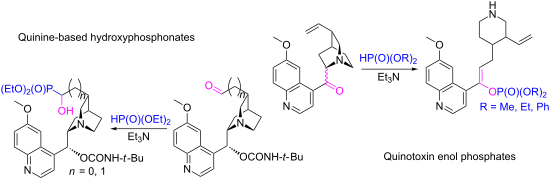
- observed reactivity seemed to be general as formation of compound 13b was evidenced (to a different extent) in other variants of the catalytical addition of diethyl phosphite to quininone/quinidinone, with catalytic systems such as: KF/Al2O3, NH3/EtOH and DBU/EtOH or toluene. Independent of the catalyst

Graphical Abstract

Scheme 1: Quinine (1) and O-9-t-butylcarbamoylquinine (2) as the substrates for oxidation of the C9 hydroxy a...
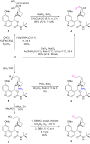
Scheme 2: Oxidation of the vinyl group of 9-O-tert-butylcarbamoylquinine to homologous aldehydes.
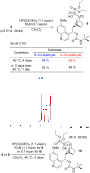
Scheme 3: Addition of diethyl phosphite to aldehydes obtained in oxidation of the vinyl group.

Scheme 4: Oxidation of quinine to quininone and quinidinone and addition of phosphites to the ketones yieldin...

Scheme 5: Spectroscopic features that confirmed the structure of the phosphate ester product of rearrangement...

Scheme 6: Tentative mechanism of the phosphonate–phosphate rearrangement associated with tandem quinuclidine ...



