Beilstein J. Org. Chem. 2026, 22, 71–87, doi:10.3762/bjoc.22.3
Graphical Abstract
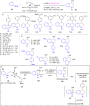
Figure 1: Historical background of zirconium and its physical properties. Image depicted in the background of ...
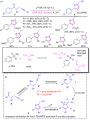
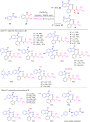
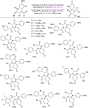
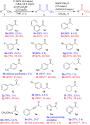
Scheme 1: Zr-mediated radical cyclization.
Scheme 2: Ni/Zr-mediated one-pot ketone synthesis.
Scheme 3: Zirconocene-catalyzed alkylative dimerization of 2-methylene-1,3-dithiane.
Scheme 4: Zirconium complexes as a photoredox catalyst.
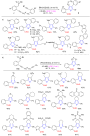
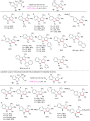
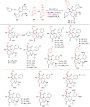
Scheme 5: Zr-catalyzed reductive ring opening of epoxides.
Scheme 6: Zr-catalyzed reductive ring opening of oxetanes. a10 mol % of Cp2Zr(OTf)2·THF was used. bPhCF3 was ...
Scheme 7: Zr-catalyzed halogen atom transfer of alkyl chlorides.
Scheme 8: Zr-catalyzed radical homo coupling of alkyl chlorides.
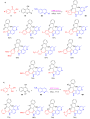
Scheme 9: Zr-catalyzed fluorine atom transfer.
Scheme 10: Zr-catalyzed C–O bond cleavage. aYield without the use of P(OEt)3.
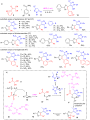
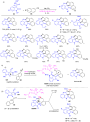
Scheme 11: Application to the total synthesis of halichondrins.
Scheme 12: Zr-catalyzed C3 dimerization of 3-bromotryptophan derivatives. aCp2ZrCl2 was used.
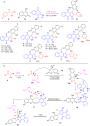
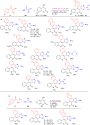
Scheme 13: Mechanistic studies.
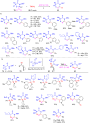
Scheme 14: Application to the total synthesis of cyctetryptomycins. A photo of compound 61b was taken by the a...
Beilstein J. Org. Chem. 2026, 22, 64–70, doi:10.3762/bjoc.22.2
Graphical Abstract
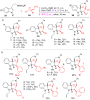
Figure 1: The expected and the unexpected in selected synthetic strategies.
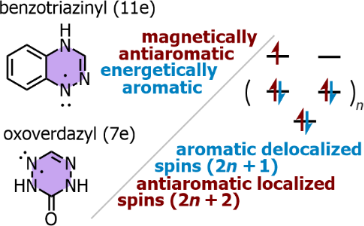
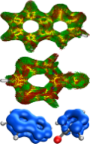
Figure 2: Distortion in antiaromatic hepta- and hexa(methoxycarbonyl)cycloheptatrienyl anions 1 and 2. HOMO (...
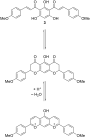
Scheme 1: Reactions of anion 2 generated from cycloheptatriene 3 with halogens and alkyl halides.
Scheme 2: Reactions of anion 2 generated from cycloheptatriene 3 with diazonium salts.
Figure 3: Two conformers of hexa(methoxycarbonyl)cycloheptatrienyl anion 2 and 2'. The energies were obtained...
Scheme 3: Radical mechanism for reactions of anion 2 with halogens, suggested structure of trapped product. T...
Beilstein J. Org. Chem. 2026, 22, 1–63, doi:10.3762/bjoc.22.1
Graphical Abstract
Figure 1: Representative alkenyl chloride motifs in natural products. References: Pinnaic acid [8], haterumalide ...
Figure 2: Representative alkenyl chloride motifs in pharmaceuticals and pesticides. References: clomifene [25], e...
Figure 3: Graphical overview of previously published reviews addressing the synthesis of alkenyl chlorides.
Figure 4: Classification of synthetic approaches to alkenyl chlorides.
Scheme 1: Early works by Friedel, Henry, and Favorsky.
Scheme 2: Product distribution obtained by H NMR integration of crude compound as observed by Kagan and co-wo...
Scheme 3: Side reactions observed for the reaction of 14 with PCl5.
Scheme 4: Only compounds 15 and 18 were observed in the presence of Hünig’s base.
Scheme 5: Efficient synthesis of dichloride 15 at low temperatures.
Scheme 6: Various syntheses of alkenyl chlorides on larger scale.
Scheme 7: Scope of the reaction of ketones with PCl5 in boiling cyclohexane.
Scheme 8: Side reactions occur when using excess amounts of PCl5.
Scheme 9: Formation of versatile β-chlorovinyl ketones.
Scheme 10: Mixture of PCl5 and PCl3 used for the synthesis of 49.
Scheme 11: Catechol–PCl3 reagents for the synthesis of alkenyl chlorides.
Scheme 12: (PhO)3P–halogen-based reagents for the synthesis of alkenyl halides.
Scheme 13: Preparation of alkenyl chlorides from alkenyl phosphates.
Scheme 14: Preparation of alkenyl chlorides by treatment of ketones with the Vilsmeier reagent.
Scheme 15: Preparation of electron-rich alkenyl chlorides by treatment of ketones with the Vilsmeier reagent.
Scheme 16: Cu-promoted synthesis of alkenyl chlorides from ketones and POCl3.
Figure 5: GC yield of 9 depending on time and reaction temperature.
Figure 6: Broken reaction flask after attempts to clean the polymerized residue.
Figure 7: GC yield of 9 depending on the amount of CuCl and time.
Scheme 17: Treatment of 4-chromanones with PCl3.
Scheme 18: Synthesis of alkenyl chlorides from the reaction of ketones with acyl chlorides.
Scheme 19: ZnCl2-promoted alkenyl chloride synthesis.
Scheme 20: Regeneration of acid chlorides by triphosgene.
Scheme 21: Alkenyl chlorides from ketones and triphosgene.
Scheme 22: Various substitution reactions.
Scheme 23: Vinylic Finkelstein reactions reported by Evano and co-workers.
Scheme 24: Challenge of selective monohydrochlorination of alkynes.
Scheme 25: Sterically encumbered internal alkynes furnish the hydrochlorination products in high yield.
Scheme 26: Recent work by Kropp with HCl absorbed on alumina.
Scheme 27: High selectivities for monhydrochlorination with nitromethane/acetic acid as solvent.
Figure 8: Functionalized alkynes which typically afford the monhydrochlorinated products.
Scheme 28: Related chorosulfonylation and chloroamination reactions.
Scheme 29: Reaction of organometallic reagents with chlorine electrophiles.
Scheme 30: Elimination reactions of dichlorides to furnish alkenyl chlorides.
Scheme 31: Elimination reactions of allyl chloride 182 to furnish alkenyl chloride 183.
Scheme 32: Detailed studies by Schlosser on the elimination of dichloro compounds.
Scheme 33: Stereoselective variation caused by change of solvent.
Scheme 34: Elimination of gem-dichloride 189 to afford alkene 190.
Scheme 35: Oxidation of enones to dichlorides and in situ elimination thereof.
Scheme 36: Oxidation of allylic alcohols to dichlorides and in situ elimination thereof.
Scheme 37: Chlorination of styrenes with SOCl2 and elimination thereof.
Scheme 38: Chlorination of styrenes with SOCl2 and elimination thereof.
Scheme 39: Fluorine–chlorine exchange followed by elimination.
Scheme 40: Intercepting cations with alkynes and trapping of the alkenyl cation intermediate with chloride.
Scheme 41: Investigations by Mayr and co-workers.
Scheme 42: In situ activation of benzyl alcohol 230 with BCl3.
Scheme 43: In situ activation of benzylic alcohols with TiCl4.
Scheme 44: In situ activation of benzylic alcohols with FeCl3.
Scheme 45: In situ activation of benzylic alcohols with FeCl3.
Scheme 46: In situ activation of aliphatic chlorides and alcohols with ZnCl2, InCl3, and FeCl3.
Scheme 47: In situ generation of benzylic cations and trapping thereof with alkynes.
Scheme 48: Intramolecular trapping reactions affording alkenyl halides.
Scheme 49: Intramolecular trapping reactions affording alkenyl chlorides.
Scheme 50: Intramolecular trapping reactions of oxonium and iminium ions affording alkenyl chlorides.
Scheme 51: Palladium and nickel-catalyzed coupling reactions to afford alkenyl chlorides.
Scheme 52: Rhodium-catalyzed couplings of 1,2-trans-dichloroethene with arylboronic esters.
Scheme 53: First report on monoselective coupling reactions for 1,1-dichloroalkenes.
Scheme 54: Negishi’s and Barluenga’s contributions.
Scheme 55: First mechanistic investigation by Johnson and co-workers.
Scheme 56: First successful cross-metathesis with choroalkene 260.
Scheme 57: Subsequent studies by Johnson.
Scheme 58: Hoveyda and Schrock’s work on stereoretentive cross-metathesis with molybdenum-based catalysts.
Scheme 59: Related work with (Z)-dichloroethene.
Scheme 60: Further ligand refinement and traceless protection of functional groups with HBpin.
Scheme 61: Alkenyl chloride synthesis by Wittig reaction.
Scheme 62: Alkenyl chloride synthesis by Julia olefination.
Scheme 63: Alkenyl chloride synthesis by reaction of ketones with Mg/TiCl4 mixture.
Scheme 64: Frequently used allylic substitution reactions which lead to alkenyl chlorides.
Scheme 65: Enantioselective allylic substitutions.
Scheme 66: Synthesis of alkenyl chlorides bearing an electron-withdrawing group.
Scheme 67: Synthesis of α-nitroalkenyl chlorides from aldehydes.
Scheme 68: Synthesis of alkenyl chlorides via elimination of an in situ generated geminal dihalide.
Scheme 69: Carbenoid approach reported by Pace.
Scheme 70: Carbenoid approach reported by Pace.
Scheme 71: Ring opening of cyclopropenes in the presence of MgCl2.
Scheme 72: Electrophilic chlorination of alkenyl MIDA boronates to Z- or E-alkenyl chlorides.
Scheme 73: Hydroalumination and hydroboration of alkynyl chlorides.
Scheme 74: Carbolithiation of chloroalkynes.
Scheme 75: Chlorination of enamine 420.
Scheme 76: Alkyne synthesis by elimination of alkenyl chlorides.
Scheme 77: Reductive lithiation of akenyl chlorides.
Scheme 78: Reactions of alkenyl chlorides with organolithium reagents.
Scheme 79: Reactions of alkenyl chlorides with organolithium reagents.
Scheme 80: Addition–elimination reaction of alkenyl chloride 9 with organolithium reagents.
Scheme 81: C–H insertions of lithiumcarbenoids.
Scheme 82: Pd-catalyzed coupling reactions with alkenyl chlorides as coupling partner.
Scheme 83: Ni-catalyzed coupling of alkenylcopper reagent with alkenyl chloride 183.
Scheme 84: Ni-catalyzed coupling of heterocycle 472 with alkenyl chloride 473.
Scheme 85: Synthesis of α-chloroketones by oxidation of alkenyl chlorides.
Scheme 86: Tetrahalogenoferrate(III)-promoted oxidation of alkenyl chlorides.
Scheme 87: Chlorine–deuterium exchange promoted by a palladium catalyst.
Scheme 88: Reaction of alkenyl chlorides with thiols in the presence of AIBN (azobisisobutyronitrile).
Scheme 89: Chloroalkene annulation.
Beilstein J. Org. Chem. 2025, 21, 2755–2760, doi:10.3762/bjoc.21.212
Graphical Abstract
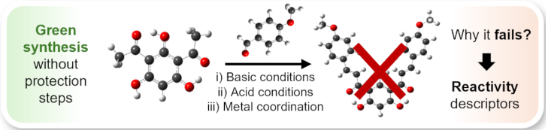
Scheme 1: Importance and synthetic approaches to ethylmaltol (1). (a) Ethylmaltol (1) is widely used as a fla...
Scheme 2: Optimized one-pot procedure to access ethylmaltol (1) via a transient protecting group strategy.
Beilstein J. Org. Chem. 2025, 21, 2739–2754, doi:10.3762/bjoc.21.211
Graphical Abstract
Scheme 1: Current synthetic approaches to aliphatic nitro-NNO-azoxy compounds and the summary of the present ...
Scheme 2: Scope of the discovered electrochemical nitro-NNO-azoxylation of nitrosoalkanes containing electron...
Scheme 3: Synthetic utility and derivatization of synthesized coupling product 2f.
Figure 1: CV-curves of 0.01 M solutions of a) 1a (blue), b) 1f (azure), c) 1c (pink), d) 1i (yellow), e) S4 (...
Figure 2: CV-curves of 0.01 M solutions of a) 1a (blue), b) ADN (red), c) the mixture of 1a and ADN (green), ...
Scheme 4: Control experiments.
Figure 3: Free energy diagram of possible interaction pathways between 1a and dinitramide-derived radical A a...
Scheme 5: Proposed mechanism for electrochemical nitro-NNO-azoxylation of 1-nitro-1-nitroso compounds 1. Free...
Figure 4: Assessment of the NO release from compounds 2a–i, 3f, and 4f.
Beilstein J. Org. Chem. 2025, 21, 2730–2738, doi:10.3762/bjoc.21.210
Graphical Abstract
Figure 1: Structures of prenylindole alkaloids derived from tryptophan.
Figure 2: Representative retrosynthetic considerations for 7-prenyl- and 7-allyltryptophan.
Scheme 1: C-7 Functionalization of 7-iodo-Nα-Boc-tryptophan methyl ester.
Scheme 2: C-7 Prenylation via C–H activation.
Figure 3: Negishi cross-coupling of allyl- and prenyl(iodo)indoles.
Scheme 3: Synthesis of prenyl- and allylindoles.
Scheme 4: Markovnikov hydrochlorination and hydrotrifluoroacetylation.
Scheme 5: Synthesis of asperdinones B–E 1–4.
Scheme 6: Control experiment.
Scheme 7: Control experiment of the Negishi cross-coupling reaction.
Scheme 8: Synthesis of terezine D and ent-asperdinone E.
Beilstein J. Org. Chem. 2025, 21, 2716–2729, doi:10.3762/bjoc.21.209
Graphical Abstract
Figure 1: Structures of bioactive molecules with trifluoromethylpyridine and piperidine frameworks.
Scheme 1: The reaction of ethyl trifluoroacetoacetate (1), acetone (2a) and 1,3- diaminopropan-2-ol (3).
Scheme 2: Three-component reaction of ethyl trifluoroacetoacetate (1), alkyl methyl ketones 2b,c and 1,3-diam...
Scheme 3: Three-component reaction of ethyl trifluoroacetoacetate (1), acetophenone (2d) and 1,3-diaminopropa...
Scheme 4: The proposed mechanism of three-component cyclization of 3-oxo ester 1, methyl ketones 2a–d and 1,3...
Figure 2: ORTEP view of compounds 4асc (a, CCDC: 2479553), 4аct (b, CCDC: 2479554), 4аtt (c, CCDC: 2479555), ...
Figure 3: ORTEP view of compound 5ctc (a, CCDC: 2479558), 5ctt (b, CCDC: 2479559) showing with the thermal el...
Figure 4: The fragments of the 1H NMR spectra (400 MHz, DMSO-d6) of diastereomers 4acc (a), 4аct (b), 4аtt (c...
Figure 5: Fragments of 1H NMR spectra (400 MHz, DMSO-d6) of hexahydrooxazolo[3,2-a]pyridin-5-ones 5ctc (a) an...
Beilstein J. Org. Chem. 2025, 21, 2703–2715, doi:10.3762/bjoc.21.208
Graphical Abstract
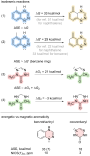
Scheme 1: Structure of reactant (chalcone, compound A), geminal product (compound B), vicinal product (compou...
Scheme 2: Reaction mechanism of ditosyloxylation of chalcones with X = -OCH3 , -SCH3 followed by 1,2-aryl mig...
Scheme 3: Reaction mechanism of ditosyloxylation of chalcones with X = -Cl, -NO2 leading to the formation of ...
Figure 1: Relative Gibbs free energy profile for HTIB-mediated ditosyloxylation of chalcone with X = -SCH3 in...
Figure 2: Relative Gibbs free energy profile for HTIB-mediated ditosyloxylation of chalcone with X = -Cl invo...
Figure 3: Relative Gibbs free energy profile for HTIB-mediated ditosyloxylation of chalcone with X = -NO2 inv...
Scheme 4: Reaction mechanism of ditosyloxylation of chalcones with X = -OCH3, -SCH3, -Cl, -NO2 leading to the...
Figure 4: Relative Gibbs free energy profile for HTIB-mediated ditosyloxylation of chalcone with X = -OCH3 le...
Figure 5: Relative Gibbs free energy profile for HTIB-mediated ditosyloxylation of chalcone with X = -SCH3 le...
Figure 6: Relative Gibbs free energy profile for HTIB-mediated ditosyloxylation of chalcone with X = -Cl lead...
Figure 7: Relative Gibbs free energy profile for HTIB-mediated ditosyloxylation of chalcone with X = -NO2 lea...
Beilstein J. Org. Chem. 2025, 21, 2694–2702, doi:10.3762/bjoc.21.207
Graphical Abstract
Scheme 1: Examples of hydrothiocyanation/cyclization of alkynes.
Figure 1: 1H and 19F NMR monitoring of 1a/NaSCN/AcOH (a, b) and 1g/NaSCN/AcOH (c, d) reaction mixtures in MeC...
Scheme 2: Plausible reaction mechanism.
Scheme 3: Oxidation of isothiazolium thiocyanate 2a.
Beilstein J. Org. Chem. 2025, 21, 2657–2693, doi:10.3762/bjoc.21.206
Graphical Abstract
Scheme 1: Representatives of steroid alkaloid classes. Marked in blue is the steroidal cholestane framework, ...
Scheme 2: Subclasses of Veratrum alkaloids: jervanine, veratramine and cevanine-type [8].
Scheme 3: Flow chart presentation of the synthesis of (−)-englerin A developed by the Christmann group [10].
Scheme 4: Structures and year of synthesis of the three types of Veratrum alkaloids reported in the literatur...
Scheme 5: Key step in the synthesis of cyclopamine (6) by the Giannis group [21].
Scheme 6: Overview of the semisynthesis of cyclopamine (6) reported by the Giannis group in 2009 [21].
Scheme 7: Key steps in the synthesis of cyclopamine (6) by the Baran group [23].
Scheme 8: Overview of the total synthesis of cyclopamine (6) by the Baran group in 2023 [23].
Scheme 9: Key steps in the synthesis of cyclopamine (6) by the Zhu/Gao group [25].
Scheme 10: Overview of the total synthesis of cyclopamine (6) by the group of Zhao/Gao in 2023 [25].
Scheme 11: Key steps in the synthesis of cyclopamine (6) by the Liu/Qin group [26].
Scheme 12: Overview of the semisynthesis of cyclopamine (6) by the Liu/Qin group in 2024 [26].
Scheme 13: Key steps in the synthesis of jervine (12) by the Masamune group [14].
Scheme 14: Overview of the total synthesis of jervine (12) by the Masamune group in 1968 [14].
Scheme 15: Color-coded schemes of the presented cyclopamine (6) syntheses by Giannis, Baran, Zhu/Gao, and Liu/...
Scheme 16: Key steps in the total synthesis of veratramine (13) by the Johnson group [15].
Scheme 17: Overview of the total synthesis of veratramine (13) by the Johnson group in 1967 [15].
Scheme 18: Key steps in the synthesis of veratramine (13) by the Zhu/Gao group [25].
Scheme 19: Shortened overview of the total synthesis of veratramine (13) by the Zhu/Gao group in 2023 [25].
Scheme 20: Key steps in the synthesis of veratramine by the Liu/Qin group [26].
Scheme 21: Overview of the semisynthesis of veratramine (13) by the Liu/Qin group in 2024 [26].
Scheme 22: Key steps in the synthesis of veratramine (13) by the Trauner group [27].
Scheme 23: Overview of the total synthesis of veratramine (13) by the Trauner group in 2025 [27].
Scheme 24: Key steps in the synthesis of verarine (14) by the Kutney group [16-19].
Scheme 25: Overview of the total synthesis of verarine (14) by the Kutney group reported 1962–1968 [16-19].
Scheme 26: Color-coded schemes of the presented veratramine-type alkaloid synthesis of Zhu/Gao, Liu/Qin and Tr...
Scheme 27: Structures of veracevine (86), veratridine (87), and cevadine (88).
Scheme 28: Key step in the semisynthesis of verticine (15) by the Kutney group (1977) [20,46].
Scheme 29: Overview of the semisynthesis of verticine (15) by the Kutney group (1977) [20,46].
Scheme 30: Key step of the total synthesis of (±)-4-methylenegermine (17) by the Stork group (2017) [22].
Scheme 31: Overview of the total synthesis of (±)-4-methylenegermine (17) by the Stork group (2017) [22].
Scheme 32: Key step of the total synthesis of heilonine (16) by Cassaidy and Rawal (2021) [24].
Scheme 33: Overview of the total synthesis of heilonine (16) by Cassaidy and Rawal (2021) [24]. FGI: functional gr...
Scheme 34: Key steps of the synthesis of heilonine (16) by Dai and co-workers (2024) [28].
Scheme 35: Overview of the total synthesis of heilonine (16) by Dai and co-workers (2024) [28].
Scheme 36: Key steps of the total synthesis of zygadenine (18) reported by Luo and co-workers [29].
Scheme 37: Overview of the total synthesis of zygadenine (18) by Luo and co-workers (2023) [29].
Scheme 38: Key step of the divergent total syntheses of highly oxidized cevanine-type alkaloids by Luo and co-...
Scheme 39: Divergent syntheses of highly oxidized cevanine-type alkaloids by Luo and co-workers (2024) [30].
Scheme 40: Color-coded overview of the presented cevanine-type alkaloid syntheses [10,20,22,24,28-30,46]. LLS: longest linear sequen...