Search for "Buchwald–Hartwig amination" in Full Text gives 31 result(s) in Beilstein Journal of Organic Chemistry.
Beilstein J. Org. Chem. 2013, 9, 2265–2319, doi:10.3762/bjoc.9.265
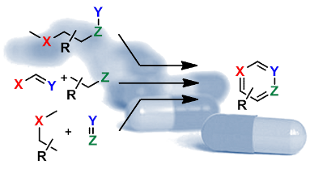
Graphical Abstract
Scheme 1: Scaled industrial processes for the synthesis of simple pyridines.
Scheme 2: Synthesis of nicotinic acid from 2-methyl-5-ethylpyridine (1.11).
Scheme 3: Synthesis of 3-picoline and nicotinic acid.
Scheme 4: Synthesis of 3-picoline from 2-methylglutarodinitrile 1.19.
Scheme 5: Picoline-based synthesis of clarinex (no yields reported).
Scheme 6: Mode of action of proton-pump inhibitors and structures of the API’s.
Scheme 7: Hantzsch-like route towards the pyridine rings in common proton pump inhibitors.
Figure 1: Structures of rosiglitazone (1.40) and pioglitazone (1.41).
Scheme 8: Synthesis of rosiglitazone.
Scheme 9: Syntheses of 2-pyridones.
Scheme 10: Synthesis and mechanism of 2-pyrone from malic acid.
Scheme 11: Polymer-assisted synthesis of rosiglitazone.
Scheme 12: Synthesis of pioglitazone.
Scheme 13: Meerwein arylation reaction towards pioglitazone.
Scheme 14: Route towards pioglitazone utilising tyrosine.
Scheme 15: Route towards pioglitazone via Darzens ester formation.
Scheme 16: Syntheses of the thiazolidinedione moiety.
Scheme 17: Synthesis of etoricoxib utilising Negishi and Stille cross-coupling reactions.
Scheme 18: Synthesis of etoricoxib via vinamidinium condensation.
Figure 2: Structures of nalidixic acid, levofloxacin and moxifloxacin.
Scheme 19: Synthesis of moxifloxacin.
Scheme 20: Synthesis of (S,S)-2,8-diazabicyclo[4.3.0]nonane 1.105.
Scheme 21: Synthesis of levofloxacin.
Scheme 22: Alternative approach to the levofloxacin core 1.125.
Figure 3: Structures of nifedipine, amlodipine and clevidipine.
Scheme 23: Mg3N2-mediated synthesis of nifedipine.
Scheme 24: Synthesis of rac-amlodipine as besylate salt.
Scheme 25: Aza Diels–Alder approach towards amlodipine.
Scheme 26: Routes towards clevidipine.
Figure 4: Examples of piperidine containing drugs.
Figure 5: Discovery of tiagabine based on early leads.
Scheme 27: Synthetic sequences to tiagabine.
Figure 6: Structures of solifenacin (2.57) and muscarine (2.58).
Scheme 28: Enantioselective synthesis of solifenacin.
Figure 7: Structures of DPP-4 inhibitors of the gliptin-type.
Scheme 29: Formation of inactive diketopiperazines from cis-rotameric precursors.
Figure 8: Co-crystal structure of carmegliptin bound in the human DPP-4 active site (PDB 3kwf).
Scheme 30: Improved route to carmegliptin.
Figure 9: Structures of lamivudine and zidovudine.
Scheme 31: Typical routes accessing uracil, thymine and cytosine.
Scheme 32: Coupling between pyrimidones and riboses via the Vorbrüggen nucleosidation.
Scheme 33: Synthesis of lamivudine.
Scheme 34: Synthesis of raltegravir.
Scheme 35: Mechanistic studies on the formation of 3.22.
Figure 10: Structures of selected pyrimidine containing drugs.
Scheme 36: General preparation of pyrimidines and dihydropyrimidones.
Scheme 37: Synthesis of imatinib.
Scheme 38: Flow synthesis of imatinib.
Scheme 39: Syntheses of erlotinib.
Scheme 40: Synthesis of erlotinib proceeding via Dimroth rearrangement.
Scheme 41: Synthesis of lapatinib.
Scheme 42: Synthesis of rosuvastatin.
Scheme 43: Alternative preparation of the key aldehyde towards rosuvastatin.
Figure 11: Structure comparison between nicotinic acetylcholine receptor agonists.
Scheme 44: Syntheses of varenicline and its key building block 4.5.
Scheme 45: Synthetic access to eszopiclone and brimonidine via quinoxaline intermediates.
Figure 12: Bortezomib bound in an active site of the yeast 20S proteasome ([114], pdb 2F16).
Scheme 46: Asymmetric synthesis of bortezomib.
Figure 13: Structures of some prominent piperazine containing drugs.
Figure 14: Structural comparison between the core of aplaviroc (4.35) and a type-1 β-turn (4.36).
Scheme 47: Examplary synthesis of an aplaviroc analogue via the Ugi-MCR.
Scheme 48: Syntheses of azelastine (5.1).
Figure 15: Structures of captopril, enalapril and cilazapril.
Scheme 49: Synthesis of cilazapril.
Figure 16: Structures of lamotrigine, ceftriaxone and azapropazone.
Scheme 50: Synthesis of lamotrigine.
Scheme 51: Alternative synthesis of lamotrigine (no yields reported).
Figure 17: Structural comparison between imiquimod and the related adenosine nucleoside.
Scheme 52: Conventional synthesis of imiquimod (no yields reported).
Scheme 53: Synthesis of imiquimod.
Scheme 54: Synthesis of imiquimod via tetrazole formation (not all yields reported).
Figure 18: Structures of various anti HIV-medications.
Scheme 55: Synthesis of abacavir.
Figure 19: Structures of diazepam compared to modern replacements.
Scheme 56: Synthesis of ocinaplon.
Scheme 57: Access to zaleplon and indiplon.
Scheme 58: Different routes towards the required N-methylpyrazole 6.65 of sildenafil.
Scheme 59: Polymer-supported reagents in the synthesis of key aminopyrazole 6.72.
Scheme 60: Early synthetic route to sildenafil.
Scheme 61: Convergent preparations of sildenafil.
Figure 20: Comparison of the structures of sildenafil, tadalafil and vardenafil.
Scheme 62: Short route to imidazotriazinones.
Scheme 63: Alternative route towards vardenafils core imidazotriazinone (6.95).
Scheme 64: Bayer’s approach to the vardenafil core.
Scheme 65: Large scale synthesis of vardenafil.
Scheme 66: Mode of action of temozolomide (6.105) as methylating agent.
Scheme 67: Different routes to temozolomide.
Scheme 68: Safer route towards temozolomide.
Figure 21: Some unreported heterocyclic scaffolds in top market drugs.
Beilstein J. Org. Chem. 2012, 8, 1700–1704, doi:10.3762/bjoc.8.193
Graphical Abstract
Scheme 1: Lead structure of zosuquidar (1a) and new inhibitors 2–13 (series a); precursors 2–13 (series b); p...
Scheme 2: Synthetic route to compounds 2a–13a. Reagents and conditions: (a) K3PO4, CH2Cl2, reflux, 3 h; then ...
Scheme 3: Preparation of N-Boc-protected 4-aminopiperidines 3c and 4c. Reagents and conditions: (a) NaOt-Bu, ...
Beilstein J. Org. Chem. 2012, 8, 1637–1643, doi:10.3762/bjoc.8.187
Graphical Abstract
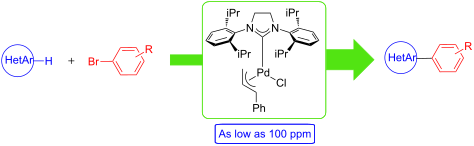
Figure 1: [Pd(NHC)(cin)Cl] catalysts examined in direct arylation.
Scheme 1: Synthesis of [Pd(IPr*Tol)(cin)Cl] (4).
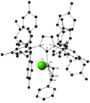
Figure 2: Molecular structure of 4. H atoms were omitted for clarity. Selected bond lengths (Å) and angles (°...
Figure 3: Previously reported catalytic systems in the direct arylation of benzothiophene (6).
Beilstein J. Org. Chem. 2012, 8, 253–258, doi:10.3762/bjoc.8.26
Graphical Abstract
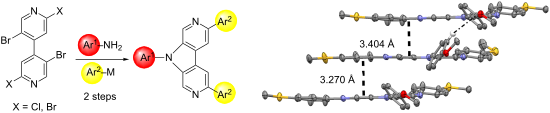
Scheme 1: Cross-coupling reactions of bipyridines 2.
Scheme 2: Ligand effect in the double N-arylation of 2a with 6a.
Figure 1: Unsuccessful substrates in the double N-arylation of 2a.
Scheme 3: Functionalization of diazacarbazole 2a.
Scheme 4: Functionalized diazacarbazoles 12a–c from bipyridine 2b.
Figure 2: (a) ORTEP views showing the π–π (dashed lines) and selected C–H···π (dotted-dashed line) interactio...
Beilstein J. Org. Chem. 2011, 7, 1387–1406, doi:10.3762/bjoc.7.163
Graphical Abstract
Scheme 1: Synthesis of substituted amides.
Scheme 2: Synthesis of ketocarbamates and imidazolones.
Scheme 3: Access to β-lactams.
Scheme 4: Access to β-lactams with increased structural diversity.
Scheme 5: Synthesis of imidazolinium salts.
Scheme 6: Access to the indenamine core.
Scheme 7: Synthesis of substituted tetrahydropyridines.
Scheme 8: Synthesis of more substituted tetrahydropyridines.
Scheme 9: Synthesis of chiral tetrahydropyridines.
Scheme 10: Preparation of α-aminonitrile by a catalyzed Strecker reaction.
Scheme 11: Synthesis of spiroacetals.
Scheme 12: Synthesis of masked 3-aminoindan-1-ones.
Scheme 13: Synthesis of homoallylic amines and α-aminoesters.
Scheme 14: Preparation of 1,2-dihydroisoquinolin-1-ylphosphonates.
Scheme 15: Pyrazole elaboration by cycloaddition of hydrazines with alkynones generated in situ.
Scheme 16: An alternative approach to pyrazoles involving hydrazine cycloaddition.
Scheme 17: Synthesis of pyrroles by cyclization of propargyl amines.
Scheme 18: Isoindolone and phthalazone synthesis by cyclization of acylhydrazides.
Scheme 19: Sultam synthesis by cyclization of sulfonamides.
Scheme 20: Synthesis of sulfonamides by aminosulfonylation of aryl iodides.
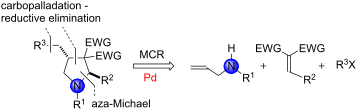
Scheme 21: Pyrrolidine synthesis by carbopalladation of allylamines.
Scheme 22: Synthesis of indoles through a sequential C–C coupling/desilylation–coupling/cyclization reaction.
Scheme 23: Synthesis of indoles by a site selective Pd/C catalyzed cross-coupling approach.
Scheme 24: Synthesis of isoindolin-1-one derivatives through a sequential Sonogashira coupling/carbonylation/h...
Scheme 25: Synthesis of pyrroles through an allylic amination/Sonogashira coupling/hydroamination reaction.
Scheme 26: Synthesis of indoles through a Sonogashira coupling/cyclofunctionalization reaction.
Scheme 27: Synthesis of indoles through a one-pot two-step Sonogashira coupling/cyclofunctionalization reactio...
Scheme 28: Synthesis of α-alkynylindoles through a Pd-catalyzed Sonogashira/double C–N coupling reaction.
Scheme 29: Synthesis of indoles through a Pd-catalyzed sequential alkenyl amination/C-arylation/N-arylation.
Scheme 30: Synthesis of N-aryl-2-benzylpyrrolidines through a sequential N-arylation/carboamination reaction.
Scheme 31: Synthesis of phenothiazine derivatives through a one-pot palladium-catalyzed double C–N arylation i...
Scheme 32: Synthesis of substituted imidazolidinones through a palladium-catalyzed three-component reaction of...
Scheme 33: Synthesis of 2,3-diarylated amines through a palladium-catalyzed four-component reaction involving ...
Scheme 34: Synthesis of rolipram involving a Pd-catalyzed three-component reaction.
Scheme 35: Synthesis of seven-membered ring lactams through a Pd-catalyzed amination/intramolecular cyclocarbo...
Beilstein J. Org. Chem. 2011, 7, 59–74, doi:10.3762/bjoc.7.10
Graphical Abstract
Scheme 1: Synthesis of selective D3 receptor ligands.
Scheme 2: Synthesis of a novel 5-HT1B receptor antagonist.
Scheme 3: Synthesis of A-366833, a selective α4β2 neural nicotinic receptor agonist.
Scheme 4: A new route to oxcarbazepine.
Scheme 5: Synthesis of key intermediates for norepinephrine transporter (NET) inhibitors.
Scheme 6: N-Annulation yielding substituted indole for the synthesis of demethylasterriquinone A1.
Scheme 7: Palladium-catalysed double N-arylation contributing to the synthesis of murrazoline.
Scheme 8: Synthesis of vitamin E amines.
Scheme 9: Improved synthesis of martinellic acid.
Scheme 10: New tariquidar-derived ABCB1 inhibitors.
Scheme 11: β-Carbolin-1-ones as inhibitors of tumour cell proliferation.
Scheme 12: Copper-catalysed synthesis of promazine drugs.
Scheme 13: Palladium-catalysed multicomponent reaction for the synthesis of promazine drugs.
Scheme 14: Key intermediate for imatinib.
Scheme 15: Synthesis of an effective Chek1/KDR kinase inhibitor.
Scheme 16: Macrocyclization as final step of the synthesis of heat shock protein inhibitor.
Scheme 17: Synthesis of N-arylimidazoles.
Scheme 18: Synthesis of benzolactam V8.
Scheme 19: Synthesis of an intermediate for lotrafiban (SB-214857).
Scheme 20: Intermolecular effort towards lotrafiban.
Scheme 21: Synthesis of matrix metalloproteases (MMPs) inhibitor.
Scheme 22: Regioselective 9-N-arylation of purines.
Scheme 23: N-Arylation of adenine and cytosine.
Scheme 24: 9-N-Arylpurines as enterovirus inhibitors.
Scheme 25: Xanthine analogues as kinase inhibitors.
Scheme 26: Synthesis of dual PPARα/γ agonists.
Scheme 27: N-Aryltriazole ribonucleosides with anti-proliferative activity.