


Search results
Search for "alicyclic" in Full Text gives 30 result(s) in Beilstein Journal of Organic Chemistry.
The chemistry of bisallenes
- Henning Hopf and
- Georgios Markopoulos
Beilstein J. Org. Chem. 2012, 8, 1936–1998, doi:10.3762/bjoc.8.225
- steps (high step economy). Keywords: alicyclic; bisallenes; cyclic; cycloadditions; cycloisomerization; isomerization; molecular complexity; step economy; Table of Contents Introduction Review Acyclic conjugated bisallenes 1.1 Synthesis of hydrocarbons 1.2 Synthesis of functionalized systems 1.3

Graphical Abstract

Figure 1: Loschmidt’s structure proposal for benzene (1) (Scheme 181 from [3]) and the corresponding modern stru...

Figure 2: The first isolated bisallenes.

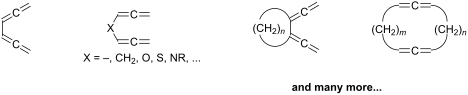
Figure 3: Carbon skeletons of selected bisallenes discussed in this review.

Scheme 1: The preparation of 1,2,4,5-hexatetraene (2).

Scheme 2: The preparation of a conjugated bisallene by the DMS-protocol.

Scheme 3: Preparation of the 3-deuterio- and 3,4-dideuterio derivatives of 24.

Scheme 4: A versatile method to prepare alkylated conjugated bisallenes and other allenes.

Scheme 5: A preparation of 3,4-dimethyl-1,2,4,5-hexatetraene (38).

Scheme 6: A (C6 + 0)-approach to 1,2,4,5-hexatetraene (2).

Scheme 7: The preparation of a fully alkylated bisallenes from a 2,4-hexadiyne-1,6-diol diacetate.

Scheme 8: The preparation of the first phenyl-substituted conjugated bisallenes 3 and 4.

Scheme 9: Selective hydrogenation of [5]cumulenes to conjugated bisallenes: another (C6 + 0)-route.

Scheme 10: Aryl-substituted conjugated bisallenes by a (C3 + C3)-approach.

Scheme 11: Hexaphenyl-1,2,4,5-hexatetraene (59) by a (C3 + C3)-approach.

Scheme 12: An allenation route to conjugated bisallenes.

Scheme 13: The preparation of 3,4-difunctionalized conjugated bisallenes.

Scheme 14: Problems during the preparation of sulfur-substituted conjugated bisallenes.

Scheme 15: The preparation of 3,4-dibromo bisallenes.

Scheme 16: Generation of allenolates by an oxy-Cope rearrangement.

Scheme 17: A linear trimerization of alkynes to conjugated bisallenes: a (C2 + C2 + C2)-protocol.

Scheme 18: Preparation of a TMS-substituted conjugated bisallene by a C3-dimerization route.

Scheme 19: A bis(trimethylsilyl)bisallene by a C3-coupling protocol.

Scheme 20: The rearrangement of highly substituted benzene derivatives into their conjugated bisallenic isomer...

Scheme 21: From fully substituted benzene derivatives to fully substituted bisallenes.

Scheme 22: From a bicyclopropenyl to a conjugated bisallene derivative.

Scheme 23: The conversion of a bismethylenecyclobutene into a conjugated bisallene.

Scheme 24: The preparation of monofunctionalized bisallenes.

Scheme 25: Preparation of bisallene diols and their cyclization to dihydrofurans.

Scheme 26: A 3,4-difunctionalized conjugated bisallene by a C3-coupling process.

Scheme 27: Preparation of a bisallenic diketone by a coupling reaction.

Scheme 28: Sulfur and selenium-substituted bisallenes by a [2.3]sigmatropic rearrangement.

Scheme 29: The biallenylation of azetidinones.

Scheme 30: The preparation of a fully ferrocenylated conjugated bisallene.

Scheme 31: The first isomerization of a 1,5-hexadiyne to a 1,2,4,5-hexatetraene.

Scheme 32: The preparation of alkynyl-substituted bisallenes by a C3-dimerization protocol.

Scheme 33: Preparation of another completely ferrocenylated bisallene.

Scheme 34: The cyclization of 1,5-hexadiyne (129) to 3,4-bismethylenecyclobutene (130) via 1,2,4,5-hexatetraen...
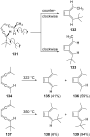
Scheme 35: Stereochemistry of the thermal cyclization of bisallenes to bismethylenecyclobutenes.

Scheme 36: Bisallene→bismethylenecyclobutene ring closures in the solid state.

Scheme 37: A bisallene cyclization/dimerization reaction.

Scheme 38: A selection of Diels–Alder additions of 1,2,4,5-hexatetraene with various double-bond dienophiles.

Scheme 39: The stereochemistry of the [2 + 4] cycloaddition to conjugated bisallenes.

Scheme 40: Preparation of azetidinone derivatives from conjugated bisallenes.

Scheme 41: Cycloaddition of heterodienophiles to a conjugated bisallene.

Scheme 42: Addition of triple-bond dienophiles to conjugated bisallenes.

Scheme 43: Sulfur dioxide addition to conjugated bisallenes.

Scheme 44: The addition of a germylene to a conjugated bisallene.

Scheme 45: Trapping of conjugated bisallenes with phosphinidenes.

Scheme 46: The cyclopropanantion of 1,2,4,5-hexatetraene (2).

Scheme 47: Photochemical reactions involving conjugated bisallenes.

Scheme 48: Base-catalyzed isomerizations of conjugated bisallenes.

Scheme 49: Ionic additions to a conjugated bisallene.

Scheme 50: Oxidation reactions of a conjugated bisallene.
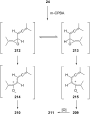
Scheme 51: The mechanism of oxidation of the bisallene 24.

Scheme 52: CuCl-catalyzed cyclization of 1,2,4,5-hexatetraene (2).

Scheme 53: The conversion of conjugated bisallenes into cyclopentenones.

Scheme 54: Oligomerization of a conjugated bisallene by nickel catalysts.
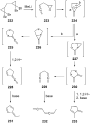
Scheme 55: Generation of 1,2,5,6-heptatetraene (229) as a reaction intermediate.

Scheme 56: The preparation of a stable derivative of 1,2,5,6-heptatetraene.

Scheme 57: A bisallene with a carbonyl group as a spacer element.

Scheme 58: The first preparation of 1,2,6,7-octatetraene (242).

Scheme 59: Preparation of 1,2,6,7-octatetraenes by (C4 + C4)-coupling of enynes.

Scheme 60: Preparation of 1,2,6,7-octatetraenes by (C4 + C4)-coupling of homoallenyl bromides.

Scheme 61: Preparation of 1,2,6,7-octatetraenes by alkylation of propargylic substrates.

Scheme 62: Preparation of two highly functionalized 1,2,6,7-octatetraenes.

Scheme 63: Preparation of several higher α,ω-bisallenes.

Scheme 64: Preparation of different alkyl derivatives of α,ω-bisallenes.

Scheme 65: The preparation of functionalized 1,2,7,8-nonatetraene derivatives.

Scheme 66: Preparation of functionalized α,ω-bisallenes.

Scheme 67: The preparation of an α,ω-bisallene by direct homologation of an α,ω-bisalkyne.

Scheme 68: The gas-phase pyrolysis of 4,4-dimethyl-1,2,5,6-heptatetraene (237).
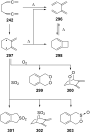
Scheme 69: Gas-phase pyrolysis of 1,2,6,7-octatetraene (242).

Scheme 70: The cyclopropanation of 1,2,6,7-octatetraene (242).

Scheme 71: Intramolecular cyclization of 1,2,6,7-octatetraene derivatives.

Scheme 72: The gas-phase pyrolysis of 1,2,7,8-nonatetraene (265) and 1,2,8,9-decatetraene (266).

Scheme 73: Rh-catalyzed cyclization of a functionalized 1,2,7,8-nonatetraene.

Scheme 74: A triple cyclization involving two different allenic substrates.

Scheme 75: Bicyclization of keto derivatives of 1,2,7,8-nonatetraene.

Scheme 76: The preparation of complex organic compounds from functionalized bisallenes.

Scheme 77: Cycloisomerization of an α,ω-bisallene containing a C9 tether.

Scheme 78: Organoborane polymers from α,ω-bisallenes.

Scheme 79: Preparation of trans- (337) and cis-1,2,4,6,7-octapentaene (341).

Scheme 80: The preparation of 4-methylene-1,2,5,6-heptatetraene (349).

Scheme 81: The preparation of acetylenic bisallenes.

Scheme 82: The preparation of derivatives of hydrocarbon 351.

Scheme 83: The construction of macrocyclic alleno-acetylenes.

Scheme 84: Preparation and reactions of 4,5-bismethylene-1,2,6,7-octatetraene (365).

Scheme 85: Preparation of 1,2-bis(propadienyl)benzene (370).

Scheme 86: The preparation of 1,4-bis(propadienyl)benzene (376).

Scheme 87: The preparation of aromatic and heteroaromatic bisallenes by metal-mediated coupling reactions.

Scheme 88: Double cyclization of an aromatic bisallene.

Scheme 89: Preparation of an allenic [15]paracyclophane by a ring-closing metathesis reaction of an aromatic α...

Scheme 90: Preparation of a macrocyclic ring system containing 1,4-bis(propadienyl)benzene units.

Scheme 91: Preparation of copolymers from 1,4-bis(propadienyl)benzene (376).

Scheme 92: A boration/copolymerization sequence of an aromatic bisallene and an aromatic bisacetylene.

Scheme 93: Formation of a layered aromatic bisallene.

Figure 4: The first members of the semicyclic bisallene series.

Scheme 94: Preparation of the first bis(vinylidene)cyclobutane derivative.
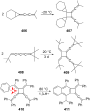
Scheme 95: Dimerization of strain-activated cumulenes to bis(vinylidene)cyclobutanes.

Scheme 96: Photodimerization of two fully substituted butatrienes in the solid state.

Scheme 97: Preparation of the two parent bis(vinylidene)cyclobutanes.

Scheme 98: The preparation of 1,3-bis(vinylidene)cyclopentane and its thermal isomerization.

Scheme 99: The preparation of the isomeric bis(vinylidene)cyclohexanes.

Scheme 100: Bi- and tricyclic conjugated bisallenes.
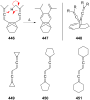
Scheme 101: A selection of polycyclic bisallenes.

Scheme 102: The first endocyclic bisallenes.

Figure 5: The stereochemistry of 1,2,6,7-cyclodecatetraene.

Scheme 103: The preparation of several endocyclic bisallenes.

Scheme 104: Synthesis of diastereomeric derivatives of 1,2,6,7-cyclodecatetraene.

Scheme 105: Preparation of a derivative of 1,2,8,9-cyclotetradecatetraene.

Scheme 106: The preparation of keto derivatives of cyclic bisallenes.

Scheme 107: The preparation of cyclic biscumulenic ring systems.

Scheme 108: Cyclic bisallenes in natural- and non-natural-product chemistry.

Scheme 109: The preparation of iron carbonyl complexes from cyclic bisallenes.

Figure 6: A selection of unknown exocyclic bisallenes that should have interesting chemical properties.

Scheme 110: The thermal isomerization of 1,2-diethynylcyclopropanes and -cyclobutanes.

Scheme 111: Intermediate generation of a cyclooctapentaene.

Scheme 112: Attempted preparation of a cyclodecahexaene.

Scheme 113: The thermal isomerization of 1,5,9-cyclododecatriyne (511) into [6]radialene (514).

Scheme 114: An isomerization involving a diketone derived from a conjugated bisallene.

Scheme 115: Typical reaction modes of heteroorganic bisallenes.

Scheme 116: Generation and thermal behavior of acyclic hetero-organic bisallenes.

Scheme 117: Generation of bis(propadienyl)thioether.

Scheme 118: The preparation of a bisallenic sulfone and its thermal isomerization.

Scheme 119: Bromination of the bisallenic sulfone 535.

Scheme 120: Metalation/hydrolysis of the bisallenic sulfone 535.

Scheme 121: Aromatic compounds from hetero bisallenes.

Scheme 122: Isomerization/cyclization of bispropargylic ethers.

Scheme 123: The preparation of novel aromatic systems by base-catalyzed isomerization of bispropargyl ethers.

Scheme 124: The isomerization of bisacetylenic thioethers to bicyclic thiophenes.

Scheme 125: Aromatization of macrocyclic bispropargylic sulfides.

Scheme 126: Preparation of ansa-compounds from macrocyclic bispropargyl thioethers.

Scheme 127: Alternate route for cyclization of a heterorganic bisallene.
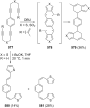
Scheme 128: Multiple isomerization/cyclization of “double” bispropargylic thioethers.

Scheme 129: Preparation of a bisallenyl disulfide and its subsequent bicyclization.

Scheme 130: Thermal cyclization of a bisallenyl thiosulfonate.

Scheme 131: Some reactions of heteroorganic bisallenes with two sulfur atoms.

Scheme 132: Further methods for the preparation of heteroorganic bisallenes.

Scheme 133: Cyclization reactions of heteroorganic bisallenes.

Scheme 134: Thermal cycloadditions of bisallenic tertiary amines.

Scheme 135: Cyclization of a bisallenic tertiary amine in the presence of a transition-metal catalyst.

Scheme 136: A Pauson–Khand reaction of a bisallenic ether.

Scheme 137: Formation of a 2:1adduct from two allenic substrates.

Scheme 138: A ring-forming silastannylation of a bisallenic tertiary amine.

Scheme 139: A three-component cyclization involving a heterorganic bisallene.

Scheme 140: Atom-economic construction of a complex organic framework from a heterorganic α,ω-bisallene.
The preferred conformation of erythro- and threo-1,2-difluorocyclododecanes
- Yi Wang,
- Peer Kirsch,
- Tomas Lebl,
- Alexandra M. Z. Slawin and
- David O'Hagan
Beilstein J. Org. Chem. 2012, 8, 1271–1278, doi:10.3762/bjoc.8.143
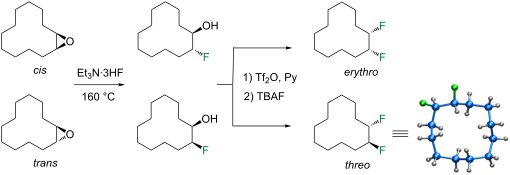
- –F bond endo into the ring, and appear to benefit from C–CHF–C angle widening, which relaxes 1,4-H,H transannular interactions. Keywords: alicyclic chemistry; conformational analysis; cyclododecane; 19F NMR; organo-fluorine chemistry; transannular interactions; Introduction The conformation of

Graphical Abstract

Figure 1: The Dunitz and Shearer structure of cyclododecane (1) [1,2]. There are four endo hydrogens above and fou...

Figure 2: Crystal structures of (a) 1,1,4,4- (b) 1,1,7,7- and (c) 1,1,6,6-tetrafluorocyclododecanes (2–4) , i...

Figure 3: Erythro- and threo-1,2-difluorocyclododecanes (5a and 5b).

Scheme 1: Synthetic routes to erythro- (5a) and threo-1,2-difluorocyclododecane (5b).

Figure 4: X-ray crystal structure of threo-1,2-difluorocyclododecane (5b) showing corner angles and represent...

Figure 5: Variable-temperature 19F{1H} NMR of erythro- (5a) and threo-1,2-difluorocyclododecane (5b).

Figure 6: Calculated relative energies of the conformations of the erythro (5a) and threo (5b) stereoisomers ...
Synthesis, reactivity and biological activity of 5-alkoxymethyluracil analogues
- Lucie Brulikova and
- Jan Hlavac
Beilstein J. Org. Chem. 2011, 7, 678–698, doi:10.3762/bjoc.7.80
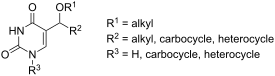
- )pyrimidines 68 and 69. The latter readily underwent nucleophilic attack by alkoxide ions to yield alicyclic or cyclic acetals 70–73 and 74, respectively, depending on the alcohol used. Uridine and arabinofuranosyl analogues: 5-Substituted uracil nucleosides where the sugar component is ribose or arabinose

Graphical Abstract

Figure 1: Investigated derivatives.

Figure 2: Modifications of uracil ring.

Figure 3: 5-(3,3,3-Trifluoro-1-methoxypropyl)-2'-deoxyuridine (1).

Scheme 1: Synthesis of 5-(3,3,3-trifluoro-1-methoxypropyl)-2'-deoxyuridine (1) and 5-(3,3,3-trifluoro-1-(2-pr...

Scheme 2: Synthesis of 5-(3,3,3-trifluoro-1-methoxyprop-1-yl)-5,6-dihydro-2'-deoxyuridine (8).

Scheme 3: Synthesis of 5-(methoxy-2-haloethyl)-2'-deoxyuridines 12 and 13.

Scheme 4: Synthesis of 5-(1-methoxy-2-iodoethyl) nucleosides 28–30.

Figure 4: [125I] radiolabelled 5-(1-methoxy-2-iodoethyl)-2'-deoxyuridine 31.

Scheme 5: Synthesis of 5-(1-alkoxy-2-iodoethyl) 34–36 and 5-(1-ethoxy-2,2-diiodoethyl)-2'-deoxyuridine (33).

Scheme 6: Synthesis of 5-(1-methoxy-2-iodoethyl)-3',5'-di-O-acetyl-2'-deoxyuridine (38) and 5-(1-ethoxy-2-iod...

Figure 5: 5-(1-Hydroxy(or ethoxy)-2-haloethyl)-3',5'-di-O-acetyl-2'-deoxyuridines 43–46.

Scheme 7: 5-(1-Methoxy-2,2-dihaloethyl)-2'-deoxyuridines 47–49.

Scheme 8: Synthesis of 5-[1-(2-haloethyl(or nitro)ethoxy)-2-iodoethyl]-2'-deoxyuridines 50–54.

Scheme 9: Synthesis of alkoxyuracil analogues 56–61.

Figure 6: 5-(Methoxy-2-haloethyl)uracils 62–64.

Scheme 10: Synthesis of perfluoro derivatives 70–74.

Scheme 11: Synthesis of 1-β-D-arabinofuranosyl-5-(1-methoxy-2-iodoethyl)uracil (79).

Scheme 12: Synthesis of 1-β-D-arabinofuranosyl-5-(2,2-dibromo-1-methoxyethyl)uracil 82 and uridine analogue 83....

Scheme 13: Synthesis of methoxy derivative 87.

Scheme 14: Synthesis of 5-(1-methoxy-2-azidoethyl)-2'-deoxyuridine (93).

Scheme 15: Synthesis of methoxyalkyl derivatives 96 and 97.

Scheme 16: Synthesis of 5-(1-methoxyethyl)-2'-deoxyuridine (100).

Scheme 17: Synthesis of 2'-deoxy-5-(1-methoxyethyl)-4'-thiouridine (104).

Figure 7: 5-(1-Butoxyethyl)uracil 105 and 5-(1-butoxyethyl)-2'-deoxyuridine (106).

Scheme 18: Synthesis of β- and α-anomer of 5-(1-ethoxy-2-methylprop-1-yl)-2'-deoxyuridine.

Scheme 19: Synthesis of 5-(1-acyloxyethyl)-1-(tetrahydrofuran-2-yl)uracils 117 and 118.

Scheme 20: Synthesis of 5-(1,2-diacetoxyethyl)-3',5'-di-O-acetyl-2'-deoxyuridine 120.

Scheme 21: Synthesis of 5-[alkoxy-(4-nitrophenyl)methyl]uracils 124.

Scheme 22: Synthesis of 5-[alkoxy-(4-nitrophenyl)methyl]uridines 126 and 127.

Scheme 23: Synthesis of phosphoramidite 134. Reaction conditions 1: (a) TBDMSCl, imidazole, pyridine, 33 h, 99...

Scheme 24: Synthesis of phosphoramidite 145. (a) B(OCH3)3, CH(OCH3)3, Na2CO3, MeOH, 150 °C; (b) I2, (0.6 equiv...

Figure 8: Oligonucleotide 146.

Scheme 25: Synthesis of phosphoramidite 150.

Figure 9: 2'-Deoxyuridine derivatives 151–154.

Scheme 26: Synthesis of 2'-deoxyuridine derivatives 151–152.

Scheme 27: Synthesis of 5-[3-(2'-deoxyuridin-5-yl)-1-methoxyprop-1-yl]-2'-deoxyuridine (163).

Scheme 28: Synthesis of “metallocenonucleosides” 164 and 167.

Scheme 29: Synthesis of 5-(2,4:3,5-di-O-benzylidene-D-pentahydroxypentyl)-2,4-di-tert-butoxy-pyrimidine 172 an...

Figure 10: α- and β-pseudouridine (174 and 175).

Figure 11: 5'-Modified pseudouridine 176 and secopseudouridines 177, 178.

Figure 12: Methoxy derivatives 12, 13 and 28.

Figure 13: 5-(1-Methoxy-2,2-dihaloethyl)-2'-deoxyuridines 47–49.

Figure 14: 5-(1-Methoxyethyl)-2'-deoxyuridine 100.

Figure 15: 2'-Deoxy-5-(1-methoxyethyl)-4'-thiouridine (104).

Figure 16: 5-(1-Methoxy-2-azidoethyl)-2'-deoxyuridine (93).

Figure 17: 5-[1-(2-Halo(or nitro)ethoxy-2-iodoethyl)]-2'-deoxyuridines 50–54.

Figure 18: 5-[Alkoxy-(4-nitrophenyl)-methyl] uracil analogues 124, 126 and 127.

Figure 19: Methoxyiodoethyl pyrimidine nucleoside 79.

Figure 20: 5-[alkoxy-(4-nitro-phenyl)-methyl]uridines 126 and 127.
Reciprocal polyhedra and the Euler relationship: cage hydrocarbons, CnHn and closo-boranes [BxHx]2−
- Michael J. McGlinchey and
- Henning Hopf
Beilstein J. Org. Chem. 2011, 7, 222–233, doi:10.3762/bjoc.7.30
- and will remain at the forefront of alicyclic chemistry until a stepwise synthesis of C60 is achieved. However, we note en passant that Scott, de Meijere and their colleagues have devised a rational route to C60 from a chlorinated precursor, C60H27Cl3, in which only the final ring closures were

Graphical Abstract

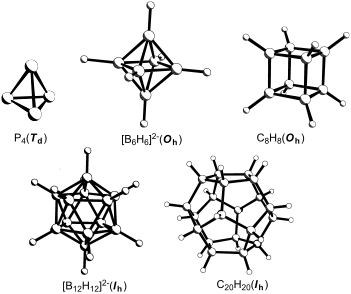
Figure 1: Molecular analogues of the Platonic solids.

Figure 2: The structure of [Mo6Cl8]4+ demonstrates the reciprocal relationship between the cube and the octah...

Figure 3: The deltahedra corresponding to the structures of the closo-boranes [BxHx]2−.

Scheme 1: The first synthesis of a tetrahedrane 19 by Maier.

Scheme 2: The conversion of Dewar benzenes to [3]-prismanes.

Scheme 3: Synthesis of [3]prismane 9 by Katz.

Scheme 4: Synthesis of cubane 10 by Eaton.

Scheme 5: Synthesis of cubane 10 by Pettit.

Scheme 6: Failed routes to [5]-prismane 11.

Scheme 7: Synthesis of [5]prismane 11 by Eaton.

Scheme 8: Retrosynthetic analysis for several approaches to dodecahedrane 16.

Scheme 9: Paquette´s synthesis of dodecahedrane 16.

Scheme 10: Prinzbach´s synthesis of dodecahedrane 16.

Figure 4: The as yet unknown polyhedranes 12–15.
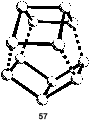
Figure 5: Coupling of two Dewar benzenes.

Scheme 11: A possible route to octahedrane 12.

Scheme 12: A possible route to nonahedrane 13.
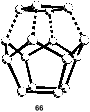
Figure 6: Capping [4]peristylane with a four-membered ring system.

Scheme 13: A possible route to decahedrane 14.

Figure 7: A possible route to undecahedrane 15 (left: side view; right: top view).

Scheme 14: Synthetic routes to trigonal prismatic hexasilanes 71a and hexagermanes 71b.

Scheme 15: Synthetic routes to octasila- and octagerma-cubanes.

Scheme 16: Synthesis of an octastannacubane and a decastannapentaprismane.

Scheme 17: Synthesis of a heterocubane.

Figure 8: D3d symmetric C8H8, a bis-truncated cubane.
Expanding the gelation properties of valine-based 3,5-diaminobenzoate organogelators with N-alkylurea functionalities
- Hak-Fun Chow and
- Chin-Ho Cheng
Beilstein J. Org. Chem. 2010, 6, 1015–1021, doi:10.3762/bjoc.6.114
- properties were extended from only aromatic solvents, to a wide range of other types of solvents such as alicyclic hydrocarbons, alcohols and polar solvents such as DMSO and DMF. It was also found that a longer N-alkylurea chain conferred improved gelation power and higher thermal stability as compared to
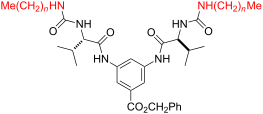
- alicyclic hydrocarbon, alcohols and even polar aprotic solvents such as DMSO and DMF by replacing the Cbz group with an N-alkylurea functionality (e.g., 2). In addition, the length of the alkyl chain –(CH2)nMe also exhibited some interesting effects on their gelation ability [15]. Results and Discussion
- alcoholic solvents and translucent gels in alicyclic hydrocarbon solvents, respectively. Hence, the range of the solvents that these new compounds can gel was significantly expanded by replacing the Cbz group with an N-alkylurea functionality. Based on these experiments, organogelators 2 with longer

Graphical Abstract

Figure 1: Amino acid based organogelators 1 and 2.

Scheme 1: Synthesis of organogelators 2.



