


Search results
Search for "antimicrobials" in Full Text gives 27 result(s) in Beilstein Journal of Organic Chemistry.
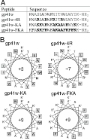
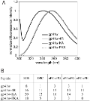
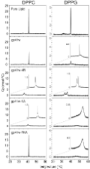
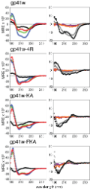
Design of a novel tryptophan-rich membrane-active antimicrobial peptide from the membrane-proximal region of the HIV glycoprotein, gp41
Beilstein J. Org. Chem. 2012, 8, 1172–1184, doi:10.3762/bjoc.8.130
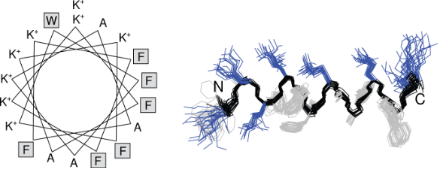
- with the greatest degree of amphipathicity and largest positive charge proved to be the most potent antimicrobial, and this peptide could be further modified to improve the antimicrobial activity. However, the other two peptides were relatively ineffective antimicrobials and instead proved to be
- hemolytic activity, indicating that further refinement of these peptide sequences is required to optimize their use as antimicrobials. This study demonstrates that de novo generation of AMPs is still not a trivial endeavour and our current understanding of AMPs is insufficient to predict the antimicrobial




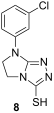
Advances in synthetic approach to and antifungal activity of triazoles
Beilstein J. Org. Chem. 2011, 7, 668–677, doi:10.3762/bjoc.7.79

- antimicrobial agents and the development of structurally new classes of antimicrobials with novel mechanisms of action as well as structural modifications to improve both their binding affinity and their spectrum of activity. One such strategy that has been pursued in recent years with increasing significance




Other Beilstein-Institut Open Science Activities



