


Search results
Search for "phenylglycine" in Full Text gives 35 result(s) in Beilstein Journal of Organic Chemistry.
Organocatalytic asymmetric Henry reaction of 1H-pyrrole-2,3-diones with bifunctional amine-thiourea catalysts bearing multiple hydrogen-bond donors
Beilstein J. Org. Chem. 2016, 12, 295–300, doi:10.3762/bjoc.12.31
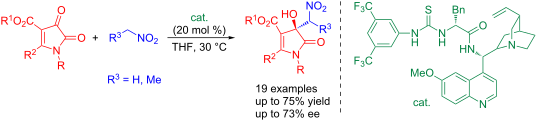
- bifunctional, thiourea-tertiary amine catalyst 3b, derived from quinine and L-valine, furnished a similar result to catalyst 3a (Table 1, entry 2). Next, the reaction was attempted with catalyst 3c derived from L-phenylalanine and catalyst 3d derived from L-phenylglycine, and improvements in enantioselectivity


A novel family of (1-aminoalkyl)(trifluoromethyl)- and -(difluoromethyl)phosphinic acids – analogues of α-amino acids
Beilstein J. Org. Chem. 2014, 10, 722–731, doi:10.3762/bjoc.10.66
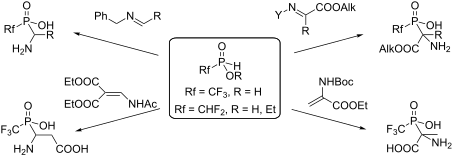
- proteinogenic and nonproteinogenic α-amino acids were prepared. The synthetic methodology was based on nucleophilic addition of (trifluoromethyl)phosphinic acid or (difluoromethyl)phosphinic acid or its ethyl ester to substrates with C=N or activated C=C double bonds. Analogues of glycine, phenylglycine
- . This resulted in the preparation of the analogues of glycine 14a and phenylglycine 14b (Scheme 3). The three-component reaction with formaldehyde gave the best results and N-protected aminophosphinic acid 13a was isolated in a moderate yield, alongside phosphonic acid 10. The analogous reaction with
- (1) to a series of N-benzylimines 16a–e in order to obtain fluorinated phosphorus analogues of glycine 14a, phenylglycine 14b, alanine 14c, valine 14d and proline 14e (Table 1). The transformations were mildly exothermic and were monitored by 31P NMR. Acid 1 undergoes the typical P–C bond forming


Concise, stereodivergent and highly stereoselective synthesis of cis- and trans-2-substituted 3-hydroxypiperidines – development of a phosphite-driven cyclodehydration
Beilstein J. Org. Chem. 2014, 10, 369–383, doi:10.3762/bjoc.10.35
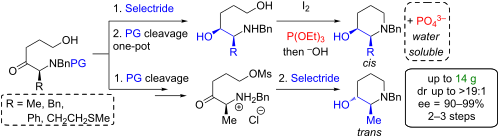
- , phenylalanine, phenylglycine and methionine 1a–d were converted to their N-benzyl-N-carbamate-protected derivatives 2a–d (PG = Cbz, Boc) in a practical one pot procedure through combination of Quitt´s reductive benzylation protocol [61] and a Schotten–Baumann acylation [62][63] in 70–95% yield (Scheme 1). While
- and 2d (Et3N/DMAP or NMM as bases; Table 1, entries 1 and 2), the protected phenylglycine derivative 2c showed high configurational lability: Under standard conditions (DCC/Et3N/0.3 equiv DMAP) the amide 5c was obtained in a diminished ee of 49% (Table 1, entry 3). HOBt as nucleophilic catalyst proved
- condensation product 5c was formed in a moderate ee of 74% (Table 1, entry 7). The configurational lability of the phenylglycine derivative was not surprising, as phenylglycine itself is 60 times more prone to racemisation than alanine [68]. The optical purity of amides 5a–c, hydroxyketone 7c and piperidins


Synthesis of conformationally restricted glutamate and glutamine derivatives from carbonylation of orthopalladated phenylglycine derivatives
Beilstein J. Org. Chem. 2012, 8, 1569–1575, doi:10.3762/bjoc.8.179
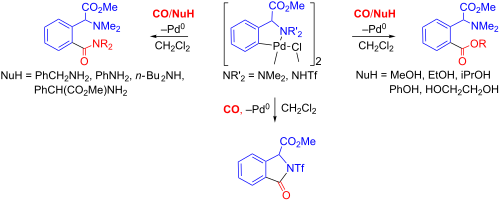
- results, however, in the formation of the cyclic isoindolinone or the open 2-carboxyphenylglycine methyl esters, with the reaction outcome being driven by the choice of the solvent. Keywords: C–H functionalization; carbonylation; glutamic acid; glutamide; palladium; phenylglycine; Introduction The
- case of alcohols, primary (2a, 2b, 2d, 2e) and secondary (2c) aliphatic alcohols, and even arylic substrates (2f) have been incorporated into the phenylglycine scaffold. Very good yields are obtained with acidic alcohols, such as methanol (2a), ethanol (2b) or even 1,2-ethanediol (2d). These values
- related alkoxycarbonylation reaction [25][26][27][28][29][30]. Once we had determined the reactivity of complex 1, having a N,N-dimethyl-phenylglycine ligand, we focused our attention on complex 3, possessing a triflate as a N-protecting group, in order to study the influence of the substituents at the N


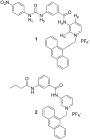
Anthracene appended pyridinium amide–urea conjugate in selective fluorometric sensing of L-N-acetylvaline salt
Beilstein J. Org. Chem. 2010, 6, 1211–1218, doi:10.3762/bjoc.6.139

- excited state of anthracene is regulated in different ways. We presume that receptor 1 may follow any equilibrium-binding mode A, B or C with valine, alanine and phenylglycine salts in solution as shown in Figure 5. This is also true for the mandelate, pyruvate and proline salts. Relevance of the
- such as the salts of valine, phenylglycine and mandelic acid exhibit the lowest values of ω among all anionic guests considered. This indicates that these guests have higher nucleophilic character compared to the other guests studied. Therefore, receptor 1, in principle, will show strong binding for



Towards racemizable chiral organogelators
Beilstein J. Org. Chem. 2010, 6, 960–965, doi:10.3762/bjoc.6.107
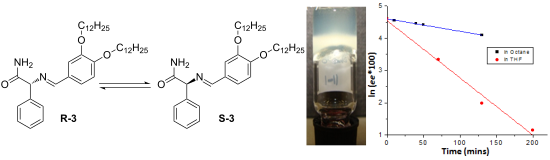
- of 0.25 M HCl solution and the aqueous solution extracted two times with 1 mL of CHCl3. The remaining aqueous solution of phenylglycine amide HCl salt was used as such for the ee determination by the following HPLC method. Column; crownether Cr (+) 150 x 4.6 mm ID, eluent; aqueous HClO4 pH = 1.2


Molecular recognition of organic ammonium ions in solution using synthetic receptors
Beilstein J. Org. Chem. 2010, 6, No. 32, doi:10.3762/bjoc.6.32
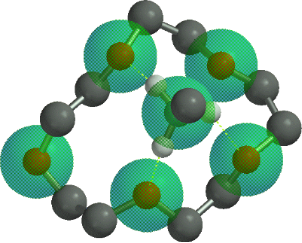
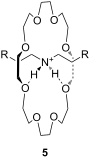
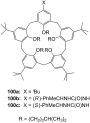
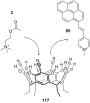
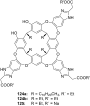
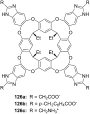
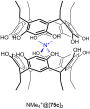
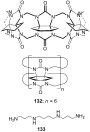
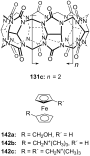
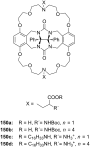
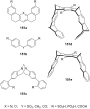
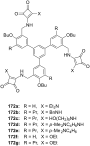
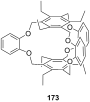
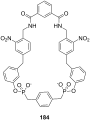
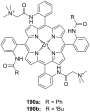
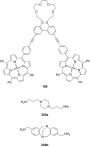
- salts with binding affinities Kass up to 4.8 × 10⁵ M−1 in CH2Cl2 with 0.25% CH3OH. The bpy-crown macrocycle with n = 1, reflecting the pseudo 18-crown-6 type structure, exhibited the best properties and the highest enantioselectivity towards the S-enantiomer of phenylglycine methyl ester hydrochloride
















































Synthesis of new triazole- based trifluoromethyl scaffolds
Beilstein J. Org. Chem. 2008, 4, No. 19, doi:10.3762/bjoc.4.19

- spectroscopic data of 2a-i and 4. Acknowledgements Claire Troufflard is gratefully acknowledged for NMR experiments. Central Glass is thanked for kind gift of fluoral hydrate and DSM company for donation of (R)-phenylglycine. We thank the European Community for the financial support (Marie Curie Early Stage


Reactions of glycidyl derivatives with ambident nucleophiles; part 2: amino acid derivatives
Beilstein J. Org. Chem. 2007, 3, No. 28, doi:10.1186/1860-5397-3-28

- functionality, in both cases at a terminal carbon atom of 2. All attempts to achieve a one-step cyclization according to Scheme 1 starting from glycine or from phenylglycine seemed to fail under various reaction conditions (for instance one equiv. of NaOH, K2CO3 or triethylamine in water), regularly giving rise
- to solid, presumably oligomeric material, insoluble even in DMSO. We therefore tested the stepwise, controlled synthesis of products of type 3a with glycidyl esters of N-acyl [6] and N-tosyl glycine and phenylglycine as isolated key intermediates: under basic reaction conditions (NaH, sec-BuLi or LDA




Stereoselective α-fluoroamide and α-fluoro- γ-lactone synthesis by an asymmetric zwitterionic aza-Claisen rearrangement
Beilstein J. Org. Chem. 2005, 1, No. 13, doi:10.1186/1860-5397-1-13
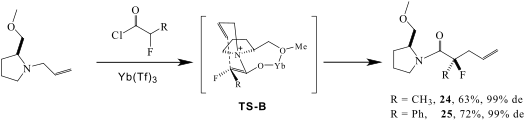
- phenylglycine as previously described.[20] In the first instance a Yb(OTf)3 mediated aza-Claisen rearrangement using allyl morpholine 10 and acid chloride 9 was explored following MacMillan's protocol.[21] This proceeded smoothly to give the α-fluoroamide 11 in good yield although reduction of the equivalence





