


Search results
Search for "quinazoline" in Full Text gives 38 result(s) in Beilstein Journal of Organic Chemistry.
A new and efficient procedure for the synthesis of hexahydropyrimidine-fused 1,4-naphthoquinones
Beilstein J. Org. Chem. 2015, 11, 1235–1240, doi:10.3762/bjoc.11.137

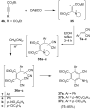
- ]quinazoline; microwave; naphthoquinone; 1,3-quinazoline; 1,3,5-triazinane; Introduction Quinones represent a diverse family of naturally occurring secondary metabolites [1][2][3]. Interest in these substances has intensified in recent years due to their pharmacological importance [4]. Heterocycle-fused


A simple copper-catalyzed two-step one-pot synthesis of indolo[1,2-a]quinazoline
Beilstein J. Org. Chem. 2014, 10, 2441–2447, doi:10.3762/bjoc.10.254

- 201203, P. R. China 10.3762/bjoc.10.254 Abstract A convenient CuI/L-proline-catalyzed, two-step one-pot method has been developed for the preparation of indolo[1,2-a]quinazoline derivatives using a sequential Ullmann-type C–C and C–N coupling. This protocol provides an operationally simple and rapid
- strategy for preparing indolo[1,2-a]quinazoline derivatives and displays good functional group tolerance. All the starting materials are commercial available or can be easily prepared. Keywords: copper; one pot; synthetic methods; Introduction Indole motifs are important in natural products and
- Ullmann condensation is a powerful method for C–N coupling [24][25][26], especially the N-arylation of nitrogen-containing heterocycles such as indoles [27][28]. Indolo[1,2-a]quinazoline is a kind of tetracyclic compounds containing the indole motif that has been constructed by intramolecular [3 + 2


Facile synthesis of 1-alkoxy-1H-benzo- and 7-azabenzotriazoles from peptide coupling agents, mechanistic studies, and synthetic applications
Beilstein J. Org. Chem. 2014, 10, 1919–1932, doi:10.3762/bjoc.10.200

- appeared implausible on the basis of prior observations, where no reaction of BOP with the free hydroxy groups of nucleosides was observed [23][25]. Our recent work on a two-step one-pot etherification of purine nucleosides, quinazoline, and pyrimidines, had led some interesting preliminary observations


Dimerisation, rhodium complex formation and rearrangements of N-heterocyclic carbenes of indazoles
Beilstein J. Org. Chem. 2014, 10, 832–840, doi:10.3762/bjoc.10.79
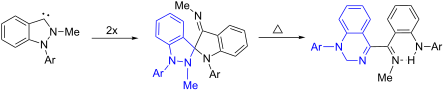
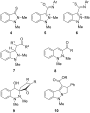
- . Keywords: E/Z isomerism; indazol-3-ylidene; mesomeric betaine; pyrazole; quinazoline; Rh complex; Introduction As a result of their biochemical and pharmacological significance, there has been a considerably growing interest in indazoles in recent years, which is reflected in several book chapters and
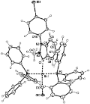
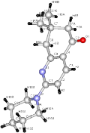
- . The dihedral angle C11–C12–C17–N18 (crystallographic numbering) was determined to be 0.5(2)°. This six-membered ring is almost perpendicularly twisted in relation to the quinazoline ring [N1–C10–C11–C12 = −92.65(17)°]. Conclusion The N-heterocyclic carbene of indazole, indazol-3-ylidene, displays a






Organobase-catalyzed three-component reactions for the synthesis of 4H-2-aminopyrans, condensed pyrans and polysubstituted benzenes
Beilstein J. Org. Chem. 2014, 10, 141–149, doi:10.3762/bjoc.10.11
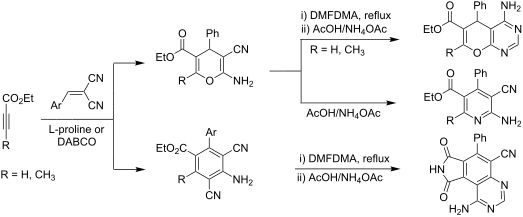
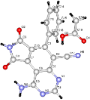
- the products. Finally, these compounds were used for the efficient synthesis of 6-amino-5-cyanonicotinic acid ester derivatives 31a,b, ethyl 4-amino-5H-pyrano[2,3-d]pyrimidine-6-carboxylates 33a,b, 4-amino-6H-pyrrolo[3,4-g]quinazoline-9-carbonitrile 39, and 1,7-diamino-6-(N'-hydroxycarbamimidoyl)-3
- reacts with DMFDMA to form amidine 38, which undergoes cyclization in refluxing AcOH/NH4OAc to form the 1-amino-pyrrolo[3,4-f]quinazoline 39. We also found that 37a reacts with hydroxylamine hydrochloride in ethanolic sodium acetate solution to form isoindolone derivative 40 (Scheme 11 and Figure 13
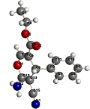
- acid derivatives 31a,b, ethyl 4-amino-5H-pyrano[2,3-d]pyrimidine-6-carboxylates 33a,b, 4-amino-6H-pyrrolo[3,4-g]quinazoline-9-carbonitrile 39, and 1,7-diamino-6-(N'-hydroxycarbamimidoyl)-3-oxo-5-phenyl-3H-isoindole-4-carboxylate 40. X-ray crystal structure of 9. X-ray crystal structure of 13a. X-ray









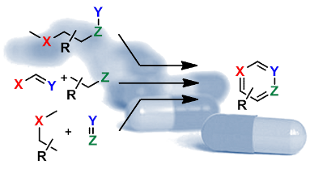
An overview of the synthetic routes to the best selling drugs containing 6-membered heterocycles
Beilstein J. Org. Chem. 2013, 9, 2265–2319, doi:10.3762/bjoc.9.265


Selective copper(II) acetate and potassium iodide catalyzed oxidation of aminals to dihydroquinazoline and quinazolinone alkaloids
Beilstein J. Org. Chem. 2013, 9, 1194–1201, doi:10.3762/bjoc.9.135

- to affect the selective oxidation of ring-fused aminals to dihydroquinazolines and quinazolinones, respectively. These methods enable the facile preparation of a number of quinazoline alkaloid natural products and their analogues. Keywords: aminal; copper; oxygen; tert-butylhydroperoxide
- ; quinazoline alkaloid; Introduction Quinazoline alkaloids are a class of naturally occurring compounds with a range of medicinal properties and have been indicated for use as bronchodilators, vasodilators, anti-inflammatory agents and acetylcholinesterase inhibitors [1][2][3][4][5]. Many of the plants these
- studied. A number of synthetic strategies have been employed to gain access to quinazoline alkaloids [5][11][12][13][14][15][16][17][18][19][20][21][22][23][24][25][26]. Perhaps the most common method involves the condensation of an ortho-aminobenzoic ester with a lactam promoted by phosphoryl chloride


3-Pyridylnitrene, 2- and 4-pyrimidinylcarbenes, 3-quinolylnitrenes, and 4-quinazolinylcarbenes. Interconversion, ring expansion to diazacycloheptatetraenes, ring opening to nitrile ylides, and ring contraction to cyanopyrroles and cyanoindoles
Beilstein J. Org. Chem. 2013, 9, 743–753, doi:10.3762/bjoc.9.84
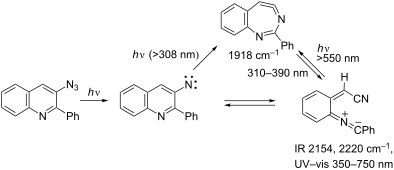
- -tetrazolyl)pyrimidine (22) [36][37], 2-phenyl-4-(5-tetrazolyl)quinazoline (52) [23], and 5-phenyl-1,2,3-triazolo[1,5-a]quinazoline (53) [23] were prepared according to literature procedures. 4,6-Dimethyl-2-(5-tetrazolyl)pyrimidine (24) and 2,4-dimethyl-6-(5-tetrazolylpyrimidine) (23) were prepared from the
- , 80 mg; 45%), and indolo[3,2-b]quinoline (52 mg; 29%). FVT of 2-phenyl-4-(5-tetrazolyl)quinazoline (52): (a) A sample of 300 mg (1.10 mmol) was sublimed at 150 °C and pyrolysed at 600 °C/10−3–10−4 mbar in the course of 12 h. Chromatography yielded 178 mg (75%) of 3-cyano-2-phenylindole (48). (b) In
- similar experiments with FVT at 600–800 °C the product was isolated on a KBr window at 77 K for IR spectroscopy. In each case 3-cyano-2-phenylindole (48) was the exclusive product. Thermolysis of 2-phenyl-4-(5-tetrazolyl)quinazoline (52) in solution: (a) A solution of 250 mg (0.91 mmol) in 50 mL of xylene




Synthesis of SF5-containing benzisoxazoles, quinolines, and quinazolines by the Davis reaction of nitro-(pentafluorosulfanyl)benzenes
Beilstein J. Org. Chem. 2013, 9, 411–416, doi:10.3762/bjoc.9.43
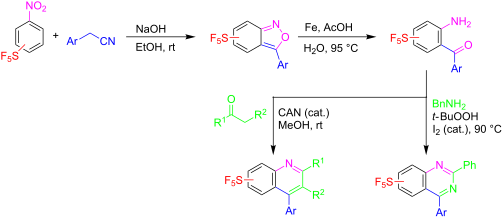
- CAN using modified literature conditions (Scheme 3) [32]. Similarly, aminoketone 11a was condensed in good yield with cyclohexanone to provide quinoline 13 in good yield (Scheme 4). Finally, quinazoline 14 was synthesized by the reaction of aminoketone 11a with benzylamine in the presence of t-BuOOH
- Wipf and co-workers [29][30]. Synthesis of quinoline 12. Synthesis of quinoline 13. Synthesis of quinazoline 14. Synthesis of SF5-containing benzisoxazoles 7–9. Synthesis of ortho-aminobenzophenones 10 and 11. Supporting Information Supporting Information File 84: Experimental details


Features of the behavior of 4-amino-5-carboxamido-1,2,3-triazole in multicomponent heterocyclizations with carbonyl compounds
Beilstein J. Org. Chem. 2012, 8, 2100–2105, doi:10.3762/bjoc.8.236
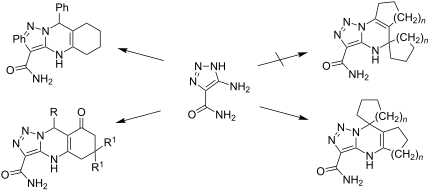
- '-cyclopentane}-3-carboxamide (4a) or 5,6,7,8-tetrahydro-4H-spiro{[1,2,3]triazolo[5,1-b]quinazoline-9,1'-cyclohexane}-3-carboxamide (4b) under all the conditions tested. The best results were observed in the case of microwave-assisted synthesis in methanol at 120 °C. Spirocompound 4c may be obtained by a
- [1,2,3]triazolo[5,1-b]quinazoline-3-carboxamides 7 or 9 under all the reactions conditions studied; however, the ultrasound-assisted procedure is the method of choice for this heterocyclization. For all the MCRs studied, changes in the directions of the heterocyclizations were not observed when microwave
- . Multicomponent synthesis of 4,5,6,7,8,9-hexahydro[1,2,3]triazolo[5,1-b]quinazoline-3-carboxamides 4a–c, 7 and 9a–j. Supporting Information Supporting Information File 322: Experimental details and characterization data for all new compounds. Acknowledgments ESG is grateful for financial support to DAAD

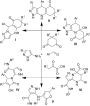


Regioselectivity in the multicomponent reaction of 5-aminopyrazoles, cyclic 1,3-diketones and dimethylformamide dimethylacetal under controlled microwave heating
Beilstein J. Org. Chem. 2012, 8, 18–24, doi:10.3762/bjoc.8.3
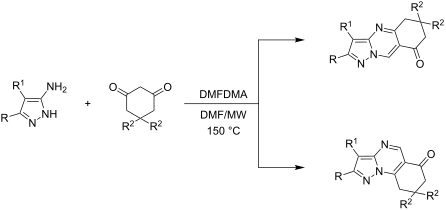
- naturally occurring and synthetic compounds containing quinazoline derivatives are of considerable interest in fields related to the organic and medicinal chemistry of natural products [1][2]. The quinazoline ring system represents the core skeleton of an important class of heterocyclic compounds possessing

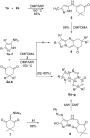


A new and facile synthetic approach to substituted 2-thioxoquinazolin-4-ones by the annulation of a pyrimidine derivative
Beilstein J. Org. Chem. 2010, 6, 1056–1060, doi:10.3762/bjoc.6.120

- number of quinazoline derivatives, which contain the 4-oxo-2-thioxo-1,2,3,4-tetrahydropyrimidine structural moiety in their heterocyclic rings, possess a wide range of biological activities [6][7][8]. There are a number of synthetic methods available for the preparation of quinazolines [9]. The most
- the higher temperature and the acid produces the required quinazoline. To obtain the optimal conditions, a variety of catalysts were also investigated to detect the catalytic activities of different metal ions and acetate in the production of 2a (Table 2). It was found that NH4OAc/AcOH in ZnCl2 was
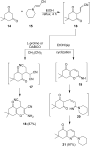
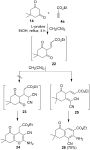
- system, resulted in a new method for the formation of quinazoline derivatives. Thus, the reaction of 5-ethoxymethylenepyrimidine-4,6-diones 1 with malononitrile and ethyl cyanoacetate gave 7-amino-2,3-dihydro-2-thioxo-1,3-diarylquinazolin-4(1H)-ones 2 and 7-hydroxy-2,3-dihydro-2-thioxo-1,3


Microwave assisted synthesis of triazoloquinazolinones and benzimidazoquinazolinones
Beilstein J. Org. Chem. 2007, 3, No. 11, doi:10.1186/1860-5397-3-11
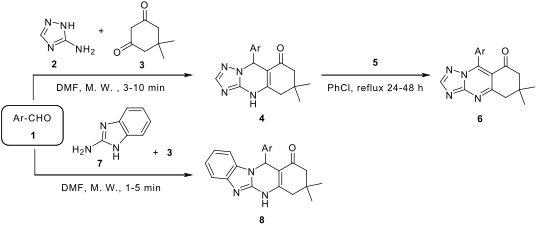
- ] anticancer, [5] anti-inflammatory, [6] anticonvulsant, [7] and antiproliferative activities as well as inhibitory effects for thymidylate synthase and poly-(ADP-ribose) polymerase (PARP). [8] An interesting method for quinazoline synthesis involved [5+1] annulation during the reaction of β-dicarbonyl





