


Search results
Search for "sorption" in Full Text gives 28 result(s) in Beilstein Journal of Organic Chemistry.
Spin state switching in iron coordination compounds
Beilstein J. Org. Chem. 2013, 9, 342–391, doi:10.3762/bjoc.9.39
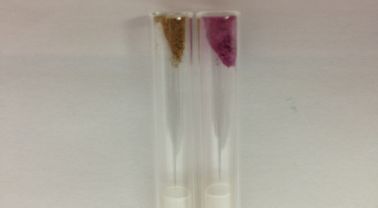


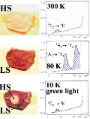
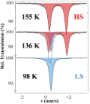


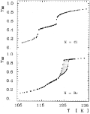

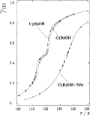


![[Graphic 1]](/bjoc/content/inline/1860-5397-9-39-i3.png?max-width=637&scale=1.18182) ) modes versus the anion volu...
) modes versus the anion volu...






Synthesis and characterization of a novel carboxyl group containing (co)polyimide with sulfur in the polymer backbone
Beilstein J. Org. Chem. 2012, 8, 776–786, doi:10.3762/bjoc.8.88

- significant loss in mechanical stability. As a result, the separation properties decrease sharply [8]. Swelling or sorption is not solely an important issue in separation processes, but also in optical applications in which polymeric lenses are used. The major concern in this case is moisture uptake from the
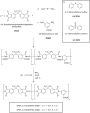
- simultaneously good solubility in organic solvents appears to be very valuable. If this material additionally acquires functional groups, i.e., carboxyl groups of the 3,5-diaminobenzoic acid (DABA) monomer, cross-linking is possible in order to decrease the water sorption. It is also possible to use carboxyl
- ) sulfide (4,4′-diaminodiphenyl sulfide, 4,4′-SDA) groups, were used for the synthesis of novel (co)polyimides in this work [25]. In order to investigate structural effects of the DABA groups on the glass-transition temperature, molecular weight, transparency and water sorption, both polymers 6FDA-4,4′-SDA



Functionalized copolyimide membranes for the separation of gaseous and liquid mixtures
Beilstein J. Org. Chem. 2010, 6, 789–800, doi:10.3762/bjoc.6.86
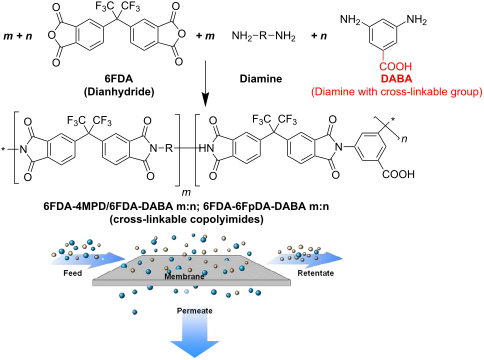
- keeping the permeate pressure much lower than the feed pressure. The mass transport through solution-diffusion membranes can be described with the solution-diffusion model [8]. Based on this model the components permeate through a polymeric membrane in a three step process, i.e., the sorption of the
- synthesized membrane polymer is suitable for a given separation problem, the solubility properties for the different feed components can be determined by means of gas or vapor sorption experiments. Diffusion coefficients can be determined by time dependent sorption measurements. For gas sorption experiments
- and for vapor sorption experiments, a microbalance and a quartz spring balance can be used, respectively [42][43]. It has been shown that polymeric membranes having significant differences in solubility for different feed components are particularly suitable for separating a mixture containing these


Other Beilstein-Institut Open Science Activities



