Search results
Search for "ureas" in Full Text gives 76 result(s) in Beilstein Journal of Organic Chemistry.
Synthesis and supramolecular self-assembly of glutamic acid-based squaramides
Beilstein J. Org. Chem. 2018, 14, 2065–2073, doi:10.3762/bjoc.14.180
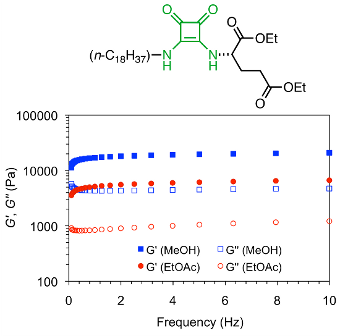
- ]. Moreover, these compounds have been recognized as bioisosters of ureas [10] exhibiting promising pharmacological properties [11] and being clinical candidates for the treatment of different diseases [1]. In addition, these compounds have shown relevance in other areas, including organic synthesis [12] and
- crystal engineering [13][14][15][16][17]. Despite their isosteric relationship with ureas, which have become key synthons in supramolecular chemistry [18][19], there are only a few reports on the formation of self-assembled supramolecular gels using squaramide derivatives [20][21][22][23]. Along this line


Hypervalent organoiodine compounds: from reagents to valuable building blocks in synthesis
Beilstein J. Org. Chem. 2018, 14, 1508–1528, doi:10.3762/bjoc.14.128
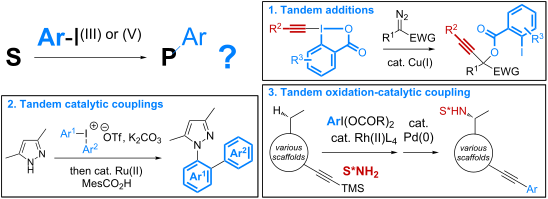
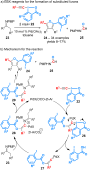
- carbamates [92], sulfamates [94][95][96][97], ureas and guanidines [98], sulfamides [99], hydroxylamine-derived sulfamates [100], carbamimidates [101], and sulfonimidamides [102][103][104][105][106][107]. These reactions involve the formation of a metal-bound nitrene that can insert into a C(sp3)–H bond or a






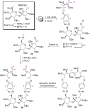
Synthesis of a sucrose-based macrocycle with unsymmetrical monosaccharides "arms"
Beilstein J. Org. Chem. 2018, 14, 634–641, doi:10.3762/bjoc.14.50

- ] and aza-crown [17][18] derivatives, macrocyclic dilactams [19][20], and ureas [21], were prepared in our laboratory. Sucrose was also used by other groups as a precursor for the preparation of biodegradable polymers [22][23][24] and polymeric nanoparticles [25]. On the other hand, sucrose derivatives


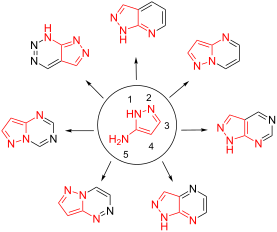
5-Aminopyrazole as precursor in design and synthesis of fused pyrazoloazines
Beilstein J. Org. Chem. 2018, 14, 203–242, doi:10.3762/bjoc.14.15


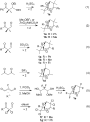
From dipivaloylketene to tetraoxaadamantanes
Beilstein J. Org. Chem. 2018, 14, 1–10, doi:10.3762/bjoc.14.1

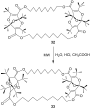
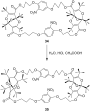
- . However, it readily reacts with amines and alcohols to form ureas and urethanes, respectively. Taking advantage of this type of concave structure, several cyclic derivatives were synthesized, and some of them were converted to tetraoxaadamantanes [37]. However, when two bisdioxine units are present in a





Diosgenyl 2-amino-2-deoxy-β-D-galactopyranoside: synthesis, derivatives and antimicrobial activity
Beilstein J. Org. Chem. 2017, 13, 2310–2315, doi:10.3762/bjoc.13.227

- the condensation of saccharides with ureas or the reaction of glycosylamines, amino sugar, or aminoglycosides with isocyanates, or their equivalents such as carbamates [32][33]. Ureido saponins presented here were obtained in the reaction of ethyl isocyanate (8), chloroethyl isocyanate (9) and phenyl


Mechanochemical synthesis of small organic molecules
Beilstein J. Org. Chem. 2017, 13, 1907–1931, doi:10.3762/bjoc.13.186
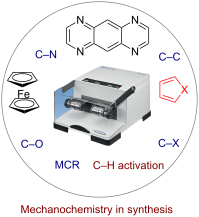
- variations are adopted to improve the efficiency of this reaction for practical application towards drug discovery [126][127][128]. Modifications have been done in substrates by replacing urea with substituted ureas and thio urea, use of various 1,3-dicarbonyl compounds etc. Reactions using ionic liquids as




Mechanochemical synthesis of thioureas, ureas and guanidines
Beilstein J. Org. Chem. 2017, 13, 1828–1849, doi:10.3762/bjoc.13.178
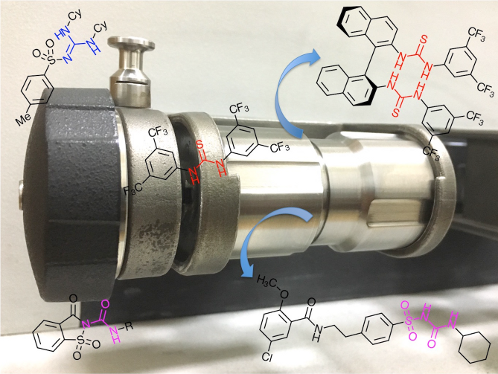
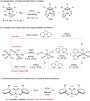
- Vjekoslav Strukil Division of Organic Chemistry and Biochemistry, Ruđer Bošković Institute, Bijenička cesta 54, 10000 Zagreb, Croatia 10.3762/bjoc.13.178 Abstract In this review, the recent progress in the synthesis of ureas, thioureas and guanidines by solid-state mechanochemical ball milling is
- enabled the quantitative synthesis of (thio)ureas and guanidines without using bulk solvents and the generation of byproducts, but it has also been established as a means to develop "click-type" chemistry for these classes of compounds and the concept of small molecule desymmetrization. Moreover
- application as organocatalysts and sensors. On the other hand, the specific and unique nature of each of these functionalities render (thio)ureas and guanidines as the key constituents of pharmaceuticals and other biologically active compounds. Keywords: guanidines; mechanochemistry; solid state synthesis






Mechanochemical N-alkylation of imides
Beilstein J. Org. Chem. 2017, 13, 1745–1752, doi:10.3762/bjoc.13.169
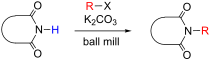
- of imides with alkyl halogenides, and the results are presented in this paper. Until now, ball milling N-alkylations of ureas [15], hydrazones [16], imines [17][18], pyridines [19], pyrimidines [20], imidazoles [21], secondary amines [22], as well as allylic alkylation reactions [23] were reported in


Continuous N-alkylation reactions of amino alcohols using γ-Al2O3 and supercritical CO2: unexpected formation of cyclic ureas and urethanes by reaction with CO2
Beilstein J. Org. Chem. 2017, 13, 329–337, doi:10.3762/bjoc.13.36
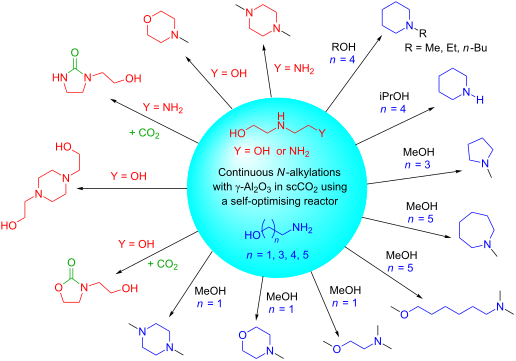
- -optimising reactor, resulting in moderate to high yields of the target products. Carrying out the reaction in scCO2 was shown to be beneficial, as higher yields were obtained in the presence of CO2 than in its absence. A surprising discovery is that, in addition to cyclic amines, cyclic ureas and urethanes


Synthesis of structurally diverse 3,4-dihydropyrimidin-2(1H)-ones via sequential Biginelli and Passerini reactions
Beilstein J. Org. Chem. 2017, 13, 54–62, doi:10.3762/bjoc.13.7
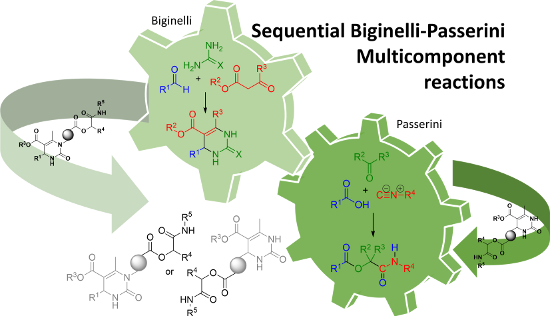
- -substituted ureas can also be employed). The Biginelli reaction was discovered in 1891 by the chemist Pietro Biginelli [10]. Later, Biginelli identified the reaction product as a 3,4-dihydropyrimidin-2(1H)-one (DHMP) [11]. DHMPs are of great interest due to their pharmaceutic activities (i.e., calcium channel



Poly(ethylene glycol)s as grinding additives in the mechanochemical preparation of highly functionalized 3,5-disubstituted hydantoins
Beilstein J. Org. Chem. 2017, 13, 19–25, doi:10.3762/bjoc.13.3
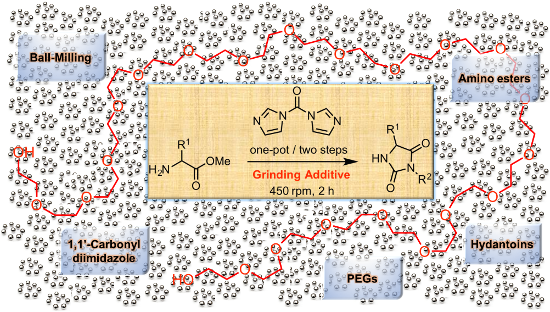
- complementing similar strategies was already described to avoid the formation of symmetrical ureas in solution [13]. The preparation of the hydantoin 2a was also investigated using batches of solid PEGs (Mw = 2000 and 3400) in which PEGs with lower molecular weight (Mw = 200–400) were eliminated before use by a


Solvent-free synthesis of novel para-menthane-3,8-diol ester derivatives from citronellal using a polymer-supported scandium triflate catalyst
Beilstein J. Org. Chem. 2016, 12, 2046–2054, doi:10.3762/bjoc.12.193
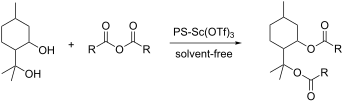
- [6], acyl imidazoles or acyl ureas [7]. Acylation of alcohols in particular, provides a cheap and effective method for the synthesis of esters with potential applications in pharmaceutical products such as fragrances, flavours, surfactants or solvents [8][9]. Generally, these reactions are done in


Cationic Pd(II)-catalyzed C–H activation/cross-coupling reactions at room temperature: synthetic and mechanistic studies
Beilstein J. Org. Chem. 2016, 12, 1040–1064, doi:10.3762/bjoc.12.99
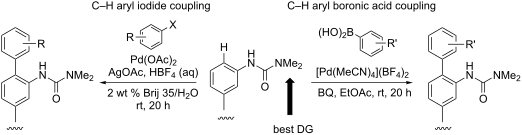
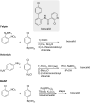
- selective mono-arylations in water (Figure 3). In fact, doubly arylated products were rather difficult to generate under these room temperature conditions, not unexpected given the previously described low reactivity of ureas already possessing an ortho-aryl substituent [121][122]. A 1-naphthylurea also
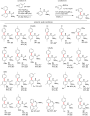
- reactions to be run in water at room temperature using the cationic palladium catalyst [Pd(MeCN)4](BF4)2 (Figure 4, 5a–c, conditions A). While this reaction proceeded with a number of alkyl anilide derivatives, as well as ureas as directing groups (5c), the substrate scope was otherwise somewhat limited
- expanded the substrate scope to include reactions with 3-alkyl-substituted ureas, as well as a wider variety of acrylates and even some acrylamides (Figure 4, 5d–h, conditions B). Many combinations of acrylates and more challenging arylureas, however, did not produce the desired product in satisfactory






The aminoindanol core as a key scaffold in bifunctional organocatalysts
Beilstein J. Org. Chem. 2016, 12, 505–523, doi:10.3762/bjoc.12.50
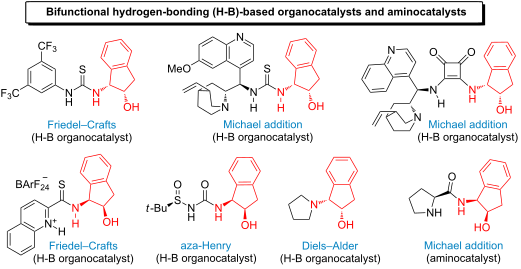
- organocatalysts ((thio)ureas, squaramides, quinolinium thioamide, etc.) in the literature containing this favored structural core. They have been successfully employed in reactions such as Friedel–Crafts alkylation, Michael addition, Diels–Alder and aza-Henry reactions. However, the 1,2-aminoindanol core
- using the differently substituted aminoindane-derived sulfinyl ureas 50–50'' showed the important effect of the indanol framework in the diastereo- and enantio-selectivity of the process. The catalysts 50' (with the TBS-protected hydroxy group (TBS, tert-butyldimethylsilyl)) and 50'' (without the


(Thio)urea-mediated synthesis of functionalized six-membered rings with multiple chiral centers
Beilstein J. Org. Chem. 2016, 12, 462–495, doi:10.3762/bjoc.12.48
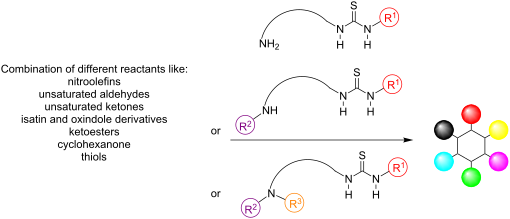
- main tools a synthetic chemist has to perform asymmetric catalysis. In this review the synthesis of six-membered rings, that contain multiple chiral centers, either by a ring closing process or by a functionalization reaction on an already existing six-membered ring, utilizing bifunctional (thio)ureas
- )ureas have been synthesized in order to utilize both hydrogen bonding interactions and enamine formation. In the last 10 years the field has witnessed the development of some new activation modes, such as SOMO catalysis [8] and photoredox organocatalysis [9]. Six-membered rings are found in many natural
- , which contain urea or thiourea moieties are more efficient. If someone combines the ability of amines, to form the corresponding enamines with a carbonyl compound and the ability of ureas or thioureas to define a specific conformation in the transition state of the reaction, then, one can take advantage


Bifunctional phase-transfer catalysis in the asymmetric synthesis of biologically active isoindolinones
Beilstein J. Org. Chem. 2015, 11, 2591–2599, doi:10.3762/bjoc.11.279
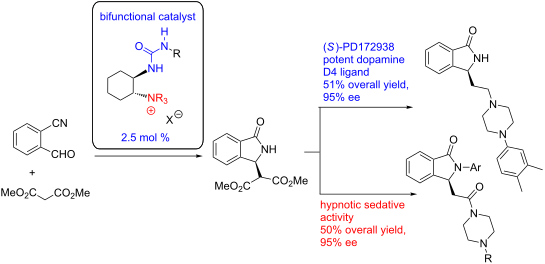
- side did not allow us to improve the catalyst performance and a similar selectivity was obtained upon incorporation of more electron-rich aryl groups R1. The initial tests also showed that ureas are more selective than thioureas (Table 1, entry 12). Thus further optimization was carried out with ureas


Recent advances in copper-catalyzed C–H bond amidation
Beilstein J. Org. Chem. 2015, 11, 2209–2222, doi:10.3762/bjoc.11.240

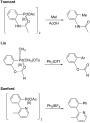
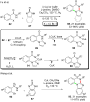
- , respectively. The imide products 64 and 65 could both be efficiently hydrolyzed to provide ureas 66 and 67. The presence of the pyridine ring in substrates 62 and 63 was crucial for the conversion of the inert carbonyl C–H bond in 61 by chelating the copper catalyst (Scheme 17). The C–H bond sulfonamidation of




A convenient four-component one-pot strategy toward the synthesis of pyrazolo[3,4-d]pyrimidines
Beilstein J. Org. Chem. 2015, 11, 2125–2131, doi:10.3762/bjoc.11.229

- -carbonitrile with amides [18][19][20][21], carboxylic acids [22][23][24], amidines [25][26], nitriles [27][28], ketones [29][30] and halohydrocarbon [31], the cyclization of 5-aminopyrazole-4-carboxamides with amides [32], ureas [33][34][35][36], esters [37][38][39] and acyl chloride [40], and the reaction of


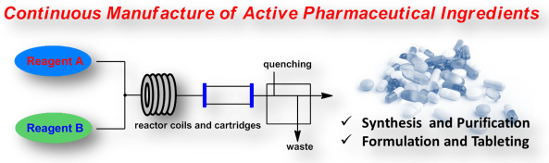
The synthesis of active pharmaceutical ingredients (APIs) using continuous flow chemistry
Beilstein J. Org. Chem. 2015, 11, 1194–1219, doi:10.3762/bjoc.11.134


3-Glucosylated 5-amino-1,2,4-oxadiazoles: synthesis and evaluation as glycogen phosphorylase inhibitors
Beilstein J. Org. Chem. 2015, 11, 499–503, doi:10.3762/bjoc.11.56

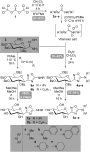
- morpholinyl (Scheme 1, d) and piperidinyl (Scheme 1, e) residues were also selected as candidates for their hydrophobic properties, although they are bulkier than aromatic rings. The synthesis started with commercially available ureas (2a and 2e) or through the synthesis of such ureas. While the synthesis
- from carbonyl diimidazole was not successful [30], and since phosgene was not considered due to its hazardous reaction conditions, ureas 2b–d could be readily prepared from triphosgene 1 (as a phosgene precursor) and the corresponding amines (Scheme 1). While treatment of triphosgene with the
- corresponding amine at room temperature in dichloromethane [31] was sufficient for ureas 2a,c–e, heating (40 °C) and the addition of triethylamine [32] were required for condensation with N-methylbenzylamine to obtain urea 2b. The Vilsmeier salt was then generated in situ with oxalyl chloride from the


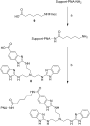
Sequence-specific RNA cleavage by PNA conjugates of the metal-free artificial ribonuclease tris(2-aminobenzimidazole)
Beilstein J. Org. Chem. 2015, 11, 493–498, doi:10.3762/bjoc.11.55
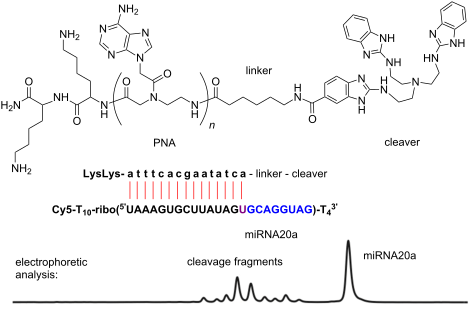
- [18]. The reaction proceeds at ambient temperature. In contrast to ureas and thioureas formed as byproducts when using carbodiimides, the N-methylpyridine-2(1H)-thione resulting from Mukaiyama's reagent is soluble and can be easily removed by chromatography. As we were searching for a heavy metal-free




Molecular cleft or tweezer compounds derived from trioxabicyclo[3.3.1]nonadiene diisocyanate and diacid dichloride
Beilstein J. Org. Chem. 2015, 11, 1–8, doi:10.3762/bjoc.11.1
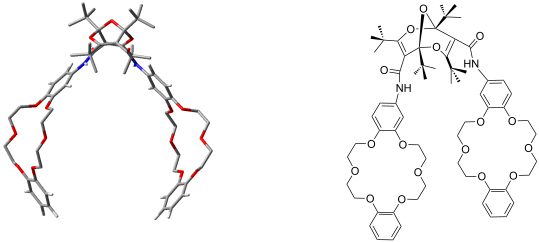
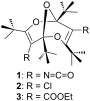
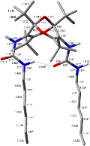
- ability to extract some alkali, alkaline earth and rare earth metal ions. Keywords: carbamates; crown ethers; diisocyanate; isocyanate; ureas; Introduction The synthesis of the surprisingly stable, monomeric diisocyanate 1 (Figure 1) was reported recently [1]. This and several other derivatives of the





Synthesis and characterization of pH responsive D-glucosamine based molecular gelators
Beilstein J. Org. Chem. 2014, 10, 3111–3121, doi:10.3762/bjoc.10.328

- volume) mixtures. Several amides are also effective gelators for water. For this series of compounds, the amides seem to be more effective for water, whereas the ureas are more effective for ethanol and aqueous mixtures. These results indicate that the additional p-methoxy group did not affect gelation
- –15 were obtained and tested for their gelation properties. General procedure for the synthesis of ureas The urea library was synthesized by mixing compound 3 and the corresponding isocyanate in stoichiometric quantities in anhydrous THF. The solution was stirred at room temperature for 3–5 h. Then
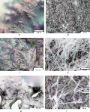
- the wet gel samples formed by several ureas. a) Compound 19 in DMSO/H2O (1:2) at 2.0 mg/mL; b) compound 17 in EtOH/H2O (1:2) at 3.3 mg/mL; c) and d) a gel formed by compound 21 in EtOH/H2O (1:2) at 5.0 mg/mL; e) and f) are from the gel formed by compound 22 in DMSO/H2O (1:2) at 4.0 mg/mL. Stability




Come-back of phenanthridine and phenanthridinium derivatives in the 21st century
Beilstein J. Org. Chem. 2014, 10, 2930–2954, doi:10.3762/bjoc.10.312

- modulation of its amino groups at 3 and 8 positions of the phenanthridine ring [52][53]. Systematic changing of the ethidium bromide exocyclic amines into guanidine, pyrrole, urea, and various substituted ureas revealed importance of electron-donor properties of substituents at the 3- and 8-position of the