


Search results
Search for "HIV-1" in Full Text gives 62 result(s) in Beilstein Journal of Organic Chemistry.
Facile synthesis of benzothiadiazine 1,1-dioxides, a precursor of RSV inhibitors, by tandem amidation/intramolecular aza-Wittig reaction
Beilstein J. Org. Chem. 2013, 9, 503–509, doi:10.3762/bjoc.9.54

- activity [16][17][18][19][20][21][22], including hypoglycemic (1), anti-HIV (2), HIV-1 specific non-nucleoside reverse transcriptase inhibitor (3), sedative (4), and respiratory syncytial virus (RSV) inhibitory activity (5; Figure 1). A literature search revealed that the 1,2,4-benzothiadiazine 1,1


Tricyclic flavonoids with 1,3-dithiolium substructure
Beilstein J. Org. Chem. 2012, 8, 1999–2003, doi:10.3762/bjoc.8.226
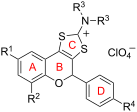
- unit. In addition to this, they are known to possess anti-inflammatory activity, inhibit the lens-aldose reductase, and decrease the blood glucose level [11][12]. Moreover, compound 3 was shown to inhibit HIV-1 integrase [13][14]. Several molybdenum and tungsten oxobisdithiolene complexes have been


Peptides presenting the binding site of human CD4 for the HIV-1 envelope glycoprotein gp120
Beilstein J. Org. Chem. 2012, 8, 1858–1866, doi:10.3762/bjoc.8.214
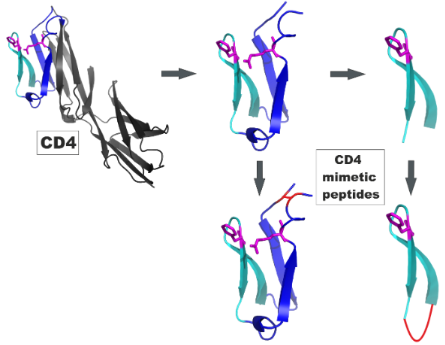
- Based on the structure of the HIV-1 glycoprotein gp120 in complex with its cellular receptor CD4, we have designed and synthesized peptides that mimic the binding site of CD4 for gp120. The ability of these peptides to bind to gp120 can be strongly enhanced by increasing their conformational stability
- protein binding site mimics. We have previously developed strategies for the design and generation of scaffolded and assembled peptides to generate protein binding site mimics [1]. The interaction of the HIV-1 envelope glycoprotein gp120 with its cellular receptor CD4 is the first step in the process of
- entry of the virus HIV-1 into its host cell. A range of crystal structures of the gp120–CD4 complex [2][3][4][5][6] have provided information on the structural details of the gp120–CD4 interaction and, thus, the basis for a rational design of inhibitors. Later on, it was found that the epitopes of a


Molecular solubilization of fullerene C60 in water by γ-cyclodextrin thioethers
Beilstein J. Org. Chem. 2012, 8, 1644–1651, doi:10.3762/bjoc.8.188
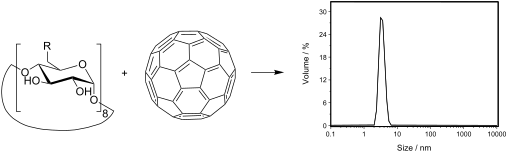
- synthesized and utilized for the inhibition of therapeutically important enzymes, such as HIV-1 protease [12], for the prevention of bacterial growth [13][14], or for photodynamic therapy of cancer by scission of DNA [3]. Despite these successes, there are still several issues relating to the chemical


Design of a novel tryptophan-rich membrane-active antimicrobial peptide from the membrane-proximal region of the HIV glycoprotein, gp41
Beilstein J. Org. Chem. 2012, 8, 1172–1184, doi:10.3762/bjoc.8.130
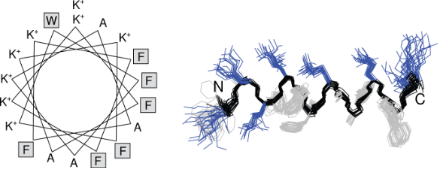
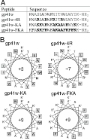
- that does not possess intrinsic antimicrobial activity. Peptides derived from the envelope HIV-1 glycoproteins, gp120 and gp41, have previously been examined for their antimicrobial activity [10] and we chose to use the membrane-proximal region of gp41 as our starting peptide scaffold. This region of
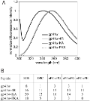
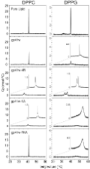
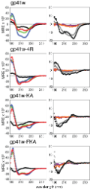
- has four additional positive charges and is also antimicrobially inactive. The lack of antimicrobial activity may be related to the fact that the gp41w peptide appears to oligomerize in solution. When found in the HIV-1 Env glycoprotein complex, gp41 is known to exist as a trimer [26], and previous




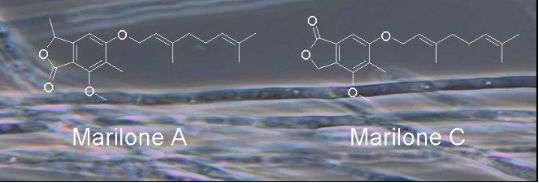
Marilones A–C, phthalides from the sponge-derived fungus Stachylidium sp.
Beilstein J. Org. Chem. 2011, 7, 1636–1642, doi:10.3762/bjoc.7.192
- liver stages as described by Ploemen et al. [24]. Inhibition of the viral HIV-1- and HIV-2-induced cytopathogenic effect in MT-4 cells assays was performed according to Pannecouque et al. [25] and Zhan et al. [26]. Severe Acute Respiratory Syndrome coronavirus (SARS) assays were performed according to
- Phosphorylation & Disease, CNRS, Roscoff, France) for performing the protein kinases assays and Dr. C. Pannecouque (Rega Institute for Medical Research, Leuven, Belgium) for performing the HIV-1 and HIV-2 antiviral assays; we also kindly thank Indra Bergval (KIT Biomedical Research, Royal Tropical Institute


Multicomponent synthesis of artificial nucleases and their RNase and DNase activity
Beilstein J. Org. Chem. 2011, 7, 1135–1140, doi:10.3762/bjoc.7.131

- oligoribonucleotides and an HIV-1 recombinant RNA fragment 96 nucleotides long [17]. Previously, compounds 1 and 2 have been synthesized from the corresponding diamines by condensation with protected natural amino acids and subsequent deprotection [18]. This approach is significantly limited by using available natural


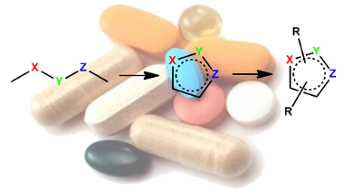
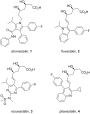
An overview of the key routes to the best selling 5-membered ring heterocyclic pharmaceuticals
Beilstein J. Org. Chem. 2011, 7, 442–495, doi:10.3762/bjoc.7.57



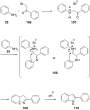


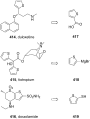


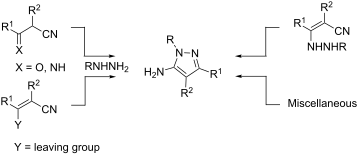
Approaches towards the synthesis of 5-aminopyrazoles
Beilstein J. Org. Chem. 2011, 7, 179–197, doi:10.3762/bjoc.7.25
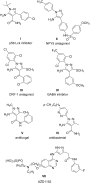
- = SCH3), respectively. These compounds were further treated with nitrous acid and coupled with different secondary amines to yield the triazenopyrazoles 78. Compounds 78 were tested for biological activity against HIV-1 and herpes simplex viruses, and showed moderate activity against HIV-1 virus (Scheme







Dipyridodiazepinone derivatives; synthesis and anti HIV-1 activity
Beilstein J. Org. Chem. 2009, 5, No. 36, doi:10.3762/bjoc.5.36
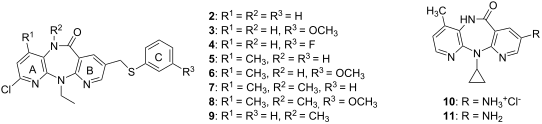
- , Ubonratchathani 34190, Thailand 10.3762/bjoc.5.36 Abstract Ten dipyridodiazepinone derivatives were synthesized and evaluated for their anti HIV-1 reverse transcriptase activity against wild-type and mutant type enzymes, K103N and Y181C. Two of them were found to be promising inhibitors for HIV-1 RT. Keywords
- : AIDS; anti HIV-1 RT; dipyridodiazepinone; nevirapine; synthesis; Introduction Dipyridodiazepinone nevirapine (1) [1] (Figure 1) is a potent non-nucleoside inhibitor of human immunodeficiency virus type 1 reverse transcriptase (HIV-1 RT) and is approved as a therapeutic agent for the treatment of AIDS
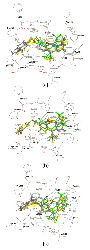
- ][5][6][7][8]. On the basis of molecular modeling analysis on the wild-type (WT) and Y181C HIV-1 RT, it was found that the dipyridodiazepinone derivatives containing an unsubstituted lactam nitrogen and a 2-chloro-8-arylthiomethyl moiety, when compared with 9 [4] (Figure 2) as reference, are effective


N-1 regioselective Michael- type addition of 5-substituted uracils to (2-hydroxyethyl) acrylate
Beilstein J. Org. Chem. 2007, 3, No. 40, doi:10.1186/1860-5397-3-40
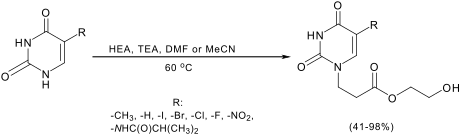
- -isopropyl-6-benzyluracyl) are in the third stage of clinical testing for their inhibition of HIV-1 reverse transcriptase.[3] Others, like acyclovir or gancyclovir are in clinical use.[4] Cidofovir, (S)-3-hydroxy-2-phosphonomethoxypropyl cytosine, is an acyclonucleoside that possesses broad-spectrum activity


One-pot synthesis of novel 1H-pyrimido[4,5-c][1,2]diazepines and pyrazolo[3,4-d]pyrimidines
Beilstein J. Org. Chem. 2006, 2, No. 5, doi:10.1186/1860-5397-2-5

- -c]pyridazine-5,7-dione), inhibits the growth of Pseudomonas 568 and also binds to herring sperm DNA.[7] However, until the emergence of HEPT[8] as a potent and selective inhibitor of HIV-1, no attention was given to the synthetic manipulation at the 6-position of uracils. Also the synthetic
- compounds of biological importance including anti-tumor antibiotics and inhibitors of HIV-1 transcriptase.[30] New methods continue to appear in the literature describing the synthesis of novel benzodiazepine analogues[31], and emphasis is placed on the alteration and replacement of benzene ring with a





