


Search results
Search for "benzamides" in Full Text gives 62 result(s) in Beilstein Journal of Organic Chemistry.
Transition-metal-catalyzed synthesis of phenols and aryl thiols
- Yajun Liu,
- Shasha Liu and
- Yan Xiao
Beilstein J. Org. Chem. 2017, 13, 589–611, doi:10.3762/bjoc.13.58

- facilitate C–H hydroxylation of benzoic acids and heteroarenes [55]. An amidation reaction between benzoic acid and 2-(pyridine-2-yl)isopropylamine gave N-(2-(pyridine-2-yl)isopropyl)benzamides, which could be hydroxylated at the ortho position in moderate to excellent yields. The reaction was promoted by a
- stoichiometric amount of Cu(OAc)2 in the presence of Ag2CO3 and TBAI as additives in DMF at 100 °C (Scheme 26). Notably, their protocol was so efficient that the reactions could accomplish within 1 hour. The substrate scope showed benzamides bearing both electron-donating groups and electron-withdrawing groups
- were converted to the corresponding phenols. Moreover, heteroarenes, such as pyridine and thiophenes, could also give hydroxylated products under their conditions. In 2016, Jana and co-workers used N-(8-quinolinyl)benzamides as starting materials, and ortho-hydroxylation occurred in the presence of a

Graphical Abstract

Figure 1: Examples of drugs bearing phenol or aryl thiol as central structural motifs.

Scheme 1: Hydroxylation of aryl halides using biphenylphosphine as ligand.

Scheme 2: Hydroxylation of aryl halides using tert-butylphosphine as ligand.

Scheme 3: Hydroxylation of aryl halides using imidazole typed phosphine ligands.

Scheme 4: [Pd(cod)(CH2SiMe3)2] catalyzed hydroxylation of aryl halides.

Scheme 5: Pd/PANI catalyzed hydroxylation of hydroxylation of aryl halides.

Scheme 6: MCM-41-dzt-Pd catalyzed hydroxylation of aryl halides.

Scheme 7: Hydroxylation of aryl halides using dibenzoylmethane as ligand.

Scheme 8: Hydroxylation of aryl halides using 2,2’-bipyridine as ligand.

Scheme 9: Hydroxylation of aryl bromides using imidazolyl pyridine as ligand.

Scheme 10: Hydroxylation of aryl halides using DMEDA as ligand.

Scheme 11: Hydroxylation of aryl halides using PAO as ligand.

Scheme 12: Hydroxylation of aryl halides using D-glucose as ligand.

Scheme 13: Hydroxylation of aryl halides using INDION-770 as ligand.

Scheme 14: PEG-400 mediated hydroxylation of aryl halides.

Scheme 15: Hydroxylation of aryl halides using glycolic acid as ligand.

Scheme 16: Hydroxylation of aryl halides using L-sodium ascorbate as ligand.

Scheme 17: Difunctionalized ethanes mediated hydroxylation of aryl iodides.

Scheme 18: Hydroxylation of aryl halides using 2-methyl-8-hydroxylquinoline as ligand.

Scheme 19: Hydroxylation of aryl halides using 8-hydroxyquinolin-N-oxide as ligand.

Scheme 20: Hydroxylation of aryl halides using lithium pipecolinate as ligand.

Scheme 21: Hydroxylation of aryl halides using L-lithium prolinate.

Scheme 22: Hydroxylation of aryl halides using triethanolamine as ligand.

Scheme 23: CuI-nanoparticle-catalyzed hydroxylation of aryl halides.

Scheme 24: Cu-g-C3N4-catalyzed hydroxylation of aryl bromides.

Scheme 25: Cu(OAc)2-mediated hydroxylation of (2-pyridyl)arenes.

Scheme 26: Removable pyridine moiety directed hydroxylation of arenes.

Scheme 27: Removable quinoline moiety directed hydroxylation of arenes.

Scheme 28: CuCl2 catalyzed hydroxylation of benzimidazoles and benzoxazoles.

Scheme 29: Disulfide-directed C–H hydroxylation.

Scheme 30: Pd(OAc)2-catalyzed hydroxylation of diarylpyridines.

Scheme 31: PdCl2-catalyzed hydroxylation of 2-arylpyridines.

Scheme 32: PdCl2-catalyzed hydroxylation of 2-arylpyridines.

Scheme 33: Pd(OAc)2-catalyzed hydroxylation of 2-arylpyridines.

Scheme 34: Pd(CH3CN)2Cl2-catalyzed hydroxylation of 2-arylpyridines.

Scheme 35: Pd(OAc)2-catalyzed hydroxylation of benzothiazolylarenes.

Scheme 36: Pd(OAc)2 catalyzed hydroxylation of benzimidazolylarenes.

Scheme 37: Dioxane mediated hydroxylation of 2-heteroarylarenes.

Scheme 38: Hydroxylation of oxime methyl ester.

Scheme 39: CN-directed meta-hydroxylation.

Scheme 40: Pd(OAc)2-catalyzed hydroxylation of benzoic acids.

Scheme 41: Pd(OAc)2-catalyzed hydroxylation of biaryl or aryl alkyl ketones.

Scheme 42: Pd(OAc)2 and Pd(TFA)2 catalyzed hydroxylation of aryl ketones.

Scheme 43: Pd(OAc)2 catalyzed hydroxylation of aryl ketones.

Scheme 44: Pd(TFA)2-catalyzed hydroxylation of aryl phosphonates.

Scheme 45: Hydroxy group directed hydroxylation.

Scheme 46: [Ru(O2CMes)2(p-cymene)] catalyzed hydroxylation of benzamides and aryl ketones.

Scheme 47: [RuCl2(p-cymene)]2-catalyzed hydroxylation of benzamides and carbamates.

Scheme 48: [RuCl2(p-cymene)]2 catalyzed hydroxylation of benzaldehydes.

Scheme 49: [RuCl2(p-cymene)]2 catalyzed hydroxylation of ethyl benzoates, benzamides and carbamates.

Scheme 50: Different regioselective ortho-hydroxylation.

Scheme 51: Ruthenium-complex-catalyzed hydroxylation of flavones.

Scheme 52: Vanadium-catalyzed hydroxylation of arenes.

Scheme 53: VOSiW-catalyzed hydroxylation of arenes.

Scheme 54: Synthesis of aryl thiols using thiourea as thiol source.

Scheme 55: Synthesis of aryl thiols using alkyl thiol as thiol source.

Scheme 56: Synthesis of 1-thionaphthol using HS-TIPS as thiol source.

Scheme 57: Synthesis of aryl thiols using sodium thiosulfate as thiol source.

Scheme 58: Synthesis of thiophenol using thiobenzoic acid as thiol source.

Scheme 59: Synthesis of aryl thiols using sulfur powder as thiol source.

Scheme 60: CuI-nanoparticles catalyzed synthesis of aryl thiols.

Scheme 61: Synthesis of aryl thiols using Na2S·5H2O as thiol source.

Scheme 62: Synthesis of aryl thiols using 1,2-ethanedithiol as thiol source.
Conjugate addition–enantioselective protonation reactions
- James P. Phelan and
- Jonathan A. Ellman
Beilstein J. Org. Chem. 2016, 12, 1203–1228, doi:10.3762/bjoc.12.116
- to both of the carbonyl oxygens. During the course of studying the addition of aromatic thiols to α,β-unsaturated benzamides and enones, Chen, Ding, and Wu first reported the conjugate addition of thiophenol (23) to N-methacryloyl benzamide 91 followed by enantioselective protonation using Takemoto’s

Graphical Abstract

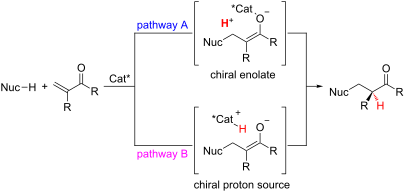
Figure 1: Two general pathways for conjugate addition followed by enantioselective protonation.

Scheme 1: Tomioka’s enantioselective addition of arylthiols to α-substituted acrylates.

Scheme 2: Sibi’s enantioselective hydrogen atom transfer reactions.

Scheme 3: Mikami’s addition of perfluorobutyl radical to α-aminoacrylate 11.

Scheme 4: Reisman’s Friedel–Crafts conjugate addition–enantioselective protonation approach toward tryptophan...

Scheme 5: Pracejus’s enantioselective addition of benzylmercaptan to α-aminoacrylate 20.

Scheme 6: Kumar and Dike’s enantioselective addition of thiophenol to α-arylacrylates.

Scheme 7: Tan’s enantioselective addition of aromatic thiols to 2-phthalimidoacrylates.

Scheme 8: Glorius’ enantioselective Stetter reactions with α-substituted acrylates.

Scheme 9: Dixon’s enantioselective addition of thiols to α-substituted acrylates.

Figure 2: Chiral phosphorous ligands.

Scheme 10: Enantioselective addition of arylboronic acids to methyl α-acetamidoacrylate.

Scheme 11: Frost’s enantioselective additions to dimethyl itaconate.

Scheme 12: Darses and Genet’s addition of potassium organotrifluoroborates to α-aminoacrylates.

Scheme 13: Proposed mechanism for enantioselective additions to α-aminoacrylates.

Scheme 14: Sibi’s addition of arylboronic acids to α-methylaminoacrylates.

Scheme 15: Frost’s enantioselective synthesis of α,α-dibenzylacetates 64.

Scheme 16: Rovis’s hydroheteroarylation of α-substituted acrylates with benzoxazoles.

Scheme 17: Proposed mechanism for the hydroheteroarylation of α-substituted acrylates with benzoxazoles.
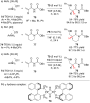
Scheme 18: Sodeoka’s enantioselective addition of amines to N-benzyloxycarbonyl acrylamides 75 and 77.

Scheme 19: Proposed catalytic cycle for Sodeoka’s enantioselective addition of amines.

Scheme 20: Sibi’s enantioselective Friedel–Crafts addition of pyrroles to imides 84.

Scheme 21: Kobayashi’s enantioselective addition of malonates to α-substituted N-acryloyloxazolidinones.

Scheme 22: Chen and Wu’s enantioselective addition of thiophenol to N-methacryloyl benzamide.

Scheme 23: Tan’s enantioselective addition of secondary phosphine oxides and thiols to N-arylitaconimides.

Scheme 24: Enantioselective addition of thiols to α-substituted N-acryloylamides.

Scheme 25: Kobayashi’s enantioselective addition of thiols to α,β-unsaturated ketones.

Scheme 26: Feng’s enantioselective addition of pyrazoles to α-substituted vinyl ketones.

Scheme 27: Luo and Cheng’s addition of indoles to vinyl ketones by enamine catalysis.

Scheme 28: Curtin–Hammett controlled enantioselective addition of indole.

Scheme 29: Luo and Cheng’s enantioselective additions to α-branched vinyl ketones.

Scheme 30: Lou’s reduction–conjugate addition–enantioselective protonation.

Scheme 31: Luo and Cheng’s primary amine-catalyzed addition of indoles to α-substituted acroleins.

Scheme 32: Luo and Cheng’s proposed mechanism and transition state.

Figure 3: Shibasaki’s chiral lanthanum and samarium tris(BINOL) catalysts.

Scheme 33: Shibasaki’s enantioselective addition of 4-tert-butyl(thiophenol) to α,β-unsaturated thioesters.

Scheme 34: Shibasaki’s application of chiral (S)-SmNa3tris(binaphthoxide) catalyst 144 to the total synthesis ...

Scheme 35: Shibasaki’s cyanation–enantioselective protonation of N-acylpyrroles.

Scheme 36: Tanaka’s hydroacylation of acrylamides with aliphatic aldehydes.

Scheme 37: Ellman’s enantioselective addition of α-substituted Meldrum’s acids to terminally unsubstituted nit...

Scheme 38: Ellman’s enantioselective addition of thioacids to α,β,β-trisubstituted nitroalkenes.

Scheme 39: Hayashi’s enantioselective hydroarylation of diphenylphosphinylallenes.

Scheme 40: Hayashi’s enantioselective hydroarylation of diphenylphosphinylallenes.

Figure 4: Togni’s chiral ferrocenyl tridentate nickel(II) and palladium(II) complexes.

Scheme 41: Togni’s enantioselective hydrophosphination of methacrylonitrile.

Scheme 42: Togni’s enantioselective hydroamination of methacrylonitrile.
Cascade alkylarylation of substituted N-allylbenzamides for the construction of dihydroisoquinolin-1(2H)-ones and isoquinoline-1,3(2H,4H)-diones
- Ping Qian,
- Bingnan Du,
- Wei Jiao,
- Haibo Mei,
- Jianlin Han and
- Yi Pan
Beilstein J. Org. Chem. 2016, 12, 301–308, doi:10.3762/bjoc.12.32

- examined, and a lower chemical yield was found when the reaction was performed at 100 °C (Table 1, entry 16). With the optimized conditions developed, we then carried out a substrate generality study using various types of N-(2-methylallyl)benzamides 4 to react with cyclohexane (2a). As shown in Scheme 2

Graphical Abstract

Scheme 1: Cascade 1,2-difunctionalization and cyclization to construct heterocycles.
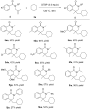
Scheme 2: Cyclization of cyclohexane (2a) with substituted N-(2-methylallyl)benzamide (reaction conditions: 4...

Scheme 3: Cyclization of cycloalkanes with N-methyl-N-(2-methylallyl)benzamide (reaction conditions: 4a (0.2 ...
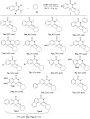
Scheme 4: Cyclization reaction of 6 with cyclohexane 2a (reaction conditions: 6 (0.2 mmol), cyclohexane 2a (2...

Scheme 5: Control experiments for the mechanism studies. a) Reaction with N-unprotected substrate 8a; b) reac...

Scheme 6: Proposed mechanism.
Recent advances in copper-catalyzed C–H bond amidation
- Jie-Ping Wan and
- Yanfeng Jing
Beilstein J. Org. Chem. 2015, 11, 2209–2222, doi:10.3762/bjoc.11.240

- related ring-fused products, the formation of other ring sized scaffolds such as five-membered structure were much less. An interesting cascade reaction between DG-functionalized benzamides 99 and malonates 100, which enabled the synthesis of indolinones 101 via selective C–C and C–N bond construction
- for lactam synthesis. Copper-catalyzed amidation/sulfonamidation of aryl C–H bonds. C–H amidation of pyridinylbenzenes and indoles. Mechanism of the Cu-catalyzed C2-amidation of indoles. Copper-catalyzed, 2-phenyl oxazole-assisted C–H amidation of benzamides. DG-assisted amidation/imidation of indole

Graphical Abstract

Scheme 1: Copper-catalyzed C–H amidation of tertiary amines.

Scheme 2: Copper-catalyzed C–H amidation and sulfonamidation of tertiary amines.

Scheme 3: Copper-catalyzed sulfonamidation of allylic C–H bonds.

Scheme 4: Copper-catalyzed sulfonamidation of benzylic C–H bonds.

Scheme 5: Copper-catalyzed sulfonamidation of C–H bonds adjacent to oxygen.

Scheme 6: Copper-catalyzed amidation and sulfonamidation of inactivated alkyl C–H bonds.

Scheme 7: Copper-catalyzed amidation and sulfonamidation of inactivated alkanes.

Scheme 8: Copper-catalyzed intramolecular C–H amidation for lactam synthesis.

Scheme 9: Copper-catalyzed intramolecular C–H amidation for lactam synthesis.

Scheme 10: Copper-catalyzed amidation/sulfonamidation of aryl C–H bonds.

Scheme 11: C–H amidation of pyridinylbenzenes and indoles.

Scheme 12: Mechanism of the Cu-catalyzed C2-amidation of indoles.

Scheme 13: Copper-catalyzed, 2-phenyl oxazole-assisted C–H amidation of benzamides.

Scheme 14: DG-assisted amidation/imidation of indole and benzene C–H bonds.

Scheme 15: Copper-catalyzed C–H amination/amidation of quinoline N-oxides.

Scheme 16: Copper-catalyzed aldehyde formyl C–H amidation.

Scheme 17: Copper-catalyzed formamide C–H amidation.

Scheme 18: Copper-catalyzed sulfonamidation of vinyl C–H bonds.

Scheme 19: CuCl2-catalyzed amidation/sulfonamidation of alkynyl C–H bonds.

Scheme 20: Cu(OH)2-catalyzed amidation/sulfonamidation of alkynyl C–H bonds.

Scheme 21: Sulfonamidation-based cascade reaction for the synthesis of tetrahydrotriazines.

Scheme 22: Copper-catalyzed cascade reaction for the synthesis of quinazolinones.
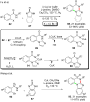
Scheme 23: Copper-catalyzed cascade reactions for the synthesis of fused quinazolinones.

Scheme 24: Copper-catalyzed synthesis of quinazolinones via methyl C–H bond amidation.

Scheme 25: Dicumyl peroxide-based cascade synthesis of quinazolinones.

Scheme 26: Copper-catalyzed cascade reactions for the synthesis of indolinones.
C–H bond halogenation catalyzed or mediated by copper: an overview
- Wenyan Hao and
- Yunyun Liu
Beilstein J. Org. Chem. 2015, 11, 2132–2144, doi:10.3762/bjoc.11.230
- functionalized 8-methylquinolinyl substrates reported by Sanford et al. [43], Daugulis and co-worker [44] established in 2013 a copper-catalyzed arene C–H o-fluorination of N-(quinolin-8-yl)benzamides 14. The mono- and/or difluorination took place in the presence of CuI, N-methylmorpholine N-oxide (NMO) and
- -catalyzed arene C–H fluorination of benzamides. Copper-catalyzed arene C–H iodination of 1,3-azoles. Copper-catalyzed C–H halogenations of phenols. Proposed mechanism for the C–H halogenation of phenols. Copper-catalyzed halogenation of electron enriched arenes. Copper-catalyzed C–H bromination of arenes

Graphical Abstract

Scheme 1: Copper-catalyzed C–H bond halogenation of 2-arylpyridine.

Scheme 2: ortho-Chlorination of 2-arylpridines with acyl chlorides.

Scheme 3: Copper-catalyzed chlorination of 2-arylpyridines using LiCl.

Scheme 4: Copper-catalyzed C–H halogenation of 2-arylpyridines using LiX.

Scheme 5: Copper-mediated selective C–H halogenations of 2-arylpyridine.

Scheme 6: Copper-catalyzed C–H o-halogenation using removable DG.

Scheme 7: Copper-catalyzed C–H halogenations using PIP as DG.

Scheme 8: Copper-catalyzed quinoline C–H chlorination.

Scheme 9: Copper-catalyzed arene C–H fluorination of benzamides.

Scheme 10: Copper-catalyzed arene C–H iodination of 1,3-azoles.
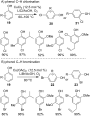
Scheme 11: Copper-catalyzed C–H halogenations of phenols.

Scheme 12: Proposed mechanism for the C–H halogenation of phenols.

Scheme 13: Copper-catalyzed halogenation of electron enriched arenes.

Scheme 14: Copper-catalyzed C–H bromination of arenes.

Scheme 15: CuI-mediated synthesis of iododibenzo[b,d]furans via C–H functionalization.

Scheme 16: Cu-Mn spinel oxide-catalyzed phenol and heteroarene halogenation.

Scheme 17: Copper-catalyzed halogenations of 2-amino-1,3thiazoles.

Scheme 18: Copper-mediated chlorination and bromination of indolizines.

Scheme 19: Copper-catalyzed three-component synthesis of bromoindolizines.

Scheme 20: Copper-mediated C–H halogenation of azacalix[1]arene[3]pyridines.

Scheme 21: Copper-mediated cascade synthesis of halogenated pyrrolones.

Scheme 22: Copper-mediated alkene C–H chlorination in spirothienooxindole.

Scheme 23: Copper-catalyzed remote C–H chlorination of alkyl hydroperoxides.
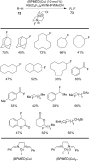
Scheme 24: Copper-catalyzed C–H fluorination of alkanes.
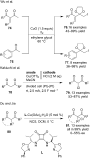
Scheme 25: Copper-catalyzed or mediated C–H halogenations of active C(sp3)-bonds.
The facile construction of the phthalazin-1(2H)-one scaffold via copper-mediated C–H(sp2)/C–H(sp) coupling under mild conditions
- Wei Zhu,
- Bao Wang,
- Shengbin Zhou and
- Hong Liu
Beilstein J. Org. Chem. 2015, 11, 1624–1631, doi:10.3762/bjoc.11.177

- , entry 19). In addition, single-crystal X-ray diffraction of 3a showed that the Z-isomer of the alkene is preferentially formed [24]. Next, the scope of 8-aminoquinoline benzamides and the generality of this process were investigated under the optimized conditions. As shown in Scheme 2, most of the
- examined substrates (1b–1m) provided the corresponding products (3b–3m) in moderate to good yields. Benzamides with weak electron-donating groups (–Me, –OCF3,) at the para-position were well compatible with good yields (3b, 3c), while the introduction of a methoxy group led to a slight decrease in the
- yield (3d). Electron-poor benzamides (–CF3, –COOMe) worked well under the transformation system and gave good yields (3e, 3f). Notably, halides and an ethenyl group were tolerated under the standard reaction conditions (3g–3i), which could undergo further elaboration. The C–H activation of meta

Graphical Abstract

Figure 1: Representative structures of biologically important phthalazin-1(2H)-ones.

Scheme 1: The construction of phthalazin-1(2H)-one scaffold via C–H activation.
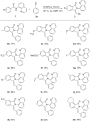
Scheme 2: Copper-mediated reaction of ethynylbenzene with carboxylic acid derivatives. Reaction conditions: 1...
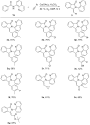
Scheme 3: Copper-mediated reaction of N-(quinolin-8-yl)benzamide with terminal alkynes. Reaction conditions: ...

Scheme 4: Hydrazinolysis and removal of the directing group.

Scheme 5: Plausible reaction mechanism.
Cross-dehydrogenative coupling for the intermolecular C–O bond formation
- Igor B. Krylov,
- Vera A. Vil’ and
- Alexander O. Terent’ev
Beilstein J. Org. Chem. 2015, 11, 92–146, doi:10.3762/bjoc.11.13
- the selective replacement of one of the two hydrogen atoms in the ortho-position of acetanilide; the molar ratio of the C- and O-reagents is close to stoichiometric. The acetoxylation (product 42) and methoxylation (product 43) of N-(2-benzoylphenyl)benzamides 41 at the ortho-position of the benzamide
- moiety of the substrate were performed using Pd(OAc)2 combined with PhI(OAc)2 as the oxidant (Scheme 9) [58]. The alkoxylation of N-tosylbenzamides 44 in the presence of the same oxidative system takes place at room temperature and gives products 45 [59]. The reactions of benzamides containing the nitro

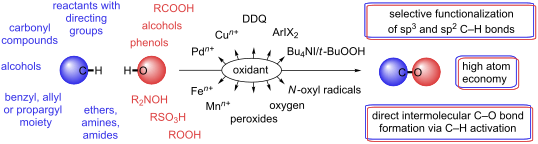
Graphical Abstract

Scheme 1: Cross-dehydrogenative coupling.

Scheme 2: Cross-dehydrogenative C–O coupling.

Scheme 3: Regioselective ortho-acetoxylation of meta-substituted arylpyridines and N-arylamides.
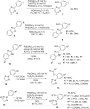
Scheme 4: ortho-Acyloxylation and alkoxylation of arenes directed by pyrimidine, benzoxazole, benzimidazole a...

Scheme 5: Cu(OAc)2/AgOTf/O2 oxidative system in the ortho-alkoxylation of arenes.
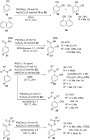
Scheme 6: Pd(OAc)2/persulfate oxidative system in the ortho-alkoxylation and acetoxylation of arenes with nit...
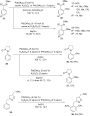
Scheme 7: ortho-Acetoxylation and methoxylation of O-methyl aryl oximes, N-phenylpyrrolidin-2-one, and (3-ben...

Scheme 8: Ruthenium-catalyzed ortho-acyloxylation of acetanilides.

Scheme 9: Acetoxylation and alkoxylation of arenes with amide directing group using Pd(OAc)2/PhI(OAc)2 oxidat...

Scheme 10: Alkoxylation of azoarenes, 2-aryloxypyridines, picolinamides, and N-(1-methyl-1-(pyridin-2-yl)ethyl...

Scheme 11: Acetoxylation of compounds containing picolinamide and quinoline-8-amine moieties using the Pd(OAc)2...

Scheme 12: (CuOH)2CO3 catalyzed oxidative ortho-etherification using air as oxidant.

Scheme 13: Copper-catalyzed aerobic alkoxylation and aryloxylation of arenes containing pyridine-N-oxide moiet...

Scheme 14: Cobalt-catalyzed aerobic alkoxylation of arenes and alkenes containing pyridine N-oxide moiety.

Scheme 15: Non-symmetric double-fold C–H ortho-acyloxylation.

Scheme 16: N-nitroso directed ortho-alkoxylation of arenes.

Scheme 17: Selective alkoxylation and acetoxylation of alkyl groups.

Scheme 18: Acetoxylation of 2-alkylpyridines and related compounds.
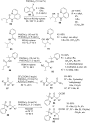
Scheme 19: Acyloxylation and alkoxylation of alkyl fragments of substrates containing amide or sulfoximine dir...

Scheme 20: Palladium-catalyzed double sp3 C–H alkoxylation of N-(quinolin-8-yl)amides for the synthesis of sym...

Scheme 21: Copper-catalyzed acyloxylation of methyl groups of N-(quinolin-8-yl)amides.

Scheme 22: One-pot acylation and sp3 C–H acetoxylation of oximes.

Scheme 23: Possible mechanism of oxidative esterification catalyzed by N-heterocyclic nucleophilic carbene.

Scheme 24: Oxidative esterification employing stoichiometric amounts of aldehydes and alcohols.

Scheme 25: Selective oxidative coupling of aldehydes with alcohols in the presence of amines.

Scheme 26: Iodine mediated oxidative esterification.

Scheme 27: Oxidative C–O coupling of benzyl alcohols with methylarenes under the action of Bu4NI/t-BuOOH syste...

Scheme 28: Oxidative coupling of methyl- and ethylarenes with aromatic aldehydes under the action of Bu4NI/t-B...

Scheme 29: Cross-dehydrogenative C–O coupling of aldehydes with t-BuOOH in the presence of Bu4NI.

Scheme 30: Bu4NI-catalyzed α-acyloxylation reaction of ethers and ketones with aldehydes and t-BuOOH.

Scheme 31: Oxidative coupling of aldehydes with N-hydroxyimides and hexafluoroisopropanol.

Scheme 32: Oxidative coupling of alcohols with N-hydroxyimides.

Scheme 33: Oxidative coupling of aldehydes and primary alcohols with N-hydroxyimides using (diacetoxyiodo)benz...

Scheme 34: Proposed mechanism of the oxidative coupling of aldehydes and N-hydroxysuccinimide under action of ...

Scheme 35: Oxidative coupling of aldehydes with pivalic acid (172).

Scheme 36: Oxidative C–O coupling of aldehydes with alkylarenes using the Cu(OAc)2/t-BuOOH system.

Scheme 37: Copper-catalyzed acyloxylation of C(sp3)-H bond adjacent to oxygen in ethers using benzyl alcohols.

Scheme 38: Oxidative C–O coupling of aromatic aldehydes with cycloalkanes.

Scheme 39: Ruthenium catalyzed cross-dehydrogenative coupling of primary and secondary alcohols.

Scheme 40: Cross-dehydrogenative C–O coupling reactions of β-dicarbonyl compounds with sulfonic acids, acetic ...

Scheme 41: Acyloxylation of ketones, aldehydes and β-dicarbonyl compounds using carboxylic acids and Bu4NI/t-B...

Scheme 42: Acyloxylation of ketones using Bu4NI/t-BuOOH system.

Scheme 43: Cross-dehydrogenative C–O coupling of β-dicarbonyl compounds and their heteroanalogues with N-hydro...

Scheme 44: Cross-dehydrogenative C–O coupling of β-dicarbonyl compounds and their heteroanalogues with t-BuOOH....

Scheme 45: Oxidative C–O coupling of 2,6-dialkylphenyl-β-keto esters and thioesters with tert-butyl hydroxycar...

Scheme 46: α’-Acyloxylation of α,β-unsaturated ketones using KMnO4.

Scheme 47: Possible mechanisms of the acetoxylation at the allylic position of alkenes by Pd(OAc)2.

Scheme 48: Products of the oxidation of terminal alkenes by Pd(II)/AcOH/oxidant system.

Scheme 49: Acyloxylation of terminal alkenes with carboxylic acids.

Scheme 50: Synthesis of linear E-allyl esters by cross-dehydrogenative coupling of terminal alkenes wih carbox...

Scheme 51: Pd(OAc)2-catalyzed acetoxylation of Z-vinyl(triethylsilanes).

Scheme 52: α’-Acetoxylation of α-acetoxyalkenes with copper(II) chloride in acetic acid.

Scheme 53: Oxidative acyloxylation at the allylic position of alkenes and at the benzylic position of alkylare...

Scheme 54: Copper-catalyzed alkoxylation of methylheterocyclic compounds using di-tert-butylperoxide as oxidan...

Scheme 55: Oxidative C–O coupling of methylarenes with β-dicarbonyl compounds or phenols.

Scheme 56: Copper-catalyzed esterification of methylbenzenes with cyclic ethers and cycloalkanes.

Scheme 57: Oxidative C–O coupling of carboxylic acids with toluene catalyzed by Pd(OAc)2.

Scheme 58: Oxidative acyloxylation at the allylic position of alkenes with carboxylic acids using the Bu4NI/t-...

Scheme 59: Cross-dehydrogenative C–O coupling of carboxylic acids with alkylarenes using the Bu4NI/t-BuOOH sys...

Scheme 60: Oxidative C–O cross-coupling of methylarenes with ethyl or isopropylarenes.

Scheme 61: Phosphorylation of benzyl C–H bonds using the Bu4NI/t-BuOOH oxidative system.

Scheme 62: Selective C–H acetoxylation of 2,3-disubstituted indoles.

Scheme 63: Acetoxylation of benzylic position of alkylarenes using DDQ as oxidant.

Scheme 64: C–H acyloxylation of diarylmethanes, 3-phenyl-2-propen-1-yl acetate and dimethoxyarene using DDQ.

Scheme 65: Cross-dehydrogenative C–O coupling of 1,3-diarylpropylenes and 1,3-diarylpropynes with alcohols.

Scheme 66: One-pot azidation and C–H acyloxylation of 3-chloro-1-arylpropynes.

Scheme 67: Cross-dehydrogenative C–O coupling of 1,3-diarylpropylenes, (E)-1-phenyl-2-isopropylethylene and is...

Scheme 68: Cross-dehydrogenative C–O coupling of alkylarenes and related compounds with N-hydroxyphthalimide.

Scheme 69: Acetoxylation at the benzylic position of alkylarenes mediated by N-hydroxyphthalimide.

Scheme 70: C–O coupling of methylarenes with aromatic carboxylic acids employing the NaBrO3/NaHSO3 system.

Scheme 71: tert-Butyl peroxidation of allyl, propargyl and benzyl ethers catalyzed by Fe(acac)3.

Scheme 72: Cross-dehydrogenative C–O coupling of ethers with carboxylic acids mediated by Bu4NI/t-BuOOH system....

Scheme 73: Oxidative acyloxylation of dimethylamides and dioxane with 2-aryl-2-oxoacetic acids accompanied by ...

Scheme 74: tert-Butyl peroxidation of N-benzylamides and N-allylbenzamide using the Bu4NI/t-BuOOH system.

Scheme 75: Cross-dehydrogenative C–O coupling of aromatic carboxylic acids with ethers using Fe(acac)3 as cata...

Scheme 76: Cross-dehydrogenative C–O coupling of cyclic ethers with 2-hydroxybenzaldehydes using iron carbonyl...
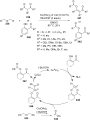
Scheme 77: Cross-dehydrogenative C–O coupling of ethers with β-dicarbonyl compounds and phenols using copper c...

Scheme 78: Cross-dehydrogenative C–O coupling of 2-hydroxybenzaldehyde with dioxane catalyzed by Cu2(BPDC)2(BP...

Scheme 79: Ruthenium chloride-catalyzed acyloxylation of β-lactams.

Scheme 80: Ruthenium-catalyzed tert-butyl peroxydation amides and acetoxylation of β-lactams.

Scheme 81: PhI(OAc)2-mediated α,β-diacetoxylation of tertiary amines.

Scheme 82: Electrochemical oxidative methoxylation of tertiary amines.

Scheme 83: Cross-dehydrogenative C–O coupling of ketene dithioacetals with carboxylic acids in the presence of...

Scheme 84: Cross-dehydrogenative C–O coupling of enamides with carboxylic acids using iodosobenzene as oxidant....

Scheme 85: Oxidative alkoxylation, acetoxylation, and tosyloxylation of acylanilides using PhI(O(O)CCF3)2 in t...

Scheme 86: Proposed mechanism of the oxidative C–O coupling of actetanilide with O-nucleophiles in the presenc...

Scheme 87: Three-component coupling of aldehydes, anilines and alcohols involving oxidative intermolecular C–O...

Scheme 88: Oxidative coupling of phenols with alcohols.

Scheme 89: 2-Acyloxylation of quinoline N-oxides with arylaldehydes in the presence of the CuOTf/t-BuOOH syste...

Scheme 90: Cross-dehydrogenative C–O coupling of azoles with primary alcohols.

Scheme 91: Oxidation of dipyrroles to dipyrrins and subsequent oxidative alkoxylation in the presence of Na3Co...

Scheme 92: Oxidative dehydrogenative carboxylation of alkanes and cycloalkanes to allylic esters.

Scheme 93: Pd-catalyzed acetoxylation of benzene.
Synthesis of enantiomerically pure N-(2,3-dihydroxypropyl)arylamides via oxidative esterification
- Akula Raghunadh,
- Satish S More,
- T. Krishna Chaitanya,
- Yadla Sateesh Kumar,
- Suresh Babu Meruva,
- L. Vaikunta Rao and
- U. K. Syam Kumar
Beilstein J. Org. Chem. 2013, 9, 2129–2136, doi:10.3762/bjoc.9.250

- -dihydroxypropyl)benzamides (6a and 6b): To a solution of phthalimido hydroxyl ester (5a) (5 g, 0.016 mol) in dichloromethane (5 mL), methylamine (15 mL) was added at 25–30 °C and stirred for 2 h. Sodium hydroxide (0.64 g, 0.016 mol) was added, and the mixture was stirred for another 1–2 h. The reaction mixture

Graphical Abstract

Scheme 1: Retro synthetic approach for the construction of N-(2,3-dihydroxypropyl)arylamides.

Scheme 2: Synthesis of phthalimido-protected chiral hydroxypropyl benzoate.

Scheme 3: Proposed mechanism of epoxide opening.

Scheme 4: Reagents and conditions: (a) Methylamine, DCM, 30–35 °C, 94%.
On the control of secondary carbanion structure utilising ligand effects during directed metallation
- Andrew E. H. Wheatley,
- Jonathan Clayden,
- Ian H. Hillier,
- Alison Campbell Smith,
- Mark A. Vincent,
- Laurence J. Taylor and
- Joanna Haywood
Beilstein J. Org. Chem. 2012, 8, 50–60, doi:10.3762/bjoc.8.5
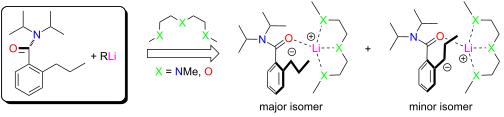
- (L = PMDTA, DGME; DGME = diglyme) and also, under kinetic control, the remarkable hemi-solvated ortho-lithiate (Scheme 4). This development allowed thermodynamic lithiate 5-Lil·PMDTA to be successfully used to generate a variety of benzamides bearing quaternary C-centres at the aromatic 2-position

Graphical Abstract

Scheme 1: Molecular structures of 1/2-H and their corresponding ortho-lithiates [21].

Scheme 2: Molecular structures of 3/4-H and their corresponding lateral lithiates [23,24].

Scheme 3: Conversion of kinetic ortho-lithiate into the thermodynamic lateral lithiate under the influence of...

Scheme 4: Molecular structure of 5-H and its lateral and ortho-lithiates [20].

Scheme 5: Lateral metallation of 6-H using t-BuLi in the presence of Lewis base L.

Figure 1: Molecular structure of 6-Lil·PMDTA; H-atoms (excl. H8) omitted for clarity. Selected bond lengths (...

Scheme 6: Comparison of aromatic and aryl–(α-C) bond distances in 5-Lil·L [20] and 6-Lil·L (L = PMDTA).

Figure 2: Molecular structure of 6-Lil·DGME; H-atoms omitted. Selected bond lengths (Å) and angles (°): O1–Li...

Figure 3: Computed minimum energy conformers (B3LYP density functional/6-311++G(2d,2p) basis set; H-atoms omi...
Directed aromatic functionalization in natural-product synthesis: Fredericamycin A, nothapodytine B, and topopyrones B and D
- Charles Dylan Turner and
- Marco A. Ciufolini
Beilstein J. Org. Chem. 2011, 7, 1475–1485, doi:10.3762/bjoc.7.171
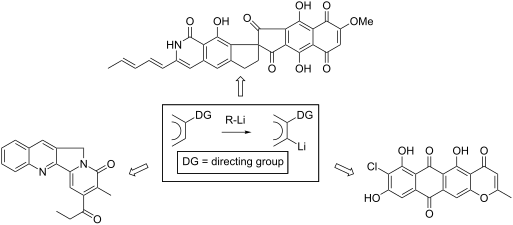
- chlorinated benzamides undergo ortho-deprotonation without difficulty [104], implying that the resistance of 57 cannot be attributed to the chloro substituent per se. Nor can the problem be ascribed to sequestration of the base through coordination/chelation [33] effects involving the chlorine atom. Such a

Graphical Abstract
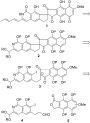
Scheme 1: Structure and retrosynthetic analysis of fredericamycin A.

Scheme 2: Assembly of the isoquinolone segment of fredericamycin.

Scheme 3: Synthesis of a naphthalide precursor to the quinoid moiety of fredericamycin.
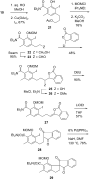
Scheme 4: Palladium-mediated cyclization of a fredericamycin model system.
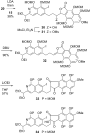
Scheme 5: Synthesis of the precursor of fredericamycin and the facile air oxidation thereof.

Scheme 6: Formal synthesis of fredericamycin A.

Figure 1: Structure of nothapodytine B.

Scheme 7: A useful pyridone synthesis.

Scheme 8: Retrosynthetic logic for nothapodytine B.

Scheme 9: Preparation of a key nothapodytine fragment.

Scheme 10: Total synthesis of nothapodytine B.

Figure 2: Structures of topopyrones.

Scheme 11: Retrosynthetic logic for the linear series of topopyrones.

Scheme 12: Construction of the molecular subunit common to all topopyrones.
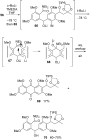
Scheme 13: Difficulties encountered during the merger of the topopyrone D moieties.

Scheme 14: Efficient synthesis of a simplified anthraquinone.

Scheme 15: Total synthesis of topopyrone D.
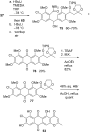
Scheme 16: Total synthesis of topopyrone B.
Approaches towards the synthesis of 5-aminopyrazoles
- Ranjana Aggarwal,
- Vinod Kumar,
- Rajiv Kumar and
- Shiv P. Singh
Beilstein J. Org. Chem. 2011, 7, 179–197, doi:10.3762/bjoc.7.25
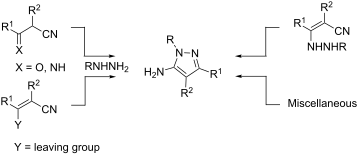
- catalyzed reaction of benzoylacetonitrile 51 and acetonitrile, yielded 5-amino-3-aryl-1H-pyrazoles 53. Corresponding amide derivatives, i.e., N-(1,3-diaryl-1H-pyrazol-5-yl)benzamides 54 were prepared by further treating aminopyrazoles 53 with substituted benzoyl chlorides in DCM (Scheme 13) [44]. 3

Graphical Abstract
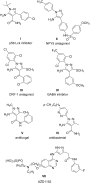
Figure 1: Pharmacologically active 5-aminopyrazoles.

Scheme 1: General equation for the condensation of β-ketonitriles with hydrazines.

Scheme 2: Reaction of hydrazinoheterocycles with α-phenyl-β-cyanoketones (4).

Scheme 3: Condensation of cyanoacetaldehyde (7) with hydrazines.

Scheme 4: Synthesis of 5-aminopyrazoles and their sulfonamide derivatives.

Scheme 5: Synthesis of 5-aminopyrazoles, containing a cyclohexylmethyl- or phenylmethyl- sulfonamido group at...

Scheme 6: Regioselective synthesis of 3-amino-2-alkyl (or aryl) thieno[3,4-c]pyrazoles 19.

Scheme 7: Solid supported synthesis of 5-aminopyrazoles.

Scheme 8: Synthesis of 5-aminopyrazoles from resin supported enamine nitrile 25 as the starting material.
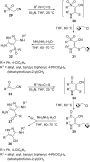
Scheme 9: Two-step “catch and release” solid-phase synthesis of 3,4,5-trisubstituted pyrazoles.

Scheme 10: Synthesis of pyrazolo[5,1-d][1,2,3,5]tetrazine-4(3H)-ones.

Scheme 11: Synthesis of the 5,5-ring system, imidazo[1,2-b]pyrazol-2-ones.

Scheme 12: Synthesis of 5-amino-3-(pyrrol-2-yl)pyrazole-4-carbonitrile.
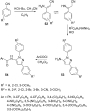
Scheme 13: Synthesis of N-(1,3-diaryl-1H-pyrazol-5-yl)benzamide.

Scheme 14: Synthesis of 3,7-bis(arylazo)-6-methyl-2-phenyl-1H-imidazo[1,2-b]pyrazoles.

Scheme 15: Synthesis of 3,5-diaminopyrazole.

Scheme 16: Synthesis of 5-amino-4-cyanopyrazole and 5-amino-3-hydrazinopyrazole.

Scheme 17: Synthesis of 3,5-diaminopyrazoles with substituted malononitriles.

Scheme 18: Synthesis of 3,5-diamino-4-oximinopyrazole.

Scheme 19: Synthesis of 4-arylazo-3,5-diaminopyrazoles.

Scheme 20: Synthesis of 3- or 5-amino-4-cyanopyrazoles.

Scheme 21: Synthesis of triazenopyrazoles.

Scheme 22: Synthesis of 5(3)-aminopyrazoles.

Scheme 23: Synthesis of 3-substituted 5-amino-4-cyanopyrazoles.

Scheme 24: Synthesis of 2-{[(1-acetyl-4-cyano-1H-pyrazol-5-yl)amino]methylene}malononitrile.

Scheme 25: Synthesis of 5-aminopyrazole carbodithioates and 5-amino-3-arylamino-1-phenylpyrazole-4-carboxamide...

Scheme 26: Synthesis of 5-amino-4-cyanopyrazoles.

Scheme 27: Synthesis of thiazolylpyrazoles.

Scheme 28: Synthesis of 5-amino-1-heteroaryl-3-methyl/aryl-4-cyanopyrazoles.

Scheme 29: Synthesis of 5-amino-3-methylpyrazole-4-carboxamide.

Scheme 30: Synthesis of 4-acylamino-3(5)-amino-5(3)-arylsulfanylpyrazoles.

Scheme 31: Synthesis of 5-amino-1-aryl-4-diethoxyphosphoryl-3-halomethylpyrazoles.

Scheme 32: Synthesis of substituted 5-amino-3-trifluoromethylpyrazoles 114 and 118.

Scheme 33: Solid-support synthesis of 5-N-alkylamino and 5-N-arylaminopyrazoles.

Scheme 34: Synthesis of 5-amino-1-cyanoacetyl-3-phenyl-1H-pyrazole.

Scheme 35: Synthesis of 3-substituted 5-amino-1-aryl-4-(benzothiazol-2-yl)pyrazoles.

Scheme 36: Synthesis of 5-amino-4-carbethoxy-3-methyl-1-(4-sulfamoylphenyl)pyrazole.

Scheme 37: Synthesis of inhibitors of hsp27-phosphorylation and TNFa-release.

Scheme 38: Synthesis of the diglycylpyrazole 142.

Scheme 39: Synthesis of 5-amino-1-aryl-4-benzoylpyrazole derivatives.

Scheme 40: Synthesis of 4-benzoyl-3,5-diamino-1-(2-cyanoethyl)pyrazole.

Scheme 41: Synthesis of the 5-aminopyrazole derivative 150.

Scheme 42: Synthesis of 3,5-diaminopyrazoles 153.

Scheme 43: Synthesis of 5-aminopyrazoles derivatives 155 via lithiated intermediates.

Scheme 44: Synthesis of 5-amino-4-(1,2,4-oxadiazol-5-yl)-pyrazoles 157.

Scheme 45: Synthesis of a 5-aminopyrazole with anticonvulsant activity.

Scheme 46: Synthesis of tetrasubstituted 5-aminopyrazole derivatives.

Scheme 47: Synthesis of substituted 5-aminopyrazoles from hydrazonoyl halides.

Scheme 48: Synthesis of 3-amino-5-phenylpyrazoles from isothiazoles.

Scheme 49: Synthesis of 5-aminopyrazoles via ring transformation.
The enantiospecific synthesis of (+)-monomorine I using a 5-endo- trig cyclisation strategy
- Malcolm B. Berry,
- Donald Craig,
- Philip S. Jones and
- Gareth J. Rowlands
Beilstein J. Org. Chem. 2007, 3, No. 39, doi:10.1186/1860-5397-3-39
- optimisation obviated the need for chromatography following the protecting group exchange, and the benzamides 11 could be isolated in high purity and good yield. Hydroxyalkylation with a range of aldehydes proceeded without issue to give the β-hydroxysulfones 12 in excellent yields. The β-hydroxysulfones were

Graphical Abstract

Scheme 1: General strategy for the synthesis of heterocycles via 5-endo-trig cyclisation

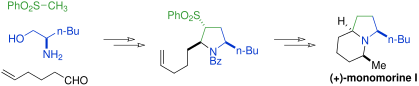
Scheme 2: Retrosynthesis of (+)-monomorine I
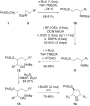
Scheme 3: The sulfone-mediated synthesis of 2,5-syn disubstituted pyrrolidines via a 5-endo-trig cyclisation

Scheme 4: The deprotection of N-benzoylpyrrolidines

Scheme 5: Synthesis of N-benzoyl protected pyrrolidine required for the preparation of (+)-monomorine I

Scheme 6: Mercury-mediated hydroamination

Scheme 7: Proposed transition state for mercury-mediate hydroamination

Scheme 8: Model study for the reductive amination-based cyclisation

Scheme 9: The synthesis of (+)-monomorine I



