


Search results
Search for "dihydrofuran" in Full Text gives 59 result(s) in Beilstein Journal of Organic Chemistry.
A gold-catalyzed alkyne-diol cycloisomerization for the synthesis of oxygenated 5,5-spiroketals
- Sami F. Tlais and
- Gregory B. Dudley
Beilstein J. Org. Chem. 2011, 7, 570–577, doi:10.3762/bjoc.7.66
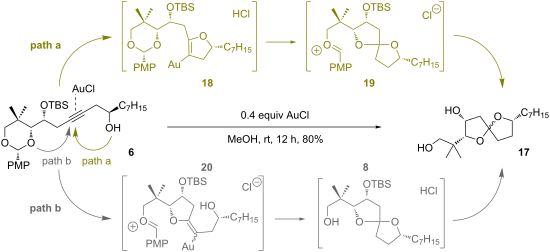
- cyclocondensation of alkyne diols to give substituted furans (Scheme 3, Reaction 3) [35]. Our objective, laid out in Scheme 4, was to initiate cycloisomerization with a 5-endo-dig cyclization of the homopropargyl alcohol 6, followed by 5-exo-trig cyclization onto the resulting dihydrofuran, whilst avoiding
- methanol. Path a, which corresponds roughly to our original experimental designs, involves initial gold-catalyzed 5-endo-dig cyclization to dihydrofuran 18. Once the regiochemistry is established, any number of condensation pathways would lead to spiroketal 17. For example, protonation of the enol ether

Graphical Abstract

Figure 1: Common spiroketal motifs.

Figure 2: Spiroketal-containing cephalosporolide natural products.

Scheme 1: Cyclocondensation vs. cycloisomerization for the synthesis of spiroketals.

Scheme 2: Retrosynthetic analysis of cephalosporolide H.

Scheme 3: Key precedents for the desired cycloisomerization.

Scheme 4: Proposed cycloisomerization with acetal hydrolysis.

Scheme 5: Synthesis of model cyclization substrate 13.

Scheme 6: Synthesis of reported structure of cephalosporolide H.

Scheme 7: Proposed mechanism.

Scheme 8: Control experiment for gold-activation of the alkyne.
An overview of the key routes to the best selling 5-membered ring heterocyclic pharmaceuticals
- Marcus Baumann,
- Ian R. Baxendale,
- Steven V. Ley and
- Nikzad Nikbin
Beilstein J. Org. Chem. 2011, 7, 442–495, doi:10.3762/bjoc.7.57
- ethyl 3-oxopropanoate followed by saponification of the ester to yield etodolac (Scheme 31) [44]. The second described route [45][46] is similar but starts with a more readily available carbonyl surrogate; 2,3-dihydrofuran 154. The Fischer indole reaction provides a primary alcohol which is TMS

Graphical Abstract
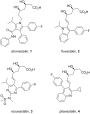
Figure 1: Structures of atorvastatin and other commercial statins.

Figure 2: Structure of compactin.

Scheme 1: Synthesis of pentasubstituted pyrroles.

Scheme 2: [3 + 2] Cycloaddition to prepare 5-isopropylpyrroles.

Scheme 3: Regiospecific [3 + 2] cycloaddition to prepare the pyrrole scaffold.

Scheme 4: Formation of the pyrrole core of atorvastatin via [3 + 2] cycloaddition.

Scheme 5: Formation of pyrrole 33 via the Paal–Knorr reaction.

Scheme 6: Convergent synthesis towards atorvastatin.

Figure 3: Binding pocket of sunitinib in the TRK KIT.

Scheme 7: Synthesis of sunitinib.

Scheme 8: Alternative synthesis of sunitinib.

Scheme 9: Key steps in the syntheses of sumatriptan and zolmitriptan.

Scheme 10: Introduction of the N,N-dimethylaminoethyl side chain.

Scheme 11: Japp–Klingemann reaction in the synthesis of sumatriptan.

Scheme 12: Synthesis of the intermediate sulfonyl chlorides 62 and 63.

Scheme 13: Alternative introduction of the sulfonamide.

Scheme 14: Negishi-type coupling to benzylic sulfonamides.

Scheme 15: Heck reaction used to introduce the sulfonamide side chain of naratriptan.

Scheme 16: Synthesis of the oxazolinone appendage of zolmitriptan.

Scheme 17: Grandberg indole synthesis used in the preparation of rizatriptan.

Scheme 18: Improved synthesis of rizatriptan.

Scheme 19: Larock-type synthesis of rizatriptan.

Scheme 20: Synthesis of eletriptan.

Scheme 21: Heck coupling for the indole system in eletriptan.

Scheme 22: Attempted Fischer indole synthesis of elatriptan.

Scheme 23: Successful Fischer indole synthesis for eletriptan.
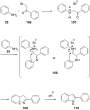
Scheme 24: Mechanistic rationale for the Bischler–Möhlau reaction.

Scheme 25: Bischler-type indole synthesis used in the fluvastatin sodium synthesis.

Scheme 26: Palladium-mediated synthesis of ondansetron.

Scheme 27: Fischer indole synthesis of ondansetron.

Scheme 28: Optimised Pictet–Spengler reaction towards tadalafil.

Figure 4: Structures of carvedilol 136 and propranolol 137.

Scheme 29: Synthesis of the carbazole core of carvedilol.

Scheme 30: Alternative syntheses of 4-hydroxy-9H-carbazole.

Scheme 31: Convergent synthesis of etodolac.

Scheme 32: Alternative synthesis of etodolac.

Figure 5: Structures of imidazole-containing drugs.

Scheme 33: Synthesis of functionalised imidazoles towards losartan.

Scheme 34: Direct synthesis of the chlorinated imidazole in losartan.

Scheme 35: Synthesis of trisubstituted imidazoles.

Scheme 36: Preparation of the imidazole ring in olmesartan.

Scheme 37: Synthesis of ondansetron.

Scheme 38: Alternative route to ondansetron and its analogues.

Scheme 39: Proton pump inhibitors and synthesis of esomeprazole.

Scheme 40: Synthesis of benzimidazole core pantoprazole.

Figure 6: Structure of rabeprazole 194.

Scheme 41: Synthesis of candesartan.

Scheme 42: Alternative access to the candesartan key intermediate 216.

Scheme 43: .Medicinal chemistry route to telmisartan.

Scheme 44: Improved synthesis of telmisartan.

Scheme 45: Synthesis of zolpidem.

Scheme 46: Copper-catalysed 3-component coupling towards zolpidem.

Figure 7: Structure of celecoxib.

Scheme 47: Preparation of celecoxib.

Scheme 48: Alternative synthesis of celecoxib.

Scheme 49: Regioselective access to celecoxib.

Scheme 50: Synthesis of pazopanib.

Scheme 51: Syntheses of anastrozole, rizatriptan and letrozole.

Scheme 52: Regioselective synthesis of anastrozole.

Scheme 53: Triazine-mediated triazole formation towards anastrozole.

Scheme 54: Alternative routes to 1,2,4-triazoles.

Scheme 55: Initial synthetic route to sitagliptin.

Figure 8: Binding of sitagliptin within DPP-IV.

Scheme 56: The process route to sitagliptin key intermediate 280.

Scheme 57: Synthesis of maraviroc.

Scheme 58: Synthesis of alprazolam.

Scheme 59: The use of N-nitrosoamidine derivatives in the preparation of fused benzodiazepines.

Figure 9: Structures of itraconazole, ravuconazole and voriconazole.

Scheme 60: Synthesis of itraconazole.

Scheme 61: Synthesis of rufinamide.

Scheme 62: Representative tetrazole formation in valsartan.

Figure 10: Structure of tetrazole containing olmesartan, candesartan and irbesartan.

Scheme 63: Early stage introduction of the tetrazole in losartan.

Scheme 64: Synthesis of cilostazol.

Figure 11: Structure of cefdinir.

Scheme 65: Semi-synthesis of cefdinir.

Scheme 66: Thiazole syntheses towards ritonavir.

Scheme 67: Synthesis towards pramipexole.

Scheme 68: Alternative route to pramipexole.

Scheme 69: Synthesis of famotidine.

Scheme 70: Efficient synthesis of the hyperuricemic febuxostat.

Scheme 71: Synthesis of ziprasidone.

Figure 12: Structure of mometasone.

Scheme 72: Industrial access to 2-furoic acid present in mometasone.

Scheme 73: Synthesis of ranitidine from furfuryl alcohol.

Scheme 74: Synthesis of nitrofurantoin.

Scheme 75: Synthesis of benzofuran.

Scheme 76: Synthesis of amiodarone.

Scheme 77: Synthesis of raloxifene.

Scheme 78: Alternative access to the benzo[b]thiophene core of raloxifene.

Scheme 79: Gewald reaction in the synthesis of olanzapine.

Scheme 80: Alternative synthesis of olanzapine.
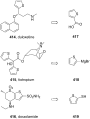
Figure 13: Access to simple thiophene-containing drugs.

Scheme 81: Synthesis of clopidogrel.

Scheme 82: Pictet–Spengler reaction in the preparation of tetrahydrothieno[3,2-c]pyridine (422).

Scheme 83: Alternative synthesis of key intermediate 422.

Figure 14: Co-crystal structures of timolol (left) and carazolol (right) in the β-adrenergic receptor.

Scheme 84: Synthesis of timolol.

Scheme 85: Synthesis of tizanidine 440.

Scheme 86: Synthesis of leflunomide.

Scheme 87: Synthesis of sulfamethoxazole.

Scheme 88: Synthesis of risperidone.

Figure 15: Relative abundance of selected transformations.

Figure 16: The abundance of heterocycles within top 200 drugs (5-membered rings).
The allylic chalcogen effect in olefin metathesis
- Yuya A. Lin and
- Benjamin G. Davis
Beilstein J. Org. Chem. 2010, 6, 1219–1228, doi:10.3762/bjoc.6.140
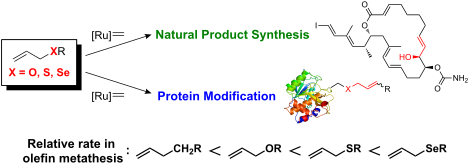
- . When the allylic alcohol was protected with a bulky group, the catalyst reacted preferentially at the less hindered allyl ether (pathway A where R′ = H). The formation of the 4,6-bicyclic intermediate is apparently disfavored with catalyst 1a leading to largely the formation of the dihydrofuran product
- . It should be noted that when a more reactive second-generation catalyst (2) is used the selectivity for the dihydrofuran product is reduced. This selectivity was also found to be highly dependent on the size of protecting group. Significant decrease in ring-size selectivity was observed when smaller

Graphical Abstract

Scheme 1: a) Variation of olefin metathesis: CM = cross-metathesis; RCM = ring-closing metathesis; ROM = ring...

Figure 1: Allylic hydroxy activation in RCM [19].

Figure 2: Possible complexes generated through preassociation of allylic alcohol with ruthenium.

Scheme 2: The influence of different OR groups on ring size-selectivity [21].

Scheme 3: Synthesis of palmerolide A precursors by Nicolaou et al. illustrates enhancement by an allylic hydr...

Scheme 4: a) Acceleration of ring-closing enyne metathesis by the allylic hydroxy group [23]. b) Proposed mode of...

Scheme 5: a) Effect of the hydroxy group on the rate and steroselectivity of ROCM [24]. b) Proposed H-bonded ruth...

Scheme 6: Plausible explanation for chemoselective CM of diene 16 [25].

Scheme 7: a) Efficient cross-metathesis of S-allylcysteine [17]. b) Comparison of relative reactivity between all...

Scheme 8: a) Macrocycle synthesis by carbonyl-relayed RCM. b) Putative complex in carbonyl-relayed RCM [33].

Scheme 9: a) Sulfur assisted cross-metathesis [17]. b) Putative unproductive chelates for larger ring sizes gener...

Scheme 10: Functionalization of Mukaiyama aldol product by CM in aqueous media [37].

Scheme 11: Comparison of reactivity between allyl sulfides and allyl selenides in aqueous cross-metathesis [38].

Scheme 12: Ring-closing metathesis on a protein [18].

Scheme 13: Expanded substrate scope of cross-metathesis on proteins [38].
Light-induced olefin metathesis
- Yuval Vidavsky and
- N. Gabriel Lemcoff
Beilstein J. Org. Chem. 2010, 6, 1106–1119, doi:10.3762/bjoc.6.127
- Hg lamp at 300 nm for 30 min at room temperature, followed by heating at 80 °C until completion of the reaction. The reaction time, compared to the non-irradiated control experiment, was reduced six fold. The various dihydrofuran rings obtained by this method are shown in Figure 7 along with their

Graphical Abstract

Scheme 1: Light activated metathesis of trans-2-pentene.

Scheme 2: Light induced generation of metathesis active species 2.
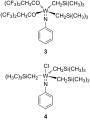
Figure 1: Well-defined tungsten photoactive catalysts.

Figure 2: The first ruthenium based complexes for PROMP.

Figure 3: Cyclic strained alkenes for PROMP.

Scheme 3: Proposed mechanism for photoactivation of sandwich complexes.

Figure 4: Ruthenium and osmium complexes with p-cymene and phosphane ligands for PROMP.

Figure 5: Commercially available photoactive ruthenium precatalyst.

Figure 6: Some of the rings produced by photo-RCM.

Scheme 4: Photopromoted ene-yne RCM by cationic allenylidene ruthenium complex 14.

Figure 7: Dihydrofurans synthesised by photopromoted ene-yne RCM.

Figure 8: Ruthenium complexes with p-cymene and NHC ligands.

Scheme 5: Ruthenium NHC complexes for PROMP containing p-cymene and trifluroacetate (17, 19) or phenylisonitr...

Figure 9: Photoactivated cationic ROMP precatalysts.

Figure 10: Different monomers for PROMP.

Scheme 6: Proposed mechanism for photoinitiated polymerisation by 22 and 23.

Figure 11: Light-induced cationic catalysts for ROMP.

Figure 12: Sulfur chelated ruthenium benzylidene pre-catalysts for olefin metathesis.

Scheme 7: Proposed mechanism for the photoactivation of sulfur-chelated ruthenium benzylidene.

Figure 13: Photoacid generators for photoinduced metathesis.

Scheme 8: Synthesis of precatalysts 36 and 37.

Scheme 9: Trapping of proposed intermediate 41.

Figure 14: Encapsulated 39, isolated from the monomer.
Redox-active tetrathiafulvalene and dithiolene compounds derived from allylic 1,4-diol rearrangement products of disubstituted 1,3-dithiole derivatives
- Filipe Vilela,
- Peter J. Skabara,
- Christopher R. Mason,
- Thomas D. J. Westgate,
- Asun Luquin,
- Simon J. Coles and
- Michael B. Hursthouse
Beilstein J. Org. Chem. 2010, 6, 1002–1014, doi:10.3762/bjoc.6.113

- the discovery of an unexpected rearrangement of 4,5-bis(2-arylhydroxymethyl)-1,3-dithiole-2-thiones (2) in the presence of acid catalysts [4]. As well as the expected dihydrofuran, formed by a nucleophilic ring-closing reaction, other compounds were also produced depending on the nature of the aryl
- obtained as the major product (by tlc). By contrast, when 2 was treated with HBr in CH2Cl2, compound 7 was isolated as a yellow oil via the initially produced dihydrofuran 4 along with compound 8 (observed only by 1H NMR) [6]. The behaviour of 4,5-bis(2-thienylhydroxymethyl)-1,3-dithiole-2-thione in the
- of spirocyclopropyl benzenium species [14]. However, as seen in Scheme 3, we propose a methoxy stabilised spirocyclopentyl benzenium intermediate. This mechanism is only valid for the 4-methoxy derivative as the position of the electron donating groups is fundamental in producing the dihydrofuran or

Graphical Abstract

Figure 1: Chemical structures of compounds 1–3.

Scheme 1: Acid-catalysed behaviour of 4,5-bis(2-arylhydroxymethyl)-1,3-dithiole-2-thiones 2.

Scheme 2: The proposed mechanism for the formation of 3.

Scheme 3: The proposed mechanism for the decomposition of 13 in the presence of perchloric acid.

Figure 2: Generalised structure of diol 17.

Scheme 4: Reagents and conditions: (i) LDA (1 equiv), 2,4-dimethoxybenzaldehyde (1 equiv), then repeat, −78 °...

Scheme 5: Reagents and conditions: (i) ethylenediamine, AcOH, MeOH; (ii) P(OEt)3, 120 °C, 3 h.

Figure 3: Molecular structure and numbering scheme of compound 22 with Hs omitted.

Scheme 6: Reagents and conditions: (i) P(OEt)3, reflux; (ii) Hg(OAc)2, CH2Cl2/AcOH; (iii) NaOEt, THF, reflux,...

Figure 4: Molecular structure of 28 with the tetrabutylammonium cation omitted.

Figure 5: Packing diagram of 28 identifying close intermolecular contacts.

Figure 6: UV–visible spectra of 3, 25, 27 and 28 in CH2Cl2 solution.

Figure 7: Cyclic voltammograms of compounds 3, 25, 27, and 28. Glassy carbon working electrode, using Pt wire...
Addition of lithiated enol ethers to nitrones and subsequent Lewis acid induced cyclizations to enantiopure 3,6-dihydro-2H-pyrans – an approach to carbohydrate mimetics
- Fabian Pfrengle and
- Hans-Ulrich Reissig
Beilstein J. Org. Chem. 2010, 6, No. 75, doi:10.3762/bjoc.6.75

- ether, dihydropyran, and dihydrofuran, all added smoothly to glyceraldehyde-derived nitrones 2a or 2b after lithiation with tert-butyllithium. Whereas in the reaction with uncomplexed nitrones, 1.5 equivalents of the respective lithiated enol ether were sufficient to obtain the desired syn-products with

Graphical Abstract

Scheme 1: Synthesis of 3,6-dihydro-2H-pyrans D.

Scheme 2: Addition of lithiated enol ether 1a to nitrone 2c/Et2AlCl.

Scheme 3: Mechanistic proposal for the transformation of syn-4a into cis-5a in the presence of TMSOTf.

Scheme 4: Unsuccessful attempt to cyclize hydroxylamine derivative syn-4f.

Scheme 5: Functionalizations of the enol ether moiety of cis-5a leading to compounds 8–11.

Scheme 6: Transformations of the enol ether moiety of trans-5a leading to products 13–15.

Scheme 7: Bromination of bicyclic dihydropyran trans-5b affording 16.

Scheme 8: Synthesis of epoxypyran 18 by bromination of cis-5d.

Scheme 9: Oxidative cleavage of dihydropyran 19 to lactone 20.

Scheme 10: Transformation of α-bromoketone 15 into nitrone 21 by an internal redox reaction.

Scheme 11: Transformation of α-bromoketone 11 into nitrone 21.

Scheme 12: Synthesis of diastereomeric aminopyrans 24 and 26.

Scheme 13: Synthesis of diastereomeric aminopyrans 28 and 30.

Scheme 14: Synthesis of triamides 31 and 32.
Recent progress on the total synthesis of acetogenins from Annonaceae
- Nianguang Li,
- Zhihao Shi,
- Yuping Tang,
- Jianwei Chen and
- Xiang Li
Beilstein J. Org. Chem. 2008, 4, No. 48, doi:10.3762/bjoc.4.48
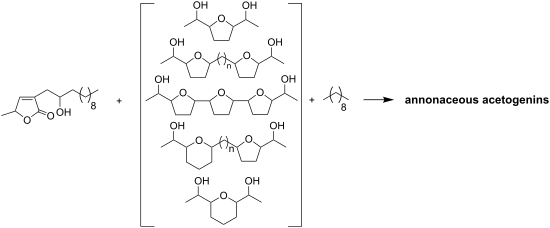
- of 67 to 1,3-dimesitylimidazol-2-ylidene ruthenium benzylidene catalyst (RuCl2(=C(H)-Ph)(PCy3)(IMes)) after protection of the free hydroxyl group afforded the RCM product 68. Hydrogenation of the double bond of dihydrofuran 68 and iodination of the primary alcohol gave 69, which was then utilized to

Graphical Abstract

Scheme 1: Total synthesis of longifolicin by Marshall’s group.

Scheme 2: Total synthesis of corossoline by Tanaka’s group.

Scheme 3: Total synthesis of corossoline by Wu’s group.

Scheme 4: Total synthesis of pseudo-annonacin A by Hanessian’s group.

Scheme 5: Total synthesis of tonkinecin by Wu’s group.

Scheme 6: Total synthesis of gigantetrocin A by Shi’s group.

Scheme 7: Total synthesis of annonacin by Wu’s group.

Scheme 8: Total synthesis of solamin by Kitahara’s group.

Scheme 9: Total synthesis of solamin by Mioskowski’s group.

Scheme 10: Total synthesis of cis-solamin by Makabe’s group.

Scheme 11: Total synthesis of cis-solamin by Brown’s group.

Scheme 12: The formal synthesis of (+)-cis-solamin by Donohoe’s group.

Scheme 13: Total synthesis of cis-solamin by Stark’s group.

Scheme 14: Total synthesis of mosin B by Tanaka’s group.

Scheme 15: Total synthesis of longicin by Hanessian’s group.

Scheme 16: Total synthesis of murisolin and 16,19-cis-murisolin by Tanaka’s group.

Scheme 17: Synthesis of a stereoisomer library of (+)-murisolin by Curran’s group.

Scheme 18: Total synthesis of murisolin by Makabe’s group.

Scheme 19: Total synthesis of reticulatain-1 by Makabe’s group.

Scheme 20: Total synthesis of muricatetrocin C by Ley’s group.

Scheme 21: Total synthesis of (4R,12S,15S,16S,19R,20R,34S)-muricatetrocin (146) and (4R,12R,15S,16S,19R,20R,34S...

Scheme 22: Total synthesis of parviflorin by Hoye’s group.

Scheme 23: Total synthesis of parviflorin by Trost’s group.

Scheme 24: Total synthesis of trilobacin by Sinha’s group.

Scheme 25: Total synthesis of 15-epi-annonin I 181b by Scharf’s group.

Scheme 26: Total synthesis of squamocin A and squamocin D by Scharf’s group.

Scheme 27: Total synthesis of asiminocin by Marshall’s group.

Scheme 28: Total synthesis of asiminecin by Marshall’s group.

Scheme 29: Total synthesis of (+)-(30S)-bullanin by Marshall’s group.

Scheme 30: Total synthesis of uvaricin by the group of Sinha and Keinan.

Scheme 31: Formal synthesis of uvaricin by Burke’s group.

Scheme 32: Total synthesis of trilobin by Marshall’s group.

Scheme 33: Total synthesis of trilobin by the group of Sinha and Keinan.

Scheme 34: Total synthesis of asimilobin by the group of Wang and Shi.

Scheme 35: Total synthesis of squamotacin by the group of Sinha and Keinan.

Scheme 36: Total synthesis of asimicin by Marshall’s group.

Scheme 37: Total synthesis of asimicin by the group of Sinha and Keinan.

Scheme 38: Total synthesis of asimicin by Roush’s group.

Scheme 39: Total synthesis of asimicin by Marshall’s group.

Scheme 40: Total synthesis of 10-hydroxyasimicin by Ley’s group.

Scheme 41: Total synthesis of asimin by Marshall’s group.

Scheme 42: Total synthesis of bullatacin by the group of Sinha and Keinan.

Scheme 43: Total synthesis of bullatacin by Roush’s group.

Scheme 44: Total synthesis of bullatacin by Pagenkopf’s group.

Scheme 45: Total synthesis of rollidecins C and D by the group of Sinha and Keinan.

Scheme 46: Total synthesis of 30(S)-hydroxybullatacin by Marshall’s group.

Scheme 47: Total synthesis of uvarigrandin A and 5(R)-uvarigrandin A by Marshall’s group.

Scheme 48: Total synthesis of membranacin by Brown’s group.

Scheme 49: Total synthesis of membranacin by Lee’s group.

Scheme 50: Total synthesis of rolliniastatin 1 and rollimembrin by Lee’s group.

Scheme 51: Total synthesis of longimicin D by the group of Maezaki and Tanaka.

Scheme 52: Total synthesis of the structure proposed for mucoxin by Borhan’s group.

Scheme 53: Modular synthesis of adjacent bis-THF annonaceous acetogenins by Marshall’s group.

Scheme 54: Total synthesis of 4-deoxygigantecin by Tanaka’s group.

Scheme 55: Total synthesis of squamostatins D by Marshall’s group.

Scheme 56: Total synthesis of gigantecin by Crimmins’s group.

Scheme 57: Total synthesis of gigantecin by Hoye’s group.

Scheme 58: Total synthesis of cis-sylvaticin by Donohoe’s group.

Scheme 59: Total synthesis of 17(S),18(S)-goniocin by Sinha’s group.

Scheme 60: Total synthesis of goniocin and cyclogoniodenin T by the group of Sinha and Keinan.

Scheme 61: Total synthesis of jimenezin by Takahashi’s group.

Scheme 62: Total synthesis of jimenezin by Lee’s group.

Scheme 63: Total synthesis of jimenezin by Hoffmann’s group.

Scheme 64: Total synthesis of muconin by Jacobsen’s group.

Scheme 65: Total synthesis of (+)-muconin by Kitahara’s group.

Scheme 66: Total synthesis of muconin by Takahashi’s group.

Scheme 67: Total synthesis of muconin by the group of Yoshimitsu and Nagaoka.

Scheme 68: Total synthesis of mucocin by the group of Sinha and Keinan.

Scheme 69: Total synthesis of mucocin by Takahashi’s group.

Scheme 70: Total synthesis of (−)-mucocin by Koert’s group.

Scheme 71: Total synthesis of mucocin by the group of Takahashi and Nakata.

Scheme 72: Total synthesis of mucocin by Evans’s group.

Scheme 73: Total synthesis of mucocin by Mootoo’s group.

Scheme 74: Total synthesis of (−)-mucocin by Crimmins’s group.

Scheme 75: Total synthesis of pyranicin by the group of Takahashi and Nakata.

Scheme 76: Total synthesis of pyranicin by Rein’s group.

Scheme 77: Total synthesis of proposed pyragonicin by the group of Takahashi and Nakata.

Scheme 78: Total synthesis of pyragonicin by Rein’s group.

Scheme 79: Total synthesis of pyragonicin by Takahashi’s group.

Scheme 80: Total synthesis of squamostanal A by Figadère’s group.

Scheme 81: Total synthesis of diepomuricanin by Tanaka’s group.

Scheme 82: Total synthesis of (−)-muricatacin [(R,R)-373a] and its enantiomer (+)-muricatacin [(S,S)-373b] by ...

Scheme 83: Total synthesis of epi-muricatacin (+)-(S,R)-373c and (−)-(R,S)-373d by Scharf’s group.

Scheme 84: Total synthesis of (−)-muricatacin 373a and 5-epi-(−)-muricatacin 373d by Uang’s group.

Scheme 85: Total synthesis of four stereoisomers of muricatacin by Yoon’s group.

Scheme 86: Total synthesis of (+)-muricatacin by Figadère’s group.

Scheme 87: Total synthesis of (+)-epi-muricatacin and (−)-muricatacin by Couladouros’s group.

Scheme 88: Total synthesis of muricatacin by Trost’s group.

Scheme 89: Total synthesis of (−)-(4R,5R)-muricatacin by Heck and Mioskowski’s group.

Scheme 90: Total synthesis of muricatacin (−)-373a by the group of Carda and Marco.

Scheme 91: Total synthesis of (−)- and (+)-muricatacin by Popsavin’s group.

Scheme 92: Total synthesis of (−)-muricatacin by the group of Bernard and Piras.

Scheme 93: Total synthesis of (−)-muricatacin by the group of Yoshimitsu and Nagaoka.

Scheme 94: Total synthesis of (−)-muricatacin by Quinn’s group.

Scheme 95: Total synthesis of montecristin by Brückner’s group.

Scheme 96: Total synthesis of (−)-acaterin by the group of Franck and Figadère.

Scheme 97: Total synthesis of (−)-acaterin by Singh’s group.

Scheme 98: Total synthesis of (−)-acaterin by Kumar’s group.

Scheme 99: Total synthesis of rollicosin by Quinn’s group.

Scheme 100: Total synthesis of Rollicosin by Makabe’s group.

Scheme 101: Total synthesis of squamostolide by Makabe’s group.

Scheme 102: Total synthesis of tonkinelin by Makabe’s group.
One-pot preparation of substituted pyrroles from α-diazocarbonyl compounds
- Fernando de C. da Silva,
- Mauricio G. Fonseca,
- Renata de S. Rianelli,
- Anna C. Cunha,
- Maria C. B. V. de Souza and
- Vitor F. Ferreira
Beilstein J. Org. Chem. 2008, 4, No. 45, doi:10.3762/bjoc.4.45

- Abstract In this work an efficient one-pot synthesis of substituted pyrroles 7a–n is described, which involves the in situ formation of dihydrofurans ethyl 5-butoxy-2-methyl-4,5-dihydrofuran-3-carboxylate (4), 1-(5-butoxy-2-methyl-4,5-dihydrofuran-3-yl)ethanone (5) and 5-butoxy-4,5-dihydrofuran-3
- -carbaldehyde (6) followed by reaction with primary amines. Keywords: diazocarbonyl; dihydrofuran; one-pot synthesis; pyrrole; Introduction The pyrrole unit [1] occurs in many interesting classes of compounds such as pharmaceutical agents [2][3][4][5], conducting polymers [6][7], molecular optics [8][9][10
- variations in the reaction times (see Table 1). The reaction of the dihydrofuran intermediates 4, 5 and 6 with excess of primary amines in the presence of glacial acetic acid afforded the corresponding substituted pyrroles 7a–n in moderate to good yields (Table 1). Slightly different reactivity between 4, 5


An efficient synthesis of novel pyrano[2,3-d]- and furopyrano[2,3-d]pyrimidines via indium- catalyzed multi- component domino reaction
- Dipak Prajapati and
- Mukut Gohain
Beilstein J. Org. Chem. 2006, 2, No. 11, doi:10.1186/1860-5397-2-11
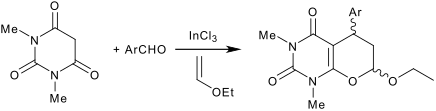
- Knoevenagel/hetero-Diels-Alder reaction of 1,3-dimethyl barbituric acid with an aromatic aldehyde and ethyl vinyl ether/2,3-dihydrofuran in presence of 1 mol% of indium(III) chloride. The reaction also proceeds in aqueous media without using any catalyst, but the yield is comparatively less (65–70
- reaction of α,β-ethylenic ketones and ethyl vinyl ether or 2,3-dihydrofuran has remained unexplored.[11] Herein, we report the first example of indium(III) chloride catalysed synthesis of fused pyrimidine derivatives via a multicomponent domino Knoevenagel hetero Diels-Alder reaction. The reaction proceeds
- ], we have investigated a new, simple and efficient synthesis of novel fused pyrimidines based on inverse electron-demand Diels-Alder reaction using ethyl vinyl ether/dihydrofuran and α,β-ethylenic ketones formed in situ as heterodienes in presence of 1 mol% of indium(III) trichloride (Scheme 1). This

Graphical Abstract

Scheme 1: Reagents and conditions: i) 1 mol% InCl3, acetonitrile:water (3:1)

Scheme 2: Reagents and conditions: i) 1 mol% InCl3, room temperature



