


Search results
Search for "eosin Y" in Full Text gives 53 result(s) in Beilstein Journal of Organic Chemistry.
Metal and metal-free photocatalysts: mechanistic approach and application as photoinitiators of photopolymerization
- Jacques Lalevée,
- Sofia Telitel,
- Pu Xiao,
- Marc Lepeltier,
- Frédéric Dumur,
- Fabrice Morlet-Savary,
- Didier Gigmes and
- Jean-Pierre Fouassier
Beilstein J. Org. Chem. 2014, 10, 863–876, doi:10.3762/bjoc.10.83
- , potential toxicity and limited availability of these structures, metal-free organic dye compounds (e.g., Eosin-Y, Nile Red, Alizarine Red S, perylene derivative or Rhodamine B etc.) were recently proposed for cooperative asymmetric organophotoredox catalysis [13][14]. Photoredox catalysis was then

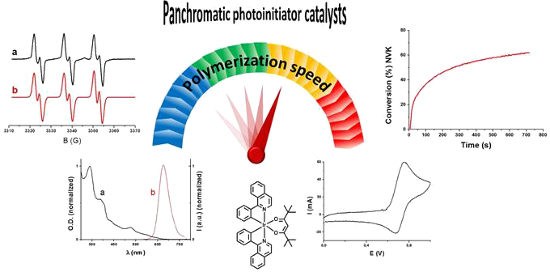
Graphical Abstract

Scheme 1: Examples of photoinitiating systems.

Figure 1: Previously reported PIC (based on metal complexes) [45-52].

Figure 2: Previously reported PIC (metal free organic molecules) [54,55].

Scheme 2: Reaction mechanisms for the three-component system PIC/eA/E-Z.

Scheme 3: Reaction mechanisms for the two-component system PIC/eA.
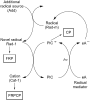
Scheme 4: Reaction mechanisms for the system PIC/eA/add.

Scheme 5: Reaction mechanisms for the system PIC/eD/B-Y.

Figure 3: Typical oxidation and reduction agents used through the photoredox catalysis approach in polymeriza...

Figure 4: Typical monomers that can be polymerized through a photoredox catalysis approach.

Scheme 6: Reaction mechanisms for the system Ru(bpy)32+/Ph2I+/R3SiH.

Scheme 7: Reaction mechanisms for the Ru(ligand)32+/Ph3S+/R3SiH system.

Scheme 8: Reaction mechanisms for the Ru(ligand)32+/Ph2I+/NVK system upon visible lights.

Scheme 9: Reaction mechanisms for the violanthrone/Ph2I+/TTMSS (R3SiH) system upon red lights.

Scheme 10: Reaction mechanisms for the Tr-AD/R-Br/MDEA system upon visible lights.

Scheme 11: The photoredox catalysis for controlled polymerization reactions.

Scheme 12: Reaction mechanisms for the Ru(ligand)32+/MDEA/R-Br system upon visible lights.

Scheme 13: Reaction mechanisms for the Violanthrone/Ru(ligand)32+/Ph2I+/R3SiH system upon visible lights.
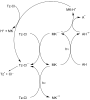
Scheme 14: Reaction mechanisms for the MK/amine/triazine system upon visible lights.
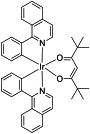
Figure 5: The new proposed PIC (Ir(piq)2(tmd)).

Figure 6: UV–visible light absorption spectra for Ir(piq)2(tmd) (2) and Ir(ppy)3 (1); solvent: acetonitrile.

Figure 7: (A) cyclic voltamogramm for Ir(piq)2(tmd) in acetonitrile; (B) absorption (a) and luminescence (b) ...

Figure 8: Photolysis of a Ir(piq)2(tmd)/Ph2I+ solution ([Ph2I+] = 0.023 M, in acetonitrile) upon a halogen la...

Figure 9: ESR spin-trapping spectra for the irradiation of a Ir(piq)2(tmd)/Ph2I+ solution in the presence of ...

Figure 10: (A) Photopolymerization profile of EPOX; photoinitiating system: Ir(piq)2(tmd)/Ph2I+/NVK (1%/2%/3%)...

Figure 11: (A) Photopolymerization profile of TMPTA; initiating systems: (1) Ir(piq)2(tmd)/MDEA (1%/2%) and (2...
The chemistry of amine radical cations produced by visible light photoredox catalysis
- Jie Hu,
- Jiang Wang,
- Theresa H. Nguyen and
- Nan Zheng
Beilstein J. Org. Chem. 2013, 9, 1977–2001, doi:10.3762/bjoc.9.234
- . König and coworkers showed that the same aza-Henry reaction can be catalyzed by the organic dye Eosin Y to afford the aza-Henry product 18 (Scheme 5) [67]. In addition to nitroalkanes, dialkyl malonates and malononitrile can be used as pronucleophiles to provide β-diester amine 19 and α-aminonitrile 20
- . The authors proposed a mechanism similar to that proposed by Stephenson and coworkers for the aza-Henry reaction catalyzed by the Ir complex (Scheme 3). The Tan group simultaneously reported that another organic dye, Rose Bengal (RB), can be used in place of Eosin Y to catalyze the aza-Henry reaction
- [68]. The Wu group concurrently developed the Eosin Y-catalyzed aza-Henry reaction as reported by König and also performed mechanistic studies on the reaction. Their proposed catalytic cycle for the reaction is detailed in Scheme 6 [69]. Wu and coworkers were able to obtain experimental evidence to

Graphical Abstract

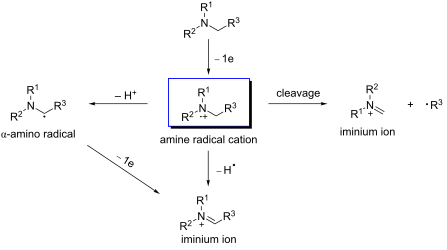
Scheme 1: Amine radical cations’ mode of reactivity.

Scheme 2: Reductive quenching of photoexcited Ru complexes by Et3N.

Scheme 3: Photoredox aza-Henry reaction.

Scheme 4: Formation of iminium ions using BrCCl3 as stoichiometric oxidant.

Scheme 5: Oxidative functionalization of N-aryltetrahydroisoquinolines using Eosin Y.

Scheme 6: Synthetic and mechanistic studies of Eosin Y-catalyzed aza-Henry reaction.

Scheme 7: Oxidative functionalization of N-aryltetrahydroisoquinolines using RB and GO.

Scheme 8: Merging Ru-based photoredox catalysis and Lewis base catalysis for the Mannich reaction.

Scheme 9: Merging Au-based photoredox catalysis and Lewis base catalysis for the Mannich reaction.

Scheme 10: Merging Ru-based photoredox catalysis and Cu-catalyzed alkynylation reaction.

Scheme 11: Merging Ru-based photoredox catalysis and NHC catalysis.

Scheme 12: 1,3-Dipolar cycloaddition of photogenically formed azomethine ylides.

Scheme 13: Plausible mechanism for photoredox 1,3-dipolar cycloaddition.

Scheme 14: Photoredox-catalyzed cascade reaction for the synthesis of fused isoxazolidines.

Scheme 15: Plausible mechanism for the photoredox-catalyzed cascade reaction.

Scheme 16: Photoredox-catalyzed α-arylation of glycine derivatives.

Scheme 17: Photoredox-catalyzed α-arylation of amides.

Scheme 18: Intramolecular interception of iminium ions by sulfonamides.

Scheme 19: Intramolecular interception of iminium ions by alcohols and sulfonamides.

Scheme 20: Intermolecular interception of iminium ions by phosphites.

Scheme 21: Photoredox-catalyzed oxidative phosphonylation by Eosin Y.
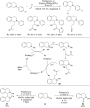
Scheme 22: Conjugated addition of α-amino radicals to Michael acceptors.

Scheme 23: Conjugated addition of α-amino radicals to Michael acceptors assisted by a Brønsted acid.

Scheme 24: Conjugated addition of α-amino radicals derived from anilines to Michael acceptors.

Scheme 25: Oxygen switch between two pathways involving α-amino radicals.

Scheme 26: Interception of α-amino radicals by azodicarboxylates.

Scheme 27: α-Arylation of amines.

Scheme 28: Plausible mechanism for α-arylation of amines.

Scheme 29: Photoinduced C–C bond cleavage of tertiary amines.

Scheme 30: Photoredox cleavage of C–C bonds of 1,2-diamines.

Scheme 31: Proposed mechanism photoredox cleavage of C–C bonds.

Scheme 32: Intermolecular [3 + 2] annulation of cyclopropylamines with olefins.

Scheme 33: Proposed mechanism for intermolecular [3 + 2] annulation.

Scheme 34: Photoinduced clevage of N–N bonds of aromatic hydrazines and hydrazides.
Flow photochemistry: Old light through new windows
- Jonathan P. Knowles,
- Luke D. Elliott and
- Kevin I. Booker-Milburn
Beilstein J. Org. Chem. 2012, 8, 2025–2052, doi:10.3762/bjoc.8.229
- ]. Photocatalysis can also be performed by using visible light. This has been applied to the hydrodehalogenation of α-haloketones by using the dye Eosin Y (36) as a photocatalyst, and both DIPEA and Hantzsch ester 35 as electron donors (Scheme 13). The reaction was shown to be high yielding for a number of
- entirely unsuccessful under batch conditions to be conducted [54]. Eosin Y (36) catalysis was also applied to an organocatalytic (42) photoredox α-alkylation of octanal (40, Scheme 15) to aldehyde 43. The reaction proved to be high yielding under both batch and microflow conditions, and a reduced

Graphical Abstract

Figure 1: An immersion-well batch reactor with 125 W medium pressure Hg lamp.

Figure 2: Transmission profile of a 0.05 M solution, ε = 200 M−1 cm−1.

Figure 3: Schematic of a typical microflow photochemical reactor (above) and detail of a triple-channel micro...

Figure 4: Schematic of a typical macroflow photochemical reactor (above) and images of the FEP photochemical ...

Scheme 1: [2 + 2] photocycloadditions of enones with enol derivatives.

Scheme 2: Competing reactions in an intramolecular [2 + 2] photocycloaddition.

Scheme 3: Diastereocontrolled cycloaddition of a cyclic enone with cyclopentene.

Scheme 4: Comparison of yields and reaction times for a batch reactor with a microflow system.

Scheme 5: Intramolecular [2 + 2] photocycloaddition.

Scheme 6: Paterno–Büchi reaction of benzophenone with an allylic alcohol.

Scheme 7: Photooxygenation of cyclopentadiene.

Scheme 8: Preparation of the anthelmintic ascaridole 23.

Scheme 9: Production of rose oxide 27 from (−)-β-citronellol (24).

Scheme 10: Photocatalytic alkylation of benzylamine.

Scheme 11: Photocatalytic reduction of 4-nitroacetophenone.

Scheme 12: Conversion of L-lysine to L-pipecolinic acid.

Scheme 13: Photocatalytic hydrodehalogenation.

Scheme 14: Photocatalytic aza-Henry reactions.

Scheme 15: Photocatalytic α-alkylation of aliphatic ketones.

Scheme 16: Decarboxylative photochemical additions.

Scheme 17: Photochemical addition of isopropanol to furanones.

Scheme 18: Photochemical addition of methanol to limonene.

Scheme 19: Light-promoted reduction of flavone.

Scheme 20: Photoreduction of benzophenone with benzhydrol.

Scheme 21: Barton reaction in a microflow system.

Scheme 22: Microflow synthesis of vitamin D3.

Scheme 23: photochemical chlorination of cyclohexane.

Scheme 24: photochemical cyanation of pyrene.

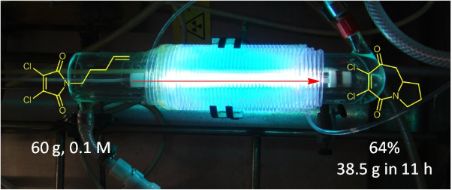
Scheme 25: Intermolecular [2 + 2] cycloaddition of maleimide (76) and intramolecular [2 + 2] cycloaddition of ...

Scheme 26: Intramolecular [5 + 2] cycloaddition of maleimide under flow conditions.

Scheme 27: Intramolecular [5 + 2] cycloaddition as a key step in the synthesis of (±)-neostenine.

Scheme 28: In situ generation of a thioaldehyde by photolysis of a phenacyl sulfide.

Scheme 29: Photodimerisation of maleic anhydride.

Scheme 30: [2 + 2] cycloaddition of a chiral enone with ethylene.

Scheme 31: Intramolecular [2 + 2] cycloaddition of a cyclopentenone.

Scheme 32: Photochemical Wolff rearrangement and cyclisation to β-lactams.

Scheme 33: Photochemical rearrangement of aryl azides.

Scheme 34: Rearrangement of quinoline N-oxides to quinolones.

Scheme 35: Photochemical rearrangement of cyclobutenones.

Scheme 36: Photoisomerisation en route to a vitamin-D derivative.

Scheme 37: Schematic of the Seeberger photooxygenation apparatus and sensitised photooxygenation of citronello...

Scheme 38: Sensitised photooxygenation of dihydroartemisinic acid.

Scheme 39: Photochemical preparation of CpRu(MeCN)3PF6.

Scheme 40: In situ photochemical generation and reaction of a [CpRu]+ catalyst.

Scheme 41: Intermolecular alkene–alkyne coupling with photogenerated catalyst.

Scheme 42: PET deoxygenation of nucleosides.

Scheme 43: Photochemical defluorination of DABFT.

Scheme 44: Aromatic azide reduction by visible-light-mediated photocatalysis.

Scheme 45: Examples of visible-light-mediated reactions.

Scheme 46: Visible-light-mediated formation of iminium ions.

Scheme 47: Examples of visible-light-mediated photocatalytic reactions.

Scheme 48: Anhydride formation from a visible-light-mediated process.

Scheme 49: Light-mediated conjugate addition of glycosyl bromide 141 to acrolein.

Scheme 50: Visible-light-mediated photocyclisation to [5]helicene.



