


Search results
Search for "head-to-tail" in Full Text gives 68 result(s) in Beilstein Journal of Organic Chemistry.
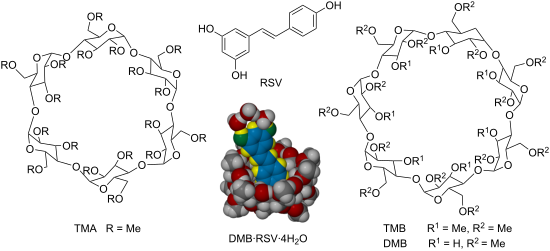
Inclusion of trans-resveratrol in methylated cyclodextrins: synthesis and solid-state structures
- Lee Trollope,
- Dyanne L. Cruickshank,
- Terence Noonan,
- Susan A. Bourne,
- Milena Sorrenti,
- Laura Catenacci and
- Mino R. Caira
Beilstein J. Org. Chem. 2014, 10, 3136–3151, doi:10.3762/bjoc.10.331
- packing is shown in Figure 7. The complex units pack in a head-to-tail manner in columns parallel to the crystal b-axis. Columns of complex units A propagate as rows parallel to the a-axis, alternating with analogous columns of B complex units. Structural analysis of the inclusion complex between
- parallel to the a-axis in a head-to-tail fashion (Figure 11a), adjacent columns being related by the two-fold screw axis along 1/2, y, 1/2. The view down the columns (Figure 11b) reveals a channel-like arrangement of the host molecules in this direction. Among the various isostructural classes of CD
- as well as numerous water–water O–H···O hydrogen bonds. The crystal packing is shown in Figure 15. Complex units stack in columns parallel to the a-axis in a head-to-tail fashion with (as noted above) a small extent of host self-inclusion (Figure 15a). Figure 15b illustrates the modified herringbone

Graphical Abstract

Figure 1: Chemical structure of trans-resveratrol (1).
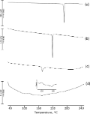
Figure 2: DSC traces of RSV (a), TMA (b), TMA–RSV physical mixture (PM) (c), TMA–RSV preparation by kneading ...

Figure 3: TG (red) and DSC (blue) traces for the hydrated TMA·RSV complex (top), and hot stage micrographs sh...
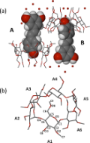
Figure 4: The two symmetry-independent complex units of TMA·RSV·6.25H2O (A and B), with only the major compon...

Figure 5: Representative atomic labelling for the ordered RSV molecule A (blue) present in host A and the two...

Figure 6: Space-filling representations of the two independent complex units A (a) and B (b) of the complex T...

Figure 7: Crystal packing for the complex TMA·RSV·6.25H2O projected down [010].

Figure 8: The components of the disorder model for RSV in its inclusion complex with TMB (s.o.f. = 0.73 for t...
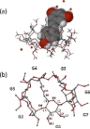
Figure 9: The asymmetric unit in the crystal of TMB·RSV·5.6H2O (a), and the non-H atom and methylglucose ring...

Figure 10: Space-filling model of the inclusion complex TMB·RSV·5.6H2O showing the inclusion of the RSV molecu...

Figure 11: Packing arrangement in the crystal of TMB·RSV·5.6H2O viewed down [010] (a) and [100] (b). Hydrogen ...

Figure 12: Structure of the host–guest complex DMB·RSV·4.0H2O (a), ring and atomic nomenclature for the host m...

Figure 13: Space-filling model of the inclusion complex DMB·RSV·4.0H2O showing the encapsulation of part of th...

Figure 14: Stereoview of two DMB·RSV·4.0H2O complex units related by a unit translation along the crystal a-ax...

Figure 15: Projections of the crystal structure of the complex DMB·RSV·4H2O along [100] (a) and [010] (b). Hyd...

Figure 16: Solubility of RSV as a function of [β-CD] (blue) and [γ-CD] (red) at 25 °C.

Figure 17: Solubility of RSV as a function of the concentrations of TMB (light blue), DMB (red), HP-β-CD (gree...
Macrocyclic bis(ureas) as ligands for anion complexation
- Claudia Kretschmer,
- Gertrud Dittmann and
- Johannes Beck
Beilstein J. Org. Chem. 2014, 10, 1834–1839, doi:10.3762/bjoc.10.193
- head-to-tail arrangement with short intramolecular hydrogen bridges. An even stronger tilting of the molecule is expected for 2. Here, the distances are too large for any intramolecular N−H∙∙∙O bridging bonds. As a strong anion complexing agent 2 binds halide anions even in DMSO as solvent, despite

Graphical Abstract

Scheme 1: Synthesis of the macrocyclic bis(ureas) 1 and 2.

Scheme 2: Formation of dihydroindoloquinolinone 3 from 1 by vacuum sublimation.
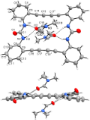
Figure 1: The molecular structure of 2·2DMF in two different views, on top perpendicular to the plane, on bot...
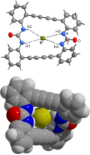
Figure 2: Molecular structure of the anionic complex in NEt4[Br·2]. Two different representations are given, ...
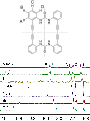
Figure 3: 1H NMR spectra of 2 in THF-d8 after addition of several different tetrabutylammonium salts. The N−H...

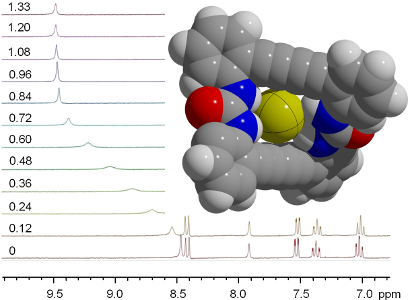
Figure 4: 1H NMR spectra of 2 in THF-d8 after addition of increasing molar equivalents of tetrabutylammonium ...
Isocyanide-based multicomponent reactions towards cyclic constrained peptidomimetics
- Gijs Koopmanschap,
- Eelco Ruijter and
- Romano V.A. Orru
Beilstein J. Org. Chem. 2014, 10, 544–598, doi:10.3762/bjoc.10.50


Graphical Abstract

Scheme 1: The proposed mechanism of the Passerini reaction.

Scheme 2: The PADAM-strategy to α-hydroxy-β-amino amide derivatives 7. An additional oxidation provides α-ket...

Scheme 3: The general accepted Ugi-mechanism.

Scheme 4: Three commonly applied Ugi/cyclization approaches. a) UDC-process, b) UAC-sequence, c) UDAC-combina...

Scheme 5: Ugi reaction that involves the condensation of Armstrong’s convertible isocyanide.

Scheme 6: Mechanism of the U-4C-3CR towards bicyclic β-lactams.

Scheme 7: The Ugi 4C-3CR towards oxabicyclo β-lactams.

Scheme 8: Ugi MCR between an enantiopure monoterpene based β-amino acid, aldehyde and isocyanide resulting in...

Scheme 9: General MCR for β-lactams in water.

Scheme 10: a) Ugi reaction for β-lactam-linked peptidomimetics. b) Varying the β-amino acid resulted in β-lact...

Scheme 11: Ugi-4CR followed by a Pd-catalyzed Sn2 cyclization.

Scheme 12: Ugi-3CR of dipeptide mimics from 2-substituted pyrrolines.

Scheme 13: Joullié–Ugi reaction towards 2,5-disubstituted pyrrolidines.

Scheme 14: Further elaboration of the Ugi-scaffold towards bicyclic systems.

Scheme 15: Dihydroxyproline derivatives from an Ugi reaction.

Scheme 16: Diastereoselective Ugi reaction described by Banfi and co-workers.

Scheme 17: Similar Ugi reaction as in Scheme 16 but with different acids and two chiral isocyanides.

Scheme 18: Highly diastereoselective synthesis of pyrrolidine-dipeptoids via a MAO-N/MCR-procedure.

Scheme 19: MAO-N/MCR-approach towards the hepatitis C drug telaprevir.

Scheme 20: Enantioselective MAO-U-3CR procedure starting from chiral pyrroline 64.

Scheme 21: Synthesis of γ-lactams via an UDC-sequence.

Scheme 22: Utilizing bifunctional groups to provide bicyclic γ-lactam-ketopiperazines.

Scheme 23: The Ugi reaction provided both γ- as δ-lactams depending on which inputs were used.

Scheme 24: The sequential Ugi/RCM with olefinic substrates provided bicyclic lactams.

Scheme 25: a) The structural and dipole similarities of the triazole unit with the amide bond. b) The copper-c...

Scheme 26: The Ugi/Click sequence provided triazole based peptidomimetics.

Scheme 27: The Ugi/Click reaction as described by Nanajdenko.

Scheme 28: The Ugi/Click-approach by Pramitha and Bahulayan.

Scheme 29: The Ugi/Click-combination by Niu et al.

Scheme 30: Triazole linked peptidomimetics obtained from two separate MCRs and a sequential Click reaction.

Scheme 31: Copper-free synthesis of triazoles via two MCRs in one-pot.

Scheme 32: The sequential Ugi/Paal–Knorr reaction to afford pyrazoles.

Scheme 33: An intramolecular Paal–Knorr condensation provided under basic conditions pyrazolones.

Scheme 34: Similar cyclization performed under acidic conditions provided pyrazolones without the trifluoroace...

Scheme 35: The Ugi-4CR towards 2,4-disubstituted thiazoles.

Scheme 36: Solid phase approach towards thiazoles.

Scheme 37: Reaction mechanism of formation of thiazole peptidomimetics containing an additional β-lactam moiet...

Scheme 38: The synthesis of the trisubstituted thiazoles could be either performed via an Ugi reaction with pr...

Scheme 39: Performing the Ugi reaction with DMB-protected isocyanide gave access to either oxazoles or thiazol...

Scheme 40: Ugi/cyclization-approach towards 2,5-disubstituted thiazoles. The Ugi reaction was performed with d...

Scheme 41: Further derivatization of the thiazole scaffold.

Scheme 42: Three-step procedure towards the natural product bacillamide C.

Scheme 43: Ugi-4CR to oxazoles reported by Zhu and co-workers.

Scheme 44: Ugi-based synthesis of oxazole-containing peptidomimetics.

Scheme 45: TMNS3 based Ugi reaction for peptidomimics containing a tetrazole.

Scheme 46: Catalytic cycle of the enantioselective Passerini reaction towards tetrazole-based peptidomimetics.

Scheme 47: Tetrazole-based peptidomimetics via an Ugi reaction and a subsequent sigmatropic rearrangement.

Scheme 48: Resin-bound Ugi-approach towards tetrazole-based peptidomimetics.

Scheme 49: Ugi/cyclization approach towards γ/δ/ε-lactam tetrazoles.

Scheme 50: Ugi-3CR to pipecolic acid-based peptidomimetics.

Scheme 51: Staudinger–Aza-Wittig/Ugi-approach towards pipecolic acid peptidomimetics.

Figure 1: The three structural isomers of diketopiperazines. The 2,5-DKP isomer is most common.

Scheme 52: UDC-approach to obtain 2,5-DKPs, either using Armstrong’s isocyanide or via ethylglyoxalate.

Scheme 53: a) Ugi reaction in water gave either 2,5-DKP structures or spiro compounds. b) The Ugi reaction in ...

Scheme 54: Solid-phase approach towards diketopiperazines.

Scheme 55: UDAC-approach towards DKPs.

Scheme 56: The intermediate amide is activated as leaving group by acid and microwave assisted organic synthes...

Scheme 57: UDC-procedure towards active oxytocin inhibitors.

Scheme 58: An improved stereoselective MCR-approach towards the oxytocin inhibitor.

Scheme 59: The less common Ugi reaction towards DKPs, involving a Sn2-substitution.

Figure 2: Spatial similarities between a natural β-turn conformation and a DKP based β-turn mimetic [158].

Scheme 60: Ugi-based syntheses of bicyclic DKPs. The amine component is derived from a coupling between (R)-N-...

Scheme 61: Ugi-based synthesis of β-turn and γ-turn mimetics.

Figure 3: Isocyanide substituted 3,4-dihydropyridin-2-ones, dihydropyridines and the Freidinger lactams. Bio-...

Scheme 62: The mechanism of the 4-CR towards 3,4-dihydropyridine-2-ones 212.

Scheme 63: a) Multiple MCR-approach to provide DHP-peptidomimetic in two-steps. b) A one-pot 6-CR providing th...

Scheme 64: The MCR–alkylation–MCR procedure to obtain either tetrapeptoids or depsipeptides.

Scheme 65: U-3CR/cyclization employing semicarbazone as imine component gave triazine based peptidomimetics.

Scheme 66: 4CR towards triazinane-diones.

Scheme 67: The MCR–alkylation–IMCR-sequence described by our group towards triazinane dione-based peptidomimet...

Scheme 68: Ugi-4CR approaches followed by a cyclization to thiomorpholin-ones (a) and pyrrolidines (b).

Scheme 69: UDC-approach for benzodiazepinones.

Scheme 70: Ugi/Mitsunobu sequence to BDPs.

Scheme 71: A UDAC-approach to BDPs with convertible isocyanides. The corresponding amide is cleaved by microwa...

Scheme 72: microwave assisted post condensation Ugi reaction.

Scheme 73: Benzodiazepinones synthesized via the post-condensation Ugi/ Staudinger–Aza-Wittig cyclization.

Scheme 74: Two Ugi/cyclization approaches utilizing chiral carboxylic acids. Reaction (a) provided the product...

Scheme 75: The mechanism of the Gewald-3CR includes three base-catalysed steps involving first a Knoevnagel–Co...

Scheme 76: Two structural 1,4-thienodiazepine-2,5-dione isomers by U-4CR/cyclization.

Scheme 77: Tetrazole-based diazepinones by UDC-procedure.

Scheme 78: Tetrazole-based BDPs via a sequential Ugi/hydrolysis/coupling.

Scheme 79: MCR synthesis of three different tricyclic BPDs.

Scheme 80: Two similar approaches both involving an Ugi reaction and a Mitsunobu cyclization.

Scheme 81: Mitsunobu–Ugi-approach towards dihydro-1,4-benzoxazepines.

Scheme 82: Ugi reaction towards hetero-aryl fused 5-oxo-1,4-oxazepines.

Scheme 83: a) Ugi/RCM-approach towards nine-membered peptidomimetics b) Sequential peptide-coupling, deprotect...

Scheme 84: Ugi-based synthesis towards cyclic RGD-pentapeptides.

Scheme 85: Ugi/MCR-approach towards 12–15 membered macrocycles.

Scheme 86: Stereoselective Ugi/RCM approach towards 16-membered macrocycles.

Scheme 87: Passerini/RCM-sequence to 22-membered macrocycles.

Scheme 88: UDAC-approach towards 12–18-membered depsipeptides.

Figure 4: Enopeptin A with its more active derivative ADEP-4.

Scheme 89: a) The Joullié–Ugi-approach towards ADEP-4 derivatives b) Ugi-approach for the α,α-dimethylated der...

Scheme 90: Ugi–Click-strategy for 15-membered macrocyclic glyco-peptidomimetics.

Scheme 91: Ugi/Click combinations provided macrocycles containing both a triazole and an oxazole moiety.

Scheme 92: a) A solution-phase procedure towards macrocycles. b) Alternative solid-phase synthesis as was repo...

Scheme 93: Ugi/cyclization towards cyclophane based macrocycles.

Scheme 94: PADAM-strategy towards eurystatin A.

Scheme 95: PADAM-approach for cyclotheanamide.

Scheme 96: A triple MCR-approach affording RGD-pentapeptoids.

Scheme 97: Ugi-MiBs-approach towards peptoid macrocycles.

Scheme 98: Passerini-based MiB approaches towards macrocycles 345 and 346.

Scheme 99: Macrocyclic peptide formation by the use of amphoteric aziridine-based aldehydes.
Topochemical control of the photodimerization of aromatic compounds by γ-cyclodextrin thioethers in aqueous solution
- Hai Ming Wang and
- Gerhard Wenz
Beilstein J. Org. Chem. 2013, 9, 1858–1866, doi:10.3762/bjoc.9.217
- distribution of products strongly depend both on the solvent [38] and the concentration of COU [39]. In principle, four stereoisomeric dimers are conceivable: syn Head-to-Head (syn-HH), anti-HH, syn-Head-to-Tail (syn-HT), and anti-HH, shown in Figure 5. The photodimerization is very slow in nonpolar media, Φ

Graphical Abstract

Figure 1: Chemical structures of selected aromatic guests: anthracene, ANT; acenaphthylene, ACE; and coumarin...

Figure 2: Structures of γ-CD and γ-CD thioethers 1–7.

Scheme 1: Photodimerization of ACE.

Figure 3: 1H NMR spectrum of the photo product of ACE in the presence of γ-CD thioether 3 in CDCl3.
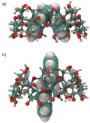
Figure 4: Schematic drawing of the ACE photodimers in γ-CD: a) the syn photodimer and b) the anti photodimer....
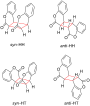
Figure 5: Structures of COU photodimers.

Figure 6: Partial 1H NMR of the photodimers formed after irradiation of COU at various concentrations of Na2SO...
Self-assembly of 2,3-dihydroxycholestane steroids into supramolecular organogels as a soft template for the in-situ generation of silicate nanomaterials
- Valeria C. Edelsztein,
- Andrea S. Mac Cormack,
- Matías Ciarlantini and
- Pablo H. Di Chenna
Beilstein J. Org. Chem. 2013, 9, 1826–1836, doi:10.3762/bjoc.9.213
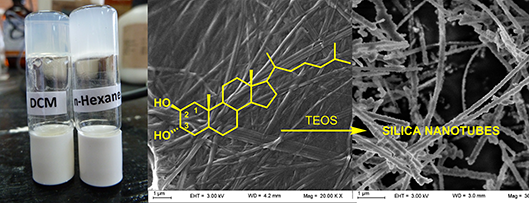
- amphiphilic property causes molecules to aggregate into structures that avoid the unfavorable head-to-tail contact, and so, head-to-head and tail-to-tail contacts are directing the self-assembly. In more polar solvents such as DCM, the side chain of the steroid is not fully elongated to avoid the interaction

Graphical Abstract

Figure 1: Structures of the 2,3-dihydroxycholestane isomers studied in this work.

Figure 2: 3D plots for LMOG 1 and solvent parameters of the tested solvents a) Hansen solubility parameters (δ...

Figure 3: Tg-vs-concentration plots for gels of 1.

Figure 4: SEM images of xerogels from a,b) dichloromethane, and c,d) from dioxane.

Figure 5: Powder X-ray diffraction pattern of the xerogels of 1 from a) n-hexane and b) dichloromethane.

Figure 6: Self-assembly models proposed for LMOG 1, only the left handed helix is shown, head to head hydroge...

Figure 7: SEM images of nanostructured silica obtained from gels of LMOG 1 under the following conditions: 0....
Inclusion of the insecticide fenitrothion in dimethylated-β-cyclodextrin: unusual guest disorder in the solid state and efficient retardation of the hydrolysis rate of the complexed guest in alkaline solution
- Dyanne L. Cruickshank,
- Natalia M. Rougier,
- Raquel V. Vico,
- Susan A. Bourne,
- Elba I. Buján,
- Mino R. Caira and
- Rita H. de Rossi
Beilstein J. Org. Chem. 2013, 9, 106–117, doi:10.3762/bjoc.9.14
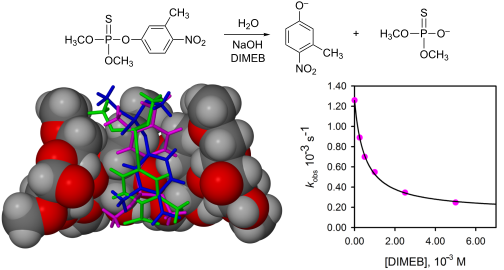
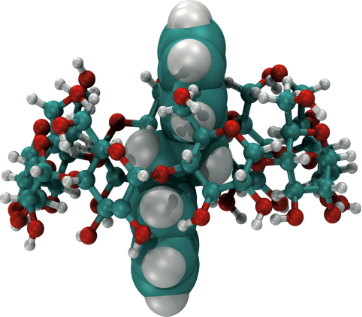
- molecules and there are no close contacts between the disordered guest molecules and host molecules. Figure 7 shows space-filling diagrams that illustrate representative modes of guest inclusion. Crystal packing is shown in Figure 8. The complex units stack head-to-tail in infinite columns parallel to the x

Graphical Abstract

Figure 1: Chemical structure of fenitrothion (1).

Figure 2: Representative TGA (top) and DSC (bottom) traces for DIMEB·1.
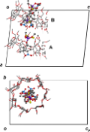
Figure 3: The asymmetric unit in DIMEB•1 viewed along [010] (top) and [100] (bottom). H atoms are omitted for...

Figure 4: The host molecules in the asymmetric unit of DIMEB·1 with the labelling of both residues and atoms ...

Figure 5: The rotamers of 1 occupying the cavity of host molecule A. Common atoms have labels with suffix A, ...

Figure 6: Stereoview of the three disordered guest components that occupy the cavity of host molecule B. Gues...

Figure 7: Space-filling diagrams showing the relative orientations of guest molecules within the cavities of ...

Figure 8: Packing diagrams of the DIMEB·1 structure, viewed along [100] (left) and [010] (right). The symmetr...
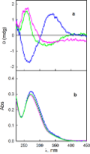
Figure 9: Induced circular dichroism (a) and UV–vis (b) spectra of 1 in the presence of β-CD (10 mM, green), ...

Scheme 1: Reaction of fenitrothion in basic media.

Figure 10: Plot of kobs versus [DIMEB] for the hydrolysis reaction of fenitrothion with HO– at different conce...

Scheme 2: Mechanism of the hydrolysis reaction of 1 mediated by DIMEB.
The chemistry of bisallenes
- Henning Hopf and
- Georgios Markopoulos
Beilstein J. Org. Chem. 2012, 8, 1936–1998, doi:10.3762/bjoc.8.225

Graphical Abstract

Figure 1: Loschmidt’s structure proposal for benzene (1) (Scheme 181 from [3]) and the corresponding modern stru...

Figure 2: The first isolated bisallenes.

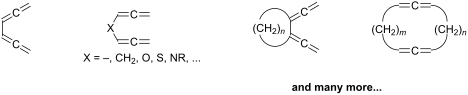
Figure 3: Carbon skeletons of selected bisallenes discussed in this review.

Scheme 1: The preparation of 1,2,4,5-hexatetraene (2).

Scheme 2: The preparation of a conjugated bisallene by the DMS-protocol.

Scheme 3: Preparation of the 3-deuterio- and 3,4-dideuterio derivatives of 24.

Scheme 4: A versatile method to prepare alkylated conjugated bisallenes and other allenes.

Scheme 5: A preparation of 3,4-dimethyl-1,2,4,5-hexatetraene (38).

Scheme 6: A (C6 + 0)-approach to 1,2,4,5-hexatetraene (2).

Scheme 7: The preparation of a fully alkylated bisallenes from a 2,4-hexadiyne-1,6-diol diacetate.

Scheme 8: The preparation of the first phenyl-substituted conjugated bisallenes 3 and 4.

Scheme 9: Selective hydrogenation of [5]cumulenes to conjugated bisallenes: another (C6 + 0)-route.

Scheme 10: Aryl-substituted conjugated bisallenes by a (C3 + C3)-approach.

Scheme 11: Hexaphenyl-1,2,4,5-hexatetraene (59) by a (C3 + C3)-approach.

Scheme 12: An allenation route to conjugated bisallenes.

Scheme 13: The preparation of 3,4-difunctionalized conjugated bisallenes.

Scheme 14: Problems during the preparation of sulfur-substituted conjugated bisallenes.

Scheme 15: The preparation of 3,4-dibromo bisallenes.

Scheme 16: Generation of allenolates by an oxy-Cope rearrangement.

Scheme 17: A linear trimerization of alkynes to conjugated bisallenes: a (C2 + C2 + C2)-protocol.

Scheme 18: Preparation of a TMS-substituted conjugated bisallene by a C3-dimerization route.

Scheme 19: A bis(trimethylsilyl)bisallene by a C3-coupling protocol.

Scheme 20: The rearrangement of highly substituted benzene derivatives into their conjugated bisallenic isomer...

Scheme 21: From fully substituted benzene derivatives to fully substituted bisallenes.

Scheme 22: From a bicyclopropenyl to a conjugated bisallene derivative.

Scheme 23: The conversion of a bismethylenecyclobutene into a conjugated bisallene.

Scheme 24: The preparation of monofunctionalized bisallenes.

Scheme 25: Preparation of bisallene diols and their cyclization to dihydrofurans.

Scheme 26: A 3,4-difunctionalized conjugated bisallene by a C3-coupling process.

Scheme 27: Preparation of a bisallenic diketone by a coupling reaction.

Scheme 28: Sulfur and selenium-substituted bisallenes by a [2.3]sigmatropic rearrangement.

Scheme 29: The biallenylation of azetidinones.

Scheme 30: The preparation of a fully ferrocenylated conjugated bisallene.

Scheme 31: The first isomerization of a 1,5-hexadiyne to a 1,2,4,5-hexatetraene.

Scheme 32: The preparation of alkynyl-substituted bisallenes by a C3-dimerization protocol.

Scheme 33: Preparation of another completely ferrocenylated bisallene.

Scheme 34: The cyclization of 1,5-hexadiyne (129) to 3,4-bismethylenecyclobutene (130) via 1,2,4,5-hexatetraen...
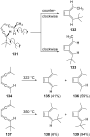
Scheme 35: Stereochemistry of the thermal cyclization of bisallenes to bismethylenecyclobutenes.

Scheme 36: Bisallene→bismethylenecyclobutene ring closures in the solid state.

Scheme 37: A bisallene cyclization/dimerization reaction.

Scheme 38: A selection of Diels–Alder additions of 1,2,4,5-hexatetraene with various double-bond dienophiles.

Scheme 39: The stereochemistry of the [2 + 4] cycloaddition to conjugated bisallenes.

Scheme 40: Preparation of azetidinone derivatives from conjugated bisallenes.

Scheme 41: Cycloaddition of heterodienophiles to a conjugated bisallene.

Scheme 42: Addition of triple-bond dienophiles to conjugated bisallenes.

Scheme 43: Sulfur dioxide addition to conjugated bisallenes.

Scheme 44: The addition of a germylene to a conjugated bisallene.

Scheme 45: Trapping of conjugated bisallenes with phosphinidenes.

Scheme 46: The cyclopropanantion of 1,2,4,5-hexatetraene (2).

Scheme 47: Photochemical reactions involving conjugated bisallenes.

Scheme 48: Base-catalyzed isomerizations of conjugated bisallenes.

Scheme 49: Ionic additions to a conjugated bisallene.

Scheme 50: Oxidation reactions of a conjugated bisallene.
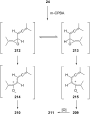
Scheme 51: The mechanism of oxidation of the bisallene 24.

Scheme 52: CuCl-catalyzed cyclization of 1,2,4,5-hexatetraene (2).

Scheme 53: The conversion of conjugated bisallenes into cyclopentenones.

Scheme 54: Oligomerization of a conjugated bisallene by nickel catalysts.
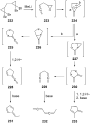
Scheme 55: Generation of 1,2,5,6-heptatetraene (229) as a reaction intermediate.

Scheme 56: The preparation of a stable derivative of 1,2,5,6-heptatetraene.

Scheme 57: A bisallene with a carbonyl group as a spacer element.

Scheme 58: The first preparation of 1,2,6,7-octatetraene (242).

Scheme 59: Preparation of 1,2,6,7-octatetraenes by (C4 + C4)-coupling of enynes.

Scheme 60: Preparation of 1,2,6,7-octatetraenes by (C4 + C4)-coupling of homoallenyl bromides.

Scheme 61: Preparation of 1,2,6,7-octatetraenes by alkylation of propargylic substrates.

Scheme 62: Preparation of two highly functionalized 1,2,6,7-octatetraenes.

Scheme 63: Preparation of several higher α,ω-bisallenes.

Scheme 64: Preparation of different alkyl derivatives of α,ω-bisallenes.

Scheme 65: The preparation of functionalized 1,2,7,8-nonatetraene derivatives.

Scheme 66: Preparation of functionalized α,ω-bisallenes.

Scheme 67: The preparation of an α,ω-bisallene by direct homologation of an α,ω-bisalkyne.

Scheme 68: The gas-phase pyrolysis of 4,4-dimethyl-1,2,5,6-heptatetraene (237).
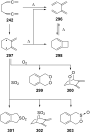
Scheme 69: Gas-phase pyrolysis of 1,2,6,7-octatetraene (242).

Scheme 70: The cyclopropanation of 1,2,6,7-octatetraene (242).

Scheme 71: Intramolecular cyclization of 1,2,6,7-octatetraene derivatives.

Scheme 72: The gas-phase pyrolysis of 1,2,7,8-nonatetraene (265) and 1,2,8,9-decatetraene (266).

Scheme 73: Rh-catalyzed cyclization of a functionalized 1,2,7,8-nonatetraene.

Scheme 74: A triple cyclization involving two different allenic substrates.

Scheme 75: Bicyclization of keto derivatives of 1,2,7,8-nonatetraene.

Scheme 76: The preparation of complex organic compounds from functionalized bisallenes.

Scheme 77: Cycloisomerization of an α,ω-bisallene containing a C9 tether.

Scheme 78: Organoborane polymers from α,ω-bisallenes.

Scheme 79: Preparation of trans- (337) and cis-1,2,4,6,7-octapentaene (341).

Scheme 80: The preparation of 4-methylene-1,2,5,6-heptatetraene (349).

Scheme 81: The preparation of acetylenic bisallenes.

Scheme 82: The preparation of derivatives of hydrocarbon 351.

Scheme 83: The construction of macrocyclic alleno-acetylenes.

Scheme 84: Preparation and reactions of 4,5-bismethylene-1,2,6,7-octatetraene (365).

Scheme 85: Preparation of 1,2-bis(propadienyl)benzene (370).

Scheme 86: The preparation of 1,4-bis(propadienyl)benzene (376).

Scheme 87: The preparation of aromatic and heteroaromatic bisallenes by metal-mediated coupling reactions.

Scheme 88: Double cyclization of an aromatic bisallene.

Scheme 89: Preparation of an allenic [15]paracyclophane by a ring-closing metathesis reaction of an aromatic α...

Scheme 90: Preparation of a macrocyclic ring system containing 1,4-bis(propadienyl)benzene units.

Scheme 91: Preparation of copolymers from 1,4-bis(propadienyl)benzene (376).

Scheme 92: A boration/copolymerization sequence of an aromatic bisallene and an aromatic bisacetylene.

Scheme 93: Formation of a layered aromatic bisallene.

Figure 4: The first members of the semicyclic bisallene series.

Scheme 94: Preparation of the first bis(vinylidene)cyclobutane derivative.
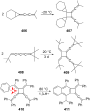
Scheme 95: Dimerization of strain-activated cumulenes to bis(vinylidene)cyclobutanes.

Scheme 96: Photodimerization of two fully substituted butatrienes in the solid state.

Scheme 97: Preparation of the two parent bis(vinylidene)cyclobutanes.

Scheme 98: The preparation of 1,3-bis(vinylidene)cyclopentane and its thermal isomerization.

Scheme 99: The preparation of the isomeric bis(vinylidene)cyclohexanes.

Scheme 100: Bi- and tricyclic conjugated bisallenes.
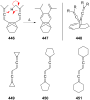
Scheme 101: A selection of polycyclic bisallenes.

Scheme 102: The first endocyclic bisallenes.

Figure 5: The stereochemistry of 1,2,6,7-cyclodecatetraene.

Scheme 103: The preparation of several endocyclic bisallenes.

Scheme 104: Synthesis of diastereomeric derivatives of 1,2,6,7-cyclodecatetraene.

Scheme 105: Preparation of a derivative of 1,2,8,9-cyclotetradecatetraene.

Scheme 106: The preparation of keto derivatives of cyclic bisallenes.

Scheme 107: The preparation of cyclic biscumulenic ring systems.

Scheme 108: Cyclic bisallenes in natural- and non-natural-product chemistry.

Scheme 109: The preparation of iron carbonyl complexes from cyclic bisallenes.

Figure 6: A selection of unknown exocyclic bisallenes that should have interesting chemical properties.

Scheme 110: The thermal isomerization of 1,2-diethynylcyclopropanes and -cyclobutanes.

Scheme 111: Intermediate generation of a cyclooctapentaene.

Scheme 112: Attempted preparation of a cyclodecahexaene.

Scheme 113: The thermal isomerization of 1,5,9-cyclododecatriyne (511) into [6]radialene (514).

Scheme 114: An isomerization involving a diketone derived from a conjugated bisallene.

Scheme 115: Typical reaction modes of heteroorganic bisallenes.

Scheme 116: Generation and thermal behavior of acyclic hetero-organic bisallenes.

Scheme 117: Generation of bis(propadienyl)thioether.

Scheme 118: The preparation of a bisallenic sulfone and its thermal isomerization.

Scheme 119: Bromination of the bisallenic sulfone 535.

Scheme 120: Metalation/hydrolysis of the bisallenic sulfone 535.

Scheme 121: Aromatic compounds from hetero bisallenes.

Scheme 122: Isomerization/cyclization of bispropargylic ethers.

Scheme 123: The preparation of novel aromatic systems by base-catalyzed isomerization of bispropargyl ethers.

Scheme 124: The isomerization of bisacetylenic thioethers to bicyclic thiophenes.

Scheme 125: Aromatization of macrocyclic bispropargylic sulfides.

Scheme 126: Preparation of ansa-compounds from macrocyclic bispropargyl thioethers.

Scheme 127: Alternate route for cyclization of a heterorganic bisallene.
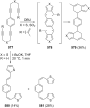
Scheme 128: Multiple isomerization/cyclization of “double” bispropargylic thioethers.

Scheme 129: Preparation of a bisallenyl disulfide and its subsequent bicyclization.

Scheme 130: Thermal cyclization of a bisallenyl thiosulfonate.

Scheme 131: Some reactions of heteroorganic bisallenes with two sulfur atoms.

Scheme 132: Further methods for the preparation of heteroorganic bisallenes.

Scheme 133: Cyclization reactions of heteroorganic bisallenes.

Scheme 134: Thermal cycloadditions of bisallenic tertiary amines.

Scheme 135: Cyclization of a bisallenic tertiary amine in the presence of a transition-metal catalyst.

Scheme 136: A Pauson–Khand reaction of a bisallenic ether.

Scheme 137: Formation of a 2:1adduct from two allenic substrates.

Scheme 138: A ring-forming silastannylation of a bisallenic tertiary amine.

Scheme 139: A three-component cyclization involving a heterorganic bisallene.

Scheme 140: Atom-economic construction of a complex organic framework from a heterorganic α,ω-bisallene.
Modulating the activity of short arginine-tryptophan containing antibacterial peptides with N-terminal metallocenoyl groups
- H. Bauke Albada,
- Alina-Iulia Chiriac,
- Michaela Wenzel,
- Maya Penkova,
- Julia E. Bandow,
- Hans-Georg Sahl and
- Nils Metzler-Nolte
Beilstein J. Org. Chem. 2012, 8, 1753–1764, doi:10.3762/bjoc.8.200
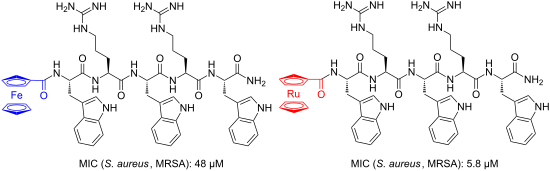
- with different N- and C-terminal substituents, which showed low micromolar antibacterial activity against various strains of Gram-positive bacteria and moderate activity against Gram-negative bacteria. Interestingly, head-to-tail cyclized RW-based synAMPs with clustered functionalities increased the

Graphical Abstract

Figure 1: Structures of the most active peptides that have been used in this study. The top row shows two rep...

Figure 2: Bactericidal activity of (RW)3 against S. aureus 133 (panel A and D) or B. megaterium (panel B) and...

Figure 3: Growth kinetics of B. megaterium under the influence of different amounts of synAMP (red: (RW)3; or...
Synthesis of trifunctional cyclo-β-tripeptide templates
- Frank Stein,
- Tahir Mehmood,
- Tilman Plass,
- Javid H. Zaidi and
- Ulf Diederichsen
Beilstein J. Org. Chem. 2012, 8, 1576–1583, doi:10.3762/bjoc.8.180

- -to-tail cyclization based on a Boc protocol using the oxidation-labile aryl hydrazide linker [24] and cleavage from the resin under simultaneous cyclization [11]. This method was adapted for the synthesis of the cyclic β-tripeptide 4 (Figure 2). The synthesis of the cyclic β-tripeptide was performed
- -phase chemistry [8][9]. Purification by chromatography is required after each coupling step, and the final cyclization reaction often results in poor yields. Herein, an alternative approach is described based on SPPS followed by on-resin cyclization. Recently, Waldmann et al. discovered an on-resin head

Graphical Abstract

Figure 1: Trifunctional cyclic β-tripeptide forming an intermolecular stack of rings by backbone hydrogen bon...

Figure 2: β-Amino acids 1–3 with orthogonal side-chain protection obtained by Arndt–Eistert homologation foll...

Scheme 1: Synthesis of cyclic peptides employing the oxidation-labile aryl hydrazide linker [11,24].

Figure 3: Functional units provided as carboxylic acids for the attachment to the cyclo-β-peptide: 5(6)-tetra...

Scheme 2: Functionalization of the cyclic β-tripeptide 4.

Figure 4: Cyclic β-tripeptides varying in two side-chain functionalities and containing an additional azide m...
Intramolecular carbenoid ylide forming reactions of 2-diazo-3-keto-4-phthalimidocarboxylic esters derived from methionine and cysteine
- Marc Enßle,
- Stefan Buck,
- Roland Werz and
- Gerhard Maas
Beilstein J. Org. Chem. 2012, 8, 433–440, doi:10.3762/bjoc.8.49
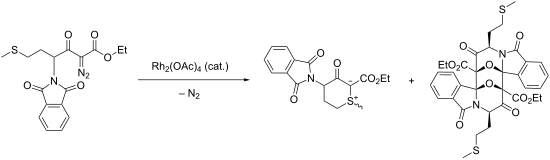
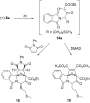
- rearrangement. The short-lived carbonyl ylides derived from methionine and S-benzylcysteine formed head-to-tail dimers by a [3 + 3]-cycloaddition and could be trapped with external dipolarophiles, while the S-allyl derivative 14c yielded the pentacyclic compound 17 by an intramolecular [3 + 2]-cycloaddition
- calculations [24], its energetic contribution in the case of sulfonium ylides stabilised by acceptor substituents is likely to be small. The oxazapolycycles 13a and b are head-to-tail dimers of carbonyl ylides, resulting from a [3 + 3]-cycloaddition. Their constitution and relative stereochemistry was assigned

Graphical Abstract

Scheme 1: Synthesis of cyclic sulfonium ylides 2; n = 0–3.

Scheme 2: Non-carbenoid formation of sulfonium ylide 4.

Scheme 3: Conditions: (a) phthalic anhydride, NEt3 (10 mol %), toluene, reflux, 2 h; (b) 1. carbonyldiimidazo...

Scheme 4: Rh(II)-catalysed carbenoid reactions of diazoesters 8a,b.

Figure 1: Proposed relative configurations of the diastereomeric cyclic sulfonium ylides 12aA and 12aB. 1H NM...

Scheme 5: Endo transition state for [3 + 3]-dimerisation of carbonyl ylide 14.

Scheme 6: Rh(II)-catalysed carbenoid reactions of diazoester 8c.
Scheme 7: Tandem cyclisation/intermolecular cycloaddition of diazoester 8a. Conditions: (a) Rh2(OAc)4 (3 mol ...

Scheme 8: Carbenoid formation of sulfonium ylides from diazoesters 11a,b. Conditions: (a) Rh2(OAc)4 (3 mol %)...
Liquid-crystalline nanoparticles: Hybrid design and mesophase structures
- Gareth L. Nealon,
- Romain Greget,
- Cristina Dominguez,
- Zsuzsanna T. Nagy,
- Daniel Guillon,
- Jean-Louis Gallani and
- Bertrand Donnio
Beilstein J. Org. Chem. 2012, 8, 349–370, doi:10.3762/bjoc.8.39
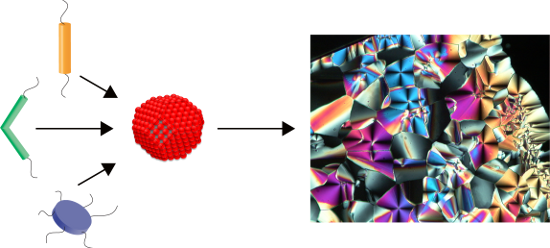
- , with a local smectic A2 order for the head-to-tail regions, and local smectic Ad order for the equators (Figure 7). In a departure from cyanobiphenyl based ligands, smectic and columnar structures were observed in a large and systematic study for systems involving swallow-tailed rodlike mesogenic

Graphical Abstract

Figure 1: Three of the common molecular and supramolecular structural motifs in liquid crystal chemistry: rod...

Figure 2: Schematic representation of the solvent-mediated ligand exchange process, illustrated for the parti...

Figure 3: Chemical structures and LC properties of the rodlike ligands discussed in the text.

Figure 4: Schematic representation of pseudospherical Au NPs coated exclusively with mesogenic rodlike ligand...

Figure 5: TEM images of Au@612 (a) before and (b) after thermal treatment. Below: Proposed model of the nanop...

Figure 6: Ligand deformation at the surface of the gold NPs giving rigid "poles" and a soft equator. Such def...

Figure 7: A simplified illustration of the local rectangular arrangement of nanoparticles in a condensed mixe...

Figure 8: Chemical structures and LC properties of the rodlike ligands discussed in the text.

Figure 9: Schematic drawing of the arrangement of nanoparticles in the columnar phase, as viewed from above (...

Figure 10: The proposed structural models resulting from ligand migration at the NP surface: (a) Smectic (Au@C6...

Figure 11: Reversible migration of the surface ligands as a function of temperature (and phase). Only the blue...

Figure 12: Photochromic and photo-mesogenic rodlike ligands.

Figure 13: Chemical structures and LC properties of side-on mesogens used to coat NPs.

Figure 14: Left: POM image of ligand 12. Right: POM image of Schlieren texture of the hybrid Au@12. Reprinted ...

Figure 15: Threaded nematic texture of Au@ C12/13 as observed by POM at RT. Scale bar = 10 μm. Reprinted with ...

Figure 16: Schematic representation of the gold NP columnar structures. (a) Rhombohedral phase in Au@C12/13 an...

Figure 17:
TEM images of thin films of the ![[Graphic 5]](/bjoc/content/inline/1860-5397-8-39-i5.png?max-width=637&scale=1.18182) phase of Au@C12/13 recorded with the beam (a) parallel to the
phase of Au@C12/13 recorded with the beam (a) parallel to the ![[Graphic 6]](/bjoc/content/inline/1860-5397-8-39-i6.png?max-width=637&scale=1.18182) pla...
pla...

Figure 18: Chemical structures and mesogenic properties of bent-core proto-mesogenic ligands used to coat NPs.

Figure 19: Chemical structures and mesogenic properties of dendritic and proto-dendritic ligands used to coat ...

Figure 20: TEM image showing the arrangement of the hybrid NPs Au@16 into regularly spaced rows. Reprinted wit...

Figure 21: Chemical structures and mesogenic properties of dendritic and proto-dendritic ligands used to coat ...
Figure 22:
Top left: Body-centred (I) cubic lattice of ![[Graphic 8]](/bjoc/content/inline/1860-5397-8-39-i8.png?max-width=637&scale=1.18182) symmetry composed of truncated octahedrons. Top right:...
symmetry composed of truncated octahedrons. Top right:...
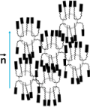
Figure 23: Model proposed for the organisation of the hybrids within the quasi-nematic mesophase. Reprinted wi...

Figure 24: Mesogenic dendrons used to coat Au NPs.

Figure 25: Chemical structures of the discotic mesogenic ligands used to coat NPs.

Figure 26: TEM images of Au@235,12 prepared from aged solutions stood for 10 days in solutions of (a) 1:1 MeOH...

Figure 27: Some of the various hybrid geometries and packing motifs possible upon ligand grafting to the surfa...
Natural product biosyntheses in cyanobacteria: A treasure trove of unique enzymes
- Jan-Christoph Kehr,
- Douglas Gatte Picchi and
- Elke Dittmann
Beilstein J. Org. Chem. 2011, 7, 1622–1635, doi:10.3762/bjoc.7.191
- through imino bond formation between the N-terminal and C-terminal amino acids. The responsible enzyme NcpB contains a C-terminal reductase domain that has been shown to catalyze the reductive release of the peptide from the synthetase as an aldehyde followed by spontaneous formation of the imino head-to
- -tail linkage [56]. Cryptophycin Cryptophycins were shown to be produced by terrestrial strains of Nostoc that are either free living or associated with a lichen symbiont. Cryptophycin 1 (15) is the most potent tubulin-destabilizing compound ever discovered and serves as a leading product for the

Graphical Abstract

Figure 1: Cyanobacteria proliferate in diverse habitats. A) Bloom-forming freshwater cyanobacteria of the gen...

Figure 2: Schematic representation of enzymatic domains in A) nonribosomal peptide synthetases (NRPS); B) pol...

Figure 3: Structures of NRPS and PKS products in freshwater cyanobacteria.

Figure 4: A) Synthesis of the Adda ((2S,3S,8S,9S)-3-amino-9-methoxy-2,6,8-trimethyl-10-phenyl-4,6-decadienoic...

Figure 5: Structures of NRPS and PKS products in marine cyanobacteria.

Figure 6: A) Formation of the trichloroleucyl starter unit of barbamide (7) synthesis through the non-heme ir...

Figure 7: Structures of NRPS and PKS products in terrestrial cyanobacteria.

Figure 8: Synthesis of the (2S,4S)-4-methylproline moiety of nostopeptolides A (13).

Figure 9: Structures of cyanobacterial peptides that are synthesized ribosomally and post-translationally mod...

Figure 10: Formation of ester linkages and ω-amide linkage in microviridins 17 by the ATP grasp ligases MvdD a...

Figure 11: Structures of cyanobacterial sunscreen compounds.
Supramolecular FRET photocyclodimerization of anthracenecarboxylate with naphthalene-capped γ-cyclodextrin
- Qian Wang,
- Cheng Yang,
- Gaku Fukuhara,
- Tadashi Mori,
- Yu Liu and
- Yoshihisa Inoue
Beilstein J. Org. Chem. 2011, 7, 290–297, doi:10.3762/bjoc.7.38
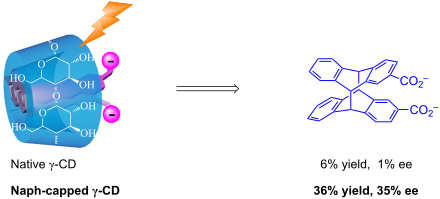
- photochirogenic system for the elucidation of the factors and mechanism that control supramolecular photochirogenesis [12][13][14][15][16][17][18][19][20][21][22]. Photocyclodimerization of AC leads to the formation of four stereoisomeric cyclodimers 1–4, of which syn-head-to-tail (HT) 2 and anti-head-to-head (HH

Graphical Abstract
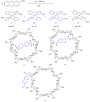
Scheme 1: Biphenyl-capped (5), naphthalene-capped (6), and naphthalene-appended γ-cyclodextrin (7).

Figure 1: UV–vis spectral changes of 0.2 mM AC upon increasing the concentration of 7 in pH 9 phosphate buffe...

Figure 2: Circular dichroism spectra of 7 (0.2 mM) in the presence of 0, 0.0083, 0.025, 0.048, 0.071, 0.093, ...

Figure 3: Circular dichroism spectra of 6 (0.2 mM) in the presence of 0, 0.0083, 0.025, 0.048, 0.071, 0.093, ...

Figure 4: UV–vis spectra of AC (black dashed line) and 7 (red dashed line) and fluorescence spectra of 7 (0.0...
Stereoselectivity of supported alkene metathesis catalysts: a goal and a tool to characterize active sites
- Christophe Copéret
Beilstein J. Org. Chem. 2011, 7, 13–21, doi:10.3762/bjoc.7.3
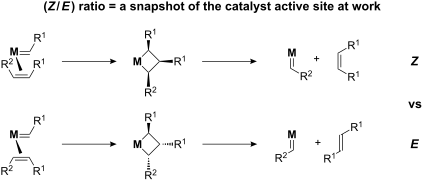
- formation of two alkylidene intermediates, M=CHR1 and M=CHR2, and for each intermediate, the alkene can approach in four possible ways: syn/head-to-head, syn/head-to-tail, anti/head-to-head and anti/head-to-tail (Scheme 2). Of these eight possible pathways, four are productive leading to the (Z)- or the (E

Graphical Abstract

Scheme 1: Alkene metathesis mechanism.
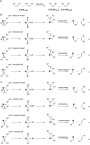
Scheme 2: Metathesis possibilities.

Scheme 3: Metathesis with Re-based alumina supported catalysts.

Figure 1: (E/Z) ratio as a function of conversion. a) MeReO3 supported on alumina and b) MeReO3 supported on ...

Scheme 4: Alkene selectivity of metathesis reactions.

Scheme 5: Hybrid organic–inorganic catalyst containing a Ru–NHC unit.
Symmetry breaking and structure of a mixture of nematic liquid crystals and anisotropic nanoparticles
- Marjan Krasna,
- Matej Cvetko and
- Milan Ambrožič
Beilstein J. Org. Chem. 2010, 6, No. 74, doi:10.3762/bjoc.6.74
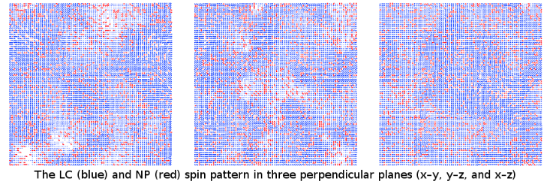
- . The directions ± of this unit vector field are physically equivalent, reflecting the so called head-to tail invariance of LC phase on the mesoscopic scale. If ensembles are suddenly quenched from the isotropic to the lower symmetry nematic phase, then unavoidably a domain pattern forms [7]. The reason

Graphical Abstract

Figure 1: Nematic orientational correlation function G(r) for different values of x (x = 0.01 and 0.25), N = ...
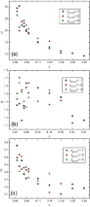
Figure 2: (a) The nematic domain length ξ, (b) the domain dispersion parameter m, and (c) the range parameter...

Figure 3: Degree of biaxiality β2 as a function of x; JLC–NP: −1, −2, and −4; JLC–LC = JLC–NP = 1, N = 80 × 8...
Self-association of an indole based guanidinium-carboxylate-zwitterion: formation of stable dimers in solution and the solid state
- Carolin Rether,
- Wilhelm Sicking,
- Roland Boese and
- Carsten Schmuck
Beilstein J. Org. Chem. 2010, 6, No. 3, doi:10.3762/bjoc.6.3
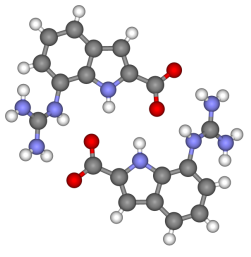
- confirmed the formation of head-to-tail dimers, which are held together by the formation of two salt bridges assisted by a network of six hydrogen bonds (Figure 6). The hydrogen bond distances between the aromatic N...O (2.703 Å), the guanidinium N...O (2.942 Å) and the indole N...O (2.935 Å) are all rather

Graphical Abstract

Figure 1: Self-assembly of zwitterion 1 to give dimer 1·1 and self-assembly of zwitterion 2 to give dimer 2·2...
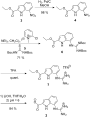
Scheme 1: Synthesis of zwitterion 2.

Scheme 2: Synthesis of compound 2·H+.

Figure 2: 1H NMR spectra of zwitterion 2 (bottom) and its protonated form 2·H+ (top).

Figure 3: Part of the 1H NMR spectrum of 2 in [D6]DMSO showing the complexation-induced shifts of the indole ...

Figure 4: Representative binding isotherm of the aromatic proton d (left) and the indole NH proton (right).

Figure 5: Binding isotherm of the guanidinium NH2 protons.

Figure 6: Crystal structure of dimer 2·2 with hydrogen bond distances (Å) and dihedral angles.

Figure 7: Side view of dimer 2·2 in the solid state.

Figure 8: Part of the crystal lattice of zwitterion 2.

Scheme 3: An attractive H-bond in 1 (left) is replaced by a repulsive steric interaction in 2 (right).

Figure 9: Energy-minimized structure for dimer 2·2 with hydrogen bond distances (Å) and dihedral angles.
Competition between local disordering and global ordering fields in nematic liquid crystals
- Matej Cvetko,
- Milan Ambrožič and
- Samo Kralj
Beilstein J. Org. Chem. 2010, 6, No. 2, doi:10.3762/bjoc.6.2
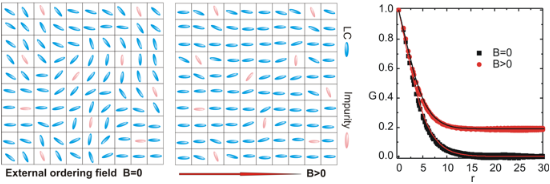
- homogeneous external (e.g., electric or magnetic) ordering field B = BeB, which tends to reorient the director field along eB. Systems with the head-to-tail invariance, where ±Sα orientations are equivalent, are taken into account. This property is characteristic for most LC molecules (where several
- the system using the Lebwohl–Lasher type semi-microscopic description. The orientational order is described in terms of the uniaxial director field exhibiting head-to-tail invariance. We calculate configurations of director fields by minimizing F at temperature zero. Therefore, our results are

Graphical Abstract

Figure 1: The orientational correlation function as a function of separation r between LC molecules for (a) 2...

Figure 2: Correlation length ξ as a function of 1/B for homogeneous and random samples for three different co...

Figure 3: The s(B) dependence for homogeneous and random samples for two different p in (a) 2D and (b) 3D. Fo...

Figure 4: The m(B) dependence r homogeneous and random samples for two different p in (a) 2D and (b) 3D. In t...
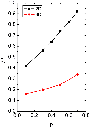
Figure 5: The crossover field Bc on varying p. Indicated lines roughly separate ergodic (B > Bc) and nonergod...
Crystal engineering of analogous and homologous organic compounds: hydrogen bonding patterns in trimethoprim hydrogen phthalate and trimethoprim hydrogen adipate
- Packianathan Thomas Muthiah,
- Savarimuthu Francis,
- Urszula Rychlewska and
- Beata Warżajtis
Beilstein J. Org. Chem. 2006, 2, No. 8, doi:10.1186/1860-5397-2-8
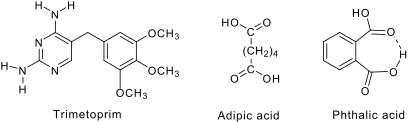
- 2, two TMP cations and two hydrogen adipate anions are arranged about an inversion center so that the complementary DDAA (D = donor, A = acceptor) arrays of quadruple hydrogen-bonding patterns are formed. The head-to-tail arrangement of the hydrogen adipate ions leads to a hydrogen-bonded
- neighbouring hydrogen adipate ion(motif VII). This head-to-tail arrangement (carboxyl-carboxylate interaction) of the hydrogen adipate ions leads to hydrogen-bonded supramolecular chain. This is shown in Figure 7. The internal angles at N1 (C2-N1-C6) in the protonated pyrimidine ring of the compounds 1 and 2

Graphical Abstract
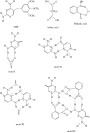
Figure 1: The schematic diagram for the various hydrogen-bonded motifs observed in compound (1).

Figure 2: The schematic diagram for the various hydrogen-bonded motifs observed in compound (2).

Figure 3: The ORTEP 3 view of the asymmetric unit of the compound 1.

Figure 4: The ORTEP 3 view of the asymmetric unit of the compound 2.

Figure 5: The hydrogen-bonded supramolecular ladder in the compound 1.

Figure 6: The hydrogen-bonded DDAA array in the compound 2.

Figure 7: The supramolecular chain made up of hydrogen adipate in the compound 2.

Figure 8: Scatterplot illustrating the distribution of the two torsion angles (C4-C5-C7-C8 (TOR1) and C5-C7-C...



