


Search results
Search for "photostability" in Full Text gives 56 result(s) in Beilstein Journal of Organic Chemistry.
From porphyrin benzylphosphoramidate conjugates to the catalytic hydrogenation of 5,10,15,20-tetrakis(pentafluorophenyl)porphyrin
Beilstein J. Org. Chem. 2014, 10, 628–633, doi:10.3762/bjoc.10.54
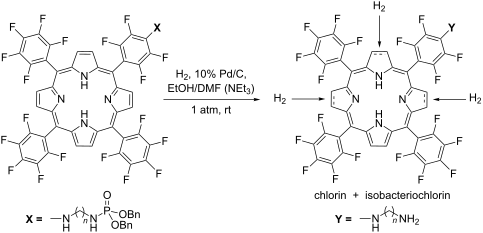
- recently synthesized porphyrin diisopropylphosphoramidate conjugates derived from 5,10,15,20-tetrakis(pentafluorophenyl)porphyrin (TPPF20). Such compounds showed a high photostability and a good capacity to generate singlet oxygen, but their solubility in water is moderate [4]. Additionally, we tried to


Studies on the photodegradation of red, green and blue phosphorescent OLED emitters
Beilstein J. Org. Chem. 2013, 9, 2088–2096, doi:10.3762/bjoc.9.245

- understanding of the processes at work and to examine whether the photostability in solution and in a solid organic matrix would show a similar behavior. We therefore selected four well-known phosphorescent emitters for a detailed investigation of their photodegradation behavior in solution and in thin polymer
- , though only as a side product, while no indication of halogen abstraction was found for the other two complexes. The influence of dioxygen As cyclometalated Ir-complexes are very efficient singlet oxygen sensitizers we investigated the influence of oxygen on the photostability of the compounds. 1O2 is
- states [14][16][21]. Supposed the molecule is not susceptible to an attack of 1O2, it would be expected that the presence of oxygen in this case actually increases the photostability of the material. This is due to the very fast quenching of the excited state by O2 [22], leading to a significantly


Synthesis and spectroscopic properties of 4-amino-1,8-naphthalimide derivatives involving the carboxylic group: a new molecular probe for ZnO nanoparticles with unusual fluorescence features
Beilstein J. Org. Chem. 2013, 9, 1311–1318, doi:10.3762/bjoc.9.147

- patterns. Keywords: fluorescence; hydrogen bond; 1,8-naphthalimide; one- and two-photon absorption; zinc oxide; Introduction 1,8-Naphthalimide derivatives are useful for a variety of applications owing to their strong fluorescence, electroactivity and photostability. These compounds can be employed as


Electron and hydrogen self-exchange of free radicals of sterically hindered tertiary aliphatic amines investigated by photo-CIDNP
Beilstein J. Org. Chem. 2013, 9, 437–446, doi:10.3762/bjoc.9.46
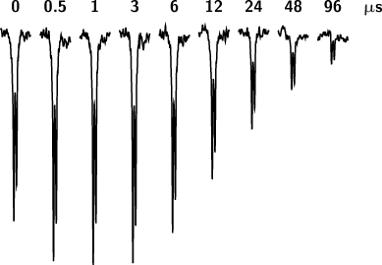
- presaturation [31], thus the displayed signal intensities correspond to the pure polarizations. Furthermore, NMR spectra taken after a full series of time-resolved CIDNP measurements gave no indication of product formation; the remarkable photostability of the BP/DABCO system has already been reported in the


Hydrophobic analogues of rhodamine B and rhodamine 101: potent fluorescent probes of mitochondria in living C. elegans
Beilstein J. Org. Chem. 2012, 8, 2156–2165, doi:10.3762/bjoc.8.243
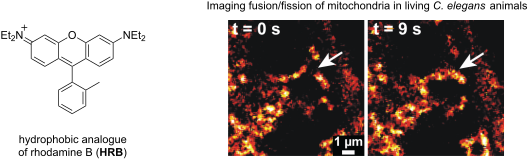
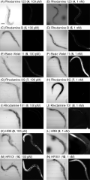
- ) are renowned for their red-shifted fluorescence, photostability, and high quantum yields over a wide range of pH values (i.e., pH 4–10). These fluorophores penetrate cells more readily than analogous fluorescein derivatives, because the negative plasma membrane potential within the cytoplasm of cells




Conjugated polymers containing diketopyrrolopyrrole units in the main chain
Beilstein J. Org. Chem. 2010, 6, 830–845, doi:10.3762/bjoc.6.92
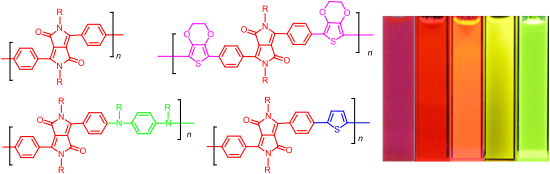
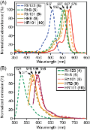
- step in high yield by the reaction of benzonitrile (or other aromatic nitriles) with succinic acid diesters. Numerous DPP derivatives have since been synthesized, their colours ranging from orange yellow via red to purple. Many DPP derivatives exhibit a high photostability in the solid state, weather




Other Beilstein-Institut Open Science Activities



