


Search results
Search for "photoswitches" in Full Text gives 57 result(s) in Beilstein Journal of Organic Chemistry.
The role of alkyl substituents in deazaadenine-based diarylethene photoswitches
Beilstein J. Org. Chem. 2016, 12, 1103–1110, doi:10.3762/bjoc.12.106
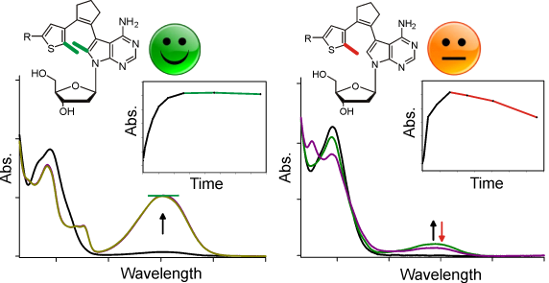
- Christopher Sarter Michael Heimes Andres Jaschke Institut für Pharmazie und Molekulare Biotechnologie, Universität Heidelberg, 69120 Heidelberg, Germany 10.3762/bjoc.12.106 Abstract Diarylethenes are an important class of reversible photoswitches and often claimed to require two alkyl
- substituents at the carbon atoms between which the bond is formed or broken in the electrocyclic rearrangement. Here we probe this claim by the synthesis and characterization of four pairs of deazaadenine-based diarylethene photoswitches with either one or two methyl groups at these positions. Depending on the
- DNA photoswitches for the application in bionanotechnology and synthetic biology. Keywords: diarylethene; nucleoside; electrocyclic rearrangement; photochromism; photoswitch; Introduction Most biomacromolecules are per se not responsive to light. Their conversion into photoresponsive molecules opens




Photoswitchable precision glycooligomers and their lectin binding
Beilstein J. Org. Chem. 2014, 10, 1603–1612, doi:10.3762/bjoc.10.166
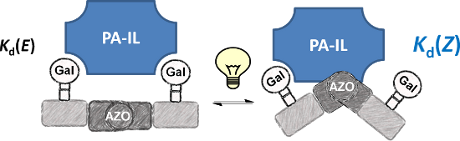
- oligomer shape and concomitantly in the sugar ligands accessibility. Indeed, dramatic shrinking of rigid-rod polymers for example, occurs upon photoirradiation when several azobenzenes are introduced in the main-chain, the embedded photoswitches acting as hinges [17][18]. In the present study, an



Control over molecular motion using the cis–trans photoisomerization of the azo group
Beilstein J. Org. Chem. 2012, 8, 1071–1090, doi:10.3762/bjoc.8.119
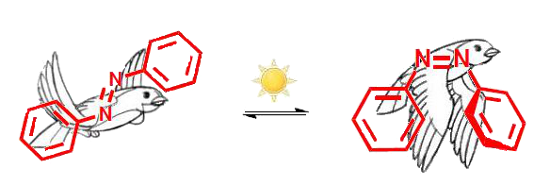
- residues were intramolecularly cross-linked with thiol reactive azobenzene-based photoswitches. Photoisomerization of the azobenzene changes the conformation of the peptide depending on the location of the cysteine. When the azo group of polypeptide 2 is in its trans form, it retains its affinity for DNA
- between the trans and cis isomer but in turn destabilizes one of the helices of the cis isomer, and only one cis isomer (P) is present in solution (Figure 22). Conclusion Azobenzene is one of the most used systems in the design of molecular photoswitches. The synthesis is very easy and their photochromic


Diarylethene-modified nucleotides for switching optical properties in DNA
Beilstein J. Org. Chem. 2012, 8, 905–914, doi:10.3762/bjoc.8.103
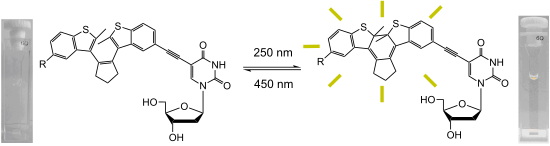
- [1][2][3][4]. Nucleic acids are synthesized by building blocks; in this bottom-up approach artificial functionalities, such as photoswitches, can be introduced synthetically by providing the corresponding artificial DNA building block. Among the known and structurally diverse photochromic compounds





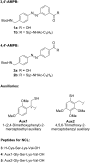
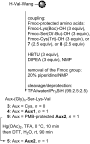
Building photoswitchable 3,4'-AMPB peptides: Probing chemical ligation methods with reducible azobenzene thioesters
Beilstein J. Org. Chem. 2012, 8, 890–896, doi:10.3762/bjoc.8.101
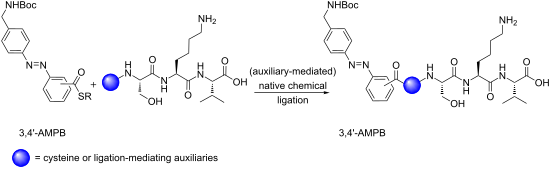
- of photoswitches, and typical applications based on light-triggered reversible conformational control of cyclic, helical or beta-hairpin peptides have been intensively reviewed [2][3]. Current research in this field focuses on advanced methods and designs for the synthesis of complex azopeptides and





Molecular switches and cages
Beilstein J. Org. Chem. 2012, 8, 870–871, doi:10.3762/bjoc.8.97

- synthetic switches, complementing the many types found in nature. Given their prominence in biology, it is not surprisingly that photoswitches, which are actuated by ultraviolet, visible or infrared light, have been an especially productive field of study. Despite their long history, new types of synthetic
- photoswitches continue to emerge and “old friends”, such as azobenzenes are constantly improved and optimized. This is not only true with respect to their photophysical properties but also with regard to their synthetic accessibility. Indeed, as molecular switches are applied in ever-increasing quantities, the
- compounds but in its infancy in the case of reversible photoswitches. The present Thematic Series of the Beilstein Journal of Organic Chemistry addresses the crucial role that chemistry, and particularly organic chemistry, can play in tuning the functional features of molecular switches and cages. These
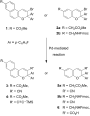
Synthesis of novel photochromic pyrans via palladium- mediated reactions
Beilstein J. Org. Chem. 2009, 5, No. 25, doi:10.3762/bjoc.5.25
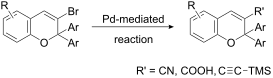
- -electronic devices, e.g. as logic gates [1]. In the life sciences, functionalized azobenzenes [6], hemithioindigos [7][8] and fulgimides [9][10] among other classes of photoswitches, have already proven to be valuable tools for photo-controlling the structure and function of complex biomolecules [6][7][8][9




Other Beilstein-Institut Open Science Activities



