


Search results
Search for "quinones" in Full Text gives 57 result(s) in Beilstein Journal of Organic Chemistry.
Chiral amplification in a cyanobiphenyl nematic liquid crystal doped with helicene-like derivatives
Beilstein J. Org. Chem. 2009, 5, No. 50, doi:10.3762/bjoc.5.50
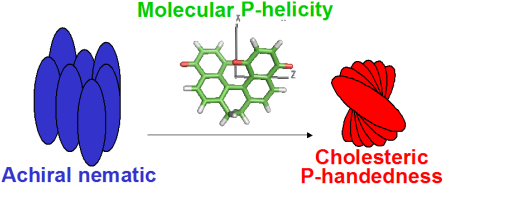
- variously distributed around the molecular core, allows us to extend our knowledge of the molecular origin of the chirality amplification in liquid crystals. Results and Discussion The enantioselective synthesis as well as the configuration assignment of enantiopure dihydro[5]helicene quinones or
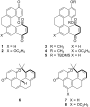
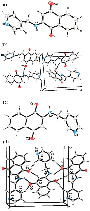
- bisquinones 1–5 and of dihydro- (and tetrahydro-) [4]helicene quinones 6–8 has been described by Carreño, Urbano and coworkers [52][53][54][55][56][57]. The twisting powers of the helicenes under investigation measured in the nematic solvent E7 are reported in Table 1. We can see that all compounds possessing
- ” → “cholesteric P-handedness” already reported for a series of carbo- and hetero-helicenes [51]. (P)-7,8-Dihydro[5]helicene quinones or bisquinones 1–4 show moderate to high HTPs; despite the presence of the same tetracyclic core, derivative 5, with the tert-butyldimethylsilyl (TBDMS) blocking group, exhibits the




Progress in liquid crystal chemistry
Beilstein J. Org. Chem. 2009, 5, No. 48, doi:10.3762/bjoc.5.48
- quinones. Many new exciting discoveries in this diverse research area are to be expected in the near future and our aim with this Thematic Series is to attract a new audience to this topic. Sabine Laschat Guest Editor
Mitomycins syntheses: a recent update
Beilstein J. Org. Chem. 2009, 5, No. 33, doi:10.3762/bjoc.5.33

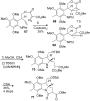
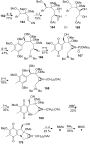
- requisite eight membered ring was formed by the well-established chemistry of quinones using an intramolecular Michael addition by the primary amine 157 (Scheme 44) [118]. The synthesis began with the known phenol 158 which was reacted with allyl bromide to trigger a Claisen rearrangement (Scheme 45). This
- this substrate in part due to the difficulties encountered during reduction of the methyl ester [124]. It is known that the treatment of quinones with mild reducing agents gives hydroquinones while strong reductants modify the quinone in a less specific manner [133][134]. 6.3. Remers. Synthesis of a






Diels- Alder reactions using 4,7-dioxygenated indanones as dienophiles for regioselective construction of oxygenated 2,3-dihydrobenz[f]indenone skeleton
Beilstein J. Org. Chem. 2008, 4, No. 15, doi:10.3762/bjoc.4.15
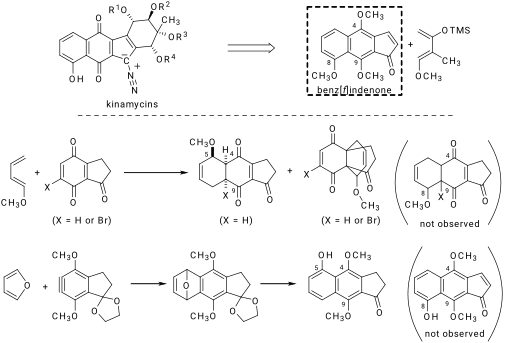
- -opened product 27. Transition states supposed for the regioselective DAR via quinone route. Representative LUMO coeffients of quinones 8 and 12 (a) and their reaction courses with diene 7 (b). Retrosynthesis of kinamycins. Synthesis of quinones 8 and 12 and the acetals 13 and 14. Reagents and conditions


Variations in product in reactions of naphthoquinone with primary amines
Beilstein J. Org. Chem. 2007, 3, No. 10, doi:10.1186/1860-5397-3-10
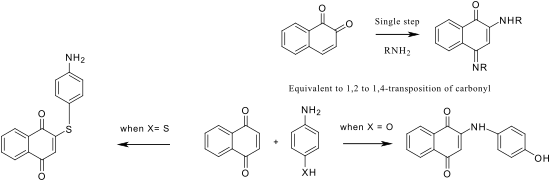
- the sole product in the reaction. Background Amino quinones are used as medicines, [1][2][3] herbicides [4] and they also show interesting redox switching properties. [5] Amino quinones are formed in the reactions of different amines with quinones. [6][7][8][9][10][11][12][13] For example 1,4
- -benzoquinone reacts with primary amines to give 2,5-diamino 1,4-benzoquinones; similar reaction of 1,4-naphthoquinone with primary amines results in the formation of 2-amino 1,4-naphthoquinones. [13] However, the product formed from such simple reaction of amine with various quinones has much scope for






Effect of transannular interaction on the redox- potentials in a series of bicyclic quinones
Beilstein J. Org. Chem. 2006, 2, No. 26, doi:10.1186/1860-5397-2-26

- redox-potentials of bicyclo[2.2.2]octane-derived quinones will help in the design of new compounds with controlled biological activity. However, attempts to directly relate the reduction potentials of substituted triptycene-quinones to the electronic effects of substituents are often unsuccessful
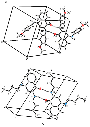
- . Results First and second redox-potentials of a series of bicyclic quinones are compared to computed energies of their LUMO, LUMO+1, and energies of reduction. Transannular influence of substituent on the redox-potentials is rationalized in terms of MO theory. Acetoxy-substituents in the 5,8-positions of
- the triptycene-quinone system selectively destabilize the product of the two-electron reduction. Conclusion We have shown that first redox-potentials of substituted bicyclic quinones correlate with their calculated LUMO energies and the energies of reduction. The second redox-potentials correlate with


The Elbs and Boyland- Sims peroxydisulfate oxidations
Beilstein J. Org. Chem. 2006, 2, No. 22, doi:10.1186/1860-5397-2-22
- the intermediate sulfate esters using acetic acid which spares carboxylic esters. These authors also give a current example of the use of sulfate esters as a protecting group in synthesis [7] as do Bunnett and Jenvey. [8] Parenthetically, there is a disputed report of the formation of quinones in low
- - and p-benzoquinone where the difference in the redox potential is 0.07 V [11] corresponding to 3 kcal mol-1. It may also be relevant that quinones are subject to attack by the hydroxyl ion to form (eventually) humic acids and that o-quinones are more reactive than p-quinones. [12][13] An analogous


Other Beilstein-Institut Open Science Activities



