


Search results
Search for "starch" in Full Text gives 67 result(s) in Beilstein Journal of Organic Chemistry.
Conjugates of methylated cyclodextrin derivatives and hydroxyethyl starch (HES): Synthesis, cytotoxicity and inclusion of anaesthetic actives
Beilstein J. Org. Chem. 2014, 10, 3087–3096, doi:10.3762/bjoc.10.325
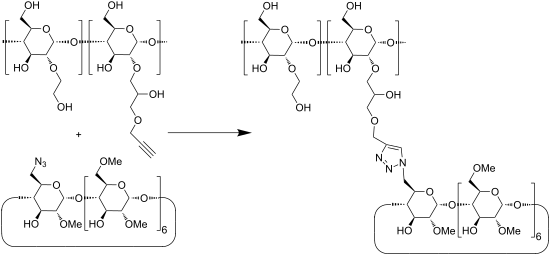
- /bjoc.10.325 Abstract The mono-6-deoxy-6-azides of 2,6-di-O-methyl-β-cyclodextrin (DIMEB) and randomly methylated-β-cyclodextrin (RAMEB) were conjugated to propargylated hydroxyethyl starch (HES) by Cu+-catalysed [2 + 3] cycloaddition. The resulting water soluble polymers showed lower critical solution
- ; occupancy; polymer; sevoflurane; solubility; starch; Introduction Cyclodextrins (CDs), α(1→4) linked cyclic oligomers of anhydroglucose, are produced nowadays in industrial scale [1]. CDs are able to complex hydrophobic or amphiphilic guest molecules in aqueous phase [2]. β-CD, the seven membered ring
- al. [28]. We intended to conjugate the corresponding methylated mono-azido-β-CD derivatives to propargylated hydroxyethyl starch (HES). Advantages of HES are its very high aqueous solubility paired with good biocompatibility and its very low allergenic potential [33]. HES is in use for a long time




Synthesis and characterization of a new photoinduced switchable β-cyclodextrin dimer
Beilstein J. Org. Chem. 2014, 10, 2874–2885, doi:10.3762/bjoc.10.304
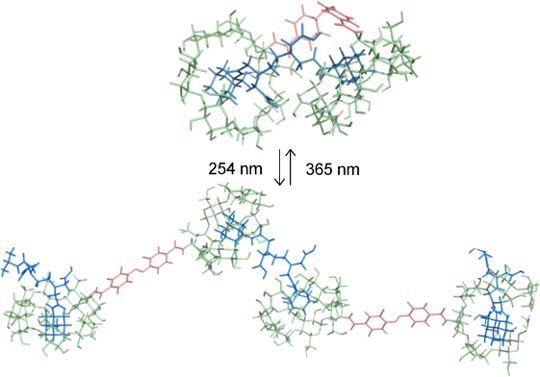
- ; switchable binding behavior; Introduction α-, β- or γ-Cyclodextrins (CDs) are cyclic oligosaccharides composed of 6, 7 or 8 α-D-1,4 glucopyranose moieties, respectively. They are natural compounds produced from starch by the reaction of 4-α-glucanotransferases [1]. Their toroidal shape, with C6-primary



Thermal and oxidative stability of the Ocimum basilicum L. essential oil/β-cyclodextrin supramolecular system
Beilstein J. Org. Chem. 2014, 10, 2809–2820, doi:10.3762/bjoc.10.298
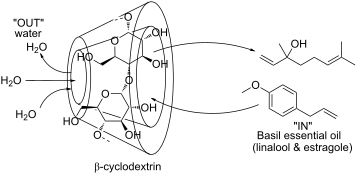
- of α-(1→4)-linked glucopyranose units, which are obtained by starch degradation under controlled enzymatic conditions [36]. The most relevant natural CDs are α-, β-, and γ-CD, having six, seven, or eight glucopyranose moieties, but many other CD derivatives can be obtained in order to enhance their


Encapsulation of biocides by cyclodextrins: toward synergistic effects against pathogens
Beilstein J. Org. Chem. 2014, 10, 2603–2622, doi:10.3762/bjoc.10.273
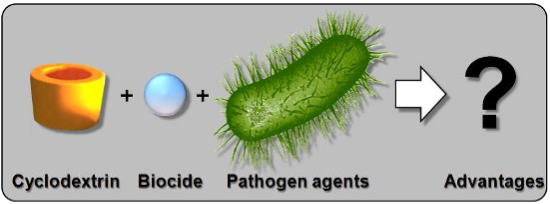
- ., starch) applying environmental-friendly technologies (i.e., enzymatic conversion), ii) they are relatively cheap and are produced in amounts of thousands of tons per year, iii) their chemical modification is relatively easy, iv) they are nontoxic in consumable concentrations (i.e., CDs are biocompatible


Effect of cyclodextrin complexation on phenylpropanoids’ solubility and antioxidant activity
Beilstein J. Org. Chem. 2014, 10, 2322–2331, doi:10.3762/bjoc.10.241
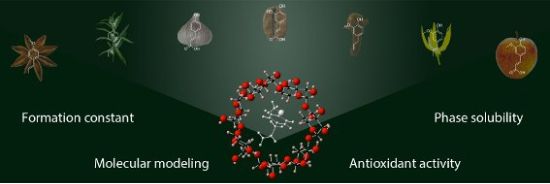
- , stability, release and bioavailability of natural compounds [10][11][12][13]. CDs are a family of cyclic oligosaccharides obtained from enzymatic degradation of starch. The most common native CDs are α-cyclodextrin (α-CD), β-cyclodextrin (β-CD) and γ-cyclodextrin (γ-CD) composed of six, seven and eight (α




Photo, thermal and chemical degradation of riboflavin
Beilstein J. Org. Chem. 2014, 10, 1999–2012, doi:10.3762/bjoc.10.208

- icing sugar, lactose and wheat starch while those with biosynthetic RF, it was found to decolorize in the presence of nicotinamide, lactose, talc and sodium starch glycolate [73]. The color changes in solid RF are often reversible and are due to photochromism [73][134]. Such color changes might not




An economical and safe procedure to synthesize 2-hydroxy-4-pentynoic acid: A precursor towards ‘clickable’ biodegradable polylactide
Beilstein J. Org. Chem. 2014, 10, 1365–1371, doi:10.3762/bjoc.10.139

- change of KI-starch test paper), which destroy product 1 during concentration and drying under vacuum. And neither addition of urea (reacting with HNO2 to release N2, CO2 and H2O) nor passing of crude product 1 through a short silica gel column can stop its decomposition. So three reductants were
- acid 6 at 0 °C followed by the addition of another 3 equiv of NaNO2 in water (40%). The resulting mixture was stirred for 40 h at room temperature, and urea in diluted HCl (1 M) was added dropwise until the mixture did not make potassium iodide starch test paper blue or purple. The resulting product 1
- was extracted with ether using a continuous extraction apparatus. Solid Na2S2O5 was added to ether layer and the resulting mixture was stirred until it did not turn potassium iodide starch test paper to purple. After removal of Na2S2O5 via filtration, the ether layer was concentrated, dried and


Carbenoid-mediated nucleophilic “hydrolysis” of 2-(dichloromethylidene)-1,1,3,3-tetramethylindane with DMSO participation, affording access to one-sidedly overcrowded ketone and bromoalkene descendants§
Beilstein J. Org. Chem. 2014, 10, 307–315, doi:10.3762/bjoc.10.28

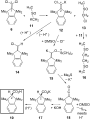
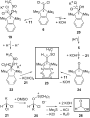
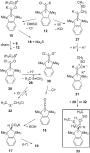
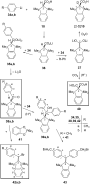
- NaOCl solution in an amount that sufficed for showing a positive potassium iodide/starch test for 30 min, at which time this residual NaOCl was forthwith destroyed by solid NaHSO3 that had to be added until the KI/starch test became negative. (KMnO4 in place of NaOCl was found to decompose 17.) The


The myxocoumarins A and B from Stigmatella aurantiaca strain MYX-030
Beilstein J. Org. Chem. 2013, 9, 2579–2585, doi:10.3762/bjoc.9.293

- . aurantiaca MYX-030, inoculated directly from a single culture of an agar plate, was incubated by shaking (150 rpm) at 30 °C for 7 days in a 500 mL shake flask without baffle containing 80 mL of medium MIX-5 (composition: 2 g glucose, 5 g potato starch, 2 g peptone, 0.5 g MgSO4, 0.5 g CaCl2, 10 g HEPES for 1
- L H2O, pH 7.4). For production of myxocoumarins, 3 × 200 mL production cultures in 500 mL flasks without baffle were inoculated with 20 mL of the preculture. Production was carried out by shaking (150 rpm) at 30 °C for 10 days in MIX-1 media (composition: 5 g casitone, 2 g starch, 2 g MgSO4, 0.5 g


Quantification of N-acetylcysteamine activated methylmalonate incorporation into polyketide biosynthesis
Beilstein J. Org. Chem. 2013, 9, 664–674, doi:10.3762/bjoc.9.75
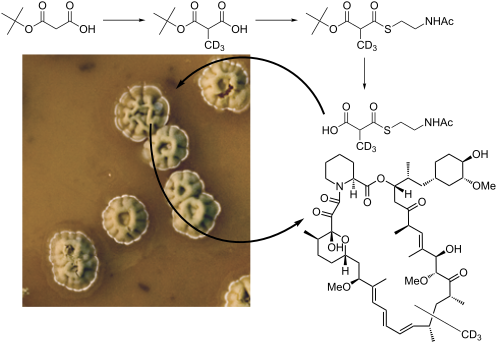
- : 5 g glucose, 50 g Glucidex IT29 (Roquette), 83.83 g NaHCO3, and 186 mg Na2CO3 were dissolved in 1 L of Millipore water to obtain 1 M carbonate feeding buffer at pH = 8. Rapamycin: 30 g starch (corn), 1 g yeast, 30 g Toasted Nutrisoy, 19 g Dextrin, 10 g NaCl, 83.83 g NaHCO3, and 186 mg Na2CO3 were



Cyclodextrin-based nanosponges as drug carriers
Beilstein J. Org. Chem. 2012, 8, 2091–2099, doi:10.3762/bjoc.8.235
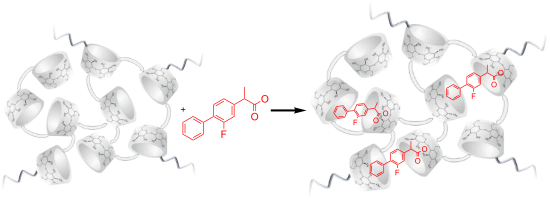
- and are synthesised by enzymatic action on hydrolysed starch. The main common native cyclodextrins are α, β and γ, which comprise six, seven and eight glucopyranose units, respectively. They have a characteristic toroidal shape, which forms a well-defined truncated cone-shaped lipophilic cavity


Superstructures with cyclodextrins: Chemistry and applications
Beilstein J. Org. Chem. 2012, 8, 1303–1304, doi:10.3762/bjoc.8.148
- ), 7 (β) and 8 (γ) 1,4-glycosidically linked α-D-glucose units. Production of these compounds is accomplished by enzymatic degradation of starch using CD-glycosyl transferase. Since their discovery more than 100 years ago, a significant development in CD research has taken place. Right after their
Unprecedented deoxygenation at C-7 of the ansamitocin core during mutasynthetic biotransformations
Beilstein J. Org. Chem. 2012, 8, 861–869, doi:10.3762/bjoc.8.96
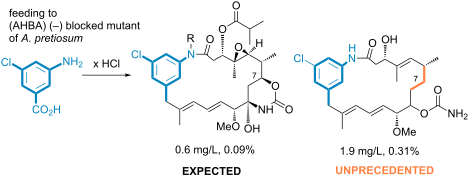
- concentration in the main culture corresponds to 5/6 of the values given for this medium due to dilution) – 60 g/L dextrin from maize starch (Fluka), 30 g/L D(+)-maltose∙H2O (Fluka), 5.25 g/L cottonseed flour (Proflo), 5 g/L CaCO3, 4.5 g/L yeast extract (Bacto), 300 mg/L K2HPO4 (Fluka, TraceSelect), 2 mg/L




Cyanoethylation of the glucans dextran and pullulan: Substitution pattern and formation of nanostructures and entrapment of magnetic nanoparticles
Beilstein J. Org. Chem. 2012, 8, 551–566, doi:10.3762/bjoc.8.63
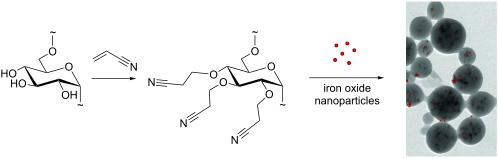
- spectroscopy (PEELS). Keywords: cyanoethyldextran; cyanoethylpullulan; ferromagnetic nanoparticles; glycan nanostructures; substitution pattern; Introduction Cyanoethylation has been widely applied to polysaccharides, e.g., to cellulose [1], inulin [2], and starch [3]. Onda reported on cyanoethylation of
- structural characterization of the material. Cyanoethylation is established for polysaccharides, but the substituent pattern has only been studied for cyanoethylamylose and starch [3]. In most cases, the products have only been roughly characterized by NMR and IR spectroscopy or by elementary analysis [1][2
- ]. Verraest described the substituent distribution in O-cyanoethylinulin by HPLC analysis and 13C NMR spectroscopy [7]. The structure and the solution properties of cyanoethylcellulose were investigated by FT–IR and 13C NMR spectroscopy, as well as by light scattering [21][22]. Cellulose and starch


Air-stable, recyclable, and time-efficient diphenylphosphinite cellulose-supported palladium nanoparticles as a catalyst for Suzuki–Miyaura reactions
Beilstein J. Org. Chem. 2011, 7, 378–385, doi:10.3762/bjoc.7.48

- ligands [23][24][25] or palladium(0) nanoparticles on various solid supports [26][27][28][29][30][31] (polystyrene [26], silica [27], cellulose [28], corn starch [29], polymethyl methacrylate [30] and others [31]). In addition, cellulose as efficient support for Pd nanoparticles in other cross-coupling


Miniemulsion polymerization as a versatile tool for the synthesis of functionalized polymers
Beilstein J. Org. Chem. 2010, 6, 1132–1148, doi:10.3762/bjoc.6.130
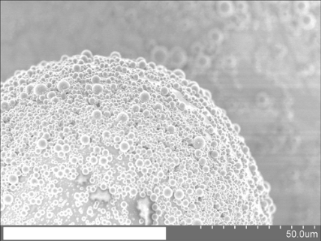
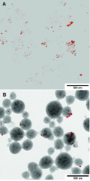
- variety of polymers, e.g., with epoxy, polyurethane (Figure 7), and polyurea, or based on synthetic polyamines, polythiourea, crosslinked starch, dextran or polyethylene imine [116]. Therefore, the functionality can be directly implemented in the capsules by using an excess of one of the monomers, or by
- synthesis to carry out a polymerase chain reaction (PCR) in crosslinked starch nanocapsules [121]. The permeability of the shell was also evaluated by fluorescence spectroscopy. The combination of cleavable polyurethane [109] with the interfacial polyaddition described above [116] afforded polymer shells





Functionalized polymers: synthesis and properties
Beilstein J. Org. Chem. 2010, 6, No. 55, doi:10.3762/bjoc.6.55
- , naturally occurring polymers as cellulose or polyisoprene were simply modified, for example by esterification or cross-linking to obtain the desired properties. Hermann Staudinger, for instance, chemically modified starch to prove the existence of high molecular weight substances. Nowadays, the development



