Search for "alkanes" in Full Text gives 107 result(s) in Beilstein Journal of Organic Chemistry.
Beilstein J. Org. Chem. 2015, 11, 1570–1582, doi:10.3762/bjoc.11.173
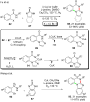
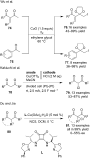
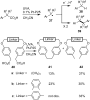
Graphical Abstract
Figure 1: Production and utilization of h+ and e– by photoactivation of a semiconductor.
Figure 2: Photoredox activity of TiO2 with moist air.
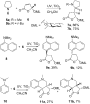
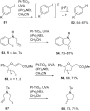
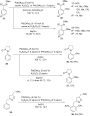
Scheme 1: TiO2 promoted oxidation of phenanthrene [29].
Scheme 2: SCPC assisted additions of allylic compounds to diazines and imines [40-42].
Scheme 3: TiO2 promoted addition and addition–cyclization reactions of tert-amines with electron-deficient al...
Scheme 4: Reactions of amines promoted by Pt-TiO2 [48,49].
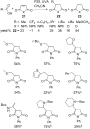
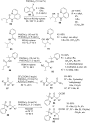
Scheme 5: P25 Promoted alkylations of N-phenylmaleimide with diverse carboxylic acids [53,54]. aAccompanied by R–R d...
Scheme 6: SCPC cyclizations of aryloxyacetic acids with suitably sited alkene acceptors [54]. aYields in brackets...
Scheme 7: TiO2 promoted reactions of aryloxyacetic acids with maleic anhydride and maleimides [53,54].
Scheme 8: Photoredox addition–cyclization reactions of aryloxyacetic and related acids promoted by maleimide [63]....
Scheme 9: SCPC promoted homo-couplings and macrocyclizations with carboxylic acids [64].
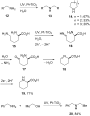
Scheme 10: TiO2 promoted alkylations of alkenes with silanes [66] and thiols [67].
Scheme 11: TiO2 reduction of a nitrochromenone derivative [70].
Scheme 12: TiO2 mediated hydrodehalogenations and cyclizations of organic iodides [71].
Scheme 13: TiO2 promoted hydrogenations of maleimides, maleic anhydride and aromatic aldehydes [79].
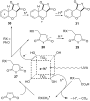
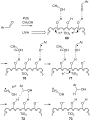
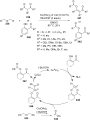
Scheme 14: Mechanistic sketch of SCPC hydrogenation of aryl aldehydes.
Beilstein J. Org. Chem. 2015, 11, 1274–1331, doi:10.3762/bjoc.11.142
Graphical Abstract
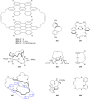
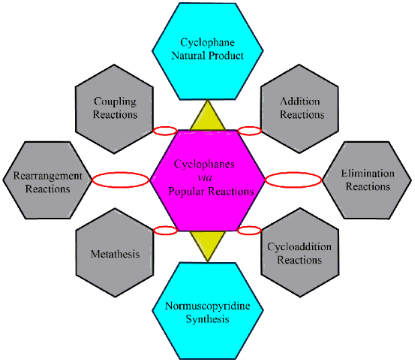
Figure 1: General representation of cyclophanes.
Figure 2: cyclophanes one or more with heteroatom.
Figure 3: Metathesis catalysts 12–17 and C–C coupling catalyst 18.
Figure 4: Natural products containing the cyclophane skeleton.
Figure 5: Turriane family of natural products.
Scheme 1: Synthesis of [3]ferrocenophanes through Mannich reaction. Reagents and conditions: (i) excess HNMe2...
Scheme 2: Synthesis of cyclophanes through Michael addition. Reagents and conditions: (i) xylylene dibromide,...
Scheme 3: Synthesis of normuscopyridine analogue 37 through an oxymercuration–oxidation strategy. Reagents an...
Scheme 4: Synthesis of tribenzocyclotriyne 39 through Castro–Stephens coupling reaction. Reagents and conditi...
Scheme 5: Synthesis of cyclophane 43 through Glaser–Eglinton coupling. Reagents and conditions: (i) 9,10-bis(...
Scheme 6: Synthesis of the macrocyclic C-glycosyl cyclophane through Glaser coupling. Reagents and conditions...
Scheme 7: Synthesis of cyclophane-containing complex 49 through Glaser–Eglinton coupling reaction. Reagents a...
Scheme 8: Synthesis of cyclophane 53 through Glaser–Eglinton coupling. Reagents and conditions: (i) K2CO3, ac...
Figure 6: Cyclophanes 54–56 that have been synthesized through Glaser–Eglinton coupling.
Figure 7: Synthesis of tetrasubstituted [2.2]paracyclophane 57 and chiral cyclophyne 58 through Eglinton coup...
Scheme 9: Synthesis of cyclophane through Glaser–Hay coupling reaction. Reagents and conditions: (i) CuCl2 (1...
Scheme 10: Synthesis of seco-C/D ring analogs of ergot alkaloids through intramolecular Heck reaction. Reagent...
Scheme 11: Synthesis of muscopyridine 73 via Kumada coupling. Reagents and conditions: (i) 72, THF, ether, 20 ...
Scheme 12: Synthesis of the cyclophane 79 via McMurry coupling. Reagents and conditions: (i) 75, decaline, ref...
Scheme 13: Synthesis of stilbenophane 81 via McMurry coupling. Reagents and conditions: (i) TiCl4, Zn, pyridin...
Scheme 14: Synthesis of stilbenophane 85 via McMurry coupling. Reagents and conditions: (i) NBS (2 equiv), ben...
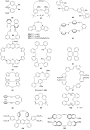
Figure 8: List of cyclophanes prepared via McMurry coupling reaction as a key step.
Scheme 15: Synthesis of paracyclophane by cross coupling involving Pd(0) catalyst. Reagents and conditions: (i...
Scheme 16: Synthesis of the cyclophane 112 via the pinacol coupling and 113 by RCM. Reagents and conditions: (...
Scheme 17: Synthesis of cyclophane derivatives 122a–c via Sonogoshira coupling. Reagents and conditions: (i) C...
Scheme 18: Synthesis of cyclophane 130 via Suzuki–Miyaura reaction as a key step. Reagents and conditions: (i)...
Scheme 19: Synthesis of the mycocyclosin via Suzuki–Miyaura cross coupling. Reagents and conditions: (i) benzy...
Scheme 20: Synthesis of cyclophanes via Wurtz coupling reaction Reagents and conditions: (i) PhLi, Et2O, C6H6,...
Scheme 21: Synthesis of non-natural glycophanes using alkyne metathesis. Reagents and conditions: (i) G-I (12)...
Figure 9: Synthesis of cyclophanes via ring-closing alkyne metathesis.
Scheme 22: Synthesis of crownophanes by cross-enyne metathesis. Reagents and conditions: (i) G-II (13), 5 mol ...
Scheme 23: Synthesis of (−)-cylindrocyclophanes A (156) and (−)-cylindrocyclophanes F (155). Reagents and cond...
Scheme 24: Synthesis of cyclophane 159 derivatives via SM cross-coupling and RCM. Reagents and conditions: (i)...
Scheme 25: Sexithiophene synthesis via cross metathesis. Reagents and conditions: (i) 161, Pd(PPh3)4, K2CO3, T...
Scheme 26: Synthesis of pyrrole-based cyclophane using enyne metathesis. Reagents and conditions: (i) Se, chlo...
Scheme 27: Synthesis of macrocyclic derivatives by RCM. Reagents and conditions: (i) G-I/G-II, CH2Cl2, 0.005 M...
Scheme 28: Synthesis of enantiopure β-lactam-based dienyl bis(dihydrofuran) 179. Reagents and conditions: (i) ...
Scheme 29: Synthesis of a [1.1.6]metaparacyclophane derivative 183 via SM cross coupling. Reagents and conditi...
Scheme 30: Synthesis of a [1.1.6]metaparacyclophane derivative 190 via SM cross coupling. Reagents and conditi...
Scheme 31: Template-promoted synthesis of cyclophanes involving RCM. Reagents and conditions: (i) acenaphthene...
Scheme 32: Synthesis of [3.4]cyclophane derivatives 200 via SM cross coupling and RCM. Reagents and conditions...
Figure 10: Examples for cyclophanes synthesized by RCM.
Scheme 33: Synthesis of the longithorone C framework assisted by fluorinated auxiliaries. Reagents and conditi...
Scheme 34: Synthesis of the longithorone framework via RCM. Reagents and conditions: (i) 213, NaH, THF, rt, 10...
Scheme 35: Synthesis of floresolide B via RCM as a key step. Reagents and conditions: (i) G-II (13, 0.1 equiv)...
Scheme 36: Synthesis of normuscopyridine (223) by the RCM strategy. Reagents and condition: (i) Mg, THF, hexen...
Scheme 37: Synthesis of muscopyridine (73) via RCM. Reagents and conditions: (i) 225, NaH, THF, 0 °C to rt, 1....
Scheme 38: Synthesis of muscopyridine (73) via RCM strategy. Reagents and conditions: (i) NaH, n-BuLi, 5-bromo...
Scheme 39: Synthesis of pyridinophane derivatives 223 and 245. Reagents and conditions: (i) PhSO2Na, TBAB, CH3...
Scheme 40: Synthesis of metacyclophane derivatives 251 and 253. Reagents and conditions: (i) 240, NaH, THF, rt...
Scheme 41: Synthesis of normuscopyridine and its higher analogues. Reagents and conditions: (i) alkenyl bromid...
Scheme 42: Synthesis of fluorinated ferrocenophane 263 via a [2 + 2] cycloaddition. Reagents and conditions: (...
Scheme 43: Synthesis of [2.n]metacyclophanes 270 via a [2 + 2] cycloaddition. Reagents and conditions: (i) Ac2...
Scheme 44: Synthesis of metacyclophane 273 by a [2 + 2 + 2] co-trimerization. Reagents and conditions: (i) [Rh...
Scheme 45: Synthesis of paracyclophane 276 via a [2 + 2 + 2] cycloaddition reaction. Reagents and conditions: ...
Scheme 46: Synthesis of cyclophane 278 via a [2 + 2 + 2] cycloaddition reaction. Reagents and conditions: (i) ...
Scheme 47: Synthesis of cyclophane 280 via a [2 + 2 + 2] cycloaddition. Reagents and conditions: (i) [(Rh(cod)(...
Scheme 48: Synthesis of taxane framework by a [2 + 2 + 2] cycloaddition. Reagents and conditions: (i) Cp(CO)2 ...
Scheme 49: Synthesis of cyclophane 284 and 285 via a [2 + 2 + 2] cycloaddition reaction. Reagents and conditio...
Scheme 50: Synthesis of pyridinophanes 293a,b and 294a,b via a [2 + 2 + 2] cycloaddition. Reagents and conditi...
Scheme 51: Synthesis of pyridinophanes 296 and 297 via a [2 + 2 + 2] cycloaddition. Reagents and conditions: (...
Scheme 52: Synthesis of triazolophane by a 1,3-dipolar cycloaddition. Reagents and conditions: (i) propargyl b...
Scheme 53: Synthesis of glycotriazolophane 309 by a click reaction. Reagents and conditions: (i) LiOH, H2O, Me...
Figure 11: Cyclophanes 310 and 311 prepared via click chemistry.
Scheme 54: Synthesis of cyclophane via the Dötz benzannulation. Reagents and conditions: (i) THF, 100 °C, 12 h...
Scheme 55: Synthesis of [6,6]metacyclophane by a Dötz benzannulation. Reagents and conditions: (i) THF, 100 °C...
Scheme 56: Synthesis of cyclophanes by a Dötz benzannulation. Reagents and conditions: (i) THF, 65 °C, 3 h; (i...
Scheme 57: Synthesis of muscopyridine (73) via an intramolecular DA reaction of ketene. Reagents and condition...
Scheme 58: Synthesis of bis[10]paracyclophane 336 via Diels–Alder reaction. Reagents and conditions: (i) DMAD,...
Scheme 59: Synthesis of [8]paracyclophane via DA reaction. Reagents and conditions: (i) maleic anhydride, 3–5 ...
Scheme 60: Biomimetic synthesis of (−)-longithorone A. Reagents and conditions: (i) Me2AlCl, CH2Cl2, −20 °C, 7...
Scheme 61: Synthesis of sporolide B (349) via a [4 + 2] cycloaddition reaction. Reagents and conditions: (i) P...
Scheme 62: Synthesis of the framework of (+)-cavicularin (352) via a [4 + 2] cycloaddition. Reagents and condi...
Scheme 63: Synthesis of oxazole-containing cyclophane 354 via Beckmann rearrangement. Reagents and conditions:...
Scheme 64: Synthesis of cyclophanes 360a–c via benzidine rearrangement. Reagents and conditions: (i) 356a–d, K2...
Scheme 65: Synthesis of cyclophanes 365a–c via benzidine rearrangement. Reagents and conditions: (i) BocNHNH2,...
Scheme 66: Synthesis of metacyclophane 367 via Ciamician–Dennstedt rearrangement. Reagents and conditions: (i)...
Scheme 67: Synthesis of cyclophane by tandem Claisen rearrangement and RCM as key steps. Reagents and conditio...
Scheme 68: Synthesis of cyclophane derivative 380. Reagents and conditions: (i) K2CO3, CH3CN, allyl bromide, r...
Scheme 69: Synthesis of metacyclophane via Cope rearrangement. Reagents and conditions: (i) MeOH, NaBH4, rt, 1...
Scheme 70: Synthesis of cyclopropanophane via Favorskii rearrangement. Reagents and conditions: (i) Br2, CH2Cl2...
Scheme 71: Cyclophane 389 synthesis via photo-Fries rearrangement. Reagents and conditions: (i) DMAP, EDCl/CHCl...
Scheme 72: Synthesis of normuscopyridine (223) via Schmidt rearrangement. Reagents and conditions: (i) ethyl s...
Scheme 73: Synthesis of crownophanes by tandem Claisen rearrangement. Reagents and conditions: (i) diamine, Et3...
Scheme 74: Attempted synthesis of cyclophanes via tandem Claisen rearrangement and RCM. Reagents and condition...
Scheme 75: Synthesis of muscopyridine via alkylation with 2,6-dimethylpyridine anion. Reagents and conditions:...
Scheme 76: Synthesis of cyclophane via Friedel–Craft acylation. Reagents and conditions: (i) CS2, AlCl3, 7 d, ...
Scheme 77: Pyridinophane 418 synthesis via Friedel–Craft acylation. Reagents and conditions: (i) 416, AlCl3, CH...
Scheme 78: Cyclophane synthesis involving the Kotha–Schölkopf reagent 421. Reagents and conditions: (i) NBS, A...
Scheme 79: Cyclophane synthesis involving the Kotha–Schölkopf reagent 421. Reagents and conditions: (i) BEMP, ...
Scheme 80: Cyclophane synthesis by coupling with TosMIC. Reagents and conditions: (i) (a) ClCH2OCH3, TiCl4, CS2...
Scheme 81: Synthesis of diaza[32]cyclophanes and triaza[33]cyclophanes. Reagents and conditions: (i) DMF, NaH,...
Scheme 82: Synthesis of cyclophane 439 via acyloin condensation. Reagents and conditions: (i) Na, xylene, 75%;...
Scheme 83: Synthesis of multibridged binuclear cyclophane 442 by aldol condensation. Reagents and conditions: ...
Scheme 84: Synthesis of various macrolactones. Reagents and conditions: (i) iPr2EtN, DMF, 77–83%; (ii) TBDMSCl...
Scheme 85: Synthesis of muscone and muscopyridine via Yamaguchi esterification. Reagents and conditions: (i) 4...
Scheme 86: Synthesis of [5]metacyclophane via a double elimination reaction. Reagents and conditions: (i) LiBr...
Figure 12: Cyclophanes 466–472 synthesized via Hofmann elimination.
Scheme 87: Synthesis of cryptophane via Baylis–Hillman reaction. Reagents and conditions: (i) methyl acrylate,...
Scheme 88: Synthesis of cyclophane 479 via double Chichibabin reaction. Reagents and conditions: (i) excess 478...
Scheme 89: Synthesis of cyclophane 483 via double Chichibabin reaction. Reagents and conditions: (i) 481, OH−;...
Scheme 90: Synthesis of cyclopeptide via an intramolecular SNAr reaction. Reagents and conditions: (i) TBAF, T...
Scheme 91: Synthesis of muscopyridine (73) via C-zip ring enlargement reaction. Reagents and conditions: (i) H...
Figure 13: Mechanism of the formation of compound 494.
Scheme 92: Synthesis of indolophanetetraynes 501a,b using the Nicholas reaction as a key step. Reagents and co...
Scheme 93: Synthesis of cyclophane via radical cyclization. Reagents and conditions: (i) cyclododecanone, phen...
Scheme 94: Synthesis of (−)-cylindrocyclophanes A (156) and (−)-cylindrocyclophanes F (155). Reagents and cond...
Scheme 95: Cyclophane synthesis via Wittig reaction. Reagents and conditions: (i) LiOEt (2.1 equiv), THF, −78 ...
Figure 14: Representative examples of cyclophanes synthesized via Wittig reaction.
Scheme 96: Synthesis of the [6]paracyclophane via isomerization of Dewar benzene. Reagents and conditions: (i)...
Beilstein J. Org. Chem. 2015, 11, 92–146, doi:10.3762/bjoc.11.13
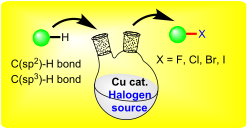
Graphical Abstract
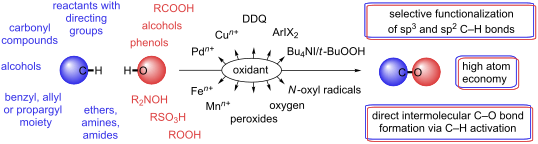
Scheme 1: Cross-dehydrogenative coupling.
Scheme 2: Cross-dehydrogenative C–O coupling.
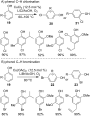
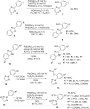
Scheme 3: Regioselective ortho-acetoxylation of meta-substituted arylpyridines and N-arylamides.
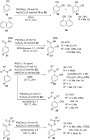
Scheme 4: ortho-Acyloxylation and alkoxylation of arenes directed by pyrimidine, benzoxazole, benzimidazole a...
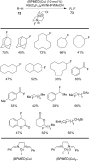
Scheme 5: Cu(OAc)2/AgOTf/O2 oxidative system in the ortho-alkoxylation of arenes.
Scheme 6: Pd(OAc)2/persulfate oxidative system in the ortho-alkoxylation and acetoxylation of arenes with nit...
Scheme 7: ortho-Acetoxylation and methoxylation of O-methyl aryl oximes, N-phenylpyrrolidin-2-one, and (3-ben...
Scheme 8: Ruthenium-catalyzed ortho-acyloxylation of acetanilides.
Scheme 9: Acetoxylation and alkoxylation of arenes with amide directing group using Pd(OAc)2/PhI(OAc)2 oxidat...
Scheme 10: Alkoxylation of azoarenes, 2-aryloxypyridines, picolinamides, and N-(1-methyl-1-(pyridin-2-yl)ethyl...
Scheme 11: Acetoxylation of compounds containing picolinamide and quinoline-8-amine moieties using the Pd(OAc)2...
Scheme 12: (CuOH)2CO3 catalyzed oxidative ortho-etherification using air as oxidant.
Scheme 13: Copper-catalyzed aerobic alkoxylation and aryloxylation of arenes containing pyridine-N-oxide moiet...
Scheme 14: Cobalt-catalyzed aerobic alkoxylation of arenes and alkenes containing pyridine N-oxide moiety.
Scheme 15: Non-symmetric double-fold C–H ortho-acyloxylation.
Scheme 16: N-nitroso directed ortho-alkoxylation of arenes.
Scheme 17: Selective alkoxylation and acetoxylation of alkyl groups.
Scheme 18: Acetoxylation of 2-alkylpyridines and related compounds.
Scheme 19: Acyloxylation and alkoxylation of alkyl fragments of substrates containing amide or sulfoximine dir...
Scheme 20: Palladium-catalyzed double sp3 C–H alkoxylation of N-(quinolin-8-yl)amides for the synthesis of sym...
Scheme 21: Copper-catalyzed acyloxylation of methyl groups of N-(quinolin-8-yl)amides.
Scheme 22: One-pot acylation and sp3 C–H acetoxylation of oximes.
Scheme 23: Possible mechanism of oxidative esterification catalyzed by N-heterocyclic nucleophilic carbene.
Scheme 24: Oxidative esterification employing stoichiometric amounts of aldehydes and alcohols.
Scheme 25: Selective oxidative coupling of aldehydes with alcohols in the presence of amines.
Scheme 26: Iodine mediated oxidative esterification.
Scheme 27: Oxidative C–O coupling of benzyl alcohols with methylarenes under the action of Bu4NI/t-BuOOH syste...
Scheme 28: Oxidative coupling of methyl- and ethylarenes with aromatic aldehydes under the action of Bu4NI/t-B...
Scheme 29: Cross-dehydrogenative C–O coupling of aldehydes with t-BuOOH in the presence of Bu4NI.
Scheme 30: Bu4NI-catalyzed α-acyloxylation reaction of ethers and ketones with aldehydes and t-BuOOH.
Scheme 31: Oxidative coupling of aldehydes with N-hydroxyimides and hexafluoroisopropanol.
Scheme 32: Oxidative coupling of alcohols with N-hydroxyimides.
Scheme 33: Oxidative coupling of aldehydes and primary alcohols with N-hydroxyimides using (diacetoxyiodo)benz...
Scheme 34: Proposed mechanism of the oxidative coupling of aldehydes and N-hydroxysuccinimide under action of ...
Scheme 35: Oxidative coupling of aldehydes with pivalic acid (172).
Scheme 36: Oxidative C–O coupling of aldehydes with alkylarenes using the Cu(OAc)2/t-BuOOH system.
Scheme 37: Copper-catalyzed acyloxylation of C(sp3)-H bond adjacent to oxygen in ethers using benzyl alcohols.
Scheme 38: Oxidative C–O coupling of aromatic aldehydes with cycloalkanes.
Scheme 39: Ruthenium catalyzed cross-dehydrogenative coupling of primary and secondary alcohols.
Scheme 40: Cross-dehydrogenative C–O coupling reactions of β-dicarbonyl compounds with sulfonic acids, acetic ...
Scheme 41: Acyloxylation of ketones, aldehydes and β-dicarbonyl compounds using carboxylic acids and Bu4NI/t-B...
Scheme 42: Acyloxylation of ketones using Bu4NI/t-BuOOH system.
Scheme 43: Cross-dehydrogenative C–O coupling of β-dicarbonyl compounds and their heteroanalogues with N-hydro...
Scheme 44: Cross-dehydrogenative C–O coupling of β-dicarbonyl compounds and their heteroanalogues with t-BuOOH....
Scheme 45: Oxidative C–O coupling of 2,6-dialkylphenyl-β-keto esters and thioesters with tert-butyl hydroxycar...
Scheme 46: α’-Acyloxylation of α,β-unsaturated ketones using KMnO4.
Scheme 47: Possible mechanisms of the acetoxylation at the allylic position of alkenes by Pd(OAc)2.
Scheme 48: Products of the oxidation of terminal alkenes by Pd(II)/AcOH/oxidant system.
Scheme 49: Acyloxylation of terminal alkenes with carboxylic acids.
Scheme 50: Synthesis of linear E-allyl esters by cross-dehydrogenative coupling of terminal alkenes wih carbox...
Scheme 51: Pd(OAc)2-catalyzed acetoxylation of Z-vinyl(triethylsilanes).
Scheme 52: α’-Acetoxylation of α-acetoxyalkenes with copper(II) chloride in acetic acid.
Scheme 53: Oxidative acyloxylation at the allylic position of alkenes and at the benzylic position of alkylare...
Scheme 54: Copper-catalyzed alkoxylation of methylheterocyclic compounds using di-tert-butylperoxide as oxidan...
Scheme 55: Oxidative C–O coupling of methylarenes with β-dicarbonyl compounds or phenols.
Scheme 56: Copper-catalyzed esterification of methylbenzenes with cyclic ethers and cycloalkanes.
Scheme 57: Oxidative C–O coupling of carboxylic acids with toluene catalyzed by Pd(OAc)2.
Scheme 58: Oxidative acyloxylation at the allylic position of alkenes with carboxylic acids using the Bu4NI/t-...
Scheme 59: Cross-dehydrogenative C–O coupling of carboxylic acids with alkylarenes using the Bu4NI/t-BuOOH sys...
Scheme 60: Oxidative C–O cross-coupling of methylarenes with ethyl or isopropylarenes.
Scheme 61: Phosphorylation of benzyl C–H bonds using the Bu4NI/t-BuOOH oxidative system.
Scheme 62: Selective C–H acetoxylation of 2,3-disubstituted indoles.
Scheme 63: Acetoxylation of benzylic position of alkylarenes using DDQ as oxidant.
Scheme 64: C–H acyloxylation of diarylmethanes, 3-phenyl-2-propen-1-yl acetate and dimethoxyarene using DDQ.
Scheme 65: Cross-dehydrogenative C–O coupling of 1,3-diarylpropylenes and 1,3-diarylpropynes with alcohols.
Scheme 66: One-pot azidation and C–H acyloxylation of 3-chloro-1-arylpropynes.
Scheme 67: Cross-dehydrogenative C–O coupling of 1,3-diarylpropylenes, (E)-1-phenyl-2-isopropylethylene and is...
Scheme 68: Cross-dehydrogenative C–O coupling of alkylarenes and related compounds with N-hydroxyphthalimide.
Scheme 69: Acetoxylation at the benzylic position of alkylarenes mediated by N-hydroxyphthalimide.
Scheme 70: C–O coupling of methylarenes with aromatic carboxylic acids employing the NaBrO3/NaHSO3 system.
Scheme 71: tert-Butyl peroxidation of allyl, propargyl and benzyl ethers catalyzed by Fe(acac)3.
Scheme 72: Cross-dehydrogenative C–O coupling of ethers with carboxylic acids mediated by Bu4NI/t-BuOOH system....
Scheme 73: Oxidative acyloxylation of dimethylamides and dioxane with 2-aryl-2-oxoacetic acids accompanied by ...
Scheme 74: tert-Butyl peroxidation of N-benzylamides and N-allylbenzamide using the Bu4NI/t-BuOOH system.
Scheme 75: Cross-dehydrogenative C–O coupling of aromatic carboxylic acids with ethers using Fe(acac)3 as cata...
Scheme 76: Cross-dehydrogenative C–O coupling of cyclic ethers with 2-hydroxybenzaldehydes using iron carbonyl...
Scheme 77: Cross-dehydrogenative C–O coupling of ethers with β-dicarbonyl compounds and phenols using copper c...
Scheme 78: Cross-dehydrogenative C–O coupling of 2-hydroxybenzaldehyde with dioxane catalyzed by Cu2(BPDC)2(BP...
Scheme 79: Ruthenium chloride-catalyzed acyloxylation of β-lactams.
Scheme 80: Ruthenium-catalyzed tert-butyl peroxydation amides and acetoxylation of β-lactams.
Scheme 81: PhI(OAc)2-mediated α,β-diacetoxylation of tertiary amines.
Scheme 82: Electrochemical oxidative methoxylation of tertiary amines.
Scheme 83: Cross-dehydrogenative C–O coupling of ketene dithioacetals with carboxylic acids in the presence of...
Scheme 84: Cross-dehydrogenative C–O coupling of enamides with carboxylic acids using iodosobenzene as oxidant....
Scheme 85: Oxidative alkoxylation, acetoxylation, and tosyloxylation of acylanilides using PhI(O(O)CCF3)2 in t...
Scheme 86: Proposed mechanism of the oxidative C–O coupling of actetanilide with O-nucleophiles in the presenc...
Scheme 87: Three-component coupling of aldehydes, anilines and alcohols involving oxidative intermolecular C–O...
Scheme 88: Oxidative coupling of phenols with alcohols.
Scheme 89: 2-Acyloxylation of quinoline N-oxides with arylaldehydes in the presence of the CuOTf/t-BuOOH syste...
Scheme 90: Cross-dehydrogenative C–O coupling of azoles with primary alcohols.
Scheme 91: Oxidation of dipyrroles to dipyrrins and subsequent oxidative alkoxylation in the presence of Na3Co...
Scheme 92: Oxidative dehydrogenative carboxylation of alkanes and cycloalkanes to allylic esters.
Scheme 93: Pd-catalyzed acetoxylation of benzene.
Beilstein J. Org. Chem. 2014, 10, 1878–1895, doi:10.3762/bjoc.10.196
Graphical Abstract
Figure 1: A visual representation of fluorocarbon surfactants at the air–water interface, highlighting the fr...
Figure 2: Correlation between relative surface coverage (Φsurf) – see Figure 1, limiting aqueous surface tension (γcmc...
Figure 3: Structures illustrating the difference in fraction free volume (FFV) within a surfactant tail regio...
Figure 4: Structures of three CO2-philic candidates: (30) MIA, (31) 2MEP and (32) 2MMP and the respective pol...
Figure 5: Structures of poly(1-decene) (37, P-1-D) and. poly(vinyl ethyl ether) (38, PVEE).
Figure 6: Schematic showing how hydrated cation radius (rhyd) mediates surfactant headgroup repulsions by con...
Figure 7: Abbreviated names and structures of hydrotropes tested by Hatzopoulos et al. [40,105,107].
Figure 8: Structures of para-methylphenol and para-ethylphenol. Para-substituted phenols have been shown to t...
Figure 9: Structures of 1,1,3,3-tetramethylguanidinium acetate (46), 1,1,3,3-tetramethylguanidinium lactate (...
Beilstein J. Org. Chem. 2014, 10, 1421–1432, doi:10.3762/bjoc.10.146
Graphical Abstract
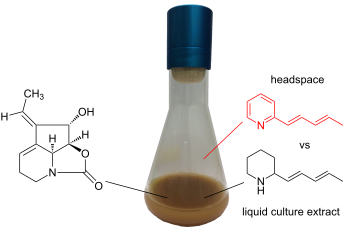
Figure 1: Alkaloids produced by Streptomyces strain FORM5.
Figure 2: Part of the total ion chromatogram of the headspace extract of Streptomyces sp. FORM5 with the stru...
Figure 3: Mass spectra of a) (E)-2-(pent-3-en-1-yl)pyridine (streptopyridine E, 8), b) (1Z,3E)-penta-1,3-dien...
Scheme 1: Synthesis of streptopyridines A to E (8–12) and the 2-alkylpyridines 6 and 7.
Figure 4: Total ion chromatograms of the product mixtures of isomers 9–12 synthesized under E-selective (a) a...
Figure 5: Structures of piperidine derivatives 20–26.
Figure 6: a) Mass spectrum of streptopyridine A (12), b) mass spectrum of 12 after feeding of 2 mM 13C2-sodiu...
Scheme 2: Proposed biosynthesis of the streptopyridines. PKS: polyketide synthase; red: reduction; ta: transa...
Figure 7: Compounds detected in the headspace of Streptomyces sp. FORM5.
Beilstein J. Org. Chem. 2014, 10, 1347–1353, doi:10.3762/bjoc.10.137
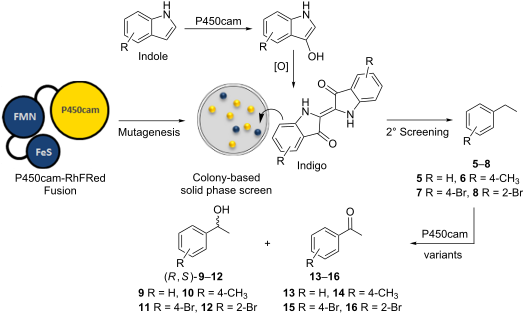
Graphical Abstract
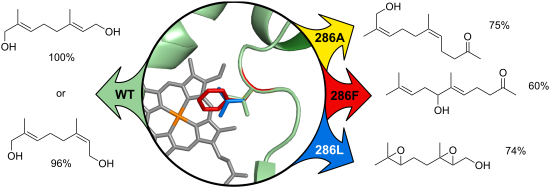
Figure 1: Immediate heme surroundings shown for the nearest relative of CYP154E1 with available crystal struc...
Scheme 1: Terpene substrates (grey background) and their oxidised derivatives.
Scheme 2: a) Ac2O, pyridine, room temperature, 24 h; b) SeO2, t-BuOOH, CH2Cl2, 0 °C, 5 h; c) K2CO3, MeOH, roo...
Scheme 3: a) SeO2, t-BuOOH, CH2Cl2, 0 °C, 3.5 h.
Beilstein J. Org. Chem. 2013, 9, 2841–2845, doi:10.3762/bjoc.9.319
Graphical Abstract
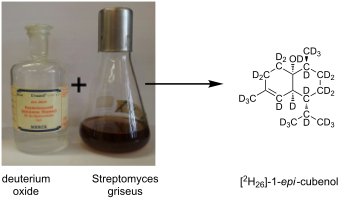
Figure 1: Terpenoids from Streptomyces griseus.
Figure 2: Total ion chromatograms of CLSA headspace extracts from S. griseus obtained after (A) incubation on...
Figure 3: Mass spectra of 1-epi-cubenol. (A) Mass spectrum of natural 3 obtained after growth on 65.GYM; (B) ...
Figure 4: Ion chromatograms of fully deuterated 3 for (A) the molecular ion (m/z = 248, 247, and 246), and (B...
Beilstein J. Org. Chem. 2013, 9, 2767–2777, doi:10.3762/bjoc.9.311
Graphical Abstract
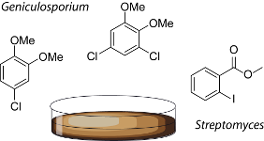
Figure 1: Total ion chromatogram of a CLSA headspace extract from Geniculosporium.
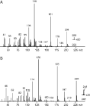
Figure 2: Mass spectra of A) the chlorinated volatile X and B) the chlorinated volatile Y.
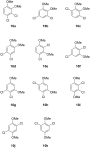
Figure 3: Constitutional isomers of chlorodimethoxybenzene as candidate structures for X.
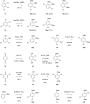
Scheme 1: Synthesis of chlorodimethoxybenzenes as reference compounds for X.
Figure 4: Constitutional isomers of dichlorodimethoxybenzene as candidate structures for Y.
Scheme 2: Synthesis of chlorodimethoxybenzenes as reference compounds for Y.
Figure 5: Known natural products that are structurally related to 4b and 10b from Geniculosporium.
Figure 6: Total ion chromatograms of headspace extracts from S. chartreusis. A) Growth on 84 GYM showing prod...
Figure 7: Calicheamicin, a known iodinated compound from the actinomycete Micromonspora echinospora.
Beilstein J. Org. Chem. 2013, 9, 1407–1413, doi:10.3762/bjoc.9.157
Graphical Abstract
Scheme 1: Preparation of the diazoacetamides.
Scheme 2: Bromination of the diazoacetamides 3a–f and thermolysis of the α-bromodiazoacetamides 4a–f.
Beilstein J. Org. Chem. 2013, 9, 1352–1382, doi:10.3762/bjoc.9.153
Graphical Abstract
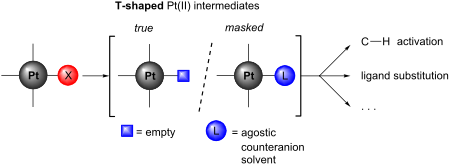
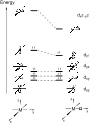
Figure 1: Qualitative orbital diagram for a d8 metal in ML4 square-planar and ML3 T-shaped complexes.
Figure 2: Walsh diagram for the d-block of a d8 ML3 complex upon bending of one L–M–L angle.
Figure 3: Neutral Y-shaped Pt complex Y1 [15]. Angles are given in degrees.
Figure 4: General classification of T-shaped Pt(II) structures according to the fourth coordination site.
Figure 5: Hydride, boryl and borylene true T-shaped Pt(II) complexes.
Figure 6: NHC-based true T-shaped Pt(II) complexes.
Figure 7: Phosphine-based agostic T-shaped Pt(II) complexes. Compounds in brackets correspond with hydrido–al...
Figure 8: Phenylpyridine and NHC-based agostic T-shaped Pt(II) complexes.
Figure 9: Counteranion coordination in T-shaped Pt(II) complexes.
Figure 10: Phosphine-based solvento Pt(II) complexes.
Figure 11: Nitrogen-based solvento Pt(II) complexes.
Figure 12: Pincer-based solvento Pt(II) complexes.
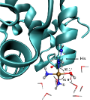
Figure 13: Structure of the QM/MM optimized cisplatin–protein adduct [94].
Figure 14: NMR coupling constants used for the characterization of three-coordinate Pt(II) species.
Figure 15: The chemical formula of the complexes discussed in Table 2.
Scheme 1: Halogen abstraction from 1.
Scheme 2: Halogen abstraction from 2 forming the dicationic complex T3 [22].
Scheme 3: Hydrogenation of complexes A5a and A5b [39].
Scheme 4: Hydrogenation of complexes 3 and A5c [40].
Scheme 5: Intermolecular C–H bond activation from T5a [28].
Scheme 6: Protonation of complexes 4 [35,36].
Scheme 7: Cyclometalation of 5 [43].
Scheme 8: Protonation of 6.
Scheme 9: Reductive elimination of ethane from 7.
Scheme 10: Reductive elimination of methane from six-coordinate Pt(IV) complexes.
Scheme 11: Proposed dissociative mechanism for the fluxional motion of dmphen in [Pt(Me)(dmphen)(PR3)]+ comple...
Figure 16: Feasible interactions for unsaturated intermediates 11b (left) and 12b (right) during fluxional mot...
Scheme 12: Halogen abstraction from 13a,b and subsequent cyclometalation to yield complexes A5a,b [39].
Scheme 13: Proposed mechanism for the acid-catalyzed cyclometalation of 14 via intermediate 15 [41].
Scheme 14: Proposed mechanism for the formation of 19 [102].
Scheme 15: Cyclometalation of 20 via thioether dissociation [117].
Figure 17: Gibbs energy profile (in chloroform solvent) for the cyclometalation of 23 [120].
Scheme 16: Coordination of tmtu to 29 and subsequent C–H bond activation via three-coordinate species 31 and 32...
Scheme 17: Cyclometalation process of NHC-based Pt(II) complexes [28,44].
Scheme 18: Cyclometalation process of complex A9 [43].
Scheme 19: “Rollover” reaction of 38 and subsequent oligomerization [123].
Scheme 20: Proposed mechanism for the formation of cyclometalated species 44 [124].
Scheme 21: Self-assembling process of 45 by “rollover” reaction [126].
Scheme 22: “Rollover” reaction of A9. Energies (solvent) in kcal mol−1 [127].
Scheme 23: Proposed mechanisms for the “rollover” cyclometalation of 52 in gas-phase ion-molecule reactions [128].
Scheme 24: β-H elimination and 1,2-insertion equilibrium involving A1d and the subsequent generation of 57 [35].
Scheme 25: Proposed mechanism for thermolysis of 7b and 7c in benzene-d6 and cyclohexane-d12 solvents [101].
Scheme 26: β-H elimination process of A11a [28].
Scheme 27: Intermolecular C–H bond activation from 62 [95].
Scheme 28: Reductive elimination of methane from 65 followed by CD3CN coordination or C–D bond-activation proc...
Figure 18: DFT-optimized structures describing the κ2 (69, left) and κ3 (69’, right) coordination modes of [Pt...
Scheme 29: Intermolecular arene C–H bond activation from NHC-based complexes [28].
Figure 19: Energy profiles (in benzene solvent) for the benzene C–H bond activation from A11a, A11b, T5a and T...
Scheme 30: Intermolecular arene C–H bond activation from PNP-based complex 71 [12].
Scheme 31: Intermolecular C–H bond-activation by gas-phase ion-molecule reactions of 74 [7,142].
Scheme 32: Dihydrogen activation through complexes A5a, A5b [39], A5c [40] and S1a [54].
Scheme 33: Dihydrogen activation through complexes A7 and 16 [41]. For a: see Scheme 13.
Scheme 34: Br2 and I2 bond activations through complexes A11a and T5a [143].
Scheme 35: Detection and isolation of the Pt(III) complex 81a [143].
Scheme 36: Cl2 bond activation through complexes 82 and 83 [144].
Scheme 37: cis–trans Isomerization mechanism of the solvento Pt(II) complexes S5 [2,61].
Figure 20: Energy profiles for the isomerization of complexes [Pt(R)(PMe3)2(NCMe)]+ where R means Me (85a, red...
Figure 21: DFT-optimized structure of intermediate 86 [62]. Bond distances in angstrom and angles in degrees.
Scheme 38: Proposed dissociative ligand-substitution mechanism of cis-[Pt(R)2S2] complexes (87) [117].
Scheme 39: Proposed mechanisms for the ligand substitution of the dinuclear species 91 [146].
Beilstein J. Org. Chem. 2013, 9, 1296–1310, doi:10.3762/bjoc.9.146
Graphical Abstract
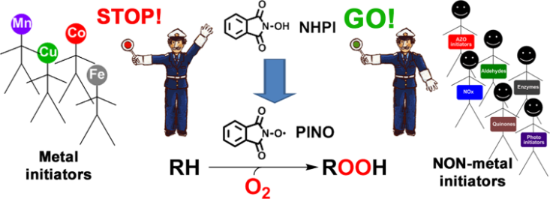
Scheme 1: Catalytic role of NHPI in the selective oxidation of organic substrates.
Scheme 2: Radical addition of aldehydes and analogues to alkenes.
Scheme 3: NHPI/AIBN-promoted aerobic oxidation of 2,6-diisopropylnaphthalene.
Scheme 4: NHPI/AIBN-promoted aerobic oxidation of CHB.
Scheme 5: NMBHA/MeOAMVN promoted aerobic oxidation of PUFA.
Scheme 6: Alkene dioxygenation by means of N-aryl hydroxamic acid and O2.
Scheme 7: NHPI-catalyzed reaction of adamantane under NO atmosphere.
Scheme 8: Nitration of alkanes and alkyl side-chains of aromatics.
Scheme 9: Radical mechanism for the nitration of alkanes catalyzed by NHPI.
Scheme 10: Benzyl alcohols from alkylbenzenes.
Scheme 11: Catalytic cycle of laccase-NHDs mediator oxidizing system.
Figure 1: Mediators of laccase.
Scheme 12: DADCAQ/NHPI-mediated aerobic oxidation mechanism.
Scheme 13: DADCAQ/TCNHPI mediated aerobic oxidation of ethylbenzene.
Scheme 14: NHPI/xanthone/TMAC mediated aerobic oxidation of ethylbenzene.
Scheme 15: NHPI/AQ-mediated aerobic oxidation of α-isophorone.
Scheme 16: NHPI/AQ-mediated oxidation of cellulose fibers by NaClO/NaBr system.
Scheme 17: NHPI/AQ mediated aerobic oxidation of cellulose fibers.
Scheme 18: Molecule-induced homolysis by peracids.
Scheme 19: Molecule-induced homolysis of NHPI/m- chloroperbenzoic acid system.
Scheme 20: Proposed mechanism for the NHPI/CH3CHO/O2-mediated epoxidation.
Scheme 21: NHPI/CH3CHO-mediated aerobic oxidation of alkyl aromatics.
Scheme 22: Light-induced generation of PINO from N-alkoxyphthalimides.
Scheme 23: Visible-light/g-C3N4 induced metal-free oxidation of allylic substrates.
Scheme 24: NHPI/o-phenanthroline-mediated organocatalytic system.
Scheme 25: NHPI/DMG-mediated organocatalytic system.
Scheme 26: NHPI catalyzed oxidative cleavage of C=C bonds.
Scheme 27: Synthesis of hydrazine derivatives.
Beilstein J. Org. Chem. 2013, 9, 1217–1225, doi:10.3762/bjoc.9.138
Graphical Abstract
Scheme 1: Aliphatic C–H oxidation with amidines and ketimines by 1,5-H radical shift.
Scheme 2: Aliphatic C–H oxidation with hydroperoxides.
Scheme 3: Proposed reaction mechanisms for the formation of 2a, 3a, and 4a.
Scheme 4: Proposed reaction mechanisms for the formation of 5 and 6.
Scheme 5: The reaction of secondary hydroperoxide 1o.
Scheme 6: 1,4-Dioxygenation of alkanes.
Scheme 7: Aerobic 1,4-dioxygenation of alkanes in the CuCl–NHPI catalytic system.
Beilstein J. Org. Chem. 2013, 9, 800–808, doi:10.3762/bjoc.9.91
Graphical Abstract
Scheme 1: Photoinduced electron transfer as an access to radical chemistry.
Figure 1: Reduction potential (versus SCE) of the ground and excited state of acceptors and oxidation potenti...
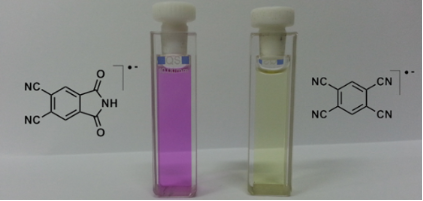
Figure 2: UV-monitoring of: (a) a 2 × 10⁻⁴ M solution of TCB in the presence of Bu4Sn (10−2 M) and (b) a 1.5 ...
Figure 3: Absorption spectra of a freeze–pump–thaw deoxygenated MeCN solution irradiated at 313 nm of (a) 1,2...
Scheme 2: Mechanistic scheme.
Figure 4: Thermodynamics of the redox processes discussed (solid arrows represent exergonic electron donation...
Beilstein J. Org. Chem. 2013, 9, 278–302, doi:10.3762/bjoc.9.34
Graphical Abstract
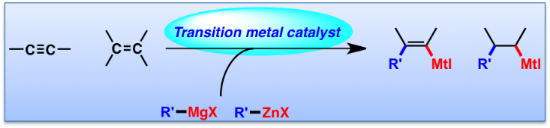
Scheme 1: Variation of substrates for carbomagnesiation and carbozincation in this article.
Scheme 2: Copper-catalyzed arylmagnesiation and allylmagnesiation of alkynyl sulfone.
Scheme 3: Copper-catalyzed four-component reaction of alkynyl sulfoxide with alkylzinc reagent, diiodomethane...
Scheme 4: Rhodium-catalyzed reaction of aryl alkynyl ketones with arylzinc reagents.
Scheme 5: Allylmagnesiation of propargyl alcohol, which provides the anti-addition product.
Scheme 6: Negishi’s total synthesis of (Z)-γ-bisabolene by allylmagnesiation.
Scheme 7: Iron-catalyzed syn-carbomagnesiation of propargylic or homopropargylic alcohol.
Scheme 8: Mechanism of iron-catalyzed carbomagnesiation.
Scheme 9: Regio- and stereoselective manganese-catalyzed allylmagnesiation.
Scheme 10: Vinylation and alkylation of arylacetylene-bearing hydroxy group.
Scheme 11: Arylmagnesiation of (2-pyridyl)silyl-substituted alkynes.
Scheme 12: Synthesis of tamoxifen from 2g.
Scheme 13: Controlling regioselectivity of carbocupration by attaching directing groups.
Scheme 14: Rhodium-catalyzed carbozincation of ynamides.
Scheme 15: Synthesis of 4-pentenenitriles through carbometalation followed by aza-Claisen rearrangement.
Scheme 16: Uncatalyzed carbomagnesiation of cyclopropenes.
Scheme 17: Iron-catalyzed carbometalation of cyclopropenes.
Scheme 18: Enantioselective carbozincation of cyclopropenes.
Scheme 19: Copper-catalyzed facially selective carbomagnesiation.
Scheme 20: Arylmagnesiation of cyclopropenes.
Scheme 21: Enantioselective methylmagnesiation of cyclopropenes without catalyst.
Scheme 22: Copper-catalyzed carbozincation.
Scheme 23: Enantioselective ethylzincation of cyclopropenes.
Scheme 24: Nickel-catalyzed ring-opening aryl- and alkenylmagnesiation of a methylenecyclopropane.
Scheme 25: Reaction mechanism.
Scheme 26: Nickel-catalyzed carbomagnesiation of arylacetylene and dialkylacetylene.
Scheme 27: Nickel-catalyzed carbozincation of arylacetylenes and its application to the synthesis of tamoxifen....
Scheme 28: Bristol-Myers Squibb’s nickel-catalyzed phenylzincation.
Scheme 29: Iron/NHC-catalyzed arylmagnesiation of aryl(alkyl)acetylene.
Scheme 30: Iron/copper-cocatalyzed alkylmagnesiation of aryl(alkyl)acetylenes.
Scheme 31: Iron-catalyzed hydrometalation.
Scheme 32: Iron/copper-cocatalyzed arylmagnesiation of dialkylacetylenes.
Scheme 33: Chromium-catalyzed arylmagnesiation of alkynes.
Scheme 34: Cobalt-catalyzed arylzincation of alkynes.
Scheme 35: Cobalt-catalyzed formation of arylzinc reagents and subsequent arylzincation of alkynes.
Scheme 36: Cobalt-catalyzed benzylzincation of dialkylacetylene and aryl(alkyl)acetylenes.
Scheme 37: Synthesis of estrogen receptor antagonist.
Scheme 38: Cobalt-catalyzed allylzincation of aryl-substituted alkynes.
Scheme 39: Silver-catalyzed alkylmagnesiation of terminal alkyne.
Scheme 40: Proposed mechanism of silver-catalyzed alkylmagnesiation.
Scheme 41: Zirconium-catalyzed ethylzincation of terminal alkenes.
Scheme 42: Zirconium-catalyzed alkylmagnesiation.
Scheme 43: Titanium-catalyzed carbomagnesiation.
Scheme 44: Three-component coupling reaction.
Scheme 45: Iron-catalyzed arylzincation reaction of oxabicyclic alkenes.
Scheme 46: Reaction of allenyl ketones with organomagnesium reagent.
Scheme 47: Regio- and stereoselective reaction of a 2,3-allenoate.
Scheme 48: Three-component coupling reaction of 1,2-allenoate, organozinc reagent, and ketone.
Scheme 49: Proposed mechanism for a rhodium-catalyzed arylzincation of allenes.
Scheme 50: Synthesis of skipped polyenes by iterative arylzincation/allenylation reaction.
Scheme 51: Synthesis of 1,4-diorganomagnesium compound from 1,2-dienes.
Scheme 52: Synthesis of tricyclic compounds.
Scheme 53: Manganese-catalyzed allylmagnesiation of allenes.
Scheme 54: Copper-catalyzed alkylmagnesiation of 1,3-dienes and 1,3-enynes.
Scheme 55: Chromium-catalyzed methallylmagnesiation of 1,6-diynes.
Scheme 56: Chromium-catalyzed allylmagnesiation of 1,6-enynes.
Scheme 57: Proposed mechanism of the chromium-catalyzed methallylmagnesiation.
Beilstein J. Org. Chem. 2013, 9, 166–172, doi:10.3762/bjoc.9.19
Graphical Abstract
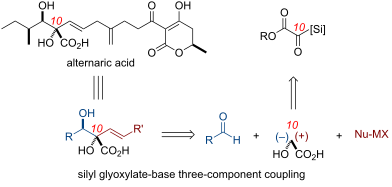
Scheme 1: (A) Silyl glyoxylates as versatile reagents for three-component coupling reactions: representative ...
Scheme 2: Potential applications of silyl glyoxylate couplings and precedent synthetic intermediates toward t...
Scheme 3: Three-component coupling with a vinyl nucleophile and elaboration to Ichihara’s aldehyde.
Scheme 4: Modified Julia olefination as a step-efficient alternative endgame strategy.
Scheme 5: Three-component coupling with an allyl nucleophile and demonstration of successful ruthenium-cataly...
Scheme 6: Approaches considered to address the stereochemical issue.
Scheme 7: Use of a dithiane moiety to excert stereochemical control in the three-component coupling reaction ...
Scheme 8: Synthesis of a vinyl iodide for nucleophile generation and its use in a three-component coupling re...
Beilstein J. Org. Chem. 2012, 8, 941–950, doi:10.3762/bjoc.8.106
Graphical Abstract
Figure 1: Important metabolites in the interaction of bacteria from the Roseobacter clade with marine algae.
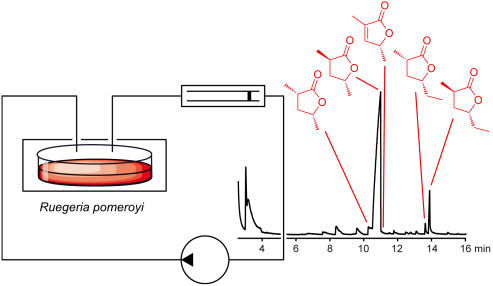
Figure 2: (A) Total ion chromatogram of a headspace extract from R. pomeroyi, (B) structures of lactones rele...
Figure 3: Mass spectra of the compounds 7–11 emitted by R. pomeroyi.
Scheme 1: Synthesis of compounds 7–11. For these target structures the relative configurations are shown.
Scheme 2: Enantioselective synthesis of (2R,4S)-7 and (2S,4S)-8.
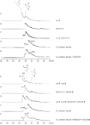
Figure 4: Enantioselective GC analyses for the assignment of the enantiomeric compositions of natural (2S,4R)-...
Beilstein J. Org. Chem. 2012, 8, 496–500, doi:10.3762/bjoc.8.56
Graphical Abstract
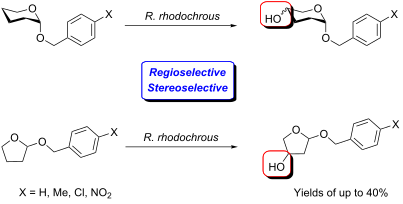
Scheme 1: Regioselective hydroxylation of Cbz-piperidine by Rhodococcus rhodochrous resting cells.
Scheme 2: Results from the incubation of THP ether derivatives with Rhodococcus rhodochrous showing the isola...
Scheme 3: Influence of substrate structure and linker length on the regioselectivity of hydroxylation.
Scheme 4: Regioselective hydroxylation following incubation of THF ether derivatives with Rhodococcus rhodoch...
Beilstein J. Org. Chem. 2012, 8, 330–336, doi:10.3762/bjoc.8.36
Graphical Abstract
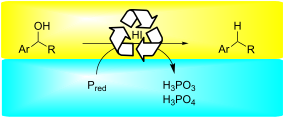
Scheme 1: Mechanism of the alcohol reduction and recycling of iodine.
Beilstein J. Org. Chem. 2012, 8, 290–299, doi:10.3762/bjoc.8.31
Graphical Abstract
Figure 1: Volatile compounds released by Mycobacterium tuberculosis and M. bovis identified in previous studi...
Figure 2: Total ion chromatogram of a headspace extract of a culture of Mycobacterium tuberculosis strain 2, ...
Figure 3: Volatiles released by mycobacteria and Nocardia spp. grown on a 7H11 solid medium.
Figure 4: Volatiles released by M. tuberculosis grown in a 7H9 broth liquid medium.
Beilstein J. Org. Chem. 2012, 8, 186–191, doi:10.3762/bjoc.8.20
Graphical Abstract
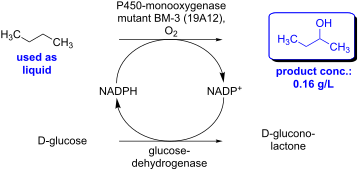
Scheme 1: Biocatalytic n-butane hydroxylation with enzymatic in situ cofactor regeneration.
Scheme 2: Biocatalytic n-octane hydroxylation with enzymatic in situ cofactor regeneration.
Scheme 3: Enzymatic hydroxylation of n-butane (used as liquid) with in situ cofactor regeneration.
Beilstein J. Org. Chem. 2011, 7, 346–363, doi:10.3762/bjoc.7.45
Graphical Abstract
Scheme 1: Superelectrophilic activation of the acetyl cation.
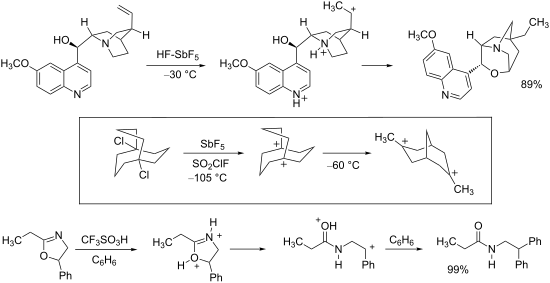
Scheme 2: Ring opening of diprotonated 2-oxazolines.
Scheme 3: AlCl3-promoted ring opening of isoxaolidine 16.
Scheme 4: Ring-opening reactions of cyclopropyl derivatives.
Scheme 5: Condensations of ninhydrin (28) with benzene.
Scheme 6: Rearrangement of 29 to 30.
Scheme 7: Superacid promoted ring opening of succinic anhydride (33).
Scheme 8: Reaction of phthalic acid (36) in FSO3H-SbF5.
Scheme 9: Ring expansion of superelectrophile 42.
Scheme 10: Reaction of camphor (44) in superacid.
Scheme 11: Isomerization of 2-cyclohexen-1-one (48).
Scheme 12: Isomerization of 2-decalone (51).
Scheme 13: Rearrangement of the acyl-dication 58.
Scheme 14: Reaction of dialkylketone 64.
Scheme 15: Ozonolysis in superacid.
Scheme 16: Rearrangement of 1-hydroxy-2-methylcyclohexane carboxylic acid (79) in superacid.
Scheme 17: Isomerization of the 1,5-manxyl dication 87.
Scheme 18: Energetics of isomerization.
Scheme 19: Rearrangement of dication 90.
Scheme 20: Superacid promoted rearrangement of pivaldehyde (92).
Scheme 21: Rearrangement of a superelectrophilic carboxonium ion 100.
Scheme 22: Proposed mechanism for the Wallach rearrangement.
Scheme 23: Wallach rearrangement of azoxypyridines 108 and 109.
Scheme 24: Proposed mechanism of the benzidine rearrangement.
Scheme 25: Superacid-promoted reaction of quinine (122).
Scheme 26: Superacid-promoted reaction of vindoline derivative 130.
Scheme 27: Charge migration by hydride shift and acid–base chemistry.
Scheme 28: Reactions of 1-hydroxycyclohexanecarboxylic acid (137).
Scheme 29: Reaction of alcohol 143 with benzene in superacid.
Scheme 30: Reaction of alcohol 148 in superacid with benzene.
Scheme 31: Mechanism of aza-polycyclic aromatic compound formation.
Scheme 32: Superacid-promoted reaction of ethylene glycol (159).
Scheme 33: Reactions of 1,3-propanediol (165) and 2-methoxyethanol (169).
Scheme 34: Rearrangement of superelelctrophilic acyl dication 173.
Beilstein J. Org. Chem. 2011, 7, 222–233, doi:10.3762/bjoc.7.30
Graphical Abstract
Figure 1: Molecular analogues of the Platonic solids.
Figure 2: The structure of [Mo6Cl8]4+ demonstrates the reciprocal relationship between the cube and the octah...
Figure 3: The deltahedra corresponding to the structures of the closo-boranes [BxHx]2−.
Scheme 1: The first synthesis of a tetrahedrane 19 by Maier.
Scheme 2: The conversion of Dewar benzenes to [3]-prismanes.
Scheme 3: Synthesis of [3]prismane 9 by Katz.
Scheme 4: Synthesis of cubane 10 by Eaton.
Scheme 5: Synthesis of cubane 10 by Pettit.
Scheme 6: Failed routes to [5]-prismane 11.
Scheme 7: Synthesis of [5]prismane 11 by Eaton.
Scheme 8: Retrosynthetic analysis for several approaches to dodecahedrane 16.
Scheme 9: Paquette´s synthesis of dodecahedrane 16.
Scheme 10: Prinzbach´s synthesis of dodecahedrane 16.
Figure 4: The as yet unknown polyhedranes 12–15.
Figure 5: Coupling of two Dewar benzenes.
Scheme 11: A possible route to octahedrane 12.
Scheme 12: A possible route to nonahedrane 13.
Figure 6: Capping [4]peristylane with a four-membered ring system.
Scheme 13: A possible route to decahedrane 14.
Figure 7: A possible route to undecahedrane 15 (left: side view; right: top view).
Scheme 14: Synthetic routes to trigonal prismatic hexasilanes 71a and hexagermanes 71b.
Scheme 15: Synthetic routes to octasila- and octagerma-cubanes.
Scheme 16: Synthesis of an octastannacubane and a decastannapentaprismane.
Scheme 17: Synthesis of a heterocubane.
Figure 8: D3d symmetric C8H8, a bis-truncated cubane.
Beilstein J. Org. Chem. 2010, 6, 1015–1021, doi:10.3762/bjoc.6.114
Graphical Abstract
Figure 1: Amino acid based organogelators 1 and 2.
Scheme 1: Synthesis of organogelators 2.
Beilstein J. Org. Chem. 2010, 6, 880–921, doi:10.3762/bjoc.6.88
Graphical Abstract
Figure 1: Examples of industrial fluorine-containing bio-active molecules.
Figure 2: CF3(S)- and CF3(O)-containing pharmacologically active compounds.
Figure 3: Hypotensive candidates with SRF and SO2RF groups – analogues of Losartan and Nifedipin.
Figure 4: The variety of the pharmacological activity of RFS-substituted compounds.
Figure 5: Recent examples of compounds containing RFS(O)n-groups [12-18].
Scheme 1: Fluorination of ArSCCl3 to corresponding ArSCF3 derivatives. For references see: a[38-43]; b[41,42]; c[43]; d[44]; e[38-43,45-47]; f[38-43,48,49]; g...
Scheme 2: Preparation of aryl pentafluoroethyl sulfides.
Scheme 3: Mild fluorination of the aryl SCF2Br derivatives.
Scheme 4: HF fluorinations of aryl α,α,β-trichloroisobutyl sulfide at various conditions.
Scheme 5: Monofluorination of α,α-dichloromethylene group.
Scheme 6: Electrophilic substitution of phenols with CF3SCl [69].
Scheme 7: Introduction of SCF3 groups into activated phenols [71-74].
Scheme 8: Preparation of tetrakis(SCF3)-4-methoxyphenol [72].
Scheme 9: The interactions of resorcinol and phloroglucinol derivatives with RFSCl.
Scheme 10: Reactions of anilines with CF3SCl.
Scheme 11: Trifluoromethylsulfanylation of anilines with electron-donating groups in the meta position [74].
Scheme 12: Reaction of benzene with CF3SCl/CF3SO3H [77].
Scheme 13: Reactions of trifluoromethyl sulfenyl chloride with aryl magnesium and -mercury substrates.
Scheme 14: Reactions of pyrroles with CF3SCl.
Scheme 15: Trifluoromethylsulfanylation of indole and indolizines.
Scheme 16: Reactions of N-methylpyrrole with CF3SCl [80,82].
Scheme 17: Reactions of furan, thiophene and selenophene with CF3SCl.
Scheme 18: Trifluoromethylsulfanylation of imidazole and thiazole derivatives [83].
Scheme 19: Trifluoromethylsulfanylation of pyridine requires initial hydride reduction.
Scheme 20: Introduction of additional RFS-groups into heterocyclic compounds in the presence of CF3SO3H.
Scheme 21: Introduction of additional RFS-groups into pyrroles [82,87].
Scheme 22: By-products in reactions of pyrroles with CF3SCl [82].
Scheme 23: Reaction of aromatic iodides with CuSCF3 [93,95].
Scheme 24: Reaction of aromatic iodides with RFZCu (Z = S, Se), RF = CF3, C6F5 [93,95,96].
Scheme 25: Side reactions during trifluoromethylsulfanylation of aromatic iodides with CF3SCu [98].
Scheme 26: Reactions with in situ generated CuSCF3.
Scheme 27: Perfluoroalkylthiolation of aryl iodides with bulky RFSCu [105].
Scheme 28: In situ formation and reaction of RFZCu with aryl iodides.
Figure 6: Examples of compounds obtained using in situ generated RFZCu methodology [94].
Scheme 29: Introduction of SCF3 group into aromatics via difluorocarbene.
Scheme 30: Tetrakis(dimethylamino)ethylene dication trifluoromethyl thiolate as a stable reagent for substitut...
Scheme 31: The use of CF2=S/CsF or (CF3S)2C=S/CsF for the introduction of CF3S groups into fluorinated heteroc...
Scheme 32: One-pot synthesis of ArSCF3 from ArX, CCl2=S and KF.
Scheme 33: Reaction of aromatics with CF3S− Kat+ [115].
Scheme 34: Reactions of activated aromatic chlorides with AgSCF3/KI.
Scheme 35: Comparative CuSCF3/KI and Hg(SCF3)2/KI reactions.
Scheme 36: Me3SnTeCF3 – a reagent for the introduction of the TeCF3 group.
Scheme 37: Sandmeyer reactions with CuSCF3.
Scheme 38: Reactions of perfluoroalkyl iodides with alkali and organolithium reagents.
Scheme 39: Perfluoroalkylation with preliminary breaking of the disulfide bond.
Scheme 40: Preparation of RFS-substituted anilines from dinitrodiphenyl disulfides.
Scheme 41: Photochemical trifluoromethylation of 2,4,6-trimercaptochlorobenzene [163].
Scheme 42: Putative process for the formation of B, C and D.
Scheme 43: Trifluoromethylation of 2-mercapto-4-hydroxy-6-trifluoromethylyrimidine [145].
Scheme 44: Deactivation of 2-mercapto-4-hydroxypyrimidines S-centered radicals.
Scheme 45: Perfluoroalkylation of thiolates with CF3Br under UV irradiation.
Scheme 46: Catalytic effect of methylviologen for RF• generation.
Scheme 47: SO2−• catalyzed trifluoromethylation.
Scheme 48: Electrochemical reduction of CF3Br in the presence of SO2 [199,200].
Scheme 49: Participation of SO2 in the oxidation of ArSCF3−•.
Scheme 50: Electron transfer cascade involving SO2 and MV.
Scheme 51: Four stages of the SRN1 mechanism for thiol perfluoroalkylation.
Scheme 52: A double role of MV in the catalysis of RFI reactions with aryl thiols.
Scheme 53: Photochemical reaction of pentafluoroiodobenzene with trifluoromethyl disulfide.
Scheme 54: N- Trifluoromethyl-N-nitrosobenzene sulfonamide – a source of CF3• radicals [212,213].
Scheme 55: Radical trifluoromethylation of organic disulfides with ArSO2N=NCF3.
Scheme 56: Barton’s S-perfluoroalkylation reactions [216].
Scheme 57: Decarboxylation of thiohydroxamic esters in the presence of C6F13I.
Scheme 58: Reactions of thioesters of trifluoroacetic and trifluoromethanesulfonic acids in the presence of ar...
Scheme 59: Perfluoroalkylation of polychloropyridine thiols with xenon perfluorocarboxylates or XeF2 [222,223].
Scheme 60: Interaction of Xe(OCORF)2 with nitroaryl disulfide [227].
Scheme 61: Bi(CF3)3/Cu(OCOCH3)2 trifluoromethylation of thiophenolate [230].
Scheme 62: Reaction of fluorinated carbanions with aryl sulfenyl chlorides.
Scheme 63: Reaction of methyl perfluoromethacrylate with PhSCl in the presence of fluoride.
Scheme 64: Reactions of ArSCN with potassium and magnesium perfluorocarbanions [237].
Scheme 65: Reactions of RFI with TDAE and organic disulfides [239,240].
Scheme 66: Decarboxylation of perfluorocarboxylates in the presence of disulfides [245].
Scheme 67: Organization of a stable form of “CF3−” anion in the DMF.
Scheme 68: Silylated amines in the presence of fluoride can deprotonate fluoroform for reaction with disulfide...
Figure 7: Other examples of aminomethanols [264].
Scheme 69: Trifluoromethylation of diphenyl disulfide with PhSO2CF3/t-BuOK.
Scheme 70: Amides of trifluoromethane sulfinic acid are sources of CF3− anion.
Scheme 71: Trifluoromethylation of various thiols using “hyper-valent” iodine (III) reagent [279].
Scheme 72: Trifluoromethylation of p-nitrothiophenolate with diaryl CF3 sulfonium salts [280].
Scheme 73: Trifluoromethyl transfer from dibenzo (CF3)S-, (CF3)Se- and (CF3)Te-phenium salts to thiolates [283].
Scheme 74: Multi-stage paths for synthesis of dibenzo-CF3-thiophenium salts [61].
Beilstein J. Org. Chem. 2010, 6, No. 38, doi:10.3762/bjoc.6.38
Graphical Abstract
Figure 1: Conformational effects associated with C–F bonds.
Figure 2: HIV protease inhibitor Indinavir (17) and fluorinated analogues 18 and 19. In analogue 18 the gauche...
Figure 3: Cholesteryl ester transfer protein inhibitors 20 and 21. In the fluorinated analogue 21, nO→σ*CF hy...
Figure 4: HIV reverse transcriptase inhibitor 22 and acid-stable fluorinated analogues 23–25. The F–C–C–O gau...
Figure 5: Dihydroquinidine (26) and fluorinated analogues 27 and 28. Newman projections along the C9–C8 bonds...
Figure 6: The neurotransmitter GABA (29) and fluorinated analogues (R)-30 and (S)-30. Newman projections of (R...
Figure 7: The insect pheromone 31 and fluorinated analogues (S)-32 and (R)-32. The proposed bioactive conform...
Figure 8: Capsaicin (33) and fluorinated analogues (R)-34 and (S)-34.
Figure 9: Asymmetric epoxidation reaction catalysed by pyrrolidine 35. Inset: the geometry of the activated i...
Figure 10: The asymmetric transannular aldol reaction catalysed by trans-4-fluoroproline (41), and its applica...
Figure 11: The asymmetric Stetter reaction catalysed by chiral NHC catalysts 49–52. The ring conformations of ...
Figure 12: A multi-vicinal fluoroalkane.
Figure 13: X-ray crystal structures of diastereoisomeric multi-vicinal fluoroalkanes 55 and 56. The different ...
Figure 14: Examples of fluorinated liquid crystal molecules. Arrows indicate the orientation of the molecular ...
Figure 15: Di-, tri- and tetra-fluoro liquid crystal molecules 60–62.
Figure 16: Collagen mimics of general formula (Pro-Yaa-Gly)10 where Yaa is either 4(R)-hydroxyproline (63) or ...
Figure 17: Enkephalin-related peptide 64 and the fluorinated analogue 65. The electron-withdrawing trifluorome...
Figure 18: The C–F bond influences the conformation of β-peptides. β-Heptapeptide 66 adopts a helical conforma...
Figure 19: The conformations of pseudopeptides 69 and 70 are influenced by the α-fluoroamide effect and the fl...