


Search results
Search for "conjugate addition" in Full Text gives 168 result(s) in Beilstein Journal of Organic Chemistry.
Synthesis of non-racemic 4-nitro-2-sulfonylbutan-1-ones via Ni(II)-catalyzed asymmetric Michael reaction of β-ketosulfones
- Alexander N. Reznikov,
- Anastasiya E. Sibiryakova,
- Marat R. Baimuratov,
- Eugene V. Golovin,
- Victor B. Rybakov and
- Yuri N. Klimochkin
Beilstein J. Org. Chem. 2019, 15, 1289–1297, doi:10.3762/bjoc.15.127
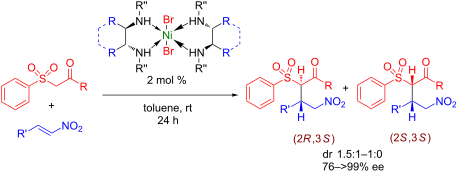
- reaction with their participation. Asymmetric conjugate addition of activated methylene compounds (such as diketones, keto esters and malonates) to nitroalkenes in the presence of Mg [43], Co [44][45], Mn [45] and Ru [46] complexes was performed. The most remarkable results were obtained with Ni(II
- coordination to Ni. The complex B regenerates after the conjugate addition via transition state C and coordination of a new β-ketosulfone molecule to Ni. TS1 and TS2 are proposed by analogy with 1,3-dicarbonyl compounds [47] to rationalize the asymmetric induction. As illustrated in Scheme 2, β-ketosulfone is

Graphical Abstract
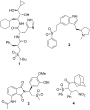
Figure 1: Рharmacologically active sulfones.

Figure 2: Structures of the ligands L1–L8.

Figure 3: Evolution of the conversion of 5 and diastereomeric composition of the products of reaction of 5a w...

Figure 4: Time profile of epimerization and retro-Michael reaction of (2R,3S)-8a in chloroform-d solution.

Figure 5: ORTEP diagram of (2R,3S)-8d.
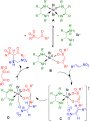
Scheme 1: The proposed mechanism of asymmetric addition of β-ketosulfones to nitroalkenes.

Scheme 2: Transition state models for asymmetric addition of β-ketosulfones to nitroalkenes.
Ugi reaction-derived prolyl peptide catalysts grafted on the renewable polymer polyfurfuryl alcohol for applications in heterogeneous enamine catalysis
- Alexander F. de la Torre,
- Gabriel S. Scatena,
- Oscar Valdés,
- Daniel G. Rivera and
- Márcio W. Paixão
Beilstein J. Org. Chem. 2019, 15, 1210–1216, doi:10.3762/bjoc.15.118
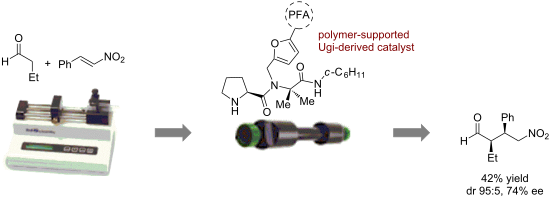
- employ a three-component, diastereoselective variant of the Ugi reaction for the synthesis of a prolyl pseudo-peptide catalyst, which proved effective in an organocatalytic conjugate addition reaction [6]. Later, our groups developed an Ugi reaction-based multicomponent approach enabling the structure
- the peptide moieties into the PFA matrix, while proving the good stability of the PFA-supported catalysts under classic working temperatures (i.e., up to 100 °C). To assess the catalytic performance of the PFA-supported catalysts, the model system consisting in organocatalytic conjugate addition of n

Graphical Abstract

Scheme 1: Schematic synthesis of polyfurfulyl alcohol (PFA) incorporating a prolyl peptide catalyst. AA: Amin...

Scheme 2: Utilization of the Ugi four-component reaction (Ugi-4CR) for the synthesis of prolyl pseudo-peptide...
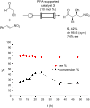
Figure 1: Analysis of the continuous-flow catalytic system producing γ-nitroaldehyde 5 with PFA-supported cat...
Switchable selectivity in Pd-catalyzed [3 + 2] annulations of γ-oxy-2-cycloalkenones with 3-oxoglutarates: C–C/C–C vs C–C/O–C bond formation
- Yang Liu,
- Julie Oble and
- Giovanni Poli
Beilstein J. Org. Chem. 2019, 15, 1107–1115, doi:10.3762/bjoc.15.107
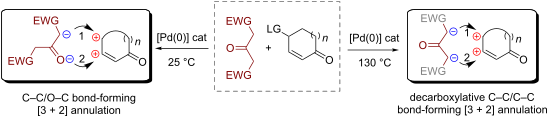
- reversibility of the O-1,4-addition step, in combination with the irreversible C-1,4-addition/decarboxylation path, the intramolecular conjugate addition step could be diverted from the kinetic (O-alkylation) to the thermodynamic path (C-alkylation) thanks to a simple temperature increase. Crucial for the
- ]nonane-3,8-dione (5a) with 50% and 69% yield, respectively (Table 1, entries 8 and 9). This product plausibly arises from a C-allylation step followed by an intramolecular C-conjugate addition/decarboxylation sequence, although throughout this study the putative intermediate 3a proved always elusive
- d). Pd(0) decoordination closes the catalytic cycle delivering intermediate E(keto) (step e) (Scheme 7). The following spontaneous intramolecular O-conjugate addition of one of the two possible enol tautomers of E(keto) affords the kinetic C–C/O–C adduct 4a through steps (f, g), or (h, i, j) (Scheme

Graphical Abstract

Scheme 1: Previously developed bis-nucleophile/bis-electrophile [3 + 2] annulations.

Scheme 2: Concept: [3 + 2] C–C/C–C vs C–C/O–C bond-forming annulations.

Figure 1: Examples of annulated cylopentanic (top) and furan-based (bottom) substructures in natural products....

Scheme 3: C–C/O–C bond forming annulations with dimethyl 3-oxoglutarate (1a).

Scheme 4: C–C/C–C bond-forming annulations with dimethyl 3-oxoglutarate (1a).

Scheme 5: C–C/C–O bond-forming annulations with various bis-nucleophiles.

Scheme 6: Decarboxylative rearrangement of 4a into 5a.

Scheme 7: Proposed mechanism for the Pd-catalyzed part of the [3 + 2] annulation reaction.

Scheme 8: Proposed mechanism for the temperature dependent cyclization part of the [3 + 2] annulation.
Multicomponent reactions (MCRs): a useful access to the synthesis of benzo-fused γ-lactams
- Edorta Martínez de Marigorta,
- Jesús M. de Los Santos,
- Ana M. Ochoa de Retana,
- Javier Vicario and
- Francisco Palacios
Beilstein J. Org. Chem. 2019, 15, 1065–1085, doi:10.3762/bjoc.15.104
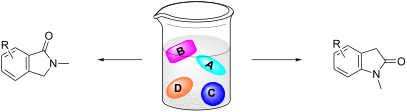
- conjugate addition of benzamide nitrogen onto the 2-ynamide generates the final cyclization product 24 through allene intermediate 28. Taking into account that the reaction does not take place with internal alkynes, the authors conclude that a terminal alkyne is necessary for the formation of the first

Graphical Abstract

Figure 1: γ-Lactam-derived structures considered in this review.

Figure 2: Alkaloids containing an isoindolinone moiety.

Figure 3: Alkaloids containing the 2-oxindole ring system.
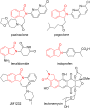
Figure 4: Drugs and biological active compounds containing an isoindolinone moiety.
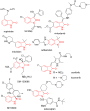
Figure 5: Drugs and biologically active compounds bearing a 2-oxindole skeleton.
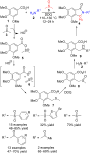
Scheme 1: Three-component reaction of benzoic acid 1, amides 2 and DMSO (3).

Scheme 2: Copper-catalysed three-component reaction of 2-iodobenzoic acids 10, alkynylcarboxylic acids 11 and...

Scheme 3: Proposed mechanism for the formation of methylene isoindolinones 13.

Scheme 4: Copper-catalysed three-component reaction of 2-iodobenzamide 17, terminal alkyne 18 and pyrrole or ...

Scheme 5: Palladium-catalysed three-component reaction of ethynylbenzamides 21, secondary amines 22 and CO (23...

Scheme 6: Proposed mechanism for the formation of methyleneisoindolinones 24.

Scheme 7: Copper-catalysed three-component reaction of formyl benzoate 29, amines 2 and alkynes 18.

Scheme 8: Copper-catalysed three-component reaction of formylbenzoate 29, amines 2 and ketones 31.

Scheme 9: Non-catalysed (A) and phase-transfer catalysed (B) three-component reactions of formylbenzoic acids ...

Scheme 10: Proposed mechanism for the formation of isoindolinones 36.

Scheme 11: Three-component reaction of formylbenzoic acid 33, amines 2 and fluorinated silyl ethers 39.

Scheme 12: Three-component Ugi reaction of 2-formylbenzoic acid (33), diamines 41 and isocyanides 42.

Scheme 13: Non-catalysed (A, B) and chiral phosphoric acid promoted (C) three-component Ugi reactions of formy...

Scheme 14: Proposed mechanism for the enantioselective formation of isoindolinones 46.

Scheme 15: Three-component reaction of benzoic acids 33 or 54, amines 2 and TMSCN (52).

Scheme 16: Several variations of the three-component reaction of formylbenzoic acids 33, amines 2 and isatoic ...

Scheme 17: Proposed mechanism for the synthesis of isoindoloquinazolinones 57.

Scheme 18: Three-component reaction of isobenzofuranone 61, amines 2 and isatoic anhydrides 56.

Scheme 19: Palladium-catalysed three-component reaction of 2-aminobenzamides 59, 2-bromobenzaldehydes 62 and C...
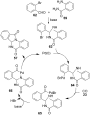
Scheme 20: Proposed mechanism for the palladium-catalysed synthesis of isoindoloquinazolinones 57.

Scheme 21: Four-component reaction of 2-vinylbenzoic acids 67, aryldioazonium tetrafluoroborates 68, DABCO·(SO2...

Scheme 22: Plausible mechanism for the formation of isoindolinones 71.

Scheme 23: Three-component reaction of trimethylsilylaryltriflates 77, isocyanides 42 and CO2 (78).

Scheme 24: Plausible mechanism for the three-component synthesis of phthalimides 79.
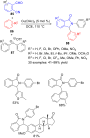
Scheme 25: Copper-catalysed three-component reaction of 2-formylbenzonitriles 85, arenes 86 and diaryliodonium...
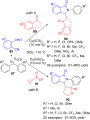
Scheme 26: Copper-catalysed three-component reaction of 2-formylbenzonitriles 85, diaryliodonium salts 87 and ...

Scheme 27: Proposed mechanism for the formation of 2,3-diarylisoindolinones 88, 89 and 92.

Scheme 28: Palladium-catalysed three-component reaction of chloroquinolinecarbaldehydes 97 with isocyanides 42...
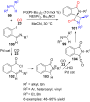
Scheme 29: Palladium-catalysed three-component reaction of imines 99 with CO (23) and ortho-iodoarylimines 100....

Scheme 30: Palladium-catalysed three-component reaction of amines 2 with CO (23) and aryl iodide 105.

Scheme 31: Three-component reaction of 2-ethynylanilines 109, perfluoroalkyl iodides 110 and carbon monoxide (...

Scheme 32: Ultraviolet-induced three-component reaction of N-(2-iodoaryl)acrylamides 113, DABCO·(SO2)2 (69) an...

Scheme 33: Proposed mechanism for the preparation of oxindoles 115.

Scheme 34: Three-component reaction of acrylamide 113, CO (23) and 1,4-benzodiazepine 121.

Scheme 35: Multicomponent reaction of sulfonylacrylamides 123, aryldiazonium tetrafluoroborates 68 and DABCO·(...

Scheme 36: Proposed mechanism for the preparation of oxindoles 124.

Scheme 37: Three-component reaction of N-arylpropiolamides 128, aryl iodides 129 and boronic acids 130.

Scheme 38: Proposed mechanism for the formation of diarylmethylene- and diarylallylideneoxindoles 131 and 132.

Scheme 39: Three-component reaction of cyclohexa-1,3-dione (136), amines 2 and alkyl acetylenedicarboxylates 1...

Scheme 40: Proposed mechanism for the formation of 2-oxindoles 138.
Synthesis of nonracemic hydroxyglutamic acids
- Dorota G. Piotrowska,
- Iwona E. Głowacka,
- Andrzej E. Wróblewski and
- Liwia Lubowiecka
Beilstein J. Org. Chem. 2019, 15, 236–255, doi:10.3762/bjoc.15.22
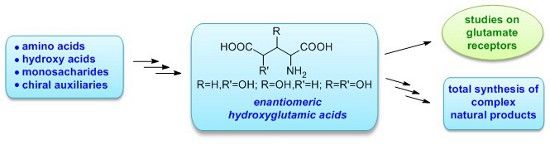
- pyrrolidine-2-one (3S,4S,5R)-123 [111]. Oxidation of the hydroxymethyl group and acid hydrolysis gave (2S,3S,4S)-4 [112]. By enantioselective conjugate addition and asymmetric dihydroxylation An orthogonally protected 3,4-dihydroxy-L-glutamic acid was envisioned as an intermediate in the projected synthesis
- O-benzyl-L-serine. Reagents and conditions: a) (CF3CH2O)2P(O)CH2COOMe, KHMDS, 18-crown-6; b) I2, MeCN; c) Bu3SnH, AIBN, benzene, reflux; d) H2, 10% Pd/C, ethanol; e) CrO3, acetone, then CH2N2, ether; f) 3 M HCl, 80 °C. Synthesis of (2S,3R)-2 employing a one-pot cis-olefination–conjugate addition
- ; j) 6 M HCl, 80 °C. Synthesis of (2S,3S,4R)-127 by enantioselective conjugate addition and asymmetric dihydroxylation. Reagents and conditions: a) ethyl 1-phenylselenylacrylate, chiral PTC, 50% KOH, CH2Cl2; b) 1 M HCl, THF; c) 9-bromo-9-phenylfluorene, K2PO4, PbNO2, MeCN; d) NaIO4, NaHCO3, MeOH/H2O

Graphical Abstract

Figure 1: Structure of L-glutamic acid.

Figure 2: 3-Hydroxy- (2), 4-hydroxy- (3) and 3,4-dihydroxyglutamic acids (4).

Figure 3: Enantiomers of 3-hydroxyglutamic acid (2).

Scheme 1: Synthesis of (2S,3R)-2 from (R)-Garner's aldehyde. Reagents and conditions: a) MeOCH=CH–CH(OTMS)=CH2...

Scheme 2: Synthesis of (2S,3R)-2 and (2S,3S)-2 from (R)-Garner’s aldehyde. Reagents and conditions: a) H2C=CH...

Scheme 3: Two-carbon homologation of the protected L-serine. Reagents and conditions: a) Fmoc-succinimide, Na2...

Scheme 4: Synthesis of di-tert-butyl ester of (2R,3S)-2 from L-serine. Reagents and conditions: a) PhSO2Cl, K2...

Scheme 5: Synthesis of (2R,3S)-2 from O-benzyl-L-serine. Reagents and conditions: a) (CF3CH2O)2P(O)CH2COOMe, ...

Scheme 6: Synthesis of (2S,3R)-2 employing a one-pot cis-olefination–conjugate addition sequence. Reagents an...

Scheme 7: Synthesis of the orthogonally protected (2S,3R)-2 from a chiral aziridine. Reagents and conditions:...

Scheme 8: Synthesis of N-Boc-protected (2S,3R)-2 from D-phenylglycine. Reagents and conditions: a) BnMgCl, et...

Scheme 9: Synthesis of (2S,3R)-2 employing ketopinic acid as chiral auxiliary. Reagents and conditions: a) Br2...

Scheme 10: Synthesis of dimethyl ester of (2S,3R)-2 employing (1S)-2-exo-methoxyethoxyapocamphane-1-carboxylic...

Scheme 11: Synthesis of N-Boc-protected dimethyl ester of (2S,3R)-2 from (S)-N-(1-phenylethyl)thioacetamide. R...

Scheme 12: Synthesis of N-Boc-protected dimethyl ester of (2S,3R)-2 via Sharpless epoxidation. Reagents and co...

Scheme 13: Synthesis of (2S,3S)-2 from the imide 51. Reagents and conditions: a) NaBH4, MeOH/CH2Cl2; b) Ac2O, ...

Scheme 14: Synthesis of (2R,3S)-2 and (2S,3S)-2 from the acetolactam 55 (PMB = p-methoxybenzyl). Reagents and ...

Scheme 15: Synthesis of (2S,3R)-2 from D-glucose. Reagents and conditions: a) NaClO2, 30% H2O2, NaH2PO4, MeCN;...

Figure 4: Enantiomers of 3-hydroxyglutamic acid (3).

Scheme 16: Synthesis of (4S)-4-hydroxy-L-glutamic acid [(2S,4S)-3] by electrophilic hydroxylation. Reagents an...

Scheme 17: Synthesis of all stereoisomers of 4-hydroxyglutamic acid (3). Reagents and conditions: a) Br2, PBr5...

Scheme 18: Synthesis of the orthogonally protected 4-hydroxyglutamic acid (2S,4S)-73. Reagents and conditions:...

Scheme 19: Synthesis of (2S,4R)-4-acetyloxyglutamic acid as a component of a dipeptide. Reagents and condition...

Scheme 20: Synthesis of N-Boc-protected dimethyl esters of (2S,4R)- and (2S,4S)-3 from (2S,4R)-4-hydroxyprolin...

Scheme 21: Synthesis of orthogonally protected (2S,4S)-3 from (2S,4R)-4-hydroxyproline. Reagents and condition...

Scheme 22: Synthesis of the protected (4R)-4-hydroxy-L-pyroglutamic acid (2S,4R)-87 by electrophilic hydroxyla...

Figure 5: Enantiomers of 3,4-dihydroxy-L-glutamic acid (4).

Scheme 23: Synthesis of (2S,3S,4R)-4 from the epoxypyrrolidinone 88. Reagents and conditions: a) MeOH, THF, KC...

Scheme 24: Synthesis of (2S,3R,4R)-4 from the orthoester 92. Reagents and conditions: a) OsO4, NMO, acetone/wa...

Scheme 25: Synthesis of (2S,3S,4S)-4 from the aziridinolactone 95. Reagents and conditions: a) BnOH, BF3·OEt2,...

Scheme 26: Synthesis of (2S,3S,4R)-4 and (2R,3S,4R)-4 from cyclic imides 106. Reagents and conditions: a) NaBH4...

Scheme 27: Synthesis of (2R,3R,4R)-4 and (2S,3R,4R)-4 from the cyclic meso-imide 110. Reagents and conditions:...

Scheme 28: Synthesis of (2S,3S,4S)-4 from the protected serinal (R)-23. Reagents and conditions: a) Ph3P=CHCOO...

Scheme 29: Synthesis of (2S,3S,4S)-4 from O-benzyl-N-Boc-D-serine. Reagents and conditions: a) ClCOOiBu, TEA, ...

Scheme 30: Synthesis of (2S,3S,4R)-127 by enantioselective conjugate addition and asymmetric dihydroxylation. ...

Figure 6: Structures of selected compounds containing hydroxyglutamic motives (in blue).
Synthesis and biological evaluation of 1,2-disubstituted 4-quinolone analogues of Pseudonocardia sp. natural products
- Stephen M. Geddis,
- Teodora Coroama,
- Suzanne Forrest,
- James T. Hodgkinson,
- Martin Welch and
- David R. Spring
Beilstein J. Org. Chem. 2018, 14, 2680–2688, doi:10.3762/bjoc.14.245

- natural products. The chemistry developed towards the allylic alcohols 5 and 6, outlined in Scheme 1, seemed ideal to this end. A range of alkynes 10 could undergo Sonogashira coupling with the commercially available acid chloride 9. The resultant ynones 11 could then undergo conjugate addition with
- resulted for 11b, which was attributed to difficulties in obtaining its precursor 10b with high purity which stemmed from its volatility. These ynones were then subjected to a conjugate addition with an assortment of primary amines 12a–f (Scheme 3). The reactions proceeded with excellent yield in all cases
- -quinolone Pseudonocardia sp. natural products, which encompassed variation of both the side chain and N-substituent. This represented an extension of the chemistry which we employed towards the natural products, utilising sequential Sonogashira coupling, high-yielding conjugate addition, and metal-catalysed

Graphical Abstract
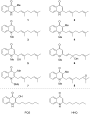
Figure 1: A family of quinolone natural products 1–8, which were first isolated from Pseudonocardia sp. CL384...

Scheme 1: Proposed use of the chemistry developed towards the total synthesis of 5 and 6 for generation of na...

Scheme 2: Sonagashira coupling of alkynes 10a and 10b with commercially available acid chloride 9 to give yno...
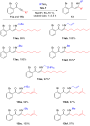
Scheme 3: Conjugate addition of primary amines 12a–f with ynones 11a and 11b. aFollowing concentration in vac...
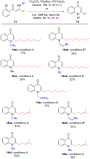
Scheme 4: Cyclisation of precursors 13 to natural product analogues 14 using palladium- or copper-catalysed c...

Scheme 5: Use of an excess of DMEDA in the Cu-catalysed cyclisation of 13bb resulted in the generation of 14bg...
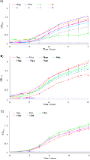
Figure 2: Growth of E. coli ESS with time in the presence of 200 μM of each compound. A) Natural product seri...
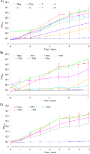
Figure 3: Growth of S. aureus 25923 with time in the presence of 200 μM of each compound. A) Natural product ...

Figure 4: OD520 (absorption corresponding to pyocyanin) normalised by the culture population (measured by OD6...
A survey of chiral hypervalent iodine reagents in asymmetric synthesis
- Soumen Ghosh,
- Suman Pradhan and
- Indranil Chatterjee
Beilstein J. Org. Chem. 2018, 14, 1244–1262, doi:10.3762/bjoc.14.107
- the enolate intermediate 111 followed by the generation of a C–C bond via conjugate addition delivered intermediate carbene 113. A 1,2-hydrogen shift led to the formation of products 108 with enantioselectivities up to 79% (Scheme 24). Later, Maruoka et al. improved the enantioselectivity up to 95% ee

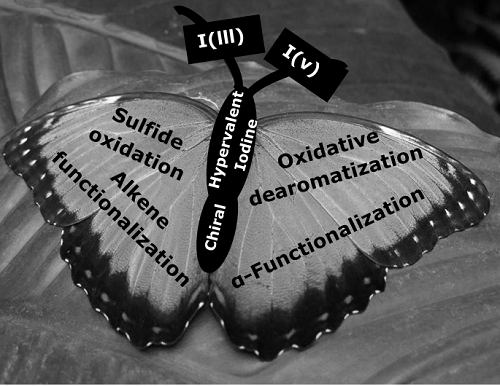
Graphical Abstract
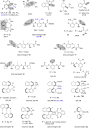
Scheme 1: An overview of different chiral iodine reagents or precursors thereof.
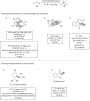
Scheme 2: Asymmetric oxidation of sulfides by chiral hypervalent iodine reagents.

Scheme 3: Oxidative dearomatization of naphthol derivatives by Kita et al.

Scheme 4: [4 + 2] Diels–Alder dimerization reported by Birman et al.

Scheme 5: m-CPBA guided catalytic oxidative naphthol dearomatization.

Scheme 6: Oxidative dearomatization of phenolic derivatives by Ishihara et al.

Scheme 7: Oxidative spirocyclization applying precatalyst 11 developed by Ciufolini et al.

Scheme 8: Asymmetric hydroxylative dearomatization.

Scheme 9: Enantioselective oxylactonization reported by Fujita et al.

Scheme 10: Dioxytosylation of styrene (47) by Wirth et al.

Scheme 11: Oxyarylation and aminoarylation of alkenes.

Scheme 12: Asymmetric diamination of alkenes.

Scheme 13: Stereoselective oxyamination of alkenes reported by Wirth et al.

Scheme 14: Enantioselective and regioselective aminofluorination by Nevado et al.

Scheme 15: Fluorinated difunctionalization reported by Jacobsen et al.

Scheme 16: Aryl rearrangement reported by Wirth et al.

Scheme 17: α-Arylation of β-ketoesters.

Scheme 18: Asymmetric α-oxytosylation of carbonyls.

Scheme 19: Asymmetric α-oxygenation and α-amination of carbonyls reported by Wirth et al.

Scheme 20: Asymmetric α-functionalization of ketophenols using chiral quaternary ammonium (hypo)iodite salt re...

Scheme 21: Oxidative Intramolecular coupling by Gong et al.

Scheme 22: α-Sulfonyl and α-phosphoryl oxylation of ketones reported by Masson et al.

Scheme 23: α-Fluorination of β-keto esters.
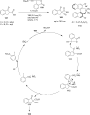
Scheme 24: Alkynylation of β-ketoesters and amides catalyzed by phase-transfer catalyst.
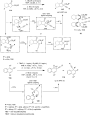
Scheme 25: Alkynylation of β-ketoesters and dearomative alkynylation of phenols.
One hundred years of benzotropone chemistry
- Arif Dastan,
- Haydar Kilic and
- Nurullah Saracoglu
Beilstein J. Org. Chem. 2018, 14, 1120–1180, doi:10.3762/bjoc.14.98
- as a fairly air-stable red-brown solid. b. Nucleophilic addition to 4,5-benzotropone (11): Ried’s group realized the reaction of 4,5-benzotropone (11) and its derivatives with lithium acetylide as a nucleophile between −50 and −32 °C [130]. While the possible 1,4-conjugate addition product 149 was

Graphical Abstract

Scheme 1: Tropone (1), tropolone (2) and their resonance structures.

Figure 1: Natural products containing a tropone nucleus.

Figure 2: Possible isomers 11–13 of benzotropone.

Scheme 2: Synthesis of benzotropones 11 and 12.

Scheme 3: Oxidation products of benzotropylium fluoroborate (16).

Scheme 4: Oxidation of 7-bromo-5H-benzo[7]annulene (22).

Scheme 5: Synthesis of 4,5-benzotropone (11) using o-phthalaldehyde (27).

Scheme 6: Synthesis of 4,5-benzotropone (11) starting from oxobenzonorbornadiene 31.

Scheme 7: Acid-catalyzed cleavage of oxo-bridge of 34.

Scheme 8: Synthesis of 4,5-benzotropone (11) from o-xylylene dibromide (38).

Scheme 9: Synthesis of 4,5-benzotropone (11) via the carbene adduct 41.

Scheme 10: Heck coupling strategy for the synthesis of 11.

Scheme 11: Synthesis of benzofulvalenes via carbonyl group of 4,5-benzotropone (11).

Figure 3: Some cycloheptatrienylium cations.

Scheme 12: Synthesis of condensation product 63 and its subsequent oxidative cyclization products.

Figure 4: A novel series of benzo[7]annulenes prepared from 4,5-benzotropone (11).

Scheme 13: Preparation of substituted benzo[7]annulene 72 using the Mukaiyama-Michael reaction.

Figure 5: Possible benzo[7]annulenylidenes 73–75.

Scheme 14: Thermal and photochemical decomposition of 7-diazo-7H-benzo[7]annulene (76) and the trapping of int...

Scheme 15: Synthesis of benzoheptafulvalene 86.

Scheme 16: Synthesis of 7-(diphenylmethylene)-7H-benzo[7]annulene (89).

Scheme 17: Reaction of 4,5-benzotropone (11) with dimethyl diazomethane.

Scheme 18: Synthesis of dihydrobenzomethoxyazocine 103.

Scheme 19: Synthesis and reducibility of benzo-homo-2-methoxyazocines.

Scheme 20: Synthesis of 4,5-benzohomotropones 104 and 115 from 4,5-benzotropones 11 and 113.

Scheme 21: A catalytic deuterogenation of 4,5-benzotropone (11) and synthesis of 5-monosubstituted benzo[7]ann...

Scheme 22: Synthesis of methyl benzo[7]annulenes 131 and 132.

Scheme 23: Ambident reactivity of halobenzo[7]annulenylium cations 133a/b.

Scheme 24: Preparation of benzo[7]annulenylidene–iron complexes 147.

Scheme 25: Synthesis of 1-ethynylbenzotropone (150) and the etheric compound 152 from 4,5-benzotropone (11) wi...

Scheme 26: Thermal decomposition of 4,5-benzotropone (11).

Scheme 27: Reaction of 4,5-benzotropone (11) with 1,2-ethanediol and 1,2-ethanedithiol.

Scheme 28: Conversions of 1-benzosuberone (162) to 2,3-benzotropone (12).

Scheme 29: Synthesis strategies for 2,3-bezotropone (12) using 1-benzosuberones.

Scheme 30: Oxidation-based synthesis of 2,3-benzotropone (12) via 1-benzosuberone (162).

Scheme 31: Synthesis of 2,3-benzotropone (12) from α-tetralone (171) via ring-expansion.

Scheme 32: Preparation of 2,3-benzotropone (12) by using of benzotropolone 174.

Figure 6: Benzoheptafulvenes as condensation products of 2,3-benzotropone (12).

Scheme 33: Conversion of 2,3-benzotropone (12) to tosylhydrazone salt 182 and gem-dichloride 187.

Figure 7: Benzohomoazocines 191–193 and benzoazocines 194–197.

Scheme 34: From 2,3-benzotropone (12) to carbonium ions 198–201.

Scheme 35: Cycloaddition reactions of 2,3-benzotropone (12).
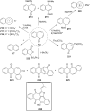
Scheme 36: Reaction of 2,3-benzotropone (12) with various reagents and compounds.

Figure 8: 3,4-Benzotropone (13) and its resonance structure.

Scheme 37: Synthesis of 6,7-benzobicyclo[3.2.0]hepta-3,6-dien-2-one (230).

Figure 9: Photolysis and thermolysis products of 230.

Figure 10: Benzotropolones and their tautomeric structures.

Scheme 38: Synthesis strategies of 4,5-benzotropolone (238).

Scheme 39: Synthesis protocol for 2-hydroxy-4,5-benzotropone (238) using oxazole-benzo[7]annulene 247.

Figure 11: Some quinoxaline and pyrazine derivatives 254–256 prepared from 4,5-benzotropolone (238).

Scheme 40: Nitration product of 4,5-benzotropolone (238) and its isomerization to 1-nitro-naphthoic acid (259)....

Scheme 41: Synthesis protocol for 6-hydroxy-2,3-benzotropone (239) from benzosuberone (162).
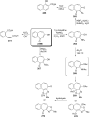
Scheme 42: Various reactions via 6-hydroxy-2,3-benzotropone (239).

Scheme 43: Photoreaction of 6-hydroxy-2,3-benzotropone (239).

Scheme 44: Synthesis of 7-hydroxy-2,3-benzotropone (241) from benzosuberone (162).

Scheme 45: Synthesis strategy for 7-hydroxy-2,3-benzotropone (241) from ketone 276.

Scheme 46: Synthesis of 7-hydroxy-2,3-benzotropone (241) from β-naphthoquinone (280).

Scheme 47: Synthesis of 7-hydroxy-2,3-benzotropone (241) from bicyclic endoperoxide 213.

Scheme 48: Synthesis of 7-hydroxy-2,3-benzotropone (241) by ring-closing metathesis.

Figure 12: Various monosubstitution products 289–291 of 7-hydroxy-2,3-benzotropone (241).

Scheme 49: Reaction of 7-hydroxy-2,3-benzotropone (241) with various reagents.

Scheme 50: Synthesis of 4-hydroxy-2,3-benzotropones 174 and 304 from diketones 300/301.

Scheme 51: Catalytic hydrogenation of diketones 300 and 174.

Scheme 52: Synthesis of halo-benzotropones from alkoxy-naphthalenes 306, 307 and 310.

Figure 13: Unexpected byproducts 313–315 during synthesis of chlorobenzotropone 309.

Figure 14: Some halobenzotropones and their cycloadducts.

Scheme 53: Multisep synthesis of 2-chlorobenzotropone 309.

Scheme 54: A multistep synthesis of 2-bromo-benzotropone 26.

Scheme 55: A multistep synthesis of bromo-2,3-benzotropones 311 and 316.

Scheme 56: Oxidation reactions of 8-bromo-5H-benzo[7]annulene (329) with some oxidants.

Scheme 57: Synthesis of 2-bromo-4,5-benzotropone (26).

Scheme 58: Synthesis of 6-chloro-2,3-benzotropone (335) using LiCl and proposed intermediate 336.

Scheme 59: Reaction of 7-bromo-2,3-benzotropone (316) with methylamine.

Scheme 60: Reactions of bromo-2,3-benzotropones 26 and 311 with dimethylamine.

Scheme 61: Reactions of bromobenzotropones 311 and 26 with NaOMe.

Scheme 62: Reactions of bromobenzotropones 26 and 312 with t-BuOK in the presence of DPIBF.

Scheme 63: Cobalt-catalyzed reductive cross-couplings of 7-bromo-2,3-benzotropone (316) with cyclic α-bromo en...

Figure 15: Cycloadduct 357 and its di-π-methane rearrangement product 358.

Scheme 64: Catalytic hydrogenation of 2-chloro-4,5-benzotropone (311).

Scheme 65: Synthesis of dibromo-benzotropones from benzotropones.

Scheme 66: Bromination/dehydrobromination of benzosuberone (162).

Scheme 67: Some transformations of isomeric dibromo-benzotropones 261A/B.

Scheme 68: Transformations of benzotropolone 239B to halobenzotropolones 369–371.

Figure 16: Bromobenzotropolones 372–376 and 290 prepared via bromination/dehydrobromination strategy.

Scheme 69: Synthesis of some halobenzotropolones 289, 377 and 378.

Figure 17: Bromo-chloro-derivatives 379–381 prepared via chlorination.

Scheme 70: Synthesis of 7-iodo-3,4-benzotropolone (382).

Scheme 71: Hydrogenation of bromobenzotropolones 369 and 370.

Scheme 72: Debromination reactions of mono- and dibromides 290 and 375.

Figure 18: Nitratation and oxidation products of some halobenzotropolenes.
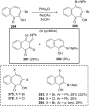
Scheme 73: Azo-coupling reactions of some halobenzotropolones 294, 375 and 378.

Figure 19: Four possible isomers of dibenzotropones 396–399.

Figure 20: Resonance structures of tribenzotropone (400).

Scheme 74: Two synthetic pathways for tribenzotropone (400).

Scheme 75: Synthesis of tribenzotropone (400) from dibenzotropone 399.

Scheme 76: Synthesis of tribenzotropone (400) from 9,10-phenanthraquinone (406).

Scheme 77: Synthesis of tribenzotropone (400) from trifluoromethyl-substituted arene 411.

Figure 21: Dibenzosuberone (414).

Figure 22: Reduction products 415 and 416 of tribenzotropone (400).

Figure 23: Structures of tribenzotropone dimethyl ketal 417 and 4-phenylfluorenone (412) and proposed intermed...

Figure 24: Structures of benzylidene- and methylene-9H-tribenzo[a,c,e][7]annulenes 419 and 420 and chiral phos...

Figure 25: Structures of tetracyclic alcohol 422, p-quinone methide 423 and cation 424.

Figure 26: Structures of host molecules 425–427.

Scheme 78: Synthesis of non-helical overcrowded derivatives syn/anti-431.

Figure 27: Hexabenzooctalene 432.

Figure 28: Structures of possible eight isomers 433–440 of naphthotropone.

Scheme 79: Synthesis of naphthotropone 437 starting from 1-phenylcycloheptene (441).

Scheme 80: Synthesis of 10-hydroxy-11H-cyclohepta[a]naphthalen-11-one (448) from diester 445.

Scheme 81: Synthesis of naphthotropone 433.

Scheme 82: Synthesis of naphthotropones 433 and 434 via cycloaddition reaction.

Scheme 83: Synthesis of naphthotropone 434 starting from 452.

Figure 29: Structures of tricarbonyl(tropone)irons 458, and possible cycloadducts 459.

Scheme 84: Synthesis of naphthotropone 436.

Scheme 85: Synthesis of precursor 465 for naphthotropone 435.

Scheme 86: Generation of naphthotropone 435 from 465.

Figure 30: Structures of tropylium cations 469 and 470.

Figure 31: Structures of tropylium ions 471+.BF4−, 472+.BF4−, and 473+.BF4−.

Scheme 87: Synthesis of tropylium ions 471+.BF4− and 479+.ClO4−.

Scheme 88: Synthesis of 1- and 2-methylanthracene (481 and 482) via carbene–carbene rearrangement.

Figure 32: Trapping products 488–490.

Scheme 89: Generation and chemistry of a naphthoannelated cycloheptatrienylidene-cycloheptatetraene intermedia...

Scheme 90: Proposed intermediates and reaction pathways for adduct 498.

Scheme 91: Exited-state intramolecular proton transfer of 505.

Figure 33: Benzoditropones 506 and 507.

Scheme 92: Synthesis of benzoditropone 506e.

Scheme 93: Synthetic approaches for dibenzotropone 507 via tropone (1).

Scheme 94: Formation mechanisms of benzoditropone 507 and 516 via 515.

Scheme 95: Synthesis of benzoditropones 525 and 526 from pyromellitic dianhydride (527).

Figure 34: Possible three benzocyclobutatropones 534–536.

Scheme 96: Synthesis of benzocyclobutatropones 534 and 539.

Scheme 97: Synthesis attempts for benzocyclobutatropone 545.

Scheme 98: Generation and trapping of symmetric benzocyclobutatropone 536.

Scheme 99: Synthesis of chloro-benzocyclobutatropone 552 and proposed mechanism of fluorenone derivatives.

Scheme 100: Synthesis of tropolone analogue 559.

Scheme 101: Synthesis of tropolones 561 and 562.

Figure 35: o/p-Tropoquinone rings (563 and 564) and benzotropoquinones (565–567).

Scheme 102: Synthesis of benzotropoquinone 566.

Scheme 103: Synthesis of benzotropoquinone 567 via a Diels–Alder reaction.

Figure 36: Products 575–577 through 1,2,3-benzotropoquinone hydrate 569.

Scheme 104: Structures 578–582 prepared from tropoquinone 567.

Figure 37: Two possible structures 583 and 584 for dibenzotropoquinone, and precursor compound 585 for 583.
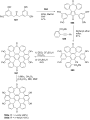
Scheme 105: Synthesis of saddle-shaped ketone 592 using dibenzotropoquinone 584.
Gram-scale preparation of negative-type liquid crystals with a CF2CF2-carbocycle unit via an improved short-step synthetic protocol
- Tatsuya Kumon,
- Shohei Hashishita,
- Takumi Kida,
- Shigeyuki Yamada,
- Takashi Ishihara and
- Tsutomu Konno
Beilstein J. Org. Chem. 2018, 14, 148–154, doi:10.3762/bjoc.14.10
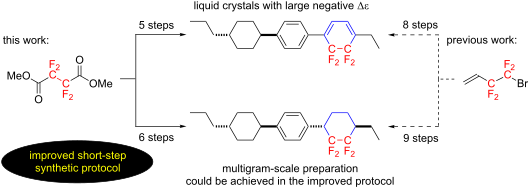
- the 1,2-addition reaction of Int-I proceeds in preference to the conjugate addition reaction, the desired octa-1,7-diene 5a should be produced in higher yield. However, no significant improvement was observed after various attempts such as employing a more nucleophilic lithium reagent instead of the
- the other hand, the β-carbon at the α,β-unsaturated carbonyl moiety of Int-I may be susceptible to attack by the vinylic Grignard reagent, as shown by the purple arrow in Scheme 3, because of the high electrophilicity and lack of steric hindrance. As a consequence, Int-I also undergoes conjugate
- addition reaction, a Michael addition reaction, giving rise to the corresponding magnesium enolate Int-L. The subsequent hydrolysis of Int-L then leads to the γ-hydroxyketone 8a', which easily tautomerizes into the more stable 5-membered hemiacetal 8a. From the above insight into the reaction mechanism, if

Graphical Abstract

Figure 1: Typical examples of previously reported negative-type liquid crystals containing a CF2CF2-carbocycl...

Scheme 1: Improved short-step synthetic protocol for multicyclic mesogens 1 and 2.

Scheme 2: Short-step approach to CF2CF2-containing carbocycles.

Figure 2: (a) Expected products of over-reaction in the Grignard reaction of dimethyl tetrafluorosuccinate (7...

Scheme 3: Mechanism for the reaction of γ-keto ester 6 with vinyl Grignard reagents.

Scheme 4: First multigram-scale preparation of CF2CF2-containing multicyclic mesogens.
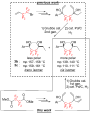
Scheme 5: Stereochemical assignment of the ring-closing metathesis products.
Conjugated nitrosoalkenes as Michael acceptors in carbon–carbon bond forming reactions: a review and perspective
- Yaroslav D. Boyko,
- Valentin S. Dorokhov,
- Alexey Yu. Sukhorukov and
- Sema L. Ioffe
Beilstein J. Org. Chem. 2017, 13, 2214–2234, doi:10.3762/bjoc.13.220
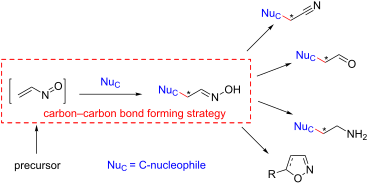
- acceptors in organic synthesis [1][2][3][4][5]. Unlike the parent α-nitroalkenes, α-nitrosoalkenes are unstable species usually generated in situ, and their synthetic potential has been studied in significantly less detail [6][7]. Because of relatively short lifetimes of α-nitrosoalkenes, conjugate addition
- years, there has been a considerable growth of interest to the conjugate addition of carbon-centered nucleophiles to α-nitrosoalkenes. This is mainly due to the development of new precursors, from which nitrosoalkenes are generated at low stationary concentrations under very mild conditions that allows
- the potential use of this strategy in the synthesis of natural products. Weinreb and co-workers performed a comprehensive investigation of the stereoselectivity of the conjugate addition to α-nitrosoalkenes using both cyclic [29] and acyclic substrates [30]. They have demonstrated that the

Graphical Abstract

Scheme 1: Precursors of nitrosoalkenes NSA.

Scheme 2: Reactions of cyclic α-chlorooximes 1 with 1,3-dicarbonyl compounds.

Scheme 3: C-C-coupling of N,N-bis(silyloxy)enamines 3 with 1,3-dicarbonyl compounds.

Scheme 4: Reaction of N,N-bis(silyloxy)enamines 3 with nitronate anions.

Scheme 5: Reaction of α-chlorooximes TBS ethers 2 with ester enolates.

Scheme 6: Assembly of bicyclooctanone 14 via an intramolecular cyclization of nitrosoalkene NSA2.

Scheme 7: A general strategy for the assembly of bicyclo[2.2.1]heptanes via an intramolecular cyclization of ...

Scheme 8: Stereochemistry of Michael addition to cyclic nitrosoalkene NSA3.

Scheme 9: Stereochemistry of Michael addition to acyclic nitrosoalkenes NSA4.

Scheme 10: Stereochemistry of Michael addition to γ-alkoxy nitrosoalkene NSA5.

Scheme 11: Oppolzer’s total synthesis of 3-methoxy-9β-estra(1,3,5(10))trien(11,17)dione (25).

Scheme 12: Oppolzer’s total synthesis of (+/−)-isocomene.

Figure 1: Alkaloids synthesized using stereoselective Michael addition to conjugated nitrosoalkenes.

Scheme 13: Weinreb’s total synthesis of alstilobanines A, E and angustilodine.

Scheme 14: Weinreb’s approach to the core structure of apparicine alkaloids.

Scheme 15: Weinreb’s synthesis of (+/−)-myrioneurinol via stereoselective conjugate addition of malonate to ni...

Scheme 16: Reactions of cyclic α-chloro oximes with Grignard reagents.

Scheme 17: Corey’s synthesis of (+/−)-perhydrohistrionicotoxin.

Scheme 18: Addition of Gilman’s reagents to α,β-epoxy oximes 53.

Scheme 19: Addition of Gilman’s reagents to α-chlorooximes.

Scheme 20: Reaction of silyl nitronate 58 with organolithium reagents via nitrosoalkene NSA12.

Scheme 21: Reaction of β-ketoxime sulfones 61 and 63 with lithium acetylides.

Scheme 22: Electrophilic addition of nitrosoalkenes NSA14 to electron-rich arenes.

Scheme 23: Addition of nitrosoalkenes NSA14 to pyrroles and indoles.

Scheme 24: Reaction of phosphinyl nitrosoalkenes NSA15 with indole.

Scheme 25: Reaction of pyrrole with α,α’-dihalooximes 70.

Scheme 26: Synthesis of indole-derived psammaplin A analogue 72.

Scheme 27: Synthesis of tryptophanes by reduction of oximinoalkylated indoles 68.

Scheme 28: Ottenheijm’s synthesis of neoechinulin B analogue 77.

Scheme 29: Synthesis of 1,2-dihydropyrrolizinones 82 via addition of pyrrole to ethyl bromopyruvate oxime.

Scheme 30: Kozikowski’s strategy to indolactam-based alkaloids via addition of indoles to ethyl bromopyruvate ...

Scheme 31: Addition of cyanide anion to nitrosoalkenes and subsequent cyclization to 5-aminoisoxazoles 86.

Scheme 32: Et3N-catalysed addition of trimethylsilyl cyanide to N,N-bis(silyloxy)enamines 3 leading to 5-amino...

Scheme 33: Addition of TMSCN to allenyl N-siloxysulfonamide 89.

Scheme 34: Reaction of nitrosoallenes NSA16 with malodinitrile and ethyl cyanoacetic ester.

Scheme 35: [4 + 1]-Annulation of nitrosoalkenes NSA with sulfonium ylides 92.

Scheme 36: Reaction of diazo compounds 96 with nitrosoalkenes NSA.

Scheme 37: Tandem Michael addition/oxidative cyclization strategy to isoxazolines 100.
The chemistry and biology of mycolactones
- Matthias Gehringer and
- Karl-Heinz Altmann
Beilstein J. Org. Chem. 2017, 13, 1596–1660, doi:10.3762/bjoc.13.159

Graphical Abstract

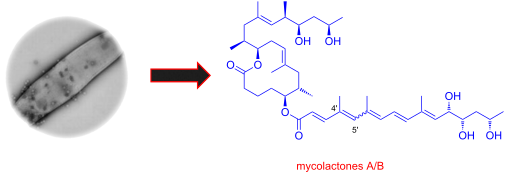
Figure 1: Initial proposal for the core macrolactone structure (left) and the established complete structure ...
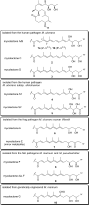
Figure 2: Mycolactone congeners and their origins.

Figure 3: Misassigned mycolactone E structure according to Small et al. [50] (11) and the correct structure (6) f...

Figure 4: Schematic illustration of Kishi’s improved mycolactone TLC detection method exploiting derivatizati...

Figure 5: Fluorescent probes derived from natural mycolactone A/B (1a,b) or its synthetic 8-desmethyl analogs...

Figure 6: Tool compounds used by Pluschke and co-workers for elucidating the molecular targets of mycolactone...

Figure 7: Synthetic strategies towards the extended mycolactone core. A) General strategies. B) Kishi’s appro...

Scheme 1: Kishi’s 1st generation approach towards the extended core structure of mycolactones. Reagents and c...

Scheme 2: Kishi’s 2nd generation approach towards the extended core structure of mycolactones. Reagents and c...

Scheme 3: Kishi’s 3rd generation approach towards the extended core structure of mycolactones. Reagents and c...

Scheme 4: Negishi’s synthesis of the extended core structure of mycolactones. Reagents and conditions: a) (i) ...

Scheme 5: Burkart’s (incomplete) 1st generation approach towards the extended core structure of mycolactones....
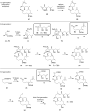
Scheme 6: Burkart’s (incomplete) 1st, 2nd and 3rd generation approach towards the extended mycolactone core s...

Scheme 7: Altmann’s synthesis of alkyl iodide 91. Reagents and conditions: a) (i) PMB-trichloroacetimidate, T...

Scheme 8: Final steps of Altmann’s synthesis of the extended core structure of mycolactones. Reagents and con...

Scheme 9: Basic principles of the Aggarwal lithiation–borylation homologation process [185,186].

Scheme 10: Aggarwal’s synthesis of the C1–C11 fragment of the mycolactone core. Reagents and conditions: a) Cl...

Scheme 11: Aggarwal’s synthesis of the linear C1–C20 fragment of the mycolactone core. Reagents and conditions...

Figure 8: Synthetic strategies towards the mycolactone A/B lower side chain.

Scheme 12: Gurjar and Cherian’s synthesis of the C1’–C8’ fragment of the mycolactone A/B pentaenoate side chai...

Scheme 13: Gurjar and Cherian’s synthesis of the benzyl-protected mycolactone A/B pentaenoate side chain. Reag...

Scheme 14: Kishi’s synthesis of model compounds for elucidating the stereochemistry of the C7’–C16’ fragment o...

Scheme 15: Kishi’s synthesis of the mycolactone A/B pentaenoate side chain. (a) (i) NaH, (EtO)2P(O)CH2CO2Et, T...

Scheme 16: Feringa and Minnaard's incomplete synthesis of mycolactone A/B pentaenoate side chain. Reagents and...

Scheme 17: Altmann’s approach towards the mycolactone A/B pentaenoate side chain. Reagents and conditions: a) ...

Scheme 18: Negishi’s access to the C1’–C7’ fragment of mycolactone A. Reagents and conditions: a) (i) n-BuLi, ...

Scheme 19: Negishi’s approach to the C1’–C7’ fragment of mycolactone B. Reagents and conditions: a) (i) DIBAL-...

Scheme 20: Negishi’s synthesis of the C8’–C16’ fragment of mycolactone A/B. Reagents and conditions: a) 142, BF...

Scheme 21: Negishi’s assembly of the mycolactone A and B pentaenoate side chains. Reagents and conditions: a) ...

Scheme 22: Blanchard’s approach to the mycolactone A/B pentaenoate side chain. a) (i) Ph3P=C(Me)COOEt, CH2Cl2,...

Scheme 23: Kishi’s approach to the mycolactone C pentaenoate side chain exemplified for the 13’R,15’S-isomer 1...

Scheme 24: Altmann’s (unpublished) synthesis of the mycolactone C pentaenoate side chain. Reagents and conditi...

Scheme 25: Blanchard’s synthesis of the mycolactone C pentaenoate side chain. Reagents and conditions: a) (i) ...

Scheme 26: Kishi’s synthesis of the tetraenoate side chain of mycolactone F exemplified by enantiomer 165. Rea...

Scheme 27: Kishi’s synthesis of the mycolactone E tetraenoate side chain. Reagents and conditions: a) (i) CH2=...

Scheme 28: Wang and Dai’s synthesis of the mycolactone E tetraenoate side chain. Reagents and conditions: a) (...

Scheme 29: Kishi’s synthesis of the dithiane-protected tetraenoate side chain of the minor oxo-metabolite of m...

Scheme 30: Kishi’s synthesis of the mycolactone S1 and S2 pentaenoate side chains. Reagents and conditions: a)...

Scheme 31: Kishi’s 1st generation and Altmann’s total synthesis of mycolactone A/B (1a,b) and Negishi’s select...

Scheme 32: Kishi’s 2nd generation total synthesis of mycolactone A/B (1a,b). Reagents and conditions: a) 2,4,6...

Scheme 33: Blanchard’s synthesis of the 8-desmethylmycolactone core. Reagents and conditions: a) (i) TsCl, TEA...

Scheme 34: Altmann’s (partially unpublished) synthesis of the C20-hydroxylated mycolactone core. Reagents and ...

Scheme 35: Altmann’s and Blanchard’s approaches towards the 11-isopropyl-8-desmethylmycolactone core. Reagents...

Scheme 36: Blanchard’s synthesis of the saturated variant of the C11-isopropyl-8-desmethylmycolactone core. Re...

Scheme 37: Structure elucidation of photo-mycolactones generated from tetraenoate 224.

Scheme 38: Kishi’s synthesis of the linear precursor of the photo-mycolactone B1 lower side chain. Reagents an...

Scheme 39: Kishi’s synthesis of the photo-mycolactone B1 lower side chain. Reagents and conditions: a) LiTMP, ...

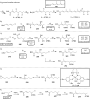
Scheme 40: Kishi’s synthesis of a stabilized lower mycolactone side chain. Reagents and conditions: a) (i) TBD...
Scheme 41: Blanchard’s variation of the C12’,C13’,C15’ stereocluster. Reagents and conditions: a) (i) DIBAL-H,...

Scheme 42: Blanchard’s synthesis of aromatic mycolactone polyenoate side chain analogs. Reagents and condition...

Scheme 43: Small’s partial synthesis of a BODIPY-labeled mycolactone derivative and Demangel’s partial synthes...

Scheme 44: Blanchard’s synthesis of the BODIPY-labeled 8-desmethylmycolactones. Reagents and conditions: a) (i...
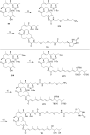
Scheme 45: Altmann’s synthesis of biotinylated mycolactones. Reagents and conditions: a) (i) CDI, THF, rt, 2 d...

Figure 9: Kishi’s elongated n-butyl carbamoyl mycolactone A/B analog.
Syntheses of 3,4- and 1,4-dihydroquinazolines from 2-aminobenzylamine
- Jimena E. Díaz,
- Silvia Ranieri,
- Nadia Gruber and
- Liliana R. Orelli
Beilstein J. Org. Chem. 2017, 13, 1470–1477, doi:10.3762/bjoc.13.145

- intramolecular conjugate addition to an α,β-unsaturated ester [12][13][14][15] or copper-catalyzed annulation of N-arylamidines [41], among others [42]. Most of the already mentioned methods have been applied to the synthesis of 3,4-dihydroquinazolines. Among them, only a few were used for the preparation of 1,4

Graphical Abstract

Figure 1: 3,4-Dihydroquinazolines 1 and 1,4-dihydroquinazolines 2.

Scheme 1: Synthetic pathways for the preparation of 3,4-dihydroquinazolines 1 and 1,4-dihydroquinazolines 2.

Scheme 2: Synthesis of compounds 3a–c.

Scheme 3: Benzylic oxidation of 1,4-dihydroquinazolines (a) and 3,4-dihydroquinazolines (b).
Phosphazene-catalyzed desymmetrization of cyclohexadienones by dithiane addition
- Matthew A. Horwitz,
- Elisabetta Massolo and
- Jeffrey S. Johnson
Beilstein J. Org. Chem. 2017, 13, 762–767, doi:10.3762/bjoc.13.75

- Matthew A. Horwitz Elisabetta Massolo Jeffrey S. Johnson Department of Chemistry, University of North Carolina at Chapel Hill, Chapel Hill, NC 27599-3290, USA 10.3762/bjoc.13.75 Abstract We report a desymmetrization of cyclohexadienones by intramolecular conjugate addition of a tethered dithiane
- nucleophile. Mild reaction conditions allow the formation of diversely functionalized fused bicyclic lactones. The products participate in facially selective additions from the convex surface, leading to allylic alcohol derivatives. Keywords: conjugate addition; cyclohexadienones; dearomatization
- ] nucleophiles using bifunctional cinchona alkaloid catalysts. The Sasai and Enders groups used a phosphinothiourea to enable a Rauhut–Currier reaction to form bicyclic enones [16]. The Tian and Lin group used alkyne-tethered cyclohexadienones in an arylrhodation/conjugate addition sequence that

Graphical Abstract

Scheme 1: Desymmetrization of cyclohexadienone by tethered nucleophile.
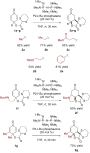
Scheme 2: Scope of the transformation.

Figure 1: Chiral iminophosphorane catalysts surveyed.

Scheme 3: Convex facial additions.

Scheme 4: Attempted oxidative deacylation.

Scheme 5: Attempted desulfurization with Raney nickel.
Solid-phase enrichment and analysis of electrophilic natural products
- Frank Wesche,
- Yue He and
- Helge B. Bode
Beilstein J. Org. Chem. 2017, 13, 405–409, doi:10.3762/bjoc.13.43
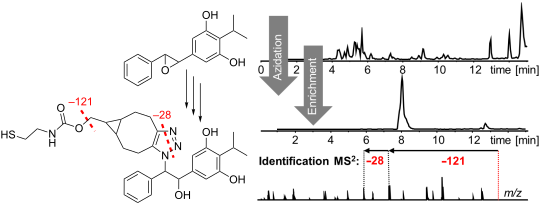
- calculated mass of 3 (Figure 1) derived from the derivatization of epoxystilbene 1, an oxidized isopropylstilbene derivative from this strain. Since only a single peak could be seen within the chromatogram, we assume that the conjugate addition took place only on the less hindered position in epoxide 1

Graphical Abstract
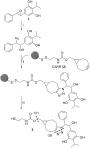
Scheme 1: Principle of azidation of XAD extracts from P. luminescens TT01 containing 1 and subsequent azide e...
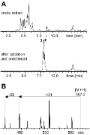
Figure 1: (A) HPLC–MS base peak chromatograms of a crude XAD extract of P. luminescens TT01 and after azidati...

Scheme 2: Structures of glidobactin derivatives (glidobactin A (4), cepafungin I (5) and luminmycin D (6)) be...
The reductive decyanation reaction: an overview and recent developments
- Jean-Marc R. Mattalia
Beilstein J. Org. Chem. 2017, 13, 267–284, doi:10.3762/bjoc.13.30
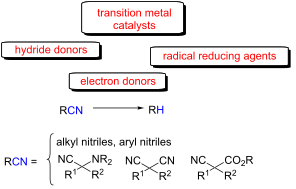
- substituted carbocycles [119][120]. An example in described in Scheme 22. The 5-membered ring is formed via a K2CO3 mediated SN2 – conjugate addition sequence between malononitrile and 6-bromo-2-hexenoate derivatives 67a,b. Dicyanocyclopentanes 68a,b are treated with tributyltin hydride/AIBN giving the

Graphical Abstract

Scheme 1: Mechanism for the reduction under metal dissolving conditions.

Scheme 2: Example of decyanation in metal dissolving conditions coupled with deprotection [30]. TBDMS = tert-buty...

Scheme 3: Preparation of α,ω-dienes [18,33].

Scheme 4: Cyclization reaction using a radical probe [18].

Scheme 5: Synthesis of (±)-xanthorrhizol (8) [39].

Scheme 6: Mechanism for the reduction of α-aminonitriles by hydride donors.

Scheme 7: Synthesis of phenanthroindolizidines and phenanthroquinolizidines [71].

Scheme 8: Two-step synthesis of 5-unsubstituted pyrrolidines (25 examples and 1 synthetic application, see be...

Scheme 9: Synthesis of (±)-isoretronecanol 19. DBU = 1,8-diazabicyclo[5.4.0]undec-7-ene [74].

Scheme 10: Proposed mechanism with 14a for the NaBH4 induced decyanation reaction (“BH3” = BH3·THF) [74].

Scheme 11: Reductive decyanation by a sodium hydride–iodide composite (26 examples) [81].

Scheme 12: Proposed mechanism for the reduction by NaH [81].

Scheme 13: Reductive decyanation catalyzed by nickel nanoparticles. Yields are given in weight % from GC–MS da...

Scheme 14: Decyanation of 2-cyanobenzo[b]thiophene [87].

Scheme 15: Simplified pathways involved in transition-metal-promoted reductive decyanations [93,95].

Scheme 16: Fe-catalyzed reductive decyanation. Numbers in square brackets represent turnover numbers. The TONs...

Scheme 17: Rh-catalyzed reductive decyanation of aryl nitriles (18 examples, 2 synthetic applications) [103].

Scheme 18: Rh-catalyzed reductive decyanation of aliphatic nitriles (15 examples, one synthetic application) [103].

Scheme 19: Ni-catalyzed reductive decyanation (method A: 28 examples and 2 synthetic applications; method B: 3...

Scheme 20: Reductive decyanation catalyzed by the nickel complex 58 (method A, 14 examples, yield ≥ 20% and 1 ...

Scheme 21: Proposed catalytic cycle for the nickel complex 58 catalyzed decyanation (method A). Only the cycle...

Scheme 22: Synthesis of bicyclic lactones [119,120].

Scheme 23: Reductive decyanation of malononitriles and cyanoacetates using NHC-boryl radicals (9 examples). Fo...

Scheme 24: Proposed mechanism for the reduction by NHC-boryl radicals. The other possible pathway (addition of ...

Scheme 25: Structures of organic electron-donors. Only the major Z isomer of 80 is shown [125,127].

Scheme 26: Reductive decyanation of malononitriles and cyanoacetates using organic electron-donors (method A, ...

Scheme 27: Photoreaction of dibenzylmalononitrile with 81 [128].

Scheme 28: Examples of decyanation promoted in acid or basic media [129,131,134,135].

Scheme 29: Mechanism proposed for the base-induced reductive decyanation of diphenylacetonitriles [136].

Scheme 30: Reductive decyanation of triarylacetonitriles [140].
First DMAP-mediated direct conversion of Morita–Baylis–Hillman alcohols into γ-ketoallylphosphonates: Synthesis of γ-aminoallylphosphonates
- Marwa Ayadi,
- Haitham Elleuch,
- Emmanuel Vrancken and
- Farhat Rezgui
Beilstein J. Org. Chem. 2016, 12, 2906–2915, doi:10.3762/bjoc.12.290

- were prepared by reductive amination of γ-aminophosphonyl ketones using sodium borohydride [41], or by conjugate addition of diethyl methylphosphonite to 2-cyclohexenone followed by Bucherer–Bergs amino acid synthesis [42]. Another synthetic approach for a series of α-fluorinated-γ-aminophosphonates
- , entries 1–5), as well as five-membered cyclic MBH alcohol 1f (Table 2, entry 6). A putative reaction pathway could start from a first β-conjugate addition of DMAP onto the allylic alcohol 1a (i), followed by the elimination of the hydroxide ion that would afford the intermediate I (ii). Similarly, a
- second β’-conjugate addition of triethyl phosphite onto I (iii), followed by the release of DMAP would provide the phosphonium intermediate II (iv). Finally, the hydroxide ion is expected to react with II via an Arbuzov rearrangement to provide the desired γ-ketoallylphosphonate 2a (v) (Scheme 3). We

Graphical Abstract

Scheme 1: Synthesis of allylphosphonates from acyclic MBH adducts.

Scheme 2: Synthesis of γ-ketoallylphosphonates from cyclic MBH adducts.

Scheme 3: Proposed mechanism for DMAP-mediated direct nucleophilic α-substitution of MBH alcohol 1a.

Scheme 4: Direct conversion of acyclic MBH alcohols 3a–c into γ-ketoallylphosphonates 4a–f.

Scheme 5: I2-Catalyzed direct synthesis of γ-tosylaminophosphonates 6 from alcohol 5.

Scheme 6: Proposed mechanism for I2-catalyzed direct nucleophilic substitution of γ-hydroxyallylphosphonate 5...

Scheme 7: Ce(III)-mediated conversion of acetate 7 into γ-aminophosphonates 8a–d.
New approaches to organocatalysis based on C–H and C–X bonding for electrophilic substrate activation
- Pavel Nagorny and
- Zhankui Sun
Beilstein J. Org. Chem. 2016, 12, 2834–2848, doi:10.3762/bjoc.12.283
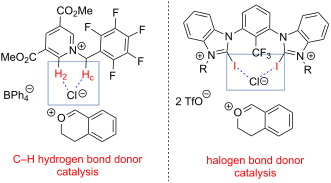
- directionality that might make these interactions of a great value to the field of organocatalysis [71][72][73]. Molecular iodine has been used for many decades as a mild catalyst or promoter of various organic transformations such as conjugate addition, imine formation or aldolate dehydration reactions [74][75
- -workers have re-evaluated the molecular iodine-catalyzed conjugate addition to α,β-unsaturated carbonyls or nitrostyrenes (Scheme 14) [80]. Based on their computational studies, they proposed that iodine activates the enone moiety by forming a halogen bond with the carbonyl and thus forming a more

Graphical Abstract

Figure 1: Electrophile Activation by Hydrogen Bond Donors [1-16].

Figure 2: Early examples of C–H hydrogen bonds and their recent use in supramolecular chemistry [18,19,32-34].

Scheme 1: Design of 1,2,3-triazole-based catalysts for trityl group transfer through chloride anion binding b...

Scheme 2: Examples of chiral triazole-based catalysts for anion activation designed by Mancheno and co-worker...

Scheme 3: Application of chiral triazole-based catalysts L3 and L4 for counterion activation of pyridinium, q...
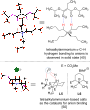
Scheme 4: Ammonium salt anion binding via C–H hydrogen bonds in solid state [40-45,50,51].
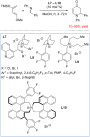
Scheme 5: Early examples of ammonium salts being used for electrophilic activation of imines in aza-Diels–Ald...
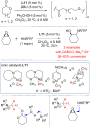
Scheme 6: Ammonium salts as hydrogen bond-donor catalysts by Bibal and co-workers [53,54].

Scheme 7: Tetraalkylammonium catalyst (L6)-catalyzed dearomatization of isoquinolinium salts [50].

Scheme 8: Tetraalkylammonium catalyst L6 complexation to halogen-containing substrates [51].

Scheme 9: Tetraalkylammonium-catalyzed aza-Diels–Alder reaction by Maruoka and co-workers [52].
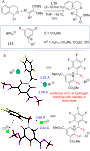
Scheme 10: (A) Alkylpyridinium catalysts L13-catalyzed reaction of 1-isochroman and silyl ketene acetals by Be...
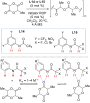
Scheme 11: Mixed N–H/C–H two hydrogen bond donors L14 and L15 as organocatalysts for ROP of lactide by Bibal a...

Scheme 12: Examples of stable complexes based on halogen bonding [68,69].

Scheme 13: Interaction between (−)-sparteine hydrobromide and (S)-1,2-dibromohexafluoropropane in the cocrysta...

Scheme 14: Iodine-catalyzed reactions that are computationally proposed to proceed through halogen bond to car...

Scheme 15: Transfer hydrogenation of phenylquinolines catalyzed by haloperfluoroalkanes by Bolm and co-workers ...
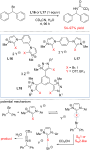
Scheme 16: Halogen bond activation of benzhydryl bromides by Huber and co-workers [82].

Scheme 17: Halogen bond-donor-catalyzed addition to oxocarbenium ions by Huber and co-workers [89].

Scheme 18: Halogen bond-donor activation of α,β-unsaturated carbonyl compounds in the [2 + 4] cycloaddition re...

Scheme 19: Halogen bond donor activation of imines in the [2 + 4] cycloaddition reaction of imine and Danishef...
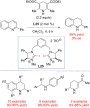
Scheme 20: Transfer hydrogenation catalyzed by a chiral halogen bond donor by Tan and co-workers [91].

Scheme 21: Allylation of benzylic alcohols by Takemoto and co-workers [92].

Scheme 22: NIS induced semipinacol rearrangement via C–X bond cleavage [93].
Et3B-mediated and palladium-catalyzed direct allylation of β-dicarbonyl compounds with Morita–Baylis–Hillman alcohols
- Ahlem Abidi,
- Yosra Oueslati and
- Farhat Rezgui
Beilstein J. Org. Chem. 2016, 12, 2402–2409, doi:10.3762/bjoc.12.234

- -allylated product 3j in 12% yield, along with the tricyclic compound 6j, in good yield, which is resulting from the intramolecular conjugate addition of 3j carbanion on the enone moiety (Table 3, entry 2). Under the same conditions, the keto ester 2j reacted with alcohol 1a, in DMF at 80 °C for 6 h longer
- conjugate addition of the β-keto ester carbanion onto the enone moiety (Scheme 2) [50][51]. The structure of the tricyclic compound 6j was elucidated on the basis of X-ray diffraction analysis (Figure 2). In a previous report, Alexakis and co-workers have demonstrated that copper-catalyzed conjugate
- addition of Grignard reagents onto α-methyl cyclic enones, affording mainly the trans-2,3-disubstituted cyclohexanones as being the thermodynamic products [52]. Similarly, we believe that the intramolecular conjugate addition of carbanion 3j onto α-substituted enone moiety is under thermodynamic control

Graphical Abstract

Figure 1: Cyclic and acyclic MBH alcohols.

Scheme 1: Proposed catalytic cycle involving palladium catalysis for Et3B-promoted allylation of diethyl malo...

Scheme 2: Mechanistic pathway leading to the tricyclic compound 6j.

Figure 2: X-ray crystal structure of tricyclic compound 6j.
Highly chemo-, enantio-, and diastereoselective [4 + 2] cycloaddition of 5H-thiazol-4-ones with N-itaconimides
- Shuai Qiu,
- Choon-Hong Tan and
- Zhiyong Jiang
Beilstein J. Org. Chem. 2016, 12, 2293–2297, doi:10.3762/bjoc.12.222
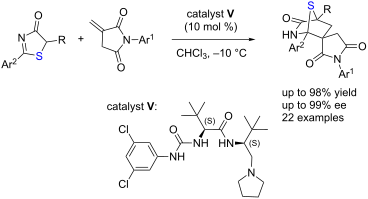
- class of sulfur-containing pro-nucleophiles in a highly enantio- and diastereoselective conjugate addition to nitroalkenes, providing α,α-disubstituted α-mercapto carboxylic acids [5]. Since then, several asymmetric variants using 5H-thiazol-4-ones as nucleophiles have been disclosed; such as amination
- [6], allylation [7], conjugate addition to enones [8], and γ-addition with allenoates [9]. All these examples focused on nucleophilic addition reactions of the C5 atom of 5H-thiazol-4-ones. Recently, we described an organocatalytic asymmetric [4 + 2] cyclization of 5H-thiazol-4-ones with a series of
- excellent catalytic efficacy as demonstrated in a series of asymmetric reactions [18]. It was found that the reaction was completed after 48 hours, affording the desired [4 + 2] annulation adduct 3a in 55% yield with 64% ee. A significant amount of conjugate addition adduct led to the unsatisfactory

Graphical Abstract
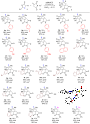
Scheme 1: Substrate scope of the [4 + 2] annulation. Reaction conditions: 1 (0.1 mmol), 2 (0.15 mmol), V (0.0...

Scheme 2: Transformation of adduct.
p-Nitrophenyl carbonate promoted ring-opening reactions of DBU and DBN affording lactam carbamates
- Madhuri Vangala and
- Ganesh P Shinde
Beilstein J. Org. Chem. 2016, 12, 2086–2092, doi:10.3762/bjoc.12.197
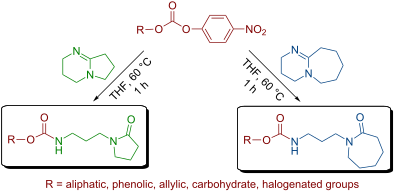
- products [12]. Subsequently, Ma and Dolphin isolated chlorin-e6 lactams from the reaction of methyl pheophorbide with DBU and DBN promoted by trialkyl triflates [13]. Additionally, the conjugate addition reaction of DBU to diarylpyrone [14] and Baylis–Hillman acetates [15] also gave caprolactam products. A

Graphical Abstract

Scheme 1: Reaction of DBU with p-nitrophenyl carbonate.

Scheme 2: Reaction of DBN with p-nitrophenyl carbonates.
Biosynthesis of oxygen and nitrogen-containing heterocycles in polyketides
- Franziska Hemmerling and
- Frank Hahn
Beilstein J. Org. Chem. 2016, 12, 1512–1550, doi:10.3762/bjoc.12.148
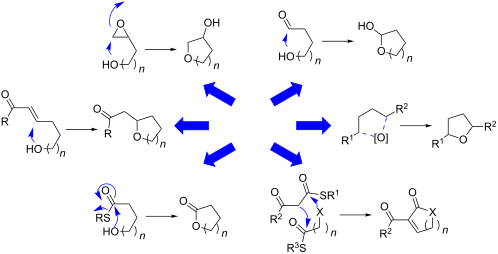
- they differ by a central, annelated furan-3-one moiety instead of an acrylate unit (Scheme 25) [149]. Their biosynthesis proceeds from chalcones by an oxidation–conjugate addition cascade catalysed by plant phenol oxidases (PPOs) [150][151]. The PPO aureusidin synthase plays a central role in aurone
- biosynthesis in Antirrhinum majus [152][153]. It catalyses the oxidation of phenols 180 and o-catechols 181 to o-quinones 182 and concomitant conjugate addition of a phenolic hydroxy group, leading to the formation of the central furan-3-one unit [154]. This enzyme is flavin-dependent and acts under

Graphical Abstract

Scheme 1: Schematic description of the cyclisation reaction catalysed by TE domains. In most cases, the nucle...

Scheme 2: Mechanisms for the formation of oxygen heterocycles. The degree of substitution can differ from tha...

Scheme 3: Pyran-ring formation in pederin (24) biosynthesis. Incubation of recombinant PedPS7 with substrate ...

Scheme 4: The domain AmbDH3 from ambruticin biosynthesis catalyses the dehydration of 25 and subsequent cycli...

Scheme 5: SalBIII catalyses dehydration of 29 and subsequent cyclisation to tetrahydropyran 30 [18].

Figure 1: All pyranonaphtoquinones contain either the naphtha[2,3-c]pyran-5,10-dione (32) or the regioisomeri...

Scheme 6: Pyran-ring formation in actinorhodin (34) biosynthesis. DNPA: 4-dihydro-9-hydroxy-1-methyl-10-oxo-3H...

Scheme 7: Pyran formation in granaticin (36) biosynthesis. DNPA: 4-dihydro-9-hydroxy-1-methyl-10-oxo-3H-napht...

Scheme 8: Pyran formation in alnumycin (37) biosynthesis. Adapted from [21].

Scheme 9: Biosynthesis of pseudomonic acid A (61). The pyran ring is initially formed in 57 after dehydrogena...

Scheme 10: Epoxidation–cyclisation leads to the formation of the tetrahydropyran ring in the western part of t...

Scheme 11: a) Nonactin (70) is formed from heterodimers of (−)(+)-dimeric nonactic acid and (+)(−)-dimeric non...

Figure 2: Pamamycins (73) are macrodiolide antibiotics containing three tetrahydrofuran moieties, which are a...

Scheme 12: A PS domain homolog in oocydin A (76) biosynthesis is proposed to catalyse furan formation via an o...

Scheme 13: Mechanism of oxidation–furan cyclisation by AurH, which converts (+)-deoxyaureothin (77) into (+)-a...

Scheme 14: Leupyrrin A2 (80) and the proposed biosynthesis of its furylidene moiety [69,70].

Scheme 15: Asperfuranone (93) biosynthesis, adapted from [75].
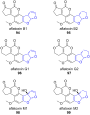
Figure 3: The four major aflatoxins produced by Aspergilli are the types B1, B2, G1 and G2 (94–97). In the di...

Scheme 16: Overview on aflatoxin B1 (94) biosynthesis. HOMST = 11-hydroxy-O-methylsterigmatocystin [78,79,82-106].

Scheme 17: A zipper mechanism leads to the formation of oxygen heterocycles in monensin biosynthesis [109-111].

Scheme 18: Formation of the 2,6-dioxabicyclo[3.2.1]octane (DBO) ring system in aurovertin B (118) biosynthesis ...

Figure 4: Structures of the epoxide-containing polyketides epothilone A (119) and oleandomycin (120) [123-125].

Scheme 19: Structures of phoslactomycin B (121) (a) and jerangolid A (122) (b). The heterocycle-forming steps ...

Scheme 20: a) Structures of rhizoxin (130) and cycloheximide (131). Model for the formation of δ-lactones (b) ...

Scheme 21: EncM catalyses a dual oxidation sequence and following processing of the highly reactive intermedia...

Figure 5: Mesomeric structures of tetronates [138,139].

Figure 6: Structures of tetronates for which gene clusters have been sequenced. The tetronate moiety is shown...
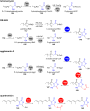
Scheme 22: Conserved steps for formation and processing in several 3-acyl-tetronate biosynthetic pathways were...

Scheme 23: In versipelostatin A (153) biosynthesis, VstJ is a candidate enzyme for catalysing the [4 + 2] cycl...

Scheme 24: a) Structures of some thiotetronate antibiotics. b) Biosynthesis of thiolactomycin (165) as propose...

Scheme 25: Aureusidine synthase (AS) catalyses phenolic oxidation and conjugate addition of chalcones leading ...

Scheme 26: a) Oxidative cyclisation is a key step in the biosynthesis of spirobenzofuranes 189, 192 and 193. b...

Scheme 27: A bicyclisation mechanism forms a β-lactone and a pyrrolidinone and removes the precursor from the ...

Scheme 28: Spontaneous cyclisation leads to off-loading of ebelactone A (201) from the PKS machinery [163].

Scheme 29: Mechanisms for the formation of nitrogen heterocycles.

Scheme 30: Biosynthesis of highly substituted α-pyridinones. a) Feeding experiments confirmed the polyketide o...

Scheme 31: Acridone synthase (ACS) catalyses the formation of 1,3-dihydroxy-N-methylacridone (224) by condensa...

Scheme 32: A Dieckmann condensation leads to the formation of a 3-acyl-4-hydroxypyridin-2-one 227 and removes ...

Scheme 33: a) Biosynthesis of the pyridinone tenellin (234). b) A radical mechanism was proposed for the ring-...

Scheme 34: a) Oxazole-containing PKS–NRPS-derived natural products oxazolomycin (244) and conglobatin (245). b...

Scheme 35: Structure of tetramic acids 251 (a) and major tautomers of 3-acyltetramic acids 252a–d (b). Adapted...

Scheme 36: Equisetin biosynthesis. R*: terminal reductive domain. Adapted from [202].

Scheme 37: a) Polyketides for which a similar biosynthetic logic was suggested. b) Pseurotin A (256) biosynthe...

Figure 7: Representative examples of PTMs with varying ring sizes and oxidation patterns [205,206].

Scheme 38: Ikarugamycin biosynthesis. Adapted from [209-211].

Scheme 39: Tetramate formation in pyrroindomycin aglycone (279) biosynthesis [213-215].

Scheme 40: Dieckmann cyclases catalyse tetramate or 2-pyridone formation in the biosynthesis of, for example, ...
Conjugate addition–enantioselective protonation reactions
- James P. Phelan and
- Jonathan A. Ellman
Beilstein J. Org. Chem. 2016, 12, 1203–1228, doi:10.3762/bjoc.12.116
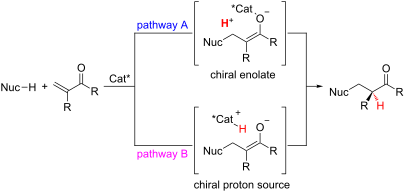
- are further classified according to whether catalysis is achieved with chiral Lewis acids, organocatalysts, or transition metals. Keywords: asymmetric catalysis; conjugate addition; enantioselective protonation; enolate; Introduction Due to their ubiquity in natural products and drugs, many
- -stereoselective step allows for the generation of a prochiral enolate intermediate that then undergoes enantioselective protonation (Figure 1). Two general strategies can be used when applying a conjugate addition–enantioselective protonation manifold. In the first strategy, a chiral enolate can be protonated by
- an achiral proton source (pathway A). In the second, an achiral enolate can be protonated by a chiral proton source (pathway B). Both strategies have been harnessed by various research groups for conjugate addition–enantioselective protonation reactions. This review covers the many conjugate addition

Graphical Abstract

Figure 1: Two general pathways for conjugate addition followed by enantioselective protonation.

Scheme 1: Tomioka’s enantioselective addition of arylthiols to α-substituted acrylates.

Scheme 2: Sibi’s enantioselective hydrogen atom transfer reactions.

Scheme 3: Mikami’s addition of perfluorobutyl radical to α-aminoacrylate 11.

Scheme 4: Reisman’s Friedel–Crafts conjugate addition–enantioselective protonation approach toward tryptophan...

Scheme 5: Pracejus’s enantioselective addition of benzylmercaptan to α-aminoacrylate 20.

Scheme 6: Kumar and Dike’s enantioselective addition of thiophenol to α-arylacrylates.

Scheme 7: Tan’s enantioselective addition of aromatic thiols to 2-phthalimidoacrylates.

Scheme 8: Glorius’ enantioselective Stetter reactions with α-substituted acrylates.

Scheme 9: Dixon’s enantioselective addition of thiols to α-substituted acrylates.

Figure 2: Chiral phosphorous ligands.

Scheme 10: Enantioselective addition of arylboronic acids to methyl α-acetamidoacrylate.

Scheme 11: Frost’s enantioselective additions to dimethyl itaconate.

Scheme 12: Darses and Genet’s addition of potassium organotrifluoroborates to α-aminoacrylates.

Scheme 13: Proposed mechanism for enantioselective additions to α-aminoacrylates.

Scheme 14: Sibi’s addition of arylboronic acids to α-methylaminoacrylates.

Scheme 15: Frost’s enantioselective synthesis of α,α-dibenzylacetates 64.

Scheme 16: Rovis’s hydroheteroarylation of α-substituted acrylates with benzoxazoles.

Scheme 17: Proposed mechanism for the hydroheteroarylation of α-substituted acrylates with benzoxazoles.
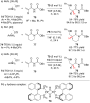
Scheme 18: Sodeoka’s enantioselective addition of amines to N-benzyloxycarbonyl acrylamides 75 and 77.

Scheme 19: Proposed catalytic cycle for Sodeoka’s enantioselective addition of amines.

Scheme 20: Sibi’s enantioselective Friedel–Crafts addition of pyrroles to imides 84.

Scheme 21: Kobayashi’s enantioselective addition of malonates to α-substituted N-acryloyloxazolidinones.

Scheme 22: Chen and Wu’s enantioselective addition of thiophenol to N-methacryloyl benzamide.

Scheme 23: Tan’s enantioselective addition of secondary phosphine oxides and thiols to N-arylitaconimides.

Scheme 24: Enantioselective addition of thiols to α-substituted N-acryloylamides.

Scheme 25: Kobayashi’s enantioselective addition of thiols to α,β-unsaturated ketones.

Scheme 26: Feng’s enantioselective addition of pyrazoles to α-substituted vinyl ketones.

Scheme 27: Luo and Cheng’s addition of indoles to vinyl ketones by enamine catalysis.

Scheme 28: Curtin–Hammett controlled enantioselective addition of indole.

Scheme 29: Luo and Cheng’s enantioselective additions to α-branched vinyl ketones.

Scheme 30: Lou’s reduction–conjugate addition–enantioselective protonation.

Scheme 31: Luo and Cheng’s primary amine-catalyzed addition of indoles to α-substituted acroleins.

Scheme 32: Luo and Cheng’s proposed mechanism and transition state.

Figure 3: Shibasaki’s chiral lanthanum and samarium tris(BINOL) catalysts.

Scheme 33: Shibasaki’s enantioselective addition of 4-tert-butyl(thiophenol) to α,β-unsaturated thioesters.

Scheme 34: Shibasaki’s application of chiral (S)-SmNa3tris(binaphthoxide) catalyst 144 to the total synthesis ...

Scheme 35: Shibasaki’s cyanation–enantioselective protonation of N-acylpyrroles.

Scheme 36: Tanaka’s hydroacylation of acrylamides with aliphatic aldehydes.

Scheme 37: Ellman’s enantioselective addition of α-substituted Meldrum’s acids to terminally unsubstituted nit...

Scheme 38: Ellman’s enantioselective addition of thioacids to α,β,β-trisubstituted nitroalkenes.

Scheme 39: Hayashi’s enantioselective hydroarylation of diphenylphosphinylallenes.

Scheme 40: Hayashi’s enantioselective hydroarylation of diphenylphosphinylallenes.

Figure 4: Togni’s chiral ferrocenyl tridentate nickel(II) and palladium(II) complexes.

Scheme 41: Togni’s enantioselective hydrophosphination of methacrylonitrile.

Scheme 42: Togni’s enantioselective hydroamination of methacrylonitrile.
1H-Imidazol-4(5H)-ones and thiazol-4(5H)-ones as emerging pronucleophiles in asymmetric catalysis
- Antonia Mielgo and
- Claudio Palomo
Beilstein J. Org. Chem. 2016, 12, 918–936, doi:10.3762/bjoc.12.90
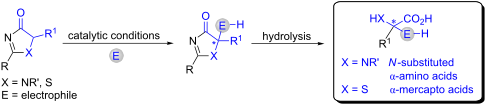
- )-ones 1 as pronucleophiles in organocatalyzed Michael addition reactions 2-Thio-1H-imidazol-4(5H)-ones 1 (R = SBn) have been reported to be effective equivalents of N-subtituted (alkyl, aryl, allyl) α-amino acids in conjugate addition reactions to both, nitroalkenes and α-silyloxy enones as Michael
- published [73]. This study shows that α’-oxyenones are very efficient key enoate equivalents in Brønsted base-catalyzed asymmetric conjugate addition of a range of soft nucleophiles such as α-substituted oxindoles, cyanoesters, oxazolones, azlactones and thiazolones to afford the corresponding

Graphical Abstract

Figure 1: Some α-substituted heterocycles for asymmetric catalysis, their reactivity patterns against enoliza...

Figure 2: 1H-Imidazol-4(5H)-ones 1 and thiazol-4(5H)-ones 2.
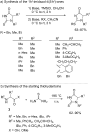
Scheme 1: a) Synthesis of 2-thio-1H-imidazol-4(5H)-ones [55] and b) preparation of the starting thiohydantoins [59].

Scheme 2: Selected examples of the Michael addition of 2-thio-1H-imidazol-4(5H)-ones to nitroalkenes [55]. aReact...

Scheme 3: Michael addition of thiohydantoins to nitrostyrene assisted by Et3N and catalysts C1 and C3. aAbsol...

Scheme 4: Elaboration of the Michael adducts coming from the Michael addition to nitroalkenes [55].

Figure 3: Proposed model for the Michael addition of 1H-imidazol4-(5H)-ones and selected 1H NMR data which su...

Scheme 5: Michael addition 2-thio-1H-imidazol-4(5H)-ones to the α-silyloxyenone 29 [55].

Scheme 6: Elaboration of the Michael adducts coming from the Michael addition to nitroolefins [55].
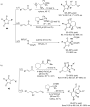
Scheme 7: Rhodanines in asymmetric catalytic reactions: a) Reaction with rhodanines of type 44 [78-80]; b) reactions...

Scheme 8: Michael addition of thiazol-4(5H)-ones to nitroolefins promoted by the ureidopeptide-like bifunctio...

Figure 4: Ureidopeptide-like Brønsted bases: catalyst design. a) Previous known design. b) Proposed new desig...

Scheme 9: Ureidopeptide-like Brønsted base bifunctional catalyst preparation. NMM = N-methylmorpholine, THF =...

Scheme 10: Selected examples of the Michael addition of thiazolones to different nitroolefins promoted by cata...

Scheme 11: Elaboration of the Michael adducts to α,α-disubstituted α-mercaptocarboxylic acid derivatives [85].

Scheme 12: Effect of the nitrogen atom at the aromatic substituent of the thiazolone on yield and stereoselect...

Scheme 13: Michael addition reaction of thiazol-4(5H)ones 74 to α’-silyloxyenone 29 [73].

Scheme 14: Elaboration of the thiazolone Michael adducts [73].

Scheme 15: Enantioselective γ-addition of oxazol-4(5H)-ones and thiazol-4(5H)-ones to allenoates promoted by C6...

Scheme 16: Enantioselective γ-addition of thiazol-4(5H)-ones and oxazol-4(5H)-ones to alkynoate 83 promoted by ...
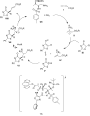
Scheme 17: Proposed mechanism for the C6-catalyzed γ-addition of thiazol-4(5H)-one to allenoates. Adapted from ...

Scheme 18: Catalytic enantioselective α-amination of thiazolones promoted by ureidopeptide like catalysts C5 a...

Scheme 19: Iridium-catalized asymmetric allyllation of substituted oxazol-4(5H)-ones and thiazol-4(5H)-ones pr...
The aminoindanol core as a key scaffold in bifunctional organocatalysts
- Isaac G. Sonsona,
- Eugenia Marqués-López and
- Raquel P. Herrera
Beilstein J. Org. Chem. 2016, 12, 505–523, doi:10.3762/bjoc.12.50
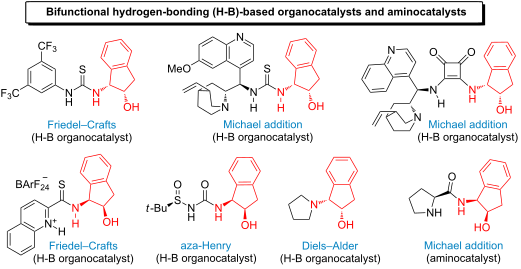
- % of this compound was employed in the enantioselective conjugate addition of the hydroxylamine derivatives 31 to the enoates 30, affording the final products 32 with good yield (up to 98%) and high enantiomeric excess (up to 98% ee). This provided an efficient method that allows the preparation of

Graphical Abstract

Figure 1: Different configurations of 1,2-aminoindanol 1a–d.

Scheme 1: Asymmetric F–C alkylation catalyzed by thiourea 4.

Figure 2: Results for the F–C reaction carried out with catalyst 4 and the structurally modified analogues, 4'...

Figure 3: (a) Transition state TS1 originally proposed for the F–C reaction catalyzed by thiourea 4 [18]. (b) Tra...

Scheme 2: Asymmetric F–C alkylation catalyzed by thiourea ent-4 in the presence of D-mandelic acid as a Brøns...

Figure 4: Transition state TS2 proposed for the activation of the thiourea-based catalyst ent-4 by an externa...

Scheme 3: Friedel–Crafts alkylation of indoles catalyzed by the chiral thioamide 6.

Scheme 4: Scalable tandem C2/C3-annulation of indoles, catalyzed by the thioamide ent-6.

Scheme 5: Plausible tandem process mechanism for the sequential, double Friedel–Crafts alkylation, which invo...

Scheme 6: One-pot multisequence process that allows the synthesis of interesting compounds 14. The pharmacolo...

Scheme 7: Reaction pathway proposed for the preparation of the compounds 14.

Scheme 8: The enantioselective synthesis of cis-vicinal-substituted indane scaffolds 21, catalyzed by ent-6.

Scheme 9: Asymmetric domino procedure (Michael addition/Henry cyclization), catalyzed by the thioamide ent-6 ...

Scheme 10: The enantioselective addition of indoles 2 to α,β-unsaturated acyl phosphonates 24, a) screening of...

Figure 5: Proposed transition state TS7 for the Friedel–Crafts reaction of indole and α,β-unsaturated acyl ph...

Scheme 11: Study of aliphatic β,γ-unsaturated α-ketoesters 26 as substrates in the F–C alkylation of indoles c...

Figure 6: Possible transition states TS8 and TS9 in the asymmetric addition of indoles 2 to the β,γ-unsaturat...

Figure 7: Transition state TS10 proposed for the asymmetric addition of dialkylhydrazone 28 to the β,γ-unsatu...

Scheme 12: Different β-hydroxylamino-based catalysts tested in a Michael addition, and the transition state TS...

Scheme 13: Enantioselective addition of acetylacetone (36a) to nitroalkenes 3, catalyzed by 37 and the propose...

Scheme 14: Addition of 3-oxindoles 39 to 2-amino-1-nitroethenes 40, catalyzed by 41.

Scheme 15: Michael addition of 1,3-dicarbonyl compounds 36 to the nitroalkenes 3 catalyzed by the squaramide 43...

Scheme 16: Asymmetric aza-Henry reaction catalyzed by the aminoindanol-derived sulfinyl urea 50.

Figure 8: Results for the aza-Henry reaction carried out with the structurally modified catalysts 50–50''.

Scheme 17: Diels–Alder reaction catalyzed by the aminoindanol derivative ent-41.

Scheme 18: Asymmetric Michael addition of 3-pentanone (55a) to the nitroalkenes 3 through aminocatalysis.

Scheme 19: Substrate scope extension for the asymmetric Michael addition between the ketones 55 and the nitroa...

Scheme 20: A possible reaction pathway in the presence of the catalyst 56 and the plausible transition state T...
(Thio)urea-mediated synthesis of functionalized six-membered rings with multiple chiral centers
- Giorgos Koutoulogenis,
- Nikolaos Kaplaneris and
- Christoforos G. Kokotos
Beilstein J. Org. Chem. 2016, 12, 462–495, doi:10.3762/bjoc.12.48
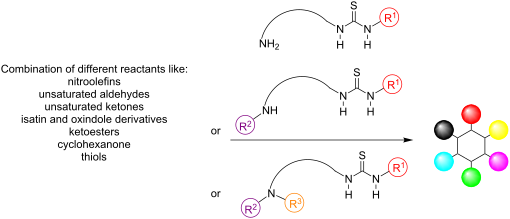
- Mannich–Michael pathway instead of the more “reasonable” Michael–Mannich pathway. In 2012, Wang and co-workers reported a novel domino Friedel–Crafts alkylation (via conjugate addition)-hemiacetalization catalyzed by rosin-derived tertiary amine-thiourea 187 (Scheme 61) [82]. Reagent 87 was successfully

Graphical Abstract

Scheme 1: Activation of carbonyl compounds via enamine and iminium intermediates [2].

Scheme 2: Electronic and steric interactions present in enamine activation mode [2].

Scheme 3: Electrophilic activation of carbonyl compounds by a thiourea moiety.

Scheme 4: Asymmetric synthesis of dihydro-2H-pyran-6-carboxylate 3 using organocatalyst 4 [16].

Scheme 5: Possible hydrogen-bonding for the reaction of (E)-methyl 2-oxo-4-phenylbut-3-enoate [16].

Scheme 6: Asymmetric desymmetrization of 4,4-cyclohexadienones using the Michael addition reaction with malon...

Scheme 7: The enantioselective synthesis of α,α-disubstituted cycloalkanones using catalyst 11 [18].

Scheme 8: The enantioselective synthesis of indolo- and benzoquinolidine compounds through aza-Diels–Alder re...

Scheme 9: Enantioselective [5 + 2] cycloaddition [20].

Scheme 10: Asymmetric synthesis of oxazine derivatives 26 [21].

Scheme 11: Asymmetric synthesis of bicyclo[3.3.1]nonadienone, core 30 present in (−)-huperzine [22].

Scheme 12: Asymmetric inverse electron-demand Diels-Alder reaction catalyzed by amine-thiourea 34 [23].

Scheme 13: Asymmetric entry to morphan skeletons, catalyzed by amine-thiourea 37 [24].

Scheme 14: Asymmetric transformation of (E)-2-nitroallyl acetate [25].

Scheme 15: Proposed way of activation.

Scheme 16: Asymmetric synthesis of nitrobicyclo[3.2.1]octan-2-one derivatives [26].

Scheme 17: Asymmetric tandem Michael–Henry reaction catalyzed by 50 [27].

Scheme 18: Asymmetric Diels–Alder reactions of 3-vinylindoles 51 [29].

Scheme 19: Proposed transition state and activation mode of the asymmetric Diels–Alder reactions of 3-vinylind...

Scheme 20: Desymmetrization of meso-anhydrides by Chin, Song and co-workers [30].

Scheme 21: Desymmetrization of meso-anhydrides by Connon and co-workers [31].

Scheme 22: Asymmetric intramolecular Michael reaction [32].

Scheme 23: Asymmetric addition of malonate to 3-nitro-2H-chromenes 67 [33].

Scheme 24: Intramolecular desymmetrization through an intramolecular aza-Michael reaction [34].

Scheme 25: Enantioselective synthesis of (−)-mesembrine [34].

Scheme 26: A novel asymmetric Michael–Michael reaction [35].

Scheme 27: Asymmetric three-component reaction catalyzed by Takemoto’s catalyst 77 [46].

Scheme 28: Asymmetric domino Michael–Henry reaction [47].

Scheme 29: Asymmetric domino Michael–Henry reaction [48].

Scheme 30: Enantioselective synthesis of derivatives of 3,4-dihydro-2H-pyran 89 [49].

Scheme 31: Asymmetric addition of α,α-dicyano olefins 90 to 3-nitro-2H-chromenes 91 [50].

Scheme 32: Asymmetric three-component reaction producing 2,6-diazabicyclo[2.2.2]octanones 95 [51].

Scheme 33: Asymmetric double Michael reaction producing substituted chromans 99 [52].

Scheme 34: Enantioselective synthesis of multi-functionalized spiro oxindole dienes 106 [53].

Scheme 35: Organocatalyzed Michael aldol cyclization [54].

Scheme 36: Asymmetric synthesis of dihydrocoumarins [55].

Scheme 37: Asymmetric double Michael reaction en route to tetrasubstituted cyclohexenols [56].

Scheme 38: Asymmetric synthesis of α-trifluoromethyl-dihydropyrans 121 [58].

Scheme 39: Tyrosine-derived tertiary amino-thiourea 123 catalyzed Michael hemiaketalization reaction [59].

Scheme 40: Enantioselective entry to bicyclo[3.2.1]octane unit [60].

Scheme 41: Asymmetric synthesis of spiro[4-cyclohexanone-1,3’-oxindoline] 126 [61].

Scheme 42: Kinetic resolution of 3-nitro-2H-chromene 130 [62].

Scheme 43: Asymmetric synthesis of chromanes 136 [63].

Scheme 44: Wang’s utilization of β-unsaturated α-ketoesters 87 [64,65].

Scheme 45: Asymmetric entry to trifluoromethyl-substituted dihydropyrans 144 [66].

Scheme 46: Phenylalanine-derived thiourea-catalyzed domino Michael hemiaketalization reaction [67].

Scheme 47: Asymmetric synthesis of α-trichloromethyldihydropyrans 149 [68].

Scheme 48: Takemoto’s thiourea-catalyzed domino Michael hemiaketalization reaction [69].

Scheme 49: Asymmetric synthesis of densely substituted cyclohexanes [70].

Scheme 50: Enantioselective synthesis of polysubstituted chromeno [4,3-b]pyrrolidine derivatines 157 [71].

Scheme 51: Enantioselective synthesis of spiro-fused cyclohexanone/5-oxazolone scaffolds 162 [72].

Scheme 52: Utilizing 2-mercaptobenzaldehydes 163 in cascade processes [73,74].

Scheme 53: Proposed transition state of the initial sulfa-Michael step [74].

Scheme 54: Asymmetric thiochroman synthesis via dynamic kinetic resolution [75].

Scheme 55: Enantioselective synthesis of thiochromans [76].

Scheme 56: Enantioselective synthesis of chromans and thiochromans synthesis [77].

Scheme 57: Enantioselective sulfa-Michael aldol reaction en route to spiro compounds [78].

Scheme 58: Enantioselective synthesis of 4-aminobenzo(thio)pyrans 179 [79].

Scheme 59: Asymmetric synthesis of tetrahydroquinolines [80].

Scheme 60: Novel asymmetric Mannich–Michael sequence producing tetrahydroquinolines 186 [81].

Scheme 61: Enantioselective synthesis of biologically interesting chromanes 190 and 191 [82].

Scheme 62: Asymmetric tandem Henry–Michael reaction [83].

Scheme 63: An asymmetric synthesis of substituted cyclohexanes via a dynamic kinetic resolution [84].

Scheme 64: Three component-organocascade initiated by Knoevenagel reaction [85].

Scheme 65: Asymmetric Michael reaction catalyzed by catalysts 57 and 211 [86].

Scheme 66: Proposed mechanism for the asymmetric Michael reaction catalyzed by catalysts 57 and 211 [86].

Scheme 67: Asymmetric facile synthesis of hexasubstituted cyclohexanes [87].

Scheme 68: Dual activation catalytic mechanism [87].

Scheme 69: Asymmetric Michael–Michael/aldol reaction catalyzed by catalysts 57, 219 and 214 [88].

Scheme 70: Asymmetric synthesis of substituted cyclohexane derivatives, using catalysts 57 and 223 [89].

Scheme 71: Asymmetric synthesis of substituted piperidine derivatives, using catalysts 223 and 228 [90].

Scheme 72: Asymmetric synthesis of endo-exo spiro-dihydropyran-oxindole derivatives catalyzed by catalyst 232 [91]....

Scheme 73: Asymmetric synthesis of carbazole spiroxindole derivatives, using catalyst 236 [92].

Scheme 74: Enantioselective formal [2 + 2] cycloaddition of enal 209 with nitroalkene 210, using catalysts 23 ...

Scheme 75: Asymmetric synthesis of polycyclized hydroxylactams derivatives, using catalyst 242 [94].

Scheme 76: Asymmetric synthesis of product 243, using catalyst 246 [95].

Scheme 77: Formation of the α-stereoselective acetals 248 from the corresponding enol ether 247, using catalys...

Scheme 78: Selective glycosidation, catalyzed by Shreiner’s catalyst 23 [97].



