Search results
Search for "cross-coupling" in Full Text gives 616 result(s) in Beilstein Journal of Organic Chemistry. Showing first 200.
Manganese-catalyzed C–C and C–N bond formation with alcohols via borrowing hydrogen or hydrogen auto-transfer
Beilstein J. Org. Chem. 2024, 20, 1111–1166, doi:10.3762/bjoc.20.98

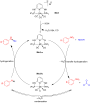
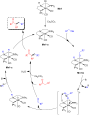
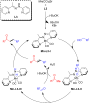
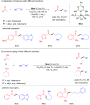
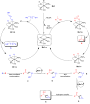
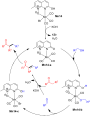
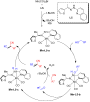
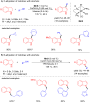
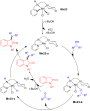
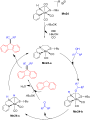
- importance in organic synthesis and is widely used in the pharmaceutical and other chemical industries. Palladium-catalyzed cross-coupling reactions are one of the compelling methods for building C–C and C–N bonds [1][2]. However, using organohalide reagents and harsh reaction conditions in this process
- are of substantial importance for the fine chemical industry, pharmaceuticals, agrochemicals, dyes, and natural products [25]. The synthesis of amine derivatives can be accomplished using many powerful techniques, including Buchwald–Hartwig and Ullmann cross-coupling reactions, hydroamination
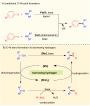
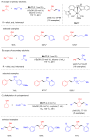
- , hydroaminomethylation, reduction of nitriles and nitro compounds or through reductive amination of carbonyl derivatives [26][27][28][29][30]. However, for example, cross-coupling reactions with alkyl or aryl halides generate considerable amounts of waste (Scheme 2A). Even though many different approaches exist for



























Light on the sustainable preparation of aryl-cored dibromides
Beilstein J. Org. Chem. 2024, 20, 1076–1087, doi:10.3762/bjoc.20.95
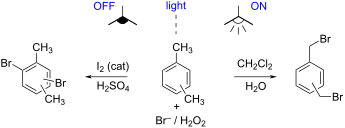
- bonds of aryl halides also exhibit high reactivity, particularly towards transition-metal-mediated cross-coupling processes or Ar-SN reactions. Benzyl and aryl halides, collectively referred to as 'aryl-cored halides', have found extensive applications across various fields, including synthesis [1



Novel analogues of a nonnucleoside SARS-CoV-2 RdRp inhibitor as potential antivirotics
Beilstein J. Org. Chem. 2024, 20, 1029–1036, doi:10.3762/bjoc.20.91
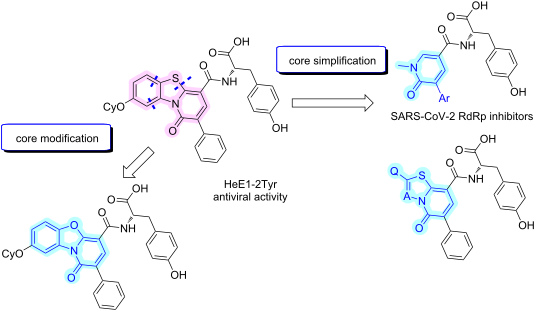
- synthetic strategy leading to pyridones bearing different aryl substituents is described in Scheme 2. During the Suzuki–Miyaura cross-coupling reaction, which introduced the substituents in the C-5 position, the methyl ester protection of the amino acid moiety was also cleaved, leading directly to the final


Carbonylative synthesis and functionalization of indoles
Beilstein J. Org. Chem. 2024, 20, 973–1000, doi:10.3762/bjoc.20.87
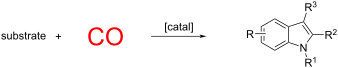
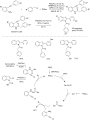
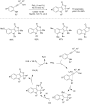
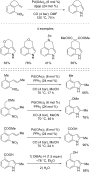
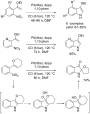
- derivatives were isolated with good yields (Scheme 1). Instead, in the Senadi et al. approach, 1-(3-amino)-1H-indol-2-yl)-1-ketones were obtained through a Pd(0)-catalyzed cascade process consisting of isonitrile insertion as carbon monoxide surrogate and a C–H cross-coupling [13]. The reaction took place in












Synthesis and properties of 6-alkynyl-5-aryluracils
Beilstein J. Org. Chem. 2024, 20, 898–911, doi:10.3762/bjoc.20.80
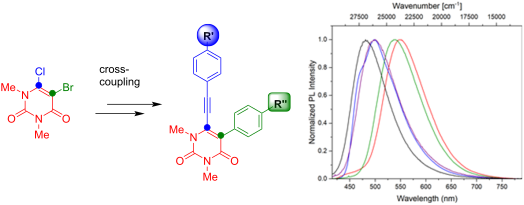
- Abstract The development of a new and straightforward chemoselective method for the synthesis of uracil-based structures by combining Suzuki–Miyaura and Sonogashira–Hagihara cross-coupling is reported. The methodology was applied to synthesize a series of novel compounds. The tolerance of the combination
- this work, we report a new chemoselective method for the synthesis of a series of hitherto unknown uracil-based compounds by combining Suzuki–Miyaura and Sonogashira–Hagihara cross-coupling [60][61]. The method is designed to be flexible and could also be used to synthesize other structural motifs
- starting with commercially available 6-chloro-1,2-dimethyluracil (1), as depicted in Scheme 1. Subsequently, 5-bromo-6-chloro-1,3-dimethyluracil (2) was synthesized by brominating the starting material. The single Sonogashira–Hagihara cross-coupling afforded 3a–j and, by a two-fold approach, 4a–h could be





Three-component N-alkenylation of azoles with alkynes and iodine(III) electrophile: synthesis of multisubstituted N-vinylazoles
Beilstein J. Org. Chem. 2024, 20, 891–897, doi:10.3762/bjoc.20.79
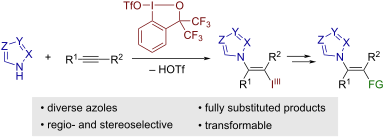
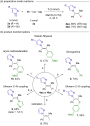
- group in the product can be leveraged as a versatile synthetic handle, allowing for the preparation of hitherto inaccessible types of densely functionalized N-vinylazoles. Keywords: alkynes; azoles; cross-coupling; hypervalent iodine; Introduction N-Functionalized azoles are prevalent in bioactive



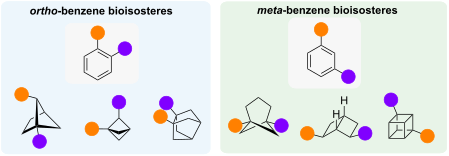
(Bio)isosteres of ortho- and meta-substituted benzenes
Beilstein J. Org. Chem. 2024, 20, 859–890, doi:10.3762/bjoc.20.78
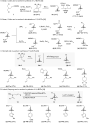
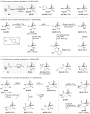
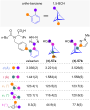
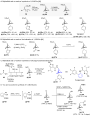
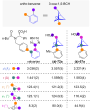
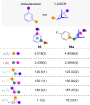
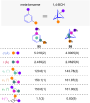
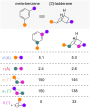
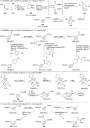
- esterification of alcohol (±)-5 gave redox active ester (±)-6, which was itself shown to be a suitable substrate for nickel-catalysed decarboxylative cross coupling reactions to aryl-substituted BCPs (±)-7. Oxidation of alcohol (±)-8 gave acid (±)-9 which yielded amine (±)-10 after a Curtius rearrangement
- decarboxylation then yields 1,2-cubane 88. This synthesis reduced the number of synthetic steps from eight, in the previously known patented synthesis from 2007 [54], to four. MacMillan and co-workers also developed a number of decarboxylative cross-coupling reactions to allow access to an even wider range of 1,2
- conditions in the transformation of alcohol 153 to aldehyde 154. All of these transformations could be performed without reduction in diastereomeric ratio. Additionally, the authors showed that acid 152 can undergo nickel-catalysed decarboxylative cross coupling reactions via redox active ester 156 to afford

















Ortho-ester-substituted diaryliodonium salts enabled regioselective arylocyclization of naphthols toward 3,4-benzocoumarins
Beilstein J. Org. Chem. 2024, 20, 841–851, doi:10.3762/bjoc.20.76
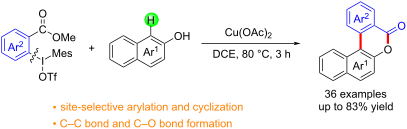
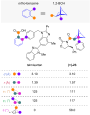
- for the synthesis of functional materials via cross-coupling reactions. Next, we extended our investigation to 1-naphthol in this reaction, and found that the arylation of 1-naphthol was achieved selectively at the C-2 position. The cascade cyclization resulted in the corresponding products 3an and


Advancements in hydrochlorination of alkenes
Beilstein J. Org. Chem. 2024, 20, 787–814, doi:10.3762/bjoc.20.72
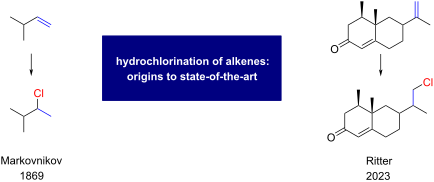
- -sensitive substrates. Another challenge, shared with Nicewicz's method [90], is the preparation of arylacridine 159 in a single step from the relatively expensive 9-chloroacridine through Pd-catalyzed cross-coupling with 2-chlorophenylboronic acid. Additionally, for large-scale reactions, a flow reactor is








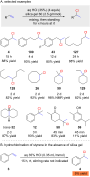
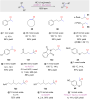


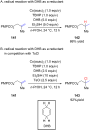


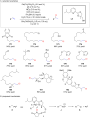
SOMOphilic alkyne vs radical-polar crossover approaches: The full story of the azido-alkynylation of alkenes
Beilstein J. Org. Chem. 2024, 20, 701–713, doi:10.3762/bjoc.20.64
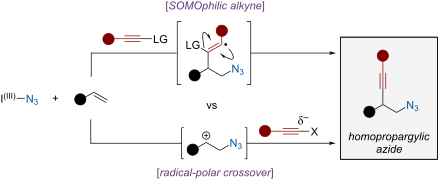
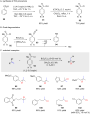
- with potential for further modification by cross-coupling. The full scope of the transformation can be found in Supporting Information File 1, Schemes S2 and S3 [45]. Concerning scope limitations, the azido-alkynylation of vinyl-pyridine 1b was unsuccessful and thiazole 1c only afforded 18% of the


Recent developments in the engineered biosynthesis of fungal meroterpenoids
Beilstein J. Org. Chem. 2024, 20, 578–588, doi:10.3762/bjoc.20.50
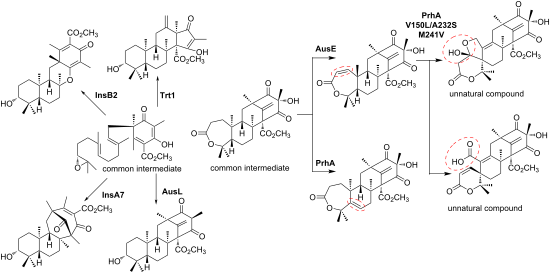
- cross-coupling between two aromatic rings [43]. In the future, further developments in bioinformatics, structural biology, and AI techniques will enable the design of biosynthetic enzymes and pathways to produce desired bioactive compounds, although understanding the chemistry catalyzed by individual






Mechanisms for radical reactions initiating from N-hydroxyphthalimide esters
Beilstein J. Org. Chem. 2024, 20, 346–378, doi:10.3762/bjoc.20.35
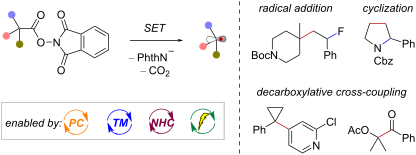
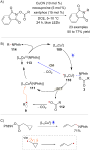
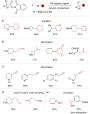
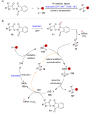
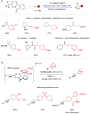
- of parameters with which to control reactivity. In this perspective, we provide an overview of the different mechanisms for radical reactions involving NHPI esters, with an emphasis on recent applications in radical additions, cyclizations and decarboxylative cross-coupling reactions. Within these
- years and in the past, they were perceived as fleeting reaction intermediates. Recent progress in photoredox catalysis [6][7][8], electrochemistry [9][10], and the use of transition-metal (TM) catalysts in radical cross-coupling reactions [11] have dramatically expanded the use of radicals in synthesis
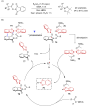
- decarboxylative cross-coupling (DCC) of NHPI esters with organometallic reagents, resembling classic Kumada, Negishi, and Suzuki couplings, has been enabled by nickel (Ni), cobalt (Co), iron (Fe), and copper (Cu) catalysts [84][85][86][87][88][89][90][91] (Scheme 23A). The typical mechanism begins by








Synthesis of π-conjugated polycyclic compounds by late-stage extrusion of chalcogen fragments
Beilstein J. Org. Chem. 2024, 20, 287–305, doi:10.3762/bjoc.20.30
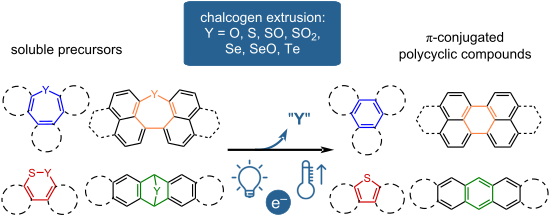
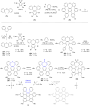
- corresponding boronic acid 9 and a Suzuki–Miyaura cross-coupling between 8 and 9 gave rise to dimer 10, followed by the oxidation of both acenaphthene units into 1,8-naphthalic anhydrides. Installation of the thiepine ring was achieved by a double nucleophilic aromatic substitution induced by sodium sulfide
- corresponding bis(thiophenyl) thioether, which then underwent successive bromination and iodination to give intermediate 18. Next, a two-fold Suzuki–Miyaura cross-coupling occurring chemoselectively on the iodinated positions allowed the symmetric extension of the hydrocarbon scaffold, with the insertion of two
- thiepine via a two-fold Suzuki–Miyaura cross-coupling with 1,2-phenylenediboronic pinacol ester. The resulting S-doped extended tribenzothiepine 21 proved stable under ambient conditions for several months and exhibited good solubility in common organic solvents, which is ascribed to the boat-shape




Nucleophilic functionalization of thianthrenium salts under basic conditions
Beilstein J. Org. Chem. 2024, 20, 257–263, doi:10.3762/bjoc.20.26
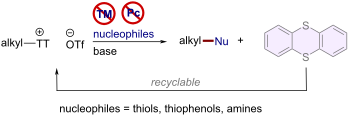
- regioselectivity. Significant advancements in the synthesis of arylthianthrenium salts have prompted a growing interest in their utilization as versatile precursors for the conversion of C–H bonds in arenes into C–C/X bonds through transition-metal-catalyzed cross-coupling processes [12][13][14][15][16][17][18][19
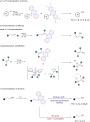
- -metal-catalyzed cross-coupling [32][33] and aminofunctionalization [34] of alkenes were achieved, benefiting from the unique reactivity of organothianthrenium species that are generated through the reaction of alkenes and thianthrene sulfoxide (TT=O) or thianthrene (TT) (Scheme 1b). Alcohols are widely
- generation of alkyl radicals [39]. After that, a series of methods for the modification of alkylthianthrenium salts have been developed, including the transition-metal-catalyzed cross-coupling with terminal alkynes [40], sulfonylation with DABCO·(SO2)2 [41][42][43], or alkylation of active alkenes [44][45



Optimizations of lipid II synthesis: an essential glycolipid precursor in bacterial cell wall synthesis and a validated antibiotic target
Beilstein J. Org. Chem. 2024, 20, 220–227, doi:10.3762/bjoc.20.22
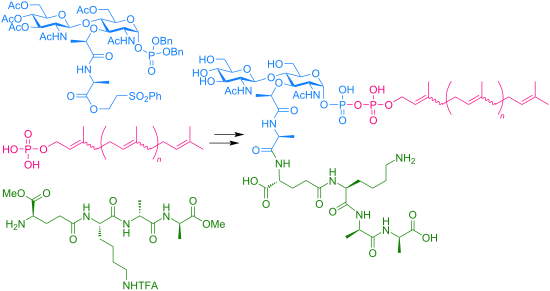
- mixture underwent a cross-coupling reaction with prenyl monophosphates [46] in DMF/THF over a four-day period, yielding fully protected versions of lipid II and its analogues. Subsequent global deprotection reactions, using aqueous NaOH, led to the formation of lipid II (11), with an overall yield of 16


Metal-catalyzed coupling/carbonylative cyclizations for accessing dibenzodiazepinones: an expedient route to clozapine and other drugs
Beilstein J. Org. Chem. 2024, 20, 193–204, doi:10.3762/bjoc.20.19
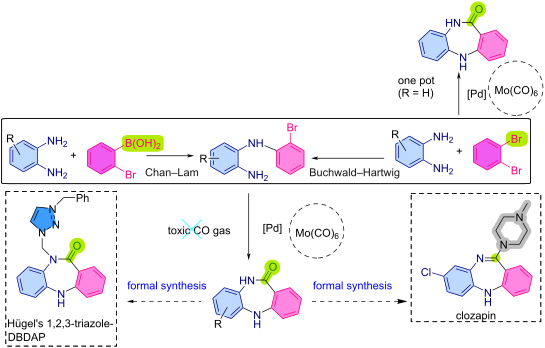
- via a cross-coupling reaction with NH3 [13]. The reaction was undertaken in the presence of a catalytic amount of a palladium catalyst and afforded a library of dibenzodiazepinones in good to excellent yields (Scheme 1a). In 2013, Zhang et al. developed a synthetic route leading to structurally


Visible-light-induced radical cascade cyclization: a catalyst-free synthetic approach to trifluoromethylated heterocycles
Beilstein J. Org. Chem. 2024, 20, 118–124, doi:10.3762/bjoc.20.12
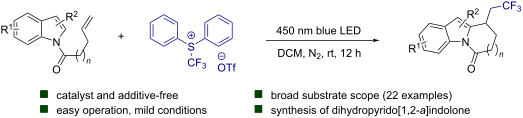
- their biological activity and potential applications, continuous efforts have been dedicated to the synthesis of DHPI derivatives. Various synthetic strategies have been explored (Scheme 1), including transition-metal-catalyzed cross-coupling reactions [8][9][10], annulation reaction of carbenoids [11




Using the phospha-Michael reaction for making phosphonium phenolate zwitterions
Beilstein J. Org. Chem. 2024, 20, 41–51, doi:10.3762/bjoc.20.6
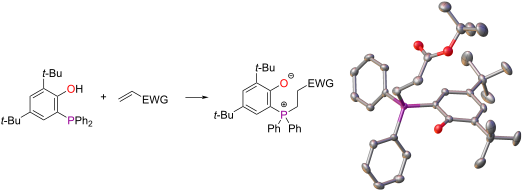
- trifluoromethyl groups [20] and the cross-coupling of aryl halides [21]. Like phosphonium salts in general are used as catalysts [22][23], phosphonium salts based on ortho-hydroxy-substituted phosphines received particular attention because of their zwitterionic nature and have been used as catalysts in the


Facile access to pyridinium-based bent aromatic amphiphiles: nonionic surface modification of nanocarbons in water
Beilstein J. Org. Chem. 2024, 20, 32–40, doi:10.3762/bjoc.20.5
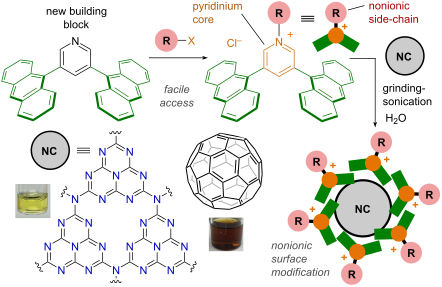
- -dibromopyridine. Negishi cross-coupling with 9-anthrylzinc chloride in the presence of PdCl2(PhCN)2/P(t-Bu)3 as catalyst afforded the common precursor 3,5-dianthrylpyridine (prePA), a simple yet novel bent building block, in 81% yield. For the synthesis of the methyl derivative, prePA was N-alkylated with excess




Biphenylene-containing polycyclic conjugated compounds
Beilstein J. Org. Chem. 2023, 19, 1895–1911, doi:10.3762/bjoc.19.141
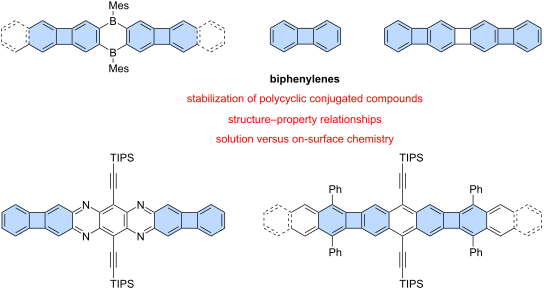
- through Sonogashira cross-coupling reactions with alkynes featuring different protecting groups such as TIPS, TES, and TIBS. Scheme 7 illustrates the derivatization process using one of the chosen examples, specifically the TIPS group. Accordingly, the cross-coupling products 33a–c were obtained in yields
- the synthesis of compound 81 through the utilization of the Negishi cross-coupling reaction and then the removal of TMS groups from this intermediate was achieved using TBAF, resulting in the formation of diyne 82 in 65% yield. The progression towards the synthesis of biphenylene-containing substrate
- selectively synthesize compound 87 through a hybrid approach involving the integration of both solution and surface chemistry techniques [53]. The key compound 96 to be used in the synthesis of POA 87 was synthesized in two steps. In the first step, 94 was obtained using a double Sonogashira cross-coupling



Recent advancements in iodide/phosphine-mediated photoredox radical reactions
Beilstein J. Org. Chem. 2023, 19, 1785–1803, doi:10.3762/bjoc.19.131
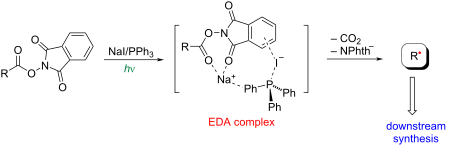
- the photoredox cross-coupling reactions discussed above. A recent elegant study conducted by Chen and colleagues introduced a straightforward method that directly employed sodium iodide for photoinduced deaminative alkenylation processes [11]. This method enabled the synthesis of β,γ-unsaturated
- radicals for alkenylation, was primarily facilitated by the electrostatic interaction between NaI and Katritzky salts 7. This innovative approach not only expanded the scope of photoredox cross-coupling reactions but also offered valuable insights into the role of NaI in facilitating these transformations
- -anion catalysis under visible light irradiation, as depicted in Scheme 9. Subsequent investigations revealed that redox-active esters 3 and Katritzky salts 15 derived from amino acids could be effectively employed in decarboxylative/deaminative cross-coupling reactions [15]. These reactions enabled the




A deep-red fluorophore based on naphthothiadiazole as emitter with hybridized local and charge transfer and ambipolar transporting properties for electroluminescent devices
Beilstein J. Org. Chem. 2023, 19, 1664–1676, doi:10.3762/bjoc.19.122
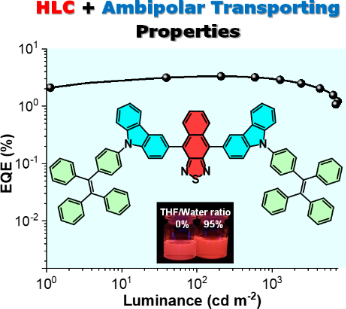
- )diboron catalyzed by Pd(dpf)Cl2/KOAc. Finally, TPECNz was obtained as red solid in a reasonable yield by a Suzuki-type cross-coupling reaction between 3 and 4,9-dibromonaphtho[2,3-c][1,2,5]thiadiazole. The chemical structure and purity of compound 3 were verified by 1H NMR, 13C NMR, and high-resolution


Radical chemistry in polymer science: an overview and recent advances
Beilstein J. Org. Chem. 2023, 19, 1580–1603, doi:10.3762/bjoc.19.116
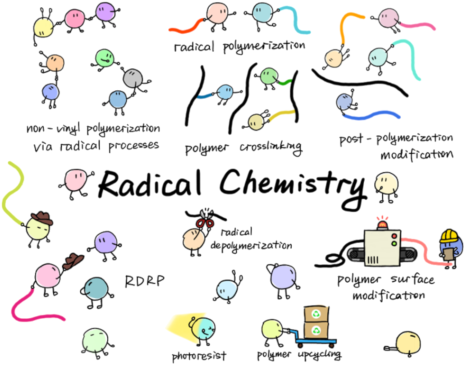
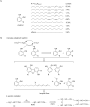
- ]. The semiquinone radicals formed during the oxidation of catechol can undergo a cross-coupling reaction to form polymers (Scheme 1). One example is the radical polymerization of urushiol. The earliest recorded application of natural radical polymerization can be traced back to the manufacture of
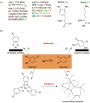
- to produce conductive polymers (Scheme 9B) [76]. Nowadays, most conductive polymers are prepared via metal-catalyzed cross-coupling reactions [77]. However, radical polymerization is also an effective way to synthesize conductive polymers at a relatively low cost. Niemi et al. [78] used FeCl3 as




Synthesis and biological evaluation of Argemone mexicana-inspired antimicrobials
Beilstein J. Org. Chem. 2023, 19, 1511–1524, doi:10.3762/bjoc.19.108
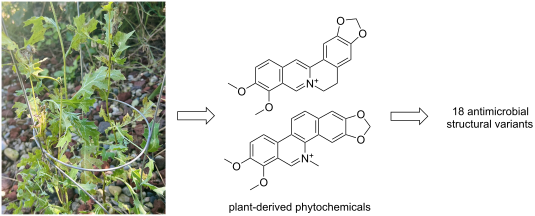
- berberine variants none are as easily modulated to rapidly install substituent diversity [31][43][44][45][46][47][48]. The method deemed most amenable to varying substituents involves substituted 2-bromo-1-aminonaphthalenes which are used in subsequent palladium cross-coupling reactions [45]. As such, our


N-Sulfenylsuccinimide/phthalimide: an alternative sulfenylating reagent in organic transformations
Beilstein J. Org. Chem. 2023, 19, 1471–1502, doi:10.3762/bjoc.19.106
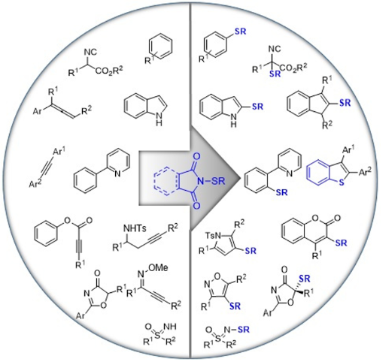
- functional materials and indispensable synthetic intermediates in drug discovery [31][32][33]. Because of their value, constructing C–S bonds has attracted significant attention via metal-catalyzed cross-coupling reactions and metal-free C–S bond formation [34][35][36][37]. Direct sulfenylation of the C–H
- as a sulfenylating source gave the target product in 93% yield. Knochel and co-workers found that copper acetate can catalyze the cross-coupling reaction between (hetero)aryl, alkyl and benzylic zinc halides 36 with N-thiophthalimides 14 (Scheme 18) [55]. Various metal catalysts, including CrCl2
- low reactivity of these phthalimides, 10 mol % of catalyst was required. Cross-coupling reaction of sulfoximines 44 with N‑(arylthio)succinimides 1 catalyzed by a nanomaterial containing hexagonal boron nitride (h-BN) and γ-cyclodextrin-supported copper(II) acetate (h-BN@γ-CD@Cu(OAc)2) was developed