


Search results
Search for "detection" in Full Text gives 544 result(s) in Beilstein Journal of Organic Chemistry. Showing first 200.
Digyalipopeptide A, an antiparasitic cyclic peptide from the Ghanaian Bacillus sp. strain DE2B
Beilstein J. Org. Chem. 2022, 18, 1763–1771, doi:10.3762/bjoc.18.185
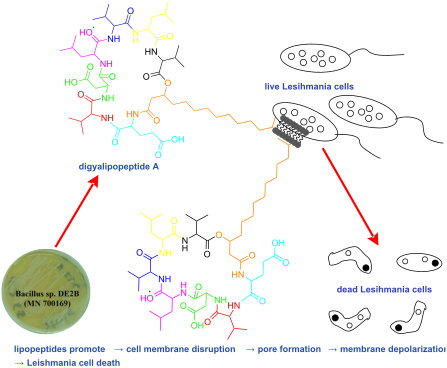
- isolated by repeated semi-preparative reversed-phase HPLC with diode array detection (0–400 nm) at retention time of 27.5 min (see Supporting Information File 1, Figures S3–S7). It was obtained as a white amorphous powder which was bright yellow when in solution. The molecular formula of 1 was determined


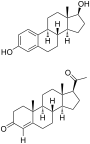
Inclusion complexes of the steroid hormones 17β-estradiol and progesterone with β- and γ-cyclodextrin hosts: syntheses, X-ray structures, thermal analyses and API solubility enhancements
Beilstein J. Org. Chem. 2022, 18, 1749–1762, doi:10.3762/bjoc.18.184
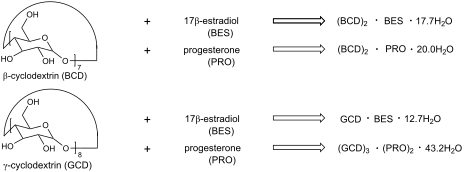
- formation, complex structure, stoichiometry and association constants via the detection and measurement of small deviations in the 1H NMR chemical shifts for both host and guest molecules upon complexation. PXRD studies were generally used to detect the formation of new crystalline phases following attempts



Navigating and expanding the roadmap of natural product genome mining tools
Beilstein J. Org. Chem. 2022, 18, 1656–1671, doi:10.3762/bjoc.18.178
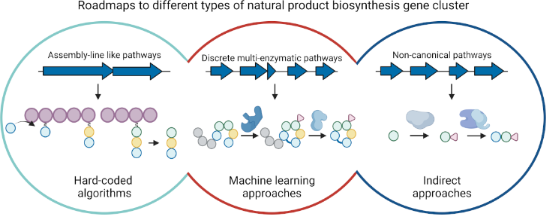
- based on the detection of the frequently encountered biosynthetic domains [21]. As a result, a lot of effort is currently being put into the development of complementing workflows to chart the “biosynthetic dark matter” (i.e., overlooked biosynthetic pathways) that we currently cannot access
- bioinformatically [39]. State-of-the-art genome mining tools are ideally suited for the detection of assembly line-like pathways. The focus on these pathways led to a strong bias in training sets: In the MIBiG database of characterized BGCs nearly 80% of all deposited NP BGCs are PKS, NRPS, or terpene BGCs (April
- genome mining tools and discuss their underlying BGC detection principles, along with advantages and limitations of the BGC identification process. Genome mining algorithms based on hard-coded biosynthetic principles An early approach to identify NP BGCs in (meta-)genomic data sets were sequence




Rhodium-catalyzed intramolecular reductive aldol-type cyclization: Application for the synthesis of a chiral necic acid lactone
Beilstein J. Org. Chem. 2022, 18, 1642–1648, doi:10.3762/bjoc.18.176
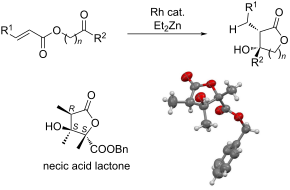
- . eThe reaction was carried out using RhCl(PPh3)3 in THF at rt. Detection of metal-enolate and proposed mechanism of intramolecular cyclization. Synthetic route towards chiral necic acid lactone (2S,3S,4R)-2j. Conditions: a) CH3SO2NH2, AD-mix-β, t-BuOH, H2O. b) SO3·Py, Et3N, DMSO, CH2Cl2. c) DMAP, CH2Cl2


Preparation of β-cyclodextrin-based dimers with selectively methylated rims and their use for solubilization of tetracene
Beilstein J. Org. Chem. 2022, 18, 1596–1606, doi:10.3762/bjoc.18.170
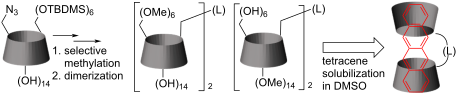
- with Thermo Scientific Helios γ with wolfram and deuterium lamp. The wavelength range is 190–800 nm. 1H, 13C, and 2D NMR spectra were measured on Bruker Avance III HD 400 spectrometer. For TLC detection of CDs, we charred a TLC plate with 50% sulfuric acid water solution at 250 °C. UV measurements The


Solid-phase total synthesis and structural confirmation of antimicrobial longicatenamide A
Beilstein J. Org. Chem. 2022, 18, 1560–1566, doi:10.3762/bjoc.18.166
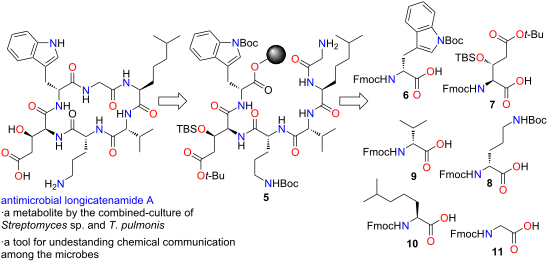
- the combined-culture strategy and new labeling reagents has led to the detection and structural determination of several unprecedented secondary metabolites [5][6][7]. Longicatenamides A–D (1–4, Figure 1) are cyclic hexapeptides isolated from the combined-culture of Streptomyces sp. KUSC_F05 and T



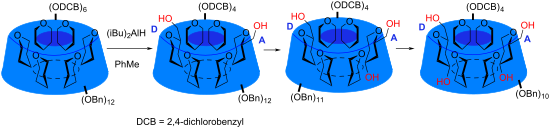
A study of the DIBAL-promoted selective debenzylation of α-cyclodextrin protected with two different benzyl groups
Beilstein J. Org. Chem. 2022, 18, 1553–1559, doi:10.3762/bjoc.18.165
- on a Bruker Solarix XR mass spectrometer analyzing TOF. Generally, NMR spectra were recorded on a 500 MHz Bruker instrument with a cryoprobe. The 800 MHz spectra were recorded at 25 °C on a Bruker Avance Neo spectrometer with 5 mm CPTXO Cryoprobe C/N-H-D optimized for direct 13C detection. Chemical


Microelectrode arrays, electrosynthesis, and the optimization of signaling on an inert, stable surface
Beilstein J. Org. Chem. 2022, 18, 1488–1498, doi:10.3762/bjoc.18.156
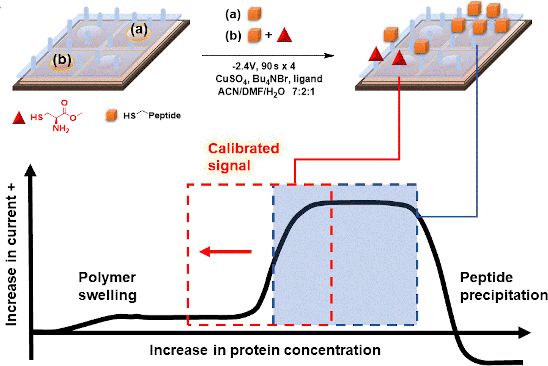
- detection methods that are dependent on the nature of the stable surface used and the amount of the binding partner that is placed on the surface. If one wants to do a quantitative study of binding events that involve molecules on such a stable surface, then once again a method for calibrating the signal
- chemistry used to place molecules on a microelectrode array, binding events on the surface of the array are typically monitored by using the electrodes in the array to measure current changes that are caused by that event. The method is ideal in that it allows for the "real-time" detection of the binding
- detection methods in the subsequent binding studies. The polymer network is not permeable to molecules tethered to its surface or proteins in solution. The synthetic problem was solved by using the electrodes in an array to generate chemical reagents and catalysts and then confining those reagents and


Computational model predicts protein binding sites of a luminescent ligand equipped with guanidiniocarbonyl-pyrrole groups
Beilstein J. Org. Chem. 2022, 18, 1322–1331, doi:10.3762/bjoc.18.137
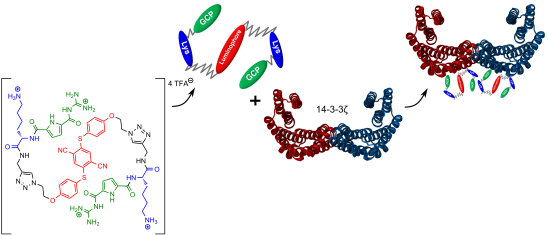
- novel luminophores tailor-made for different applications. One unique, promising class of compounds, the so-called aggregation-induced emitters (AIE) have been used for a wide range of applications, e.g., in OLEDs, liquid crystals [17], stimuli responses, bioassays, protein and ion detection or imaging




Derivatives of benzo-1,4-thiazine-3-carboxylic acid and the corresponding amino acid conjugates
Beilstein J. Org. Chem. 2022, 18, 1195–1202, doi:10.3762/bjoc.18.124
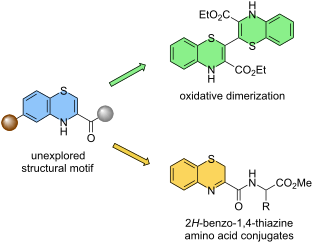
- transform into a green-blue chromophore in the presence of peroxides or redox-active metal ions under acidic conditions, creating a potential detection method for such entities [29]. Additionally, the same structure was used for the preparation of a benzo-1,4-thiazine-based cyanine chromophore, which showed
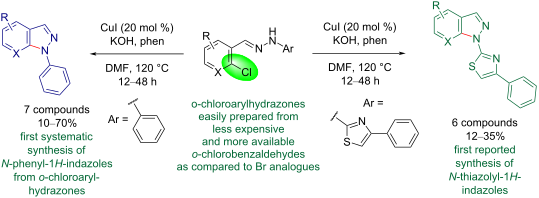
Synthesis of N-phenyl- and N-thiazolyl-1H-indazoles by copper-catalyzed intramolecular N-arylation of ortho-chlorinated arylhydrazones
Beilstein J. Org. Chem. 2022, 18, 1079–1087, doi:10.3762/bjoc.18.110
- resealable screw-cap Schlenk flask (≈10 mL volume) in the presence of a Teflon-coated magnetic stirring bar. TLC analyses were performed with Al plates covered with silica gel (SiliCycle, F254) and visualized by UV detection. Silica gel (Vetec, 0.063–0.200 mm, 70–230 mesh) was used for column chromatography


New azodyrecins identified by a genome mining-directed reactivity-based screening
Beilstein J. Org. Chem. 2022, 18, 1017–1025, doi:10.3762/bjoc.18.102
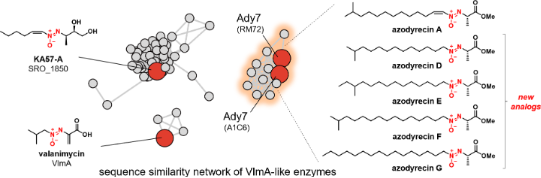
- natural products, despite their notable biological activities. Reactivity-based screening is an emerging strategy in natural products discovery, in which chemical probes are used for the specific detection of the unique functionality of interest in crude metabolites [5][6]. The reactions usually
- macrozamin [4]. Although the N2H4 generation is an advantageous reactivity of an azoxy group, to the best of our knowledge, it has not been applied for the detection of azoxy bonds in the context of natural products discovery. The azoxy bond is biosynthesized by two distinct mechanisms. The first is the




The stereochemical course of 2-methylisoborneol biosynthesis
Beilstein J. Org. Chem. 2022, 18, 818–824, doi:10.3762/bjoc.18.82
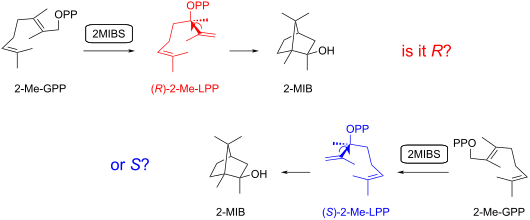
- the genes for the biosynthesis of 1 are present in about half of the species [28], which is reflected by the frequent detection of 1 among the volatiles emitted by a large number of streptomycetes and closely related bacteria [3][4][5][6][7]. A series of side products of the 2MIBS has been identified




Thiophene/selenophene-based S-shaped double helicenes: regioselective synthesis and structures
Beilstein J. Org. Chem. 2022, 18, 809–817, doi:10.3762/bjoc.18.81
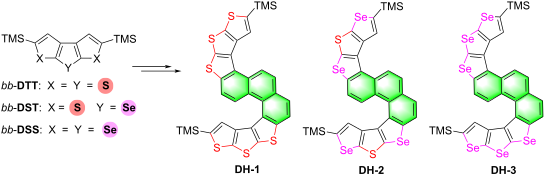
- ]. Column chromatography was carried out on silica gel (300–400 mesh). Analytical thin-layer chromatography was performed on glass plates of silica gel GF-254 with detection by UV. Standard techniques for synthesis under inert atmosphere and Schlenk glassware equipped with an 8 mm PTFE vacuum stopcock, were


Synthesis of bis-spirocyclic derivatives of 3-azabicyclo[3.1.0]hexane via cyclopropene cycloadditions to the stable azomethine ylide derived from Ruhemann's purple
Beilstein J. Org. Chem. 2022, 18, 769–780, doi:10.3762/bjoc.18.77
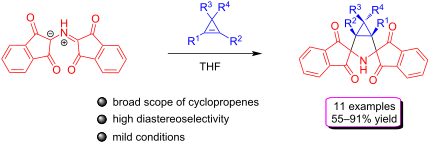
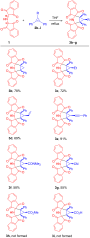
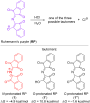
- observed signals were at the limit of detection and whether they actually correspond to a minor diastereomer could not be ascertained unambiguously. The major product 4 was purified by recrystallization of the crude mixture from MeOH and obtained in 62% yield. The structure and relative configuration of






Terpenoids from Glechoma hederacea var. longituba and their biological activities
Beilstein J. Org. Chem. 2022, 18, 555–566, doi:10.3762/bjoc.18.58
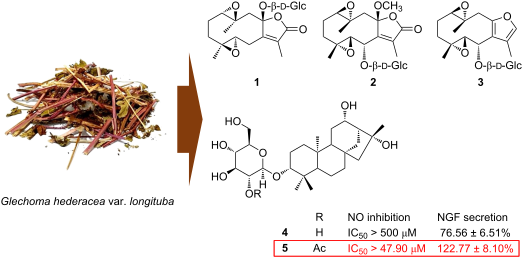
- . The monosaccharide of 5 was detected at 13.8 min, the same detection time (13.8 min) as ᴅ-glucopyranoside. LC–MS analysis was perfomed under the following conditions: flow rate 0.7 mL/min; 25% MeCN with 0.1% formic acid, column, Kinetex C18 column (250 mm × 4.6 mm, 5 µm, Phenomenex). Sugar analysis
- ), the reaction mixture was allowed to react again at 60 °C for 2 h. The reactant was suspended in distilled H2O (1 mL) and then partitioned with n-hexane (1 mL). The n-hexane soluble layer was analyzed using GC–MS analysis. All monosaccharides were detected at 11.3 min, the same detection time (11.3 min



Site-selective reactions mediated by molecular containers
Beilstein J. Org. Chem. 2022, 18, 309–324, doi:10.3762/bjoc.18.35
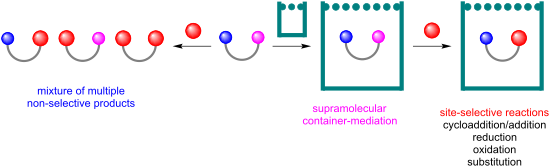
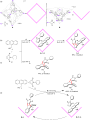
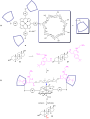
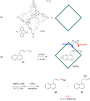
- increasing DMSO concentration, without the detection of any monohydrolyzed product. This work further demonstrated the striking ability of the water-soluble cavitand to mediate site-selective reactions. Conclusion To summarize, we have reviewed various site-selective reactions mediated by molecular






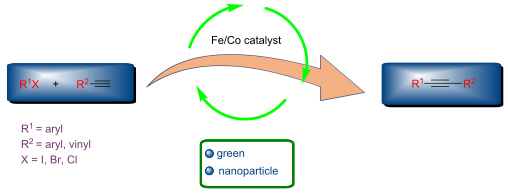
Recent developments and trends in the iron- and cobalt-catalyzed Sonogashira reactions
Beilstein J. Org. Chem. 2022, 18, 262–285, doi:10.3762/bjoc.18.31
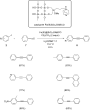
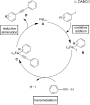
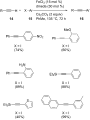
- for the effective Sonogashira coupling under aqueous conditions (Scheme 3) [22]. The coupling reaction was catalyzed by the nanoparticles in water between room temperature and 45 °C. Notably, the amount of Pd was below the detection limit. The reaction done in the presence of 1000 ppm of Pd ligated





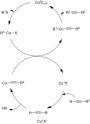


Anomeric 1,2,3-triazole-linked sialic acid derivatives show selective inhibition towards a bacterial neuraminidase over a trypanosome trans-sialidase
Beilstein J. Org. Chem. 2022, 18, 208–216, doi:10.3762/bjoc.18.24
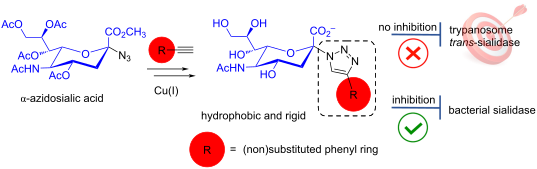
- both enzymes (Figure 3A) (and TcTS transferase activity in the presence of an acceptor substrate, such as lactose – Figure 3B) by releasing the fluorophore 4-methylumbelliferone (MU) for detection upon cleavage of the substrate 2'-(4-methylumbelliferyl) α-ᴅ-N-acetylneuraminic acid (MUNANA). Compounds



The role of chemistry in the success of oligonucleotides as therapeutics
Beilstein J. Org. Chem. 2022, 18, 197–199, doi:10.3762/bjoc.18.22

- oligonucleotide primers and probes for use in diagnostic testing kits for the detection of COVID-19 for tackling the pandemic. With this thematic issue, we express our sincere gratitude to all the scientists for their ground-breaking work to bring oligonucleotide therapeutics to the bedside. We also express our

Study on the interactions between melamine-cored Schiff bases with cucurbit[n]urils of different sizes and its application in detecting silver ions
Beilstein J. Org. Chem. 2021, 17, 2950–2958, doi:10.3762/bjoc.17.204

- host–guest interactions. Among them, Q[7]-TBT is selected as a UV detector for the detection of silver ions (Ag+). This work makes full use of the characteristics of each cucurbituril and melamine-cored Schiff base to construct a series of complexes and these are applied to metal detection. Keywords
- to yield different metal-organic frameworks [6][7][8][9][10][11], but also can be used as analytical reagents for the detection of different organic and inorganic substances [12][13][14]. Among the various central molecules for the synthesis of Schiff bases, melamine (2,4,6-triamino-s-triazine) has
- supermolecule polymer with TBT due to its larger cavity. Since Q[7] and TBT form a host–guest complex, the carboxyl group at the end of TBT and the carbonyl group of the Q[7] still have a strong ability to coordinate with metals. Therefore, Q[7]-TBT is selected for the detection of silver ions (Ag+) [32][33


First total synthesis of hoshinoamide A
Beilstein J. Org. Chem. 2021, 17, 2924–2931, doi:10.3762/bjoc.17.201
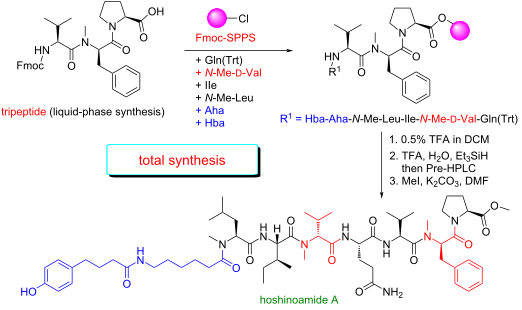
- % CH3CN/H2O and 0.1% TFA over 40 min were applied at a flow rate of 1.0 mL/min and detection at 220 nm. Method B: Linear gradient of 10–90–90–10% CH3CN/H2O and 0.1% TFA over 10 min (10–90 vol % MeCN over 6 min, 90–90 vol % over 3 min, 90–10 vol % MeCN over 1 min) were applied at a flow rate of 1.0 mL/min
- and detection at 220 nm. Preparative reverse-phase HPLC was performed by using Thermo Scientific Ultimate 3000 equipped with a Thermo Hypersil Gold (5 µm, 150 × 21.2 mm) column adpoting the following buffer systems: A: 0.1% TFA in water. B: 0.1% TFA in MeCN using a 10–90–90–10 vol % MeCN gradient (10



Biological properties and conformational studies of amphiphilic Pd(II) and Ni(II) complexes bearing functionalized aroylaminocarbo-N-thioylpyrrolinate units
Beilstein J. Org. Chem. 2021, 17, 2812–2821, doi:10.3762/bjoc.17.192
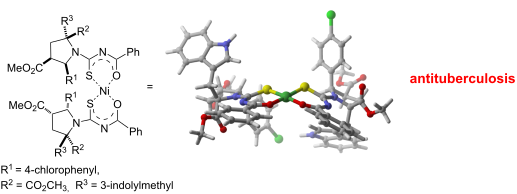
- from LECO detection system. General procedure for ligands and complexes Synthesis of selected ligands (L1–L3): The known pyrrolidines and aroylaminocarbo-N-thioylpyrrolidine compounds (L1–L3) were synthesized according to published procedures [15]. Preparation of Ni(II) and Pd(II) complexes (L1-M, L2-M

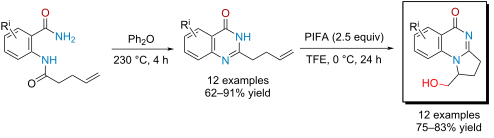
The PIFA-initiated oxidative cyclization of 2-(3-butenyl)quinazolin-4(3H)-ones – an efficient approach to 1-(hydroxymethyl)-2,3-dihydropyrrolo[1,2-a]quinazolin-5(1H)-ones
Beilstein J. Org. Chem. 2021, 17, 2787–2794, doi:10.3762/bjoc.17.189
- (doublet), t (triplet), dd (doublet of doublet), q (quartet), m (multiplet) and br s (broad singlet). LC–MS spectra were recorded on an Agilent 1100 Series high-performance liquid chromatograph equipped with a diode matrix with an Agilent LC\MSD SL mass selective detector. Mass spectrometric detection of


GlycoBioinformatics
Beilstein J. Org. Chem. 2021, 17, 2726–2728, doi:10.3762/bjoc.17.184
- tightly connected to mainstream bioinformatics. For example, databases and tools from genomics can be used for gaining information about genes encoding for glycosyltransferases, glycosidases, and glycan-binding proteins (lectins), and search engines initially designed for the detection of



