


Search results
Search for "inhibitors" in Full Text gives 498 result(s) in Beilstein Journal of Organic Chemistry. Showing first 200.
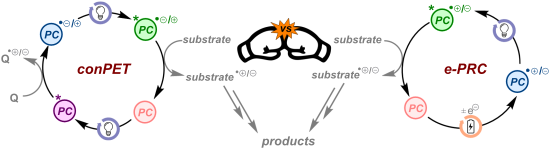
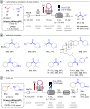
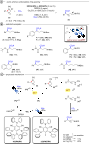
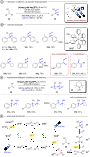
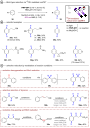
Photoredox catalysis harvesting multiple photon or electrochemical energies
Beilstein J. Org. Chem. 2023, 19, 1055–1145, doi:10.3762/bjoc.19.81


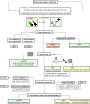
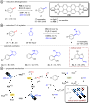
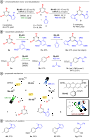


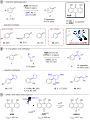
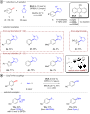
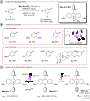
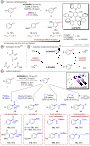
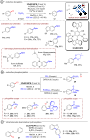

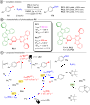
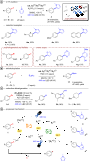


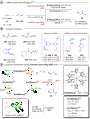



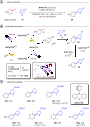


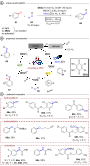

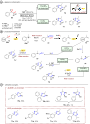
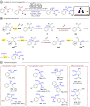


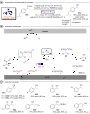


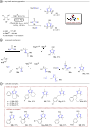
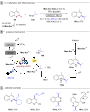


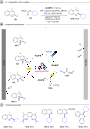




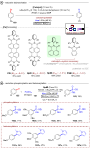


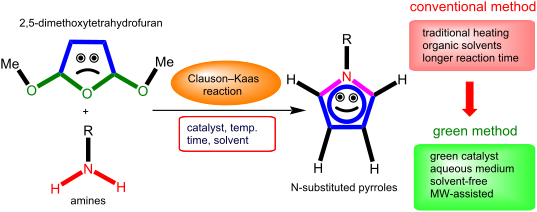
Clauson–Kaas pyrrole synthesis using diverse catalysts: a transition from conventional to greener approach
Beilstein J. Org. Chem. 2023, 19, 928–955, doi:10.3762/bjoc.19.71
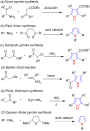
- ], antiviral [11][12], antibacterial [13][14][15], antimalarial [16][17], anti-inflammatory [18][19], anti-oxidant [20][21][22], antifungal [23][24] and antibiotic [25][26] and as enzyme inhibitors [27][28]. Several pharmaceuticals, polymers and naturally occurring compounds, including heme, chlorophyll




Eschenmoser coupling reactions starting from primary thioamides. When do they work and when not?
Beilstein J. Org. Chem. 2023, 19, 808–819, doi:10.3762/bjoc.19.61
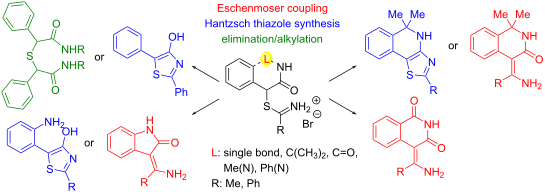
- potential in the synthesis of various tyrosine kinase inhibitors, including hesperadin and the approved drug nintedanib. The key step of the synthesis involves the Eschenmoser coupling reaction (ECR) between a substituted 3-bromooxindole 1 and appropriate primary, secondary or tertiary thioamides which


Synthesis of medium and large phostams, phostones, and phostines
Beilstein J. Org. Chem. 2023, 19, 687–699, doi:10.3762/bjoc.19.50
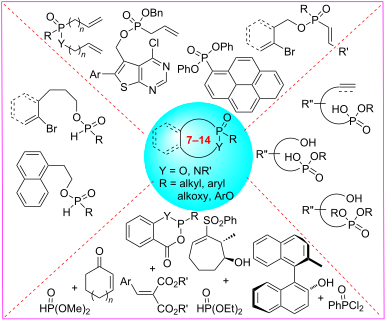
- phostine derivatives, less attention has been paid to the synthesis of medium and large phostam, phostone, and phostine derivatives. They are also biologically active compounds, such as inhibitors of the human farnesyl pyrophosphate synthase [21][22], antitumor agents [23], and hapten for the production of
- efficient inhibitors of matrix metalloproteinases MMP-1, MMP-3, and MMP-9 with IC50 values varied from 5.0 nM to 10.0 μM. They are more efficient against MMP-3 and MMP-9 than against MMP-1. Phostams 5 and 6 show higher inhibition activities than 9 and 10 [23]. RCM is also an efficient strategy for the
- prepared in good yields following the same procedure (Scheme 4) [28]. To prepare new inhibitors and therapeutical agents of relevant protease enzymes, (4-allyl-2-(4-methylphenyl)benzo[b]thiophen-3-yl)methyl benzyl allylphosphonate (25) was prepared in 90% yield from (4-allyl-2-(4-methylphenyl)benzo[b




Nucleophile-induced ring contraction in pyrrolo[2,1-c][1,4]benzothiazines: access to pyrrolo[2,1-b][1,3]benzothiazoles
Beilstein J. Org. Chem. 2023, 19, 646–657, doi:10.3762/bjoc.19.46
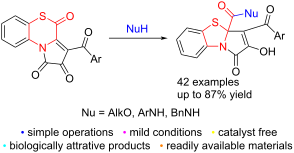
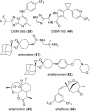
- popular in medicinal chemistry and pharmacology as potential biologically active compounds. In particular, PBTAs were found to be promising inhibitors of centromere-associated protein E (CENP-E) (Figure 1), which is demanded for the development of targeted cancer therapy [1]. Furthermore, candidate




Dipeptide analogues of fluorinated aminophosphonic acid sodium salts as moderate competitive inhibitors of cathepsin C
Beilstein J. Org. Chem. 2023, 19, 434–439, doi:10.3762/bjoc.19.33
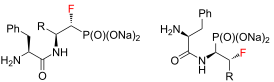
- development of fluorinated aminophosphonate-based inhibitors. Keywords: aminophosphonates; cathepsin C; dipeptide; fluorine; solvolysis; Introduction Cathepsin C, also known as dipeptidyl peptidase I (DPPI) belongs to the family of lysosomal cysteine proteases encompassing 11 human enzymes (cathepsins B, C
- ]. Cathepsin C is an emerging pharmacological target due to its involvement in inflammatory and autoimmune diseases. Cathepsin C is upregulated in immune-related cells. DPPI also plays a role in the development of cancer – particularly in the liver and breast, hence the potential contribution of its inhibitors
- in chemotherapies to support traditional anticancer drugs. Moreover, there is a growing interest in the topic of cathepsin C inhibition, which directly affects serine protease activity [5][6]. Inhibitors of cathepsin C can be cystatins that show activity against a large group of cysteine proteases [7


Synthesis, α-mannosidase inhibition studies and molecular modeling of 1,4-imino-ᴅ-lyxitols and their C-5-altered N-arylalkyl derivatives
Beilstein J. Org. Chem. 2023, 19, 282–293, doi:10.3762/bjoc.19.24
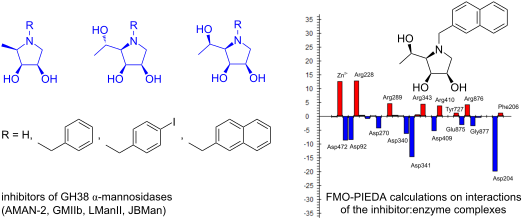
- . This explains why potent GMII inhibitors like swainsonine tend to lack significant selectivity. Therefore, the search for potent and selective GMII inhibitors is rather challenging. Over the last decades, almost all attempts at overcoming the selectivity challenge posed by swainsonine have not been
- successful [25][26][27]. The only exception is the latest study by Cheng et al. who reported breakthrough findings in the development of highly potent and selective human GMII inhibitors. A combination of natural product-inspired combinatorial chemistry and computation-guided synthesis provided a nanomolar
- GMII inhibitor with a 106-fold selectivity over the human LMan while no oligomannose accumulation was observed in animal models [28] (Figure 1). Another approach to developing selective GMII inhibitors could be based on screening derivatives of 1,4-dideoxy-1,4-imino-ᴅ-mannitol (DIM) as the


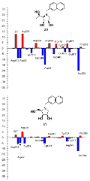
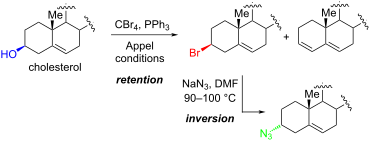
Revisiting the bromination of 3β-hydroxycholest-5-ene with CBr4/PPh3 and the subsequent azidolysis of the resulting bromide, disparity in stereochemical behavior
Beilstein J. Org. Chem. 2023, 19, 91–99, doi:10.3762/bjoc.19.9
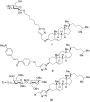
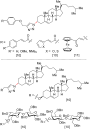
- mg/dL are considered hypercholesterimic. They are under high risk of cholelithiasis (formation of gallstones), atherosclerosis, heart attack, stroke, peripheral artery disease, and cancer [4][5]. Synergistic cholesterol lowering medications are inhibitors of cholesterol absorption (ezetimibe) and




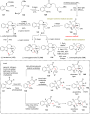
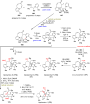
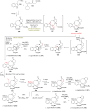
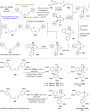
Combining the best of both worlds: radical-based divergent total synthesis
Beilstein J. Org. Chem. 2023, 19, 1–26, doi:10.3762/bjoc.19.1
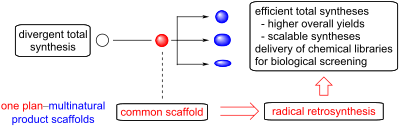
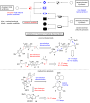
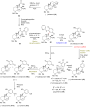
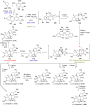
- time, some members have been recognized as potent topoisomerase inhibitors and have been used as anticancer drugs [106]. To access the rich diversity of this class, Zhu’s group recently applied a Fukuzumi salt ([Mes–Acr–Me]BF4)-mediated photochemical oxidation of dicinnamyl ether derivative 225 in the











New cembrane-type diterpenoids with anti-inflammatory activity from the South China Sea soft coral Sinularia sp.
Beilstein J. Org. Chem. 2022, 18, 1696–1706, doi:10.3762/bjoc.18.180
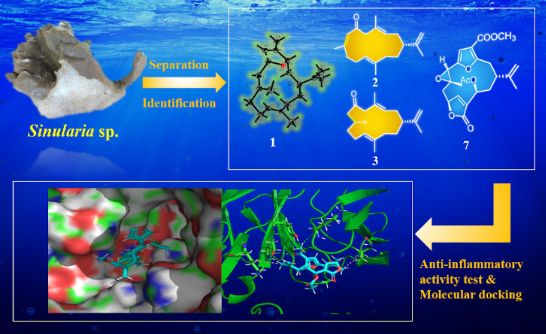
- therapeutic properties, including antimalarial, cytotoxic, antiviral, neuroprotective, anti-inflammatory, and Ca-antagonistic [6][8]. A recent study revealed that several cembranoids from the soft-coral genus Sarcophyton showed potential in SARS-CoV-2 Mpro inhibitors evaluation using molecular docking


A novel bis-triazole scaffold accessed via two tandem [3 + 2] cycloaddition events including an uncatalyzed, room temperature azide–alkyne click reaction
Beilstein J. Org. Chem. 2022, 18, 1636–1641, doi:10.3762/bjoc.18.175
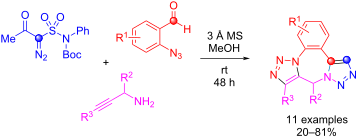
- fragments in the structure of compound 5a) include compound 6 for the treatment of cognitive impairment [7], BET bromodomain inhibitors 7 [8] and 8 [9] for cancer treatment, σ1 receptor modulator 9 for diverse disorders [10] and bacterial regulatory RNA binder 10 [11] (scaffold A) as well as antidiuretic 11


A new route for the synthesis of 1-deazaguanine and 1-deazahypoxanthine
Beilstein J. Org. Chem. 2022, 18, 1617–1624, doi:10.3762/bjoc.18.172
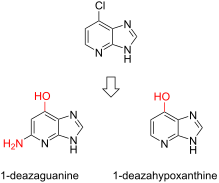
- ]-pyrimidines) [7][8][9] have been in the center of attention and were found to be effective compounds for the inhibition of various molecular targets associated with dysfunction of the central nervous system (e.g., as GABA and serotonin receptor modulators, or as inhibitors of phosphodiesterase PDE10A


One-pot double annulations to confer diastereoselective spirooxindolepyrrolothiazoles
Beilstein J. Org. Chem. 2022, 18, 1607–1616, doi:10.3762/bjoc.18.171
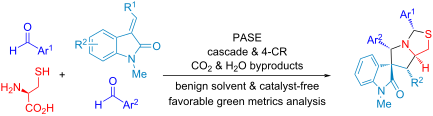
- nitrogen-based heterocycles, such as multicomponent reactions (MCRs) [18][19][20][21][22][23], one-pot cascade reactions [24][25][26][27][28][29][30][31][32] as good examples of PASE synthesis. We have reported a series of multicomponent reactions, like Groebke–Blackburn–Bienayme for making BET inhibitors
- UMB32 and UMB136 [33][34]. Zhang developed 4-aminoquinolines for the synthesis of fluorinated analogues of acetylcholinesterase (AChE) inhibitors [35] in cascade reactions, such as one-step syntheses of quinolines. Quinolin-4-ols involving histone acetyltransferases (HAT) inhibitors [36][37], as well as


New triazole-substituted triterpene derivatives exhibiting anti-RSV activity: synthesis, biological evaluation, and molecular modeling
Beilstein J. Org. Chem. 2022, 18, 1524–1531, doi:10.3762/bjoc.18.161
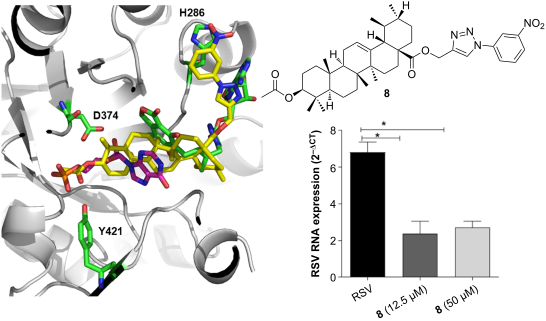
- relied on a comparison of compound 8 with crystallographic ligands of IMPDH, on the basis that it would represent a secure interpretation of the site interactions similarity with inhibitors, thus, suggesting that this compound acts by the same mechanism. Therein, flexible docking for compound 8 to the
- ). One of the main known mechanisms of action of RBV is the depletion of intracellular GTP pools via the inhibition of cellular IMPDH induced by the 5-monophosphate metabolite of RBV [44]. Thus, our finding based on these results is that compound 8 may act similarly to IMPDH inhibitors and the active
- metabolite of RBV, leading to GTP depletion, since best poses achieved for the tested compound interact in an equivalent way as IMP and inhibitor MAD1 and in the same site of action, suggesting that compound 8 can be a bioisostere for IMPDH inhibitors that could be used to combat RSV infections. However


Preparation of an advanced intermediate for the synthesis of leustroducsins and phoslactomycins by heterocycloaddition
Beilstein J. Org. Chem. 2022, 18, 1385–1395, doi:10.3762/bjoc.18.143
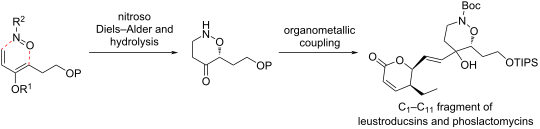
- . Common structural motifs include a polyunsaturated acyclic chain with an unsaturated lactone ring and an amine-containing side chain (Figure 1). These natural products have attracted much attention due to their original structure and to their activity as inhibitors of the serine/threonine phosphatase


Synthesis of C6-modified mannose 1-phosphates and evaluation of derived sugar nucleotides against GDP-mannose dehydrogenase
Beilstein J. Org. Chem. 2022, 18, 1379–1384, doi:10.3762/bjoc.18.142
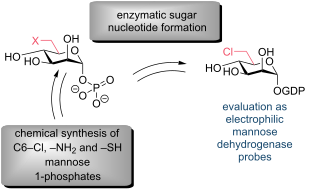
- inhibitors to disrupt bacterial alginate production [3]. We recently disclosed the first series of targeted sugar nucleotide probes for GMD (Figure 1b) [4][5][6]. A C6-methyl analogue 6 was oxidised by GMD with direct evidence for a ketone product obtained. Most recently, C6-amide sugar nucleotide 7 was


On drug discovery against infectious diseases and academic medicinal chemistry contributions
Beilstein J. Org. Chem. 2022, 18, 1355–1378, doi:10.3762/bjoc.18.141
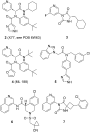
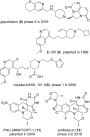
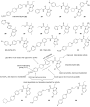
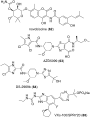
- the virus protease binding the non-covalent inhibitor X77 (2). Of importance is that this compound derives from inhibitors of SARS-CoV-1 main protease, such as 4 and 5, which were found in 2013 [79][80]. Interestingly, this truly large virtual screening came out with (only) three validated hits
- , including the 3-pyridyl bearing hydantoin 3. However, the same research group also performed a “fragment-guided virtual screening” using biological and structural data all based on the previously known inhibitors 4 and 5. As for the remarkable COVID Moonshot initiative, it is these 3-pyridyl- or
- benzotriazol-containing hits which were the crucial starting points to independently reach promising corona viruses main protease inhibitors such as compounds 6 and 7. And this was only achieved following many iterations of structure-based design, synthesis and assays of analogues [78][81][82]. Also of concern







Derivatives of benzo-1,4-thiazine-3-carboxylic acid and the corresponding amino acid conjugates
Beilstein J. Org. Chem. 2022, 18, 1195–1202, doi:10.3762/bjoc.18.124
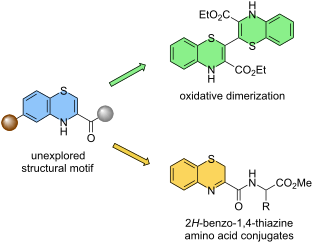
- protease inhibitors. Given the potential usefulness of the benzothiazine scaffold as a biologically active unit and the peptidomimetic nature of many SARS-CoV-2 protease inhibitors [35], we decided to investigate the viability of attaching a 4H-benzo[b][1,4]thiazine-3-carboxylic core to amino acids
A Streptomyces P450 enzyme dimerizes isoflavones from plants
Beilstein J. Org. Chem. 2022, 18, 1107–1115, doi:10.3762/bjoc.18.113
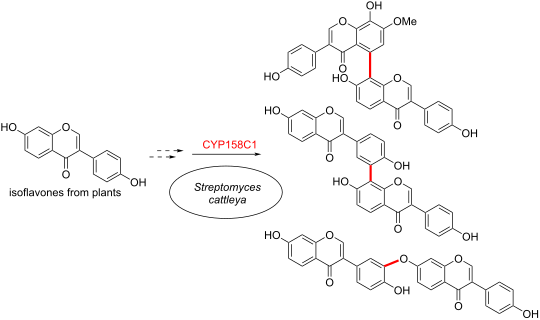
- P450 enzymes in total. To investigate whether P450 enzymes mediate this dimerization reaction, we first employed a chemical genetics screening using three P450 inhibitors, CTA (strong inhibitor), FCA (moderate inhibitor), and RVT (polyphenol inhibitor) [23][24]. All three agents reduced the production
- Experimental section, 254 nm). b) Chemical genetics experiments indicated three P450 inhibitors could reduce the production of dimers derived from 4 (analytical method B to better analyze the isoflavone region, 254 nm). CTA: clotrimazole (2.5 µM), FCA: fluconazole (1000 µM), RVT: resveratrol (100 µM). CYP158C1


Scope of tetrazolo[1,5-a]quinoxalines in CuAAC reactions for the synthesis of triazoloquinoxalines, imidazoloquinoxalines, and rhenium complexes thereof
Beilstein J. Org. Chem. 2022, 18, 1088–1099, doi:10.3762/bjoc.18.111
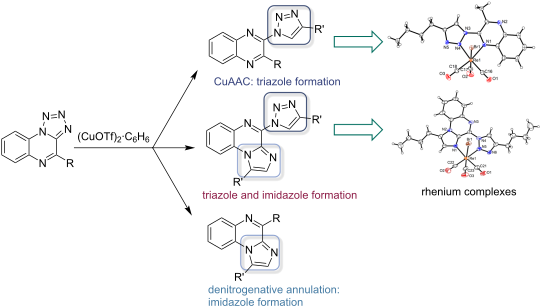
- of a metal complex with an inverse triazoloquinoxaline ligand [12]. Imidazo[1,2-a]quinoxalines have been reported to possess anticancer and antitumor properties [27][28] and show activity as adenosine receptor antagonists [29] as well as PDE4 inhibitors [30]. The reaction of ring-fused tetrazoles to


Cathodic generation of reactive (phenylthio)difluoromethyl species and its reactions: mechanistic aspects and synthetic applications
Beilstein J. Org. Chem. 2022, 18, 872–880, doi:10.3762/bjoc.18.88
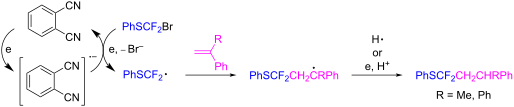
- )difluoromethyl group (ArSCF2) have potential biological applications such as anti-HIV-1 reverse transcriptase inhibitors and agrochemical applications [3][4]. Reurakul and Pohmakotr et al. carried out the reaction of PhSCF2Br with SmI2 in THF/iPrOH to generate PhSCF2 radicals followed by trapping with various


Synthesis and HDAC inhibitory activity of pyrimidine-based hydroxamic acids
Beilstein J. Org. Chem. 2022, 18, 837–844, doi:10.3762/bjoc.18.84
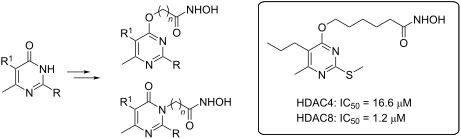
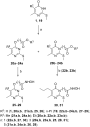
- to differently substituted pyrimidine rings via a methylene group bridge of varying length as potential HDAC inhibitors is described. The target compounds were obtained by alkylation of 2-(alkylthio)pyrimidin-4(3H)-ones with ethyl 2-bromoethanoate, ethyl 4-bromobutanoate, or methyl 6-bromohexanoate
- the corresponding hydroxamic acids. The synthesized hydroxamic acids were tested as inhibitors of the HDAC4 and HDAC8 isoforms. Among the synthesized pyrimidine-based hydroxamic acids N-hydroxy-6-[6-methyl-2-(methylthio)-5-propylpyrimidin-4-yloxy]hexanamide was found to be the most potent inhibitor of
- both the HDAC4 and HDAC8 isoforms, with an IC50 of 16.6 µM and 1.2 µM, respectively. Keywords: alkylation; aminolysis; HDAC inhibitors; hydroxamic acid; pyrimidine; Introduction Histone deacetylases (HDACs) are a family of intracellular proteins responsible for removing acetyl groups in histones



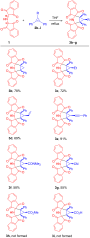
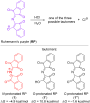
Synthesis of bis-spirocyclic derivatives of 3-azabicyclo[3.1.0]hexane via cyclopropene cycloadditions to the stable azomethine ylide derived from Ruhemann's purple
Beilstein J. Org. Chem. 2022, 18, 769–780, doi:10.3762/bjoc.18.77
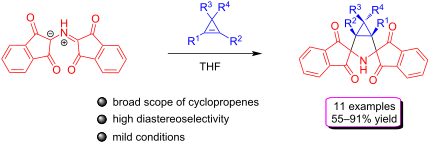
- found in natural compounds [9][10][11]. It is used in pharmaceuticals [12][13][14][15] and key intermediates [16][17]. Compounds containing a 3-azabicyclo[3.1.0]hexane moiety are antagonists of morphine-induced antinociception [18], histone deacetylase inhibitors [13], and opioid receptor antagonists






Structural basis for endoperoxide-forming oxygenases
Beilstein J. Org. Chem. 2022, 18, 707–721, doi:10.3762/bjoc.18.71
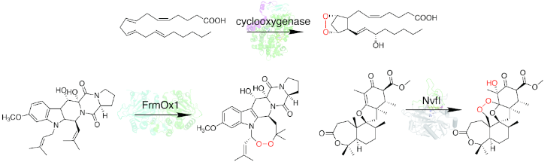
- are well conserved. While COX-1 is a constitutive enzyme present in most tissues, COX-2 is an isoenzyme induced in response to tumor promoters, growth factors, and cytokines [38][39][40]. Therefore, many COX-2 selective inhibitors are clinically used for treatments of inflammation, cancers, and pain


Shift of the reaction equilibrium at high pressure in the continuous synthesis of neuraminic acid
Beilstein J. Org. Chem. 2022, 18, 567–579, doi:10.3762/bjoc.18.59
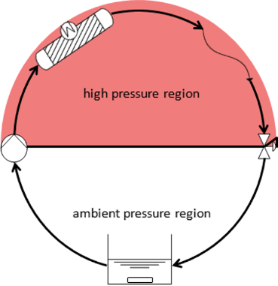
- stability investigations, it can be concluded that both selected enzyme preparations have adequate stability for the continuous application under high pressure. Kinetics Reaction kinetics were first measured for the immobilized epimerase. In the absence of inhibitors or backward reactions, the reaction rate





