


Search results
Search for "nanotechnology" in Full Text gives 80 result(s) in Beilstein Journal of Organic Chemistry.
Beilstein Journal of Organic Chemistry: Open Access comes of age in Organic Chemistry
Beilstein J. Org. Chem. 2012, 8, 1284–1286, doi:10.3762/bjoc.8.145
- the scientific content and quality themselves. Of particular note are the lab videos that are made to correspond to a paper published in the Beilstein Journal of Organic Chemistry or in the Beilstein Journal of Nanotechnology. This combination allows scientists to use a visual medium to go further in
Liquid-crystalline nanoparticles: Hybrid design and mesophase structures
Beilstein J. Org. Chem. 2012, 8, 349–370, doi:10.3762/bjoc.8.39
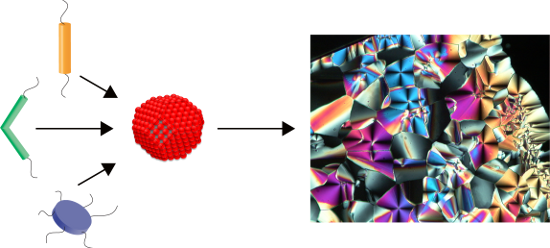
- ; Introduction The term "nanotechnology" has gone far beyond the realms of universities and research laboratories and is understood by scientist and layman alike to be synonymous with "high-tech" and "futuristic", promising to bring about tremendous advances in our quality of life. By utilising a "bottom-up
- molecular machines and devices, with dimensions on the order of atoms and molecules, capable of performing specific predetermined tasks [2]. At the core of this nanotechnology revolution lies the nanoparticle (NP), the most common of which being metallic particles (including alloys and oxides) with at least
- morphology (size, shape and roughness) and can be manipulated by coating with suitable structure-directing agents. Amongst the techniques used to assemble NPs, self-assembly methods show immense promise towards achieving the ambitious results expected from the field of nanotechnology research [23]. Liquid





![[Graphic 5]](/bjoc/content/inline/1860-5397-8-39-i5.png?max-width=637&scale=1.18182) phase of Au@C12/13 recorded with the beam (a) parallel to the
phase of Au@C12/13 recorded with the beam (a) parallel to the ![[Graphic 6]](/bjoc/content/inline/1860-5397-8-39-i6.png?max-width=637&scale=1.18182) pla...
pla...


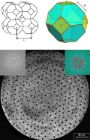
![[Graphic 8]](/bjoc/content/inline/1860-5397-8-39-i8.png?max-width=637&scale=1.18182) symmetry composed of truncated octahedrons. Top right:...
symmetry composed of truncated octahedrons. Top right:...


Highly efficient cyclosarin degradation mediated by a β-cyclodextrin derivative containing an oxime-derived substituent
Beilstein J. Org. Chem. 2011, 7, 1543–1554, doi:10.3762/bjoc.7.182
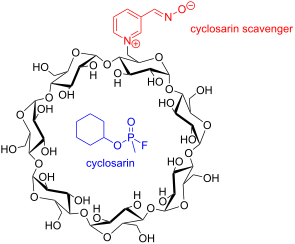
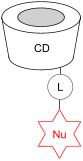
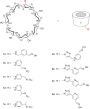
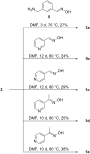
- binding properties, and their relatively straightforward chemical modification have made cyclodextrins indispensable tools in applications such as sensing [2], nanotechnology [3][4], polymer chemistry [5][6][7][8], medicinal chemistry [9][10], food chemistry [11], and others. Importantly, the scope of







Symmetry breaking and structure of a mixture of nematic liquid crystals and anisotropic nanoparticles
Beilstein J. Org. Chem. 2010, 6, No. 74, doi:10.3762/bjoc.6.74
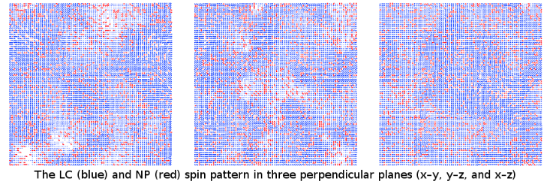
- an important role in the emerging field of nanotechnology and also in composites with extraordinary material properties. These mixtures can, in general, exhibit properties which are not encountered in either of the isolated components, thus opening the door to new applications. Of particular interest



Synthesis of deep- cavity fluorous calix[4]arenes as molecular recognition scaffolds
Beilstein J. Org. Chem. 2008, 4, No. 36, doi:10.3762/bjoc.4.36
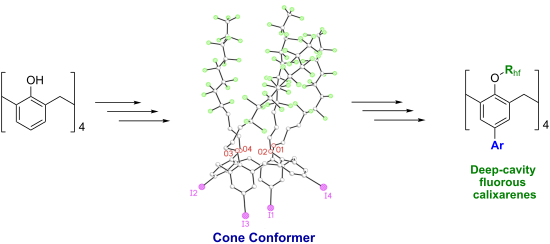
- ; organofluorine; (perfluoroalkyl)alkyl aryl ethers; Introduction Calixarenes [1] are one of the most useful types of macrocyclic scaffolds. Since first reported by Zinke and Ziegler [2], calix[4]arenes have been used for a variety of molecular recognition, nanotechnology, and supramolecular applications. These



Other Beilstein-Institut Open Science Activities



