Search results
Search for "protecting group" in Full Text gives 473 result(s) in Beilstein Journal of Organic Chemistry. Showing first 200.
Synthesis of ether lipids: natural compounds and analogues
Beilstein J. Org. Chem. 2023, 19, 1299–1369, doi:10.3762/bjoc.19.96
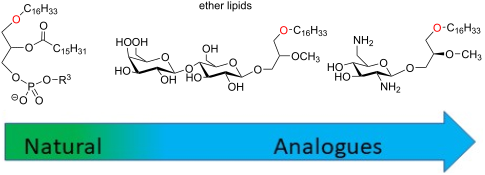
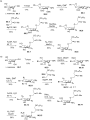
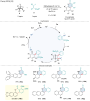
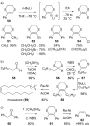
- intermediate 6.3 (ᴅ- or ʟ-threitol) that was then alkylated with mesityl lipid alcohol to produce 6.4 [80][81]. The acetal protecting group was removed in acidic conditions and then the intermediate 6.5 was subjected to oxidative cleavage to yield an aldehyde that was reduced with NaBH4 to produce 6.6a,b
- 1H-tetrazole to produce the trialkyl phosphite 8.3 that was oxidized with tert-butyl hydroperoxide to produce phosphate 8.4. Then, β-elimination of the cyanoethyl protecting group produced PAF with a global yield of 70%. The limit of this method arises from the instability of the precursor 8.1 for
- deprotonation of solketal in DMF followed by the addition of oleyl alcohol tosylate. 9.3 was isolated after the hydrolysis in acidic conditions of the acetal protecting group. The protection of the primary alcohol required a protecting group that can be deprotected without affecting the C=C double bond of the






Aromatic C–H bond functionalization through organocatalyzed asymmetric intermolecular aza-Friedel–Crafts reaction: a recent update
Beilstein J. Org. Chem. 2023, 19, 956–981, doi:10.3762/bjoc.19.72

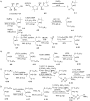
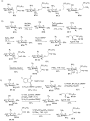
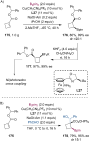
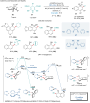
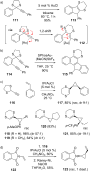
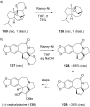
- of the Boc-protecting group with the Teoc group then gave phenol 136. Compound 136 was then subjected to a highly diastereoselective oxidative phenolic coupling giving fused tetracyclic architecture 137. Follow-up acid-mediated intramolecular aza-Michael addition and subsequent alkene reduction




Enolates ambushed – asymmetric tandem conjugate addition and subsequent enolate trapping with conventional and less traditional electrophiles
Beilstein J. Org. Chem. 2023, 19, 593–634, doi:10.3762/bjoc.19.44
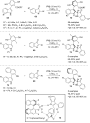
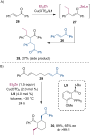
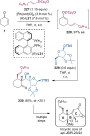
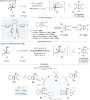
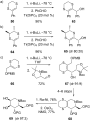
- been shown to impart high levels of enantioselectivity for these ketones [46]. We performed the conjugate addition for 2 h and then added imine 58 having a tosyl protecting group. The workup allowed the isolation of domino products 59 as a mixture of diastereomers with dr 3:2 and enantiomeric purities
- several imines bearing various N-protecting groups [48]. We have argued that this protecting group could influence the enolate addition. Indeed, an effect of the nitrogen protecting group was observed. Interestingly, small sulfonyl-based protecting groups led to the (R,R,S)-diastereoisomer of the product
- 61. On the other hand, the sterically bulky diphenylphosphorane group afforded the (R,R,R)-diastereoisomer 63 as the main product. The large protecting group likely overrides the repulsive interaction between the enolate and a phenyl group in a preferred synclinal Mg-bound arrangement of the reagents









Transition-metal-catalyzed domino reactions of strained bicyclic alkenes
Beilstein J. Org. Chem. 2023, 19, 487–540, doi:10.3762/bjoc.19.38
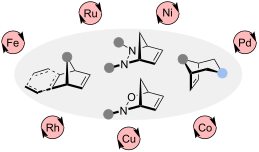
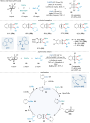
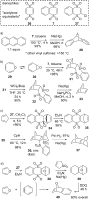
- -butyldimethylsilyl-protecting group resulted in the corresponding 1,5-enyne only being produced in a 33% yield. Several different norbornene derivatives were explored and gave the anticipated exo,exo-difunctionalized product in good yield. In contrast, when using an ethylene-bridged bicycloalkene to generate the
- ]-sigmatropic rearrangement of the diazabicycle 47 to form the allylic carbazate intermediate 51. Nucleophilic attack of an organomagnesium, or organocuprate, in an anti SN2’ fashion on 52 furnish the final ring-opened product 49. The authors note the use of a carbamate protecting group was crucial for the



















Synthesis, α-mannosidase inhibition studies and molecular modeling of 1,4-imino-ᴅ-lyxitols and their C-5-altered N-arylalkyl derivatives
Beilstein J. Org. Chem. 2023, 19, 282–293, doi:10.3762/bjoc.19.24
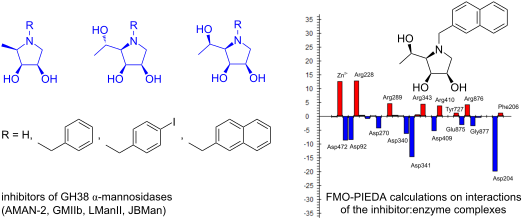
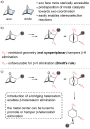
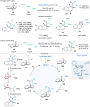
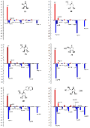
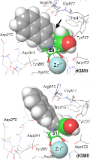
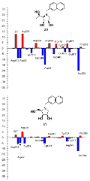
- -benzyl group with the Cbz group, trityl ether hydrolysis, oxidation of the liberated OH group, and stereoselective addition of MeMgBr to the resulting aldehyde functionality. Hydrogenolysis of the Cbz protecting group in 13 followed by N-alkylation afforded pyrrolidines 14–16 which after acidic


Strategies to access the [5-8] bicyclic core encountered in the sesquiterpene, diterpene and sesterterpene series
Beilstein J. Org. Chem. 2023, 19, 245–281, doi:10.3762/bjoc.19.23
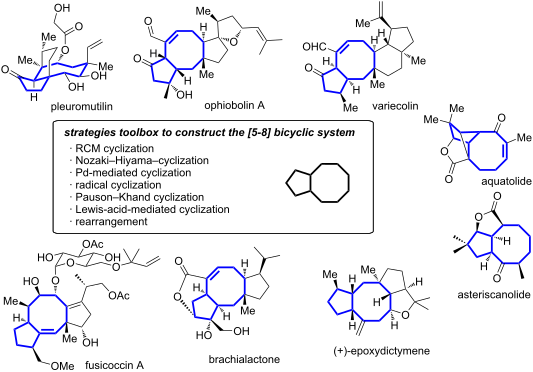
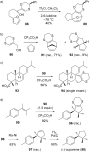
- reaction has never been used in the synthesis of natural products before this report, and no β-elimination of the silyloxy group was observed, although this often occurs in such systems [26]. The installation of the two alkenes in 37 required 13 additional steps, and further protecting group manipulations
- were necessary to give compound 38 as a precursor for the late-stage RCM cyclization. This ring formation was very challenging and necessitated extended optimization. Indeed, during the course of the RCM a dramatic effect of the OH-protecting group on the cyclopentane unit was observed. The presence of
- a TBDPS substituent in compound 40 was assumed unfavorable, since this bulky residue generates a steric hindrance precluding the cyclization (Scheme 6, path A) [27]. Its replacement by a sterically less demanding benzyl protecting group (compound 44) allowed the reaction to occur (Scheme 6, path B


1,4-Dithianes: attractive C2-building blocks for the synthesis of complex molecular architectures
Beilstein J. Org. Chem. 2023, 19, 115–132, doi:10.3762/bjoc.19.12
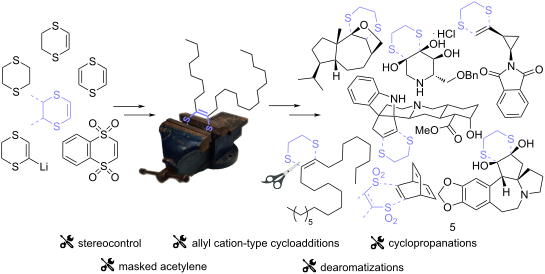
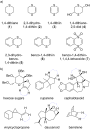
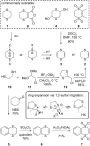
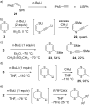
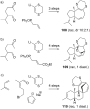
- rapid build-up of target molecules (see Scheme 1a) [7]. Once the important skeletal carbon–carbon bonds have been formed around the thioketal carbon, the sulfur-heterocycle can perform its primary function as a temporary protecting group and be chemoselectively hydrolyzed to afford a carbonyl functional
- , control of the reactivity of Raney nickel (which always has to be employed in excess and in a heterogenous system), can be quite time consuming. Finally, the 1,4-dithiane or -dithiin ring system need not necessarily be considered as a temporary tethering of protecting group, but can also become an











Combining the best of both worlds: radical-based divergent total synthesis
Beilstein J. Org. Chem. 2023, 19, 1–26, doi:10.3762/bjoc.19.1
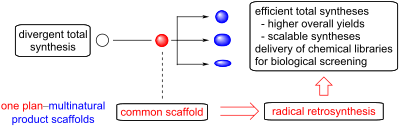
- of atom economy and protecting-group-free synthesis dominating the field of total synthesis. In this new era, total synthesis is moving towards natural efficacy by utilizing both the biosynthetic knowledge of divergent synthesis and the latest developments in radical chemistry. This contemporary
- protecting-group-free synthesis [13], are gradually drawing more and more the interest of organic chemists as a sustainable way to deliver structurally diverse chemical libraries for biological screening. The current review is focusing on selected examples utilizing a radical-based divergent total synthesis
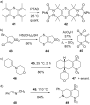
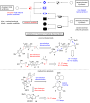
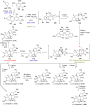
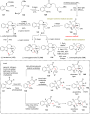
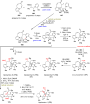
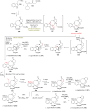
- products kadsulignan E (235) and heteroclitin J (236) depending on the appropriate substitution of DBCODs. Selection of radical termination at the 3- and 1-positions, respectively, can be engineered by the strategic incorporation of a TES protecting group at the 1-position (see 243) for heteroclitin J (236










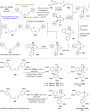

Total synthesis of grayanane natural products
Beilstein J. Org. Chem. 2022, 18, 1707–1719, doi:10.3762/bjoc.18.181
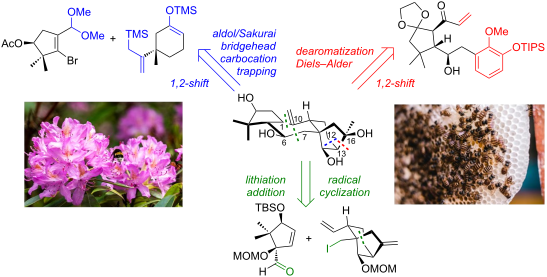
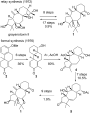
- had previously reported a similar rearrangement for the synthesis of a grayanane-type skeleton [21]. Further methylation and protecting group interconversions lead to an advanced tricyclic structure 5, which could be further elaborated into relay intermediate 1. Although Matsumoto’s approach does not
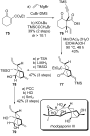
- substituted cyclohexanone 9, corresponding to the future C ring [24]. After deprotonation, the C3 position was stereoselectively alkylated using propargyl bromide, and the benzyl protecting group was cleaved with FeCl3, leading to spontaneous lactone closure. A Luche reduction stereoselectively converted
- the PMB protecting group, Dess–Martin oxidation, and SmI2-induced cyclization. This last step was highly selective, giving solely the intermediate 17. The synthesis was then pursued by the hydroboration–oxidation of the monosubstituted alkene, followed by stereoselective epoxidation of the 1,1





A new route for the synthesis of 1-deazaguanine and 1-deazahypoxanthine
Beilstein J. Org. Chem. 2022, 18, 1617–1624, doi:10.3762/bjoc.18.172
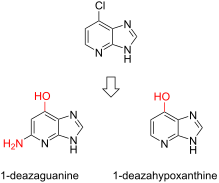
- alcohol. We build on a commercially available imidazopyridine derivative and conceived a protecting group strategy to enhance solubility and selectivity to orchestrate the installation of the exocyclic amino and hydroxy groups. Results and Discussion 1-Deazaguanine Previously described syntheses for 1
- tetrahydropyranyl protecting group. The final step was then accomplished by hydrogenation of benzyl ether 31 to obtain 1-deazahypoxanthine (30) in 44% overall yield. Conclusion We have developed convenient synthetic routes for 1-deazaguanine (11) and 1-deazahypoxanthine (30). Starting from readily accessible 6-iodo


Solid-phase total synthesis and structural confirmation of antimicrobial longicatenamide A
Beilstein J. Org. Chem. 2022, 18, 1560–1566, doi:10.3762/bjoc.18.166
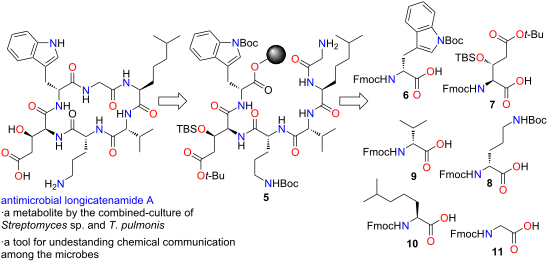
- )-protected ᴅ-serine 12 (Scheme 2). Treatment of the olefin 15 with trifluoroacetic acid (TFA) cleaved the Boc protecting group and the acetonide to deliver unsaturated amino alcohol 16. The amino group in 16 was protected by the fluorenylmethyloxycarbonyl (Fmoc) protecting group for solid-phase peptide



Preparation of an advanced intermediate for the synthesis of leustroducsins and phoslactomycins by heterocycloaddition
Beilstein J. Org. Chem. 2022, 18, 1385–1395, doi:10.3762/bjoc.18.143
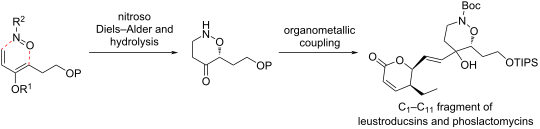
- phosphates can be hydrolysed under basic, acidic or reductive conditions [26]. Although acidic conditions could not be used due to the lability of the nitrogen Boc-protecting group, we found that the TIPS-protected cycloadduct 10b could be cleanly transformed into the ketone 11b with excess Red-Al [28
- ], together with a small amount of the over reduced alcohol 12b, which could be reoxidized to 11b (Scheme 4). Other substrates failed to deliver appreciable yields of the ketone under the same conditions. These studies validate the role of TIPS ether as protecting group for the primary alcohol. At this stage
- we wondered whether it was possible to perform the whole synthetic sequence with this protecting group. Accordingly, the enol phosphate 13 was synthesized in five steps (26% overall yield) from 1,4-butanediol (Scheme 5). Since cycloaddition with the Wightman reagent 6 releases hydrogen chloride in


First series of N-alkylamino peptoid homooligomers: solution phase synthesis and conformational investigation
Beilstein J. Org. Chem. 2022, 18, 845–854, doi:10.3762/bjoc.18.85
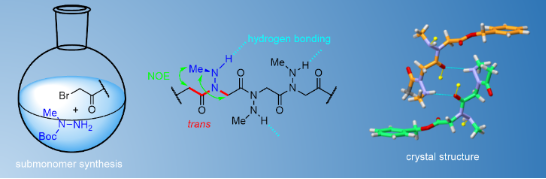
- -methylhydrazine as a submonomer was adopted in this work (Figure 2). Benzyl bromoacetate, rather than tert-butyl bromoacetate, successfully used in the past for the synthesis of peptoids in solution [22], was chosen as the starting substrate to ensure orthogonality of the C-terminal protecting group with respect


New synthesis of a late-stage tetracyclic key intermediate of lumateperone
Beilstein J. Org. Chem. 2022, 18, 653–659, doi:10.3762/bjoc.18.66

- a Fischer indole synthesis. The inexpensive starting material, the efficient synthetic steps, and the avoidance of the borane-based reduction step provide a reasonable potential for scalability. Keywords: drug substance; indole synthesis; key intermediate; protecting group; telescoping


Bioinspired tetraamino-bisthiourea chiral macrocycles in catalyzing decarboxylative Mannich reactions
Beilstein J. Org. Chem. 2022, 18, 486–496, doi:10.3762/bjoc.18.51
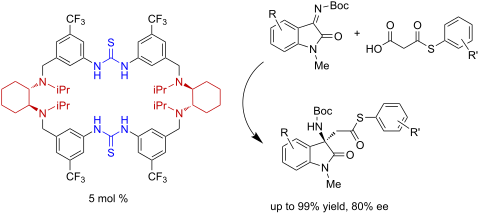
- ), the corresponding products 8b–g were obtained in only moderate yields with decreased selectivity. Replacing the Boc-protecting group on the imine site by a Cbz group led to a largely decreased selectivity (8h). For a series of substrates with various substituents on the 5, 6, or 7-position, including




Menadione: a platform and a target to valuable compounds synthesis
Beilstein J. Org. Chem. 2022, 18, 381–419, doi:10.3762/bjoc.18.43
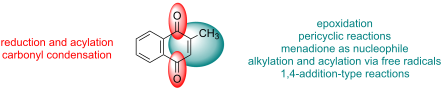
- was possible. However, the high conversion rates of the reagents to the desired products were not reflected in the isolated product yields, which was attributed to the workup and purification processes. It was also possible to demonstrate a moderate influence of the N-protecting group on the reaction


Site-selective reactions mediated by molecular containers
Beilstein J. Org. Chem. 2022, 18, 309–324, doi:10.3762/bjoc.18.35
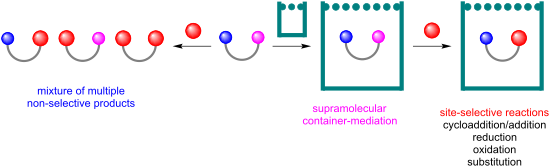
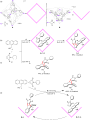
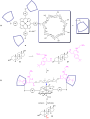
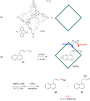
- could be regarded as a protective group by shielding the internal alkenyl site. In 2016, the Rebek group achieved the site-selective reduction of an α,ω-diazide compound by trimethylphosphine (PMe3) in aqueous solution with a cavitand host as the protecting group for one of the azide sites (Figure 5
- , and factors like steric and electronic effects of the nucleophile and substrate and the polarity of the solvent would influence the product ratio [75]. Here, as illustrated above, the authors introduced the cage host J as the noncovalent protecting group of the internal reactive sites, which directed






Unexpected chiral vicinal tetrasubstituted diamines via borylcopper-mediated homocoupling of isatin imines
Beilstein J. Org. Chem. 2022, 18, 303–308, doi:10.3762/bjoc.18.34
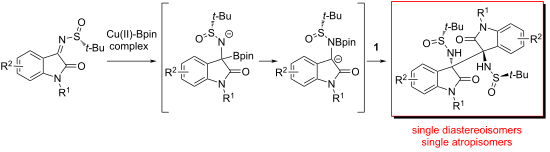
- conformer. Aiming to generalize the discovered transformation, a brief scope of the reaction with respect to the N-tert-butanesulfinyl imine substrate was next performed (Figure 2). The protecting group R1 on the oxindole nitrogen atom was found to have a moderate effect on the reactivity, with R1 = Bn


Regioselectivity of the SEAr-based cyclizations and SEAr-terminated annulations of 3,5-unsubstituted, 4-substituted indoles
Beilstein J. Org. Chem. 2022, 18, 293–302, doi:10.3762/bjoc.18.33
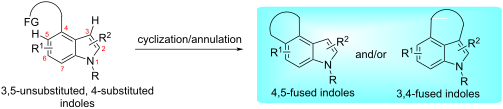
- cyclization is observed. Moreover, the use of the electron-withdrawing protecting group on the indole N atom could favor the formation of 4,5-fused indoles by decreasing the nucleophilicity at the indole C3 position. However, detailed studies of the effect of the electronic nature of the indole NH protecting
- group on the regioselectivity are yet to be reported for SEAr-based intramolecular cyclization and annulation reactions of 3,5-unsubstituted, 4-substituted indoles. Such studies in this area will certainly aid in elucidating the regioselectivity more precisely. SEAr-based, CAr–C bond-forming cyclization


Synthesis and late stage modifications of Cyl derivatives
Beilstein J. Org. Chem. 2022, 18, 174–181, doi:10.3762/bjoc.18.19
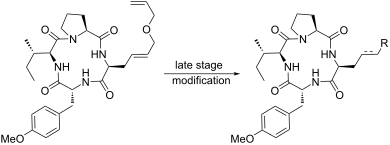
- suitable protected linear precursor A (Scheme 2, PG: protecting group), the resulting carboxylic acid obtained can directly be activated and subjected to cyclization. If the glycine allyl ester is incorporated as the last building block into the C-terminus of the peptide, this concept should provide a high

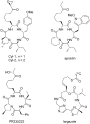


Asymmetric organocatalytic Michael addition of cyclopentane-1,2-dione to alkylidene oxindole
Beilstein J. Org. Chem. 2022, 18, 167–173, doi:10.3762/bjoc.18.18
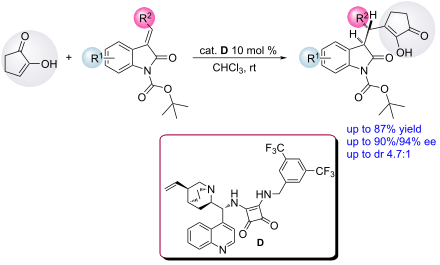
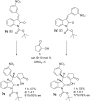
- because of the longer time needed. Next, we screened different protecting groups for the oxindole. Previously, Boc-protected oxindole 2a gave us the product in 75% yield, in dr 2.6:1 and in ee 90%/94% (Scheme 1, 3a). With a Cbz-protecting group the enantioselectivity decreased to 82%/88% (Scheme 1, 3b
- ). The use of a sterically more demanding Fmoc-protecting group decreased the ee values even more for the minor diastereoisomer (Scheme 1, 3c). Surprisingly, with benzyl-protected oxindole, the reaction did not proceed (Scheme 1, 3d), which implies that the carbonyl group of the carbamate moiety in the N
- -protecting group and electron-withdrawing properties of the protection groups are essential for coordination with the catalyst and for the reactivity of the Michael acceptor. Using a tosyl-protected oxindole the reaction was sluggish, the yield was low and the enantioselectivity could not be determined


Synthesis and bioactivity of pyrrole-conjugated phosphopeptides
Beilstein J. Org. Chem. 2022, 18, 159–166, doi:10.3762/bjoc.18.17
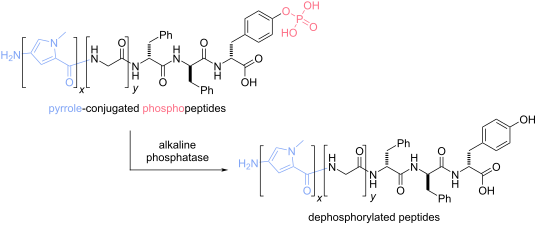
- in the backbone of 2a leads to 7, which bears an additional positive charge compared to 2a. A ᴅ-tetraleucine (l4) replaces ᴅ-diphenylalanine (ff) in 2d and 2e to form 8a and 8b, respectively. Adding a Boc protecting group at the N-terminus of 2a produces 9. Attaching a guanidinoacetic acid motif to
- , we introduced the N-methylpyrrole (Py) units into the peptides obtained via solution-phase amide bond formation to produce 2a–h, 3a,b, 4a,b, 5a,b, 6a–c, 7, 8a,b, 11a,b, 12a–c, 13, 14, and 15a–c. We conjugated two Py units successively to the peptide ffpy and kept the Boc protecting group of the
- cytotoxicity, respectively. Capping the N-terminus with a Boc-protecting group (9) or a guanidinoacetic acid motif (10a and 10b) renders the molecules with higher cytotoxicity (resulting in cell viabilities of about 70%) than those of 2f and 2g. Compounds without phosphorylation (11a, 11b and 12a–c) show



Ready access to 7,8-dihydroindolo[2,3-d][1]benzazepine-6(5H)-one scaffold and analogues via early-stage Fischer ring-closure reaction
Beilstein J. Org. Chem. 2022, 18, 143–151, doi:10.3762/bjoc.18.15
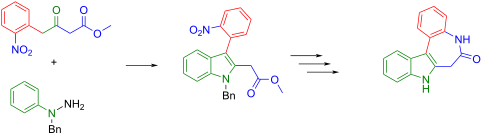
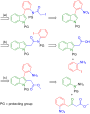
- groups in one step produced 16 in 86% yield. However, attempts to perform the ring-closure reaction of the Boc-protected amide 16 by an intramolecular Heck reaction failed and led to degradation of the starting material. Most likely, the electron-withdrawing tert-butyloxycarbonyl protecting group
- hampered this transformation [24]. Therefore, the same synthetic way was repeated with ethoxymethyl ether as the protecting group to give 17. The ESI mass spectrum provided evidence that cyclization occurred with formation of 18. However, protection with chloromethyl ethyl ether was achieved only in 18
- % yield. This is most likely due to the strongly basic conditions (NaH) needed for the attachment of the ethoxymethyl protecting group, which might lead to deprotonation at the CH2 group (C7) followed by the formation of undesired side products. Being disappointed by the inefficiency of this route with at


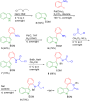
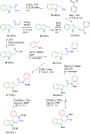


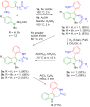


Chemical and chemoenzymatic routes to bridged homoarabinofuranosylpyrimidines: Bicyclic AZT analogues
Beilstein J. Org. Chem. 2022, 18, 95–101, doi:10.3762/bjoc.18.10
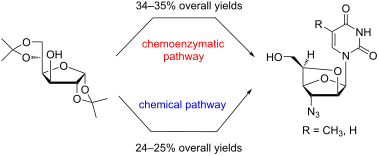
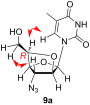
- unusual removal of TBDPS was observed when nucleosides 22a,b were treated with 2 M NaOH in dioxane and water (1:1). A literature search showed that the TBDPS protecting group could be removed under basic conditions [35][36]. However, removal of the TBDPS group from the primary hydroxy group of a



Peptide stapling by late-stage Suzuki–Miyaura cross-coupling
Beilstein J. Org. Chem. 2022, 18, 1–12, doi:10.3762/bjoc.18.1
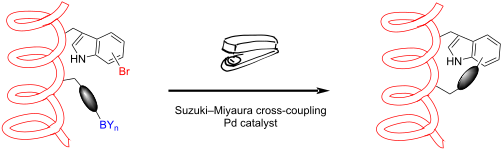
- -diaminobutyric acid (Dab), ornithine (Orn), or lysine (Lys). Utilising the Alloc protecting group allowed the coupling of 4-carboxyphenylboronic acid once the linear sequence had been synthesised (Scheme 2C). The intramolecular SMC between 6- or 7-bromotryptophan and the boronic acid afforded the stapled