Search results
Search for "responsive" in Full Text gives 164 result(s) in Beilstein Journal of Organic Chemistry.
Homo- and hetero-difunctionalized β-cyclodextrins: Short direct synthesis in gram scale and analysis of regiochemistry
Beilstein J. Org. Chem. 2019, 15, 710–720, doi:10.3762/bjoc.15.66
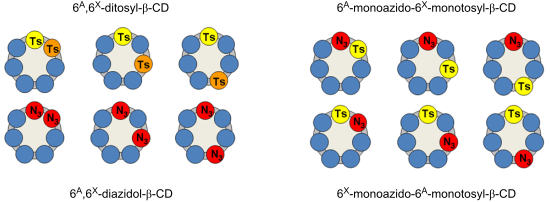
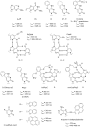
- selective functionalization of these cyclic oligosaccharides can remarkably improve their complexing ability and enables their application as artificial enzymes [2][3][4], chiral resolving agents [5], stimuli-responsive materials [6], molecular sensors [7] or bioactive hosts with significant emerging


Polyaminoazide mixtures for the synthesis of pH-responsive calixarene nanosponges
Beilstein J. Org. Chem. 2019, 15, 633–641, doi:10.3762/bjoc.15.59

- . The desired responsivity to pH variations of the nanosponges obtained was verified by means of absorption tests on a set of organic pollutant model molecules. Keywords: calixarenes; nanosponges; pH-responsive materials; pollutants; polyaminoazides; Introduction The ability to provide a response to
- presence of unreacted alkyne groups. Sequestration abilities of the CaNS nanosponges The possible pH-responsive sequestration abilities of materials CaNS-I and CaNS-II were verified by means of sequestration tests on a set of suitable guest, namely p-nitroaniline derivatives 6–10 and dyes 11–15 (Figure 4
- work we verified the feasibility of synthesizing new pH-responsive calixarene nanosponges by using two different polyaminoazide mixtures as the reticulating agent. Full characterization (HR-ESIMS, FTIR, 1D and 2D NMR) of the mixtures has been provided. It is particularly important to stress that the


LCST phase behavior of benzo-21-crown-7 with different alkyl chains
Beilstein J. Org. Chem. 2019, 15, 437–444, doi:10.3762/bjoc.15.38
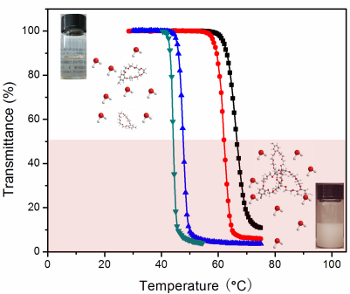
- -crown-7, B21C7s) can effectively control the thermo-responsive properties. Keywords: crown ethers; hydrophobic units; lower critical solution temperature; LCST; thermo-responsiveness; supramolecular chemistry; Introduction The introduction of stimuli-responsiveness into artificial materials is vital
- molecules-containing systems has been developed exhibiting LCST behavior and adjustable thermo-responsive properties. These include ionic liquids [27][28][29][30], macrocycles [31][32][33][34], and supramolecular pairs [26][35][36][37][38]. For example, the combination of macrocycles and supramolecular
- interactions can realize controlled release and product separation in complex supramolecular systems [35]. More options of small molecules with LCST properties not only give rise to more flexibility for LCST systems and thermo-responsive materials, but would be a great advantage for functionalization. In our


Olefin metathesis in multiblock copolymer synthesis
Beilstein J. Org. Chem. 2019, 15, 218–235, doi:10.3762/bjoc.15.21

- multiblock copolymers with the possibility to introduce stimuli-responsive functionalities were obtained using a bimetallic ruthenium initiator [74]. The initiator allowed for the single-step fabrication of symmetrically end-functionalized telechelic polymers using ROMP and functional chain terminators






Lectins of Mycobacterium tuberculosis – rarely studied proteins
Beilstein J. Org. Chem. 2019, 15, 1–15, doi:10.3762/bjoc.15.1
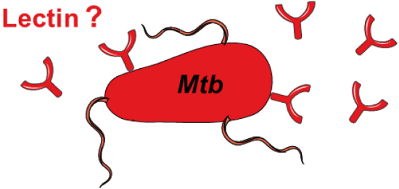
- successful strategies to survive, replicate and persist within macrophages for days, months or even years, including highly-specialized metabolic pathways for nutrient acquisition and stress-responsive processes for protection against the immune system [7][8][9][10][11][12]. In this regard, invasion of


Tetrathiafulvalene – a redox-switchable building block to control motion in mechanically interlocked molecules
Beilstein J. Org. Chem. 2018, 14, 2163–2185, doi:10.3762/bjoc.14.190
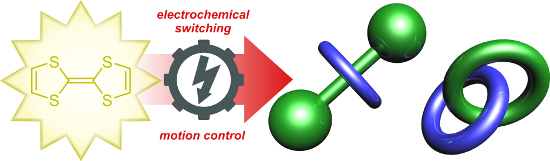
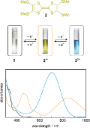
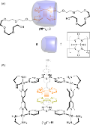
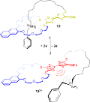
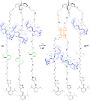
- topologically complex TTF catenanes and cage compounds [52][74][102][103][104]. 6.1. Stimuli-responsive circumrotation The TTF-based catenane 26 allows implementing a stimuli-responsive circumrotation motion (Figure 24) [105]. Similar to the corresponding donor–acceptor rotaxanes, the macrocycle preferentially
- organosulfur compound TTF developed from a molecular switch with multiple electronic and material applications to one of the most widely used building blocks for the construction of stimuli-responsive MIMs and functional molecular devices. The development of straightforward organic reactions to implement TTFs









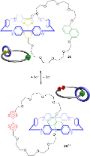


A switchable [2]rotaxane with two active alkenyl groups
Beilstein J. Org. Chem. 2018, 14, 2074–2081, doi:10.3762/bjoc.14.181
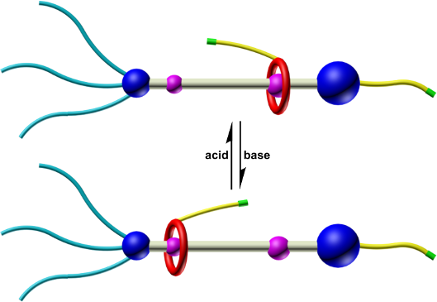
- and thiol functional groups. The reversible shuttling movement of the macrocycle between two different recognition sites on the molecular thread can be driven by external acid and base. This kind of rotaxane bearing functional groups provides a powerful platform for preparing stimuli-responsive
- ][5][6][7]. During the past years, a large number of different MIMs has been constructed, such as handcuff catenane [8], molecular elevators [9][10], molecular muscles [11][12], trefoil necklace [13][14][15], molecular walkers [16][17][18] and molecular pumps [19][20]. Combining the stimuli-responsive
- , which act as important precursors for constructing stimuli-responsive supramolecular materials [21][22]. Rotaxanes [23][24][25][26][27][28][29][30][31], as one of the most important MIMs, have been deeply investigated because of their excellent properties and convenient synthesis. By introducing various


Synthesis and supramolecular self-assembly of glutamic acid-based squaramides
Beilstein J. Org. Chem. 2018, 14, 2065–2073, doi:10.3762/bjoc.14.180
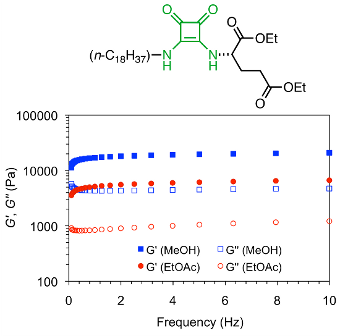
- gels are typically made of low-molecular-weight (LMW) compounds self-assembled in different solvents via non-covalent interactions. In most cases, this feature enables reversible stimuli-responsive gel-to-sol transitions [31]. Usually, the entanglement of 1D nanofibers of gelator molecules generates a


An amphiphilic pseudo[1]catenane: neutral guest-induced clouding point change
Beilstein J. Org. Chem. 2018, 14, 1937–1943, doi:10.3762/bjoc.14.167
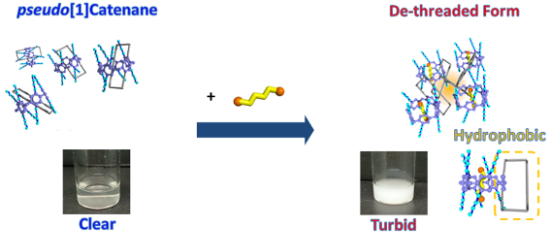
- ; Introduction Thermo-responsive molecules exhibiting a lower critical solution temperature (LCST) are very important for applications such as controlled drug release [1], molecular separation [2], and tissue culture substrates [3]. Poly(N-isopropylacrylamide) (pNIPAAm) is a widely used thermo-responsive polymer
- , which exhibits a clouding point around 32 °C [1][2][3][4]. Recently, thermo-responsive molecules with additional functions have been developed to replace pNIPAAm [5][6][7][8][9][10]. For example, we have developed thermo-responsive macrocyclic molecules which exhibit LCST behavior regulated by host
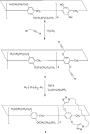
- -responsive LCST changes are very rare, while there have been some examples of LCST control using ionic chemical stimuli [5][6]. Results and Discussion Supramolecular structure and clouding point of bicyclic compound 3 The bicyclic compound 3 was prepared using a copper(I)-catalyzed alkyne–azide cycloaddition


Graphitic carbon nitride prepared from urea as a photocatalyst for visible-light carbon dioxide reduction with the aid of a mononuclear ruthenium(II) complex
Beilstein J. Org. Chem. 2018, 14, 1806–1812, doi:10.3762/bjoc.14.153
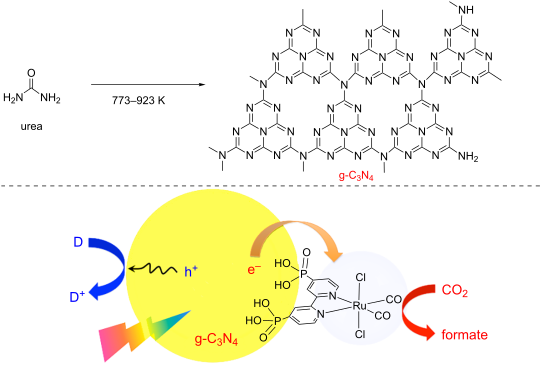
- -responsive photocatalyst mostly for H2 evolution from aqueous triethanolamine (TEOA) solution [2][3][5]. The present work also compares the activities for CO2 reduction with those for H2 evolution in order to obtain a better understanding on photocatalytic activities of g-C3N4 for different kinds of


Synthesis of diamido-bridged bis-pillar[5]arenes and tris-pillar[5]arenes for construction of unique [1]rotaxanes and bis-[1]rotaxanes
Beilstein J. Org. Chem. 2018, 14, 1660–1667, doi:10.3762/bjoc.14.142

- explosive development on the construction of various supramolecular devices and diverse responsive materials has been reported by using diverse functionalized pillararenes [33][34][35]. Due to easily preparation and suitable cavity, functionalized pillar[5]arenes were widely used as wheel component for


A conformationally adaptive macrocycle: conformational complexity and host–guest chemistry of zorb[4]arene
Beilstein J. Org. Chem. 2018, 14, 1570–1577, doi:10.3762/bjoc.14.134
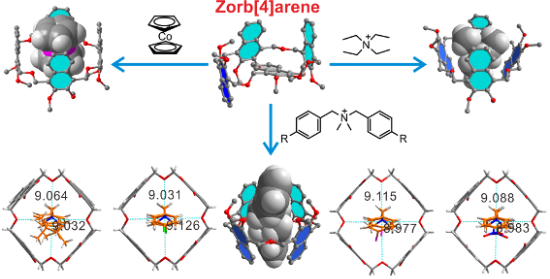
- binding behavior of ZB4 and lays the basis for the construction of stimuli-responsive materials with ZB4 as a major component. Keywords: conformations; host–guest chemistry; macrocycles; supramolecular chemistry; zorb[4]arene; Introduction Macrocyclic receptors are the principal workhorses used in
- understand the importance of conformational adaptivity in biomolecular recognition and even design stimuli-responsive materials by harnessing this large amplitude of conformational changes. X-ray single crystal structure of ZB4 and the host–guest complexes. a) ZB4, b) 2+@ZB4-IV, c) 3+@ZB4-IV, d) 10+@ZB4-I


London dispersion as important factor for the stabilization of (Z)-azobenzenes in the presence of hydrogen bonding
Beilstein J. Org. Chem. 2018, 14, 1238–1243, doi:10.3762/bjoc.14.106
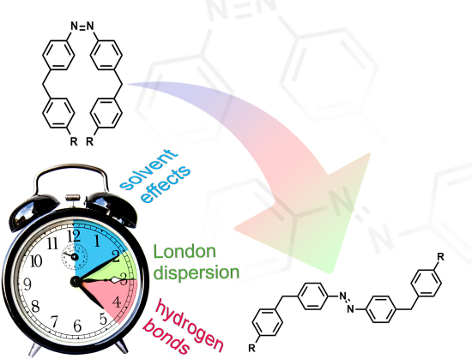
- important classes of molecular switches is crucial for the design of light-responsive materials using this entity. Herein, we present the stabilization of metastable (Z)-azobenzenes by London dispersion interactions, even in the presence of comparably stronger hydrogen bonds in various solvents. The Z→E


On the design principles of peptide–drug conjugates for targeted drug delivery to the malignant tumor site
Beilstein J. Org. Chem. 2018, 14, 930–954, doi:10.3762/bjoc.14.80
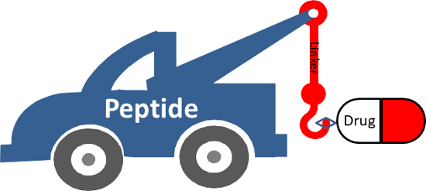
- different enzymes and/or the tumor microenvironment might trigger the improper release of the drug from the PDC, i.e., to end up with the drug-carrying part of the linker. Another class of linkers is the stimuli-responsive/degradable linkers, designed to achieve an efficient release of the drug from the
- enzyme-hydrolyzable units (EHU) responsive to proteases are degradable peptide linkers that have attracted significant interest due to the specificity of certain enzymes and there has been a dramatic escalation over in the past years. The most representative examples in this field are the MMP-2/9 (matrix


Nanoreactors for green catalysis
Beilstein J. Org. Chem. 2018, 14, 716–733, doi:10.3762/bjoc.14.61
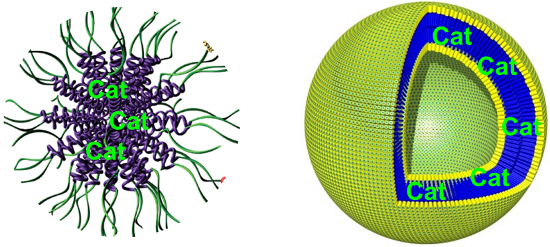
- conversion of glucose in a tandem reaction [82]. The hydrophilic block of their polymersomes was PEG, and the hydrophobic block contained both poly[2-(diethylamino)ethyl methacrylate] (PDEAEM) which is pH responsive, and poly[4-(3,4-dimethylmaleimido)butyl methacrylate] (PDMIBM) as cross-linker. The activity
- -soluble polymers [109]. For instance, PNIPAM is a thermo-responsive polymer, which has a lower critical solution temperature (LCST) of 32 °C. Above the LCST, individual polymer chains switch from a swollen coil configuration to a collapsed globular one, providing a nano-environment that is suitable for


Stimuli-responsive oligonucleotides in prodrug-based approaches for gene silencing
Beilstein J. Org. Chem. 2018, 14, 436–469, doi:10.3762/bjoc.14.32
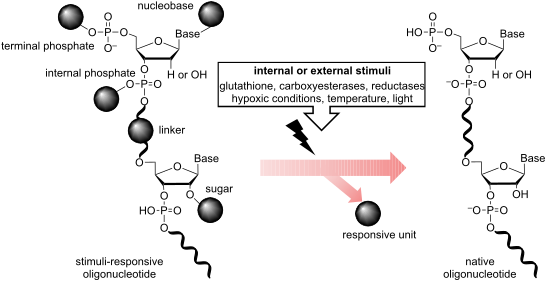
- under different stimuli. The interest in stimuli-responsive ONs for gene silencing functions has been notable in recent years. The ON prodrug strategies usually help to overcome limitations of natural ONs due to their low metabolic stability and poor delivery. Nevertheless, compared to permanent ON
- the modification in the nucleotide: the internucleosidic phosphate, the nucleobase, the sugar or the extremities of ONs. Moreover, the review provides a current and detailed account of stimuli-responsive ONs with the main goal of gene silencing. However, for some stimuli-responsive ONs reported in
- this review, no application for controlling gene expression has been shown, but a certain potential in this field could be demonstrated. Additionally, other applications in different domains have been mentioned to extend the interest in such molecules. Keywords: enzymolabile group; light-responsive


Fluorogenic PNA probes
Beilstein J. Org. Chem. 2018, 14, 253–281, doi:10.3762/bjoc.14.17
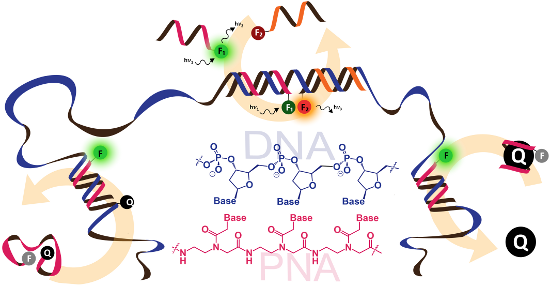
- they will be non-responsive to the base pairing similar to PNA carrying tC or tCO [177]. Pyrrolocytosine is another intrinsically fluorescent hydrogen-bond-forming nucleobase that has been extensively studied in a DNA context [188][189]. When incorporated into PNA, the simple phenyl-substituted
- into PNA, these PhpC derivatives exhibited a bright blue fluorescence with large fluorescence quantum yield (0.5–0.6), which can be useful for monitoring the cellular uptake and distribution of PNA [192]. In addition, the fluorescence was responsive to the base pairing, where up to 60% quenching was




Binding abilities of polyaminocyclodextrins: polarimetric investigations and biological assays
Beilstein J. Org. Chem. 2017, 13, 2751–2763, doi:10.3762/bjoc.13.271
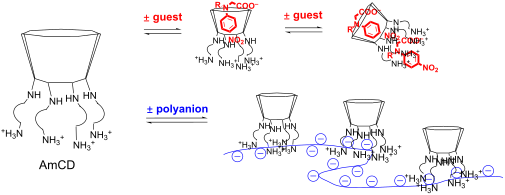
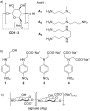
- ][41]. Moreover, the same products have been used for the synthesis of pH-responsive nanosponges [42]. In view of possible further applications, the present work is aimed at verifying the abilities of AmCD materials synthesized by us to act as bimodal supramolecular ligands. To the best of our



Phosphonic acid: preparation and applications
Beilstein J. Org. Chem. 2017, 13, 2186–2213, doi:10.3762/bjoc.13.219
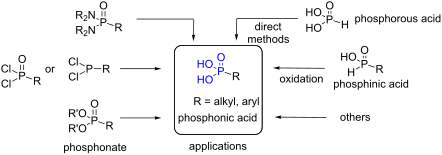
- materials [90]. Such type of chelating agents was also designed to develop responsive contrast agents for magnetic resonance spectroscopy [91]. Acyclic diamine compounds (e.g., 15, Figure 4) possessing phosphonic acid groups as additional coordination sites or the tetraazamacrocyclic compound 14 were also


Theoretical simulation of the infrared signature of mechanically stressed polymer solids
Beilstein J. Org. Chem. 2017, 13, 1710–1716, doi:10.3762/bjoc.13.165
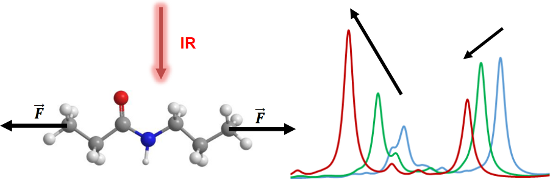
- in stress-induced aging of polymeric materials [1][10]. On the other hand, elegant routes have been established to harness this effect for the design of self-healing and stress-responsive materials [11][12][13][14][15]. The influence of an external force on the molecular structure of a polymer can be


Synthesis and metal binding properties of N-alkylcarboxyspiropyrans
Beilstein J. Org. Chem. 2017, 13, 1542–1550, doi:10.3762/bjoc.13.154
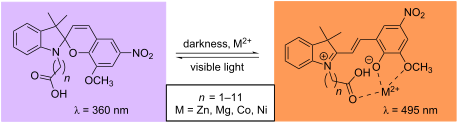
- spiropyran-modified agarose gel [14][15] and the creation of light-responsive nanopores through modification of natural channel proteins [16]. Furthermore, addition of an N-alkylcarboxylate moiety is a common tactic used to enhance water solubility of spiropyran derivatives [6]. Spiropyran–metal cation




Grip on complexity in chemical reaction networks
Beilstein J. Org. Chem. 2017, 13, 1486–1497, doi:10.3762/bjoc.13.147
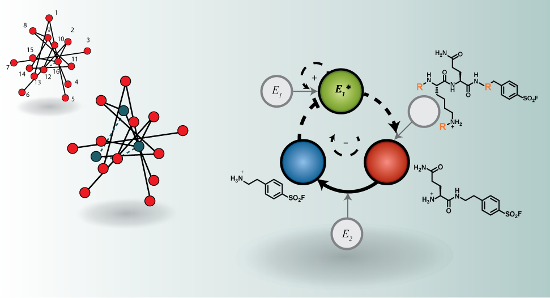
- of a bilayer network composed of the mechanical action of a temperature-responsive gel coupled with various exothermic reactions. Reprinted with permission from [34], copyright 2012 Nature Publishing Group. (b) Small dynamic combinatorial library made from dithiol building blocks. Adapted with




Interactions between shape-persistent macromolecules as probed by AFM
Beilstein J. Org. Chem. 2017, 13, 938–951, doi:10.3762/bjoc.13.95
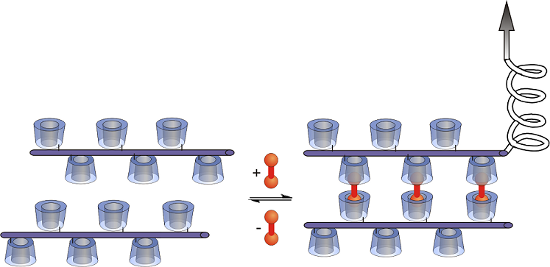
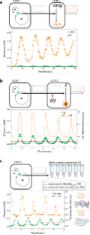
- and friction by applying external stimuli onto the responsive ditopic linkers [47][48][49]. In contrast to previous work our molecular toolkit, based on ditopic connector molecules, allows the independent determination of unspecific interactions between CD polymers at tip and planar surface as well as






Fluorescent carbon dots from mono- and polysaccharides: synthesis, properties and applications
Beilstein J. Org. Chem. 2017, 13, 675–693, doi:10.3762/bjoc.13.67
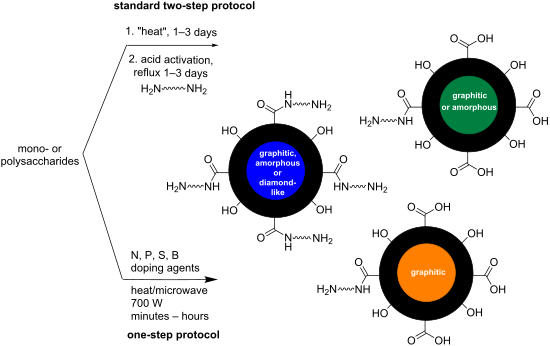
- CDs. Subsequently in 2014, the same group was able to show that coating of calcium alginate (CA) beads with chitosan hydrogel-based CDs yielded a new nanomaterial that could be employed as a pH-responsive drug-delivery vehicle (Scheme 21) [56]. The CDs were used as a protective layer onto the CA beads


Novel β-cyclodextrin–eosin conjugates
Beilstein J. Org. Chem. 2017, 13, 543–551, doi:10.3762/bjoc.13.52
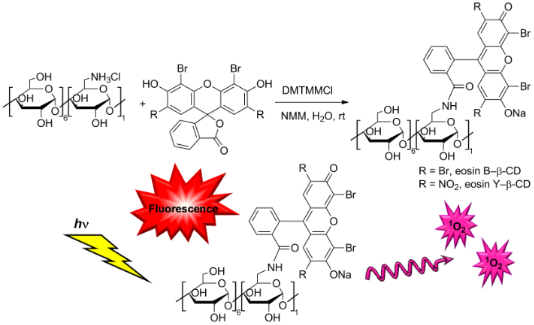
- high purity through an improved synthetic route. The prepared CD conjugates have been thoroughly characterized by 1D and 2D NMR experiments. While the eosin B (4)-β-CD conjugate was not light responsive, probably due to self-aggregation phenomena, the eosin Y conjugate 2–β-CD showed excellent