


Search results
Search for "ring strain" in Full Text gives 89 result(s) in Beilstein Journal of Organic Chemistry.
Control over molecular motion using the cis–trans photoisomerization of the azo group
- Estíbaliz Merino and
- María Ribagorda
Beilstein J. Org. Chem. 2012, 8, 1071–1090, doi:10.3762/bjoc.8.119
- . The isomers (trans,trans) and (cis,cis) are 28 and 2.6 kcal∙mol−1 more stable than the intermediate isomer, respectively. The large energy difference between (trans,trans) and (trans,cis) isomers indicates the ring strain that exists in the (trans,cis) isomer, and the thermal isomerization from (cis

Graphical Abstract

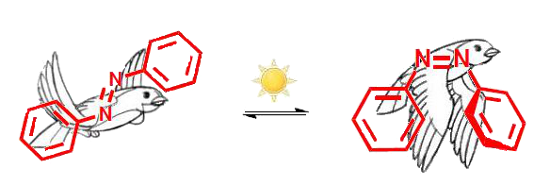
Figure 1: Photoisomerization process of azobenzene.

Figure 2: Representative example of an UV spectrum of an azocompound of the azobenzene type (blue line: trans...

Figure 3: Mechanistic proposals for the isomerization of azobenzenes.

Figure 4: Representation of the photocontrol of a K+ channel in the cellular membrane based on the isomerizat...

Figure 5: (a) MAG interaction with iGluR; (b) photocontrol of the opening of the ion channel by trans–cis iso...

Figure 6: Photocontrol of the structure of the α-helix in the polypeptide azoderivative 2. Reprinted (adapted...

Figure 7: Recognition of a guanidinium ion by a cis,cis-bis-azo derivative 3.

Figure 8: Recognition of cesium ions by cis-azo derivative 4.

Figure 9: Photocontrolled formation of an inclusion complex of cyclodextrin trans-azo 5+6.

Figure 10: Pseudorotaxane-based molecular machine.

Figure 11: Molecular hinge. Reprinted (adapted) with permission from Org. Lett. 2004, 6, 2595–2598. Copyright ...

Figure 12: Molecular threader. Reprinted (adapted) with permission from Acc. Chem. Res. 2001, 34, 445–455. Cop...

Figure 13: Molecular scissors based on azobenzene 12. Reprinted (adapted) with permission from J. Am. Chem. So...

Figure 14: Molecular pedals. Reprinted by permission from Macmillan Publishers Ltd: Nature, 2006, 440, 512–515...

Figure 15: Design of nanovehicles based on azo structures. Reprinted (adapted) with permission from Org. Lett. ...

Figure 16: Light-activated mesostructured silica nanoparticles (LAMs).

Figure 17: Molecular lift.

Figure 18: Conformational considerations in mono-ortho-substituted azobenzenes.

Scheme 1: Synthesis and photoisomerization of sulfinyl azobenzenes. Reprinted (adapted) with permission from ...

Figure 19: Photoisomerization of azocompound 22 and its application as a photobase catalyst.

Figure 20: Effect of irradiation with linearly polarized light on azo-LCEs. Reprinted by permission from Macmi...

Figure 21: Chemically and photochemically triggered memory switching cycle of the [2]rotaxane 25.

Figure 22: Unidirectional photoisomerization process of the azobenzene 26.
Expanding the chemical diversity of spirooxindoles via alkylative pyridine dearomatization
- Chunhui Dai,
- Bo Liang and
- Corey R. J. Stephenson
Beilstein J. Org. Chem. 2012, 8, 986–993, doi:10.3762/bjoc.8.111
- (Table 1, entry 6), in contrast to 5-phenyl-1,3-cyclohexanedione (5c), which gave a slightly lower yield (Table 1, entry 7). Interestingly, nonequivalent 1,3-dicarbonyl compound 5d afforded single constitutional isomer (Table 1, entry 8), presumably due to the increased sterics and overall ring strain

Graphical Abstract

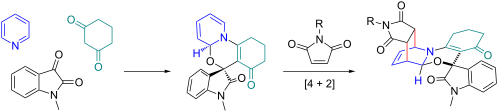
Scheme 1: Unexpected alkylative pyridine dearomatization during our previous work on the synthesis of spiroox...

Figure 1: X-ray crystal structure of compound 6b.
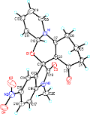
Figure 2: X-ray crystal structure of compound 3d.

Scheme 2: Application of spiro [1,3]oxazino compound 3a in D–A reactions.

Figure 3: X-ray crystal structure of compound 8a.
High-affinity multivalent wheat germ agglutinin ligands by one-pot click reaction
- Henning S. G. Beckmann,
- Heiko M. Möller and
- Valentin Wittmann
Beilstein J. Org. Chem. 2012, 8, 819–826, doi:10.3762/bjoc.8.91
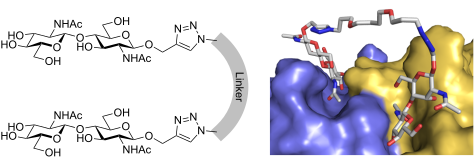
- GlcNAc residues kept in their optimal positions. Our molecular modeling studies revealed that the para-disubstituted aromatic linker of C3 cannot adopt a low-energy conformation if the chitobiose residues are kept in their ideal positions in the binding sites of WGA, resulting in significant ring strain
- of the triazole moieties as well as the central phenyl ring. This ring strain can be reduced by slightly pulling the GlcNAc residues directly attached to the linker out of the binding site, but at the expense of a less efficient multivalent binding of the two chitobiose entities. The chitobiose

Graphical Abstract

Figure 1: Amines used for the synthesis of glycoclusters.

Scheme 1: Synthesis of glycocluster B5 with isolation of the intermediate diazide 2.

Scheme 2: Deacetylation of glycoconjugates B1–B6. (a) NaOMe, MeOH.
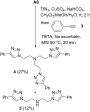
Scheme 3: Formation of side-product 5 during the synthesis of 4.

Figure 2: Dose-response curves for the inhibition of binding of HRP-labeled WGA to covalently immobilized Glc...

Figure 3: Molecular model of divalent ligand C4 with its two chitobiose moieties occupying two adjacent bindi...
Alkoxide-induced ring opening of bicyclic 2-vinylcyclobutanones: A convenient synthesis of 2-vinyl-substituted 3-cycloalkene-1-carboxylic acid esters
- Xiufang Ji,
- Zhiming Li,
- Quanrui Wang and
- Andreas Goeke
Beilstein J. Org. Chem. 2012, 8, 650–657, doi:10.3762/bjoc.8.72
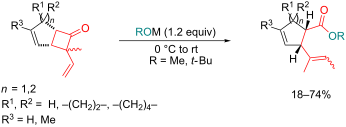
- the C-3 proton (Figure 1). Taking the high degree of ring strain in substrates 4 into account, an alkoxide-promoted ring opening to vicinally functionalized products 5 or 6 was expected. To validate this proposal, the 7-methyl-7-vinyl substituted bicyclo[3.2.0]heptenone 4a was employed as a model
- hindered base LDA only led to the formation of aldol adduct 7 (Scheme 4). Although the mechanism is not fully understood, a tentative mechanistic rationale is depicted in Scheme 5. Due to the high ring strain of the cyclobutanones, the ring is very sensitive to the influence of nucleophiles. As exemplified

Graphical Abstract

Scheme 1: Metathetic ring opening of 7-methyl-7-vinylbicyclo[3.2.0]hept-2-en-6-one to a linear polyene ketone....

Scheme 2: Synthesis of vinyl or phenyl substituted cyclobutanones 4a–i.

Figure 1: Determination of the structure of 3-phenyl-2-vinyl substituted cyclobutanone 4g.

Scheme 3: Ring opening of cyclobutanones 4 to afford products 5 or 6.

Scheme 4: Reaction of 4a with LDA.

Scheme 5: Plausible mechanism for ring opening of 4a.
Intramolecular hydroamination of alkynic sulfonamides catalyzed by a gold–triethynylphosphine complex: Construction of azepine frameworks by 7-exo-dig cyclization
- Hideto Ito,
- Tomoya Harada,
- Hirohisa Ohmiya and
- Masaya Sawamura
Beilstein J. Org. Chem. 2011, 7, 951–959, doi:10.3762/bjoc.7.106
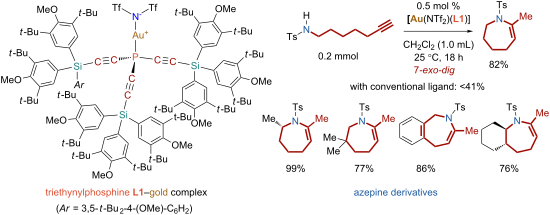
- that the reaction of the N-tosylbenzamide 4n afforded exceptionally the exomethylene isomer 6n. One conceivable reason is that the alkene isomerisation was prevented due to a ring strain in the seven-membered ring of 5n, of which six out of seven atoms are sp2-hybridized. Conclusion We demonstrated

Graphical Abstract

Figure 1: Azepine frameworks found in natural products and pharmaceuticals.

Figure 2: Semihollow-shaped triethynylphosphine L1.

Figure 3: Time–conversion profiles for the gold-catalyzed cyclization of 4a with L1, X-Phos and IPr ligands.

Scheme 1: 8-exo-dig cyclization of sulfonamide 9.

Scheme 2: Isomerization experiments of 6a.

Figure 4: Possible pathway for the gold-catalyzed conversion of 4a into 5a.
When gold can do what iodine cannot do: A critical comparison
- Sara Hummel and
- Stefan F. Kirsch
Beilstein J. Org. Chem. 2011, 7, 847–859, doi:10.3762/bjoc.7.97
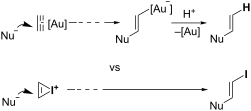
- migration of R3 are strictly limited to compounds that bear a quaternary center (R3 = alkyl, R2 ≠ H). As shown for the gold(I)-catalyzed reaction of 1,5-enyne 53, the formation of the bicyclo[3.1.0]hexene 54 is driven by the release of ring strain. Enynes with R3 = H undergo exclusively a hydride shift to

Graphical Abstract

Scheme 1: Mechanistic scenarios for alkyne activation.

Scheme 2: Synthesis of 3(2H)-furanones.

Scheme 3: Synthesis of furans.

Scheme 4: Formation of dihydrooxazoles.

Scheme 5: Variation on indole formation.

Scheme 6: Formation of naphthalenes.
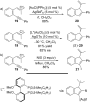
Scheme 7: Formation of indenes.

Scheme 8: Iodocyclization of 3-silyloxy-1,5-enynes.

Scheme 9: 5-Endo cyclizations with concomitant nucleophilic trapping.

Scheme 10: Reactivity of 3-BocO-1,5-enynes.
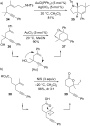
Scheme 11: Intramolecular nucleophilic trapping.

Scheme 12: Approach to azaanthraquinones.

Scheme 13: Carbocyclizations with enol derivatives.

Scheme 14: Gold-catalyzed cyclization modes for 1,5-enynes.

Scheme 15: Iodine-induced cyclization of 1,5-enynes.
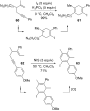
Scheme 16: Diverse reactivity of 1,6-enynes.
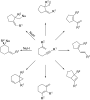
Scheme 17: Iodocyclization of 1,6-enynes.

Scheme 18: Cyclopropanation of alkenes with 1,6-enynes.

Scheme 19: Cyclopropanation of alkenes with 1,6-enynes.
Alkene selenenylation: A comprehensive analysis of relative reactivities, stereochemistry and asymmetric induction, and their comparisons with sulfenylation
- Vadim A. Soloshonok and
- Donna J. Nelson
Beilstein J. Org. Chem. 2011, 7, 744–758, doi:10.3762/bjoc.7.85

- directly bonded to the C=C are included in this study to avoid undesirable complicating effects associated with ring strain, polarization, or conjugation [72][73][74][75][76][77][78]. Experimental IEs for alkenes in Table 1 are used as reported in the literature [79]. Alkene ab initio (HF level, 6-31G

Graphical Abstract

Figure 1: Chiral aryl selenium electrophiles 1–3.

Scheme 1: Plausible mechanism of alkene selenenylation.

Figure 2: Plot of log krel values for PhSeCl addition to alkenes versus their corresponding IEs. Point number...

Figure 3: Plot of log krel values for PhSeCl addition to alkenes versus their corresponding HOMOs, analogous ...

Figure 4: Plot of log krel versus HOMO shows data grouped by branching at α position. Data are from Table 3; point n...

Scheme 2: Major products from reactions of 1 and 2 with representative alkenols.

Figure 5: Structure of intermediate complex 9.

Figure 6: Plot of log krel values for PhSCl addition to alkenes versus their IEs. Data are from Table 6.
Rh-Catalyzed rearrangement of vinylcyclopropane to 1,3-diene units attached to N-heterocycles
- Franca M. Cordero,
- Carolina Vurchio,
- Stefano Cicchi,
- Armin de Meijere and
- Alberto Brandi
Beilstein J. Org. Chem. 2011, 7, 298–303, doi:10.3762/bjoc.7.39

- group endows many natural and synthetic compounds with a broad spectrum of interesting properties, mainly related to its unusual bonding and inherent ring strain [1][2][3]. This characteristic confers on molecules containing this moiety high reactivity, especially towards ring expansion and ring-opening

Graphical Abstract

Scheme 1: General approach to spirocyclopropanated tetrahydropyridones by 1,3-dipolar cycloaddition/thermal r...

Scheme 2: Synthesis of tetrahydrospiro[cyclopropane-1,1’(2’H,6’H)-pyrido[2,1-a]isoquinolin]-2’-one 8.

Scheme 3: Synthesis of 7’-oxohexahydro spiro[cyclopropane-1-8’(5’H)indolizines] 12.

Scheme 4: Olefination of spirocyclopropanated heterocyclic ketones 8, 12 and 16.

Figure 1: Key NOE interactions. 18: 11b-H/11-H, 11b-H/6-H, 11b-H/Ht, Hv/2-CH3; E-19: Hb/CH3, Hc/11b-H, Hc/11-...

Scheme 5: Rearrangement of VCPs 15 and 17 catalyzed by Rh(PPh3)3Cl.
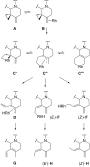
Scheme 6: Mechanism of the rearrangement of heterocyclic VCPs catalyzed by Rh(PPh3)3Cl.
Reciprocal polyhedra and the Euler relationship: cage hydrocarbons, CnHn and closo-boranes [BxHx]2−
- Michael J. McGlinchey and
- Henning Hopf
Beilstein J. Org. Chem. 2011, 7, 222–233, doi:10.3762/bjoc.7.30
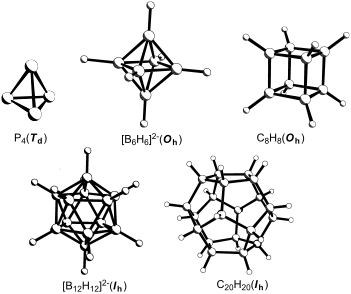
- associated with cyclobutadienes, steric interactions between the bulky alkyl groups destabilize the planar system. However, the formation of a molecule containing four cyclopropyl moieties clearly introduces considerable additional ring strain. [3]Prismane, C6H6, 9 Prismane derivatives bearing bulky
- (2,6-diethylphenyl)cyclotristannne, 74, and fully characterized spectroscopically and by X-ray crystallography [46][47][48]. The major mitigating factor here is that such elements commonly form structures in which 90° angles are the norm [49], and so ring strain is no longer such a major impediment to

Graphical Abstract

Figure 1: Molecular analogues of the Platonic solids.

Figure 2: The structure of [Mo6Cl8]4+ demonstrates the reciprocal relationship between the cube and the octah...

Figure 3: The deltahedra corresponding to the structures of the closo-boranes [BxHx]2−.

Scheme 1: The first synthesis of a tetrahedrane 19 by Maier.

Scheme 2: The conversion of Dewar benzenes to [3]-prismanes.

Scheme 3: Synthesis of [3]prismane 9 by Katz.

Scheme 4: Synthesis of cubane 10 by Eaton.

Scheme 5: Synthesis of cubane 10 by Pettit.

Scheme 6: Failed routes to [5]-prismane 11.

Scheme 7: Synthesis of [5]prismane 11 by Eaton.

Scheme 8: Retrosynthetic analysis for several approaches to dodecahedrane 16.

Scheme 9: Paquette´s synthesis of dodecahedrane 16.

Scheme 10: Prinzbach´s synthesis of dodecahedrane 16.

Figure 4: The as yet unknown polyhedranes 12–15.
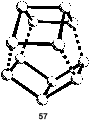
Figure 5: Coupling of two Dewar benzenes.

Scheme 11: A possible route to octahedrane 12.

Scheme 12: A possible route to nonahedrane 13.
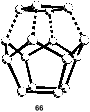
Figure 6: Capping [4]peristylane with a four-membered ring system.

Scheme 13: A possible route to decahedrane 14.

Figure 7: A possible route to undecahedrane 15 (left: side view; right: top view).

Scheme 14: Synthetic routes to trigonal prismatic hexasilanes 71a and hexagermanes 71b.

Scheme 15: Synthetic routes to octasila- and octagerma-cubanes.

Scheme 16: Synthesis of an octastannacubane and a decastannapentaprismane.

Scheme 17: Synthesis of a heterocubane.

Figure 8: D3d symmetric C8H8, a bis-truncated cubane.
β-Hydroxy carbocation intermediates in solvolyses of di- and tetra-hydronaphthalene substrates
- Jaya S. Kudavalli and
- Rory A. More O'Ferrall
Beilstein J. Org. Chem. 2010, 6, 1035–1042, doi:10.3762/bjoc.6.118
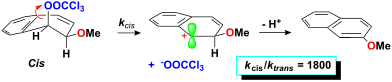
- the carbocyclic substrate in this case shows a rate retardation of 80,000 [16]. This value has been considered exceptionally large and an additional rate-retarding effect has been attributed to ring strain induced by the presence of oxygen in the six-membered ring of the bicyclic carbocation

Graphical Abstract

Scheme 1: Mechanism of dehydration of benzene-1,2-dihydrodiol.

Figure 1: Reactivity ratios for acid-catalyzed reaction of arene dihydrodiols.

Figure 2: Substrates for solvolysis measurements.

Scheme 2: Products of solvolysis and (ester) hydrolysis of trans-1-trichloroacetoxy-2-methoxy-1,2-dihydronaph...

Scheme 3: Products of solvolysis of trans-1-chloro-2-hydroxy-1,2,3,4-tetrahydronaphthalene.

Figure 3: Rate constants for aqueous solvolyses.

Figure 4: Cis/trans reactivity ratios for β-hydroxycarbocation forming reactions.

Figure 5: Comparison of the effect of a β-hydroxy group on the reactivity of cis and trans di- and tetrahdron...

Scheme 4: ‘Aromatic’ hyperconjugation for the benzenium ion.

Scheme 5: Stereochemistry of carbocation formation from solvolysis of cis-1-trichloroacetoxy-2-hydroxy-1,2-di...
Molecular recognition of organic ammonium ions in solution using synthetic receptors
- Andreas Späth and
- Burkhard König
Beilstein J. Org. Chem. 2010, 6, No. 32, doi:10.3762/bjoc.6.32

Graphical Abstract

Figure 1: Biologically important amines and quaternary ammonium salts: histamine (1), dopamine (2) and acetyl...

Figure 2: Crown ether 18-crown-6.

Figure 3: Conformations of 18-crown-6 (4) in solvents of different polarity.

Figure 4: Binding topologies of the ammonium ion depending on the crown ring size.
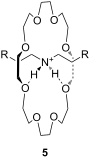
Figure 5: A “pseudorotaxane” structure consisting of 24-crown-8 and a secondary ammonium ion (5); R = Ph.

Figure 6: Typical examples of azacrown ethers, cryptands and related aza macrocycles.

Figure 7: Binding of ammonium to azacrown ethers and cryptands [111-113].

Figure 8: A 19-crown-6-ether with decalino blocking groups (11) and a thiazole-dibenzo-18-crown-6-ether (12).

Figure 9: 1,3-Bis(6-oxopyridazin-1-yl)propane derivatives 13 and 14 by Campayo et al.

Figure 10: Fluorescent azacrown-PET-sensors based on coumarin.

Figure 11: Two different pyridino-cryptands (17 and 18) compared to a pyridino-crown (19); chiral ammonium ion...

Figure 12: Pyridino-18-crown-6 ligand (21), a similar acridino-18-crown-6 ligand (22) and a structurally relat...

Figure 13: Ciral pyridine-azacrown ether receptors 24.

Figure 14: Chiral 15-crown-5 receptors 26 and an analogue 18-crown-6 ligand 27 derived from amino alcohols.

Figure 15: C2-symmetric chiral 18-crown-6 amino alcohol derivatives 28 and related macrocycles.

Figure 16: Macrocycles with diamide-diester groups (30).

Figure 17: C2-symmetric chiral aza-18-crown-6 ethers (31) with phenethylamine residues.

Figure 18: Chiral C-pivot p-methoxy-phenoxy-lariat ethers.

Figure 19: Chiral lariat crown ether 34.

Figure 20: Sucrose-based chiral crown ether receptors 36.
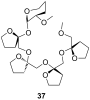
Figure 21: Permethylated fructooligosaccharide 37 showing induced-fit chiral recognition.

Figure 22: Biphenanthryl-18-crown-6 derivative 38.

Figure 23: Chiral lariat crown ethers derived from binol by Fuji et al.

Figure 24: Chiral phenolic crown ether 41 with “aryl chiral barriers” and guest amines.
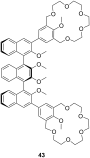
Figure 25: Chiral bis-crown receptor 43 with a meso-ternaphthalene backbone.

Figure 26: Chromogenic pH-dependent bis-crown chemosensor 44 for diamines.

Figure 27: Triamine guests for binding to receptor 44.

Figure 28: Chiral bis-crown phenolphthalein chemosensors 46.

Figure 29: Crown ether amino acid 47.

Figure 30: Luminescent receptor 48 for bis-alkylammonium guests.

Figure 31: Luminescent CEAA (49a), a bis-CEAA receptor for amino acids (49b) and the structure of lysine bindi...

Figure 32: Luminescent CEAA tripeptide for binding small peptides.

Figure 33: Bis crown ether 51a self assembles co-operatively with C60-ammonium ion 51b.

Figure 34: Triptycene-based macrotricyclic dibenzo-[24]-crown-8 ether host 52 and guests.

Figure 35: Copper imido diacetic acid azacrown receptor 53a and the suggested His-Lys binding motif; a copper ...

Figure 36: Urea (54) and thiourea (55) benzo crown receptor for transport and extraction of amino acids.

Figure 37: Crown pyryliums ion receptors 56 for amino acids.

Figure 38: Ditopic sulfonamide bridged crown ether receptor 57.

Figure 39: Luminescent peptide receptor 58.

Figure 40: Luminescent receptor 59 for the detection of D-glucosamine hydrochloride in water/ethanol and lumin...

Figure 41: Guanidinium azacrown receptor 61 for simple amino acids and ditopic receptor 62 with crown ether an...

Figure 42: Chiral bicyclic guanidinium azacrown receptor 63 and similar receptor 64 for the enantioselective t...

Figure 43: Receptors for zwitterionic species based on luminescent CEAAs.

Figure 44: 1,10-Azacrown ethers with sugar podand arms and the anticancer agent busulfan.

Figure 45: Benzo-18-crown-6 modified β-cyclodextrin 69 and β-cyclodextrin functionalized with diaza-18-crown-6...

Figure 46: Receptors for colorimetric detection of primary and secondary ammonium ions.

Figure 47: Porphyrine-crown-receptors 72.

Figure 48: Porphyrin-crown ether conjugate 73 and fullerene-ammonium ion guest 74.

Figure 49: Calix[4]arene (75a), homooxocalix[4]arene (75b) and resorcin[4]arene (75c) compared (R = H, alkyl c...

Figure 50: Calix[4]arene and ammonium ion guest (R = H, alkyl, OAcyl etc.), possible binding sites; A: co-ordi...

Figure 51: Typical guests for studies with calixarenes and related molecules.
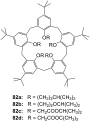
Figure 52: Lower rim modified p-tert-butylcalix[5]arenes 82.

Figure 53: The first example of a water soluble calixarene.

Figure 54: Sulfonated water soluble calix[n]arenes that bind ammonium ions.
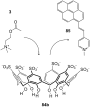
Figure 55: Displacement assay for acetylcholine (3) with a sulfonato-calix[6]arene (84b).

Figure 56: Amino acid inclusion in p-sulfonatocalix[4]arene (84a).

Figure 57: Calixarene receptor family 86 with upper and lower rim functionalization.

Figure 58: Calix[6]arenes 87 with one carboxylic acid functionality.
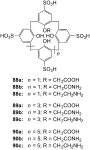
Figure 59: Sulfonated calix[n]arenes with mono-substitution at the lower rim systematically studied on their r...

Figure 60: Cyclotetrachromotropylene host (91) and its binding to lysine (81c).

Figure 61: Calixarenes 92 and 93 with phosphonic acids groups.

Figure 62: Calix[4]arene tetraphosphonic acid (94a) and a double bridged analogue (94b).
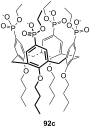
Figure 63: Calix[4]arene tetraphosphonic acid ester (92c) for surface recognition experiments.

Figure 64: Calixarene receptors 95 with α-aminophosphonate groups.

Figure 65: A bridged homocalix[3]arene 95 and a distally bridged homocalix[4]crown 96.

Figure 66: Homocalix[3]arene ammonium ion receptor 97a and the Reichardt’s dye (97b) for colorimetric assays.

Figure 67: Chromogenic diazo-bridged calix[4]arene 98.

Figure 68: Calixarene receptor 99 by Huang et al.
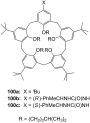
Figure 69: Calixarenes 100 reported by Parisi et al.

Figure 70: Guest molecules for inclusion in calixarenes 100: DAP × 2 HCl (101a), APA (101b) and Lys-OMe × 2 HC...

Figure 71: Different N-linked peptido-calixarenes open and with glycol chain bridges.

Figure 72: (S)-1,1′-Bi-2-naphthol calixarene derivative 104 published by Kubo et al.

Figure 73: A chiral ammonium-ion receptor 105 based on the calix[4]arene skeleton.

Figure 74: R-/S-phenylalaninol functionalized calix[6]arenes 106a and 106b.

Figure 75: Capped homocalix[3]arene ammonium ion receptor 107.

Figure 76: Two C3 symmetric capped calix[6]arenes 108 and 109.

Figure 77: Phosphorous-containing rigidified calix[6]arene 110.

Figure 78: Calix[6]azacryptand 111.

Figure 79: Further substituted calix[6]azacryptands 112.

Figure 80: Resorcin[4]arene (75c) and the cavitands (113).

Figure 81: Tetrasulfonatomethylcalix[4]resorcinarene (114).
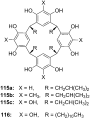
Figure 82: Resorcin[4]arenes (115a/b) and pyrogallo[4]arenes (115c, 116).
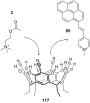
Figure 83: Displacement assay for acetylcholine (3) with tetracyanoresorcin[4]arene (117).

Figure 84: Tetramethoxy resorcinarene mono-crown-5 (118).

Figure 85: Components of a resorcinarene based displacement assay for ammonium ions.

Figure 86: Chiral basket resorcin[4]arenas 121.

Figure 87: Resorcinarenes with deeper cavitand structure (122).

Figure 88: Resorcinarene with partially open deeper cavitand structure (123).
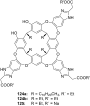
Figure 89: Water-stabilized deep cavitands with partially structure (124, 125).
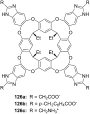
Figure 90: Charged cavitands 126 for tetralkylammonium ions.

Figure 91: Ditopic calix[4]arene receptor 127 capped with glycol chains.

Figure 92: A calix[5]arene dimer for diammonium salt recognition.

Figure 93: Calixarene parts 92c and 129 for the formation molecular capsules.
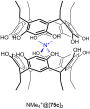
Figure 94: Encapsulation of a quaternary ammonium cation by two resorcin[4]arene molecules (NMe4+@[75c]2 × Cl−...

Figure 95: Encapsulation of a quaternary ammonium cation by six resorcin[4]arene molecules (NMe3D+@[130]6 × Cl−...

Figure 96: Structure and schematic of cucurbit[6]uril (CB[6], 131a).
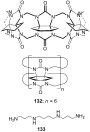
Figure 97: Cyclohexanocucurbit[6]uril (CB′[6], 132) and the guest molecule spermine (133).

Figure 98: α,α,δ,δ-Tetramethylcucurbit[6]uril (134).

Figure 99: Structure of the cucurbituril-phthalhydrazide analogue 135.

Figure 100: Organic cavities for the displacement assay for amine differentiation.

Figure 101: Displacement assay methodology for diammonium- and related guests involving cucurbiturils and some ...

Figure 102: Nor-seco-Cucurbituril (±)-bis-ns-CB[6] (140) and guest molecules.

Figure 103: The cucurbit[6]uril based complexes 141 for chiral discrimination.
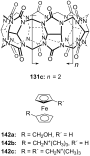
Figure 104: Cucurbit[7]uril (131c) and its ferrocene guests (142) opposed.

Figure 105: Cucurbit[7]uril (131c) guest inclusion and representative guests.

Figure 106: Cucurbit[7]uril (131c) binding to succinylcholine (145) and different bis-ammonium and bis-phosphon...

Figure 107: Paraquat-cucurbit[8]uril complex 149.
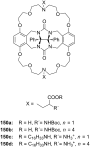
Figure 108: Gluconuril-based ammonium receptors 150.
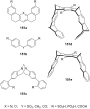
Figure 109: Examples of clefts (151a), tweezers (151b, 151c, 151d) and clips (151e).

Figure 110: Kemp’s triacid (152a), on example of Rebek’s receptors (152b) and guests.

Figure 111: Amino acid receptor (154) by Rebek et al.

Figure 112: Hexagonal lattice designed hosts by Bell et al.

Figure 113: Bell’s amidinium receptor (156) and the amidinium ion (157).
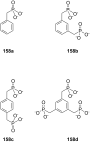
Figure 114: Aromatic phosphonic acids.

Figure 115: Xylene phosphonates 159 and 160a/b for recognition of amines and amino alcohols.
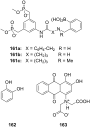
Figure 116: Bisphosphonate recognition motif 161 for a colorimetric assay with alizarin complexone (163) for ca...

Figure 117: Bisphosphonate/phosphate clip 164 and bisphosphonate cleft 165.

Figure 118: N-Methylpyrazine 166a, N-methylnicotinamide iodide (166b) and NAD+ (166c).

Figure 119: Bisphosphate cavitands.
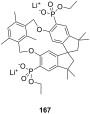
Figure 120: Bisphosphonate 167 of Schrader and Finocchiaro.
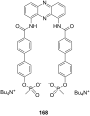
Figure 121: Tweezer 168 for noradrenaline (80b).

Figure 122: Different tripods and heparin (170).
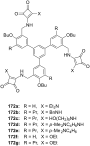
Figure 123: Squaramide based receptors 172.
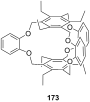
Figure 124: Cage like NH4+ receptor 173 of Kim et al.

Figure 125: Ammonium receptors 174 of Chin et al.

Figure 126: 2-Oxazolin-based ammonium receptors 175a–d and 176 by Ahn et al.

Figure 127: Racemic guest molecules 177.

Figure 128: Tripods based on a imidazole containing macrocycle (178) and the guest molecules employed in the st...

Figure 129: Ammonium ion receptor 180.

Figure 130: Tetraoxa[3.3.3.3]paracyclophanes 181 and a cyclophanic tetraester (182).

Figure 131: Peptidic bridged paraquat-cyclophane.
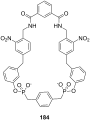
Figure 132: Shape-selective noradrenaline host.

Figure 133: Receptor 185 for binding of noradrenaline on surface layers from Schrader et al.

Figure 134: Tetraphosphonate receptor for binding of noradrenaline.

Figure 135: Tetraphosphonate 187 of Schrader and Finocchiaro.

Figure 136: Zinc-Porphyrin ammonium-ion receptors 188 and 189 of Mizutani et al.
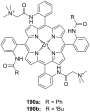
Figure 137: Zinc porphyrin receptor 190.

Figure 138: Zinc porphyrin receptors 191 capable of amino acid binding.

Figure 139: Zinc-porphyrins with amino acid side chains for stereoinduction.

Figure 140: Bis-zinc-bis-porphyrin based on Tröger’s base 193.

Figure 141: BINAP-zinc-prophyrin derivative 194 and it’s guests.

Figure 142: Bisaryl-linked-zinc-porphyrin receptors.
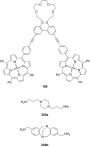
Figure 143: Bis-zinc-porphyrin 199 for diamine recognition and guests.

Figure 144: Bis-zinc-porphyrin crown ether 201.

Figure 145: Bis-zinc-porphyrin 202 for stereodiscrimination (L = large substituent; S = small substituent).

Figure 146: Bis-zinc-porphyrin[3]rotaxane and its copper complex and guests.

Figure 147: Dien-bipyridyl ligand 206 for co-ordination of two metal atoms.

Figure 148: The ligand and corresponding tetradentate co-complex 207 serving as enantioselective receptor for a...

Figure 149: Bis(oxazoline)–copper(II) complex 208 for the recognition of amino acids in aqueous solution.

Figure 150: Zinc-salen-complexes 209 for the recognition tertiary amines.

Figure 151: Bis(oxazoline)–copper(II) 211 for the recognition of amino acids in aqueous solution.

Figure 152: Zn(II)-complex of a C2 terpyridine crown ether.

Figure 153: Displacement assay and receptor for aspartate over glutamate.

Figure 154: Chiral complex 214 for a colorimetric displacement assay for amino acids.

Figure 155: Metal complex receptor 215 with tripeptide side arms.

Figure 156: A sandwich complex 216 and its displaceable dye 217.

Figure 157: Lanthanide complexes 218–220 for amino acid recognition.
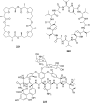
Figure 158: Nonactin (221), valinomycin (222) and vancomycin (223).

Figure 159: Monesin (224a) and a chiral analogue for enantiodiscrimination of ammonium guests (224b).

Figure 160: Chiral podands (226) compared to pentaglyme-dimethylether (225) and 18-crown-6 (4).

Figure 161: Lasalocid A (228).

Figure 162: Lasalocid derivatives (230) of Sessler et al.

Figure 163: The Coporphyrin I tetraanion (231).

Figure 164: Linear and cyclic peptides for ammonium ion recognition.

Figure 165: Cyclic and bicyclic depsipeptides for ammonium ion recognition.
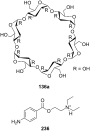
Figure 166: α-Cyclodextrin (136a) and novocaine (236).
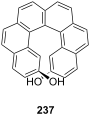
Figure 167: Helical diol receptor 237 by Reetz and Sostmann.

Figure 168: Ammonium binding spherand by Cram et al. (238a) and the cyclic[6]metaphenylacetylene 238b in compar...

Figure 169: Receptor for peptide backbone and ammonium binding (239).

Figure 170: Anion sensor principle with 3-hydroxy-2-naphthanilide of Jiang et al.

Figure 171: 7-bromo-3-hydroxy-N-(2-hydroxyphenyl)naphthalene 2-carboxamide (241) and its amine binding.

Figure 172: Naturally occurring catechins with affinity to quaternary ammonium ions.

Figure 173: Spiropyran (244) and merocyanine form (244a) of the amino acid receptors of Fuji et al.

Figure 174: Coumarin aldehyde (245) and its iminium species with amino acid bound (245a) by Glass et al.
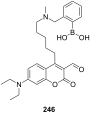
Figure 175: Coumarin aldehyde appended with boronic acid.

Figure 176: Quinolone aldehyde dimers by Glass et al.

Figure 177: Chromogenic ammonium ion receptors with trifluoroacetophenone recognition motifs.

Figure 178: Chromogenic ammonium ion receptor with trifluoroacetophenone recognition motif bound on different m...
Ring strain and total syntheses of modified macrocycles of the isoplagiochin type
- Andreas Speicher,
- Timo Backes,
- Kerstin Hesidens and
- Jürgen Kolz
Beilstein J. Org. Chem. 2009, 5, No. 71, doi:10.3762/bjoc.5.71
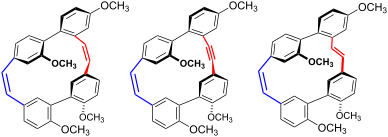
- macrocycles. Keywords: axially chiral biaryl; isoplagiochin; macrocycle; ring strain; total synthesis; Introduction The cyclic bisbibenzyls isoplagiochin C (1) and D (2) were isolated from the liverworts Plagiochila fruticosa [1], Plagiochila deflexa [2], Herbertus sakuraii [3] and Lepidozia fauriana [4
- conformational analysis and MD investigations clearly confirmed the biaryl axis A to be configurationally stable at room temperature due to the second (more flexible) biaryl axis B, an (even more flexible) helical stilbene unit C and their combination with the ring-strain of the entire molecule. By experimental
- ) or even tolane bridges between the two biaryl units a–b and c–d. These structures should be more rigid with respect to the ring strain enhanced by geometrically fixed two-carbon bridges. But for ring strain considerations, the real cyclization product possessing at least additional phenolic

Graphical Abstract

Figure 1: Structures of isoplagiochins C (1) and D (2) (with aryl fragments a–d and possible conformational b...

Figure 2: Possible stereoisomers of 1 as conformers C1–C4 relative to the configurationally stable biaryl axi...

Scheme 1: Stereochemical correlation for 1 and 2. (*: configurationally stable, (*): configurationally semi-s...
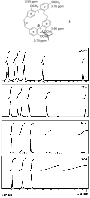
Figure 3: Temperature dependent 1H NMR and assignment of methoxy signals in the tetramethyl ether 3.

Scheme 2: Strategy of synthesis for the macrocycles 5–7.

Scheme 3: Preparation of the terminal alkyne 13 as a–b part (TBATB = tetrabutylammonium tribromide).

Scheme 4: Sonogashira-type coupling to the tolane 16.

Scheme 5: Synthesis of the d building blocks 21 and 26. aThe original procedure in diluted ammonia [31] was repla...

Scheme 6: Synthesis of the tolane precursors 27 and 28 for cyclization.

Scheme 7: Synthesis of the modified macrocycles 5–7 from the dialdehyde precursors 28–30.
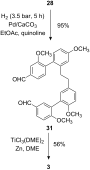
Scheme 8: Synthesis of the known macrocycle 3 via McMurry reaction.
Mitomycins syntheses: a recent update
- Jean-Christophe Andrez
Beilstein J. Org. Chem. 2009, 5, No. 33, doi:10.3762/bjoc.5.33

- the “normal” 5-substituted isoxazoline is formed. Hence, the nitrodecene 123 gives rise to only the nine-membered carbocycle 125 upon reaction with phenyl isocyanate. The matching HOMO-LUMO interactions for such cycloadditions favour the formation of 126 but ring strain and transannular steric effects

Graphical Abstract

Scheme 1: Aziridine containing natural products.

Scheme 2: Mitomycin structures and nomenclature.

Scheme 3: Base catalysed epimerization of mitomycin B.

Scheme 4: Biosynthesis of mitomycin C (MMC) 7.

Scheme 5: Mode of action of mitomycin C.

Scheme 6: The N–C3–C9a disconnection.

Scheme 7: Danishefsky’s Retrosynthesis of mitomycin K.

Scheme 8: Hetero Diels–Alder reaction en route to mitomycins.

Scheme 9: Nitroso Diels–Alder cycloaddition.

Scheme 10: Frank azide cycloadddition.

Scheme 11: Final steps of mitomycin K synthesis. aPDC, DCM; bPhSCH2N3, PhH, 80 °C; cL-selectride, THF, −78 °C; ...

Scheme 12: Naruta–Maruyama retrosynthesis.

Scheme 13: Synthesis of a leucoaziridinomitosane by nitrene cycloaddition. aAlCl3-Et2O; bNaH, ClCH2OMe; cn-BuL...

Scheme 14: Thermal decomposition of azidoquinone 51.

Scheme 15: Diastereoselectivity during the cycloaddition.

Scheme 16: Oxidation with iodo-azide.

Scheme 17: Williams’ approach towards mitomycins.aDEIPSCl, Imidazole, DCM; bPd/C, HCO2NH4, MeOH; cAllocCl, NaH...

Scheme 18: Synthesis of pyrrolidones by homoconjugate addition.
Scheme 19: Homoconjugate addition on the fully functionalized substrate.

Scheme 20: Introduction of the olefin.

Scheme 21: Retrosynthesis of N–C9a, N–C3 bond formation.

Scheme 22: Synthesis of the pyrrolo[1,2]indole 82 using N-PSP activation.aAc2O, Py; bAc2O, Hg(OAc)2, AcOH, 90%...

Scheme 23: Synthesis of an aziridinomitosane. am-CPBA, DCM then iPr2NH, CCl4 reflux; bK2CO3, MeOH; cBnBr, KH; d...

Scheme 24: Oxidation products of a leucoaziridinomitosane obtained from a Polonovski oxidation.

Scheme 25: Polonovski oxidation of an aziridinomitosane. am-CPBA; bPd/C, H2; cDimethoxypropane, PPTS.

Scheme 26: The C1–C9a disconnection.

Scheme 27: Ziegler synthesis of desmethoxymitomycin A.aIm2C=O, THF; bNH3; cTMSOTf, 2,6-di-tert-butylpyridine, ...

Scheme 28: Transformation of sodium erythorbate.aTBDMSCl; bNaN3; cPPh3; d(Boc)2O, DMAP; eTBAF; fTf2O, Pyr.

Scheme 29: Formation of C9,C10-unsaturation in the mitomycins. am-CPBA, DCM; bO3, MeOH; cMe2S; dKHMDS, (EtO)3P...

Scheme 30: Fragmentation mechanism.

Scheme 31: Michael addition-cyclisation.

Scheme 32: SmI2 8-endo-dig cyclisation.

Scheme 33: Synthesis of pyrrolo[1,2-a]indole by 5-exo-dig radical cyclization.

Scheme 34: The C9–C9a disconnection.

Scheme 35: Intramolecular nitrile oxide cycloaddition.

Scheme 36: Regioselectivity of the INOC.

Scheme 37: Fukuyama’s INOC strategy.

Scheme 38: Synthesis of a mitosane core by rearrangement of a 1-(1-pyrrolidinyl)-1,3-butadiene.

Scheme 39: Sulikowski synthesis of an aziridinomitosene. aPd(Tol3P)2Cl2, Bu3SnF, 140; bH2, Pd/C; cTFAA, Et3N; d...

Scheme 40: Enantioselective carbene insertion.

Scheme 41: Parson’s radical cyclization.

Scheme 42: Cha’s mitomycin B core synthesis.

Scheme 43: The N-aromatic disconnection.

Scheme 44: Kishi retrosynthesis.

Scheme 45: Kishi synthesis of a starting material. aallyl bromide, K2CO3, acetone, reflux; bN,N-Dimethylanilin...
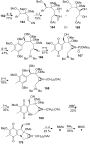
Scheme 46: Kishi synthesis of MMC 7. aLDA, THF, −78 °C then PhSeBr, THF, −78 °C; bH2O2, THF-EtOAc; cDIBAL, DCM...

Scheme 47: Acid catalyzed degradation of MMC 7.

Scheme 48: In vivo formation of apomitomycin B.

Scheme 49: Advanced intermediate for apomitomycin B synthesis.

Scheme 50: Remers synthesis of a functionalized mitosene. aTMSCl, Et3N, ZnCl2 then NBS; bAcOK; cNH2OH; dPd/C, H...

Scheme 51: Coleman synthesis of desmethoxymitomycin A. aSnCl2, PhSH, Et3N, CH3CN; bClCO2Bn, Et3N; cPPh3, DIAD,...

Scheme 52: Transition state and pyrrolidine synthesis.

Scheme 53: Air oxidation of mitosanes and aziridinomitosanes.

Scheme 54: The C9-aromatic disconnection.

Scheme 55: Synthesis of the aziridine precursor. aLHMDS, THF; bNaOH; c(s)-α-Me-BnNH2, DCC, HOBT; dDIBAL; eK2CO3...

Scheme 56: Synthesis of 206 via enamine conjugate addition.

Scheme 57: Rapoport synthesis of an aziridinomitosene.

Scheme 58: One pot synthesis of a mitomycin analog.

Scheme 59: Synthesis of compound 218 via intramolecular Heck coupling. aEtMgCl, THF, then 220; bMsCl, Et3N; cN...

Scheme 60: Elaboration of indole 223. aEt3N, Ac2O; bAcOH; cSOCl2, Et3N; dNaN3, DMF; eH2SO4, THF; fK2CO3, MeOH; ...

Scheme 61: C9-C9a functionalization from indole.

Scheme 62: Synthesis of mitomycin K. a2 equiv. MoO5.HMPA, MeOH; bPPh3, Et3N, THF-H2O; cMeOTf, Py, DCM; dMe3SiCH...

Scheme 63: Configurational stability of mitomycin K derivatives.

Scheme 64: Epimerization of carbon C9a in compound 227b.

Scheme 65: Corey–Chaykovsky synthesis of indol 235.

Scheme 66: Cory intramolecular aza-Darzens reaction for the formation of aziridinomitosene 239.

Scheme 67: Jimenez synthesis of aziridinomitosene 242.

Scheme 68: Von Braun opening of indoline 244.

Scheme 69: C9a oxidation of an aziridinomitosane with DDQ/OsO4.

Scheme 70: Synthesis of epi-mitomycin K. aNaH, Me2SO4; bH2, Pd/C; cMitscher reagent [165]; d[(trimethylsilyl)methyl...

Scheme 71: Mitomycins rearrangement.

Scheme 72: Fukuyama’s retrosynthesis.

Scheme 73: [2+3] Cycloaddition en route to isomitomycin A. aToluene, 110 °C; bDIBAL, THF, −78 °C; cAc2O, Py.; d...

Scheme 74: Final steps of Fukuyama’s synthesis.

Scheme 75: “Crisscross annulation”.

Scheme 76: Synthesis of 274; the 8-membered ring 274 was made using a crisscross annulation. a20% Pd(OH)2/C, H2...

Scheme 77: Conformational analysis of compound 273 and 275.

Scheme 78: Synthesis of a mitomycin analog. aNa2S2O4, H2O, DCM; bBnBr (10 equiv), K2CO3, 18-crown-6 (cat.), TH...

Scheme 79: Vedejs retrosynthesis.

Scheme 80: Formation of the azomethine ylide.

Scheme 81: Vedejs second synthesis of an aziridinomitosene. aDIBAL; bTPAP, NMO; c287; dTBSCl, imidazole.

Scheme 82: Trityl deprotection and new aziridine protecting group 300.

Scheme 83: Ene reaction towards benzazocinones.

Scheme 84: Benzazocenols via homo-Brook rearrangement.

Scheme 85: Pt-catalyzed [3+2] cycloaddition.

Scheme 86: Carbonylative lactamization entry to benzazocenols. aZn(OTf)2, (+)-N-methylephedrine, Et3N, TMS-ace...

Scheme 87: 8 membered ring formation by RCM. aBOC2O, NaHCO3; bTBSCl, Imidazole, DMF; callyl bromide, NaH, DMF; ...

Scheme 88: Aziridinomitosene synthesis. aTMSN3; bTFA; cPOCl3, DMF; dNaClO2, NaH2PO4, 2-methyl-2-butene; eMeI, ...

Scheme 89: Metathesis from an indole.

Scheme 90: Synthesis of early biosynthetic intermediates of mitomycins.
Dimerization of propargyl and homopropargyl 6-azido- 6-deoxy- glycosides upon 1,3-dipolar cycloaddition
- Nikolas Pietrzik,
- Daniel Schmollinger and
- Thomas Ziegler
Beilstein J. Org. Chem. 2008, 4, No. 30, doi:10.3762/bjoc.4.30

- dimers, trimers and tetramers. α-Galactoside 4e did not give any isolable dimer 7e at all (cf. Table 1, entry 5). Similarly, α-glucoside 4c resulted in a lower yield of the corresponding dimer compared to β-glucoside 4a (cf. Table 1, entries 1 and 3). This may be attributed to a significant ring-strain

Graphical Abstract

Figure 1: Schematic representation of glycosylated building blocks for the combinatorial synthesis of glycope...

Scheme 1: Synthesis and reaction of compounds 4a and 4a'.

Scheme 2: Preparation of compounds 4a–g.



