Search results
Search for "Pseudomonas" in Full Text gives 115 result(s) in Beilstein Journal of Organic Chemistry.
Partial thioamide scan on the lipopeptaibiotic trichogin GA IV. Effects on folding and bioactivity
Beilstein J. Org. Chem. 2012, 8, 1161–1171, doi:10.3762/bjoc.8.129
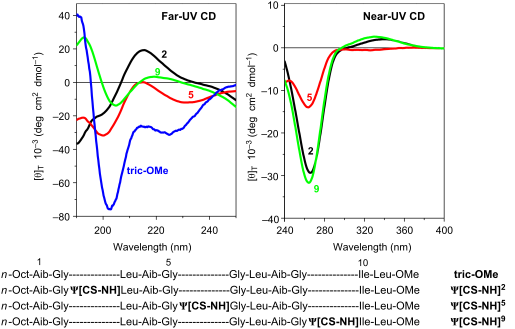
- , Escherichia coli ATCC 25922, Pseudomonas aeruginosa ATCC 27853, Klebsiella pneumoniae ATCC 13883, Salmonella entereditis 13076, and Proteus mirabilis ATCC 10975. The well-known antibiotics bacitracin and tetracyclin (10 μg/disk) were used as controls. List of primary structures and abbreviations for the


Low-generation dendrimers with a calixarene core and based on a chiral C2-symmetric pyrrolidine as iminosugar mimics
Beilstein J. Org. Chem. 2012, 8, 951–957, doi:10.3762/bjoc.8.107
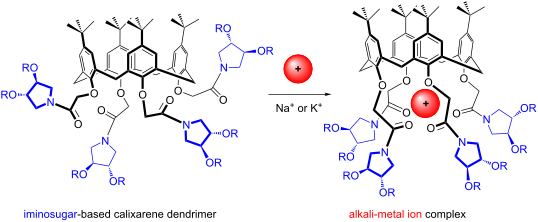
- enhance the avidity of interactions between glycans and lectins [15]. Some glycocalixarenes have shown remarkable inhibition properties towards galectins [21][22] or Pseudomonas Aeruginosa lectin [23], the inhibition ability being dependent on the macrocyclic conformation and presentation of the glycoside


Synthetic glycopeptides and glycoproteins with applications in biological research
Beilstein J. Org. Chem. 2012, 8, 804–818, doi:10.3762/bjoc.8.90
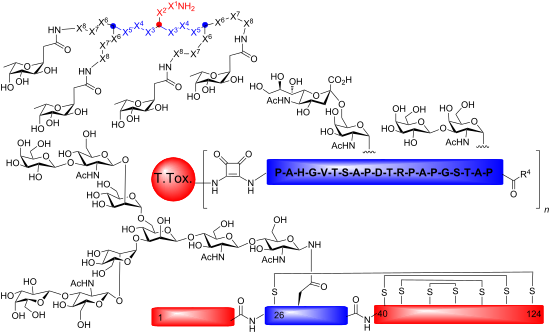
- distance (Figure 2) [140][141][142]. In another study, a combinatorial library of fucosyl-peptide dendrimers was synthesized and screened for binding to the fucose-specific lectin (LecB) from Pseudomonas aeruginosa, a pathogen causing severe infections in patients leading to chronic inflammation in the


Identification and isolation of insecticidal oxazoles from Pseudomonas spp.
Beilstein J. Org. Chem. 2012, 8, 749–752, doi:10.3762/bjoc.8.85
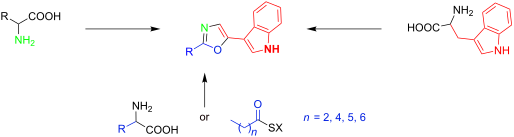
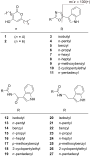
- , Penryn, Cornwall, TR10 9EZ, UK Faculty of Tropical Medicine, Mahidol University, 420/6 Ratchawithi Road, Ratchathewi, Bangkok 10400, Thailand 10.3762/bjoc.8.85 Abstract Two new and five known oxazoles were identified from two different Pseudomonas strains in addition to the known pyrones pseudopyronine
- intermediates were also investigated revealing interesting biological activities for several compounds despite their overall simple structures. Keywords: insecticidal activity; labradorin; oxazole; Pseudomonas; secondary metabolite; Findings During our search for novel natural products from entomopathogenic
- its 16S-rRNA gene revealing it to be a Pseudomonas sp. with closest homology to P. putida (100% similarity: Supporting Information File 1, Figure S4) [11][12][13][14]. As judged on the basis of high-resolution MALDI–MS and LC–ESIMS/MS data the well-known entomopathogenic P. entomophila [15][16] also



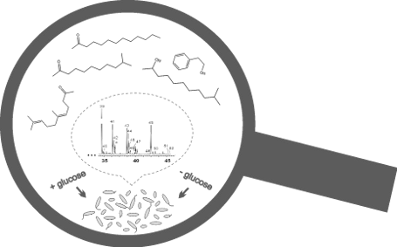
Volatile organic compounds produced by the phytopathogenic bacterium Xanthomonas campestris pv. vesicatoria 85-10
Beilstein J. Org. Chem. 2012, 8, 579–596, doi:10.3762/bjoc.8.65
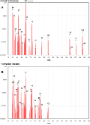
- dahliae, Paecilomyces carneus and Sclerotinia sclerotiorum were strongly inhibited by the rhizobacteria (Serratia spp., Pseudomonas spp., Stenotrophomonas spp.), and only F. solani appeared to be resistant against the bacterial volatiles. Also Muscodor albus volatiles only partially influence the growth
- investigated more comprehensively. In addition, inorganic compounds have to be considered, including hydrogen cyanide (HCN) and ammonia. HCN is produced, e.g., by Pseudomonas spp. [55] and, due to its slightly higher proton affinity than water, it should be detectable down to a concentration lower than 100 ppb




Synthesis of szentiamide, a depsipeptide from entomopathogenic Xenorhabdus szentirmaii with activity against Plasmodium falciparum
Beilstein J. Org. Chem. 2012, 8, 528–533, doi:10.3762/bjoc.8.60
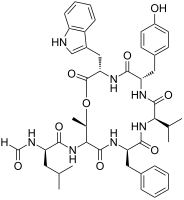
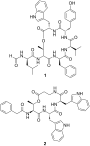
- different Gram-positive (Micrococcus luteus, Bacillus subtilis, Staphylococcus aureus) and Gram-negative (Escherichia coli, Pseudomonas aeroginosa) bacteria, as well as yeast (Candida albicans, Saccharomyces cerivisiae). However, consistent with the published data [12], no antibacterial or antifungal



Mutational analysis of a phenazine biosynthetic gene cluster in Streptomyces anulatus 9663
Beilstein J. Org. Chem. 2012, 8, 501–513, doi:10.3762/bjoc.8.57
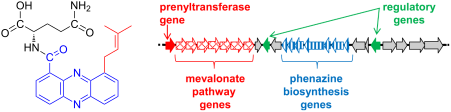
- phenazines are secondary metabolites, produced mainly by different species of the proteobacterium Pseudomonas and of the actinobacterium Streptomyces. While Pseudomonas strains produce phenazine derivatives with relatively simple structures, more complex phenazines are produced by Streptomyces strains [1
- ]. The biosynthesis of phenazine-1-carboxylic acid (PCA) and its derivatives has been studied extensively in Pseudomonas [2][3][4][5]. The biosynthesis of PCA requires a set of seven genes named phzABCDEFG [3][6]. PhzC codes for DAHP (3-deoxy-D-arabinoheptulosonate-7-phosphate) synthase, the first enzyme
- ]. The LysR-like protein PqsR from Pseudomonas sp. M18 is involved in the regulation of phenazine biosynthesis. Inactivation of pqsR resulted in almost complete abolishment of the transcription of the phenazine biosynthesis genes [21]. It may therefore be speculated that ppzY codes for a positive


Natural product biosyntheses in cyanobacteria: A treasure trove of unique enzymes
Beilstein J. Org. Chem. 2011, 7, 1622–1635, doi:10.3762/bjoc.7.191
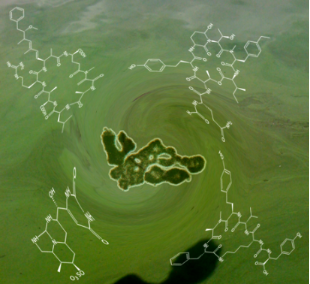
- mechanism of ureido bond formation remains to be elucidated. Recently, ureido bond formation was characterized for the protease inhibitor syringolin A that is produced by Pseudomonas syringiae [35]. The responsible freestanding NRPS module contains a sequence stretch with similarity to acyltransferases


Coupled chemo(enzymatic) reactions in continuous flow
Beilstein J. Org. Chem. 2011, 7, 1449–1467, doi:10.3762/bjoc.7.169
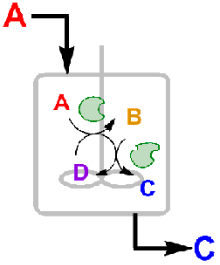
- continuous epoxidation of 1,7-octadiene (70) to (R)-7-epoxyoctene (72) by a strain of Pseudomonas oleovorans growing on heptane (71) (Scheme 23) [51]. In a continuous operation, with regard to the aqueous phase, substrates for both growth and biotransformation were supplied in the gas phase from a reservoir
- biofilm membrane reactor (Scheme 24) [52][53]. Cells of Pseudomonas sp. were grown in a biofilm attached to the inner surface of a silicon tube, through which a nutrient solution was constantly pumped. In a specially designed hermetic reaction compartment the tube was partially submerged into liquid 73
- ]. Continuous epoxidation of 1,7-octadiene (70) to (R)-7-epoxyoctene (72) by a strain of Pseudomonas oleovorans in a closed-gas-loop bioreactor (CCGLB). R: Reductase; Fe: Rubredoxin [51]. Oxidation of styrene (73) to (S)-styrene oxide (74) in a continuously operated biofilm tube reactor containing cells of


Synthesis, reactivity and biological activity of 5-alkoxymethyluracil analogues
Beilstein J. Org. Chem. 2011, 7, 678–698, doi:10.3762/bjoc.7.80
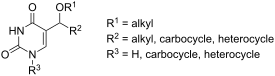
- tested for their antimicrobial activity against standard reference gram-positive and gram-negative bacterial strains such as Enterococcus faecalis CCM 4224, Staphylococcus aureus CCM 3953, Escherichia coli CCM 3954 and Pseudomonas aeruginosa CCM 3955 and against gram-positive and gram-negative bacteria
- obtained from clinical material of patients treated at the University Hospital in Olomouc (methicillin resistant Staphylococcus aureus - MRSA, Staphylococcus haemolyticus, Escherichia coli and Pseudomonas aeruginosa) with resistance to currently used fluoroquinolones. Only the octyl and nonyl derivatives


β-Hydroxy carbocation intermediates in solvolyses of di- and tetra-hydronaphthalene substrates
Beilstein J. Org. Chem. 2010, 6, 1035–1042, doi:10.3762/bjoc.6.118
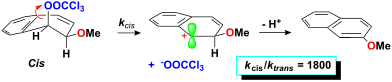
- -arenedihydrodiols are products of fermentation of aromatic molecules by mutant strains of soil bacteria containing dioxygenase enzymes such as Pseudomonas putida UV4 [1]. A characteristic reaction they undergo is acid-catalysed dehydration to form phenols [2], as illustrated for benzene-1,2-dihydrodiol in Scheme 1


One-pot three-component synthesis of quinoxaline and phenazine ring systems using Fischer carbene complexes
Beilstein J. Org. Chem. 2010, 6, No. 52, doi:10.3762/bjoc.6.52
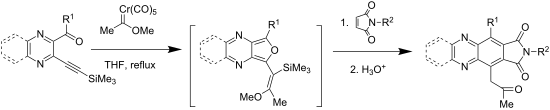
- heterocycles which exhibit a wide range of biological activities. Many phenazine compounds are found in nature and are produced by bacteria such as Pseudomonas spp., Streptomyces spp. and Pantoea agglomerans. These phenazine natural products have been implicated in the virulence and competitive fitness of the


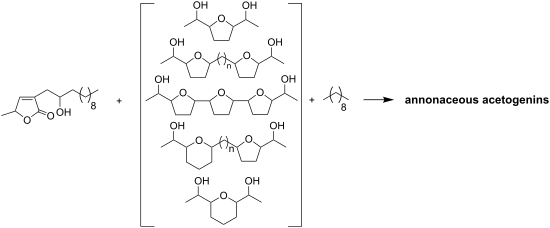
Recent progress on the total synthesis of acetogenins from Annonaceae
Beilstein J. Org. Chem. 2008, 4, No. 48, doi:10.3762/bjoc.4.48


One-pot synthesis of novel 1H-pyrimido[4,5-c][1,2]diazepines and pyrazolo[3,4-d]pyrimidines
Beilstein J. Org. Chem. 2006, 2, No. 5, doi:10.1186/1860-5397-2-5

- -c]pyridazine-5,7-dione), inhibits the growth of Pseudomonas 568 and also binds to herring sperm DNA.[7] However, until the emergence of HEPT[8] as a potent and selective inhibitor of HIV-1, no attention was given to the synthetic manipulation at the 6-position of uracils. Also the synthetic


New modification of the Perkow reaction: halocarboxylate anions as leaving groups in 3-acyloxyquinoline- 2,4(1H,3H)-dione compounds
Beilstein J. Org. Chem. 2005, 1, No. 17, doi:10.1186/1860-5397-1-17
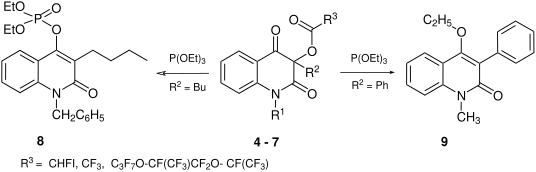
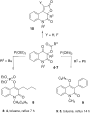
- fluorinated but-2-enolide rings. The 3-alkyl-3-hydroxyquinoline-2,4(1H,3H)-dione metabolites of Pseudomonas species exhibit antibiotic or lipoxygenase inhibitor activity[1] that may be modified by the introduction of an annulated pharmacophoric but-2-enolide ring. [2] The annulation was successfully carried