


Search results
Search for "acid catalysis" in Full Text gives 114 result(s) in Beilstein Journal of Organic Chemistry.
Ion-exchange-resin-catalyzed adamantylation of phenol derivatives with adamantanols: Developing a clean process for synthesis of 2-(1-adamantyl)-4-bromophenol, a key intermediate of adapalene
- Nan Wang,
- Ronghua Wang,
- Xia Shi and
- Gang Zou
Beilstein J. Org. Chem. 2012, 8, 227–233, doi:10.3762/bjoc.8.23
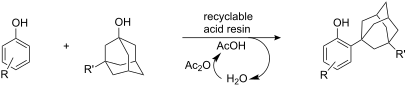
- % after purification by chromatography) in 2 h (Table 1, entry 9). The control experiment showed that no reaction occurred in the absence of the acidic ion-exchange resin, clearly excluding the possibility of acetic acid catalysis in the adamantylation (Table 1, entry 12). When the loading of the resin

Graphical Abstract

Figure 1: Recycling of the ion-exchange-resin catalyst in the adamantylation reaction of 4-bromophenol (1a) w...
Efficient, highly diastereoselective MS 4 Å-promoted one-pot, three-component synthesis of 2,6-disubstituted-4-tosyloxytetrahydropyrans via Prins cyclization
- Naseem Ahmed and
- Naveen Kumar Konduru
Beilstein J. Org. Chem. 2012, 8, 177–185, doi:10.3762/bjoc.8.19
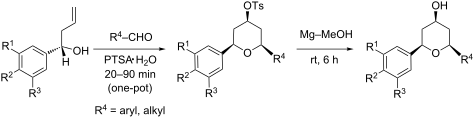
- reaction times [10]. In continuation of our interest in acid catalysis [35][36][37][38][39], we report herein an efficient, economical and highly diastereoselective one-pot three-component synthesis for both symmetrical and unsymmetrical 2,4,6-trisubstituted tetrahydropyrans using aromatic homoallyl

Graphical Abstract

Figure 1: Tetrahydropyran ring containing natural products.

Scheme 1: Plausible side products mechanism.

Scheme 2: Plausible reaction mechanism via Prins cyclization.

Figure 2: Schematic NOE diagram of compound 3b.

Scheme 3: Deprotection of the hydroxy group.
A practical route to tertiary diarylmethylamides or -carbamates from imines, organozinc reagents and acyl chlorides or chloroformates
- Erwan Le Gall,
- Antoine Pignon and
- Thierry Martens
Beilstein J. Org. Chem. 2011, 7, 997–1002, doi:10.3762/bjoc.7.112
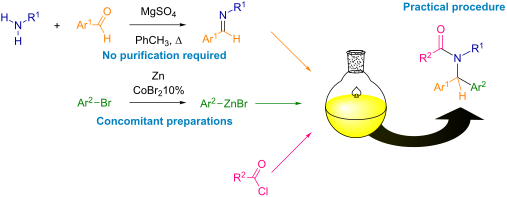
- -substituted aldimines, formed in situ upon reaction of primary amines with aromatic aldehydes, cannot be undertaken under our established conditions. Thus, we intended to activate the C=N double bond by rendering the carbon more electrophilic and we initially envisaged the use of Lewis acid catalysis. Indeed

Graphical Abstract

Scheme 1: Addition of nucleophiles onto activated imines (A) or iminiums (B).

Scheme 2: Activation of the aldimine with MsCl.
Multicomponent reaction access to complex quinolines via oxidation of the Povarov adducts
- Esther Vicente-García,
- Rosario Ramón,
- Sara Preciado and
- Rodolfo Lavilla
Beilstein J. Org. Chem. 2011, 7, 980–987, doi:10.3762/bjoc.7.110
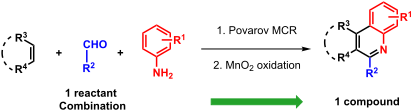
- through the Povarov MCR (the interaction of anilines, aldehydes and activated olefin inputs under acid catalysis) [4][5][6][7][8]. Interestingly, this process allows cyclic enol ethers and enamines to be used as electron-rich alkenes, leading to heterocycle-fused tetrahydroquinolines, usually as a mixture
- and elimination products (21 and 22, respectively) were independently prepared with DDQ under acid catalysis in an oxygenated atmosphere (O2-TFA), and characterized by NMR and HPLC methods. The optimized conditions with the Wako reagent were productive and selectively afforded the corresponding

Graphical Abstract

Scheme 1: Povarov oxidation access to substituted quinolines.

Scheme 2: Tetrahydroquinoline oxidation.

Scheme 3: Synthesis of the Povarov adducts and their oxidation products.

Figure 1: Optimization of the reaction conditions for the preparation of quinoline 18.

Scheme 4: Oxidation of lactam-fused tetrahydroquinolines 20,20'.
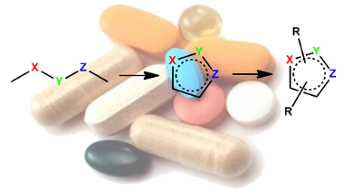
An overview of the key routes to the best selling 5-membered ring heterocyclic pharmaceuticals
- Marcus Baumann,
- Ian R. Baxendale,
- Steven V. Ley and
- Nikzad Nikbin
Beilstein J. Org. Chem. 2011, 7, 442–495, doi:10.3762/bjoc.7.57
- an α-bromo ketone and an excess of aniline to give a 2-arylindole derivative 110 [31] (Scheme 24). For a long time this procedure has received little attention due to the requirement for rather extreme reaction conditions. However, the use of microwave radiation in combination with Lewis acid
- catalysis allows the reaction to be conducted much more efficiently [32]. This gives mid range yields (50–70%) of the 2-arylindoles over the two step sequence and tolerates a selection of functional groups on the aniline ring. Fluvastatin (2, Lescol), a HMG-CoA reductase inhibitor was initially prepared by

Graphical Abstract
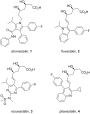
Figure 1: Structures of atorvastatin and other commercial statins.

Figure 2: Structure of compactin.

Scheme 1: Synthesis of pentasubstituted pyrroles.

Scheme 2: [3 + 2] Cycloaddition to prepare 5-isopropylpyrroles.

Scheme 3: Regiospecific [3 + 2] cycloaddition to prepare the pyrrole scaffold.

Scheme 4: Formation of the pyrrole core of atorvastatin via [3 + 2] cycloaddition.

Scheme 5: Formation of pyrrole 33 via the Paal–Knorr reaction.

Scheme 6: Convergent synthesis towards atorvastatin.

Figure 3: Binding pocket of sunitinib in the TRK KIT.

Scheme 7: Synthesis of sunitinib.

Scheme 8: Alternative synthesis of sunitinib.

Scheme 9: Key steps in the syntheses of sumatriptan and zolmitriptan.

Scheme 10: Introduction of the N,N-dimethylaminoethyl side chain.

Scheme 11: Japp–Klingemann reaction in the synthesis of sumatriptan.

Scheme 12: Synthesis of the intermediate sulfonyl chlorides 62 and 63.

Scheme 13: Alternative introduction of the sulfonamide.

Scheme 14: Negishi-type coupling to benzylic sulfonamides.

Scheme 15: Heck reaction used to introduce the sulfonamide side chain of naratriptan.

Scheme 16: Synthesis of the oxazolinone appendage of zolmitriptan.

Scheme 17: Grandberg indole synthesis used in the preparation of rizatriptan.

Scheme 18: Improved synthesis of rizatriptan.

Scheme 19: Larock-type synthesis of rizatriptan.

Scheme 20: Synthesis of eletriptan.

Scheme 21: Heck coupling for the indole system in eletriptan.

Scheme 22: Attempted Fischer indole synthesis of elatriptan.

Scheme 23: Successful Fischer indole synthesis for eletriptan.
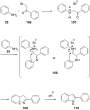
Scheme 24: Mechanistic rationale for the Bischler–Möhlau reaction.

Scheme 25: Bischler-type indole synthesis used in the fluvastatin sodium synthesis.

Scheme 26: Palladium-mediated synthesis of ondansetron.

Scheme 27: Fischer indole synthesis of ondansetron.

Scheme 28: Optimised Pictet–Spengler reaction towards tadalafil.

Figure 4: Structures of carvedilol 136 and propranolol 137.

Scheme 29: Synthesis of the carbazole core of carvedilol.

Scheme 30: Alternative syntheses of 4-hydroxy-9H-carbazole.

Scheme 31: Convergent synthesis of etodolac.

Scheme 32: Alternative synthesis of etodolac.

Figure 5: Structures of imidazole-containing drugs.

Scheme 33: Synthesis of functionalised imidazoles towards losartan.

Scheme 34: Direct synthesis of the chlorinated imidazole in losartan.

Scheme 35: Synthesis of trisubstituted imidazoles.

Scheme 36: Preparation of the imidazole ring in olmesartan.

Scheme 37: Synthesis of ondansetron.

Scheme 38: Alternative route to ondansetron and its analogues.

Scheme 39: Proton pump inhibitors and synthesis of esomeprazole.

Scheme 40: Synthesis of benzimidazole core pantoprazole.

Figure 6: Structure of rabeprazole 194.

Scheme 41: Synthesis of candesartan.

Scheme 42: Alternative access to the candesartan key intermediate 216.

Scheme 43: .Medicinal chemistry route to telmisartan.

Scheme 44: Improved synthesis of telmisartan.

Scheme 45: Synthesis of zolpidem.

Scheme 46: Copper-catalysed 3-component coupling towards zolpidem.

Figure 7: Structure of celecoxib.

Scheme 47: Preparation of celecoxib.

Scheme 48: Alternative synthesis of celecoxib.

Scheme 49: Regioselective access to celecoxib.

Scheme 50: Synthesis of pazopanib.

Scheme 51: Syntheses of anastrozole, rizatriptan and letrozole.

Scheme 52: Regioselective synthesis of anastrozole.

Scheme 53: Triazine-mediated triazole formation towards anastrozole.

Scheme 54: Alternative routes to 1,2,4-triazoles.

Scheme 55: Initial synthetic route to sitagliptin.

Figure 8: Binding of sitagliptin within DPP-IV.

Scheme 56: The process route to sitagliptin key intermediate 280.

Scheme 57: Synthesis of maraviroc.

Scheme 58: Synthesis of alprazolam.

Scheme 59: The use of N-nitrosoamidine derivatives in the preparation of fused benzodiazepines.

Figure 9: Structures of itraconazole, ravuconazole and voriconazole.

Scheme 60: Synthesis of itraconazole.

Scheme 61: Synthesis of rufinamide.

Scheme 62: Representative tetrazole formation in valsartan.

Figure 10: Structure of tetrazole containing olmesartan, candesartan and irbesartan.

Scheme 63: Early stage introduction of the tetrazole in losartan.

Scheme 64: Synthesis of cilostazol.

Figure 11: Structure of cefdinir.

Scheme 65: Semi-synthesis of cefdinir.

Scheme 66: Thiazole syntheses towards ritonavir.

Scheme 67: Synthesis towards pramipexole.

Scheme 68: Alternative route to pramipexole.

Scheme 69: Synthesis of famotidine.

Scheme 70: Efficient synthesis of the hyperuricemic febuxostat.

Scheme 71: Synthesis of ziprasidone.

Figure 12: Structure of mometasone.

Scheme 72: Industrial access to 2-furoic acid present in mometasone.

Scheme 73: Synthesis of ranitidine from furfuryl alcohol.

Scheme 74: Synthesis of nitrofurantoin.

Scheme 75: Synthesis of benzofuran.

Scheme 76: Synthesis of amiodarone.

Scheme 77: Synthesis of raloxifene.

Scheme 78: Alternative access to the benzo[b]thiophene core of raloxifene.

Scheme 79: Gewald reaction in the synthesis of olanzapine.

Scheme 80: Alternative synthesis of olanzapine.
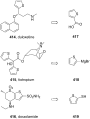
Figure 13: Access to simple thiophene-containing drugs.

Scheme 81: Synthesis of clopidogrel.

Scheme 82: Pictet–Spengler reaction in the preparation of tetrahydrothieno[3,2-c]pyridine (422).

Scheme 83: Alternative synthesis of key intermediate 422.

Figure 14: Co-crystal structures of timolol (left) and carazolol (right) in the β-adrenergic receptor.

Scheme 84: Synthesis of timolol.

Scheme 85: Synthesis of tizanidine 440.

Scheme 86: Synthesis of leflunomide.

Scheme 87: Synthesis of sulfamethoxazole.

Scheme 88: Synthesis of risperidone.

Figure 15: Relative abundance of selected transformations.

Figure 16: The abundance of heterocycles within top 200 drugs (5-membered rings).
Kinetics and mechanism of vanadium catalysed asymmetric cyanohydrin synthesis in propylene carbonate
- Michael North and
- Marta Omedes-Pujol
Beilstein J. Org. Chem. 2010, 6, 1043–1055, doi:10.3762/bjoc.6.119
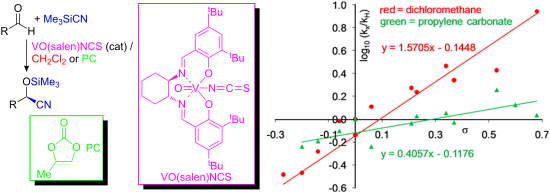
- Lewis base catalysis is dominant; and b) when Lewis acid catalysis is dominant. Hammett correlations with catalyst 2 at 0 °C. Data in red are obtained in dichloromethane [52], whilst data in blue are obtained in propylene carbonate. Synthesis and transformation of nonracemic silyl-protected cyanohydrins

Graphical Abstract

Scheme 1: Synthesis and transformation of nonracemic silyl-protected cyanohydrins.
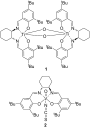
Figure 1: Highly active metal(salen) complexes for asymmetric cyanohydrin synthesis.

Scheme 2: Synthesis of cyclic carbonates.

Scheme 3: Synthesis of cyanohydrin trimethylsilyl ethers and acetates.

Scheme 4: Equilibrium between bimetallic and monometallic Ti(salen) complexes.

Figure 2: Second-order kinetics plot for the addition of TMSCN to benzaldehyde at 0 °C catalysed by complex 2...

Figure 3: Plot of k2obs against [2], showing that the reactions are first order with respect to the concentratio...

Figure 4: Eyring plot to determine the activation parameters for catalyst 2 in propylene carbonate. The red a...

Figure 5: 51V NMR spectra of complex 2 recorded at 50 °C. a) Spectrum in CDCl3; b) spectrum in CDCl3 with 500...
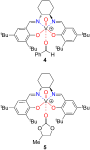
Figure 6: Structures consistent with the 51V NMR spectra.

Figure 7: Bimetallic aluminium(salen) complex for asymmetric cyanohydrin synthesis.

Figure 8: Rate determining transition states for asymmetric cyanohydrin synthesis: a) when Lewis base catalys...

Figure 9: Hammett correlations with catalyst 2 at 0 °C. Data in red are obtained in dichloromethane [52], whilst ...
Preparation of aminoethyl glycosides for glycoconjugation
- Robert Šardzík,
- Gavin T. Noble,
- Martin J. Weissenborn,
- Andrew Martin,
- Simon J. Webb and
- Sabine L. Flitsch
Beilstein J. Org. Chem. 2010, 6, 699–703, doi:10.3762/bjoc.6.81

- 2-chloroethanol under acid catalysis, followed by peracetylation, nucleophilic substitution with azide and finally, reduction of the azido group [13][14]. Alternatively, the carbohydrate was first activated as the trichloroacetimidate or bromide followed by glycosylation with N-Cbz-aminoethanol [15

Graphical Abstract

Figure 1: Aminoethyl glycosides (1–9) which were synthesised in this study.

Scheme 1: General reaction scheme for generation of aminoethyl glycosides. X = OAc, Br or Cl.

Scheme 2: Deprotection protocols.
Chemical synthesis using enzymatically generated building units for construction of the human milk pentasaccharides sialyllacto-N-tetraose and sialyllacto-N-neotetraose epimer
- Dirk Schmidt and
- Joachim Thiem
Beilstein J. Org. Chem. 2010, 6, No. 18, doi:10.3762/bjoc.6.18
- ′-benzylidene-protected derivative 11 in almost quantitative yield by transacetalization with benzaldehyde dimethylacetal in acetonitrile under p-toluenesulfonic acid catalysis. Subsequent peracetylation with acetic anhydride/pyridine, selective cleavage of the benzylidene group with 80% acetic acid at 90 °C

Graphical Abstract

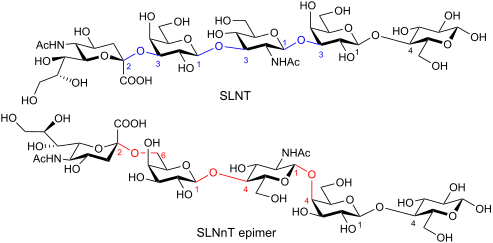
Figure 1: Structures of pentasaccharides 1 and 2.

Scheme 1: Preparation of pentasaccharide 8. 1) MeOH, acidic ion exchange resin; 2) Ac2O, pyridine; 3) 80% HOA...

Scheme 2: Preparation of pentasaccharide 14. 1) MeOH, acidic ion exchange resin; 2) Ac2O, pyridine; 3) 80% HO...

Figure 2: Roman numbering of saccharide units in all pentasaccharides for NMR assignment.
A review of new developments in the Friedel–Crafts alkylation – From green chemistry to asymmetric catalysis
- Magnus Rueping and
- Boris J. Nachtsheim
Beilstein J. Org. Chem. 2010, 6, No. 6, doi:10.3762/bjoc.6.6
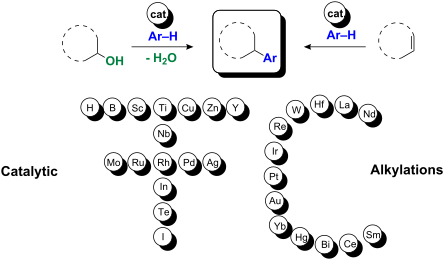
- –Crafts alkylation; green chemistry; hydroalkylation; hydroarylation; Lewis-acid catalysis; propargyl alcohols; Introduction In 1887 Charles Friedel and James Mason Crafts isolated amylbenzene after the treatment of amyl chloride with AlCl3 in benzene (Scheme 1) [1]. This was not only one of the first

Graphical Abstract

Scheme 1: AlCl3-mediated reaction between amyl chloride and benzene as developed by Friedel and Crafts.

Figure 1: Most often used metal salts for catalytic FC alkylations and hydroarylations of arenes.

Figure 2: 1,1-diarylalkanes with biological activity.

Scheme 2: Alkylating reagents and side products produced.

Scheme 3: Initially reported TeCl4-mediated FC alkylation of 1-penylethanol with toluene.

Scheme 4: Sc(OTf)3-catalyzed FC benzylation of arenes.

Scheme 5: Reductive FC alkylation of arenes with arenecarbaldehydes.

Scheme 6: Iron(III)-catalyzed FC benzylation of arenes and heteroarenes.

Scheme 7: A gold(III)-catalyzed route to beclobrate.

Scheme 8: Catalytic FC-type alkylations of 1,3-dicarbonyl compounds.

Scheme 9: Iron(III)-catalyzed synthesis of phenprocoumon.

Scheme 10: Bi(OTf)3-catalyzed FC alkylation of benzyl alcohols developed by Rueping et al.

Scheme 11: (A) Bi(OTf)3-catalyzed intramolecular FC alkylation as an efficient route to substituted fulvenes. ...

Scheme 12: FC-type glycosylation of 1,2-dimethylindole and trimethoxybenzene.

Scheme 13: FC alkylation with highly reactive ferrocenyl- and benzyl alcohols. The reaction proceeds even with...

Scheme 14: Reductive FC alkylation of arenes with benzaldehyde and acetophenone catalyzed by the Ir-carbene co...

Scheme 15: Formal synthesis of 1,1-diarylalkanes from benzyl alcohols and styrenes.

Scheme 16: (A) Mo-catalyzed hydroarylation of styrenes and cyclohexenes. (B) Hydroalkylation–cyclization casca...

Scheme 17: Bi(III)-catalyzed hydroarylation of styrenes with arenes and heteroarenes.

Scheme 18: BiCl3-catalyzed ene/FC alkylation reaction cascade – A fast access to highly arylated dihydroindene...

Scheme 19: Au(I)/Ag(I)-catalyzed hydroarylation of indoles with styrenes, aliphatic and cyclic alkenes.

Scheme 20: First transition-metal-catalyzed ortho-hydroarylation developed by Beller et al.

Scheme 21: (A) Ti(IV)-mediated rearrangement of an N-benzylated aniline to the corresponding ortho-alkylated a...

Scheme 22: Dibenzylation of aniline gives potentially useful amine-based ligands in a one-step procedure.

Scheme 23: FC-type alkylations with allyl alcohols as alkylating reagents – linear vs. branched product format...

Scheme 24: (A) First catalytic FC allylation and cinnamylation using allyl alcohols and its derivatives. (B) E...

Scheme 25: FC allylation/cyclization reaction yielding substituted chromanes.

Scheme 26: Synthesis of (all-rac)-α-tocopherol utilizing Lewis- and strong Brønsted-acids.

Scheme 27: Au(III)-catalyzed cinnamylation of arenes.

Scheme 28: “Exhaustive” allylation of benzene-1,3,5-triol.

Scheme 29: Palladium-catalyzed allylation of indole.

Scheme 30: Pd-catalyzed synthesis of pyrroloindoles from L-tryptophane.

Scheme 31: Ru(IV)-catalyzed allylation of indole and pyrroles with unique regioselectivity.

Scheme 32: Silver(I)-catalyzed intramolecular FC-type allylation of arenes and heteroarenes.

Scheme 33: FC-type alkylations of arenes using propargyl alcohols.

Scheme 34: (A) Propargylation of arenes with stoichiometric amounts of the Ru-allenylidene complex 86. (B) Fir...

Scheme 35: Diruthenium-catalyzed formation of chromenes and 1H-naphtho[2,1-b]pyrans.

Scheme 36: Rhenium(V)-catalyzed FC propargylations as a first step in the total synthesis of podophyllotoxin, ...

Scheme 37: Scandium-catalyzed arylation of 3-sulfanyl- and 3-selanylpropargyl alcohols.

Scheme 38: Synthesis of 1,3-diarylpropynes via direct coupling of propargyl trichloracetimidates and arenes.

Scheme 39: Diastereoselective substitutions of benzyl alcohols.

Scheme 40: (A) First diastereoselective FC alkylations developed by Bach et al. (B) anti-Selective FC alkylati...

Scheme 41: Diastereoselective AuCl3-catalyzed FC alkylation.

Scheme 42: Bi(OTf)3-catalyzed alkylation of α-chiral benzyl acetates with silyl enol ethers.

Scheme 43: Bi(OTf)3-catalyzed diastereoselective substitution of propargyl acetates.

Scheme 44: Nucelophilic substitution of enantioenriched ferrocenyl alcohols.

Scheme 45: First catalytic enantioselective propargylation of arenes.
Regioselective alkynylation followed by Suzuki coupling of 2,4-dichloroquinoline: Synthesis of 2-alkynyl- 4-arylquinolines
- Ellanki A. Reddy,
- Aminul Islam,
- K. Mukkanti,
- Venkanna Bandameedi,
- Dipal R. Bhowmik and
- Manojit Pal
Beilstein J. Org. Chem. 2009, 5, No. 32, doi:10.3762/bjoc.5.32

- ) 10.3762/bjoc.5.32 Abstract A two step synthesis of 2-alkynyl-4-arylquinolines has been accomplished via Pd/C-mediated regioselective C-2 alkynylation of 2,4-dichloroquinoline in water followed by Suzuki coupling at C-4 of the resulting 4-chloro derivative. Keywords: alkyne; boronic acid; catalysis; 2,4

Graphical Abstract

Figure 1: 2-Alkynyl-4-aryl pyridine and its benzo derivative.

Scheme 1: Sequential synthesis of 2-alkynyl-4-arylquinolines from 2,4-dichloroquinoline under palladium catal...

Scheme 2: The reaction mechanism of stepwise C–C bond forming reactions.
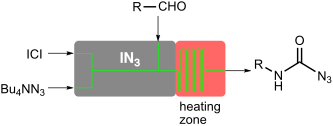
Controlling hazardous chemicals in microreactors: Synthesis with iodine azide
- Johan C. Brandt and
- Thomas Wirth
Beilstein J. Org. Chem. 2009, 5, No. 30, doi:10.3762/bjoc.5.30
- the substrate, lack of acid catalysis, or a combination of these reasons. Additionally, the substitution pattern of the substrates led to an unexpected outcome of the reaction. Experimental Synthesis of tetrabutylammonium azide: Procedure I [23]: Sodium azide (200 mmol, 13 g) was dissolved in water

Graphical Abstract

Scheme 1: Azide addition to aldehydes and formation of carbamoyl azides.

Figure 1: Microreactor setup for the in situ generation and use of iodine azide (IN3).

Scheme 2: Reaction of carbamoyl azide 4a with n-butyllithium.
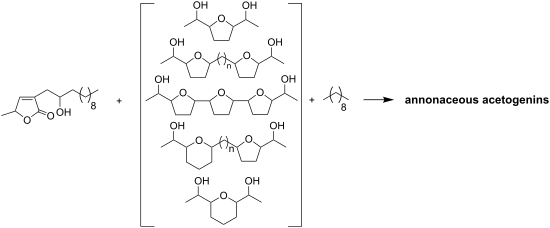
Recent progress on the total synthesis of acetogenins from Annonaceae
- Nianguang Li,
- Zhihao Shi,
- Yuping Tang,
- Jianwei Chen and
- Xiang Li
Beilstein J. Org. Chem. 2008, 4, No. 48, doi:10.3762/bjoc.4.48

Graphical Abstract

Scheme 1: Total synthesis of longifolicin by Marshall’s group.

Scheme 2: Total synthesis of corossoline by Tanaka’s group.

Scheme 3: Total synthesis of corossoline by Wu’s group.

Scheme 4: Total synthesis of pseudo-annonacin A by Hanessian’s group.

Scheme 5: Total synthesis of tonkinecin by Wu’s group.

Scheme 6: Total synthesis of gigantetrocin A by Shi’s group.

Scheme 7: Total synthesis of annonacin by Wu’s group.

Scheme 8: Total synthesis of solamin by Kitahara’s group.

Scheme 9: Total synthesis of solamin by Mioskowski’s group.

Scheme 10: Total synthesis of cis-solamin by Makabe’s group.

Scheme 11: Total synthesis of cis-solamin by Brown’s group.

Scheme 12: The formal synthesis of (+)-cis-solamin by Donohoe’s group.

Scheme 13: Total synthesis of cis-solamin by Stark’s group.

Scheme 14: Total synthesis of mosin B by Tanaka’s group.

Scheme 15: Total synthesis of longicin by Hanessian’s group.

Scheme 16: Total synthesis of murisolin and 16,19-cis-murisolin by Tanaka’s group.

Scheme 17: Synthesis of a stereoisomer library of (+)-murisolin by Curran’s group.

Scheme 18: Total synthesis of murisolin by Makabe’s group.

Scheme 19: Total synthesis of reticulatain-1 by Makabe’s group.

Scheme 20: Total synthesis of muricatetrocin C by Ley’s group.

Scheme 21: Total synthesis of (4R,12S,15S,16S,19R,20R,34S)-muricatetrocin (146) and (4R,12R,15S,16S,19R,20R,34S...

Scheme 22: Total synthesis of parviflorin by Hoye’s group.

Scheme 23: Total synthesis of parviflorin by Trost’s group.

Scheme 24: Total synthesis of trilobacin by Sinha’s group.

Scheme 25: Total synthesis of 15-epi-annonin I 181b by Scharf’s group.

Scheme 26: Total synthesis of squamocin A and squamocin D by Scharf’s group.

Scheme 27: Total synthesis of asiminocin by Marshall’s group.

Scheme 28: Total synthesis of asiminecin by Marshall’s group.

Scheme 29: Total synthesis of (+)-(30S)-bullanin by Marshall’s group.

Scheme 30: Total synthesis of uvaricin by the group of Sinha and Keinan.

Scheme 31: Formal synthesis of uvaricin by Burke’s group.

Scheme 32: Total synthesis of trilobin by Marshall’s group.

Scheme 33: Total synthesis of trilobin by the group of Sinha and Keinan.

Scheme 34: Total synthesis of asimilobin by the group of Wang and Shi.

Scheme 35: Total synthesis of squamotacin by the group of Sinha and Keinan.

Scheme 36: Total synthesis of asimicin by Marshall’s group.

Scheme 37: Total synthesis of asimicin by the group of Sinha and Keinan.

Scheme 38: Total synthesis of asimicin by Roush’s group.

Scheme 39: Total synthesis of asimicin by Marshall’s group.

Scheme 40: Total synthesis of 10-hydroxyasimicin by Ley’s group.

Scheme 41: Total synthesis of asimin by Marshall’s group.

Scheme 42: Total synthesis of bullatacin by the group of Sinha and Keinan.

Scheme 43: Total synthesis of bullatacin by Roush’s group.

Scheme 44: Total synthesis of bullatacin by Pagenkopf’s group.

Scheme 45: Total synthesis of rollidecins C and D by the group of Sinha and Keinan.

Scheme 46: Total synthesis of 30(S)-hydroxybullatacin by Marshall’s group.

Scheme 47: Total synthesis of uvarigrandin A and 5(R)-uvarigrandin A by Marshall’s group.

Scheme 48: Total synthesis of membranacin by Brown’s group.

Scheme 49: Total synthesis of membranacin by Lee’s group.

Scheme 50: Total synthesis of rolliniastatin 1 and rollimembrin by Lee’s group.

Scheme 51: Total synthesis of longimicin D by the group of Maezaki and Tanaka.

Scheme 52: Total synthesis of the structure proposed for mucoxin by Borhan’s group.

Scheme 53: Modular synthesis of adjacent bis-THF annonaceous acetogenins by Marshall’s group.

Scheme 54: Total synthesis of 4-deoxygigantecin by Tanaka’s group.

Scheme 55: Total synthesis of squamostatins D by Marshall’s group.

Scheme 56: Total synthesis of gigantecin by Crimmins’s group.

Scheme 57: Total synthesis of gigantecin by Hoye’s group.

Scheme 58: Total synthesis of cis-sylvaticin by Donohoe’s group.

Scheme 59: Total synthesis of 17(S),18(S)-goniocin by Sinha’s group.

Scheme 60: Total synthesis of goniocin and cyclogoniodenin T by the group of Sinha and Keinan.

Scheme 61: Total synthesis of jimenezin by Takahashi’s group.

Scheme 62: Total synthesis of jimenezin by Lee’s group.

Scheme 63: Total synthesis of jimenezin by Hoffmann’s group.

Scheme 64: Total synthesis of muconin by Jacobsen’s group.

Scheme 65: Total synthesis of (+)-muconin by Kitahara’s group.

Scheme 66: Total synthesis of muconin by Takahashi’s group.

Scheme 67: Total synthesis of muconin by the group of Yoshimitsu and Nagaoka.

Scheme 68: Total synthesis of mucocin by the group of Sinha and Keinan.

Scheme 69: Total synthesis of mucocin by Takahashi’s group.

Scheme 70: Total synthesis of (−)-mucocin by Koert’s group.

Scheme 71: Total synthesis of mucocin by the group of Takahashi and Nakata.

Scheme 72: Total synthesis of mucocin by Evans’s group.

Scheme 73: Total synthesis of mucocin by Mootoo’s group.

Scheme 74: Total synthesis of (−)-mucocin by Crimmins’s group.

Scheme 75: Total synthesis of pyranicin by the group of Takahashi and Nakata.

Scheme 76: Total synthesis of pyranicin by Rein’s group.

Scheme 77: Total synthesis of proposed pyragonicin by the group of Takahashi and Nakata.

Scheme 78: Total synthesis of pyragonicin by Rein’s group.

Scheme 79: Total synthesis of pyragonicin by Takahashi’s group.

Scheme 80: Total synthesis of squamostanal A by Figadère’s group.

Scheme 81: Total synthesis of diepomuricanin by Tanaka’s group.

Scheme 82: Total synthesis of (−)-muricatacin [(R,R)-373a] and its enantiomer (+)-muricatacin [(S,S)-373b] by ...

Scheme 83: Total synthesis of epi-muricatacin (+)-(S,R)-373c and (−)-(R,S)-373d by Scharf’s group.

Scheme 84: Total synthesis of (−)-muricatacin 373a and 5-epi-(−)-muricatacin 373d by Uang’s group.

Scheme 85: Total synthesis of four stereoisomers of muricatacin by Yoon’s group.

Scheme 86: Total synthesis of (+)-muricatacin by Figadère’s group.

Scheme 87: Total synthesis of (+)-epi-muricatacin and (−)-muricatacin by Couladouros’s group.

Scheme 88: Total synthesis of muricatacin by Trost’s group.

Scheme 89: Total synthesis of (−)-(4R,5R)-muricatacin by Heck and Mioskowski’s group.

Scheme 90: Total synthesis of muricatacin (−)-373a by the group of Carda and Marco.

Scheme 91: Total synthesis of (−)- and (+)-muricatacin by Popsavin’s group.

Scheme 92: Total synthesis of (−)-muricatacin by the group of Bernard and Piras.

Scheme 93: Total synthesis of (−)-muricatacin by the group of Yoshimitsu and Nagaoka.

Scheme 94: Total synthesis of (−)-muricatacin by Quinn’s group.

Scheme 95: Total synthesis of montecristin by Brückner’s group.

Scheme 96: Total synthesis of (−)-acaterin by the group of Franck and Figadère.

Scheme 97: Total synthesis of (−)-acaterin by Singh’s group.

Scheme 98: Total synthesis of (−)-acaterin by Kumar’s group.

Scheme 99: Total synthesis of rollicosin by Quinn’s group.

Scheme 100: Total synthesis of Rollicosin by Makabe’s group.

Scheme 101: Total synthesis of squamostolide by Makabe’s group.

Scheme 102: Total synthesis of tonkinelin by Makabe’s group.
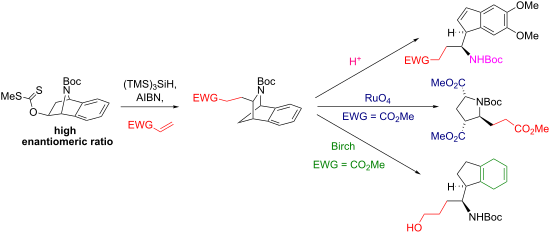
Radical cascades using enantioenriched 7-azabenzonorbornenes and their applications in synthesis
- David M. Hodgson and
- Leonard H. Winning
Beilstein J. Org. Chem. 2008, 4, No. 38, doi:10.3762/bjoc.4.38
- some degree of isomerisation to (aminomethyl)indenes 22 and 25 respectively were observed, as indicated by the appearance of vinylic CH resonances in the 1H NMR spectra (δ 6.8–6.0). This isomerisation is presumably the result of trace acid catalysis, with the process likely proceeding via protonation

Graphical Abstract

Scheme 1: Cyclopropylmethyl–homoallyl and nortricyclyl–norbornenyl radical systems.

Scheme 2: Deoxygenation-rearrangement-electrophile trapping.

Figure 1: Radical SOMO/α-nitrogen lone-pair interaction in the rearranged radical 7.

Figure 2: Other products obtained from xanthate 5 by tandem deoxygenation–rearrangement–electrophile trapping....

Scheme 3: Asymmetric hydroboration–oxidation of alkenes 14, 16 and 18.

Scheme 4: Deoxygenation–rearrangement–isomerisation of xanthates 20 and 23.

Scheme 5: Deoxygenation–rearrangement–electrophile trapping of xanthates 20 and 23.

Scheme 6: 2-Azabenzonorbornene as a masked pyrrolidine.

Scheme 7: Ring-opening–hydration–oxidation of azacycle 8.

Scheme 8: Preparation of trisubstituted pyrrolidine (+)-36.

Scheme 9: Preparation of pyrrolidine diester (+)-35 from Vince’s lactam 37.

Scheme 10: Acid-catalysed ring-opening–oxidation of azacycle (+)-8.

Scheme 11: Birch reduction of (+)-8 and 10.
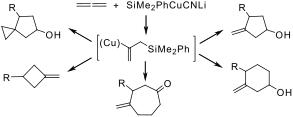
Allylsilanes in the synthesis of three to seven membered rings: the silylcuprate strategy
- Asunción Barbero,
- Francisco J. Pulido and
- M. Carmen Sañudo
Beilstein J. Org. Chem. 2007, 3, No. 16, doi:10.1186/1860-5397-3-16
- under Lewis acid catalysis. [10] Thus, silicon assisted cyclization of oxoallylsilanes 3–8 in the presence of TiCl4 or EtAlCl2 results in the formation of 3-methylene-1-cyclopentanols 11–14 with a high degree of stereocontrol (Scheme 3). [7] The cis stereochemistry observed in 11 might indicate a

Graphical Abstract

Scheme 1: The silylcupration of allenes.

Scheme 2: Silylcupration of 1,2-propadiene and reaction with oxo compounds.
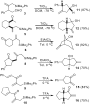
Scheme 3: Silicon assisted cyclization of oxoallylsilanes.

Scheme 4: Silylcupration of terminal alkynes bearing electron-withdrawing functions.
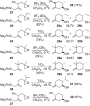
Scheme 5: The acid-catalyzed cyclization of epoxyallylsilanes.

Scheme 6: Intramolecular cyclization of TMS-epoxyallylsilanes.

Scheme 7: Spiro-cyclopropanation from oxoallylsilanes.

Scheme 8: Cyclobutane formation from hydroxy-functionalized allysilanes.

Scheme 9: Cyclobutene formation from vinyltin cuprates and epoxides.
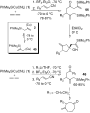
Scheme 10: Silylcupration of 1,2-propadiene and reaction with α,β-unsaturated nitriles.

Scheme 11: Cycloheptane formation from silylcupration of α,β-unsaturated imines.

Scheme 12: Seven membered ring formation from functionalized allylsilanes.



