


Search results
Search for "alkanes" in Full Text gives 111 result(s) in Beilstein Journal of Organic Chemistry.
Reciprocal polyhedra and the Euler relationship: cage hydrocarbons, CnHn and closo-boranes [BxHx]2−
- Michael J. McGlinchey and
- Henning Hopf
Beilstein J. Org. Chem. 2011, 7, 222–233, doi:10.3762/bjoc.7.30
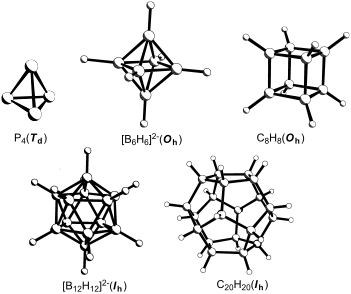
- structure). Now, every deltahedron has a reciprocal polyhedron in which each triangular face has become a vertex linked to three neighbors; this is precisely the criterion that has to be satisfied by alkanes of the CnHn type. To illustrate this inverse polyhedral relationship between closo-boranes, [BxHx]2
- contributions to this area [33]. Currently unknown polyhedranes, CnHn, n = 12, 14, 16, 18 After this short overview of the successful syntheses of several polycyclic alkanes, CnHn, where n = 4, 6, 8, 10 and 20, we now turn to the remaining unknown polyhedranes for which n = 12 (octahedrane, 12), n = 14

Graphical Abstract

Figure 1: Molecular analogues of the Platonic solids.

Figure 2: The structure of [Mo6Cl8]4+ demonstrates the reciprocal relationship between the cube and the octah...

Figure 3: The deltahedra corresponding to the structures of the closo-boranes [BxHx]2−.

Scheme 1: The first synthesis of a tetrahedrane 19 by Maier.

Scheme 2: The conversion of Dewar benzenes to [3]-prismanes.

Scheme 3: Synthesis of [3]prismane 9 by Katz.

Scheme 4: Synthesis of cubane 10 by Eaton.

Scheme 5: Synthesis of cubane 10 by Pettit.

Scheme 6: Failed routes to [5]-prismane 11.

Scheme 7: Synthesis of [5]prismane 11 by Eaton.

Scheme 8: Retrosynthetic analysis for several approaches to dodecahedrane 16.

Scheme 9: Paquette´s synthesis of dodecahedrane 16.

Scheme 10: Prinzbach´s synthesis of dodecahedrane 16.

Figure 4: The as yet unknown polyhedranes 12–15.
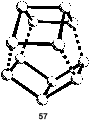
Figure 5: Coupling of two Dewar benzenes.

Scheme 11: A possible route to octahedrane 12.

Scheme 12: A possible route to nonahedrane 13.
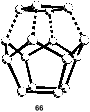
Figure 6: Capping [4]peristylane with a four-membered ring system.

Scheme 13: A possible route to decahedrane 14.

Figure 7: A possible route to undecahedrane 15 (left: side view; right: top view).

Scheme 14: Synthetic routes to trigonal prismatic hexasilanes 71a and hexagermanes 71b.

Scheme 15: Synthetic routes to octasila- and octagerma-cubanes.

Scheme 16: Synthesis of an octastannacubane and a decastannapentaprismane.

Scheme 17: Synthesis of a heterocubane.

Figure 8: D3d symmetric C8H8, a bis-truncated cubane.
Expanding the gelation properties of valine-based 3,5-diaminobenzoate organogelators with N-alkylurea functionalities
- Hak-Fun Chow and
- Chin-Ho Cheng
Beilstein J. Org. Chem. 2010, 6, 1015–1021, doi:10.3762/bjoc.6.114
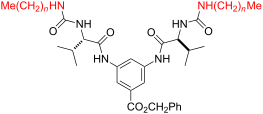
- gelating power in aromatic solvents. However, they are poor organogelators in non-aromatic solvents such as alkanes, alcohols, acetone, acetonitrile and DMSO. In order to further expand their gelating power in other solvents, we decided to further modify the appending Cbz groups with other functionalities

Graphical Abstract

Figure 1: Amino acid based organogelators 1 and 2.

Scheme 1: Synthesis of organogelators 2.
Aromatic and heterocyclic perfluoroalkyl sulfides. Methods of preparation
- Vladimir N. Boiko
Beilstein J. Org. Chem. 2010, 6, 880–921, doi:10.3762/bjoc.6.88
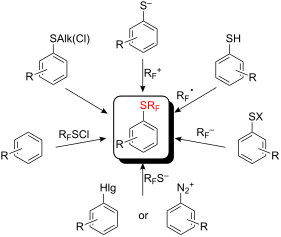
- ) polyhalogenofluoro alkanes as partial fluorinated alkylating agents generates the corresponding sulfides which are appropriate precursors for subsequent conversion to perfluoroalkyl thioethers. For example, α,α-difluoro polyhalogenoalkyl sulfides and α,α-dichlorotrifluoroethyl sulfide can be obtained by reaction of

Graphical Abstract

Figure 1: Examples of industrial fluorine-containing bio-active molecules.

Figure 2: CF3(S)- and CF3(O)-containing pharmacologically active compounds.

Figure 3: Hypotensive candidates with SRF and SO2RF groups – analogues of Losartan and Nifedipin.

Figure 4: The variety of the pharmacological activity of RFS-substituted compounds.

Figure 5: Recent examples of compounds containing RFS(O)n-groups [12-18].

Scheme 1: Fluorination of ArSCCl3 to corresponding ArSCF3 derivatives. For references see: a[38-43]; b[41,42]; c[43]; d[44]; e[38-43,45-47]; f[38-43,48,49]; g...

Scheme 2: Preparation of aryl pentafluoroethyl sulfides.

Scheme 3: Mild fluorination of the aryl SCF2Br derivatives.

Scheme 4: HF fluorinations of aryl α,α,β-trichloroisobutyl sulfide at various conditions.

Scheme 5: Monofluorination of α,α-dichloromethylene group.

Scheme 6: Electrophilic substitution of phenols with CF3SCl [69].

Scheme 7: Introduction of SCF3 groups into activated phenols [71-74].

Scheme 8: Preparation of tetrakis(SCF3)-4-methoxyphenol [72].

Scheme 9: The interactions of resorcinol and phloroglucinol derivatives with RFSCl.

Scheme 10: Reactions of anilines with CF3SCl.

Scheme 11: Trifluoromethylsulfanylation of anilines with electron-donating groups in the meta position [74].

Scheme 12: Reaction of benzene with CF3SCl/CF3SO3H [77].

Scheme 13: Reactions of trifluoromethyl sulfenyl chloride with aryl magnesium and -mercury substrates.

Scheme 14: Reactions of pyrroles with CF3SCl.

Scheme 15: Trifluoromethylsulfanylation of indole and indolizines.

Scheme 16: Reactions of N-methylpyrrole with CF3SCl [80,82].

Scheme 17: Reactions of furan, thiophene and selenophene with CF3SCl.

Scheme 18: Trifluoromethylsulfanylation of imidazole and thiazole derivatives [83].

Scheme 19: Trifluoromethylsulfanylation of pyridine requires initial hydride reduction.

Scheme 20: Introduction of additional RFS-groups into heterocyclic compounds in the presence of CF3SO3H.

Scheme 21: Introduction of additional RFS-groups into pyrroles [82,87].

Scheme 22: By-products in reactions of pyrroles with CF3SCl [82].

Scheme 23: Reaction of aromatic iodides with CuSCF3 [93,95].

Scheme 24: Reaction of aromatic iodides with RFZCu (Z = S, Se), RF = CF3, C6F5 [93,95,96].

Scheme 25: Side reactions during trifluoromethylsulfanylation of aromatic iodides with CF3SCu [98].

Scheme 26: Reactions with in situ generated CuSCF3.

Scheme 27: Perfluoroalkylthiolation of aryl iodides with bulky RFSCu [105].

Scheme 28: In situ formation and reaction of RFZCu with aryl iodides.

Figure 6: Examples of compounds obtained using in situ generated RFZCu methodology [94].

Scheme 29: Introduction of SCF3 group into aromatics via difluorocarbene.

Scheme 30: Tetrakis(dimethylamino)ethylene dication trifluoromethyl thiolate as a stable reagent for substitut...

Scheme 31: The use of CF2=S/CsF or (CF3S)2C=S/CsF for the introduction of CF3S groups into fluorinated heteroc...

Scheme 32: One-pot synthesis of ArSCF3 from ArX, CCl2=S and KF.

Scheme 33: Reaction of aromatics with CF3S− Kat+ [115].

Scheme 34: Reactions of activated aromatic chlorides with AgSCF3/KI.

Scheme 35: Comparative CuSCF3/KI and Hg(SCF3)2/KI reactions.

Scheme 36: Me3SnTeCF3 – a reagent for the introduction of the TeCF3 group.

Scheme 37: Sandmeyer reactions with CuSCF3.

Scheme 38: Reactions of perfluoroalkyl iodides with alkali and organolithium reagents.

Scheme 39: Perfluoroalkylation with preliminary breaking of the disulfide bond.

Scheme 40: Preparation of RFS-substituted anilines from dinitrodiphenyl disulfides.

Scheme 41: Photochemical trifluoromethylation of 2,4,6-trimercaptochlorobenzene [163].

Scheme 42: Putative process for the formation of B, C and D.

Scheme 43: Trifluoromethylation of 2-mercapto-4-hydroxy-6-trifluoromethylyrimidine [145].

Scheme 44: Deactivation of 2-mercapto-4-hydroxypyrimidines S-centered radicals.

Scheme 45: Perfluoroalkylation of thiolates with CF3Br under UV irradiation.

Scheme 46: Catalytic effect of methylviologen for RF• generation.

Scheme 47: SO2−• catalyzed trifluoromethylation.

Scheme 48: Electrochemical reduction of CF3Br in the presence of SO2 [199,200].

Scheme 49: Participation of SO2 in the oxidation of ArSCF3−•.

Scheme 50: Electron transfer cascade involving SO2 and MV.

Scheme 51: Four stages of the SRN1 mechanism for thiol perfluoroalkylation.

Scheme 52: A double role of MV in the catalysis of RFI reactions with aryl thiols.

Scheme 53: Photochemical reaction of pentafluoroiodobenzene with trifluoromethyl disulfide.

Scheme 54: N- Trifluoromethyl-N-nitrosobenzene sulfonamide – a source of CF3• radicals [212,213].

Scheme 55: Radical trifluoromethylation of organic disulfides with ArSO2N=NCF3.

Scheme 56: Barton’s S-perfluoroalkylation reactions [216].

Scheme 57: Decarboxylation of thiohydroxamic esters in the presence of C6F13I.

Scheme 58: Reactions of thioesters of trifluoroacetic and trifluoromethanesulfonic acids in the presence of ar...

Scheme 59: Perfluoroalkylation of polychloropyridine thiols with xenon perfluorocarboxylates or XeF2 [222,223].

Scheme 60: Interaction of Xe(OCORF)2 with nitroaryl disulfide [227].

Scheme 61: Bi(CF3)3/Cu(OCOCH3)2 trifluoromethylation of thiophenolate [230].

Scheme 62: Reaction of fluorinated carbanions with aryl sulfenyl chlorides.

Scheme 63: Reaction of methyl perfluoromethacrylate with PhSCl in the presence of fluoride.

Scheme 64: Reactions of ArSCN with potassium and magnesium perfluorocarbanions [237].

Scheme 65: Reactions of RFI with TDAE and organic disulfides [239,240].

Scheme 66: Decarboxylation of perfluorocarboxylates in the presence of disulfides [245].

Scheme 67: Organization of a stable form of “CF3−” anion in the DMF.

Scheme 68: Silylated amines in the presence of fluoride can deprotonate fluoroform for reaction with disulfide...

Figure 7: Other examples of aminomethanols [264].

Scheme 69: Trifluoromethylation of diphenyl disulfide with PhSO2CF3/t-BuOK.

Scheme 70: Amides of trifluoromethane sulfinic acid are sources of CF3− anion.

Scheme 71: Trifluoromethylation of various thiols using “hyper-valent” iodine (III) reagent [279].

Scheme 72: Trifluoromethylation of p-nitrothiophenolate with diaryl CF3 sulfonium salts [280].

Scheme 73: Trifluoromethyl transfer from dibenzo (CF3)S-, (CF3)Se- and (CF3)Te-phenium salts to thiolates [283].

Scheme 74: Multi-stage paths for synthesis of dibenzo-CF3-thiophenium salts [61].
The C–F bond as a conformational tool in organic and biological chemistry
- Luke Hunter
Beilstein J. Org. Chem. 2010, 6, No. 38, doi:10.3762/bjoc.6.38
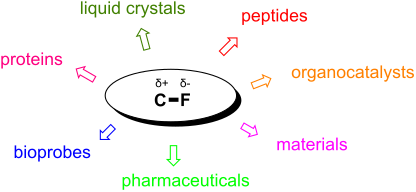
- fluoroalkane” (e.g. 54, Figure 12), which is conceptually intermediate between alkanes and perfluoroalkanes [37]. Multi-vicinal fluoroalkanes are interesting systems for studying stereoelectronic effects such as the gauche effect and they also have potential applications in materials science, for example, as

Graphical Abstract
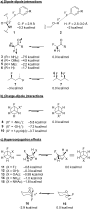
Figure 1: Conformational effects associated with C–F bonds.

Figure 2: HIV protease inhibitor Indinavir (17) and fluorinated analogues 18 and 19. In analogue 18 the gauche...

Figure 3: Cholesteryl ester transfer protein inhibitors 20 and 21. In the fluorinated analogue 21, nO→σ*CF hy...
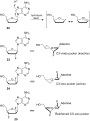
Figure 4: HIV reverse transcriptase inhibitor 22 and acid-stable fluorinated analogues 23–25. The F–C–C–O gau...
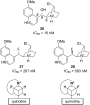
Figure 5: Dihydroquinidine (26) and fluorinated analogues 27 and 28. Newman projections along the C9–C8 bonds...

Figure 6: The neurotransmitter GABA (29) and fluorinated analogues (R)-30 and (S)-30. Newman projections of (R...

Figure 7: The insect pheromone 31 and fluorinated analogues (S)-32 and (R)-32. The proposed bioactive conform...

Figure 8: Capsaicin (33) and fluorinated analogues (R)-34 and (S)-34.

Figure 9: Asymmetric epoxidation reaction catalysed by pyrrolidine 35. Inset: the geometry of the activated i...
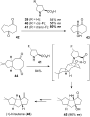
Figure 10: The asymmetric transannular aldol reaction catalysed by trans-4-fluoroproline (41), and its applica...

Figure 11: The asymmetric Stetter reaction catalysed by chiral NHC catalysts 49–52. The ring conformations of ...

Figure 12: A multi-vicinal fluoroalkane.

Figure 13: X-ray crystal structures of diastereoisomeric multi-vicinal fluoroalkanes 55 and 56. The different ...
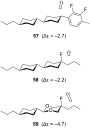
Figure 14: Examples of fluorinated liquid crystal molecules. Arrows indicate the orientation of the molecular ...

Figure 15: Di-, tri- and tetra-fluoro liquid crystal molecules 60–62.

Figure 16: Collagen mimics of general formula (Pro-Yaa-Gly)10 where Yaa is either 4(R)-hydroxyproline (63) or ...

Figure 17: Enkephalin-related peptide 64 and the fluorinated analogue 65. The electron-withdrawing trifluorome...

Figure 18: The C–F bond influences the conformation of β-peptides. β-Heptapeptide 66 adopts a helical conforma...

Figure 19: The conformations of pseudopeptides 69 and 70 are influenced by the α-fluoroamide effect and the fl...
Molecular recognition of organic ammonium ions in solution using synthetic receptors
- Andreas Späth and
- Burkhard König
Beilstein J. Org. Chem. 2010, 6, No. 32, doi:10.3762/bjoc.6.32
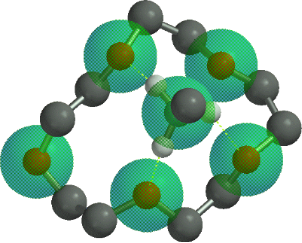
- of two or more crown ether amino acids. The group of Voyer reported crown ether based receptors for diamino and diammonium alkanes [187]. They used crown ether amino acid (CEAA) 19 (Figure 29), which was incorporated twice into an oligo Ala peptide chain. The receptor structure was modified by

Graphical Abstract

Figure 1: Biologically important amines and quaternary ammonium salts: histamine (1), dopamine (2) and acetyl...

Figure 2: Crown ether 18-crown-6.

Figure 3: Conformations of 18-crown-6 (4) in solvents of different polarity.

Figure 4: Binding topologies of the ammonium ion depending on the crown ring size.
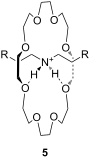
Figure 5: A “pseudorotaxane” structure consisting of 24-crown-8 and a secondary ammonium ion (5); R = Ph.

Figure 6: Typical examples of azacrown ethers, cryptands and related aza macrocycles.

Figure 7: Binding of ammonium to azacrown ethers and cryptands [111-113].

Figure 8: A 19-crown-6-ether with decalino blocking groups (11) and a thiazole-dibenzo-18-crown-6-ether (12).

Figure 9: 1,3-Bis(6-oxopyridazin-1-yl)propane derivatives 13 and 14 by Campayo et al.

Figure 10: Fluorescent azacrown-PET-sensors based on coumarin.

Figure 11: Two different pyridino-cryptands (17 and 18) compared to a pyridino-crown (19); chiral ammonium ion...

Figure 12: Pyridino-18-crown-6 ligand (21), a similar acridino-18-crown-6 ligand (22) and a structurally relat...

Figure 13: Ciral pyridine-azacrown ether receptors 24.

Figure 14: Chiral 15-crown-5 receptors 26 and an analogue 18-crown-6 ligand 27 derived from amino alcohols.

Figure 15: C2-symmetric chiral 18-crown-6 amino alcohol derivatives 28 and related macrocycles.

Figure 16: Macrocycles with diamide-diester groups (30).

Figure 17: C2-symmetric chiral aza-18-crown-6 ethers (31) with phenethylamine residues.

Figure 18: Chiral C-pivot p-methoxy-phenoxy-lariat ethers.

Figure 19: Chiral lariat crown ether 34.

Figure 20: Sucrose-based chiral crown ether receptors 36.
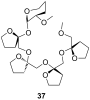
Figure 21: Permethylated fructooligosaccharide 37 showing induced-fit chiral recognition.

Figure 22: Biphenanthryl-18-crown-6 derivative 38.

Figure 23: Chiral lariat crown ethers derived from binol by Fuji et al.

Figure 24: Chiral phenolic crown ether 41 with “aryl chiral barriers” and guest amines.
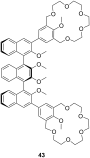
Figure 25: Chiral bis-crown receptor 43 with a meso-ternaphthalene backbone.

Figure 26: Chromogenic pH-dependent bis-crown chemosensor 44 for diamines.

Figure 27: Triamine guests for binding to receptor 44.

Figure 28: Chiral bis-crown phenolphthalein chemosensors 46.

Figure 29: Crown ether amino acid 47.

Figure 30: Luminescent receptor 48 for bis-alkylammonium guests.

Figure 31: Luminescent CEAA (49a), a bis-CEAA receptor for amino acids (49b) and the structure of lysine bindi...

Figure 32: Luminescent CEAA tripeptide for binding small peptides.

Figure 33: Bis crown ether 51a self assembles co-operatively with C60-ammonium ion 51b.

Figure 34: Triptycene-based macrotricyclic dibenzo-[24]-crown-8 ether host 52 and guests.

Figure 35: Copper imido diacetic acid azacrown receptor 53a and the suggested His-Lys binding motif; a copper ...

Figure 36: Urea (54) and thiourea (55) benzo crown receptor for transport and extraction of amino acids.

Figure 37: Crown pyryliums ion receptors 56 for amino acids.

Figure 38: Ditopic sulfonamide bridged crown ether receptor 57.

Figure 39: Luminescent peptide receptor 58.

Figure 40: Luminescent receptor 59 for the detection of D-glucosamine hydrochloride in water/ethanol and lumin...

Figure 41: Guanidinium azacrown receptor 61 for simple amino acids and ditopic receptor 62 with crown ether an...

Figure 42: Chiral bicyclic guanidinium azacrown receptor 63 and similar receptor 64 for the enantioselective t...

Figure 43: Receptors for zwitterionic species based on luminescent CEAAs.

Figure 44: 1,10-Azacrown ethers with sugar podand arms and the anticancer agent busulfan.

Figure 45: Benzo-18-crown-6 modified β-cyclodextrin 69 and β-cyclodextrin functionalized with diaza-18-crown-6...

Figure 46: Receptors for colorimetric detection of primary and secondary ammonium ions.

Figure 47: Porphyrine-crown-receptors 72.

Figure 48: Porphyrin-crown ether conjugate 73 and fullerene-ammonium ion guest 74.

Figure 49: Calix[4]arene (75a), homooxocalix[4]arene (75b) and resorcin[4]arene (75c) compared (R = H, alkyl c...

Figure 50: Calix[4]arene and ammonium ion guest (R = H, alkyl, OAcyl etc.), possible binding sites; A: co-ordi...

Figure 51: Typical guests for studies with calixarenes and related molecules.
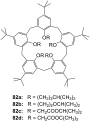
Figure 52: Lower rim modified p-tert-butylcalix[5]arenes 82.

Figure 53: The first example of a water soluble calixarene.

Figure 54: Sulfonated water soluble calix[n]arenes that bind ammonium ions.
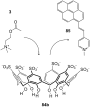
Figure 55: Displacement assay for acetylcholine (3) with a sulfonato-calix[6]arene (84b).

Figure 56: Amino acid inclusion in p-sulfonatocalix[4]arene (84a).

Figure 57: Calixarene receptor family 86 with upper and lower rim functionalization.

Figure 58: Calix[6]arenes 87 with one carboxylic acid functionality.
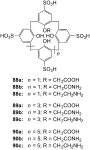
Figure 59: Sulfonated calix[n]arenes with mono-substitution at the lower rim systematically studied on their r...

Figure 60: Cyclotetrachromotropylene host (91) and its binding to lysine (81c).

Figure 61: Calixarenes 92 and 93 with phosphonic acids groups.

Figure 62: Calix[4]arene tetraphosphonic acid (94a) and a double bridged analogue (94b).
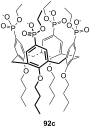
Figure 63: Calix[4]arene tetraphosphonic acid ester (92c) for surface recognition experiments.

Figure 64: Calixarene receptors 95 with α-aminophosphonate groups.

Figure 65: A bridged homocalix[3]arene 95 and a distally bridged homocalix[4]crown 96.

Figure 66: Homocalix[3]arene ammonium ion receptor 97a and the Reichardt’s dye (97b) for colorimetric assays.

Figure 67: Chromogenic diazo-bridged calix[4]arene 98.

Figure 68: Calixarene receptor 99 by Huang et al.
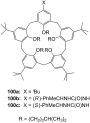
Figure 69: Calixarenes 100 reported by Parisi et al.

Figure 70: Guest molecules for inclusion in calixarenes 100: DAP × 2 HCl (101a), APA (101b) and Lys-OMe × 2 HC...

Figure 71: Different N-linked peptido-calixarenes open and with glycol chain bridges.

Figure 72: (S)-1,1′-Bi-2-naphthol calixarene derivative 104 published by Kubo et al.

Figure 73: A chiral ammonium-ion receptor 105 based on the calix[4]arene skeleton.

Figure 74: R-/S-phenylalaninol functionalized calix[6]arenes 106a and 106b.

Figure 75: Capped homocalix[3]arene ammonium ion receptor 107.

Figure 76: Two C3 symmetric capped calix[6]arenes 108 and 109.

Figure 77: Phosphorous-containing rigidified calix[6]arene 110.

Figure 78: Calix[6]azacryptand 111.

Figure 79: Further substituted calix[6]azacryptands 112.

Figure 80: Resorcin[4]arene (75c) and the cavitands (113).

Figure 81: Tetrasulfonatomethylcalix[4]resorcinarene (114).
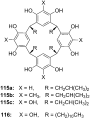
Figure 82: Resorcin[4]arenes (115a/b) and pyrogallo[4]arenes (115c, 116).
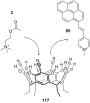
Figure 83: Displacement assay for acetylcholine (3) with tetracyanoresorcin[4]arene (117).

Figure 84: Tetramethoxy resorcinarene mono-crown-5 (118).

Figure 85: Components of a resorcinarene based displacement assay for ammonium ions.

Figure 86: Chiral basket resorcin[4]arenas 121.

Figure 87: Resorcinarenes with deeper cavitand structure (122).

Figure 88: Resorcinarene with partially open deeper cavitand structure (123).
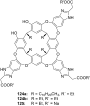
Figure 89: Water-stabilized deep cavitands with partially structure (124, 125).
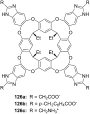
Figure 90: Charged cavitands 126 for tetralkylammonium ions.

Figure 91: Ditopic calix[4]arene receptor 127 capped with glycol chains.

Figure 92: A calix[5]arene dimer for diammonium salt recognition.

Figure 93: Calixarene parts 92c and 129 for the formation molecular capsules.
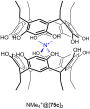
Figure 94: Encapsulation of a quaternary ammonium cation by two resorcin[4]arene molecules (NMe4+@[75c]2 × Cl−...

Figure 95: Encapsulation of a quaternary ammonium cation by six resorcin[4]arene molecules (NMe3D+@[130]6 × Cl−...

Figure 96: Structure and schematic of cucurbit[6]uril (CB[6], 131a).
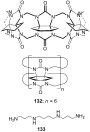
Figure 97: Cyclohexanocucurbit[6]uril (CB′[6], 132) and the guest molecule spermine (133).

Figure 98: α,α,δ,δ-Tetramethylcucurbit[6]uril (134).

Figure 99: Structure of the cucurbituril-phthalhydrazide analogue 135.

Figure 100: Organic cavities for the displacement assay for amine differentiation.

Figure 101: Displacement assay methodology for diammonium- and related guests involving cucurbiturils and some ...

Figure 102: Nor-seco-Cucurbituril (±)-bis-ns-CB[6] (140) and guest molecules.

Figure 103: The cucurbit[6]uril based complexes 141 for chiral discrimination.
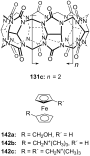
Figure 104: Cucurbit[7]uril (131c) and its ferrocene guests (142) opposed.

Figure 105: Cucurbit[7]uril (131c) guest inclusion and representative guests.

Figure 106: Cucurbit[7]uril (131c) binding to succinylcholine (145) and different bis-ammonium and bis-phosphon...

Figure 107: Paraquat-cucurbit[8]uril complex 149.
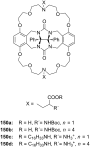
Figure 108: Gluconuril-based ammonium receptors 150.
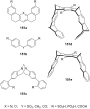
Figure 109: Examples of clefts (151a), tweezers (151b, 151c, 151d) and clips (151e).

Figure 110: Kemp’s triacid (152a), on example of Rebek’s receptors (152b) and guests.

Figure 111: Amino acid receptor (154) by Rebek et al.

Figure 112: Hexagonal lattice designed hosts by Bell et al.

Figure 113: Bell’s amidinium receptor (156) and the amidinium ion (157).
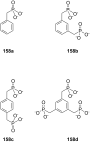
Figure 114: Aromatic phosphonic acids.

Figure 115: Xylene phosphonates 159 and 160a/b for recognition of amines and amino alcohols.
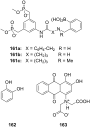
Figure 116: Bisphosphonate recognition motif 161 for a colorimetric assay with alizarin complexone (163) for ca...

Figure 117: Bisphosphonate/phosphate clip 164 and bisphosphonate cleft 165.

Figure 118: N-Methylpyrazine 166a, N-methylnicotinamide iodide (166b) and NAD+ (166c).

Figure 119: Bisphosphate cavitands.
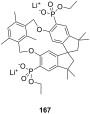
Figure 120: Bisphosphonate 167 of Schrader and Finocchiaro.
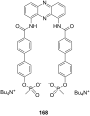
Figure 121: Tweezer 168 for noradrenaline (80b).

Figure 122: Different tripods and heparin (170).
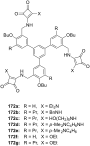
Figure 123: Squaramide based receptors 172.
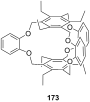
Figure 124: Cage like NH4+ receptor 173 of Kim et al.

Figure 125: Ammonium receptors 174 of Chin et al.

Figure 126: 2-Oxazolin-based ammonium receptors 175a–d and 176 by Ahn et al.

Figure 127: Racemic guest molecules 177.

Figure 128: Tripods based on a imidazole containing macrocycle (178) and the guest molecules employed in the st...

Figure 129: Ammonium ion receptor 180.

Figure 130: Tetraoxa[3.3.3.3]paracyclophanes 181 and a cyclophanic tetraester (182).

Figure 131: Peptidic bridged paraquat-cyclophane.
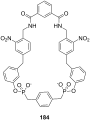
Figure 132: Shape-selective noradrenaline host.

Figure 133: Receptor 185 for binding of noradrenaline on surface layers from Schrader et al.

Figure 134: Tetraphosphonate receptor for binding of noradrenaline.

Figure 135: Tetraphosphonate 187 of Schrader and Finocchiaro.

Figure 136: Zinc-Porphyrin ammonium-ion receptors 188 and 189 of Mizutani et al.
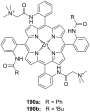
Figure 137: Zinc porphyrin receptor 190.

Figure 138: Zinc porphyrin receptors 191 capable of amino acid binding.

Figure 139: Zinc-porphyrins with amino acid side chains for stereoinduction.

Figure 140: Bis-zinc-bis-porphyrin based on Tröger’s base 193.

Figure 141: BINAP-zinc-prophyrin derivative 194 and it’s guests.

Figure 142: Bisaryl-linked-zinc-porphyrin receptors.
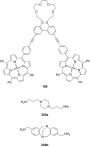
Figure 143: Bis-zinc-porphyrin 199 for diamine recognition and guests.

Figure 144: Bis-zinc-porphyrin crown ether 201.

Figure 145: Bis-zinc-porphyrin 202 for stereodiscrimination (L = large substituent; S = small substituent).

Figure 146: Bis-zinc-porphyrin[3]rotaxane and its copper complex and guests.

Figure 147: Dien-bipyridyl ligand 206 for co-ordination of two metal atoms.

Figure 148: The ligand and corresponding tetradentate co-complex 207 serving as enantioselective receptor for a...

Figure 149: Bis(oxazoline)–copper(II) complex 208 for the recognition of amino acids in aqueous solution.

Figure 150: Zinc-salen-complexes 209 for the recognition tertiary amines.

Figure 151: Bis(oxazoline)–copper(II) 211 for the recognition of amino acids in aqueous solution.

Figure 152: Zn(II)-complex of a C2 terpyridine crown ether.

Figure 153: Displacement assay and receptor for aspartate over glutamate.

Figure 154: Chiral complex 214 for a colorimetric displacement assay for amino acids.

Figure 155: Metal complex receptor 215 with tripeptide side arms.

Figure 156: A sandwich complex 216 and its displaceable dye 217.

Figure 157: Lanthanide complexes 218–220 for amino acid recognition.
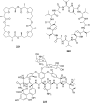
Figure 158: Nonactin (221), valinomycin (222) and vancomycin (223).

Figure 159: Monesin (224a) and a chiral analogue for enantiodiscrimination of ammonium guests (224b).

Figure 160: Chiral podands (226) compared to pentaglyme-dimethylether (225) and 18-crown-6 (4).

Figure 161: Lasalocid A (228).

Figure 162: Lasalocid derivatives (230) of Sessler et al.

Figure 163: The Coporphyrin I tetraanion (231).

Figure 164: Linear and cyclic peptides for ammonium ion recognition.

Figure 165: Cyclic and bicyclic depsipeptides for ammonium ion recognition.
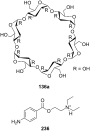
Figure 166: α-Cyclodextrin (136a) and novocaine (236).
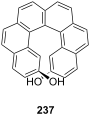
Figure 167: Helical diol receptor 237 by Reetz and Sostmann.

Figure 168: Ammonium binding spherand by Cram et al. (238a) and the cyclic[6]metaphenylacetylene 238b in compar...

Figure 169: Receptor for peptide backbone and ammonium binding (239).

Figure 170: Anion sensor principle with 3-hydroxy-2-naphthanilide of Jiang et al.

Figure 171: 7-bromo-3-hydroxy-N-(2-hydroxyphenyl)naphthalene 2-carboxamide (241) and its amine binding.

Figure 172: Naturally occurring catechins with affinity to quaternary ammonium ions.

Figure 173: Spiropyran (244) and merocyanine form (244a) of the amino acid receptors of Fuji et al.

Figure 174: Coumarin aldehyde (245) and its iminium species with amino acid bound (245a) by Glass et al.
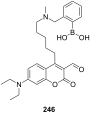
Figure 175: Coumarin aldehyde appended with boronic acid.

Figure 176: Quinolone aldehyde dimers by Glass et al.

Figure 177: Chromogenic ammonium ion receptors with trifluoroacetophenone recognition motifs.

Figure 178: Chromogenic ammonium ion receptor with trifluoroacetophenone recognition motif bound on different m...
Saddle-shaped tetraphenylenes with peripheral gallic esters displaying columnar mesophases
- Eugen Wuckert,
- Constanze Hägele,
- Frank Giesselmann,
- Angelika Baro and
- Sabine Laschat
Beilstein J. Org. Chem. 2009, 5, No. 57, doi:10.3762/bjoc.5.57
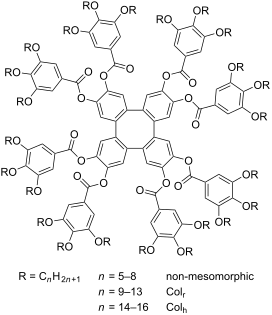
- orientational order and hence the clearing temperature is determined both by the alkoxy chain lengths as well as the rigid gallic acid moiety. In order to eliminate the influence of the alkyl side chain on the odd-even effect of the tetraphenylenes the melting temperatures Tmalk of n-alkanes were subtracted
- function of the chain lengths n. The differences between the clearing temperatures Tcl [°C] of tetraphenylenes 2 and the melting points Tmalk of the n-alkanes exhibit an almost normal odd-even effect without any inversion of the alteration. Synthesis of tetraphenylenes 2. Phase transition temperatures [°C
Graphical Abstract
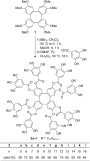
Scheme 1: Synthesis of tetraphenylenes 2.

Figure 1: DSC traces of compound 2h during (a) second cooling and (b) second heating (heating/cooling rate 5 ...

Figure 2: Texture of 2h under the POM at 25 °C upon cooling from the isotropic liquid (heating/cooling rate 5...

Figure 3: Molecular modelling of the saddle-shaped tetraphenylene (octakis)acyl core unit of 2 [35].

Figure 4: Clearing temperatures Tcl [°C] of tetraphenylenes 2e–l as a function of the chain lengths n.

Figure 5: The differences between the clearing temperatures Tcl [°C] of tetraphenylenes 2 and the melting poi...
Desymmetrization of 7-azabicycloalkenes by tandem olefin metathesis for the preparation of natural product scaffolds
- Wolfgang Maison,
- Marina Büchert and
- Nina Deppermann
Beilstein J. Org. Chem. 2007, 3, No. 48, doi:10.1186/1860-5397-3-48
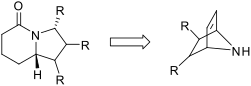
- metathesis (RORCM) [40][41][42][43][44][45][46][47][48][49][50][51][52][53][54] to N-acylated 2-azabicycloalkenes 4 as precursors for azabicyclo [X.3.0]alkanes like 6 (Scheme 1).[55] Various other strained heterocycles have also been used for ring opening metathesis or other tandem metathesis sequences. [56

Graphical Abstract

Figure 1: Ruthenium based precatalysts used in this study.

Scheme 1: RORCM of 2-azabicycloalkenes 5 to bicyclic scaffolds 6.

Scheme 2: RORCM of 7-azabicycloalkenes 8 and 10 to pyridone 9 and isoindole scaffold 11.

Scheme 3: RORCM of 7-azabicycloalkenes 13 and 16 to bicyclic scaffolds 14, 15, 17 and 18. Conditions A: 10 mo...

Scheme 4: ROCM of 7-azabicycloalkenes 7 and 12 to isoindole and pyrrolidine scaffolds 19 and 20.

Scheme 5: Catalytic enantioselective desymmetrization of 7-azabicycloalkene 10 to scaffold 23.
Part 3. Triethylborane- air: a suitable initiator for intermolecular radical additions of S-2-oxoalkyl- thionocarbonates (S-xanthates) to olefins
- Jean Boivin and
- Van Tai Nguyen
Beilstein J. Org. Chem. 2007, 3, No. 47, doi:10.1186/1860-5397-3-47

- S-alkyl-thionocarbonates (S-xanthates), O-alkyl-thionocarbonates (O-xanthates) and related compounds to the corresponding alkanes at room temperature.[7] In the present article, we wish to report that a more comprehensive understanding of the different routes involved permits the premature reduction

Graphical Abstract

Scheme 1: Reactivity of 2-oxoalkylxanthates toward 1-decene in the presence of Et3B/O2: competition between a...

Figure 1: Starting xanthates and olefins.
Figure 2: Adducts between xanthates and olefins.

Scheme 2: Postulated mechanism for the reaction of 2-oxoalkyl xanthates with olefins in the presence of Et3B.
Part 2. Mechanistic aspects of the reduction of S-alkyl- thionocarbonates in the presence of triethylborane and air
- Florent Allais,
- Jean Boivin and
- Van Tai Nguyen
Beilstein J. Org. Chem. 2007, 3, No. 46, doi:10.1186/1860-5397-3-46

- corresponding alkanes with good to excellent yields. Such a process complies with the long-standing pursuit of an environmentally acceptable process for desulfurisation, dehalogenation or deoxygenation that operates under mild reaction conditions. In this context, special attention must be paid to a paper
- plurality of mechanisms.[3] The reactivity of the combination alkylborane/air/water touches many other domains and certainly deserves further study. Xanthates 1a, 2a and their corresponding alkanes. Deuterated O-ethyl-S-ethyl dithiocarbonates 3–5, deuterated adduct 1d and alkane 1e. Kinetics of the

Graphical Abstract

Figure 1: Xanthates 1a, 2a and their corresponding alkanes.

Figure 2: Deuterated O-ethyl-S-ethyl dithiocarbonates 3–5, deuterated adduct 1d and alkane 1e.

Figure 3: Kinetics of the reduction of compound 1a in C6H6 at 20°C.

Scheme 1: Preparation of Et3B-d15.
Part 1. Reduction of S-alkyl- thionocarbonates and related compounds in the presence of trialkylboranes/air
- Jean Boivin and
- Van Tai Nguyen
Beilstein J. Org. Chem. 2007, 3, No. 45, doi:10.1186/1860-5397-3-45

- -dithiocarbonates (S-xanthates), iodides, O-alkyl-dithiocarbonates (O-xanthates) and related compounds to the corresponding alkanes is very important in organic synthesis, especially in natural products chemistry.[1][2] Deoxygenation (Barton-McCombie reaction) has been largely used to handle sensitive compounds
- and 2b, respectively. Interestingly, secondary S-alkylxanthates 3a–5a were cleanly reduced to the corresponding alkanes in excellent yields (up to 80%) (Table 1, entries 3–5). When the starting material was soluble enough, there was no need for an extra solvent other than the mixture of hexanes
- . Thus, compounds 10a, 12a–14a gave the corresponding alkanes in fair to good yields (entries 8–11). The reduction of a tertiary xanthate, without risk of any pseudo-Tchugaev thermal elimination, was also feasible in good yield as shown by reaction of compound 15a (entry 12). Attempts to reduce a primary

Graphical Abstract

Figure 1: Reaction of α-acylxanthate 1a with 1-decene and Et3B/air.

Figure 2: Xanthates and thionoimidazolides 2–16 and their reduced derivatives.

Scheme 1: Reduction of xanthate 17a at different temperatures with Et3B (5 equiv.)/air.

Scheme 2: Reduction of S-alkylxanthates and O-alkylxanthates.

Scheme 3: Reduction of O-alkyl-S-methyl xanthate 19, thionoimidazolide 21 and iodide 22 by Et3B/air at 20°C.
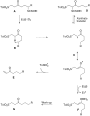
Scheme 4: Products formed through a putative 1,5-hydrogen atom transfer.
The vicinal difluoro motif: The synthesis and conformation of erythro- and threo- diastereoisomers of 1,2-difluorodiphenylethanes, 2,3-difluorosuccinic acids and their derivatives
- David O'Hagan,
- Henry S. Rzepa,
- Martin Schüler and
- Alexandra M. Z. Slawin
Beilstein J. Org. Chem. 2006, 2, No. 19, doi:10.1186/1860-5397-2-19
- Jt = 32 Hz are estimated values. The observed 3JHF coupling constants are an average over the rotational isomers. Synthesis of vicinal dimethyl difluorosuccinates. The conversion of the tartrates 1 with SF4 and HF [6][7]. Schlosser's route to vicinal erythro- or threo- difluoro alkanes 5 [13

Graphical Abstract

Scheme 1: Synthesis of vicinal dimethyl difluorosuccinates. The conversion of the tartrates 1 with SF4 and HF ...

Scheme 2: Schlosser's route to vicinal erythro- or threo- difluoro alkanes 5 [13].

Scheme 3: Halofluorination of electron-rich alkenes with in situ fluoride displacement generates vicinal difl...

Scheme 4: Bromofluorination of stilbene [19].

Scheme 5: Treatment of anti-14 with base generated the E-fluorostilbene 15 by an anti elimination mechanism.

Scheme 6: Hypothesis for the predominent retention of configuration during fluoride substitution via phenoniu...

Scheme 7: Proposed C-C bond rotation during the preparation of 14 from cis-stilbene.

Figure 1: Crystal structure of erythro-13.

Figure 2: X-ray structure of threo-13.
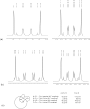
Figure 3: Expanded regions of the second order AA'XX' spin systems in the 1H-NMR (left) and 19F-NMR spectra (...
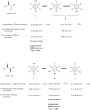
Figure 4: NMR coupling constants and calculated relative energies (kcalmol-1) of the staggered conformers of ...

Scheme 8: Synthesis of erythro-19 via ozonolysis of erythro-13.

Figure 5: X-ray structure of erythro-19.

Figure 6: X-ray structure of threo-19.

Scheme 9: Strategy for the preparation of diastereoisomers of erythro- and threo- 20.

Figure 7: NMR (CDCl3, RT) coupling constants of erythro- and threo- 2,3-difluoro-3-phenylpropionates 21.

Figure 8: Newman projections showing the staggered conformations of erythro- and threo- 21.

Figure 9: X-ray structure of methyl threo- 21.

Figure 10: The preferred conformation of α-fluoroamides has the C-F and amide carbonyl anti-planar [29,30].

Scheme 10: The synthesis of stereoisomers of erythro- and threo- 22. These isomers could be separated by chrom...

Figure 11: X-ray structure of erythro-22.

Figure 12: Crystal packing of erythro-22 clearly indicating intermolecular hydrogen bonding.

Figure 13: X-ray structure of threo-22.

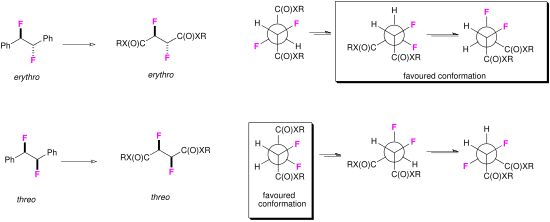
Figure 14: The conformations of erythro- and threo- 23 are very different as a consequence of each conformatio...

Figure 15: 3JHF and 3JHH coupling constants for the erythro (yellow) and threo (blue) diastereoisomers of the ...

Figure 16: Newman projections of the three staggered conformations of the erythro and threo stereoisomers of t...

Figure 17: The average coupling constant with no conformational bias. The limiting coupling constants Jg = 8 H...

Figure 18: The observed 3JHF coupling constants are an average over the rotational isomers.



