Search results
Search for "conjugate addition" in Full Text gives 168 result(s) in Beilstein Journal of Organic Chemistry.
Cupreines and cupreidines: an established class of bifunctional cinchona organocatalysts
Beilstein J. Org. Chem. 2016, 12, 429–443, doi:10.3762/bjoc.12.46
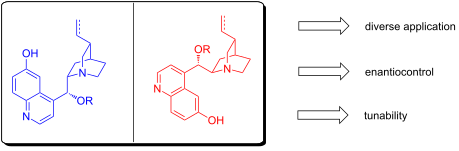
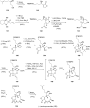
- cyclopropanation using dimethyl bromomalonate (57) and some form of Michael acceptor. In this process, the enolate resulting from the initital conjugate addition attacks the C–Br bond to form a three-membered ring. In our work in this area, we designed a new cupreine derived catalyst HCPN-59 to add dimethyl
- nitroolefins, and (b) Lin’s similar process with α-nitroesters using the symmetric hydrocupreidine system HCPD-44. A diastereodivergent sulfa-Michael addition developed by Melchiorre and co-workers. Melchiorre’s vinylogous Michael addition. Simpkins’s TKP conjugate addition reactions. Hydrocupreine catalyst


Synthesis and reactivity of aliphatic sulfur pentafluorides from substituted (pentafluorosulfanyl)benzenes
Beilstein J. Org. Chem. 2016, 12, 110–116, doi:10.3762/bjoc.12.12
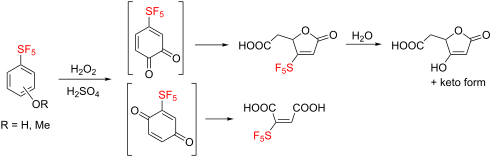
- transformations: electrophilic aromatic hydroxylation to the intermediate 6, oxidation to ortho-benzoquinone 7, Baeyer–Villiger (BV) oxidation, hydrolysis to muconic acid derivative 8, and finally intramolecular conjugate addition affording 3. Under certain conditions, small amounts of intermediates 6 and 8 were


Synthesis of Xenia diterpenoids and related metabolites isolated from marine organisms
Beilstein J. Org. Chem. 2015, 11, 2521–2539, doi:10.3762/bjoc.11.273
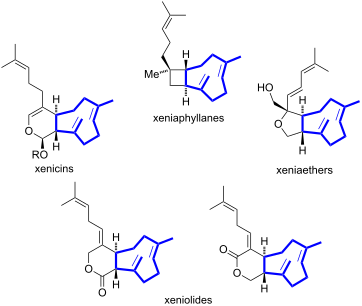
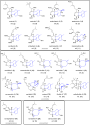
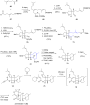
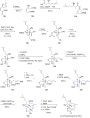
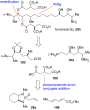
- already at that time the great potential of modern synthetic organic chemistry. More than 20 years later, in 1984, Oishi and co-workers reported a different strategy which culminated in the total synthesis of racemic β-caryophyllene (22) (Scheme 5) [34]. Their synthesis commenced with conjugate addition
- allenic sulfone [44] which, upon conjugate addition of diethyl amine followed by hydrolysis afforded a β-ketosulfone. For the following ring closure, the primary alcohol was desilylated and converted to the corresponding allylic carbonate 71. The cyclononene structure 72 was then assembled via a palladium
- -catalyzed conjugate addition of silyl ketene acetal 81a to enone ent-80. Deprotonation and trapping of the resulting enolate with formaldehyde furnished lactone 82 in a regio- and stereoselective fashion. Introduction of the exocyclic double bond proved to be challenging and therefore salt-free, highly







Copper-catalyzed stereoselective conjugate addition of alkylboranes to alkynoates
Beilstein J. Org. Chem. 2015, 11, 2444–2450, doi:10.3762/bjoc.11.265

- Takamichi Wakamatsu Kazunori Nagao Hirohisa Ohmiya Masaya Sawamura Department of Chemistry, Faculty of Science, Hokkaido University, Sapporo 060-0810, Japan 10.3762/bjoc.11.265 Abstract A copper-catalyzed conjugate addition of alkylboron compounds (alkyl-9-BBN, prepared by hydroboration of
- alkenes with 9-BBN-H) to alkynoates to form β-disubstituted acrylates is reported. The addition occurred in a formal syn-hydroalkylation mode. The syn stereoselectivity was excellent regardless of the substrate structure. A variety of functional groups were compatible with the conjugate addition
- . Keywords: alkylborane; alkynoate; conjugate addition; copper; multisubstituted alkene; Introduction Copper-mediated conjugate additions of organometallic reagents to alkynoates are powerful tools for the synthesis of multisubstituted alkenes [1][2][3][4][5][6][7][8]. Because of their broad availability


Copper-catalyzed asymmetric conjugate addition of organometallic reagents to extended Michael acceptors
Beilstein J. Org. Chem. 2015, 11, 2418–2434, doi:10.3762/bjoc.11.263
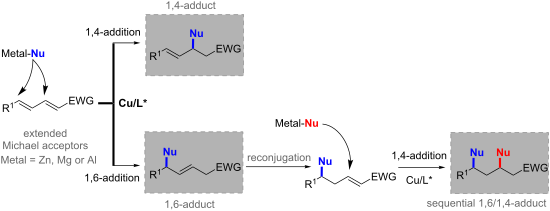
- Chimie, 8 Rue de l’Ecole Normale, 34296 Montpellier Cedex 5, France 10.3762/bjoc.11.263 Abstract The copper-catalyzed asymmetric conjugate addition (ACA) of nucleophiles onto polyenic Michael acceptors represents an attractive and powerful methodology for the synthesis of relevant chiral molecules, as
- ; sequential addition; Introduction Amongst the variety of synthetic methods available for the formation of C–C or C–heteroatom bonds, the asymmetric conjugate addition (ACA) of nucleophiles to electron-deficient alkenes is one of the most relevant and versatile for the synthesis of complex chiral molecules
- compound to an extended Michael acceptor was reported independently as early as 1972, by the Näf [4] and Corey [5] groups, who studied the reactivity of pentadienyl methyl ester (1, Figure 2). In both cases, the 1,6-conjugate addition of a stoichiometric amount of a Gilman reagent proceeded in a selective


Copper-catalyzed arylation of alkyl halides with arylaluminum reagents
Beilstein J. Org. Chem. 2015, 11, 2400–2407, doi:10.3762/bjoc.11.261
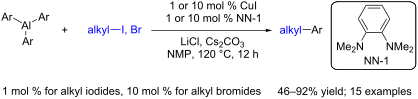
- form triorganoaluminate species in the presence of anions in solution [52][53][54][55][56][57]. In addition, organoaluminum reagents have been demonstrated to undergo transmetalation with Cu salts based on their participation in allylic and conjugate addition reactions [11][15][43]. Similar Cu


Copper catalysis in organic synthesis
Beilstein J. Org. Chem. 2015, 11, 2252–2253, doi:10.3762/bjoc.11.244
- . Some of the most highly cited papers of all time on this topic are reviews on conjugate addition, cross-coupling, and [3 + 2] “Click” reaction applied to bioconjugation. The growth in copper-catalyzed organic reactions may be driven by a couple of factors. First, copper chemistry is incredibly diverse
Chiral Cu(II)-catalyzed enantioselective β-borylation of α,β-unsaturated nitriles in water
Beilstein J. Org. Chem. 2015, 11, 2007–2011, doi:10.3762/bjoc.11.217
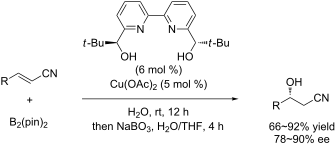
- Lei Zhu Taku Kitanosono Pengyu Xu Shu Kobayashi Department of Chemistry, School of Sciences, The University of Tokyo, Hongo, Bunkyo-ku, Tokyo, Japan 10.3762/bjoc.11.217 Abstract The promising performance of copper(II) complexes was demonstrated for asymmetric boron conjugate addition to α,β
- ]. Enantioselective boron conjugate addition to α,β-unsaturated nitriles provides one of the most efficient routes to chiral β-boryl nitriles. Several straightforward methods have been developed that rely on chiral Cu(I) complexes with air-sensitive phosphine ligands [11][12][13][14][15]. In contrast, Cu(II)-based
- catalysis, which has been reported recently for asymmetric boron conjugate addition, is characterized by the effective and thermodynamically stable catalysis in water. Furthermore, a broad range of α,β-unsaturated acceptors, including one example of an α,β-unsaturated nitrile, are applicable, and the


Preparation of conjugated dienoates with Bestmann ylide: Towards the synthesis of zampanolide and dactylolide using a facile linchpin approach
Beilstein J. Org. Chem. 2015, 11, 1815–1822, doi:10.3762/bjoc.11.197

- the methyl ester 14 [48]. Cuprate-mediated conjugate addition of a methyl nucleophile to the ynoate 14 provided the Z-enoate 15. Our attempts to directly reduce the ester 15 to the aldehyde 8 were unsuccessful due to competitive over-reduction to the corresponding alcohol. Therefore, a two-step


Reaction of allene esters with Selectfluor/TMSX (X = I, Br, Cl) and Selectfluor/NH4SCN: Competing oxidative/electrophilic dihalogenation and nucleophilic/conjugate addition
Beilstein J. Org. Chem. 2015, 11, 1641–1648, doi:10.3762/bjoc.11.180
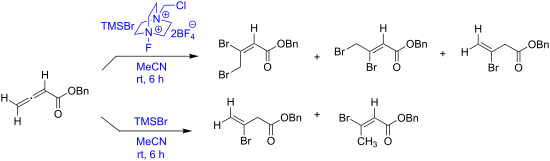
- ) is diminished in allenoates, most significantly in reactions with TMSCl, and essentially disappearing in reactions with NH4SCN, in favor of nucleophilic/conjugate addition. The study underscores the contrasting reactivity patterns in 1-arylallenes and allenoates toward electrophilic and nucleophilic
- additions in halofunctionalization with TMSX/Selectfluor and thiocyanation reactions with NH4SCN/Selectfluor. These competing pathways are influenced by the nature of the anion, allene structure, and the choice of solvent. Keywords: allene esters; oxidative electrophilic dihalogenation/conjugate addition
- /Selectfluor in MeCN, DMF, as well as in [BMIM][PF6] and [BMIM][NTf2]. The isomeric conjugate addition products 1l and 1m were isolated, with 1l as the major isomer. Unlike previous findings with 1-arylallenes [18], no dithiocyanation products were found irrespective of the choice of solvent (Scheme 4). In


Selected synthetic strategies to cyclophanes
Beilstein J. Org. Chem. 2015, 11, 1274–1331, doi:10.3762/bjoc.11.142
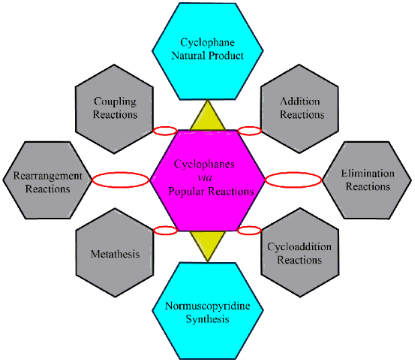
- provided acrylate 226, which was subjected to enantioselective copper-catalyzed conjugate addition with a methyl Grignard reagent involving (R)-tol-BINAP ligand to generate ester 227 in good yield and high enantiopurity. This intermediate was then converted to the key metathesis precursor involving a three




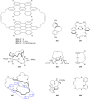


One-pot odourless synthesis of thioesters via in situ generation of thiobenzoic acids using benzoic anhydrides and thiourea
Beilstein J. Org. Chem. 2015, 11, 1265–1273, doi:10.3762/bjoc.11.141

- reaction of thiourea with benzoic anhydrides, which were subjected to conjugate addition with electron-deficient alkenes or a nucleophilic displacement reaction with alkyl halides. Keywords: benzoic anhydride; Michael addition; nucleophilic displacement; thioester; thiourea; Introduction Thioesters have
- -based reactions have a foul smell, making them unpleasant. Thioesters can also be prepared through the conjugate addition and nucleophilic displacement reactions using thioacid nucleophiles. Nevertheless, the reactions of thioacids have not been widely studied because they are not sufficiently available


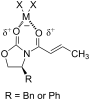
Diastereoselective and enantioselective conjugate addition reactions utilizing α,β-unsaturated amides and lactams
Beilstein J. Org. Chem. 2015, 11, 530–562, doi:10.3762/bjoc.11.60

- Katherine M. Byrd Department of Medicinal Chemistry, University of Kansas, 1251 Wescoe Hall Drive Lawrence, Kansas 66045-7582, USA 10.3762/bjoc.11.60 Abstract The conjugate addition reaction has been a useful tool in the formation of carbon–carbon bonds. The utility of this reaction has been
- demonstrated in the synthesis of many natural products, materials, and pharmacological agents. In the last three decades, there has been a significant increase in the development of asymmetric variants of this reaction. Unfortunately, conjugate addition reactions using α,β-unsaturated amides and lactams remain
- underdeveloped due to their inherently low reactivity. This review highlights the work that has been done on both diastereoselective and enantioselective conjugate addition reactions utilizing α,β-unsaturated amides and lactams. Keywords: α,β-unsaturated amides; α,β-unsaturated lactams; conjugate addition




Chemoselective O-acylation of hydroxyamino acids and amino alcohols under acidic reaction conditions: History, scope and applications
Beilstein J. Org. Chem. 2015, 11, 446–468, doi:10.3762/bjoc.11.51
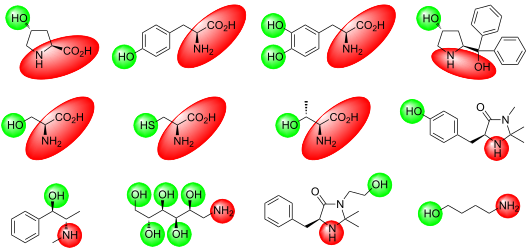
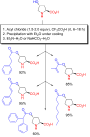
- Patchornik [20]. As a complicating factor, unlike other side-chain derivatives of hydroxyamino acids, the O-acrylic derivatives are powerful acceptors for conjugate addition and must be kept strictly in salt form to avoid decomposition through self-addition. The problem is exacerbated in proline derivatives
- propylene oxide in lower alcohols [46]. The acrylic derivatives, however, must be kept in salt form to avoid decomposition by conjugate addition. Acylation of hydroxyproline with aliphatic acyl chlorides in CF3CO2H gave a near quantitative yield of product (although the total yield was eroded by the


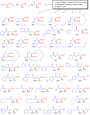


Copper-catalyzed cascade reactions of α,β-unsaturated esters with keto esters
Beilstein J. Org. Chem. 2015, 11, 213–218, doi:10.3762/bjoc.11.23

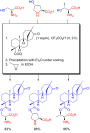
- not suitable for some acid-sensitive or base-sensitive intermediates. Alternatively, the lactone is also formed through the reaction of a carbonyl with an enolate that can be generated from a metal-catalyzed conjugate addition of an α,β-unsaturated diester. As shown in Figure 1, it involves a
- of γ-carboxy-γ-lactones via a copper-catalyzed cascade reaction. Considering that the reported conjugate addition–aldolization–lactonization cascade reactions proceed via the key intermediate A in Figure 1, we envisioned that the conjugate reduction of a methacrylate and the following aldol reaction
- esters and a silane was developed. The reaction involves conjugate addition of copper hydride, generated in situ, to α,β-unsaturated esters, followed by the aldolization with a keto ester and lactonization. It gives γ-carboxymethyl-γ-lactones and δ-carboxymethyl-δ-lactones in high yields, and provides a


Stereoselective synthesis of perillaldehyde-based chiral β-amino acid derivatives through conjugate addition of lithium amides
Beilstein J. Org. Chem. 2014, 10, 2738–2742, doi:10.3762/bjoc.10.289

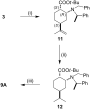
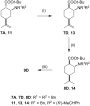
- -butyl perillate (3), however the saturation of the isopropenyl function at position 4 proved to have no effect on the stereoselectivity of the reaction (Scheme 3). When N-benzyl-N-α-methylbenzylamine was applied as a chiral nucleophile in the conjugate addition, the steric effect of the α-methyl
- synthesis of β-peptides and 1,3-heterocycles in three steps. The steric effects of the isopropyl group at position 4 and of the α-methyl substituent of (R)-N-benzyl-N-α-methylbenzylamine on the reactivity were also studied and, upon application of a chiral amine, excellent stereoselectivity of the conjugate
- addition was observed. Amino ester 11 was obtained as a single product and transformed to the corresponding amino acids 10A and 10D in good yields on the gram scale. Keywords: asymmetric synthesis; β-amino acid; chiral; Michael addition; monoterpene; Introduction In the past decade, cyclic β-amino acids


Application of cyclic phosphonamide reagents in the total synthesis of natural products and biologically active molecules
Beilstein J. Org. Chem. 2014, 10, 1848–1877, doi:10.3762/bjoc.10.195
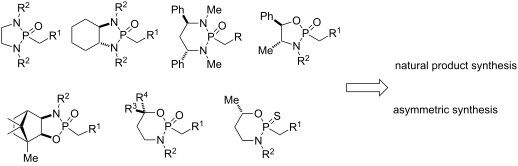
- summarized, as well as an overview of the synthesis of the employed phosphonamide reagents. Keywords: conjugate addition; cyclopropanation; olefination; organophosphorus; phosphonamide; total synthesis; Introduction Chiral non-racemic and achiral cyclic phosphonamide reagents 1–7 (Figure 1) have been
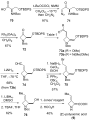
- in 28–64% ee [5]. In a similar fashion, Denmark’s oxazaphosphorinane cis-44a yielded keto esters 46a–c in high optical purities via conjugate addition to enones 41 followed by ozonolysis and oxidative esterification. Using diastereomer trans-44b on the other hand provided ketoesters 46a–c with only
- used for limited exploratory studies. Cyclopropanation and aziridination The cyclopropanation of α,β-unsaturated esters and lactones using chiral phosphonamide reagents is a special case of the conjugate addition–enolate alkylation sequence. The application of chloroallyl phosphonamides such as (trans












A tandem Mannich addition–palladium catalyzed ring-closing route toward 4-substituted-3(2H)-furanones
Beilstein J. Org. Chem. 2014, 10, 1462–1470, doi:10.3762/bjoc.10.150
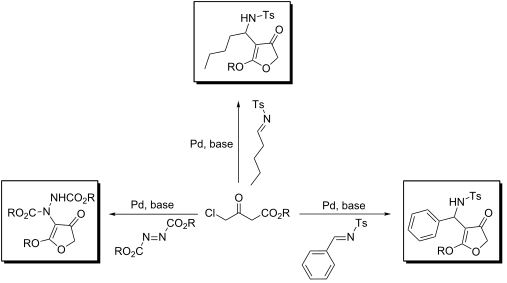
- economic and most importantly eco-friendly [1][2]. Conjugate addition is a very efficient tool used by synthetic chemists for the construction of carbon–carbon or carbon–heteroatom bonds [3]. Much effort has been invested to develop different variants of conjugate additions, both in catalyzed and non




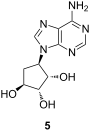
Stereoselective synthesis of carbocyclic analogues of the nucleoside Q precursor (PreQ0)
Beilstein J. Org. Chem. 2014, 10, 1333–1338, doi:10.3762/bjoc.10.135

- Pd(II)-catalyzed Miyaura 1,4-conjugate addition of phenylboronic acid to cyclohexenone [39]. The resulting ketone 25 was reduced to the axial [40][41] and equatorial [40] alcohols 26 and 27 with excellent diastereoselectivity thanks to steric control of the hydride source. After column chromatography




4-Hydroxy-6-alkyl-2-pyrones as nucleophilic coupling partners in Mitsunobu reactions and oxa-Michael additions
Beilstein J. Org. Chem. 2014, 10, 1159–1165, doi:10.3762/bjoc.10.116

- of pyronyl ethers is useful in itself, the ability to introduce an unsaturated group onto the oxygen, leading to a pyronyl enol ether, would have additional value. This is a highly unusual motif found in some marine polyketide natural products (such as compound 1, Figure 1). Conjugate addition to α,β


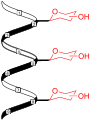
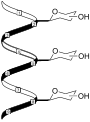
Molecular architecture with carbohydrate functionalized β-peptides adopting 314-helical conformation
Beilstein J. Org. Chem. 2014, 10, 948–955, doi:10.3762/bjoc.10.93

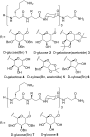
- attracted interest due to their use as structural elements as peptidomimetics [38][39], oligosaccharide mimetics [40][41] and induction of secondary structures [42][43][44][45][46]. Carbohydrate-derived β-amino acids used in this study were obtained by conjugate addition (Michael addition) of ammonia to a
- ]. Thus, preparation of the glucose derived β3-amino acid, the corresponding starting material ethyl (methyl 2,3,4-tri-O-benzyl-6,7-dideoxy-α-D-gluco-oct-6-enopyranoside)uronate (9a) was prepared from D-glucose as reported earlier [54]. Conjugate addition of ammonia to the α,β-unsaturated ester 9a


Asymmetric total synthesis of a putative sex pheromone component from the parasitoid wasp Trichogramma turkestanica
Beilstein J. Org. Chem. 2014, 10, 761–766, doi:10.3762/bjoc.10.71
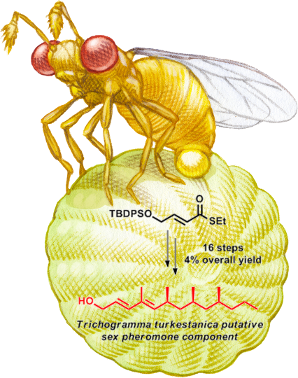
- )-4,6,8,10-tetramethyltrideca-2E,4E-dien-1-ol (2), is reported as a contribution to this identification. Catalytic asymmetric conjugate addition of methylmagnesium bromide and stereoselective Horner–Wadsworth–Emmons olefinations are used as the key steps, and 2 was obtained in 16 steps with an overall yield
- strategies is available for the synthesis of deoxypropionates [7][8][9][10][11][12][13][14][15]. Our approach [16] is based on copper-catalyzed asymmetric conjugate addition of methylmagnesium bromide to α,β-unsaturated thioesters and has proven its versatility [17][18][19]. Arrays of up to eight methyl
- substituents have been constructed [20]. Starting from 3, the first conjugate addition using (R,SFe)-L1 afforded 4, as expected in high yield and excellent enantiomeric excess (Scheme 1). Reduction with DIBALH, followed by Horner–Wadsworth–Emmons olefination and again asymmetric conjugate addition gave 6 in 77


Phosphinate-containing heterocycles: A mini-review
Beilstein J. Org. Chem. 2014, 10, 732–740, doi:10.3762/bjoc.10.67
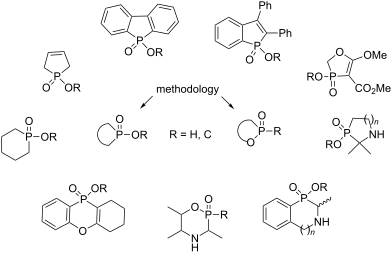
- cyclization through conjugate addition of ethyl 7-(ethoxy-H-phosphinoyl)-3-methyl-2-heptenoate (48) in the presence of potassium tert-butoxide (Scheme 20) [28]. A phosphorino[3’,4’:4,5]furo[2,3-d]-1,3-dioxole 51 was synthesized in 36% yield by Tattersall and coworkers by realizing a double Arbuzov-type


Recent applications of the divinylcyclopropane–cycloheptadiene rearrangement in organic synthesis
Beilstein J. Org. Chem. 2014, 10, 163–193, doi:10.3762/bjoc.10.14
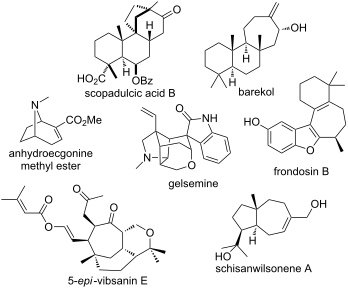
- achieved by the conjugate addition of cyanide [78]. Reduction of the newly introduced nitrile yielded the unexpected stable pentacycle 77. Formation of the missing methyl group (compound 78) could be achieved using forcing Wolff–Kishner-conditions. Benzoate formation and global oxidation [79][80] finally
- to give tricycle 111. The enol ether moiety was reduced using NaCNBH3, followed by allylic Riley oxidation and PCC-mediated enone formation. Copper-catalyzed conjugate addition in the presence of TMSCl [105] yielded silyl enol ether 112. Subsequent introduction of the side chain in 113 via a Claisen
- detected in the human body after cocaine consumption. It can be degradatively accessed from cocaine through pyrolysis, cocaine congeners can be prepared via conjugate addition afterwards [113][114]. Boc-protected pyrrole 127 was subjected to rhodium-catalyzed cyclopropanation with vinyldiazo compound 128




Organobase-catalyzed three-component reactions for the synthesis of 4H-2-aminopyrans, condensed pyrans and polysubstituted benzenes
Beilstein J. Org. Chem. 2014, 10, 141–149, doi:10.3762/bjoc.10.11
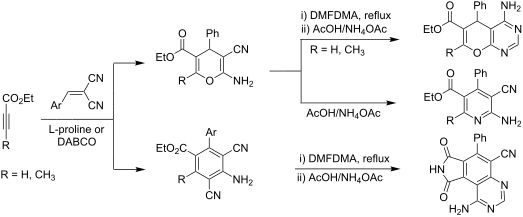
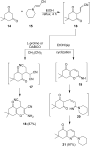
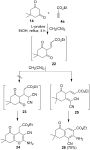
- generated using a one-pot reaction involving condensation of ethyl propiolate (4a) with benzylidenemalononitrile (7a) in the presence of L-proline (5) (Scheme 4) [4]. It is believed that the pathway followed in this process involves conjugate addition of proline to the propiolate to yield adduct 6 which