


Search results
Search for "furans" in Full Text gives 106 result(s) in Beilstein Journal of Organic Chemistry.
Photocycloaddition of aromatic and aliphatic aldehydes to isoxazoles: Cycloaddition reactivity and stability studies
- Axel G. Griesbeck,
- Marco Franke,
- Jörg Neudörfl and
- Hidehiro Kotaka
Beilstein J. Org. Chem. 2011, 7, 127–134, doi:10.3762/bjoc.7.18
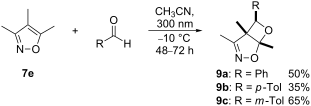
- of this reaction [6]. Previous publications have clearly demonstrated the versatility of the Paternò–Büchi reaction in various synthetic applications which gives rise to a multiplicity of different products. The photocycloaddition of furans to carbonyl compounds affords the corresponding β-hydroxy
- reagent on the liberated benzaldehyde. Conclusion The photocycloaddition of electronically excited carbonyl compounds to isoxazoles is clearly less effective than with other five-membered aromatic or non-aromatic heterocycles (furans, thiophenes, pyrroles, oxazoles, dihydrofurans, dihydropyrroles) [1

Graphical Abstract
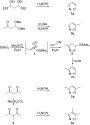
Scheme 1: Synthetic routes to isoxazoles 7a–7e.

Scheme 2: Synthetic routes to isoxazoles 7f–7h.

Scheme 3: Benzaldehyde photocycloaddition to 7a–7e.

Scheme 4: Photochemical ring contraction of isoxazoles 7f–7h.

Scheme 5: Photocycloaddition of aromatic aldehydes to di- and trimethyl isoxazoles 7d and 7e.

Scheme 6: Preparative photocycloadditions of 7e with aromatic aldehydes.

Figure 1: Structures of the photoproducts 9a–9c in the crystal.

Scheme 7: T-type photochromism of isoxazole–aldehyde pairs.

Scheme 8: Reductive cleavage of the trimethylisoxazole adduct 9a.
Aromatic and heterocyclic perfluoroalkyl sulfides. Methods of preparation
- Vladimir N. Boiko
Beilstein J. Org. Chem. 2010, 6, 880–921, doi:10.3762/bjoc.6.88
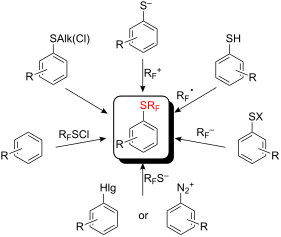
- -isomers [87]. Unlike pyrroles, furan, thiophene and selenophene react with CF3SCl only in the presence of catalysts. For selenophene [84] and thiophenes [85] SnCl4 is sufficient, whilst furans require more forcing conditions usually involving prolonged heating (20 h at 60 °C) and in pyridine for

Graphical Abstract

Figure 1: Examples of industrial fluorine-containing bio-active molecules.

Figure 2: CF3(S)- and CF3(O)-containing pharmacologically active compounds.

Figure 3: Hypotensive candidates with SRF and SO2RF groups – analogues of Losartan and Nifedipin.

Figure 4: The variety of the pharmacological activity of RFS-substituted compounds.

Figure 5: Recent examples of compounds containing RFS(O)n-groups [12-18].

Scheme 1: Fluorination of ArSCCl3 to corresponding ArSCF3 derivatives. For references see: a[38-43]; b[41,42]; c[43]; d[44]; e[38-43,45-47]; f[38-43,48,49]; g...

Scheme 2: Preparation of aryl pentafluoroethyl sulfides.

Scheme 3: Mild fluorination of the aryl SCF2Br derivatives.

Scheme 4: HF fluorinations of aryl α,α,β-trichloroisobutyl sulfide at various conditions.

Scheme 5: Monofluorination of α,α-dichloromethylene group.

Scheme 6: Electrophilic substitution of phenols with CF3SCl [69].

Scheme 7: Introduction of SCF3 groups into activated phenols [71-74].

Scheme 8: Preparation of tetrakis(SCF3)-4-methoxyphenol [72].

Scheme 9: The interactions of resorcinol and phloroglucinol derivatives with RFSCl.

Scheme 10: Reactions of anilines with CF3SCl.

Scheme 11: Trifluoromethylsulfanylation of anilines with electron-donating groups in the meta position [74].

Scheme 12: Reaction of benzene with CF3SCl/CF3SO3H [77].

Scheme 13: Reactions of trifluoromethyl sulfenyl chloride with aryl magnesium and -mercury substrates.

Scheme 14: Reactions of pyrroles with CF3SCl.

Scheme 15: Trifluoromethylsulfanylation of indole and indolizines.

Scheme 16: Reactions of N-methylpyrrole with CF3SCl [80,82].

Scheme 17: Reactions of furan, thiophene and selenophene with CF3SCl.

Scheme 18: Trifluoromethylsulfanylation of imidazole and thiazole derivatives [83].

Scheme 19: Trifluoromethylsulfanylation of pyridine requires initial hydride reduction.

Scheme 20: Introduction of additional RFS-groups into heterocyclic compounds in the presence of CF3SO3H.

Scheme 21: Introduction of additional RFS-groups into pyrroles [82,87].

Scheme 22: By-products in reactions of pyrroles with CF3SCl [82].

Scheme 23: Reaction of aromatic iodides with CuSCF3 [93,95].

Scheme 24: Reaction of aromatic iodides with RFZCu (Z = S, Se), RF = CF3, C6F5 [93,95,96].

Scheme 25: Side reactions during trifluoromethylsulfanylation of aromatic iodides with CF3SCu [98].

Scheme 26: Reactions with in situ generated CuSCF3.

Scheme 27: Perfluoroalkylthiolation of aryl iodides with bulky RFSCu [105].

Scheme 28: In situ formation and reaction of RFZCu with aryl iodides.

Figure 6: Examples of compounds obtained using in situ generated RFZCu methodology [94].

Scheme 29: Introduction of SCF3 group into aromatics via difluorocarbene.

Scheme 30: Tetrakis(dimethylamino)ethylene dication trifluoromethyl thiolate as a stable reagent for substitut...

Scheme 31: The use of CF2=S/CsF or (CF3S)2C=S/CsF for the introduction of CF3S groups into fluorinated heteroc...

Scheme 32: One-pot synthesis of ArSCF3 from ArX, CCl2=S and KF.

Scheme 33: Reaction of aromatics with CF3S− Kat+ [115].

Scheme 34: Reactions of activated aromatic chlorides with AgSCF3/KI.

Scheme 35: Comparative CuSCF3/KI and Hg(SCF3)2/KI reactions.

Scheme 36: Me3SnTeCF3 – a reagent for the introduction of the TeCF3 group.

Scheme 37: Sandmeyer reactions with CuSCF3.

Scheme 38: Reactions of perfluoroalkyl iodides with alkali and organolithium reagents.

Scheme 39: Perfluoroalkylation with preliminary breaking of the disulfide bond.

Scheme 40: Preparation of RFS-substituted anilines from dinitrodiphenyl disulfides.

Scheme 41: Photochemical trifluoromethylation of 2,4,6-trimercaptochlorobenzene [163].

Scheme 42: Putative process for the formation of B, C and D.

Scheme 43: Trifluoromethylation of 2-mercapto-4-hydroxy-6-trifluoromethylyrimidine [145].

Scheme 44: Deactivation of 2-mercapto-4-hydroxypyrimidines S-centered radicals.

Scheme 45: Perfluoroalkylation of thiolates with CF3Br under UV irradiation.

Scheme 46: Catalytic effect of methylviologen for RF• generation.

Scheme 47: SO2−• catalyzed trifluoromethylation.

Scheme 48: Electrochemical reduction of CF3Br in the presence of SO2 [199,200].

Scheme 49: Participation of SO2 in the oxidation of ArSCF3−•.

Scheme 50: Electron transfer cascade involving SO2 and MV.

Scheme 51: Four stages of the SRN1 mechanism for thiol perfluoroalkylation.

Scheme 52: A double role of MV in the catalysis of RFI reactions with aryl thiols.

Scheme 53: Photochemical reaction of pentafluoroiodobenzene with trifluoromethyl disulfide.

Scheme 54: N- Trifluoromethyl-N-nitrosobenzene sulfonamide – a source of CF3• radicals [212,213].

Scheme 55: Radical trifluoromethylation of organic disulfides with ArSO2N=NCF3.

Scheme 56: Barton’s S-perfluoroalkylation reactions [216].

Scheme 57: Decarboxylation of thiohydroxamic esters in the presence of C6F13I.

Scheme 58: Reactions of thioesters of trifluoroacetic and trifluoromethanesulfonic acids in the presence of ar...

Scheme 59: Perfluoroalkylation of polychloropyridine thiols with xenon perfluorocarboxylates or XeF2 [222,223].

Scheme 60: Interaction of Xe(OCORF)2 with nitroaryl disulfide [227].

Scheme 61: Bi(CF3)3/Cu(OCOCH3)2 trifluoromethylation of thiophenolate [230].

Scheme 62: Reaction of fluorinated carbanions with aryl sulfenyl chlorides.

Scheme 63: Reaction of methyl perfluoromethacrylate with PhSCl in the presence of fluoride.

Scheme 64: Reactions of ArSCN with potassium and magnesium perfluorocarbanions [237].

Scheme 65: Reactions of RFI with TDAE and organic disulfides [239,240].

Scheme 66: Decarboxylation of perfluorocarboxylates in the presence of disulfides [245].

Scheme 67: Organization of a stable form of “CF3−” anion in the DMF.

Scheme 68: Silylated amines in the presence of fluoride can deprotonate fluoroform for reaction with disulfide...

Figure 7: Other examples of aminomethanols [264].

Scheme 69: Trifluoromethylation of diphenyl disulfide with PhSO2CF3/t-BuOK.

Scheme 70: Amides of trifluoromethane sulfinic acid are sources of CF3− anion.

Scheme 71: Trifluoromethylation of various thiols using “hyper-valent” iodine (III) reagent [279].

Scheme 72: Trifluoromethylation of p-nitrothiophenolate with diaryl CF3 sulfonium salts [280].

Scheme 73: Trifluoromethyl transfer from dibenzo (CF3)S-, (CF3)Se- and (CF3)Te-phenium salts to thiolates [283].

Scheme 74: Multi-stage paths for synthesis of dibenzo-CF3-thiophenium salts [61].
A novel and efficient method to prepare 2-aryltetrahydrofuran-2-ylphosphonic acids
- Vsevolod V. Komissarov,
- Anatoly M. Kritzyn and
- Jouko J. Vepsäläinen
Beilstein J. Org. Chem. 2010, 6, No. 63, doi:10.3762/bjoc.6.63

- [18]. The length of hydrocarbon chain is also of major importance, since cyclic tetrahydropyran derivatives are not formed in the case of arylpentanones 9a,b under the same conditions as those used for the synthesis of furans 2 (Scheme 3). According to the NMR spectra, the only phosphorus containing
- -aryl-1-butanones 1 with PCl3/AcOH lead to unexpected cyclic product 2 instead of the expected alkene 3. Preparation of cyclic furans 2a–e and ethyl esters 4a,c from chloroarylbutanones 1. Proposed reaction mechanism for the cyclization reaction. Acyclic products are obtained from pentanones 9a,b and

Graphical Abstract

Figure 1: Treatment of 4-chloro-1-aryl-1-butanones 1 with PCl3/AcOH lead to unexpected cyclic product 2 inste...

Scheme 1: Preparation of cyclic furans 2a–e and ethyl esters 4a,c from chloroarylbutanones 1.

Scheme 2: Proposed reaction mechanism for the cyclization reaction.

Scheme 3: Acyclic products are obtained from pentanones 9a,b and butanone 9c.
A review of new developments in the Friedel–Crafts alkylation – From green chemistry to asymmetric catalysis
- Magnus Rueping and
- Boris J. Nachtsheim
Beilstein J. Org. Chem. 2010, 6, No. 6, doi:10.3762/bjoc.6.6
- and with good ortho/para selectivity. Although different arenes and heteroarenes, including thiophene can be efficiently alkylated, furans did not result in the desired products. In addition to styrene, dihydronaphthalene and α-methylstyrene could be used as electrophiles. In the latter case, the
- indoles, thiophenes, pyrroles or furans gave the desired anti-1,1,2-triarylalkanes 110 in good yields and with high diastereoselectivities (Scheme 40B). BF3•OEt2 and TFA were used in stoichiometric amounts to promote this reaction. However, application of BF3 resulted in significantly higher reactivity

Graphical Abstract

Scheme 1: AlCl3-mediated reaction between amyl chloride and benzene as developed by Friedel and Crafts.

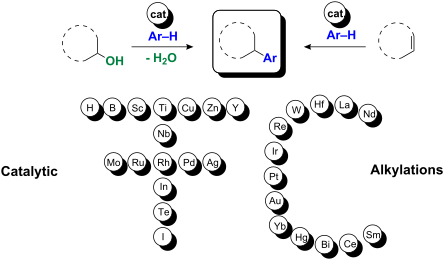
Figure 1: Most often used metal salts for catalytic FC alkylations and hydroarylations of arenes.

Figure 2: 1,1-diarylalkanes with biological activity.

Scheme 2: Alkylating reagents and side products produced.

Scheme 3: Initially reported TeCl4-mediated FC alkylation of 1-penylethanol with toluene.

Scheme 4: Sc(OTf)3-catalyzed FC benzylation of arenes.

Scheme 5: Reductive FC alkylation of arenes with arenecarbaldehydes.

Scheme 6: Iron(III)-catalyzed FC benzylation of arenes and heteroarenes.

Scheme 7: A gold(III)-catalyzed route to beclobrate.

Scheme 8: Catalytic FC-type alkylations of 1,3-dicarbonyl compounds.

Scheme 9: Iron(III)-catalyzed synthesis of phenprocoumon.

Scheme 10: Bi(OTf)3-catalyzed FC alkylation of benzyl alcohols developed by Rueping et al.

Scheme 11: (A) Bi(OTf)3-catalyzed intramolecular FC alkylation as an efficient route to substituted fulvenes. ...

Scheme 12: FC-type glycosylation of 1,2-dimethylindole and trimethoxybenzene.

Scheme 13: FC alkylation with highly reactive ferrocenyl- and benzyl alcohols. The reaction proceeds even with...

Scheme 14: Reductive FC alkylation of arenes with benzaldehyde and acetophenone catalyzed by the Ir-carbene co...

Scheme 15: Formal synthesis of 1,1-diarylalkanes from benzyl alcohols and styrenes.

Scheme 16: (A) Mo-catalyzed hydroarylation of styrenes and cyclohexenes. (B) Hydroalkylation–cyclization casca...

Scheme 17: Bi(III)-catalyzed hydroarylation of styrenes with arenes and heteroarenes.

Scheme 18: BiCl3-catalyzed ene/FC alkylation reaction cascade – A fast access to highly arylated dihydroindene...

Scheme 19: Au(I)/Ag(I)-catalyzed hydroarylation of indoles with styrenes, aliphatic and cyclic alkenes.

Scheme 20: First transition-metal-catalyzed ortho-hydroarylation developed by Beller et al.

Scheme 21: (A) Ti(IV)-mediated rearrangement of an N-benzylated aniline to the corresponding ortho-alkylated a...

Scheme 22: Dibenzylation of aniline gives potentially useful amine-based ligands in a one-step procedure.

Scheme 23: FC-type alkylations with allyl alcohols as alkylating reagents – linear vs. branched product format...

Scheme 24: (A) First catalytic FC allylation and cinnamylation using allyl alcohols and its derivatives. (B) E...

Scheme 25: FC allylation/cyclization reaction yielding substituted chromanes.

Scheme 26: Synthesis of (all-rac)-α-tocopherol utilizing Lewis- and strong Brønsted-acids.

Scheme 27: Au(III)-catalyzed cinnamylation of arenes.

Scheme 28: “Exhaustive” allylation of benzene-1,3,5-triol.

Scheme 29: Palladium-catalyzed allylation of indole.

Scheme 30: Pd-catalyzed synthesis of pyrroloindoles from L-tryptophane.

Scheme 31: Ru(IV)-catalyzed allylation of indole and pyrroles with unique regioselectivity.

Scheme 32: Silver(I)-catalyzed intramolecular FC-type allylation of arenes and heteroarenes.

Scheme 33: FC-type alkylations of arenes using propargyl alcohols.

Scheme 34: (A) Propargylation of arenes with stoichiometric amounts of the Ru-allenylidene complex 86. (B) Fir...

Scheme 35: Diruthenium-catalyzed formation of chromenes and 1H-naphtho[2,1-b]pyrans.

Scheme 36: Rhenium(V)-catalyzed FC propargylations as a first step in the total synthesis of podophyllotoxin, ...

Scheme 37: Scandium-catalyzed arylation of 3-sulfanyl- and 3-selanylpropargyl alcohols.

Scheme 38: Synthesis of 1,3-diarylpropynes via direct coupling of propargyl trichloracetimidates and arenes.

Scheme 39: Diastereoselective substitutions of benzyl alcohols.

Scheme 40: (A) First diastereoselective FC alkylations developed by Bach et al. (B) anti-Selective FC alkylati...

Scheme 41: Diastereoselective AuCl3-catalyzed FC alkylation.

Scheme 42: Bi(OTf)3-catalyzed alkylation of α-chiral benzyl acetates with silyl enol ethers.

Scheme 43: Bi(OTf)3-catalyzed diastereoselective substitution of propargyl acetates.

Scheme 44: Nucelophilic substitution of enantioenriched ferrocenyl alcohols.

Scheme 45: First catalytic enantioselective propargylation of arenes.
End game strategies towards the total synthesis of vibsanin E, 3-hydroxyvibsanin E, furanovibsanin A, and 3-O-methylfuranovibsanin A
- Brett D. Schwartz,
- Craig M. Williams and
- Paul V. Bernhardt
Beilstein J. Org. Chem. 2008, 4, No. 34, doi:10.3762/bjoc.4.34

- methylated furans using catalytic amounts of mercury triflate. Although verification of this protocol was undertaken on a cycloheptanone derivative, substrate 39 failed to give the desired furan 42 (Scheme 6). Instead, hydration was observed as the major reaction pathway (i.e. 40) with furan 41 being

Graphical Abstract

Figure 1: A collection of the structural diversity seen in the vibsanin type diterpene family.

Figure 2: Vibsanin type diterpene synthetic targets.

Scheme 1: Retrosynthesis of vibsanin type targets.

Scheme 2: The four functional group areas identified for investigation.

Scheme 3: Acetone sidechain studies.

Figure 3: ORTEP diagrams of compounds 24 and 23 (30% probability elipsoids).

Scheme 4: α-Hydroxylation investigations.

Figure 4: ORTEP diagram of compound 32 (30% probability ellipsoids).

Scheme 5: Investigating literature methods to install the furan ring system.

Scheme 6: Installation of the furan ring system continued.

Scheme 7: Installation of the enol sidechain utilizing Wittig chemistry.

Scheme 8: Attempts to gain access to targets 50 and 51.

Scheme 9: Further attempts to gain access to target compound 51.
Trapping evidence for the thermal cyclization of di-(o-acetylphenyl)acetylene to 3,3'-dimethyl- 1,1'-biisobenzofuran
- Charles P. Casey,
- Neil A. Strotman and
- Ilia A. Guzei
Beilstein J. Org. Chem. 2005, 1, No. 18, doi:10.1186/1860-5397-1-18
- electrocyclic ring closures to furans.[9][17][18] Related ring closures of o-acyl phenylcarbenes to isobenzofurans have been reported (Scheme 9).[19][20][21] These carbenes were formed as transient intermediates by photolytic or chemical cleavage of diazo or diazirine compounds. Isobenzofurans formed in this

Graphical Abstract

Scheme 1: Thermal cyclization of η2-(o-ethynylbenzoyl)rhenium complexes to rhenium isobenzofuryl carbene comp...

Scheme 2: Reagents and conditions: (a) Me3SiC≡CH, Pd(PPh3)4, CuI, Et3N, toluene, 40°C, 22 h, 99 %; (b) KF, Me...

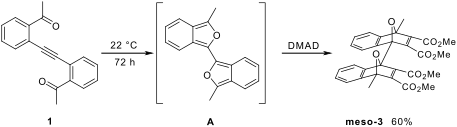
Scheme 3: Possible thermal bicyclization of 1 to A.

Scheme 4: Thermal rearrangement of a 2,6-alkadien-4-yn-1,8-dialdehyde to a bifuran.

Scheme 5: Photochemical cyclization to a bifuran.

Scheme 6: Trapping of A by DMAD to form Diels-Alder adducts meso-3 and rac-3.
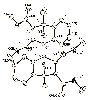
Figure 1: X-ray crystal structure of meso-3.

Scheme 7: Possible stepwise mechanism for rearrangement of 1 to A.

Scheme 8: Possible concerted mechanism for rearrangement of 1 to A.

Scheme 9: Ring closures of o-acyl phenylcarbenes to isobenzofurans.

Scheme 10: Ring opening of 2-furylcarbenes to alk-2-en-4-yn-1-ones.

Scheme 11: Coupled coarctate cyclization and 6π electrocyclization.



