


Search results
Search for "glycosides" in Full Text gives 144 result(s) in Beilstein Journal of Organic Chemistry.
Carbohydrate PEGylation, an approach to improve pharmacological potency
Beilstein J. Org. Chem. 2014, 10, 1433–1444, doi:10.3762/bjoc.10.147
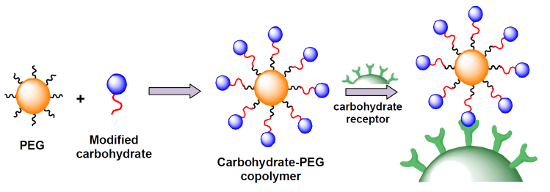
- mannose to PEI via a PEG chain spacer (Figure 3B). This system was used to deliver small interfering RNA (siRNA) into a murine macrophage cell line [44]. Mannose residues as their 2-aminoethyl glycosides were attached by reductive amination to the surface of copolymer micelles of PEG with poly-ε
- -caprolactone for targeting dendritic cells and macrophages (Figure 4) [45] Both mannose and galactose were attached to PEGylated nanoparticles by click-chemistry between their propargyl glycosides and a gold nanoparticles derivatized with an azide-functionalized PEG [46]. Also, several unprotected carbohydrate






Molecular recognition of surface-immobilized carbohydrates by a synthetic lectin
Beilstein J. Org. Chem. 2014, 10, 1354–1364, doi:10.3762/bjoc.10.138
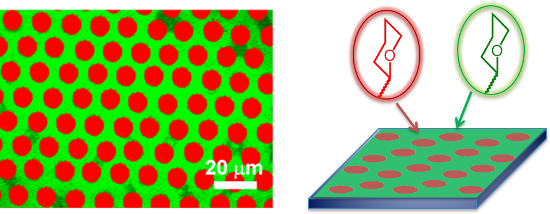
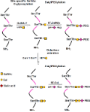
- ]. Our group has shown that also simple carbohydrate microarrays can be conveniently prepared by μCP if reactive glycosides are printed on a suitable target self-assembled monolayer (SAM) [31][32]. Amongst others, we reported carbohydrate microarrays fabricated by cycloaddition of alkynes on azide
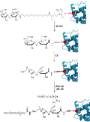
- HisHis towards immobilized NANA in comparison with the glycosides of glucose (Glc), galactose (Gal) and mannose (Man) (Figure 1). In this study, we exploit the epoxide ring opening reaction of amine-tethered carbohydrates on epoxide-terminated SAMs [42] to print carbohydrate microarrays on silicon and
- , Man, see Figure 1) were selected for the fabrication of carbohydrate arrays. To provide carbohydrate inks suitable for microcontact printing (µCP), NANA was conjugated via its C1 carboxylic acid moiety, whereas the other carbohydrates were conjugates as β-glycosides (Glc, Gal) and α-glycosides (Man


Design and synthesis of multivalent neoglycoconjugates by click conjugations
Beilstein J. Org. Chem. 2014, 10, 1325–1332, doi:10.3762/bjoc.10.134
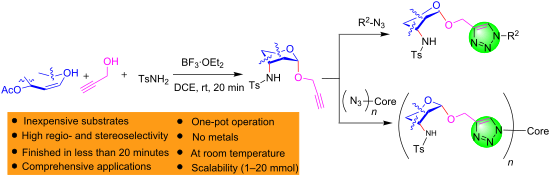
- different substituent groups (3a–3e) with α-propargyl 3-tosylamino-2,3-dideoxy glycosides 2 afforded the corresponding 3-tosylamino-2,3-dideoxyneoglycoconjugates (4a–4h) in good to excellent yields with exclusive anomeric selectivity (Table 3, entries 1–8). This encouraging result prompted us to apply these


cis–trans Isomerization of silybins A and B
Beilstein J. Org. Chem. 2014, 10, 1047–1063, doi:10.3762/bjoc.10.105
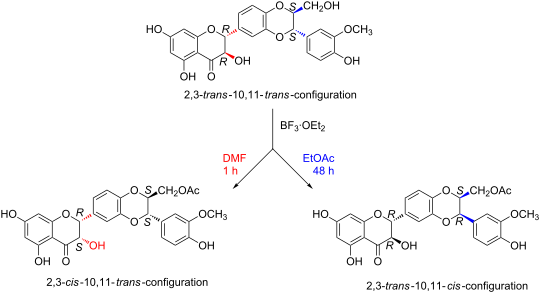
- (or 10 from 1b) on silica gel was not feasible, analogous to the preparative separation of silybin stereoisomers 1a and 1b (Figure 1), which was a challenge for several decades. It was accomplished as the separation of the respective silybin glycosides for the first time [13][14], later by HPLC [3
- -dihydroquercetin-3-α-L-rhamnopyranoside (pyridine; aqueous solution), was reported earlier [30][31][32][33]. The thermal or enzymatic rearrangement of taxifolin to alphitonin yielded four taxifolin isomers [34]. With flavanonols (3-O-glycosides or the respective aglycons), isomerization can be explained by the


Efficient carbon-Ferrier rearrangement on glycals mediated by ceric ammonium nitrate: Application to the synthesis of 2-deoxy-2-amino-C-glycoside
Beilstein J. Org. Chem. 2014, 10, 300–306, doi:10.3762/bjoc.10.27
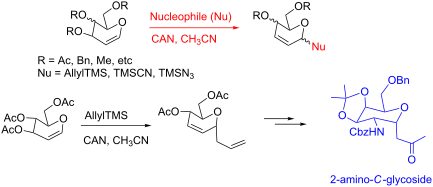
- -glycosides; carbon-Ferrier rearrangement; ceric ammonium nitrate; 2-deoxy-2-aminoglycosides; Overman rearrangement; Introduction The growing significance of C-glycosides can be attributed to their potential use as inhibitors of carbohydrate-processing enzymes [1][2][3], their extraordinary stability
- compared to O-glycosides, and their widespread applicability as intermediates in the synthesis of biologically important molecules [4][5][6][7][8]. C-glycosides are also subunits of several biologically active natural products [9][10][11]. Consequently, numerous reports are available in literature on the
- synthesis of C-glycosides [12][13][14]. Among these, the Ferrier rearrangement [15] of glycals with protic acids [5][16][17] or Lewis acids [18][19][20][21][22] and carbon nucleophiles such as allylsilanes [23], silylacetylenes [24], silyl enol ethers [25], olefins [26], and organozinc reagents [27] has


Biosynthesis of rare hexoses using microorganisms and related enzymes
Beilstein J. Org. Chem. 2013, 9, 2434–2445, doi:10.3762/bjoc.9.281
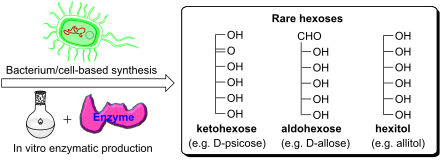
- rare sugar [25]. More interestingly, D-psicose has also been used to prepare several D-psicose containing disaccharides, aiming to learn the function of the rare sugar containing oligosaccharides and glycosides [27]. D-Psicose can be prepared through the epimerization of D-fructose at C-3 catalyzed by


Synthesis of homo- and heteromultivalent carbohydrate-functionalized oligo(amidoamines) using novel glyco-building blocks
Beilstein J. Org. Chem. 2013, 9, 2395–2403, doi:10.3762/bjoc.9.276
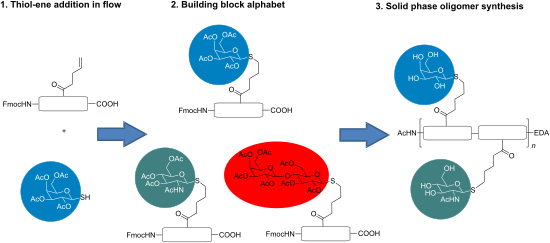
- established conditions (30 min; 1.5 equiv thioglycoside; 0.1 M). Although the reactivity of aminoglycosides 5 and 6 is in the same range as that of glycosides 2–4, we chose a higher excess of thiol component (2 equiv) for the production of glycosylated building blocks 11 and 12, resulting in >95% conversion



A protecting group-free synthesis of the Colorado potato beetle pheromone
Beilstein J. Org. Chem. 2013, 9, 2374–2377, doi:10.3762/bjoc.9.273
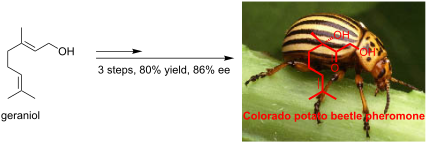
- of glycosides (Scheme 1) [14] and expected that the approach might also be applicable in the synthesis of (S)-1. Triol 3, with vicinal primary, secondary, and tertiary hydroxy groups should be a suitable substrate for chemoselective oxidation with catalyst 2, enabling a protecting group-free


Gold-catalyzed glycosidation for the synthesis of trisaccharides by applying the armed–disarmed strategy
Beilstein J. Org. Chem. 2013, 9, 2147–2155, doi:10.3762/bjoc.9.252
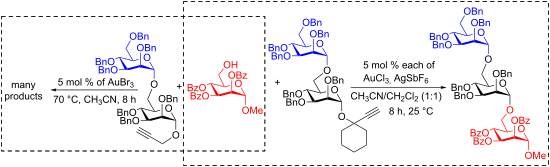
- oligosaccharides. The gold catalysis for glycosidation reactions, in which alkynylated glycosides are used, has emerged as one of the versatile options in this regard. A cleavage of the interglycosidic bond that was thought to be due to the higher reaction temperature and the acidic medium was observed during the
- moiety were screened. It was found that 1-ethynylcyclohexanyl (Ech) glycosides are suitable for carrying out the glycosidation at 25 °C in the presence of 5 mol % each of AuCl3 and AgSbF6. Subsequently, Ech-glycosides were observed to be suitable for the synthesis of trisaccharides under gold catalysis
- still no universal glycosyl donor [17][18], although the first glycoside was reported by Emil Fischer more than a century ago. A series of observations in our laboratory led to the identification of a gold(III)-catalyzed glycosidation reaction that uses alkynyl glycosides as glycosyl donors [19][20][21


The chemistry of isoindole natural products
Beilstein J. Org. Chem. 2013, 9, 2048–2078, doi:10.3762/bjoc.9.243
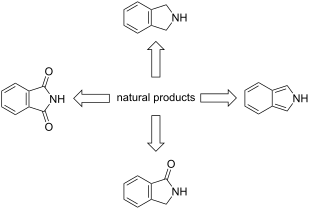
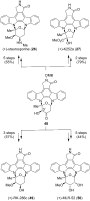
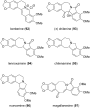
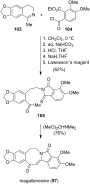
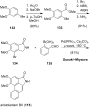
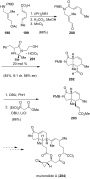
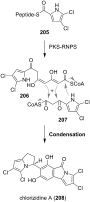
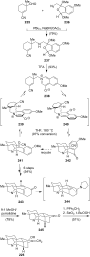
- natural indolocarbazole compounds have been isolated from several bacteria and marine invertebrates either as their glycosides (26–29) or aglycones (30–33) [17]. Based on the number of glycosidic bonds linking the carbohydrate moiety to the isoindole framework, the latter can be divided into two











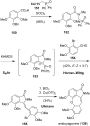
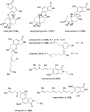


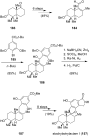
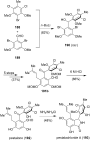



Synthesis of mucin-type O-glycan probes as aminopropyl glycosides
Beilstein J. Org. Chem. 2013, 9, 1867–1872, doi:10.3762/bjoc.9.218

- ][11][12][13][14] than there are available for other types of glycosides and even fewer that lead to fragments ready to be conjugated to glycoarray platforms [15]. One of the most troublesome steps in previous approaches is the synthesis of the α-glycosidic linkage between 2-acetamido-2-deoxy-D


Synthesis of meso-substituted dihydro-1,3-oxazinoporphyrins
Beilstein J. Org. Chem. 2013, 9, 496–502, doi:10.3762/bjoc.9.53

- derived from porphyrins [11][12]. Previously, a large number of these molecules have been synthesized by the coupling of diverse pharmaceutically important moieties, such as carbohydrates [13][14][15], amino acid residues [16][17][18][19], steroids [20][21], glycosides [22][23][24], nitroxyl derivatives


Thermotropic and lyotropic behaviour of new liquid-crystalline materials with different hydrophilic groups: synthesis and mesomorphic properties
Beilstein J. Org. Chem. 2013, 9, 425–436, doi:10.3762/bjoc.9.45

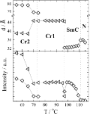
- silver-containing thermotropic liquid-crystalline materials based on bis(stilbazole) silver(I) cation in association with the amphiphilic counter-ion lauryl sulfate exhibit lyotropic and thermotropic liquid-crystalline behaviour [20]. A series of monoalkyl glycosides possesses a very stable thermotropic
- in the mesomorphic behaviour of alkyl glycosides has been made recently [24]. The methyl 6-O-(n-acyl)-α-D-glucopyranosides, with chain lengths between dodecanoyl and hexadecanoyl exhibit a monotropic SmA phase (i.e., occurring explicitly on cooling) only [25]. Even though a lot has already been done




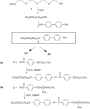


Synthesis and testing of the first azobenzene mannobioside as photoswitchable ligand for the bacterial lectin FimH
Beilstein J. Org. Chem. 2013, 9, 223–233, doi:10.3762/bjoc.9.26
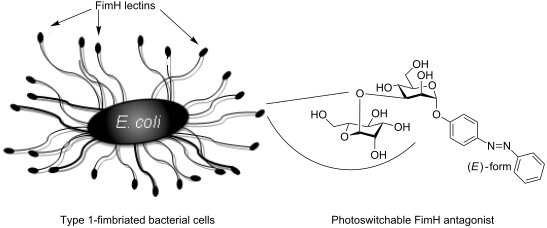
- adhesive surfaces. Keywords: azobenzene glycosides; bacterial adhesion; E/Z photoisomerisation; FimH antagonists; mannobiosides; molecular switches; sweet switches; Introduction Adhesion of bacteria to surfaces can be a severe problem both in vivo and in vitro. Hence, inhibition of bacterial adhesion by
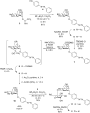
- ) in order to make a photoswitchable FimH antagonist available. Photoirradiation of azobenzene glycosides at ~365 nm effects E→Z isomerisation of the N=N double bond, and thermal relaxation or irradiation at ~450 nm leads to Z→E back isomerisation [13][14]. In the case that the E→Z isomerisation
- , glycosylation of the key intermediate 10 by using the mannosyl donor 3 gave the desired mannobioside 11 in 76% yield. Finally, removal of the O-acetyl groups according to Zemplén led to the unprotected 1,3-linked target mannobioside α-D-Man-(1→3)-D-Man (2). With the two azobenzene glycosides 6 and 2 at hand



A new synthetic access to 2-N-(glycosyl)thiosemicarbazides from 3-N-(glycosyl)oxadiazolinethiones and the regioselectivity of the glycosylation of their oxadiazolinethione precursors
Beilstein J. Org. Chem. 2013, 9, 135–146, doi:10.3762/bjoc.9.16
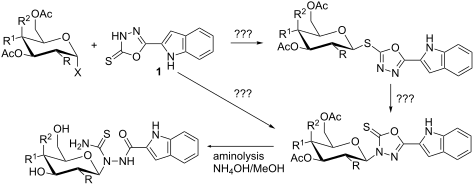
- , Germany 10.3762/bjoc.9.16 Abstract Glycosylations of 5-(1H-indol-2-yl)-1,3,4-oxadiazoline-2(3H)-thione delivered various degrees of S- and/or N-glycosides depending on the reaction conditions. S-Glycosides were obtained regiospecifically by grinding oxadiazolinethiones with acylated α-D-glycosyl halides
- in basic alumina, whereas 3-N-(glycosyl)oxadiazolinethiones were selectively obtained by reaction with HgCl2 followed by heating the resultant chloromercuric salt with α-D-glycosyl halides in toluene under reflux. On using Et3N or K2CO3 as a base, mixtures of S- (major degree) and N-glycosides (minor
- purification of mixtures of S- or N-glycosides to obtain the pure N-glycosides. The aminolysis of the respective S- or N-glycosides with ammonia in aqueous methanol served as further confirmation of their structures. While in S-glycosides the glycosyl moiety was cleaved off again, 3-N-(glycosyl


Acylsulfonamide safety-catch linker: promise and limitations for solid–phase oligosaccharide synthesis
Beilstein J. Org. Chem. 2012, 8, 2067–2071, doi:10.3762/bjoc.8.232
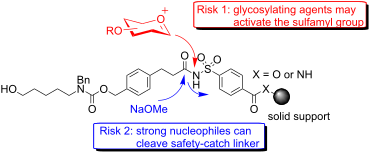
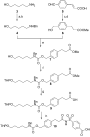
- the fast release and analysis of glycosides. Linker-functionalized resin 11 contains both cleavage sites, and was accessed by coupling the cesium salt of linker 10 with Merrifield chloride resin prior to capping and deprotection (Scheme 2). A second resin 12, containing only the safety-catch cleavage




The Amadori rearrangement as glycoconjugation method: Synthesis of non-natural C-glycosyl type glycoconjugates
Beilstein J. Org. Chem. 2012, 8, 1619–1629, doi:10.3762/bjoc.8.185

- chemical stability towards physiological hydrolysis of the glycosidic linkage, compared to the naturally occurring O- as well as N-glycosides [26]. A broad application of this reaction is not feasible as yet. However, according to its mechanism, the scope of the Amadori rearrangement could well comprise a


Synthesis and structure of tricarbonyl(η6-arene)chromium complexes of phenyl and benzyl D-glycopyranosides
Beilstein J. Org. Chem. 2012, 8, 1059–1070, doi:10.3762/bjoc.8.118

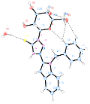
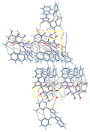
- methylated aryl O-, S-, N- and C-glycosides of D-glucopyranose and D-mannopyranose with hexacarbonylchromium. All tricarbonylchromium complexes were fully characterized. The structures of nine crystalline complexes were determined by X-ray diffraction, revealing unusual intra- and intermolecular nonclassical
- hydrogen bonds. Keywords: aryl glycosides; carbohydrates; transition-metal complex; tricarbonyl(arene)chromium; Introduction In 1957, Fischer and Öfele published the preparation of tricarbonyl(η6-benzene)chromium, which was the first arene tricarbonylchromium complex [1]. Since then, a plethora of
- reactions [9][10][11][12]. Tricarbonylchromium complexes of type C and D were obtained via benzannulation of glucal-derived pentacarbonylchromium carbenes or by reaction of alkynyl C-glycosides with pentacarbonylchromium carbenes [13]. Further syntheses and characterizations of more examples of carbohydrate


High-affinity multivalent wheat germ agglutinin ligands by one-pot click reaction
Beilstein J. Org. Chem. 2012, 8, 819–826, doi:10.3762/bjoc.8.91
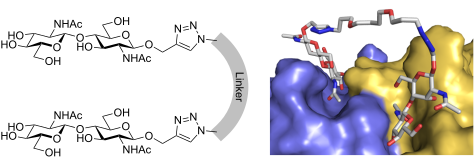
- diastereomeric (monovalent) C-glycosidic Con A ligands displayed only a small difference in the free energies of binding to Con A, a sizable difference was measured between the corresponding multivalent C-glycosides (calculated per monovalent ligand within the glycopolymer). Such effects can be analyzed in the




Triterpenoid saponins from the roots of Acanthophyllum gypsophiloides Regel
Beilstein J. Org. Chem. 2012, 8, 763–775, doi:10.3762/bjoc.8.87
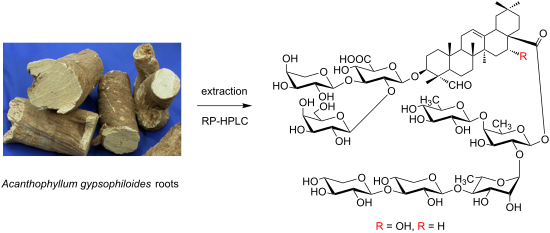
- , consistent with the molecular formula С75H118O39. GLC analysis of the acetylated (S)-2-octyl glycosides derived after full acid hydrolysis of compound 1 revealed the presence of D-galactose (D-Gal), L-arabinose (L-Ara), 6-deoxy-D-glucose (D-Qui), D-xylose (D-Xyl), L-rhamnose (L-Rha), D-fucose (D-Fuc), and D
- methanol and the slurry was diluted with acetone (160 mL). The formed precipitate was filtered and dried to give 22.2 g of total glycosides (fraction B). Combined fractions A and B (36.7 g) were subjected to preparative HPLC (Ascentis C18, 5 μm, 250 × 21.2 mm) using a mixture of 65% methanol and 35% 0.05 M
- analyses. Compounds 1 and 2 were hydrolyzed with 2 M CF3CO2H (120 °C, 2 h) and the absolute configurations of the monosaccharides were determined by GLC of acetylated (S)-(+)-2-octyl glycosides according to the published method [29]. GLC was performed using an Agilent 7820A chromatograph equipped with an


Formation of carbohydrate-functionalised polystyrene and glass slides and their analysis by MALDI-TOF MS
Beilstein J. Org. Chem. 2012, 8, 753–762, doi:10.3762/bjoc.8.86
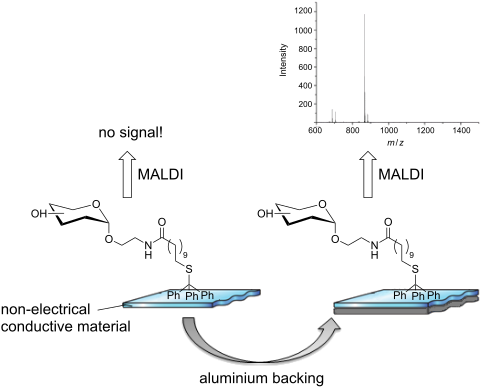
- -mercaptoundecanoic acid (1), which is tritylated with 2 in a straightforward synthesis, in 98% yield, following the procedure of Kovács et al. [23] (Scheme 1). The acid 3 was coupled with either of the aminoethyl glycosides 4 [24][25][26] or the GlcNAc derivative 6 [27], which were prepared according to literature


Sonogashira–Hagihara reactions of halogenated glycals
Beilstein J. Org. Chem. 2012, 8, 675–682, doi:10.3762/bjoc.8.75
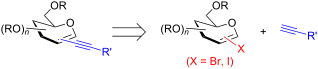
- glycals using several aromatic and aliphatic alkynes. This Pd-catalyzed cross-coupling reaction presents a facile access to alkynyl C-glycosides and sets the stage for a reductive/oxidative refunctionalization of the enyne moiety to regenerate either C-glycosidic structures or pyran derivatives with a
- substituent in position 2. Keywords: C-glycosides; enyne; glycals; reductive/oxidative refunctionalization; Sonogashira–Hagihara reaction; Introduction Carbohydrates are key players in a plethora of biological processes, such as cell-development, metastasis, cell–cell aggregation and viral infection [1][2
- , modified mono- or disaccharides have come into the focus of medicinal chemists [8][9]. An important class of carbohydrate mimetics are the C-glycosides [10][11][12][13]. In such compounds the oxygen of the O-glycosidic bond is substituted by a methylene unit rendering them stable to enzymatic degradation


Phytoalexins of the Pyrinae: Biphenyls and dibenzofurans
Beilstein J. Org. Chem. 2012, 8, 613–620, doi:10.3762/bjoc.8.68
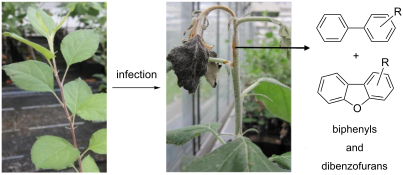
- 34 species of the Pyrinae, only Sorbus aucuparia formed a phytoalexin, namely aucuparin (3) [20]. Another abiotic elicitor, mercury, caused accumulation of 4'-methoxyaucuparin (10) in Rhaphiolepis umbellata at concentrations higher than after fungal infection [14][19]. So far, no glycosides of



2-Allylphenyl glycosides as complementary building blocks for oligosaccharide and glycoconjugate synthesis
Beilstein J. Org. Chem. 2012, 8, 597–605, doi:10.3762/bjoc.8.66
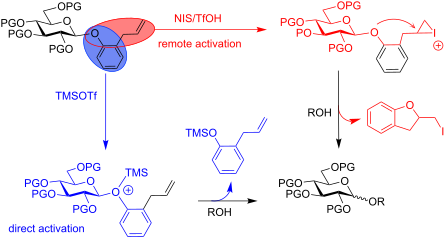
- orthogonality was shown for O-pentenyl versus O-propargyl glycosides by Hotha et al. [17] and for S-glycosyl O-methyl phenylcarbamothioate (SNea) versus thioglycosides/thioimidates by us [18], but still their applicability to multistep synthesis remains to be proven. Working to expand this concept, our group
- oligosaccharide synthesis [6]. However, suitable reaction conditions for the orthogonal activation of these two classes of leaving groups are yet to be found. Commonly, O-glycosides are too stable to be used as effective glycosyl donors [21]. Pent-4-enyl O-glycosides introduced by Fraser-Reid are unique in this
- part of the ongoing research effort to develop versatile building blocks, we present herein the development of a new ortho-allylphenyl (AP) leaving group. In line with other efforts [23][24][25][26], the AP group was specifically designed to address the drawbacks of O-pentenyl glycosides and to create


Electrochemical generation of 2,3-oxazolidinone glycosyl triflates as an intermediate for stereoselective glycosylation
Beilstein J. Org. Chem. 2012, 8, 456–460, doi:10.3762/bjoc.8.52
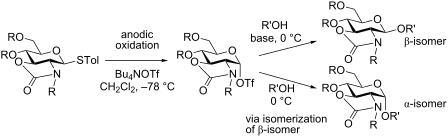
- , Wako, Saitama 351-0198, Japan 10.3762/bjoc.8.52 Abstract Glycosyl triflates with a 2,3-oxazolidinone protecting group were generated from thioglycosides by low-temperature electrochemical oxidation. The glycosyl triflates reacted with alcohols to give the corresponding glycosides β-selectively at low
- amino sugars [7][8], the selectivity highly depends on the nature of the glycosyl acceptors and reaction conditions. In the last decade, 2,3-oxazolidinone protected 2-amino-2-deoxy-glycosides have been developed as glycosyl donors for the stereoselective synthesis of amino sugars [9][10][11][12][13][14
- ][15][16][17][18][19][20][21][22][23][24]. These glycosyl donors afford the corresponding glycosides in a 1,2-trans or 1,2-cis selective manner by action with various types of glycosyl acceptors. However, it is still uncertain whether glycosyl triflate intermediates [25], which were detected by NMR





