


Search results
Search for "oxidative coupling" in Full Text gives 105 result(s) in Beilstein Journal of Organic Chemistry.
Novel carbazole–pyridine copolymers by an economical method: synthesis, spectroscopic and thermochemical studies
- Aamer Saeed,
- Madiha Irfan and
- Shahid Ameen Samra
Beilstein J. Org. Chem. 2011, 7, 638–647, doi:10.3762/bjoc.7.75

- of the pyridine ring [20]. Zheng et al. have prepared a new class of copolymers that incorporate pyridine and N-alkyl carbazole alternatively into the main chain by oxidative-coupling copolymerization. These polymers are thermostable, highly soluble, and processable, and the fluorescence spectra of

Graphical Abstract

Scheme 1: Synthesis of the monomers. i) R–Br, 50% KOH, benzene, TBAB, 80 °C, 2 h; ii) AcCl, AlCl3, CHCl3, 0 °...

Scheme 2: Synthesis of poly[3,6-N-alkylcarbazole-4-(3-substituted phenyl)pyridine-2,5-diyl]. i) CH3COONH4, CH3...
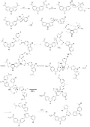
Scheme 3: Proposed mechanism of pyridine ring formation.
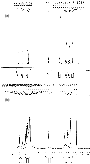
Figure 1: 1H NMR spectra of (a) monomer 2a and (b) polymer P1a.

Figure 2: Zimm plot for P2a in THF at room temperature.

Figure 3: Thermogravimetric analysis curve of P1a.

Figure 4: TGA curves of polymers (a) P1 and (b) P2.

Figure 5: DSC graph for polymer P1a.

Figure 6: UV–vis spectra of the polymers of (a) series P1 and (b) series P2.

Figure 7: Photoluminescence spectra of polymers P1and P2 in CHCl3 solution.

Figure 8: (a) Polymers of P2 series in visible light; (b) observed fluorescence (CHCl3 dilute solutions) unde...
Gold catalysis for organic synthesis
- F. Dean Toste
Beilstein J. Org. Chem. 2011, 7, 553–554, doi:10.3762/bjoc.7.63
- , cycloaddition and cycloisomerization reactions, to applications in enantioselective catalysis, oxidative coupling and the total synthesis of natural products, and transformations of alkynes, allenes, alkenes and even C–H bonds. A true treasure chest of reactivity! I am grateful to all of the authors that have
An overview of the key routes to the best selling 5-membered ring heterocyclic pharmaceuticals
- Marcus Baumann,
- Ian R. Baxendale,
- Steven V. Ley and
- Nikzad Nikbin
Beilstein J. Org. Chem. 2011, 7, 442–495, doi:10.3762/bjoc.7.57
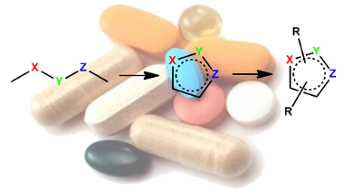

Graphical Abstract
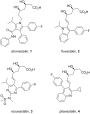
Figure 1: Structures of atorvastatin and other commercial statins.

Figure 2: Structure of compactin.

Scheme 1: Synthesis of pentasubstituted pyrroles.

Scheme 2: [3 + 2] Cycloaddition to prepare 5-isopropylpyrroles.

Scheme 3: Regiospecific [3 + 2] cycloaddition to prepare the pyrrole scaffold.

Scheme 4: Formation of the pyrrole core of atorvastatin via [3 + 2] cycloaddition.

Scheme 5: Formation of pyrrole 33 via the Paal–Knorr reaction.

Scheme 6: Convergent synthesis towards atorvastatin.

Figure 3: Binding pocket of sunitinib in the TRK KIT.

Scheme 7: Synthesis of sunitinib.

Scheme 8: Alternative synthesis of sunitinib.

Scheme 9: Key steps in the syntheses of sumatriptan and zolmitriptan.

Scheme 10: Introduction of the N,N-dimethylaminoethyl side chain.

Scheme 11: Japp–Klingemann reaction in the synthesis of sumatriptan.

Scheme 12: Synthesis of the intermediate sulfonyl chlorides 62 and 63.

Scheme 13: Alternative introduction of the sulfonamide.

Scheme 14: Negishi-type coupling to benzylic sulfonamides.

Scheme 15: Heck reaction used to introduce the sulfonamide side chain of naratriptan.

Scheme 16: Synthesis of the oxazolinone appendage of zolmitriptan.

Scheme 17: Grandberg indole synthesis used in the preparation of rizatriptan.

Scheme 18: Improved synthesis of rizatriptan.

Scheme 19: Larock-type synthesis of rizatriptan.

Scheme 20: Synthesis of eletriptan.

Scheme 21: Heck coupling for the indole system in eletriptan.

Scheme 22: Attempted Fischer indole synthesis of elatriptan.

Scheme 23: Successful Fischer indole synthesis for eletriptan.
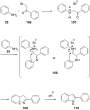
Scheme 24: Mechanistic rationale for the Bischler–Möhlau reaction.

Scheme 25: Bischler-type indole synthesis used in the fluvastatin sodium synthesis.

Scheme 26: Palladium-mediated synthesis of ondansetron.

Scheme 27: Fischer indole synthesis of ondansetron.

Scheme 28: Optimised Pictet–Spengler reaction towards tadalafil.

Figure 4: Structures of carvedilol 136 and propranolol 137.

Scheme 29: Synthesis of the carbazole core of carvedilol.

Scheme 30: Alternative syntheses of 4-hydroxy-9H-carbazole.

Scheme 31: Convergent synthesis of etodolac.

Scheme 32: Alternative synthesis of etodolac.

Figure 5: Structures of imidazole-containing drugs.

Scheme 33: Synthesis of functionalised imidazoles towards losartan.

Scheme 34: Direct synthesis of the chlorinated imidazole in losartan.

Scheme 35: Synthesis of trisubstituted imidazoles.

Scheme 36: Preparation of the imidazole ring in olmesartan.

Scheme 37: Synthesis of ondansetron.

Scheme 38: Alternative route to ondansetron and its analogues.

Scheme 39: Proton pump inhibitors and synthesis of esomeprazole.

Scheme 40: Synthesis of benzimidazole core pantoprazole.

Figure 6: Structure of rabeprazole 194.

Scheme 41: Synthesis of candesartan.

Scheme 42: Alternative access to the candesartan key intermediate 216.

Scheme 43: .Medicinal chemistry route to telmisartan.

Scheme 44: Improved synthesis of telmisartan.

Scheme 45: Synthesis of zolpidem.

Scheme 46: Copper-catalysed 3-component coupling towards zolpidem.

Figure 7: Structure of celecoxib.

Scheme 47: Preparation of celecoxib.

Scheme 48: Alternative synthesis of celecoxib.

Scheme 49: Regioselective access to celecoxib.

Scheme 50: Synthesis of pazopanib.

Scheme 51: Syntheses of anastrozole, rizatriptan and letrozole.

Scheme 52: Regioselective synthesis of anastrozole.

Scheme 53: Triazine-mediated triazole formation towards anastrozole.

Scheme 54: Alternative routes to 1,2,4-triazoles.

Scheme 55: Initial synthetic route to sitagliptin.

Figure 8: Binding of sitagliptin within DPP-IV.

Scheme 56: The process route to sitagliptin key intermediate 280.

Scheme 57: Synthesis of maraviroc.

Scheme 58: Synthesis of alprazolam.

Scheme 59: The use of N-nitrosoamidine derivatives in the preparation of fused benzodiazepines.

Figure 9: Structures of itraconazole, ravuconazole and voriconazole.

Scheme 60: Synthesis of itraconazole.

Scheme 61: Synthesis of rufinamide.

Scheme 62: Representative tetrazole formation in valsartan.

Figure 10: Structure of tetrazole containing olmesartan, candesartan and irbesartan.

Scheme 63: Early stage introduction of the tetrazole in losartan.

Scheme 64: Synthesis of cilostazol.

Figure 11: Structure of cefdinir.

Scheme 65: Semi-synthesis of cefdinir.

Scheme 66: Thiazole syntheses towards ritonavir.

Scheme 67: Synthesis towards pramipexole.

Scheme 68: Alternative route to pramipexole.

Scheme 69: Synthesis of famotidine.

Scheme 70: Efficient synthesis of the hyperuricemic febuxostat.

Scheme 71: Synthesis of ziprasidone.

Figure 12: Structure of mometasone.

Scheme 72: Industrial access to 2-furoic acid present in mometasone.

Scheme 73: Synthesis of ranitidine from furfuryl alcohol.

Scheme 74: Synthesis of nitrofurantoin.

Scheme 75: Synthesis of benzofuran.

Scheme 76: Synthesis of amiodarone.

Scheme 77: Synthesis of raloxifene.

Scheme 78: Alternative access to the benzo[b]thiophene core of raloxifene.

Scheme 79: Gewald reaction in the synthesis of olanzapine.

Scheme 80: Alternative synthesis of olanzapine.
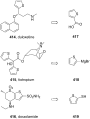
Figure 13: Access to simple thiophene-containing drugs.

Scheme 81: Synthesis of clopidogrel.

Scheme 82: Pictet–Spengler reaction in the preparation of tetrahydrothieno[3,2-c]pyridine (422).

Scheme 83: Alternative synthesis of key intermediate 422.

Figure 14: Co-crystal structures of timolol (left) and carazolol (right) in the β-adrenergic receptor.

Scheme 84: Synthesis of timolol.

Scheme 85: Synthesis of tizanidine 440.

Scheme 86: Synthesis of leflunomide.

Scheme 87: Synthesis of sulfamethoxazole.

Scheme 88: Synthesis of risperidone.

Figure 15: Relative abundance of selected transformations.

Figure 16: The abundance of heterocycles within top 200 drugs (5-membered rings).
Redox-active tetrathiafulvalene and dithiolene compounds derived from allylic 1,4-diol rearrangement products of disubstituted 1,3-dithiole derivatives
- Filipe Vilela,
- Peter J. Skabara,
- Christopher R. Mason,
- Thomas D. J. Westgate,
- Asun Luquin,
- Simon J. Coles and
- Michael B. Hursthouse
Beilstein J. Org. Chem. 2010, 6, 1002–1014, doi:10.3762/bjoc.6.113

- -oxidative coupling of 3 and 27 is therefore only accessible through the pendant group making a dimer the only possible product. Compounds 25 and 28 have two oxidisable pendant thiophene groups, so polymerisation could theoretically proceed through the coupling of these units. However, repeated cycling over

Graphical Abstract

Figure 1: Chemical structures of compounds 1–3.

Scheme 1: Acid-catalysed behaviour of 4,5-bis(2-arylhydroxymethyl)-1,3-dithiole-2-thiones 2.

Scheme 2: The proposed mechanism for the formation of 3.

Scheme 3: The proposed mechanism for the decomposition of 13 in the presence of perchloric acid.

Figure 2: Generalised structure of diol 17.

Scheme 4: Reagents and conditions: (i) LDA (1 equiv), 2,4-dimethoxybenzaldehyde (1 equiv), then repeat, −78 °...

Scheme 5: Reagents and conditions: (i) ethylenediamine, AcOH, MeOH; (ii) P(OEt)3, 120 °C, 3 h.

Figure 3: Molecular structure and numbering scheme of compound 22 with Hs omitted.

Scheme 6: Reagents and conditions: (i) P(OEt)3, reflux; (ii) Hg(OAc)2, CH2Cl2/AcOH; (iii) NaOEt, THF, reflux,...

Figure 4: Molecular structure of 28 with the tetrabutylammonium cation omitted.

Figure 5: Packing diagram of 28 identifying close intermolecular contacts.

Figure 6: UV–visible spectra of 3, 25, 27 and 28 in CH2Cl2 solution.

Figure 7: Cyclic voltammograms of compounds 3, 25, 27, and 28. Glassy carbon working electrode, using Pt wire...
Pd/C- Mediated synthesis of indoles in water
- Mohosin Layek,
- Udaya Lakshmi,
- Dipak Kalita,
- Deepak K. Barange,
- Aminul Islam,
- K. Mukkanti and
- Manojit Pal
Beilstein J. Org. Chem. 2009, 5, No. 46, doi:10.3762/bjoc.5.46

- present study we have used three equivalents of terminal alkynes to obtain the optimum yields of products. It is possible that the excess equivalents of terminal alkynes might undergo dimerization via oxidative coupling though no significant amount of 1,3-butadiyne derivative was isolated as a side

Graphical Abstract

Figure 1: Design of novel indole derivative C of pharmacological interest.

Scheme 1: Preparation of 2,5-disubstituted indole.

Scheme 2: Preparation of compound C.



