


Search results
Search for "π–π-interactions" in Full Text gives 136 result(s) in Beilstein Journal of Organic Chemistry.
Synthesis and self-assembly of 1-deoxyglucose derivatives as low molecular weight organogelators
- Guijun Wang,
- Hao Yang,
- Sherwin Cheuk and
- Sherman Coleman
Beilstein J. Org. Chem. 2011, 7, 234–242, doi:10.3762/bjoc.7.31
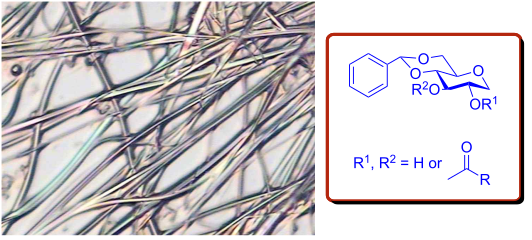
- gelators for water or aqueous ethanol mixtures. The monoesters presumably form an extended hydrogen bonding array between the ring oxygen and the free hydroxy groups [36]. For these compounds, the main forces that influence gelation include phenyl ring π–π interactions, hydrogen bonding, and hydrophobic

Graphical Abstract

Figure 1: Structures of three ester derivatives of compound 1.

Figure 2: Structures of ester analogs 5–7 and headgroup 8.

Scheme 1: Synthesis of a series of esters 9A–18C.
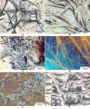
Figure 3: Optical micrographs of the gels formed by compound 9A in hexane at 15 mg/mL (A, B), 9B in DMSO/wate...

Figure 4: An ethanol gel formed by compound 18A at <10 mg/mL. a) A clear solution when heated above 70 °C; b)...

Figure 5: Optical micrographs under bright field (a, b) and scanning electron micrograph (c) of the gel forme...
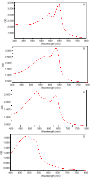
Figure 6: The UV–vis absorption spectra of the polymerized gel formed by compound 18A in ethanol (10 mg/mL): ...
An easy assembled fluorescent sensor for dicarboxylates and acidic amino acids
- Xiao-bo Zhou,
- Yuk-Wang Yip,
- Wing-Hong Chan and
- Albert W. M. Lee
Beilstein J. Org. Chem. 2011, 7, 75–81, doi:10.3762/bjoc.7.11
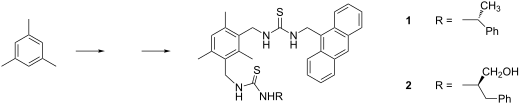
- accommodate dicarboxylates of different chain lengths. The 3–4 fold stronger binding interaction between sensor 1 and isophthalate in comparison with those of other dicarboxylates may be the result of the good host–guest shape-complementary relationship and the π–π interactions between the aromatic moieties

Graphical Abstract

Scheme 1: Synthesis of sensor 1 and 2.

Figure 1: The changes in the fluorescence emission spectra of sensor 1 (5.0 × 10⁻⁶ M) upon addition of isopht...

Figure 2: Proposed three sites binding model for sensor 2 and glutamate complex.

Figure 3: Partial 1H NMR spectra for (a) sensor 2 (free, 3 mM), (b) sensor 2 + 0.5 equiv D-glutamate, (c) sen...
Gelation or molecular recognition; is the bis-(α,β-dihydroxy ester)s motif an omnigelator?
- Peter C. Griffiths,
- David W. Knight,
- Ian R. Morgan,
- Amy Ford,
- James Brown,
- Ben Davies,
- Richard K. Heenan,
- Stephen M. King,
- Robert M. Dalgliesh,
- John Tomkinson,
- Stuart Prescott,
- Ralf Schweins and
- Alison Paul
Beilstein J. Org. Chem. 2010, 6, 1079–1088, doi:10.3762/bjoc.6.123
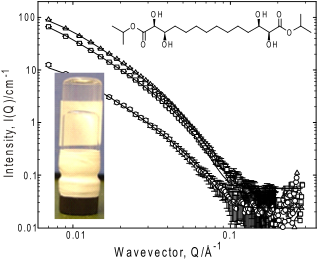
- , solvophobic effects and π–π interactions [11][12][13][14][15][16][17][18][19][20][21][22][23][24][25][26][27][28][29][30][31][32][33][34]. Our previous work has focused on the thermoreversible gelation of partially fluorinated liquids by a homologous series of chiral, non-racemic bis-(α,β-dihydroxy ester)s

Graphical Abstract

Figure 1: Schröder–van Laar analysis for the melting of toluene (open symbols) and ethanol/water (filled symb...

Figure 2: SANS from 50 mg ml−1 G6 in a range of solvents, 25 °C; d-acetone (circles), d-chloroform (triangles...

Figure 3: SANS from G6 25 °C in d-toluene as a function of G6 concentration; 5 mg ml−1 (circles), 10 mg ml−1 ...

Figure 4: SANS from a series of homologous gelators, G5 (circles), G6 (squares) and G8 (triangles) in d-tolue...

Figure 5: SANS from 50 mg ml−1 G6 in d-toluene, 25 °C; hydrogenous gelator (empty symbols) and partially deut...

Figure 6: SANS from 35 mg ml−1 G6 in 75% d-ethanol/25% D2O, 37 °C; hydrogenous gelator (empty symbols) and pa...

Figure 7: SESANS data for 50 mg ml−1 G6 in deuterated toluene, 25 °C.
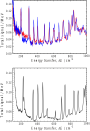
Figure 8: Inelastic neutron spectroscopy from toluene gels (upper Figure): red deuterated toluene/hydrogenous...
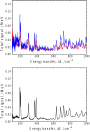
Figure 9: Inelastic neutron spectroscopy from cyclohexane gels (upper Figure): red deuterated cyclohexane/hyd...

Scheme 1: Synthesis of hydrogenous gelators.

Scheme 2: Structure of partially deuterated gelators.
Redox-active tetrathiafulvalene and dithiolene compounds derived from allylic 1,4-diol rearrangement products of disubstituted 1,3-dithiole derivatives
- Filipe Vilela,
- Peter J. Skabara,
- Christopher R. Mason,
- Thomas D. J. Westgate,
- Asun Luquin,
- Simon J. Coles and
- Michael B. Hursthouse
Beilstein J. Org. Chem. 2010, 6, 1002–1014, doi:10.3762/bjoc.6.113

- restricted to dimers. Secondly, the six-membered ring comprising–C1–C2–C3–C4–C5–C6– and the adjacent thiophene (–S3–C7–C8–C4–C3–) form π–π interactions with a neighbouring molecule, such that the overlap between the corresponding molecules is restricted to one minor portion of the molecule. The centroid
- –centroid distance between the benzene and thiophene rings is 3.74 Å and this interaction is also constrained to dimers. Although in Figure 5 the cations have been omitted for clarity, the diagram shows where the tetrabutylammonium molecules reside to block further close π–π interactions. These interactions

Graphical Abstract

Figure 1: Chemical structures of compounds 1–3.

Scheme 1: Acid-catalysed behaviour of 4,5-bis(2-arylhydroxymethyl)-1,3-dithiole-2-thiones 2.

Scheme 2: The proposed mechanism for the formation of 3.

Scheme 3: The proposed mechanism for the decomposition of 13 in the presence of perchloric acid.

Figure 2: Generalised structure of diol 17.

Scheme 4: Reagents and conditions: (i) LDA (1 equiv), 2,4-dimethoxybenzaldehyde (1 equiv), then repeat, −78 °...

Scheme 5: Reagents and conditions: (i) ethylenediamine, AcOH, MeOH; (ii) P(OEt)3, 120 °C, 3 h.

Figure 3: Molecular structure and numbering scheme of compound 22 with Hs omitted.

Scheme 6: Reagents and conditions: (i) P(OEt)3, reflux; (ii) Hg(OAc)2, CH2Cl2/AcOH; (iii) NaOEt, THF, reflux,...

Figure 4: Molecular structure of 28 with the tetrabutylammonium cation omitted.

Figure 5: Packing diagram of 28 identifying close intermolecular contacts.

Figure 6: UV–visible spectra of 3, 25, 27 and 28 in CH2Cl2 solution.

Figure 7: Cyclic voltammograms of compounds 3, 25, 27, and 28. Glassy carbon working electrode, using Pt wire...
Pyridinium based amphiphilic hydrogelators as potential antibacterial agents
- Sayanti Brahmachari,
- Sisir Debnath,
- Sounak Dutta and
- Prasanta Kumar Das
Beilstein J. Org. Chem. 2010, 6, 859–868, doi:10.3762/bjoc.6.101
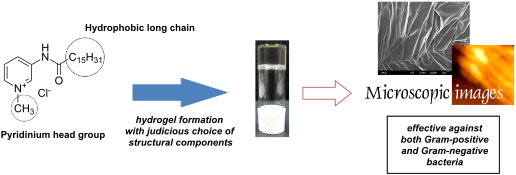
- amphiphile 2 began to self-assemble towards hydrogelation above 0.035%, w/v. Moreover, the red shifted emission peak up to MGC and above indicates that the intermolecular π–π interactions between the pyridine moieties plays an important role in gelation [28]. Consequently, the fluorescence quenching of

Graphical Abstract
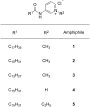
Figure 1: Structure of amphiphiles 1–5.

Scheme 1: Synthetic procedure of the amphiphiles.

Figure 2: Variation of the Tgel with concentration of amphiphiles 1 and 2.

Figure 3: (a, b) FESEM images of the dried gels of 1 and 2, respectively at their MGC. (c, d) Two- and three-...

Figure 4: Luminescence spectra of 2 in water (λex = 330 nm) at various concentrations and room temperature.

Figure 5: FTIR spectra of (a) 1 and (b) 2 in CHCl3 solution (dashed line) and in D2O at the gel state (solid ...

Figure 6: 2D-NOESY spectra of 2 (2%, w/v) in DMSO-d6 with 70% water.

Figure 7: XRD diagram of the dried gel of 2.

Figure 8: Schematic representation of the possible arrangement of molecules during hydrogelation of 2.

Figure 9: MTT assay based percent NIH3T3 cell viability as a function of concentration of amphiphile 2.
Conjugated polymers containing diketopyrrolopyrrole units in the main chain
- Bernd Tieke,
- A. Raman Rabindranath,
- Kai Zhang and
- Yu Zhu
Beilstein J. Org. Chem. 2010, 6, 830–845, doi:10.3762/bjoc.6.92
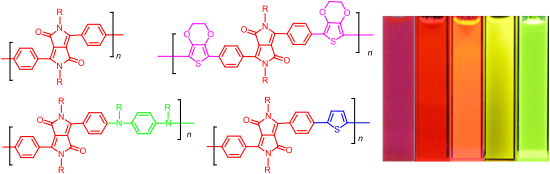
- . Strong hydrogen bonding between the lactam units favors the chromophores forming physically cross-linked chain structures in the solid state, which is the origin for the poor solubility [7][8]. Short distances between the chromophore planes (0.336 nm) and phenyl ring planes (0.354 nm) enable π-π
- -interactions via molecular orbital overlapping and excition coupling effects [7][8][9], whilst electronic interactions and strong intermolecular forces lead to a high thermal stability of up to 500 °C. For chemical incorporation into conjugated polymers, the solubility of the DPP compound needs to be increased

Graphical Abstract

Figure 1: Structure of 3,6-diphenyl-substituted 2,5-diketopyrrolo[3,4-c]pyrrole (DPP).

Scheme 1: Synthesis of DPP monomers.

Figure 2: Plot of current density and light intensity versus voltage of polymer light-emitting diode containi...

Scheme 2: Pd-catalyzed coupling reactions for preparation of DPP-containing polymers.
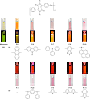
Figure 3: Optical properties of some diphenylDPP-based conjugated polymers.
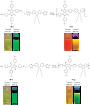
Figure 4: Optical properties of copolymers P-21 and P-22 based on two isomeric diphenylDPP monomer units (fro...

Figure 5: Absorption spectroelectrochemical plots of P-25 and P-26 as thin films on ITO glass. Scan rate: 100...

Scheme 3: Thiophenyl-DPP-based polymers.
Synthesis, electronic properties and self-assembly on Au{111} of thiolated (oligo)phenothiazines
- Adam W. Franz,
- Svetlana Stoycheva,
- Michael Himmelhaus and
- Thomas J. J. Müller
Beilstein J. Org. Chem. 2010, 6, No. 72, doi:10.3762/bjoc.6.72
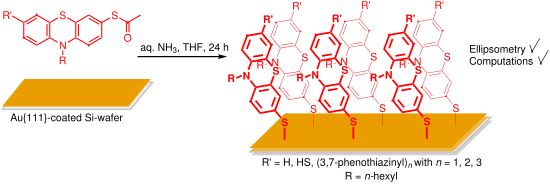
- reversible formation of stable radical cations [26][27][28][29][30][31], their tunable redox and fluorescence properties [32][33][34], and their tendency to self-assemble on surfaces by π–π interactions [35] make them eligible for use as redox-switchable molecular entities. In addition, the inherent folded

Graphical Abstract

Scheme 1: Synthesis of (oligo)phenothiazinyl thioacetates 2 and 4.

Figure 1: Normalized absorption (solid line) and emission (dashed line) spectra of thioacetate 2d (recorded i...

Figure 2: Cyclic voltammogram of thioacetate 2d (recorded in CH2Cl2, T = 293 K; 0.1 M electrolyte [Bu4N][PF6]...

Scheme 2: Preparation of SAMs from (oligo)phenothiazinyl thioacetates 2 or 4 on a Au{111}-coated silicon wafe...
Molecular recognition of organic ammonium ions in solution using synthetic receptors
- Andreas Späth and
- Burkhard König
Beilstein J. Org. Chem. 2010, 6, No. 32, doi:10.3762/bjoc.6.32
- . The authors reasoned that steric and π–π-interactions with the crowns phenyl substituents are the decisive factor for the enantioselective recognition. Recently, Turgut et al. reported a comparable series of C2-symmetric chiral aza crown ether macrocycles (29) based on (S)-3-phenyloxy-1,2-propanediol
- guests such as NEA (20a) or phenylglycinol (20c). For tryptophan (81b) the best results were achieved with selection factors of one enantiomer over the other up to 13 fold, corresponding to over 90% ee. This is explained by π–π-interactions. Besides chiral substituents on the crown ether ring, chiral

Graphical Abstract

Figure 1: Biologically important amines and quaternary ammonium salts: histamine (1), dopamine (2) and acetyl...

Figure 2: Crown ether 18-crown-6.

Figure 3: Conformations of 18-crown-6 (4) in solvents of different polarity.

Figure 4: Binding topologies of the ammonium ion depending on the crown ring size.
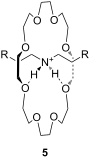
Figure 5: A “pseudorotaxane” structure consisting of 24-crown-8 and a secondary ammonium ion (5); R = Ph.

Figure 6: Typical examples of azacrown ethers, cryptands and related aza macrocycles.

Figure 7: Binding of ammonium to azacrown ethers and cryptands [111-113].

Figure 8: A 19-crown-6-ether with decalino blocking groups (11) and a thiazole-dibenzo-18-crown-6-ether (12).

Figure 9: 1,3-Bis(6-oxopyridazin-1-yl)propane derivatives 13 and 14 by Campayo et al.

Figure 10: Fluorescent azacrown-PET-sensors based on coumarin.

Figure 11: Two different pyridino-cryptands (17 and 18) compared to a pyridino-crown (19); chiral ammonium ion...

Figure 12: Pyridino-18-crown-6 ligand (21), a similar acridino-18-crown-6 ligand (22) and a structurally relat...

Figure 13: Ciral pyridine-azacrown ether receptors 24.

Figure 14: Chiral 15-crown-5 receptors 26 and an analogue 18-crown-6 ligand 27 derived from amino alcohols.

Figure 15: C2-symmetric chiral 18-crown-6 amino alcohol derivatives 28 and related macrocycles.

Figure 16: Macrocycles with diamide-diester groups (30).

Figure 17: C2-symmetric chiral aza-18-crown-6 ethers (31) with phenethylamine residues.

Figure 18: Chiral C-pivot p-methoxy-phenoxy-lariat ethers.

Figure 19: Chiral lariat crown ether 34.

Figure 20: Sucrose-based chiral crown ether receptors 36.
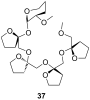
Figure 21: Permethylated fructooligosaccharide 37 showing induced-fit chiral recognition.

Figure 22: Biphenanthryl-18-crown-6 derivative 38.

Figure 23: Chiral lariat crown ethers derived from binol by Fuji et al.

Figure 24: Chiral phenolic crown ether 41 with “aryl chiral barriers” and guest amines.
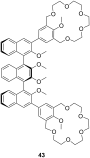
Figure 25: Chiral bis-crown receptor 43 with a meso-ternaphthalene backbone.

Figure 26: Chromogenic pH-dependent bis-crown chemosensor 44 for diamines.

Figure 27: Triamine guests for binding to receptor 44.

Figure 28: Chiral bis-crown phenolphthalein chemosensors 46.

Figure 29: Crown ether amino acid 47.

Figure 30: Luminescent receptor 48 for bis-alkylammonium guests.

Figure 31: Luminescent CEAA (49a), a bis-CEAA receptor for amino acids (49b) and the structure of lysine bindi...

Figure 32: Luminescent CEAA tripeptide for binding small peptides.

Figure 33: Bis crown ether 51a self assembles co-operatively with C60-ammonium ion 51b.

Figure 34: Triptycene-based macrotricyclic dibenzo-[24]-crown-8 ether host 52 and guests.

Figure 35: Copper imido diacetic acid azacrown receptor 53a and the suggested His-Lys binding motif; a copper ...

Figure 36: Urea (54) and thiourea (55) benzo crown receptor for transport and extraction of amino acids.

Figure 37: Crown pyryliums ion receptors 56 for amino acids.

Figure 38: Ditopic sulfonamide bridged crown ether receptor 57.

Figure 39: Luminescent peptide receptor 58.

Figure 40: Luminescent receptor 59 for the detection of D-glucosamine hydrochloride in water/ethanol and lumin...

Figure 41: Guanidinium azacrown receptor 61 for simple amino acids and ditopic receptor 62 with crown ether an...

Figure 42: Chiral bicyclic guanidinium azacrown receptor 63 and similar receptor 64 for the enantioselective t...

Figure 43: Receptors for zwitterionic species based on luminescent CEAAs.

Figure 44: 1,10-Azacrown ethers with sugar podand arms and the anticancer agent busulfan.

Figure 45: Benzo-18-crown-6 modified β-cyclodextrin 69 and β-cyclodextrin functionalized with diaza-18-crown-6...

Figure 46: Receptors for colorimetric detection of primary and secondary ammonium ions.

Figure 47: Porphyrine-crown-receptors 72.

Figure 48: Porphyrin-crown ether conjugate 73 and fullerene-ammonium ion guest 74.

Figure 49: Calix[4]arene (75a), homooxocalix[4]arene (75b) and resorcin[4]arene (75c) compared (R = H, alkyl c...

Figure 50: Calix[4]arene and ammonium ion guest (R = H, alkyl, OAcyl etc.), possible binding sites; A: co-ordi...

Figure 51: Typical guests for studies with calixarenes and related molecules.
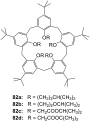
Figure 52: Lower rim modified p-tert-butylcalix[5]arenes 82.

Figure 53: The first example of a water soluble calixarene.

Figure 54: Sulfonated water soluble calix[n]arenes that bind ammonium ions.
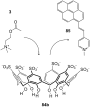
Figure 55: Displacement assay for acetylcholine (3) with a sulfonato-calix[6]arene (84b).

Figure 56: Amino acid inclusion in p-sulfonatocalix[4]arene (84a).

Figure 57: Calixarene receptor family 86 with upper and lower rim functionalization.

Figure 58: Calix[6]arenes 87 with one carboxylic acid functionality.
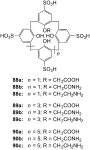
Figure 59: Sulfonated calix[n]arenes with mono-substitution at the lower rim systematically studied on their r...

Figure 60: Cyclotetrachromotropylene host (91) and its binding to lysine (81c).

Figure 61: Calixarenes 92 and 93 with phosphonic acids groups.

Figure 62: Calix[4]arene tetraphosphonic acid (94a) and a double bridged analogue (94b).
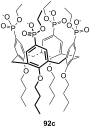
Figure 63: Calix[4]arene tetraphosphonic acid ester (92c) for surface recognition experiments.

Figure 64: Calixarene receptors 95 with α-aminophosphonate groups.

Figure 65: A bridged homocalix[3]arene 95 and a distally bridged homocalix[4]crown 96.

Figure 66: Homocalix[3]arene ammonium ion receptor 97a and the Reichardt’s dye (97b) for colorimetric assays.

Figure 67: Chromogenic diazo-bridged calix[4]arene 98.

Figure 68: Calixarene receptor 99 by Huang et al.
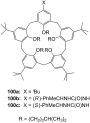
Figure 69: Calixarenes 100 reported by Parisi et al.

Figure 70: Guest molecules for inclusion in calixarenes 100: DAP × 2 HCl (101a), APA (101b) and Lys-OMe × 2 HC...

Figure 71: Different N-linked peptido-calixarenes open and with glycol chain bridges.

Figure 72: (S)-1,1′-Bi-2-naphthol calixarene derivative 104 published by Kubo et al.

Figure 73: A chiral ammonium-ion receptor 105 based on the calix[4]arene skeleton.

Figure 74: R-/S-phenylalaninol functionalized calix[6]arenes 106a and 106b.

Figure 75: Capped homocalix[3]arene ammonium ion receptor 107.

Figure 76: Two C3 symmetric capped calix[6]arenes 108 and 109.

Figure 77: Phosphorous-containing rigidified calix[6]arene 110.

Figure 78: Calix[6]azacryptand 111.

Figure 79: Further substituted calix[6]azacryptands 112.

Figure 80: Resorcin[4]arene (75c) and the cavitands (113).

Figure 81: Tetrasulfonatomethylcalix[4]resorcinarene (114).
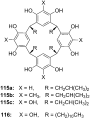
Figure 82: Resorcin[4]arenes (115a/b) and pyrogallo[4]arenes (115c, 116).
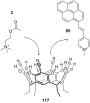
Figure 83: Displacement assay for acetylcholine (3) with tetracyanoresorcin[4]arene (117).

Figure 84: Tetramethoxy resorcinarene mono-crown-5 (118).

Figure 85: Components of a resorcinarene based displacement assay for ammonium ions.

Figure 86: Chiral basket resorcin[4]arenas 121.

Figure 87: Resorcinarenes with deeper cavitand structure (122).

Figure 88: Resorcinarene with partially open deeper cavitand structure (123).
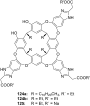
Figure 89: Water-stabilized deep cavitands with partially structure (124, 125).
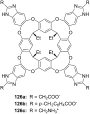
Figure 90: Charged cavitands 126 for tetralkylammonium ions.

Figure 91: Ditopic calix[4]arene receptor 127 capped with glycol chains.

Figure 92: A calix[5]arene dimer for diammonium salt recognition.

Figure 93: Calixarene parts 92c and 129 for the formation molecular capsules.
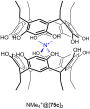
Figure 94: Encapsulation of a quaternary ammonium cation by two resorcin[4]arene molecules (NMe4+@[75c]2 × Cl−...

Figure 95: Encapsulation of a quaternary ammonium cation by six resorcin[4]arene molecules (NMe3D+@[130]6 × Cl−...

Figure 96: Structure and schematic of cucurbit[6]uril (CB[6], 131a).
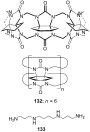
Figure 97: Cyclohexanocucurbit[6]uril (CB′[6], 132) and the guest molecule spermine (133).

Figure 98: α,α,δ,δ-Tetramethylcucurbit[6]uril (134).

Figure 99: Structure of the cucurbituril-phthalhydrazide analogue 135.

Figure 100: Organic cavities for the displacement assay for amine differentiation.

Figure 101: Displacement assay methodology for diammonium- and related guests involving cucurbiturils and some ...

Figure 102: Nor-seco-Cucurbituril (±)-bis-ns-CB[6] (140) and guest molecules.

Figure 103: The cucurbit[6]uril based complexes 141 for chiral discrimination.
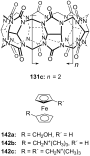
Figure 104: Cucurbit[7]uril (131c) and its ferrocene guests (142) opposed.

Figure 105: Cucurbit[7]uril (131c) guest inclusion and representative guests.

Figure 106: Cucurbit[7]uril (131c) binding to succinylcholine (145) and different bis-ammonium and bis-phosphon...

Figure 107: Paraquat-cucurbit[8]uril complex 149.
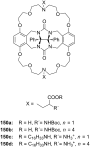
Figure 108: Gluconuril-based ammonium receptors 150.
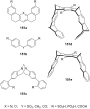
Figure 109: Examples of clefts (151a), tweezers (151b, 151c, 151d) and clips (151e).

Figure 110: Kemp’s triacid (152a), on example of Rebek’s receptors (152b) and guests.

Figure 111: Amino acid receptor (154) by Rebek et al.

Figure 112: Hexagonal lattice designed hosts by Bell et al.

Figure 113: Bell’s amidinium receptor (156) and the amidinium ion (157).
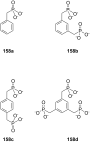
Figure 114: Aromatic phosphonic acids.

Figure 115: Xylene phosphonates 159 and 160a/b for recognition of amines and amino alcohols.
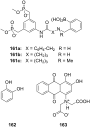
Figure 116: Bisphosphonate recognition motif 161 for a colorimetric assay with alizarin complexone (163) for ca...

Figure 117: Bisphosphonate/phosphate clip 164 and bisphosphonate cleft 165.

Figure 118: N-Methylpyrazine 166a, N-methylnicotinamide iodide (166b) and NAD+ (166c).

Figure 119: Bisphosphate cavitands.
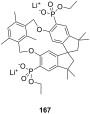
Figure 120: Bisphosphonate 167 of Schrader and Finocchiaro.
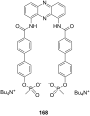
Figure 121: Tweezer 168 for noradrenaline (80b).

Figure 122: Different tripods and heparin (170).
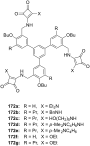
Figure 123: Squaramide based receptors 172.
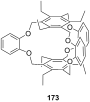
Figure 124: Cage like NH4+ receptor 173 of Kim et al.

Figure 125: Ammonium receptors 174 of Chin et al.

Figure 126: 2-Oxazolin-based ammonium receptors 175a–d and 176 by Ahn et al.

Figure 127: Racemic guest molecules 177.

Figure 128: Tripods based on a imidazole containing macrocycle (178) and the guest molecules employed in the st...

Figure 129: Ammonium ion receptor 180.

Figure 130: Tetraoxa[3.3.3.3]paracyclophanes 181 and a cyclophanic tetraester (182).

Figure 131: Peptidic bridged paraquat-cyclophane.
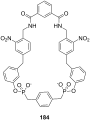
Figure 132: Shape-selective noradrenaline host.

Figure 133: Receptor 185 for binding of noradrenaline on surface layers from Schrader et al.

Figure 134: Tetraphosphonate receptor for binding of noradrenaline.

Figure 135: Tetraphosphonate 187 of Schrader and Finocchiaro.

Figure 136: Zinc-Porphyrin ammonium-ion receptors 188 and 189 of Mizutani et al.
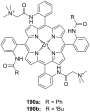
Figure 137: Zinc porphyrin receptor 190.

Figure 138: Zinc porphyrin receptors 191 capable of amino acid binding.

Figure 139: Zinc-porphyrins with amino acid side chains for stereoinduction.

Figure 140: Bis-zinc-bis-porphyrin based on Tröger’s base 193.

Figure 141: BINAP-zinc-prophyrin derivative 194 and it’s guests.

Figure 142: Bisaryl-linked-zinc-porphyrin receptors.
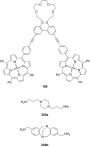
Figure 143: Bis-zinc-porphyrin 199 for diamine recognition and guests.

Figure 144: Bis-zinc-porphyrin crown ether 201.

Figure 145: Bis-zinc-porphyrin 202 for stereodiscrimination (L = large substituent; S = small substituent).

Figure 146: Bis-zinc-porphyrin[3]rotaxane and its copper complex and guests.

Figure 147: Dien-bipyridyl ligand 206 for co-ordination of two metal atoms.

Figure 148: The ligand and corresponding tetradentate co-complex 207 serving as enantioselective receptor for a...

Figure 149: Bis(oxazoline)–copper(II) complex 208 for the recognition of amino acids in aqueous solution.

Figure 150: Zinc-salen-complexes 209 for the recognition tertiary amines.

Figure 151: Bis(oxazoline)–copper(II) 211 for the recognition of amino acids in aqueous solution.

Figure 152: Zn(II)-complex of a C2 terpyridine crown ether.

Figure 153: Displacement assay and receptor for aspartate over glutamate.

Figure 154: Chiral complex 214 for a colorimetric displacement assay for amino acids.

Figure 155: Metal complex receptor 215 with tripeptide side arms.

Figure 156: A sandwich complex 216 and its displaceable dye 217.

Figure 157: Lanthanide complexes 218–220 for amino acid recognition.
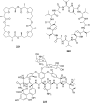
Figure 158: Nonactin (221), valinomycin (222) and vancomycin (223).

Figure 159: Monesin (224a) and a chiral analogue for enantiodiscrimination of ammonium guests (224b).

Figure 160: Chiral podands (226) compared to pentaglyme-dimethylether (225) and 18-crown-6 (4).

Figure 161: Lasalocid A (228).

Figure 162: Lasalocid derivatives (230) of Sessler et al.

Figure 163: The Coporphyrin I tetraanion (231).

Figure 164: Linear and cyclic peptides for ammonium ion recognition.

Figure 165: Cyclic and bicyclic depsipeptides for ammonium ion recognition.
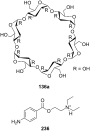
Figure 166: α-Cyclodextrin (136a) and novocaine (236).
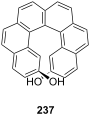
Figure 167: Helical diol receptor 237 by Reetz and Sostmann.

Figure 168: Ammonium binding spherand by Cram et al. (238a) and the cyclic[6]metaphenylacetylene 238b in compar...

Figure 169: Receptor for peptide backbone and ammonium binding (239).

Figure 170: Anion sensor principle with 3-hydroxy-2-naphthanilide of Jiang et al.

Figure 171: 7-bromo-3-hydroxy-N-(2-hydroxyphenyl)naphthalene 2-carboxamide (241) and its amine binding.

Figure 172: Naturally occurring catechins with affinity to quaternary ammonium ions.

Figure 173: Spiropyran (244) and merocyanine form (244a) of the amino acid receptors of Fuji et al.

Figure 174: Coumarin aldehyde (245) and its iminium species with amino acid bound (245a) by Glass et al.
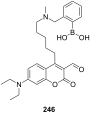
Figure 175: Coumarin aldehyde appended with boronic acid.

Figure 176: Quinolone aldehyde dimers by Glass et al.

Figure 177: Chromogenic ammonium ion receptors with trifluoroacetophenone recognition motifs.

Figure 178: Chromogenic ammonium ion receptor with trifluoroacetophenone recognition motif bound on different m...
Synthesis of rigidified flavin–guanidinium ion conjugates and investigation of their photocatalytic properties
- Harald Schmaderer,
- Mouchumi Bhuyan and
- Burkhard König
Beilstein J. Org. Chem. 2009, 5, No. 26, doi:10.3762/bjoc.5.26

- acetonitrile. Structural investigations The structure of compounds 1, 2, 6, and 9 was examined in the solid state and in solution. Figure 1 shows the X-ray crystal structures of 6 and 9. The planar flavin chromophore is turned outward relative to the Kemp’s acid. Intermolecular π-π-interactions between the

Graphical Abstract

Scheme 1: Flavin–guanidinium ion conjugates 1 and 2 and tetraacetyl riboflavin (3).

Scheme 2: Synthesis of flavins 1 and 2. Conditions: (i) DMAP, H2O, Δ, 20 h, 71–78%, (ii) HOBt, EDC, NEt(iPr)2...

Figure 1: X-ray crystal structures of the flavin-Kemp’s acids 6 (left) and 9 (right).

Figure 2: Structure of compound 1 in the solid state.
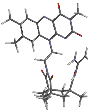
Figure 3: Calculated lowest energy conformation of 1 in the gas phase (AM1, Spartan program package).

Scheme 3: Oxidative photocleavage of dibenzyl phosphate.

Scheme 4: Photoreduction of 4-nitrophenyl phosphate.

Scheme 5: Photo Diels–Alder-reaction of anthracene with N-methyl-maleinimide.
Variations in product in reactions of naphthoquinone with primary amines
- Marjit W. Singh,
- Anirban Karmakar,
- Nilotpal Barooah and
- Jubaraj B. Baruah
Beilstein J. Org. Chem. 2007, 3, No. 10, doi:10.1186/1860-5397-3-10
- have anion binding ability on protonation or have complex forming ability with metals. The incorporation of pyridine ring to a quinone has also another facet as we have recently observed that in picolyl derivative of 1,8-naphthalimides the π-π interactions are governed by the position of the nitrogen

Graphical Abstract

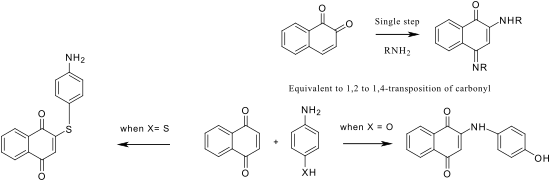
Scheme 1: Reaction of 1,2-naphthoquinone with primary amines.
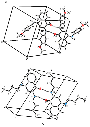
Figure 1: The solid state structure of (a) 1 and (b) 2 (drawn with 20% thermal ellipsoids).

Scheme 2: Equivalence of reactivity between 1,2 and 1,4-naphthoquinone.

Scheme 3: The reaction of picolylamine with 1,4-naphthoquinone.
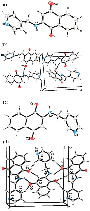
Figure 2: (a) The crystal structure of 3 and (b) weak interactions in 3 leading to self-assembly, (c) Structu...

Scheme 4: The reaction of 1,4-naphthoquinone with 4-aminothiophenol and 4-aminophenol.

Figure 3: The 1HNMR spectra (400 MHz) of the reaction mixture of 1,4-naphthoquinone with 4-amino thiophenol (...

Figure 4: The structure of the products from the reaction of 1,4-naphthoquinone with (a) 4-aminothiophenol (b...
Molecular recognition. 1. Crystal structures of hexaazamacrocyclic amines containing p-xylylene spacers and their adducts with acids
- Teresa Borowiak,
- Grzegorz Dutkiewicz,
- Maciej Kubicki,
- Marek Pietraszkiewicz,
- Agnieszka Gil and
- Rainer Mattes
Beilstein J. Org. Chem. 2005, 1, No. 16, doi:10.1186/1860-5397-1-16
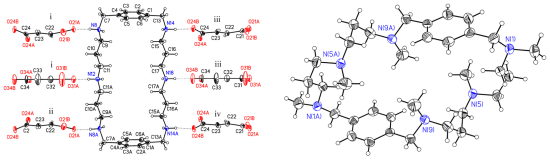
- molecular plane. Four of the six methyl groups are directed towards the molecular cavity. They are situated in pairs slightly above and below the cavity due to the crystallographic symmetry. The remaining two methyl groups are exo-oriented along the long molecular axis. No π-π interactions occur in the

Graphical Abstract

Scheme 1: Formulas of macrocyclic amines, 1: 1,5,9,18,22,26-hexaaza [11.11]-p-cyclophane and 2: 1,4,7,16,19,2...

Figure 1: The ionic synthon of 1-FUM built from one macrocyclic hexa-protonated cation and six fumaric anions...

Figure 2: The structure of one sheet in 1-FUM – a projection perpendicular to the phenyl ring planes. Tapes o...

Figure 3: The arrangement of two sheets (after rotation by 90°). The height of one sheet corresponds to the h...

Figure 4: The molecular conformation of 1-N-Me, atom labeling scheme indicated. Displacement parameters are d...

Figure 5: The unit cell of 1-N-Me, stacks of molecules are indicated.



