Search results
Search for "acylation" in Full Text gives 355 result(s) in Beilstein Journal of Organic Chemistry. Showing first 200.
Efficient synthesis of piperazinyl amides of 18β-glycyrrhetinic acid
Beilstein J. Org. Chem. 2020, 16, 798–808, doi:10.3762/bjoc.16.73
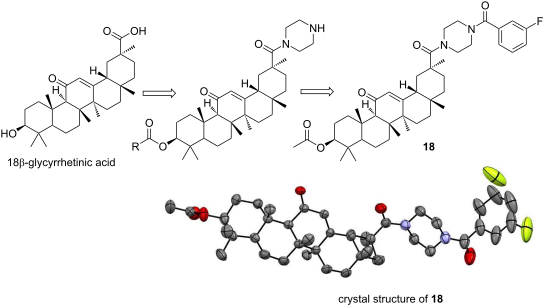
- compound 8. Finally, the piperazinyl amide 4 was synthesized by of N-Boc deprotection. Another procedure for the synthesis of compound 8 involves acylation of compound 9, which was prepared by the reactions of 18β-glycyrrhetinic acid with 1-Boc-piperazine under similar reaction conditions. Compound 8 was


Recent developments in photoredox-catalyzed remote ortho and para C–H bond functionalizations
Beilstein J. Org. Chem. 2020, 16, 248–280, doi:10.3762/bjoc.16.26
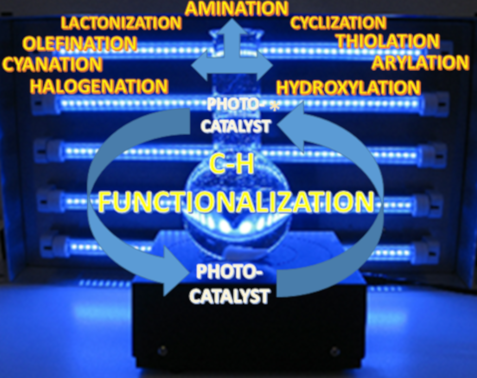
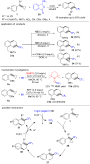
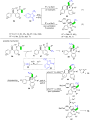
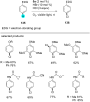
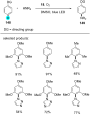
- Figure 3, E0,0 is the energy gap between the ground state and the lowest triplet state, corresponding to the band gap in semiconductors. C–H acylation Decarboxylative acylation of acetanilides: In 2015, Wang and co-workers first reported the acylation of acetanilides via C–H functionalization using
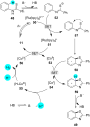
- through this methodology is shown in Scheme 3, and the mechanistic pathway that is involved is displayed in Figure 7. Synthesis of fluorenones: Very recently, Ruzi et al. generated several fluorenone derivatives via dual photoredox-catalyzed deoxygenative intramolecular acylation reactions at room
- olefination. C–H olefination of phenolic ethers. Decarboxylative acylation of acetanilides. Synthesis of fluorenone derivatives by intramolecular deoxygenative acylation of biaryl carboxylic acids. Synthesis of benzothiazoles via aerobic C–H thiolation. Synthesis of benzothiazoles via oxidant-free C–H












Combination of multicomponent KA2 and Pauson–Khand reactions: short synthesis of spirocyclic pyrrolocyclopentenones
Beilstein J. Org. Chem. 2020, 16, 200–211, doi:10.3762/bjoc.16.23
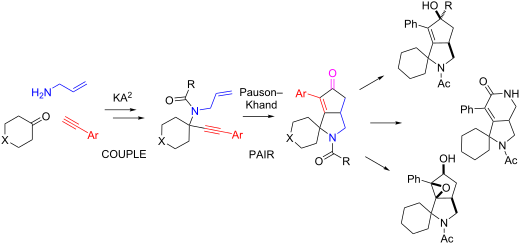
- ). The acylation of the amino group was found necessary to allow for the cobalt-catalyzed reaction to proceed under a CO atmosphere. This step was also carried out in one pot after the KA2 reaction by diluting with pyridine and adding the acylating reagent, to achieve the corresponding product in
- slightly lower yield. Attempts to carry out the Pauson–Khand reaction directly on the amino group before the acylation step did not work, nor using a modified approach using ammonium chloride and 1.5 equivalents of Co2(CO)8 under an inert atmosphere, as reported for similar reactions in the presence of
- basic nitrogen atoms [28]. The variation of the alkyne component proved to give the KA2 coupling adduct when aromatic terminal alkynes were used, as shown in Table 1, entries 1 and 2 for those containing phenyl and thienyl moieties, resulting in 82% and 74% yield for the KA2 step. Subsequent acylation




Rapid, two-pot procedure for the synthesis of dihydropyridinones; total synthesis of aza-goniothalamin
Beilstein J. Org. Chem. 2020, 16, 135–139, doi:10.3762/bjoc.16.15

- significantly lower biological activity compared to the parent compound (IC50 = 942 µM, U251 cell line) [15][16]. However, Pilli and co-workers were able to demonstrate that acylation of aza-goniothalamin 1 yielded analogues such as compound 3 with significantly improved biological profiles (IC50 = 11 µM, U251


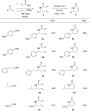

Potent hemithioindigo-based antimitotics photocontrol the microtubule cytoskeleton in cellulo
Beilstein J. Org. Chem. 2020, 16, 125–134, doi:10.3762/bjoc.16.14
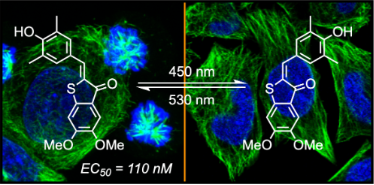
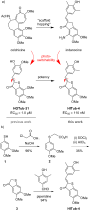
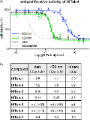
- , so it was sought to minimise their exposure to these conditions during synthesis. In the end, we used two routes to the thioindoxyls: either Friedel–Crafts acylation of α-phenylthioacetic acids (which are easily accessible from thiophenols by alkylation using 2-chloroacetic acid, Figure 1b) or else





[1,3]/[1,4]-Sulfur atom migration in β-hydroxyalkylphosphine sulfides
Beilstein J. Org. Chem. 2020, 16, 88–105, doi:10.3762/bjoc.16.11
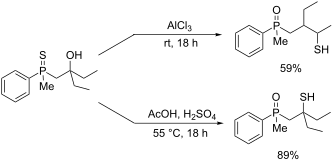
- ]-rearrangement proceeded with additional partial enrichment of one enantiomer. The latter may have occurred through the preferential acylation of one of two diastereoisomers under the reaction conditions where the second chirality center at the phosphorus atom influenced the ratio of the acylation reaction. With


Regioselectivity of glycosylation reactions of galactose acceptors: an experimental and theoretical study
Beilstein J. Org. Chem. 2019, 15, 2982–2989, doi:10.3762/bjoc.15.294

- by BF3·OEt2-promoted glycosylation [18] with a short reaction time, exploiting anchimeric assistance, followed by Zemplén de-O-acylation. On the other hand, for the synthesis of the α-anomer 8, a SnCl4-promoted glycosylation was found to be very effective [19], but with a longer reaction time in


A green, economical synthesis of β-ketonitriles and trifunctionalized building blocks from esters and lactones
Beilstein J. Org. Chem. 2019, 15, 2930–2935, doi:10.3762/bjoc.15.287
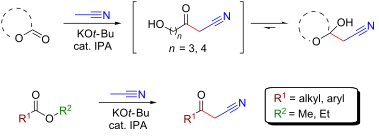
- Daniel P. Pienaar Kamogelo R. Butsi Amanda L. Rousseau Dean Brady Molecular Sciences Institute, School of Chemistry, University of the Witwatersrand, PO Wits 2050, Johannesburg, South Africa 10.3762/bjoc.15.287 Abstract The acylation of the acetonitrile anion with lactones and esters in ethereal
- catalytic amount of isopropanol, or 18-crown-6, was necessary to facilitate the reaction and to reduce side-product formation under ambient conditions. Keywords: acylation; β-ketonitrile; enolizable; trifunctionalized; sustainable; Introduction β-Ketonitriles represent highly versatile intermediates for
- , atom-economical ring opening of enolizable δ-valerolactone (3, Scheme 1). Although a two-step (or four-step, should hydroxy group O-protection prove to be necessary prior to acylation) protocol could, in theory, be envisaged to produce β-ketonitrile 2 from 3 by ring-opening esterification to afford


Nanangenines: drimane sesquiterpenoids as the dominant metabolite cohort of a novel Australian fungus, Aspergillus nanangensis
Beilstein J. Org. Chem. 2019, 15, 2631–2643, doi:10.3762/bjoc.15.256
- cell lines, two bacteria, one fungus and one plant (Table 4). Compound 1 was inactive up to 100 μg mL−1 in all of the assays performed, suggesting acylation at 6-OH is important for biological activity. Compounds 4, 5 and 7 showed moderate antibacterial activity against B. subtilis, with weaker
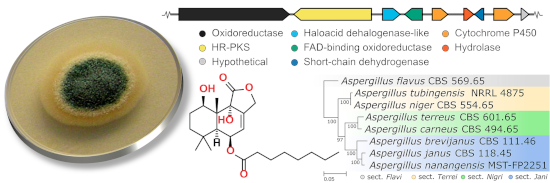
- . The C-6 and C-8 lipid chain is likely produced by the HR-PKS encoded by gene FE257_006541, while the acylation could be attributed to the enzyme encoded by FE257_006545, which contains the conserved domain of the alpha/beta-hydrolase fold superfamily (which includes thioesterases and acyltransferases


Combining the Ugi-azide multicomponent reaction and rhodium(III)-catalyzed annulation for the synthesis of tetrazole-isoquinolone/pyridone hybrids
Beilstein J. Org. Chem. 2019, 15, 2447–2457, doi:10.3762/bjoc.15.237

- aldehydes were reacted in parallel with trimethylsilyl azide and tritylamine under microwave irradiation – followed by removal of the trityl group and acylation to afford the N-acylaminomethyltetrazoles 1a–s and 2a–l. The functionalized tetrazoles were obtained in moderate to excellent yields over three
- steps without purification of the intermediates. In this strategy, three different diversity sites could be generated, i.e., those derived from the isocyano and aldehyde components and a third one from the carboxylic acid used in the last acylation step. We sought to incorporate aryl or vinyl carboxylic
- and the residue was used for the next step without any further purification. Third step: acylation of deprotected aminomethyltetrazoles. The N-deprotected aminomethyltetrazole obtained in the previous step was dissolved in dried DMF (4.0 mL, 0.5 M) in a flask provided with a magnetic stirring bar. The




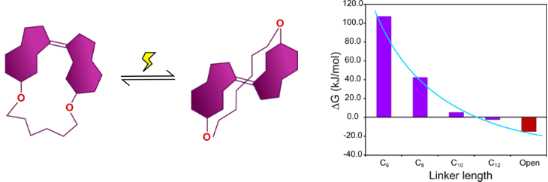
Effect of ring size on photoisomerization properties of stiff stilbene macrocycles
Beilstein J. Org. Chem. 2019, 15, 2408–2418, doi:10.3762/bjoc.15.233
- well-established reactions (Scheme 2). The indanone is formed by intramolecular Friedel–Crafts acylation of 2 under microwave radiation as reported by Oliverio et al. [23]. The second step is the demethylation of indanone methyl ether 3 by aluminium trichloride in toluene at reflux [24]. Two indanone




1,2,3,4-Tetrahydro-1,4,5,8-tetraazaanthracene revisited: properties and structural evidence of aromaticity loss
Beilstein J. Org. Chem. 2019, 15, 2059–2068, doi:10.3762/bjoc.15.203
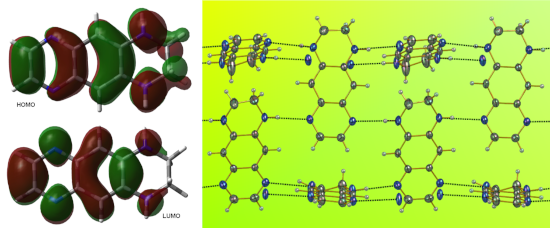
- demonstrated the formation of 8 which shows 5 signals whereas the spectrum of 7a (or 7b) exhibits 12 resonances. Next, we found that acylation of 3 with a large excess of acetic anhydride or pivaloyl chloride in the presence of N,N-diisopropylethylamine afforded 1,4-diacyl derivatives 9 and 10a in high yields
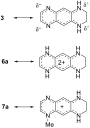
- : nitrogen, blue; carbon, grey; iodine, violet. Synthesis of THTTA (3). Protonation, alkylation and acylation of 3. Charge transfer and delocalization within 3 and its diprotonated (6a) and monomethylated (7a) derivatives. Experimental and calculated selected bond lengths (Å). Supporting Information




Synthesis of 1-azaspiro[4.4]nonan-1-oxyls via intramolecular 1,3-dipolar cycloaddition
Beilstein J. Org. Chem. 2019, 15, 2036–2042, doi:10.3762/bjoc.15.200
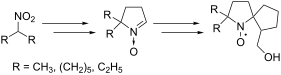
- in the side chain, the hydroxymethyl group in 9a–c was protected via acylation. Heating of 9a–c with an excess of acetic anhydride in chloroform quantitatively afforded the corresponding esters 10a–c. The products of acylation of the sterically hindered amino group were not detected in the reaction
- group of the cyclopentane ring (Scheme 7). The ester groups in 11a–c were easily cleaved in an aqueous–methanol solution of ammonia. Nitroxides 12a–c were isolated as orange compounds moderately soluble in water. Overall yields of these radicals via the acylation–oxidation–deprotection pathway were in



Application of chiral 2-isoxazoline for the synthesis of syn-1,3-diol analogs
Beilstein J. Org. Chem. 2019, 15, 1840–1847, doi:10.3762/bjoc.15.179
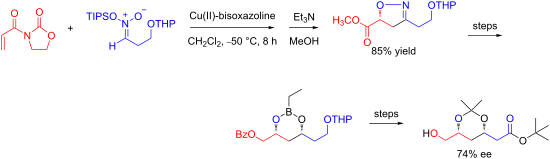
- , with the protecting groups removed except benzoyl. PTSA-catalyzed acetonization of 10 using 2.0 equiv DMP gave a mixture of two acetonides 19 and 13, which are separable by silica gel chromatography (Scheme 5a). In another trial (Scheme 5b), acylation of the two hydroxy groups in 9 yielded 20 in a


N-(1-Phenylethyl)aziridine-2-carboxylate esters in the synthesis of biologically relevant compounds
Beilstein J. Org. Chem. 2019, 15, 1722–1757, doi:10.3762/bjoc.15.168

- protected diamine (R)-80a. Removal of the chiral auxiliary yielded the diamine (R)-80b which after acylation provided analogues (R)-76. Compound (R)-76 (R = C9H19) appeared inactive as inhibitor of human sphingosine kinases 1 and 2. 1,2-Diamino-3-hydroxy derivatives The interest in sphingoid analogues stems
- morpholine first required the reaction with iodotrimethylsilane and furnished diamino alcohol 82 which after N-debenzylation and acylation gave (1R,2R)-81. In a similar way other GCS inhibitors, e.g., ᴅ-threo-P4 (1R,2R)-83a and ᴅ-threo-4'-hydroxy-P4 (1R,2R)-83b (Scheme 20) were obtained and examined as
- acylation of the nitrogen atom with 13 selected acyl chlorides was synthesized starting from the aziridine ketone (2S,1'R)-97 (Scheme 25) [76]. To introduce the R absolute configuration at C3 (ceramide numbering) the aziridine alcohol (2S,1'R,1''R)-98 was stereoselectively obtained by reduction of the


Recent advances on the transition-metal-catalyzed synthesis of imidazopyridines: an updated coverage
Beilstein J. Org. Chem. 2019, 15, 1612–1704, doi:10.3762/bjoc.15.165
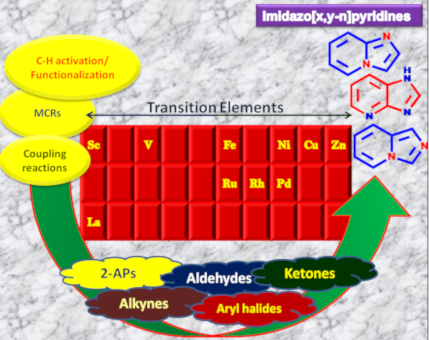
- ash-supported Sc(OTf)3 for Friedal–Crafts acylation reaction, also the group of Fukuzawa has exploited Sc(OTf)3 in the synthesis of N-substituted 1,4-DHPs [26][82]. Enhancement in reactivity and selectivity of many reactions, ability to polarize bonds upon coordination and thus altering their


A novel three-component reaction between isocyanides, alcohols or thiols and elemental sulfur: a mild, catalyst-free approach towards O-thiocarbamates and dithiocarbamates
Beilstein J. Org. Chem. 2019, 15, 1523–1533, doi:10.3762/bjoc.15.155
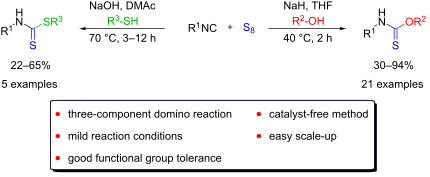
- reaction reported by Tan and co-workers using potassium tert-butylate in t-BuOH/dioxane at 55 °C for 6 h resulted in the desired isothiocyanate in only 34% yield [69]. In the next step, we investigated the acylation of the alcohol component by the isothiocyanate (Scheme 7, reaction 2). In the absence of a




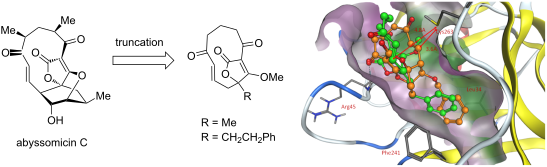
Synthesis and biological evaluation of truncated derivatives of abyssomicin C as antibacterial agents
Beilstein J. Org. Chem. 2019, 15, 1468–1474, doi:10.3762/bjoc.15.147
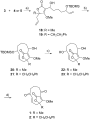
- bromide, see Supporting Information File 1) using 11 in the presence of trifluoroacetic acid afforded the corresponding homoallylic alcohol 14 and 15 in 84% and 92% yield, respectively. The next steps involved acylation of alcohol 14 and 15 using bromoacetyl bromide in refluxing toluene, which afforded


Mechanochemical Friedel–Crafts acylations
Beilstein J. Org. Chem. 2019, 15, 1313–1320, doi:10.3762/bjoc.15.130
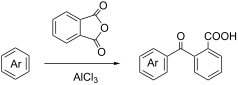
- Mateja Dud Anamarija Bris Iva Jusinski Davor Gracin Davor Margetic Ruđer Bošković Institute, Bijenička cesta 54, HR-10002 Zagreb, Croatia 10.3762/bjoc.15.130 Abstract Friedel–Crafts (FC) acylation reactions were exploited in the preparation of ketone-functionalized aromatics. Environmentally more
- employment of different aromatic hydrocarbons in conjunction with anhydrides and acylation reagents. It was shown that certain FC-reactive aromatics could be effectively functionalized by FC acylations carried out under ball-milling conditions without the presence of a solvent. The reaction mechanism was
- a few examples of FCRs employing manual grinding: reserpine acylation with AlCl3 [6] and acylation reaction of aromatics [7]. One of the reasons for this scarcity is the hygroscopic nature of the aluminum trichloride catalyst [8][9][10][11][12] when exposed to air humidity. This problem could be


Synthesis and SAR of the antistaphylococcal natural product nematophin from Xenorhabdus nematophila
Beilstein J. Org. Chem. 2019, 15, 535–541, doi:10.3762/bjoc.15.47
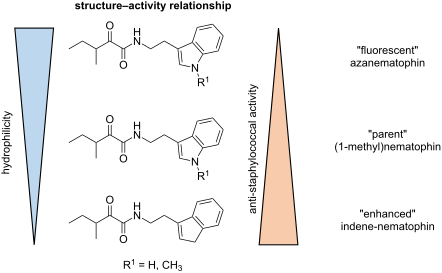
- initiated. The syntheses of the appropriate azatryptamine derivatives (17, 18, 25, and 26) were achieved from the non-expensive and commercially available 4- and 7-azaindole (13 and 20), respectively. First, 13 and 20 were converted in a Friedel–Crafts acylation with chloroacetyl chloride (ClCH2COCl) and


A chemoenzymatic synthesis of ceramide trafficking inhibitor HPA-12
Beilstein J. Org. Chem. 2019, 15, 490–496, doi:10.3762/bjoc.15.42
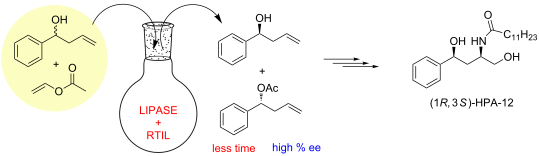
- synthesis of the title compound has been developed using an efficient and highly enantioselective lipase-catalyzed acylation in a hydrophobic ionic liquid, [bmim][PF6], followed by a diastereoselective asymmetric dihydroxylation as the key steps for incorporating the stereogenic centers. The further
- conversion to the appropriate intermediates and subsequent acylation with lauric acid furnished the target compound. Keywords: AD mix-β; [bmim][PF6]; DDQ; HPA-12; lipase; Introduction Ceramides belong to the family of sphingolipids (SLs) and are synthesized de-novo in the endoplasmic reticulum (ER) [1
- lipase-catalyzed trans-acylation of (±)-4 furnished (S)-4 with good ees, while the ee of the (R)-acetate was poor [44]. The acylase 1-catalyzed resolution protocol gave (S)-4 in a poor % ee [45]. A unified approach where both the enantiomers of 4 are obtained in good optical purities is rare. This is


Syntheses and chemical properties of β-nicotinamide riboside and its analogues and derivatives
Beilstein J. Org. Chem. 2019, 15, 401–430, doi:10.3762/bjoc.15.36
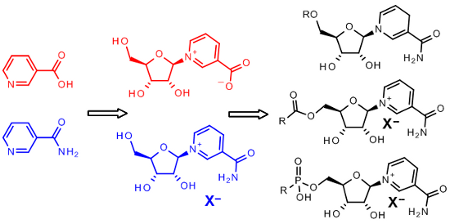
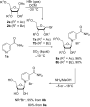
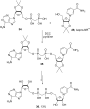
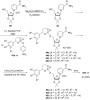
- conditions used pyridine as solvent. The patent publication of Szczepankiewicz et al. [34] describes the preparation of 5′-alkanoate and 2′,3′,5′-alkanoate derivatives of NR+ synthesized by the direct acylation of NR+Cl− or NR+OTf− with the corresponding acid anhydrides or acid chlorides (Scheme 20). Thus
- presence of 2-chloropyridine at room temperature for 30 min to yield the 5′-alkanoates 37 in low to moderate yields (16–44%) after HPLC reversed phase purification. At the same time, exhaustive acylation of NR+Cl− was achieved with n-pentanoic anhydride or n-hexanoic anhydride, used in 2.7 or 4.5 molar
- acylation of NR+ salts when using ethyl chloroformate. This yielded nicotinamide riboside triethylcarbonate but the authors were not able to completely purify the product. It should also be noted that all the described compounds were characterized only by mass spectrometry and the patent publication does










Chemical structure of cichorinotoxin, a cyclic lipodepsipeptide that is produced by Pseudomonas cichorii and causes varnish spots on lettuce
Beilstein J. Org. Chem. 2019, 15, 299–309, doi:10.3762/bjoc.15.27
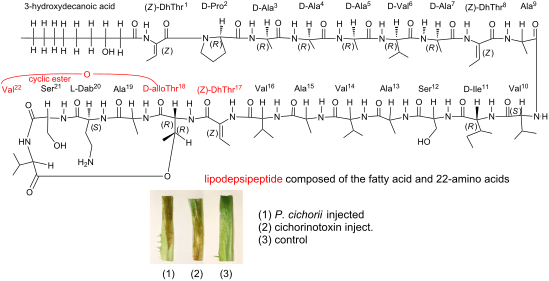
- conserved; this could be the Dab-Ser or the Dab-Dab sequence for example. The conversion of the two hydrophilic amino acids into hydrophobic residues by acylation may have caused the complete loss of activity seen with the tetraacetate (4). Acyclic compound A (a linear lipopeptide) produced by alkaline


A novel and efficient synthesis of phenanthrene derivatives via palladium/norbornadiene-catalyzed domino one-pot reaction
Beilstein J. Org. Chem. 2019, 15, 291–298, doi:10.3762/bjoc.15.26
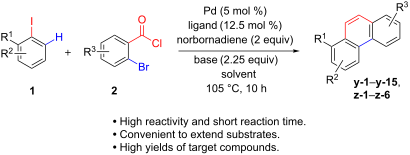
- to multisubstituted arenes. In the previous work, we innovatively developed a strategy for the remote C–H alkylation of arenes [18]. Recently, our group also achieved aromatic ketones [19] and 2-alkynyl aromatic ketones [20] successfully through ortho-acylation and ipso-Suzuki coupling or




Oxidative radical ring-opening/cyclization of cyclopropane derivatives
Beilstein J. Org. Chem. 2019, 15, 256–278, doi:10.3762/bjoc.15.23
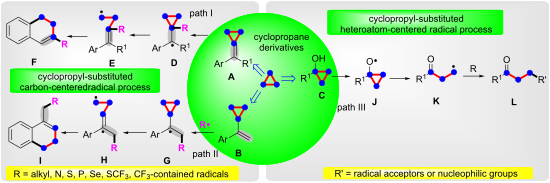
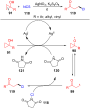
- -workers also reported the first silver-catalyzed ring-opening and acylation of cyclopropanols 91 with aldehydes 48 for the synthesis of 1,4-diketones 144 (Scheme 39) [119]. They proposed that the involvement of an uncommon water-assisted 1,2-HAT process was strongly exothermic and it promoted the addition
- . Ag(I)-catalyzed ring-opening and acylation of cyclopropanols with aldehydes. Aerobic oxidation ring-opening of cyclopropanols for the synthesis of 2-oxyranyl ketones. Aerobic oxidation ring-opening of cyclopropanols for the synthesis of linear enones. Aerobic oxidation ring-opening of cyclopropanols