


Search results
Search for "antimalarial" in Full Text gives 129 result(s) in Beilstein Journal of Organic Chemistry.
Triple-channel microreactor for biphasic gas–liquid reactions: Photosensitized oxygenations
Beilstein J. Org. Chem. 2011, 7, 1158–1163, doi:10.3762/bjoc.7.134
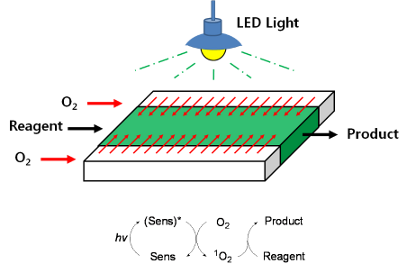
- efficiency of the triple-channel microreactor. The product of this reaction is an allyl hydroperoxide alcohol that is used in the synthesis of artemisinin-derived antimalarial 1,2,4-trioxanes [48]. The reaction in the triple-channel and in batch was carried out as aforementioned with methylene blue as


Novel tetracyclic structures from the synthesis of thiolactone-isatin hybrids
Beilstein J. Org. Chem. 2010, 6, No. 78, doi:10.3762/bjoc.6.78

- this project are the structure-activity relationships delineated from O-4 modified analogues which reportedly display enhanced antimalarial and promising antitubercular activity [15][16]. The other component of the envisaged hybrid, isatin (2) is an intriguing and synthetically versatile scaffold


Synthesis of spiroannulated and 3-arylated 1,2,4-trioxanes from mesitylol and methyl 4-hydroxytiglate by photooxygenation and peroxyacetalization
Beilstein J. Org. Chem. 2010, 6, No. 61, doi:10.3762/bjoc.6.61
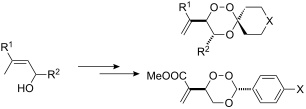
- pharmacological properties. Hydrophilic as well as lipophilic derivatives have been prepared from artemisinin and show improved antimalarial properties and better bioavailabilities [1][2][3][4][5]. In recent years, additional medicinal properties of artemisinin and the water soluble artesunates have been
- singlet oxygen ene reaction of allylic alcohols as a route to ß-hydroperoxy alcohols that can be transformed into 1,2,4-trioxanes by reaction with carbonyl compounds in the presence of Lewis acids [11]. This approach leads to simple cyclic peroxides (e.g. 2) which in some cases show similar antimalarial
- effects as the natural compound (Figure 1) [12]. An apparently useful structural feature is a large 3,3-spirofused hydrophobic group. The adamantane skeleton is a unique motif in other cyclic peroxides with antimalarial activities [13][14] which additionally exhibit other remarkable pharmaceutical


Synthesis of some novel annulated pyrido[2,3-d]pyrimidines via stereoselective intramolecular hetero Diels–Alder reactions of 1-oxa-1,3-butadienes
Beilstein J. Org. Chem. 2010, 6, No. 11, doi:10.3762/bjoc.6.11
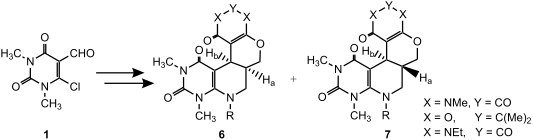
- ], antihypertensive [13], bronchiodilator [15] and vasodilator [16] properties. Additionally, some compounds of this type exhibit antialergic [17], antimalarial [18], analgesic [19][20] and antifungal [21] activity. Consequently, much effort has been directed towards the synthetic manipulation of uracil for the


Other Beilstein-Institut Open Science Activities



