Search results
Search for "asymmetric" in Full Text gives 953 result(s) in Beilstein Journal of Organic Chemistry. Showing first 200.
Catalytic multi-step domino and one-pot reactions
Beilstein J. Org. Chem. 2024, 20, 254–256, doi:10.3762/bjoc.20.25
- stereocenters [7]. In the Review paper by Kisszékelyi and Šebesta, the diverse variety of chiral metal enolates obtained by asymmetric conjugate additions of organometallic reagents and the possibilities to engage metal enolates in tandem reactions with new electrophiles are presented [8]. A Perspective from X
- facile stereoselective tandem reaction based on the asymmetric conjugate addition of dialkylzinc reagents to unsaturated acylimidazoles, followed by trapping of the intermediate zinc enolate with carbocations [12]. A practical one-pot synthesis of fluorescent pyrazolo[3,4-b]pyridin-6-ones by reacting 5

Substitution reactions in the acenaphthene analog of quino[7,8-h]quinoline and an unusual synthesis of the corresponding acenaphthylenes by tele-elimination
Beilstein J. Org. Chem. 2024, 20, 243–253, doi:10.3762/bjoc.20.24
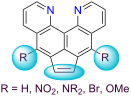
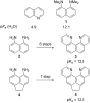
- several minutes with a good yield (Scheme 4). The spectral data fully confirmed the purity and asymmetric structure of product 11. It should be emphasized that the isolation and purification of nitro compounds 10 and 11 is complicated by their low solubility in traditional organic solvents, sensitivity to
- (Scheme 8). In addition to the spectral data confirming the composition and asymmetric structure of compound 16, a clear sign of the emerging acenaphthylene system is its yellow-orange color, which distinguishes the UV-active (yellow-green luminescence) acenaphthylene 16 from the light-beige UV-inactive
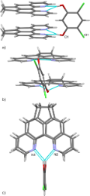
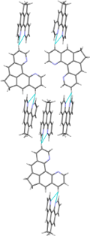
- compounds 5·HBF4 and 8·HBF4 were recrystallized from acetonitrile and subjected to XRD analysis under the same conditions. Selected data obtained are shown in Table 1. As can be seen, in both protonated quinoquinoline systems, an intramolecular hydrogen bond is realized (strongly asymmetric in crystals, but





Chiral phosphoric acid-catalyzed transfer hydrogenation of 3,3-difluoro-3H-indoles
Beilstein J. Org. Chem. 2024, 20, 205–211, doi:10.3762/bjoc.20.20
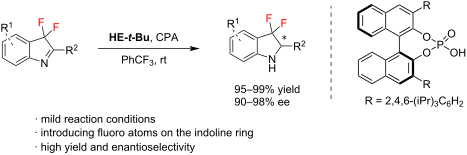
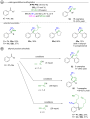
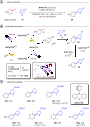
- excellent yield and enantioselectivity. Keywords: asymmetric organocatalysis; chiral Brønsted acid; 3,3-difluoroindoline; Hantzsch ester; transfer hydrogenation; Introduction The introduction of fluoro atoms into organic molecules can alter their lipophilicity, solubility, metabolic stability, and
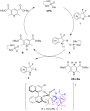
- -catalyzed asymmetric hydrogenation of indoles to synthesize chiral indolines has been widely studied (Scheme 1a) [21][22]. Representative examples include Ir- or Ru-catalyzed asymmetric hydrogenation of 2,3,3-trisubstituted 3H-indole [23][24]. Generally, these methods employ precious metals and/or
- relatively strict reaction conditions (up to 150 bar H2). In 2022, Liu’s group reported an asymmetric hydrogenation of 3H-indoles catalyzed by a chiral Mn complex, which showed good yield and enantioselectivity [25]. In addition to metal catalysis for the enantioselective reduction, asymmetric


Aldiminium and 1,2,3-triazolium dithiocarboxylate zwitterions derived from cyclic (alkyl)(amino) and mesoionic carbenes
Beilstein J. Org. Chem. 2023, 19, 1947–1956, doi:10.3762/bjoc.19.145
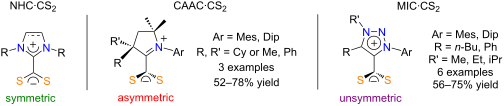
- to the asymmetric stretching of the CS2 group (Table 2). This band was observed at wavenumbers ranging from 1037 to 1050 cm−1, down from 1052–1080 cm−1 for common imidazol(in)ium-2-dithiocarboxylate inner salts bearing aliphatic or aromatic substituents on their nitrogen atoms [40]. This shift to
- derived from nucleophilic carbenes. More sophisticated methods, such as the determination of the Huynh electronic parameter, should, however, be better suited to evaluate more precisely the influence of substituents on the donating ability of carbene ligands [22][76][77]. Apart from the asymmetric
- stretching vibration of the S=C–S− group, another strong absorption was clearly visible in the IR spectra of CAAC·CS2 betaines 4a–c. This second most intense band was observed around 1550 cm−1 (Table 2). It probably originated from the asymmetric stretching of the aldiminium group, in line with similar high


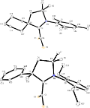
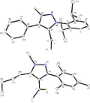
Construction of diazepine-containing spiroindolines via annulation reaction of α-halogenated N-acylhydrazones and isatin-derived MBH carbonates
Beilstein J. Org. Chem. 2023, 19, 1923–1932, doi:10.3762/bjoc.19.143
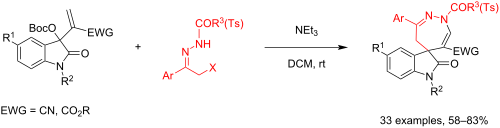
- sequentially underwent a [4 + 3] cycloaddition reaction (reaction 1 in Scheme 1) [54]. Recently, Chen and co-workers reported a chiral tertiary amine-catalyzed asymmetric γ-regioselective [4 + 3] annulation reaction of isatin-derived MBH carbonates and cyclic 2-benzylidenebenzo[b]thiophen-3-ylidene



Anion–π catalysis on carbon allotropes
Beilstein J. Org. Chem. 2023, 19, 1881–1894, doi:10.3762/bjoc.19.140
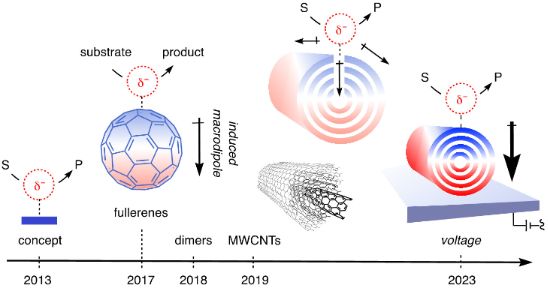
- introduced in 2017, followed by carbon nanotubes in 2019. Consistent with expectations from theory, anion–π catalysis on carbon allotropes generally increases with polarizability. Realized examples reach from enolate addition chemistry to asymmetric Diels–Alder reactions and autocatalytic ether cyclizations
- ] are deprotonated, and tautomers I and II add to an enolate acceptor. For anion–π catalysis, nitroolefins like 5 [60] were convenient acceptors because they are compatible with asymmetric catalysis, and because stabilization of intermediate III by privileged nitronate-π interactions drives the reaction
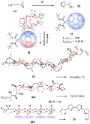
- with a freely rotating tether. Further increasing activity with fullerene 22 should not be overrated because A/D22/23 = 4.6 was recorded against triethylamine (23), which is a less precise control compared to the exactly matching 20. Asymmetric anion–π catalysis on fullerenes The best fullerene




A novel recyclable organocatalyst for the gram-scale enantioselective synthesis of (S)-baclofen
Beilstein J. Org. Chem. 2023, 19, 1811–1824, doi:10.3762/bjoc.19.133
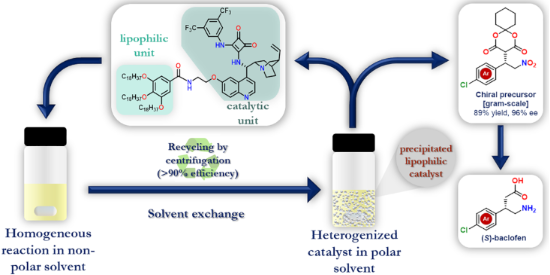
- processes are of paramount importance. In particular, the application of asymmetric organocatalysts is receiving increased attention [1][2][3][4]. This is illustrated by the fact that in 2021 the Nobel Prize in Chemistry was awarded for the discovery of asymmetric organocatalysis [5]. The use of


Recent advancements in iodide/phosphine-mediated photoredox radical reactions
Beilstein J. Org. Chem. 2023, 19, 1785–1803, doi:10.3762/bjoc.19.131
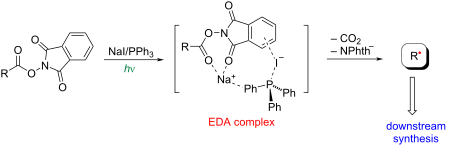
- provided a more sustainable and economically viable approach but also demonstrated excellent performance in various transformations. It had been successfully applied to a series of radical reactions, including trifluoromethylation, deaminative alkylation, and asymmetric versions of Minisci reactions
- develop other alternative radical precursors, explore new different reaction types (rather than the decarboxylative process), and design novel EDA complexes for photoredox catalysis, in addition to the well-established methods mentioned earlier. Moreover, asymmetric versions of iodide/phosphine-mediated
- photoredox radical reactions are relatively scarce [52], representing an unexplored area that requires further investigation. Developing asymmetric methodologies in this domain holds great promise for future exploration. Last but not the least, conducting detailed mechanistic studies on iodide/phosphine




Trifluoromethylated hydrazones and acylhydrazones as potent nitrogen-containing fluorinated building blocks
Beilstein J. Org. Chem. 2023, 19, 1741–1754, doi:10.3762/bjoc.19.127
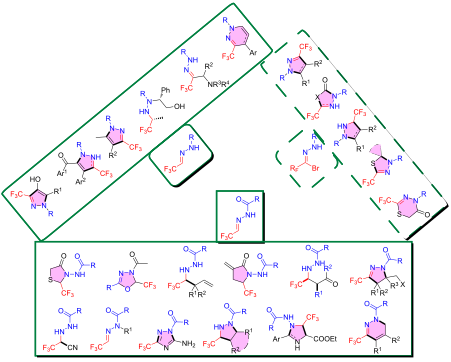
- conditions [38] (Scheme 2). Moreover, a chiral Brønsted acid-catalyzed asymmetric 6π electrocyclization of trifluoroacetaldehyde hydrazones for the synthesis of enantiomerically enriched 3-trifluoromethyl-1,4-dihydropyridazines was first developed by Rueping et al. [39]. The strategy involves chiral ion
- pairs and provides a good basis and scope for further extensions and explorations [39] (Scheme 3). Based on the work by Wu et al. and extending their previous work, Rueping and co-workers explored the effects of fluorine in organocatalytic reactions. They developed an asymmetric Brønsted acid–Lewis base
- =N motif within hydrazones gives them both electrophilic and nucleophilic character. In 2005, Brigaud et al. developed a highly stereoselective method for the synthesis of α-trifluoromethylamines with organometallic reagents to extend the asymmetric methodologies of trifluoroacetaldehyde hydrazones


Radical chemistry in polymer science: an overview and recent advances
Beilstein J. Org. Chem. 2023, 19, 1580–1603, doi:10.3762/bjoc.19.116
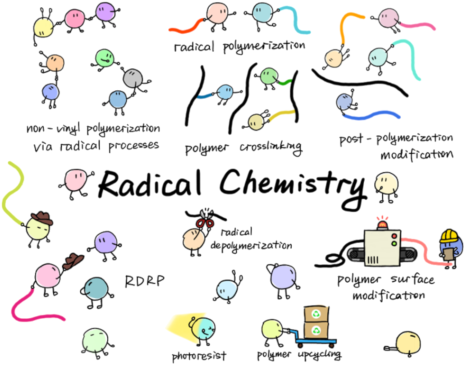
- has been used to cure a liquid isoprene polymer in precise digital light processing 3D printing [105]. Recently, Kanbayashi et al. reported that thiol–ene chemistry would not cause racemization of an asymmetric center linked to a pendant vinyl group, which can be particularly valuable for




N-Sulfenylsuccinimide/phthalimide: an alternative sulfenylating reagent in organic transformations
Beilstein J. Org. Chem. 2023, 19, 1471–1502, doi:10.3762/bjoc.19.106
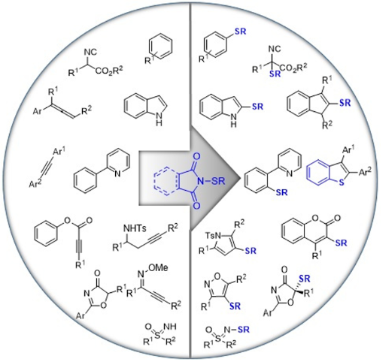
- organosulfur chemistry, sulfenylating agents are an important key in C–S bond formation strategies. Among various organosulfur precursors, N-sulfenylsuccinimide/phthalimide derivatives have shown highly electrophilic reactivity for the asymmetric synthesis of many organic compounds. Hence, in this review
- of the product, while benzoyl peroxide (BPO) gave a low yield. Various nucleophiles 161, including ammonia, alkylamines, hydrazines, alcohols and alkoxides, indole, N-alkylpyrrole, N-substituted anilines, PhSH, and PhMgBr worked well under these conditions. Asymmetric thiolation of 4-substituted
- /phthalimides as new alternative sulfenylating reagents can meet this demand. In this context, we observed that most of the reactions have used unactivated C–H bonds, such as C(sp2)–H and C(sp3)–H bonds. In some reactions, chiral organocatalysts catalyzed asymmetric sulfenylation processes. In most cases, there




α-(Aminomethyl)acrylates as acceptors in radical–polar crossover 1,4-additions of dialkylzincs: insights into enolate formation and trapping
Beilstein J. Org. Chem. 2023, 19, 1443–1451, doi:10.3762/bjoc.19.103
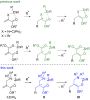
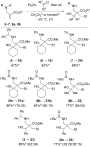
- was poorly efficient with tosylamine, leading to product 7 in low 20% yield [25]. With the aim to develop asymmetric variants, we also considered the synthesis of N-(tert-butanesulfinyl) α-(aminomethyl)acrylates 8a–c. For this purpose, the application of the same protocol with (±)-tert
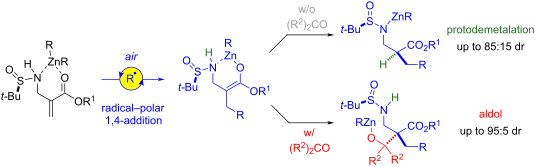
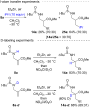
- ). Asymmetric variants of these transformations are possible using the tert-butanesulfinyl chiral auxiliary on the nitrogen atom. The levels of 1,4-stereoinduction are significant but a convincing model to account for it cannot be put forward at this point. Nonetheless, from a synthetic methodology point of






Application of N-heterocyclic carbene–Cu(I) complexes as catalysts in organic synthesis: a review
Beilstein J. Org. Chem. 2023, 19, 1408–1442, doi:10.3762/bjoc.19.102
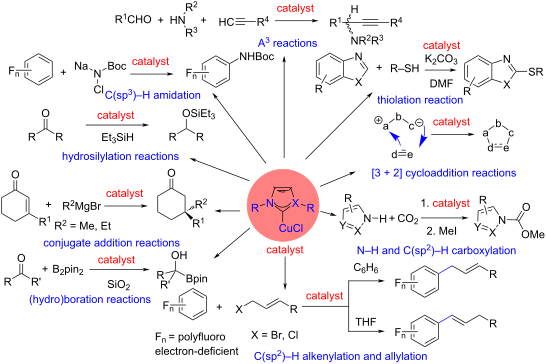
- of imidazolium salt 109 (R1 = iBu) resulted in the highest level of stereoinduction for the conjugate addition of EtMgBr to 3-methylcyclohexenone. 2.2.2 Reaction with organoaluminum reagents: Hoveyda and co-workers [60] investigated the NHC–copper-catalyzed asymmetric conjugate addition of alkyl- and
- , Me, C≡C-n-hep, Ph, CO2Me) and trialkylaluminum (alkyl = Me, Et, iBu) were used for the reactions. This approach is particularly attractive for asymmetric conjugate additions to pentenones, which are otherwise difficult to accomplish. 2.2.3 Reaction with organoboron reagents: In 2010, Hoveyda and co
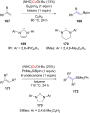
- ] further extended this work and synthesized a series of highly tunable functionalized NHC-precursor azolium salts. The efficacy of the combination of these salts with Cu salts as catalyst was investigated for the asymmetric conjugate addition (ACA) of dialkylzinc to acyclic enones and it was found that the










Synthesis of ether lipids: natural compounds and analogues
Beilstein J. Org. Chem. 2023, 19, 1299–1369, doi:10.3762/bjoc.19.96
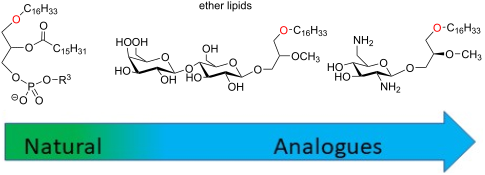
- (PAF), by an acetyl group (R2 = CH3) [1]. The asymmetric carbon of the glycerol (sn-2 position) features a R configuration. The last substituent attached to the glycerol unit is a polar head group mostly constituted by a phosphatidylethanolamine group (PE) or a phosphocholine moiety (PC). ELs with
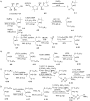
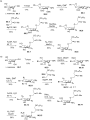
- from allyl alcohol (Figure 7) [82]. The Sharpless asymmetric epoxidation of allyl alcohol followed by tosylation produced glycidyl tosylate 7.1a (Figure 7). The reaction of palmityl alcohol (C16H33-OH) in the presence of a catalytic amount of BF3 open regio- and stereoselectively the epoxide to produce






Organic thermally activated delayed fluorescence material with strained benzoguanidine donor
Beilstein J. Org. Chem. 2023, 19, 1289–1298, doi:10.3762/bjoc.19.95
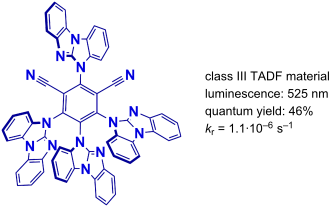
- the plane of the central benzene ring. In both molecules in the asymmetric unit, the benzoguanidine moiety bound to the benzene carbon neighboring two nitrile groups, is orientated in the opposing projection about the plane of the benzene ring to the remaining benzoguanidine moieties (Figure 2b


Non-noble metal-catalyzed cross-dehydrogenation coupling (CDC) involving ether α-C(sp3)–H to construct C–C bonds
Beilstein J. Org. Chem. 2023, 19, 1259–1288, doi:10.3762/bjoc.19.94
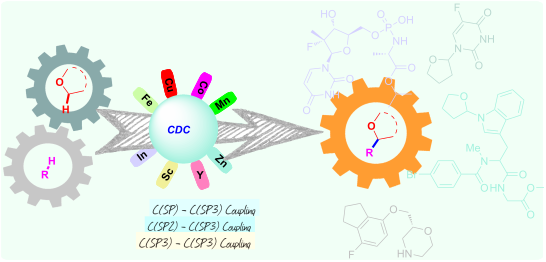
- of ethers to obtain symmetric and asymmetric 1,1-bis-indolylmethane derivatives (Scheme 23) [84]. The reaction proceeds through the tandem oxidative coupling of the C–O bond and cleavage of the C–H bond. Fe plays a dual role in catalysing the C–C bond coupling and C–O bond cleavage as Lewis acid
- cross-coupling of ethers with enamides. Ni(II)-catalyzed CDC of indoles with 1,4-dioxane. Chemo- and regioselective ortho- or para-alkylation of pyridines. Asymmetric CDC of 3,6-dihydro-2H-pyrans with aldehydes. CDC of heterocyclic aromatics with ethers. Indium-catalyzed alkylation of DHPs with 1,3








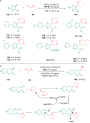


Acetaldehyde in the Enders triple cascade reaction via acetaldehyde dimethyl acetal
Beilstein J. Org. Chem. 2023, 19, 1243–1250, doi:10.3762/bjoc.19.92
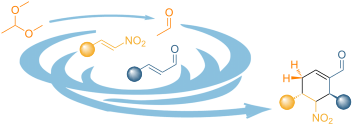
- Superiore di Pavia, Palazzo del Broletto, Piazza della Vittoria, 15, 27100, Pavia, Italy INSTM, Consorzio Nazionale per la Scienza e Tecnologia dei Materiali, RU L’Aquila, Italy 10.3762/bjoc.19.92 Abstract Asymmetric organocatalyzed multicomponent reactions represent an important toolbox in the field of
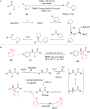
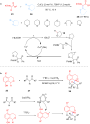
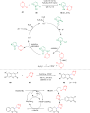
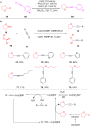
- single operation and from readily available substrates. Their combination with asymmetric aminocatalysis [4][6][7][8] has recently led to innovative approaches for the one-step enantioselective preparation of stereochemically dense molecules. Nowadays, organocatalytic cascade processes provide a powerful
- complete enantiocontrol (Scheme 1). This elegantly designed example established a new direction in asymmetric aminocatalysis, leading to an impressive growth of methods based on organocascade processes [8][10][13][14][15][16]. The experimental simplicity of the strategy offers the potential of rapidly


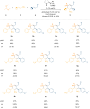
Selective construction of dispiro[indoline-3,2'-quinoline-3',3''-indoline] and dispiro[indoline-3,2'-pyrrole-3',3''-indoline] via three-component reaction
Beilstein J. Org. Chem. 2023, 19, 1234–1242, doi:10.3762/bjoc.19.91
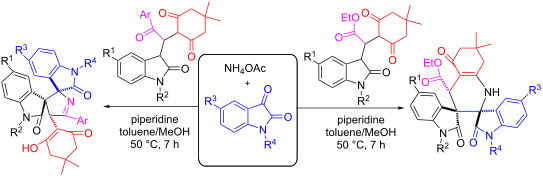
- multicomponent reactions have been successfully developed to construct multifunctionalized or polycyclic spirooxindoles. For example, Zhang successfully developed a recyclable bifunctional cinchona/thiourea-catalyzed four-component Michael/Mannich cyclization sequence for the asymmetric synthesis of



Radical ligand transfer: a general strategy for radical functionalization
Beilstein J. Org. Chem. 2023, 19, 1225–1233, doi:10.3762/bjoc.19.90
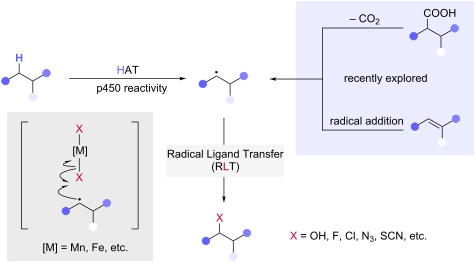
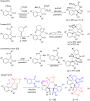
- potential of RLT reactions to be rapid and efficient. In both cases, benzylic carboxylic acids were most amenable as substrates, with alkyl carboxylic acids such as adamantane and dicyclohexylmethane providing fluorinated aliphatic products in low to moderate yields. Asymmetric RLT catalysis has also been
- of recent interest, with exciting preliminary decarboxylative azidation results obtained under thermal conditions by Hongli Bao and co-workers [44]. An asymmetric iron (NON) pincer catalyst IV was employed to decarboxylate benzylic peroxyesters and form enantiomerically enriched benzylic azides. An
- utilized to perform both HAT and RLT. While many challenges remain for achieving general asymmetric induction in RLT catalysis, this advance represents an important step toward this aspirational goal with many lessons to build upon. Our group has recently leveraged iron photochemistry to build on these


Selective and scalable oxygenation of heteroatoms using the elements of nature: air, water, and light
Beilstein J. Org. Chem. 2023, 19, 1146–1154, doi:10.3762/bjoc.19.82
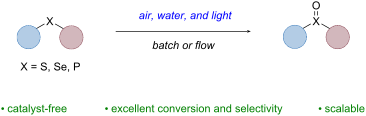
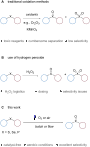
- phosphine oxide, and selenides to selenoxides. Sulfoxide, phosphine oxide, and selenoxide-containing molecules have diverse applications in the pharmaceutical industry [10], as chiral auxiliaries or as ligands for asymmetric metal catalysis [11], and in materials such as polymers [12][13] and flame





Photoredox catalysis harvesting multiple photon or electrochemical energies
Beilstein J. Org. Chem. 2023, 19, 1055–1145, doi:10.3762/bjoc.19.81
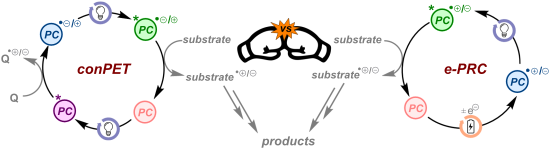
- catalyst intermediate, the same catalyst can in principle be repurposed for either technique, and mechanistic learnings will thus be highly transferrable between the fields. Although asymmetric transformations are yet to be achieved using conPET, the PEC section of this Review will also describe pioneering




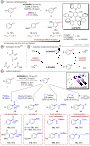
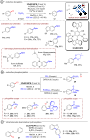

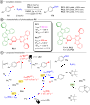
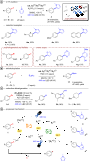




















Aromatic C–H bond functionalization through organocatalyzed asymmetric intermolecular aza-Friedel–Crafts reaction: a recent update
Beilstein J. Org. Chem. 2023, 19, 956–981, doi:10.3762/bjoc.19.72

- groups into the aromatic ring. This reaction has a great scope of forming aza-stereocenters which can be tuned by different asymmetric catalysts. This review assembles recent advances in asymmetric aza-Friedel–Crafts reactions mediated by organocatalysts. The mechanistic interpretation with the origin of
- stereoselectivity is also explained. Keywords: asymmetric; aza-Friedel–Crafts reaction; H-bonding; organocatalysis; stereoselectivity; Introduction The ease of a chemical transformation depends on the thermodynamic instability of a chemical bond owing to its fast cleavage under mild reaction conditions. A C–H
- years ago, the concept became increasingly accepted and popular only by the last decade of the last century [2][3]. Nowadays, organocatalysis is especially applied to asymmetric synthesis and a huge number of organocatalysts has been introduced in last three decades for the asymmetric synthesis of




Photoredox catalysis enabling decarboxylative radical cyclization of γ,γ-dimethylallyltryptophan (DMAT) derivatives: formal synthesis of 6,7-secoagroclavine
Beilstein J. Org. Chem. 2023, 19, 918–927, doi:10.3762/bjoc.19.70
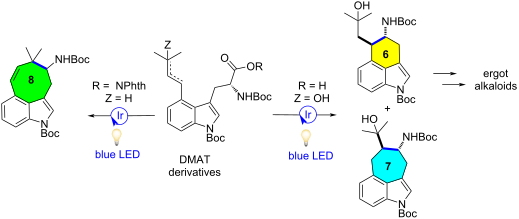
- position via a sequential electron transfer–proton transfer (ET/PT) [52][53][54][55][56][57][58][59]. With our ongoing interest of establishing new methods for the asymmetric synthesis of nonproteinogenic tryptophan derivatives as well as their associated indole alkaloid natural products [60][61][62][63


Asymmetric tandem conjugate addition and reaction with carbocations on acylimidazole Michael acceptors
Beilstein J. Org. Chem. 2023, 19, 881–888, doi:10.3762/bjoc.19.65

- 10.3762/bjoc.19.65 Abstract We present here a stereoselective tandem reaction based on the asymmetric conjugate addition of dialkylzinc reagents to unsaturated acylimidazoles followed by trapping of the intermediate zinc enolate with carbocations. The use of a chiral NHC ligand provides chiral zinc
- obtained by other conjugate addition reactions. Keywords: acylimidazole; asymmetric catalysis; carbocation; conjugate addition; enolate; Introduction Asymmetric metal-catalyzed conjugate additions provide access to numerous chiral scaffolds. This type of C–C bond formation efficiently enables the
- its applications in the total syntheses of complex natural products and other molecules of biological relevance [13][14]. Acylimidazoles proved to be versatile building blocks broadly applicable in asymmetric catalysis and organic synthesis. Today, acylimidazoles are used as ester/amide surrogates




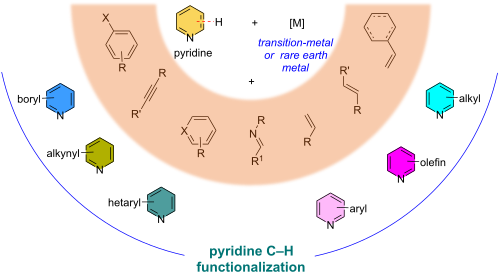
Pyridine C(sp2)–H bond functionalization under transition-metal and rare earth metal catalysis
Beilstein J. Org. Chem. 2023, 19, 820–863, doi:10.3762/bjoc.19.62
- regeneration of 189 (Scheme 36b). In 2019, using NHC ligands, a protocol for the regio- and enantioselective C–H cyclization of pyridines was reported by Shi and co-workers [107] toward the direct asymmetric pyridine C–H alkylation (Scheme 37). The authors found that alkene-tethered C2 pyridine 193, C3