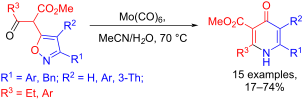
Search for "high yield" in Full Text gives 612 result(s) in Beilstein Journal of Organic Chemistry. Showing first 200.
Beilstein J. Org. Chem. 2022, 18, 350–359, doi:10.3762/bjoc.18.39
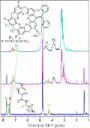
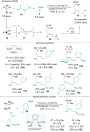
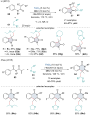
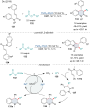
Graphical Abstract
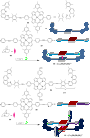
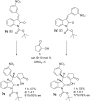
Figure 1: Piperidine and pyrrolidine rings in biologically active compounds.
Scheme 1: Conventional synthetic routes for piperidine derivatives.
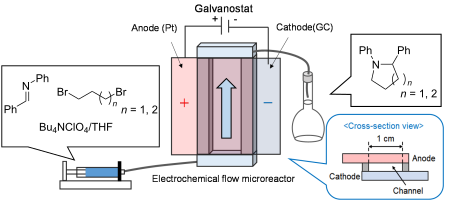
Scheme 2: Synthesis of 1,2-diphenylpiperidine (3a) by the electroreductive cyclization mechanism.
Figure 2: Schematic diagram of the electroreductive cyclization for the synthesis of 1,2-diphenylpiperidine (...
Figure 3: Yield of 3a for each fraction sample in the continuous flow reductive cyclization.
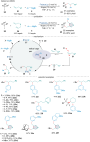
Beilstein J. Org. Chem. 2022, 18, 262–285, doi:10.3762/bjoc.18.31
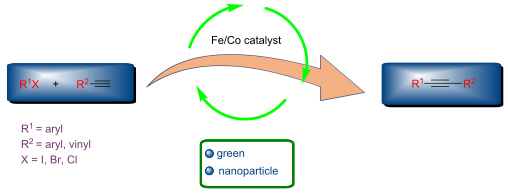
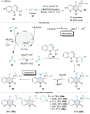
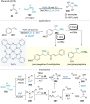
Graphical Abstract
Scheme 1: One pot Sonogashira coupling of aryl iodides with arylynols in the presence of iron(III) chloride h...
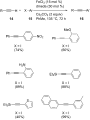
Scheme 2: The iron-catalyzed Sonogashira coupling of aryl iodides with terminal acetylenes in water under aer...
Scheme 3: Sonogashira coupling of aryl halides and phenylacetylene in the presence of iron nanoparticles.
Scheme 4: Sonogashira coupling catalyzed by a silica-supported heterogeneous Fe(III) catalyst.
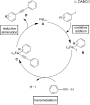
Scheme 5: Suggested catalytic cycle for the Sonogashira coupling using a silica-supported heterogeneous Fe(II...
Scheme 6: Chemoselective iron-catalyzed cross coupling of 4-bromo-1-cyclohexen-1-yltrifluromethane sulfonate ...
Scheme 7: Fe-catalyzed Sonogashira coupling between terminal alkynes and aryl iodides.
Scheme 8: Iron-catalyzed domino Sonogashira coupling and hydroalkoxylation.
Scheme 9: Sonogashira coupling of aryl halides and phenylacetylene in the presence of Fe(III) acetylacetonate...
Scheme 10: Sonogashira coupling of aryl iodides and alkynes with Fe(acac)3/2,2-bipyridine catalyst.
Scheme 11: Sonogashira cross-coupling of terminal alkynes with aryl iodides in the presence of Fe powder/ PPh3...
Scheme 12: α-Fe2O3 nanoparticles-catalyzed coupling of phenylacetylene with aryl iodides.
Scheme 13: Sonogashira cross-coupling reaction between phenylacetylene and 4-substituted iodobenzenes catalyze...
Scheme 14: One-pot synthesis of 2-arylbenzo[b]furans via tandem Sonogashira coupling–cyclization protocol.
Scheme 15: Suggested mechanism of the Fe(III) catalyzed coupling of o-iodophenol with acetylene derivatives.
Scheme 16: Fe3O4@SiO2/Schiff base/Fe(II)-catalyzed Sonogashira–Hagihara coupling reaction.
Scheme 17: Sonogashira coupling using the Fe(II)(bdmd) catalyst in DMF/1,4-dioxane.
Scheme 18: Synthesis of 7-azaindoles using Fe(acac)3 as catalyst.
Scheme 19: Plausible mechanistic pathway for the synthesis of 7-azaindoles.
Scheme 20: Synthesis of Co@imine-POP catalyst.
Scheme 21: Sonogashira coupling of various arylhalides and phenylacetylene in the presence of Co@imine-POP cat...
Scheme 22: Sonogashira coupling of aryl halides and phenylacetylene using Co-DMM@MNPs/chitosan.
Scheme 23: Sonogashira cross-coupling of aryl halides with terminal acetylenes in the presence of Co-NHC@MWCNT...
Scheme 24: Sonogashira cross-coupling of aryl halides with terminal acetylenes in the presence of Co nanoparti...
Scheme 25: Sonogashira coupling reaction of aryl halides with phenylacetylene in the presence of Co nanopartic...
Scheme 26: PdCoNPs-3DG nanocomposite-catalyzed Sonogashira cross coupling of aryl halide and terminal alkynes.
Scheme 27: Sonogashira cross-coupling of aryl halides and phenylacetylene in the presence of graphene-supporte...
Scheme 28: Sonogashira cross-coupling with Pd/Co ANP-PPI-graphene.
Scheme 29: Pd-Co-1(H)-catalyzed Sonogashira coupling reaction.
Scheme 30: The coupling of aryl halides with terminal alkynes using cobalt hollow nanospheres as catalyst.
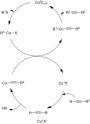
Scheme 31: A plausible mechanism for the cobalt-catalyzed Sonogashira coupling reaction.
Scheme 32: Sonogashira cross-coupling reaction of arylhalides with phenylacetylene catalyzed by Fe3O4@PEG/Cu-C...
Scheme 33: Plausible mechanism of Sonogashira cross-coupling reaction catalyzed by Fe3O4@PEG/Cu-Co.
Scheme 34: Sonogashira coupling reaction of para-substituted bromobenzenes with phenylacetylene in the presenc...
Scheme 35: Possible mechanism for the visible light-assisted cobalt complex-catalyzed Sonogashira coupling. (R...
Scheme 36: Sonogashira cross-coupling of aryl halides and phenylacetylene using cobalt as additive.
Scheme 37: Plausible mechanism of Sonogashira cross-coupling reaction over [LaPd*]. (Reproduced with permissio...
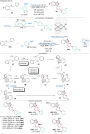
Beilstein J. Org. Chem. 2022, 18, 167–173, doi:10.3762/bjoc.18.18
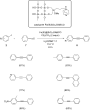
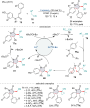
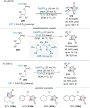
Graphical Abstract
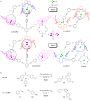
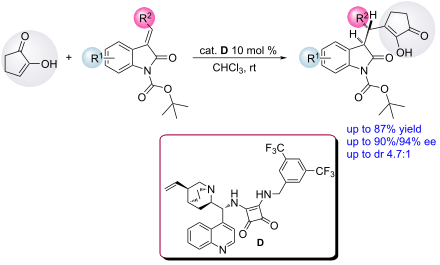
Figure 1: Model of the catalyst action.
Figure 2: Catalysts screened.
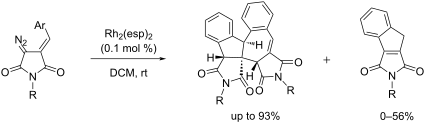
Scheme 1: Screening of different N-protecting groups. Reaction conditions: 0.2 M solution of 1 (1 equiv), 2 (...
Scheme 2: Scope of the reaction (the relative configuration of the major diastereoisomer is depicted). Reacti...
Scheme 3: Comparison reactions of E- and Z-isomers (the relative configurations of the major diastereoisomers...
Beilstein J. Org. Chem. 2022, 18, 77–85, doi:10.3762/bjoc.18.7
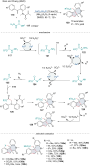
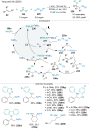
Graphical Abstract
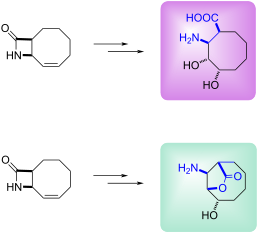
Figure 1: Examples of natural products containing β-amino acids.
Scheme 1: Synthesis of cyclic β-amino acid 6.
Scheme 2: Epoxidation of Boc-protected amino ester 4 and hydrolysis of epoxide 7 with HCl(g)–MeOH.
Scheme 3: Reaction of epoxide 7 with NaHSO4 in methylene chloride/MeOH.
Figure 2: The X-ray crystal structure of 10.
Scheme 4: Synthesis of cyclic β-amino acid derivative 8.
Scheme 5: Suggested mechanism for the reaction of epoxide 7 with NaHSO4.
Figure 3: Solvent-corrected relative free energy profile at 298.15 K for the reaction mechanism of 14 shown i...
Figure 4: Solvent-corrected relative free energy profile at 298.15 K for the reaction mechanism of 17 shown i...
Figure 5: The optimized geometries of the conformers 7a and 7b with selected interatomic distances at the B3L...
Beilstein J. Org. Chem. 2022, 18, 53–69, doi:10.3762/bjoc.18.5
Graphical Abstract
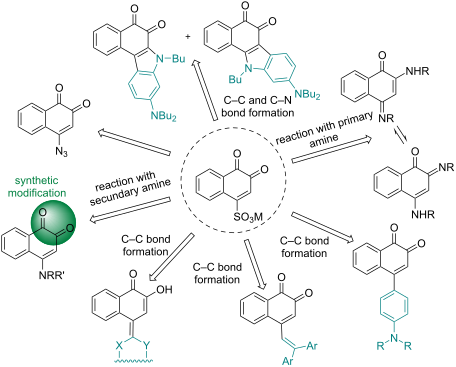
Figure 1: Naphthoquinones are commonly used in organic synthesis.
Figure 2: Some important natural and synthetic naphthoquinones.
Scheme 1: Synthetic studies of BNQs and reactions with amines.
Scheme 2: Methods described for the synthesis of β-NQS.
Figure 3: Drugs detected using β-NQSNa.
Scheme 3: Reactions between β-NQS and amines.
Scheme 4: Isomerization of 4-arylamino-1,2-naphthoquinones.
Scheme 5: Synthesis of unsymmetrical 2-amino-4-imino compounds.
Scheme 6: Synthesis of bis(isoxazolyl)naphthoquinones from β-NQS.
Scheme 7: The reaction of β-NQS with 30 followed by cycle condensation.
Scheme 8: Synthesis of 4-(2-amino-5-selenothiazoles)-1,2-naphthoquinones.
Scheme 9: Synthesis of amino- and phenoxy-1,2-naphthoquinones.
Scheme 10: Synthesis of 4-semicarbazide-1,2-naphthoquinone.
Scheme 11: Reactions of 4-azido-1,2-naphthoquinone.
Figure 4: Modifications that can be easily carried out from the products of β-NQS 8.
Scheme 12: Derivatives of 1,2-naphthoquinones obtained from β-NQS.
Scheme 13: Oximes as well as 4-amino- and 4-phenoxy-1,2-naphthoquinone as potential anti-inflammatory agents.
Scheme 14: Synthesis of triazoles from β-NQS.
Scheme 15: Synthesis of naphtho[1,2-d]oxazoles from β-NQS.
Scheme 16: A) Arylation and vinylation of β-NQS catalyzed by Ni(II) salts. B) Transformation of the 1,2-dicarb...
Scheme 17: Benzo[a]carbazole and benzo[c]carbazoles fused with 1,2-naphthoquinone.
Scheme 18: Synthesis of 1,2-naphthoquinones having a C=C bond from β-NQS. Method A: NaOH, EtOH/H2O, 40 °C, 2 h...
Scheme 19: C=C bond formation from β-NQS and substituted acetonitriles.
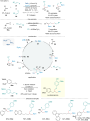
Beilstein J. Org. Chem. 2022, 18, 37–52, doi:10.3762/bjoc.18.4
Graphical Abstract
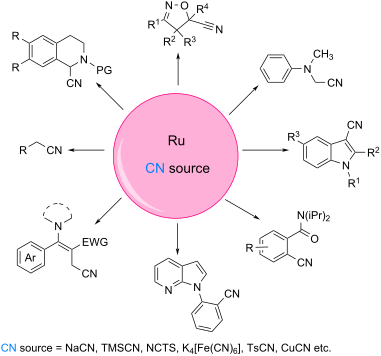
Scheme 1: Starch-immobilized ruthenium trichloride-catalyzed cyanation of tertiary amines.
Scheme 2: Proposed mechanism for the cyanation of tertiary amines using starch-immobilized ruthenium trichlor...
Scheme 3: Cyanation of tertiary amines using heterogeneous Ru/C catalyst.
Scheme 4: Proposed mechanism for cyanation of tertiary amines using a heterogeneous Ru/C catalyst.
Scheme 5: Ruthenium-carbamato complex-catalyzed oxidative cyanation of tertiary amines.
Scheme 6: Cyanation of tertiary amines using immobilized MCM-41-2N-RuCl3 as the catalyst.
Scheme 7: Cyanation of tertiary amines using RuCl3·nH2O as the catalyst and molecular oxygen as oxidant.
Scheme 8: RuCl3-catalyzed cyanation of tertiary amines using NaCN/HCN and H2O2 as oxidant.
Scheme 9: Proposed mechanism for the ruthenium-catalyzed oxidative cyanation using H2O2.
Scheme 10: Proposed mechanism for the ruthenium-catalyzed aerobic oxidative cyanation.
Scheme 11: RuCl3-catalyzed oxidative cyanation of tertiary amines using acetone cyanohydrin as the cyanating a...
Scheme 12: Cyanation of indoles using K4[Fe(CN)6] as cyano source and Ru(III)-exchanged NaY zeolite (RuY) as c...
Scheme 13: Cyanation of arenes and heteroarenes using a ruthenium(II) catalyst and N-cyano-N-phenyl-p-toluenes...
Scheme 14: Proposed mechanism for the cyanation of arenes and heteroarenes using ruthenium(II) as catalyst and...
Scheme 15: Synthesis of N-(2-cyanoaryl)-7-azaindoles.
Figure 1: Structure of the TiO2-immobilized ruthenium polyazine complex.
Scheme 16: Visible-light-induced oxidative cyanation of aza-Baylis–Hillman adducts.
Scheme 17: Synthesis of 1° alkyl nitriles using [Ru(bpy)3](PF6)2 as the photocatalyst.
Scheme 18: Synthesis of 2° and 3° alkyl nitriles using [Ru(bpy)3](PF6)2 as the photocatalyst.
Scheme 19: Photoredox cross coupling reaction.
Scheme 20: Synthesis of α-amino nitriles from amines via a one-pot strategy.
Scheme 21: Proposed mechanistic pathway for the cyanation of the aldimine intermediate.
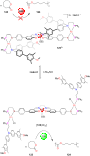
Scheme 22: Strecker-type functionalization of N-aryl-substituted tetrahydroisoquinolines under flow conditions....
Scheme 23: One-pot synthesis of α-aminonitriles using RuCl3 as catalyst.
Scheme 24: Synthesis of alkyl nitriles using (Ru(TMHD)3) as the catalyst.
Scheme 25: Synthesis of cyanated isoxazolines from alkenyl oximes catalyzed by [RuCl2(p-cymene)]2 in the prese...
Scheme 26: Proposed mechanism for the synthesis of cyanated isoxazolines from alkenyl oximes.
Scheme 27: Oxidative cyanation of differently substituted alcohols.
Beilstein J. Org. Chem. 2021, 17, 2924–2931, doi:10.3762/bjoc.17.201
Graphical Abstract
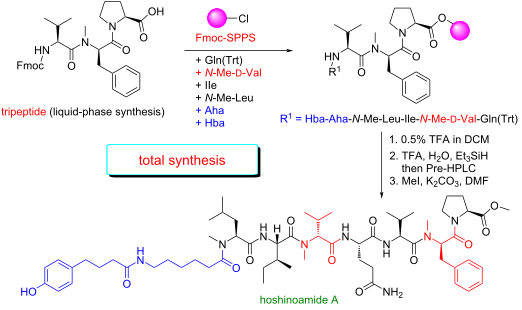
Figure 1: a) Structures of hoshinoamides A and B. b) Structure of hoshinoamide C.
Scheme 1: Synthesis of resin-bound tripeptide 3 by SPPS. DIPEA: N,N-diisopropylethylamine; HCTU: O-(6-chloro-...
Scheme 2: Synthesis of dipeptide 6. HATU: 2-(7-azabenzotriazol-1-yl)-N,N,N',N'-tetramethyluronium hexafluorop...
Scheme 3: Synthesis of hoshinoamide A.
Beilstein J. Org. Chem. 2021, 17, 2848–2893, doi:10.3762/bjoc.17.196
Graphical Abstract
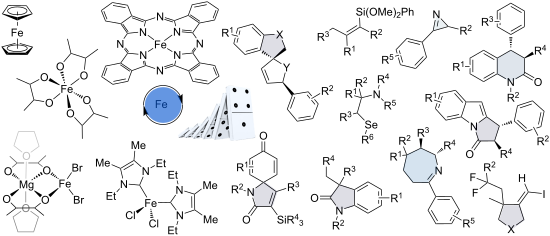
Figure 1: Price comparison among iron and other transition metals used in catalysis.
Scheme 1: Typical modes of C–C bond formation.
Scheme 2: The components of an iron-catalyzed domino reaction.
Scheme 3: Iron-catalyzed tandem cyclization and cross-coupling reactions of iodoalkanes 1 with aryl Grignard ...
Scheme 4: Three component iron-catalyzed dicarbofunctionalization of vinyl cyclopropanes 14.
Scheme 5: Three-component iron-catalyzed dicarbofunctionalization of alkenes 21.
Scheme 6: Double carbomagnesiation of internal alkynes 31 with alkyl Grignard reagents 32.
Scheme 7: Iron-catalyzed cycloisomerization/cross-coupling of enyne derivatives 35 with alkyl Grignard reagen...
Scheme 8: Iron-catalyzed spirocyclization/cross-coupling cascade.
Scheme 9: Iron-catalyzed alkenylboration of alkenes 50.
Scheme 10: N-Alkyl–N-aryl acrylamide 60 CDC cyclization with C(sp3)–H bonds adjacent to a heteroatom.
Scheme 11: 1,2-Carboacylation of activated alkenes 60 with aldehydes 65 and alcohols 67.
Scheme 12: Iron-catalyzed dicarbonylation of activated alkenes 68 with alcohols 67.
Scheme 13: Iron-catalyzed cyanoalkylation/radical dearomatization of acrylamides 75.
Scheme 14: Synergistic photoredox/iron-catalyzed 1,2-dialkylation of alkenes 82 with common alkanes 83 and 1,3...
Scheme 15: Iron-catalyzed oxidative coupling/cyclization of phenol derivatives 86 and alkenes 87.
Scheme 16: Iron-catalyzed carbosulfonylation of activated alkenes 60.
Scheme 17: Iron-catalyzed oxidative spirocyclization of N-arylpropiolamides 91 with silanes 92 and tert-butyl ...
Scheme 18: Iron-catalyzed free radical cascade difunctionalization of unsaturated benzamides 94 with silanes 92...
Scheme 19: Iron-catalyzed cyclization of olefinic dicarbonyl compounds 97 and 100 with C(sp3)–H bonds.
Scheme 20: Radical difunctionalization of o-vinylanilides 102 with ketones and esters 103.
Scheme 21: Dehydrogenative 1,2-carboamination of alkenes 82 with alkyl nitriles 76 and amines 105.
Scheme 22: Iron-catalyzed intermolecular 1,2-difunctionalization of conjugated alkenes 107 with silanes 92 and...
Scheme 23: Four-component radical difunctionalization of chemically distinct alkenes 114/115 with aldehydes 65...
Scheme 24: Iron-catalyzed carbocarbonylation of activated alkenes 60 with carbazates 117.
Scheme 25: Iron-catalyzed radical 6-endo cyclization of dienes 119 with carbazates 117.
Scheme 26: Iron-catalyzed decarboxylative synthesis of functionalized oxindoles 130 with tert-butyl peresters ...
Scheme 27: Iron‑catalyzed decarboxylative alkylation/cyclization of cinnamamides 131/134.
Scheme 28: Iron-catalyzed carbochloromethylation of activated alkenes 60.
Scheme 29: Iron-catalyzed trifluoromethylation of dienes 142.
Scheme 30: Iron-catalyzed, silver-mediated arylalkylation of conjugated alkenes 115.
Scheme 31: Iron-catalyzed three-component carboazidation of conjugated alkenes 115 with alkanes 101/139b and t...
Scheme 32: Iron-catalyzed carboazidation of alkenes 82 and alkynes 160 with iodoalkanes 20 and trimethylsilyl ...
Scheme 33: Iron-catalyzed asymmetric carboazidation of styrene derivatives 115.
Scheme 34: Iron-catalyzed carboamination of conjugated alkenes 115 with alkyl diacyl peroxides 163 and acetoni...
Scheme 35: Iron-catalyzed carboamination using oxime esters 165 and arenes 166.
Scheme 36: Iron-catalyzed iminyl radical-triggered [5 + 2] and [5 + 1] annulation reactions with oxime esters ...
Scheme 37: Iron-catalyzed decarboxylative alkyl etherification of alkenes 108 with alcohols 67 and aliphatic a...
Scheme 38: Iron-catalyzed inter-/intramolecular alkylative cyclization of carboxylic acid and alcohol-tethered...
Scheme 39: Iron-catalyzed intermolecular trifluoromethyl-acyloxylation of styrene derivatives 115.
Scheme 40: Iron-catalyzed carboiodination of terminal alkenes and alkynes 180.
Scheme 41: Copper/iron-cocatalyzed cascade perfluoroalkylation/cyclization of 1,6-enynes 183/185.
Scheme 42: Iron-catalyzed stereoselective carbosilylation of internal alkynes 187.
Scheme 43: Synergistic photoredox/iron catalyzed difluoroalkylation–thiolation of alkenes 82.
Scheme 44: Iron-catalyzed three-component aminoazidation of alkenes 82.
Scheme 45: Iron-catalyzed intra-/intermolecular aminoazidation of alkenes 194.
Scheme 46: Stereoselective iron-catalyzed oxyazidation of enamides 196 using hypervalent iodine reagents 197.
Scheme 47: Iron-catalyzed aminooxygenation for the synthesis of unprotected amino alcohols 200.
Scheme 48: Iron-catalyzed intramolecular aminofluorination of alkenes 209.
Scheme 49: Iron-catalyzed intramolecular aminochlorination and aminobromination of alkenes 209.
Scheme 50: Iron-catalyzed intermolecular aminofluorination of alkenes 82.
Scheme 51: Iron-catalyzed aminochlorination of alkenes 82.
Scheme 52: Iron-catalyzed phosphinoylazidation of alkenes 108.
Scheme 53: Synergistic photoredox/iron-catalyzed three-component aminoselenation of trisubstituted alkenes 82.
Beilstein J. Org. Chem. 2021, 17, 2729–2764, doi:10.3762/bjoc.17.185
Graphical Abstract
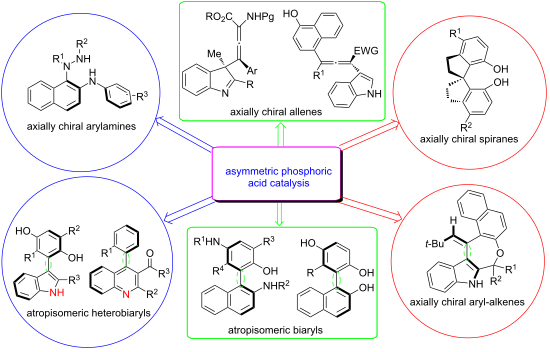
Figure 1: Representative examples of axially chiral biaryls, heterobiaryls, spiranes and allenes as ligands a...
Figure 2: Selected examples of axially chiral drugs and bioactive molecules.
Figure 3: Axially chiral functional materials and supramolecules.
Figure 4: Important chiral phosphoric acid scaffolds used in this review.
Scheme 1: Atroposelective aryl–aryl-bond formation by employing a facile [3,3]-sigmatropic rearrangement.
Scheme 2: Atroposelective synthesis of axially chiral biaryl amino alcohols 5.
Scheme 3: The enantioselective reaction of quinone and 2-naphthol derivatives.
Scheme 4: Enantioselective synthesis of multisubstituted biaryls.
Scheme 5: Enantioselective synthesis of axially chiral quinoline-derived biaryl atropisomers mediated by chir...
Scheme 6: Pd-Catalyzed atroposelective C–H olefination of biarylamines.
Scheme 7: Palladium-catalyzed directed atroposelective C–H allylation.
Scheme 8: Enantioselective synthesis of axially chiral (a) aryl indoles and (b) biaryldiols.
Scheme 9: Asymmetric arylation of indoles enabled by azo groups.
Scheme 10: Proposed mechanism for the asymmetric arylation of indoles.
Scheme 11: Enantioselective synthesis of axially chiral N-arylindoles [38].
Scheme 12: Enantioselective [3 + 2] formal cycloaddition and central-to-axial chirality conversion.
Scheme 13: Organocatalytic atroposelective arene functionalization of nitrosonaphthalene with indoles.
Scheme 14: Proposed reaction mechanism for the atroposelective arene functionalization of nitrosonaphthalenes.
Scheme 15: Asymmetric construction of axially chiral naphthylindoles [65].
Scheme 16: Enantioselective synthesis of axially chiral 3,3’-bisindoles [66].
Scheme 17: Atroposelective synthesis of 3,3’-bisiindoles bearing axial and central chirality.
Scheme 18: Enantioselective synthesis of axially chiral 3,3’-bisindoles bearing single axial chirality.
Scheme 19: Enantioselective reaction of azonaphthalenes with various pyrazolones.
Scheme 20: Enantioselective and atroposelective synthesis of axially chiral N-arylcarbazoles [73].
Scheme 21: Atroposelective cyclodehydration reaction.
Scheme 22: Atroposelective construction of axially chiral N-arylbenzimidazoles [78].
Scheme 23: Proposed reaction mechanism for the atroposelective synthesis of axially chiral N-arylbenzimidazole...
Scheme 24: Atroposelective synthesis of axially chiral arylpyrroles [21].
Scheme 25: Synthesis of axially chiral arylquinazolinones and its reaction pathway [35].
Scheme 26: Synthesis of axially chiral aryquinoline by Friedländer heteroannulation reaction and its proposed...
Scheme 27: Povarov cycloaddition–oxidative chirality conversion process.
Scheme 28: Atroposelective synthesis of oxindole-based axially chiral styrenes via kinetic resolution.
Scheme 29: Synthesis of axially chiral alkene-indole frame works [45].
Scheme 30: Proposed reaction mechanism for axially chiral alkene-indoles.
Scheme 31: Atroposelective C–H aminations of N-aryl-2-naphthylamines with azodicarboxylates.
Scheme 32: Synthesis of brominated atropisomeric N-arylquinoids.
Scheme 33: The enantioselective syntheses of axially chiral SPINOL derivatives.
Scheme 34: γ-Addition reaction of various 2,3-disubstituted indoles to β,γ-alkynyl-α-imino esters.
Scheme 35: Regio- and stereoselective γ-addition reactions of isoxazol-5(4H)-ones to β,γ-alkynyl-α-imino ester...
Scheme 36: Synthesis of chiral tetrasubstituted allenes and naphthopyrans.
Scheme 37: Asymmetric remote 1,8-conjugate additions of thiazolones and azlactones to propargyl alcohols.
Scheme 38: Synthesis of chiral allenes from 1-substituted 2-naphthols [107].
Beilstein J. Org. Chem. 2021, 17, 2680–2715, doi:10.3762/bjoc.17.182
Graphical Abstract
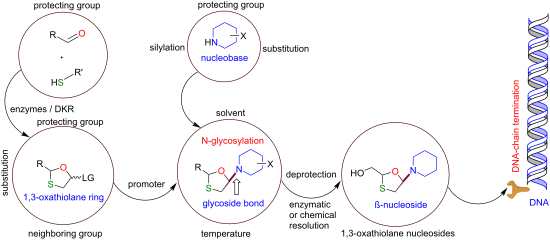
Figure 1: Representative modified 1,3-oxathiolane nucleoside analogues.
Figure 2: Mechanism of antiviral action of 1,3-oxathiolane nucleosides, 3TC (1) and FTC (2), as chain termina...
Figure 3: Synthetic strategies for the construction of the 1,3-oxathiolane sugar ring.
Scheme 1: Synthesis of 4 from benzoyloxyacetaldehyde (3a) and 2-mercapto-substituted dimethyl acetal 3na.
Scheme 2: Synthesis of 8 from protected glycolic aldehyde 3b and 2-mercaptoacetic acid (3o).
Scheme 3: Synthesis of 20 from ᴅ-mannose (3c).
Scheme 4: Synthesis of 20 from 1,6-thioanhydro-ᴅ-galactose (3d).
Scheme 5: Synthesis of 8 from 2-(tert-butyldiphenylsilyloxy)methyl-5-oxo-1,2-oxathiolane (3m).
Scheme 6: Synthesis of 20a from ʟ-gulose derivative 3f.
Scheme 7: Synthesis of 31 from (+)-thiolactic acid 3p and 2-benzoyloxyacetaldehyde (3a).
Scheme 8: Synthesis of 35a from 1,4-dithiane-2,5-diol (3q) and glyoxylic acid (3g) hydrate.
Scheme 9: Synthetic routes toward 41 through Pummerer reaction from methyl 2-mercaptoacetate (3j) and bromoac...
Scheme 10: Strategy for the synthesis of 2,5-substituted 1,3-oxathiolane 41a using 4-nitrobenzyl glyoxylate an...
Scheme 11: Synthesis of 44 by a resolution method using Mucor miehei lipase.
Scheme 12: Synthesis of 45 from benzoyloxyacetaldehyde (3a) and 2-mercaptoacetaldehyde bis(2-methoxyethyl) ace...
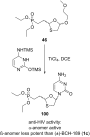
Scheme 13: Synthesis of 46 from 2-mercaptoacetaldehyde bis(2-methoxyethyl) acetal (3nc) and diethyl 3-phosphon...
Scheme 14: Synthesis of 48 from 1,3-dihydroxyacetone dimer 3l.
Scheme 15: Approach toward 52 from protected alkene 3rb and lactic acid derivative 51 developed by Snead et al....
Scheme 16: Recent approach toward 56a developed by Kashinath et al.
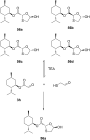
Scheme 17: Synthesis of 56a from ʟ-menthyl glyoxylate (3h) hydrate by DKR.
Scheme 18: Possible mechanism with catalytic TEA for rapid interconversion of isomers.
Scheme 19: Synthesis of 35a by a classical resolution method through norephedrine salt 58 formation.
Scheme 20: Synthesis of 63 via [1,2]-Brook rearrangement from silyl glyoxylate 61 and thiol 3nb.
Scheme 21: Combined use of STS and CAL-B as catalysts to synthesize an enantiopure oxathiolane precursor 65.
Scheme 22: Synthesis of 1 and 1a from glycolaldehyde dimer 64 and 1,4-dithiane-2,5-diol (3q) using STS and CAL...
Scheme 23: Synthesis of 68 by using Klebsiella oxytoca.
Scheme 24: Synthesis of 71 and 72 using Trichosporon taibachii lipase and kinetic resolution.
Scheme 25: Synthesis of 1,3-oxathiolan-5-ones 77 and 78 via dynamic covalent kinetic resolution.
Figure 4: Pathway for glycosidic bond formation.
Scheme 26: First synthesis of (±)-BCH-189 (1c) by Belleau et al.
Scheme 27: Enantioselective synthesis of 3TC (1).
Scheme 28: Synthesis of cis-diastereomer 3TC (1) from oxathiolane propionate 44.
Scheme 29: Synthesis of (±)-BCH-189 (1c) via SnCl4-mediated N-glycosylation of 8.
Scheme 30: Synthesis of (+)-BCH-189 (1a) via TMSOTf-mediated N-glycosylation of 20.
Scheme 31: Synthesis of 3TC (1) from oxathiolane precursor 20a.
Scheme 32: Synthesis of 83 via N-glycosylation of 20 with pyrimidine bases.
Scheme 33: Synthesis of 85 via N-glycosylation of 20 with purine bases.
Scheme 34: Synthesis of 86 and 87 via N-glycosylation using TMSOTf and pyrimidines.
Scheme 35: Synthesis of 90 and 91 via N-glycosylation using TMSOTf and purines.
Scheme 36: Synthesis of 3TC (1) via TMSI-mediated N-glycosylation.
Scheme 37: Stereoselective N-glycosylation for the synthesis of 1 by anchimeric assistance of a chiral auxilia...
Scheme 38: Whitehead and co-workers’ approach for the synthesis of 1 via direct N-glycosylation without an act...
Scheme 39: ZrCl4-mediated stereoselective N-glycosylation.
Scheme 40: Plausible reaction mechanism for stereoselective N-glycosylation using ZrCl4.
Scheme 41: Synthesis of enantiomerically pure oxathiolane nucleosides 1 and 2.
Scheme 42: Synthesis of tetrazole analogues of 1,3-oxathiolane nucleosides 97.
Scheme 43: Synthetic approach toward 99 from 1,3-oxathiolane 45 by Camplo et al.
Scheme 44: Synthesis of 100 from oxathiolane phosphonate analogue 46.
Scheme 45: Synthetic approach toward 102 and the corresponding cyclic thianucleoside monophosphate 102a by Cha...
Scheme 46: Synthesis of emtricitabine (2) from 1,4-dithiane-2,5-diol (3q) and glyoxylic acid (3g).
Scheme 47: Synthesis of 1 and 2, respectively, from 56a–d using iodine-mediated N-glycosylation.
Scheme 48: Plausible mechanism for silane- and I2-mediated N-glycosylation.
Scheme 49: Pyridinium triflate-mediated N-glycosylation of 35a.
Scheme 50: Possible pathway for stereoselective N-glycosylation via in situ chelation with a metal ligand.
Scheme 51: Synthesis of novel 1,3-oxathiolane nucleoside 108 from oxathiolane precursor 8 and 3-benzyloxy-2-me...
Scheme 52: Synthesis of 110 using T-705 as a nucleobase and 1,3-oxathiolane derivative 8 via N-glycosylation.
Scheme 53: Synthesis of 1 using an asymmetric leaving group and N-glycosylation with bromine and mesitylene.
Scheme 54: Cytidine deaminase for enzymatic separation of 1c.
Scheme 55: Enzymatic resolution of the monophosphate derivative 116 for the synthesis of (−)-BCH-189 (1) and (...
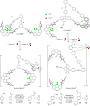
Scheme 56: Enantioselective resolution by PLE-mediated hydrolysis to obtain FTC (2).
Scheme 57: (+)-Menthyl chloroformate as a resolving agent to separate a racemic mixture 120.
Scheme 58: Separation of racemic mixture 1c by cocrystal 123 formation with (S)-(−)-BINOL.
Beilstein J. Org. Chem. 2021, 17, 2629–2641, doi:10.3762/bjoc.17.176
Graphical Abstract
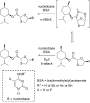
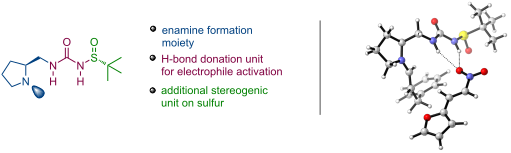
Figure 1: Catalyst design principles.
Scheme 1: Synthesis of isothiocyanate 3a and isocyanate 3b.
Scheme 2: Synthesis of sulfinylthioureas C1 and ureas C2.
Scheme 3: Synthesis of adducts 8a,d,f in solution.
Figure 2: DFT-calculated (PBEh-3c/def2-SV(P)//M06-2X/def2-TZVP) structures of catalyst (S,R) and (S,S)-C2, en...
Figure 3: a) Arrangements of reactants in the transition states; b) DFT-calculated (PBEh-3c/def2-SV(P)//M06-2...
Figure 4: DFT-calculated (PBEh-3c/def2-SV(P)//M06-2X/def2-TZVP) reaction profile for the Michael addition of ...
Beilstein J. Org. Chem. 2021, 17, 2585–2610, doi:10.3762/bjoc.17.173
Graphical Abstract
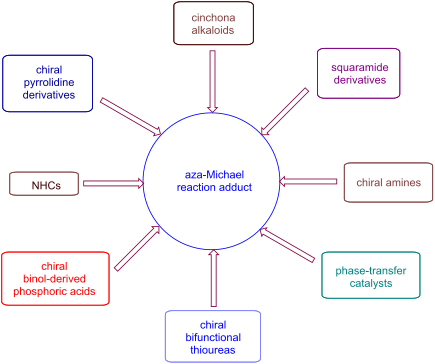
Scheme 1: Asymmetric aza-Michael addition catalyzed by cinchona alkaloid derivatives.
Scheme 2: Intramolecular 6-exo-trig aza-Michael addition reaction.
Scheme 3: Asymmetric aza-Michael/Michael addition cascade reaction of 2-nitrobenzofurans and 2-nitrobenzothio...
Scheme 4: Asymmetric aza-Michael addition of para-dienone imide to benzylamine.
Scheme 5: Asymmetric synthesis of chiral N-functionalized heteroarenes.
Beilstein J. Org. Chem. 2021, 17, 2462–2476, doi:10.3762/bjoc.17.163
Graphical Abstract
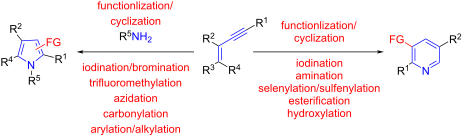
Scheme 1: Ag/I2-mediated electrophilic annulation of 2-en-4-ynyl azides 1.
Scheme 2: The proposed mechanism of Ag-catalyzed aza-annulation.
Scheme 3: The proposed mechanism of I2-mediated aza-annulation.
Scheme 4: Copper-catalyzed amination of (E)-2-en-4-ynyl azides 1.
Scheme 5: The proposed mechanism of copper-catalyzed amination.
Scheme 6: The derivatization of sulfonated aminonicotinates.
Scheme 7: Copper-catalyzed chalcogenoamination of (E)-2-en-4-ynyl azides 1.
Scheme 8: The possible mechanism of chalcogenoamination.
Scheme 9: The derivatization of 5‑selenyl- and 5-sulfenyl-substituted nicotinates.
Scheme 10: The tandem reaction of nitriles, Reformatsky reagents, and 1,3-enynes.
Scheme 11: Nickel-catalyzed [4 + 2]-cycloaddition of 3-azetidinones with 1,3-enynes.
Scheme 12: Electrophilic iodocyclization of 2-nitro-1,3-enynes to pyrroles.
Scheme 13: Electrophilic halogenation of 2-trifluoromethyl-1,3-enynes to pyrroles.
Scheme 14: Copper-catalyzed cascade cyclization of 2-nitro-1,3-enynes with amines.
Scheme 15: Tandem cyclization of 2-nitro-1,3-enynes, Togni reagent II, and amines.
Scheme 16: Tandem cyclization of 2-nitro-1,3-enynes, TMSN3, and amines.
Scheme 17: Cascade cyclization of 6-hydroxyhex-2-en-4-ynals to pyrroles.
Scheme 18: Au/Ag-catalyzed oxidative aza-annulation of 1,3-enynyl azides.
Scheme 19: The plausible mechanism of Au/Ag-catalyzed oxidative aza-annulation.
Scheme 20: Synthesis of 2-tetrazolyl-substituted 3-acylpyrroles from enynals.
Scheme 21: CuH-catalyzed coupling reaction of 1,3-enynes and nitriles to pyrroles.
Scheme 22: The mechanism of CuH-catalyzed coupling of 1,3-enynes and nitriles to pyrroles.
Beilstein J. Org. Chem. 2021, 17, 2433–2440, doi:10.3762/bjoc.17.160
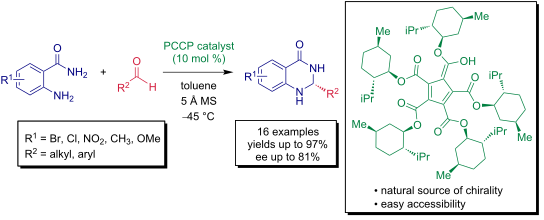
Graphical Abstract
Figure 1: Synthetic strategies employing chiral Brønsted acid catalysis.
Scheme 1: The substrate scope of the aminalization reaction for different aldehydes. aAfter recrystallization...
Scheme 2: The substrate scope of the intermolecular aminalization reaction for anthranilamide derivatives. aA...
Figure 2: X-ray single-crystal structure of aminal 3l with the displacement ellipsoids drawn at the 30% proba...
Beilstein J. Org. Chem. 2021, 17, 2377–2384, doi:10.3762/bjoc.17.154
Graphical Abstract
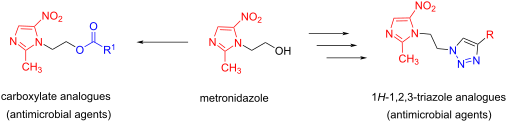
Figure 1: Structure of metronidazole (1).
Figure 2: Chemical structures of some metronidazole derivatives with different biological activity.
Figure 3: Crystal structure of compound 3. Colour codes: carbon = grey, mitrogen = blue, oxygen = red, hydrog...
Scheme 1: Reagents and conditions: (a) TsCl, Et3N, dry DCM, DMAP, 0 °C to room temperature, 5 h, 96%; (b) NaN3...
Figure 4: Crystal structure of 1H-1,2,3-triazole compound 5c: Colour codes: carbon = grey, nitrogen = blue, o...
Scheme 2: Reagents and conditions: (a) acid chlorides 6a–e, pyridine, dry DCM, DMAP, room temperature, 4–5 h,...
Figure 5: Crystal structures of compound 7b. Colour codes: carbon = grey, nitrogen = blue, oxygen = red, hydr...
Figure 6: General structural feature of the synthesized molecules 5.
Figure 7: The graph representing the antifungal activity of Didymella sp. against compounds 5a–i and 7a–e.
Figure 8: The graph representing the antibacterial activity of E. coli against compounds 5a–i and 7a–e.
Beilstein J. Org. Chem. 2021, 17, 2348–2376, doi:10.3762/bjoc.17.153
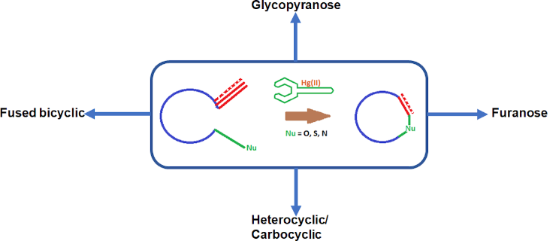
Graphical Abstract
Scheme 1: Schematic representation of Hg(II)-mediated addition to an unsaturated bond.
Scheme 2: First report of Hg(II)-mediated synthesis of 2,5-dioxane derivatives from allyl alcohol.
Scheme 3: Stepwise synthesis of 2,6-distubstituted dioxane derivatives.
Scheme 4: Cyclization of carbohydrate alkene precursor.
Scheme 5: Hg(II)-mediated synthesis of C-glucopyranosyl derivatives.
Scheme 6: Synthesis of C-glycosyl amino acid derivative using Hg(TFA)2.
Scheme 7: Hg(OAc)2-mediated synthesis of α-ᴅ-ribose derivative.
Scheme 8: Synthesis of β-ᴅ-arabinose derivative 18.
Scheme 9: Hg(OAc)2-mediated synthesis of tetrahydrofuran derivatives.
Scheme 10: Synthesis of Hg(TFA)2-mediated bicyclic nucleoside derivative.
Scheme 11: Synthesis of pyrrolidine and piperidine derivatives.
Scheme 12: HgCl2-mediated synthesis of diastereomeric pyrrolidine derivatives.
Scheme 13: HgCl2-mediated cyclization of alkenyl α-aminophosphonates.
Scheme 14: Cyclization of 4-cycloocten-1-ol with Hg(OAc)2 forming fused bicyclic products.
Scheme 15: trans-Amino alcohol formation through Hg(II)-salt-mediated cyclization.
Scheme 16: Hg(OAc)2-mediated 2-aza- or 2-oxa-bicyclic ring formations.
Scheme 17: Hg(II)-salt-induced cyclic peroxide formation.
Scheme 18: Hg(OAc)2-mediated formation of 1,2,4-trioxanes.
Scheme 19: Endocyclic enol ether derivative formation through Hg(II) salts.
Scheme 20: Synthesis of optically active cyclic alanine derivatives.
Scheme 21: Hg(II)-salt-mediated formation of tetrahydropyrimidin-4(1H)-one derivatives.
Scheme 22: Cyclization of ether derivatives to form stereoselective oxazolidine derivatives.
Scheme 23: Cyclization of amide derivatives induced by Hg(OAc)2.
Scheme 24: Hg(OAc)2/Hg(TFA)2-promoted cyclization of salicylamide-derived amidal auxiliary derivatives.
Scheme 25: Hg(II)-salt-mediated cyclization to form dihydrobenzopyrans.
Scheme 26: HgCl2-induced cyclization of acetylenic silyl enol ether derivatives.
Scheme 27: Synthesis of exocyclic and endocyclic enol ether derivatives.
Scheme 28: Cyclization of trans-acetylenic alcohol by treatment with HgCl2.
Scheme 29: Synthesis of benzofuran derivatives in presence of HgCl2.
Scheme 30: a) Hg(II)-salt-mediated cyclization of 4-hydroxy-2-alkyn-1-ones to furan derivatives and b) its mec...
Scheme 31: Cyclization of arylacetylenes to synthesize carbocyclic and heterocyclic derivatives.
Scheme 32: Hg(II)-salt-promoted cyclization–rearrangement to form heterocyclic compounds.
Scheme 33: a) HgCl2-mediated cyclization reaction of tethered alkyne dithioacetals; and b) proposed mechanism.
Scheme 34: Cyclization of aryl allenic ethers on treatment with Hg(OTf)2.
Scheme 35: Hg(TFA)2-mediated cyclization of allene.
Scheme 36: Hg(II)-catalyzed intramolecular trans-etherification reaction of 2-hydroxy-1-(γ-methoxyallyl)tetrah...
Scheme 37: a) Cyclization of alkene derivatives by catalytic Hg(OTf)2 salts and b) mechanism of cyclization.
Scheme 38: a) Synthesis of 1,4-dihydroquinoline derivatives by Hg(OTf)2 and b) plausible mechanism of formatio...
Scheme 39: Synthesis of Hg(II)-salt-catalyzed heteroaromatic derivatives.
Scheme 40: Hg(II)-salt-catalyzed synthesis of dihydropyranone derivatives.
Scheme 41: Hg(II)-salt-catalyzed cyclization of alkynoic acids.
Scheme 42: Hg(II)-salt-mediated cyclization of alkyne carboxylic acids and alcohol to furan, pyran, and spiroc...
Scheme 43: Hg(II)-salt-mediated cyclization of 1,4-dihydroxy-5-alkyne derivatives.
Scheme 44: Six-membered morpholine derivative formation by catalytic Hg(II)-salt-induced cyclization.
Scheme 45: Hg(OTf)2-catalyzed hydroxylative carbocyclization of 1,6-enyne.
Scheme 46: a) Hg(OTf)2-catalyzed hydroxylative carbocyclization of 1,6-enyne. b) Proposed mechanism.
Scheme 47: a) Synthesis of carbocyclic derivatives using a catalytic amount of Hg(II) salt. b) Proposed mechan...
Scheme 48: Cyclization of 1-alkyn-5-ones to 2-methylfuran derivatives.
Scheme 49: Hg(NO3)2-catalyzed synthesis of 2-methylenepiperidine.
Scheme 50: a) Preparation of indole derivatives through cycloisomerization of 2-ethynylaniline and b) its mech...
Scheme 51: a) Hg(OTf)2-catalyzed synthesis of 3-indolinones and 3-coumaranones and b) simplified mechanism.
Scheme 52: a) Hg(OTf)2-catalyzed one pot cyclization of nitroalkyne and b) its plausible mechanism.
Scheme 53: Synthesis of tricyclic heterocyclic scaffolds.
Scheme 54: HgCl2-mediated cyclization of 2-alkynylphenyl alkyl sulfoxide.
Scheme 55: a) Hg(OTf)2-catalyzed cyclization of allenes and alkynes. b) Proposed mechanism of cyclization.
Scheme 56: Stereoselective synthesis of tetrahydropyran derivatives.
Scheme 57: a) Hg(ClO4)2-catalyzed cyclization of α-allenol derivatives. b) Simplified mechanism.
Scheme 58: Hg(TFA)2-promoted cyclization of a γ-hydroxy alkene derivative.
Scheme 59: Synthesis Hg(II)-salt-mediated cyclization of allyl alcohol for the construction of ventiloquinone ...
Scheme 60: Hg(OAc)2-mediated cyclization as a key step for the synthesis of hongconin.
Scheme 61: Examples of Hg(II)-salt-mediated cyclized ring formation in the syntheses of (±)-fastigilin C and (...
Scheme 62: Formal synthesis of (±)-thallusin.
Scheme 63: Total synthesis of hippuristanol and its analog.
Scheme 64: Total synthesis of solanoeclepin A.
Scheme 65: a) Synthesis of Hg(OTf)2-catalyzed azaspiro structure for the formation of natural products. b) Pro...
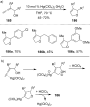
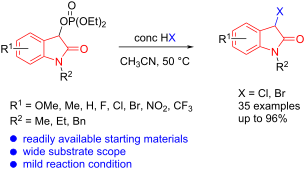
Beilstein J. Org. Chem. 2021, 17, 2321–2328, doi:10.3762/bjoc.17.150
Graphical Abstract
Figure 1: Representation of bioactive molecules and applications.
Scheme 1: Synthetic methodologies for 3-monohalooxindoles.
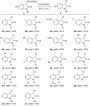
Scheme 2: Substrate scope of the acidolysis of isatin-derived phosphates 2 with hydrochloric acid. Standard r...
Scheme 3: Substrate scope of the acidolysis of isatin-derived phosphates 2 with hydrobromic acid. Standard re...
Scheme 4: Reduction of the substrates 2 to the corresponding oxindoles 5.
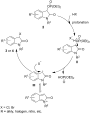
Scheme 5: Plausible reaction mechanism.
Beilstein J. Org. Chem. 2021, 17, 2203–2208, doi:10.3762/bjoc.17.142
Graphical Abstract
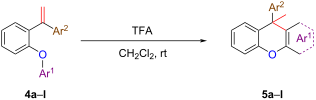
Scheme 1: Synthesis of 4a: (i) phenol, K2CO3, DMF, reflux, 2 h, 91%; (ii) PhMgBr, dry THF, 0 °C, 2 h, 86%; (i...
Figure 1: Scope of substrates for intramolecular FCA by activation of 4a–l and their isolated yields. aCondit...
Scheme 2: Plausible reaction mechanism for the cyclization reaction of alkene 4a.
Beilstein J. Org. Chem. 2021, 17, 1981–2025, doi:10.3762/bjoc.17.129
Graphical Abstract
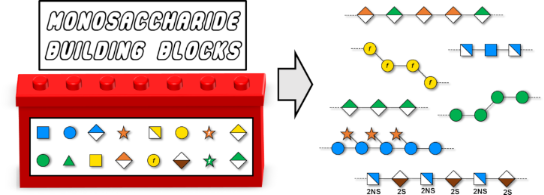
Figure 1: Overview of the methods available for the synthesis of polysaccharides. For each method, advantages...
Figure 2: Overview of the classes of polysaccharides discussed in this review. Each section deals with polysa...
Scheme 1: Enzymatic and chemical polymerization approaches provide cellulose oligomers with a non-uniform dis...
Scheme 2: AGA of a collection of cellulose analogues obtained using BBs 6–9. Specifically placed modification...
Figure 3: Chemical structure of the different branches G, X, L, F commonly found in XGs. Names are given foll...
Scheme 3: AGA of XG analogues with defined side chains. The AGA cycle includes coupling (TMSOTf), Fmoc deprot...
Figure 4: Synthetic strategies and issues associated to the formation of the β(1–3) linkage.
Scheme 4: Convergent synthesis of β(1–3)-glucans using a regioselective glycosylation strategy.
Scheme 5: DMF-mediated 1,2-cis glycosylation. A) General mechanism and B) examples of α-glucans prepared usin...
Scheme 6: Synergistic glycosylation strategy employing a nucleophilic modulation strategy (TMSI and Ph3PO) in...
Scheme 7: Different approaches to produce xylans. A) Polymerization techniques including ROP, and B) enzymati...
Scheme 8: A) Synthesis of arabinofuranosyl-decorated xylan oligosaccharides using AGA. Representative compoun...
Scheme 9: Chemoenzymatic synthesis of COS utilizing a lysozyme-catalyzed transglycosylation reaction followed...
Scheme 10: Synthesis of COS using an orthogonal glycosylation strategy based on the use of two different LGs.
Scheme 11: Orthogonal N-PGs permitted the synthesis of COS with different PA.
Scheme 12: AGA of well-defined COS with different PA using two orthogonally protected BBs. The AGA cycle inclu...
Scheme 13: A) AGA of β(1–6)-N-acetylglucosamine hexasaccharide and dodecasaccharide. AGA includes cycles of co...
Figure 5: ‘Double-faced’ chemistry exemplified for ᴅ-Man and ʟ-Rha. Constructing β-Man linkages is considerab...
Figure 6: Implementation of a capping step after each glycosylation cycle for the AGA of a 50mer oligomannosi...
Scheme 14: AGA enabled the synthesis of a linear α(1–6)-mannoside 100mer 93 within 188 h and with an average s...
Scheme 15: The 151mer branched polymannoside was synthesized by a [30 + 30 + 30 + 30 + 31] fragment coupling. ...
Figure 7: PG stereocontrol strategy to obtain β-mannosides. A) The mechanism of the β-mannosylation reaction ...
Scheme 16: A) Mechanism of 1,2-cis stereoselective glycosylation using ManA donors. Once the ManA donor is act...
Figure 8: A) The preferred 4H3 conformation of the gulosyl oxocarbenium ion favors the attack of the alcohol ...
Scheme 17: AGA of type I rhamnans up to 16mer using disaccharide BB 115 and CNPiv PG. The AGA cycle includes c...
Figure 9: Key BBs for the synthesis of the O-antigen of Bacteroides vulgatus up to a 128mer (A) and the CPS o...
Figure 10: Examples of type I and type II galactans synthesized to date.
Figure 11: A) The DTBS PG stabilizes the 3H4 conformation of the Gal oxocarbenium ion favoring the attack of t...
Figure 12: Homogalacturonan oligosaccharides synthesized to date. Access to different patterns of methyl-ester...
Figure 13: GlfT2 from Mycobacterium tuberculosis catalyzes the sequential addition of UPD-Galf donor to a grow...
Figure 14: The poor reactivity of acceptor 137 hindered a stepwise synthesis of the linear galactan backbone a...
Scheme 18: AGA of a linear β(1–5) and β(1–6)-linked galactan 20mer. The AGA cycle includes coupling (NIS/TfOH)...
Figure 15: The 92mer arabinogalactan was synthesized using a [31 + 31 + 30] fragment coupling between a 31mer ...
Scheme 19: Synthesis of the branched arabinofuranose fragment using a six component one-pot synthesis. i) TTBP...
Figure 16: A) Chemical structure and SNFG of the representative disaccharide units forming the GAG backbones, ...
Figure 17: Synthetic challenges associated to the H/HS synthesis.
Scheme 20: Degradation of natural heparin and heparosan generated valuable disaccharides 150 and 151 that can ...
Scheme 21: A) The one-step conversion of cyanohydrin 156 to ʟ-iduronamide 157 represent the key step for the s...
Scheme 22: A) Chemoenzymatic synthesis of heparin structures, using different types of UDP activated natural a...
Scheme 23: Synthesis of the longest synthetic CS chain 181 (24mer) using donor 179 and acceptor 180 in an iter...
Scheme 24: AGA of a collection of HA with different lengths. The AGA cycle includes coupling (TfOH) and Lev de...
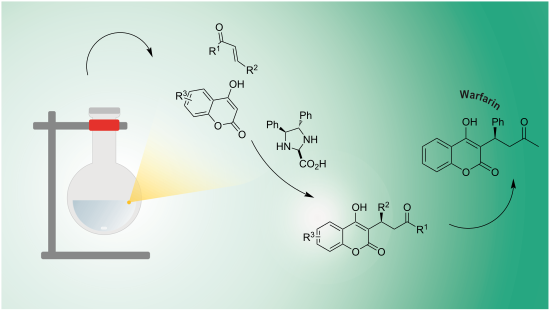
Beilstein J. Org. Chem. 2021, 17, 1952–1980, doi:10.3762/bjoc.17.128
Graphical Abstract
Figure 1: Coumarin-derived commercially available drugs.
Figure 2: Inhibition of acetylcholinesterase by coumarin derivatives.
Scheme 1: Michael addition of 4-hydroxycoumarins 1 to α,β‐unsaturated enones 2.
Scheme 2: Organocatalytic conjugate addition of 4-hydroxycoumarin 1 to α,β-unsaturated aldehydes 2 followed b...
Scheme 3: Synthesis of 3,4-dihydrocoumarin derivatives 10 through decarboxylative and dearomatizative cascade...
Scheme 4: Total synthesis of (+)-smyrindiol (17).
Scheme 5: Michael addition of 4-hydroxycoumarin (1) to enones 2 through a bifunctional modified binaphthyl or...
Scheme 6: Michael addition of ketones 20 to 3-aroylcoumarins 19 using a cinchona alkaloid-derived primary ami...
Scheme 7: Enantioselective reaction of cyclopent-2-enone-derived MBH alcohols 24 with 4-hydroxycoumarins 1.
Scheme 8: Sequential Michael addition/hydroalkoxylation one-pot approach to annulated coumarins 28 and 30.
Scheme 9: Michael addition of 4-hydroxycoumarins 1 to enones 2 using a binaphthyl diamine catalyst 31.
Scheme 10: Asymmetric Michael addition of 4-hydroxycoumarin 1 with α,β-unsaturated ketones 2 catalyzed by a ch...
Scheme 11: Catalytic asymmetric β-C–H functionalization of ketones via enamine oxidation.
Scheme 12: Enantioselective synthesis of polycyclic coumarin derivatives 37 catalyzed by an primary amine-imin...
Scheme 13: Allylic alkylation reaction between 3-cyano-4-methylcoumarins 39 and MBH carbonates 40.
Scheme 14: Enantioselective synthesis of cyclopropa[c]coumarins 45.
Scheme 15: NHC-catalyzed lactonization of 2-bromoenals 46 with 4-hydroxycoumarin (1).
Scheme 16: NHC-catalyzed enantioselective synthesis of dihydrocoumarins 51.
Scheme 17: Domino reaction of enals 2 with hydroxylated malonate 53 catalyzed by NHC 55.
Scheme 18: Oxidative [4 + 2] cycloaddition of enals 57 to coumarins 56 catalyzed by NHC 59.
Scheme 19: Asymmetric [3 + 2] cycloaddition of coumarins 43 to azomethine ylides 60 organocatalyzed by quinidi...
Scheme 20: Synthesis of α-benzylaminocoumarins 64 through Mannich reaction between 4-hydroxycoumarins (1) and ...
Scheme 21: Asymmetric addition of malonic acid half-thioesters 67 to coumarins 66 using the sulphonamide organ...
Scheme 22: Enantioselective 1,4-addition of azadienes 71 to 3-homoacyl coumarins 70.
Scheme 23: Michael addition/intramolecular cyclization of 3-acylcoumarins 43 to 3-halooxindoles 74.
Scheme 24: Enantioselective synthesis of 3,4-dihydrocoumarins 78 catalyzed by squaramide 73.
Scheme 25: Organocatalyzed [4 + 2] cycloaddition between 2,4-dienals 79 and 3-coumarincarboxylates 43.
Scheme 26: Enantioselective one-pot Michael addition/intramolecular cyclization for the synthesis of spiro[dih...
Scheme 27: Michael/hemiketalization addition enantioselective of hydroxycoumarins (1) to: (a) enones 2 and (b)...
Scheme 28: Synthesis of 2,3-dihydrofurocoumarins 89 through Michael addition of 4-hydroxycoumarins 1 to β-nitr...
Scheme 29: Synthesis of pyrano[3,2-c]chromene derivatives 93 via domino reaction between 4-hydroxycoumarins (1...
Scheme 30: Conjugated addition of 4-hydroxycoumarins 1 to nitroolefins 95.
Scheme 31: Michael addition of 4-hydroxycoumarin 1 to α,β-unsaturated ketones 2 promoted by primary amine thio...
Scheme 32: Enantioselective synthesis of functionalized pyranocoumarins 99.
Scheme 33: 3-Homoacylcoumarin 70 as 1,3-dipole for enantioselective concerted [3 + 2] cycloaddition.
Scheme 34: Synthesis of warfarin derivatives 107 through addition of 4-hydroxycoumarins 1 to β,γ-unsaturated α...
Scheme 35: Asymmetric multicatalytic reaction sequence of 2-hydroxycinnamaldehydes 109 with 4-hydroxycoumarins ...
Scheme 36: Mannich asymmetric addition of cyanocoumarins 39 to isatin imines 112 catalyzed by the amide-phosph...
Scheme 37: Enantioselective total synthesis of (+)-scuteflorin A (119).
Beilstein J. Org. Chem. 2021, 17, 1752–1813, doi:10.3762/bjoc.17.123
Graphical Abstract
Scheme 1: Fluorination with N-F amine 1-1.
Scheme 2: Preparation of N-F amine 1-1.
Scheme 3: Reactions of N-F amine 1-1.
Scheme 4: Synthesis of N-F perfluoroimides 2-1 and 2-2.
Scheme 5: Synthesis of 1-fluoro-2-pyridone (3-1).
Scheme 6: Fluorination with 1-fluoro-2-pyridone (3-1).
Figure 1: Synthesis of N-F sulfonamides 4-1a–g.
Scheme 7: Fluorination with N-F reagent 4-1b,c,f.
Scheme 8: Fluorination of alkenyllithiums with N-F 4-1h.
Scheme 9: Synthesis of N-fluoropyridinium triflate (5-4a).
Scheme 10: Synthetic methods for N-F-pyridinium salts.
Figure 2: Synthesis of various N-fluoropyridinium salts. Note: athis yield was the one by the improved method...
Scheme 11: Fluorination power order of N-fluoropyridinium salts.
Scheme 12: Fluorinations with N-F salts 5-4.
Scheme 13: Fluorination of Corey lactone 5-7 with N-F-bis(methoxymethyl) salt 5-4l.
Scheme 14: Fluorination with NFPy.
Scheme 15: Synthesis of the N-F reagent, N-fluoroquinuclidinium fluoride (6-1).
Scheme 16: Fluorinations achieved with N-F fluoride 6-1.
Scheme 17: Synthesis of N-F imides 7-1a–g.
Scheme 18: Fluorination with (CF3SO2)2NF, 7-1a.
Scheme 19: Fluorination reactions of various substrates with 7-1a.
Scheme 20: Synthesis of N-F triflate 8-1.
Scheme 21: Synthesis of chiral N-fluoro sultams 9-1 and 9-2.
Scheme 22: Fluorination with chiral N-fluoro sultams 9-1 and 9-2.
Scheme 23: Synthesis of saccharin-derived N-fluorosultam 10-2.
Scheme 24: Fluorination with N-fluorosultam 10-2.
Scheme 25: Synthesis of N-F reagent 11-2.
Scheme 26: Fluorination with N-F reagent 11-2.
Scheme 27: Synthesis and reaction of N-fluorolactams 12-1.
Scheme 28: Synthesis of NFOBS 13-2.
Scheme 29: Fluorination with NFOBS 13-2.
Scheme 30: Synthesis of NFSI (14-2).
Scheme 31: Fluorination with NFSI 14-2.
Scheme 32: Synthesis of N-fluorosaccharin (15-1) and N-fluorophthalimide (15-2).
Scheme 33: Synthesis of N-F salts 16-3.
Scheme 34: Fluorination with N-F salts 16-3.
Figure 3: Monofluorination with Selectfluor (16-3a).
Figure 4: Difluorination with Selectfluor (16-3a).
Scheme 35: Transfer fluorination of Selectfluor (16-3a).
Scheme 36: Fluorination of substrates with Selectfluor (16-3a).
Scheme 37: Synthesis of chiral N-fluoro-sultam 17-2.
Scheme 38: Asymmetric fluorination with chiral 17-2.
Figure 5: Synthesis of Zwitterionic N-fluoropyridinium salts 18-2a–h.
Scheme 39: Fluorinating power order of zwitterionic N-fluoropyridinium salts.
Scheme 40: Fluorination with zwitterionic 18-2.
Scheme 41: Activation of salt 18-2h with TfOH.
Scheme 42: Synthesis of NFTh, 19-2.
Scheme 43: Fluorination with NFTh, 19-2.
Scheme 44: Synthesis of 3-fluorobenzo-1,2,3-oxathiazin-4-one 2,2-dioxide (20-2).
Scheme 45: Fluorination with 20-2.
Scheme 46: Synthesis of N-F amide 21-3.
Scheme 47: Fluorination with N-F amide 21-2.
Scheme 48: Synthesis of N,N’-difluorodiazoniabicyclo[2.2.2]octane salts 22-1.
Scheme 49: One-pot synthesis of N,N’-difluoro-1,4-diazoniabicyclo[2.2.2]octane bistetrafluoroborate salt (22-1d...
Figure 6: Fluorination of anisole with 22-1a, d, e.
Scheme 50: Fluorination with N,N’-diF bisBF4 22-1d.
Scheme 51: Synthesis of bis-N-F reagents 23-1–5.
Scheme 52: Fluorination with 23-2, 4, 5.
Figure 7: Synthesis of N,N’-difluorobipyridinium salts 24-2.
Figure 8: Controlled fluorination of N,N’-diF 24-2.
Scheme 53: Fluorinating power of N,N’-diF salts 24-2 and N-F salt 5-4a.
Scheme 54: Fluorination reactions with SynfluorTM (24-2b).
Scheme 55: Additional fluorination reactions with SynfluorTM (24-2b).
Scheme 56: Synthesis of N-F 25-1.
Scheme 57: Fluorination of polycyclic aromatics with 25-1.
Scheme 58: Synthesis of 26-1 and dimethyl analog 26-2.
Scheme 59: Fluorination with reagents 26-1, 26-2, 1-1, and 26-3.
Scheme 60: Synthesis of N-F reagent 27-2.
Scheme 61: Synthesis of chiral N-F reagents 27-6.
Scheme 62: Synthesis of chiral N-F 27-7–9.
Scheme 63: Asymmetric fluorination with 27-6.
Scheme 64: Synthesis of chiral N-F reagents 28-3.
Scheme 65: Asymmetric fluorination with 28-3.
Scheme 66: Synthesis of chiral N-F reagents 28-7.
Figure 9: Asymmetric fluorination with 28-7.
Scheme 67: In situ formation of N-fluorinated cinchona alkaloids with SelectfluorTM.
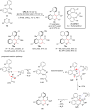
Scheme 68: Asymmetric fluorination with N-F alkaloids formed in situ.
Scheme 69: Synthesis of N-fluorocinchona alkaloids with Selectfluor.
Scheme 70: Asymmetric fluorination with 30-1–4.
Scheme 71: Transfer fluorination from various N-F reagents.
Figure 10: Asymmetric fluorination of silyl enol ethers.
Scheme 72: Synthesis of N-fluoro salt 32-2.
Scheme 73: Reactivity of N-fluorotriazinium salt 32-2.
Scheme 74: Synthesis of bulky N-fluorobenzenesulfonimide NFBSI 33-3.
Scheme 75: Comparison of NFSI and NFBSI.
Scheme 76: Synthesis of p-substituted N-fluorobenzenesulfonimides 34-3.
Figure 11: Asymmetric fluorination with 34-3 and a chiral catalyst 34-4.
Scheme 77: 1,4-Fluoroamination with Selecfluor and a chiral catalyst.
Figure 12: Asymmetric fluoroamination with 35-5a, b.
Scheme 78: Synthesis of Selectfluor analogs 35-5a, b.
Scheme 79: Synthesis of chiral dicationic DABCO-based N-F reagents 36-5.
Scheme 80: Asymmetric fluorocyclization with chiral 36-5b.
Scheme 81: Synthesis of chiral 37-2a,b.
Scheme 82: Asymmetric fluorination with chiral 37-2a,b.
Scheme 83: Asymmetric fluorination with chiral 37-2b.
Scheme 84: Reaction of indene with chiral 37-2a,b.
Scheme 85: Synthesis of Me-NFSI, 38-2.
Scheme 86: Fluorination of active methine compounds with Me-NFSI.
Scheme 87: Fluorination of malonates with Me-NFSI.
Scheme 88: Fluorination of keto esters with Me-NFSI.
Scheme 89: Synthesis of N-F 39-3 derived from the ethylene-bridged Tröger’s base.
Scheme 90: Fluorine transfer from N-F 39-3.
Scheme 91: Fluorination with N-F 39-3.
Scheme 92: Synthesis of SelectfluorCN.
Scheme 93: Bistrifluoromethoxylation of alkenes using SelectfluorCN.
Figure 13: Synthesis of NFAS 41-2.
Scheme 94: Radical fluorination with different N-F reagents.
Scheme 95: Radical fluorination of alkenes with NFAS 41-2.
Scheme 96: Radical fluorination of alkenes with NFAS 41-2f.
Scheme 97: Decarboxylative fluorination with NFAS 41-2a,f.
Scheme 98: Fluorine plus detachment (FPD).
Figure 14: FPD values of representative N-F reagents in CH2Cl2 and CH3CN (in parentheses). Adapted with permis...
Scheme 99: N-F homolytic bond dissociation energy (BDE).
Figure 15: BDE values of representative N-F reagents in CH3CN. Adapted with permission from ref. [127]. Copyright 2...
Figure 16: Quantitative reactivity scale for popular N-F reagents. Adapted with permission from ref. [138], publish...
Scheme 100: SET and SN2 mechanisms.
Scheme 101: Radical clock reactions.
Scheme 102: Reaction of potassium enolate of citronellic ester with N-F reagents, 10-1, NFSI, and 8-1.
Scheme 103: Reaction of compound IV with Selectfluor (OTf) and NFSI.
Scheme 104: Reaction of TEMPO with Selecfluor.
Beilstein J. Org. Chem. 2021, 17, 1600–1628, doi:10.3762/bjoc.17.114
Graphical Abstract
Figure 1: Some significant triazole derivatives [8,23-27].
Scheme 1: A general comparison between synthetic routes for disubstituted 1,2,3-triazole derivatives and full...
Scheme 2: Synthesis of formyltriazoles 3 from the treatment of α-bromoacroleins 1 with azides 2.
Scheme 3: A probable mechanism for the synthesis of formyltriazoles 5 from the treatment of α-bromoacroleins 1...
Scheme 4: Synthesis of 1,4,5-trisubstituted 1,2,3-triazoles 8 from the reaction of aryl azides 7 with enamino...
Scheme 5: Proposed mechanism for the synthesis of 1,4,5-trisubstituted 1,2,3-triazoles from the reaction of a...
Scheme 6: Synthesis of 1,4,5-trisubstituted 1,2,3-triazoles 11 from the reaction of primary amines 10 with 1,...
Scheme 7: The proposed mechanism for the synthesis of 1,4,5-trisubstituted 1,2,3-triazoles 11 from the reacti...
Scheme 8: Synthesis of fully decorated 1,2,3-triazoles 19 containing a sulfur-based side chain.
Scheme 9: Mechanism for the formation of fully decorated 1,2,3-triazoles 19 containing a sulfur-based side ch...
Scheme 10: Synthesis of fully decorated 1,2,3-triazole compounds 25 through the regioselective addition and cy...
Scheme 11: A reasonable mechanism for the synthesis of fully decorated 1,2,3-triazole compounds 25 through the...
Scheme 12: Synthesis of 1,4,5-trisubstituted glycosyl-containing 1,2,3-triazole derivatives 30 from the reacti...
Scheme 13: Synthesis of 1,4,5-trisubstituted 1,2,3-triazoles 34 via intramolecular cyclization reaction of ket...
Scheme 14: Synthesis of fully decorated 1,2,3-triazoles 38 from the reaction of aldehydes 35, amines 36, and α...
Scheme 15: A reasonable mechanism for the synthesis of fully decorated 1,2,3-triazoles 38 from the reaction of...
Scheme 16: Synthesis of functionally rich double C- and N-vinylated 1,2,3-triazoles 45 and 47.
Scheme 17: Synthesis of disubstituted 4-chloro-, 4-bromo-, and 4-iodo-1,2,3-triazoles 50.
Scheme 18: a) A general route for SPAAC in polymer chemistry and b) synthesis of a novel pH-sensitive polymeri...
Scheme 19: Synthesis of 5-allenyl-1,2,3-triazoles 60 by the treatment of alkynes 57, azides 58, and propargyli...
Scheme 20: A reasonable mechanism for the synthesis of 5-allenyl-1,2,3-triazoles 60 by the treatment of alkyne...
Scheme 21: Synthesis of 5‐alkynyl-1,2,3-triazoles 69.
Scheme 22: A reasonable mechanism for the synthesis of 5‐alkynyl-1,2,3-triazoles 69.
Scheme 23: Synthesis of sulfur-cycle-fused 1,2,3-triazoles 75 and 77.
Scheme 24: A reasonable mechanism for the synthesis of sulfur-cycle-fused 1,2,3‐triazoles 75 and 77.
Scheme 25: Synthesis of 5-selanyltriazoles 85 from the reaction of ethynylstibanes 82, organic azides 83, and ...
Scheme 26: A mechanism for the synthesis of 5-selanyltriazoles 85 from the reaction of ethynylstibanes 82, org...
Scheme 27: Synthesis of trisubstituted triazoles containing an Sb substituent at position C5 in 93 and 5-unsub...
Scheme 28: Synthesis of asymmetric triazole disulfides 98 from disulfide-containing tert-butyltosyl disulfide 97...
Scheme 29: A mechanism for the synthesis of asymmetric triazole disulfides 98 from disulfide-containing tert-bu...
Scheme 30: Synthesis of triazole-fused sultams 104.
Scheme 31: Synthesis of 1,2,3-triazole-fused tricyclic heterocycles 106.
Scheme 32: A reasonable mechanism for the synthesis of 1,2,3-triazole-fused tricyclic heterocycles 106.
Scheme 33: Synthesis of 5-aryl-substituted 1,2,3-triazole derivatives 112.
Scheme 34: A reasonable mechanism for the synthesis of 5-aryl-substituted 1,2,3-triazole derivatives 112.
Scheme 35: Synthesis of 1,4,5-trisubstituted 1,2,3-triazole-5-carboxamides 119.
Scheme 36: A probable mechanism for the synthesis of 1,4,5-trisubstituted 1,2,3-triazole-5-carboxamides 119.
Scheme 37: Synthesis of fully decorated triazoles 125 via the Pd/C-catalyzed arylation of disubstituted triazo...
Scheme 38: Synthesis of triazolo[1,5-a]indolones 131.
Scheme 39: Synthesis of unsymmetrically substituted triazole-fused enediyne systems 135 and 5-aryl-4-ethynyltr...
Scheme 40: Synthesis of Pd/Cu-BNP 139 and application of 139 in the synthesis of polycyclic triazoles 142.
Scheme 41: A probable mechanism for the synthesis of polycyclic triazoles 142.
Scheme 42: Synthesis of highly functionalized 1,2,3-triazole-fused 5-, 6-, and 7-membered rings 152–154.
Scheme 43: A probable mechanism for the synthesis of highly functionalized 1,2,3-triazole-fused 5-, 6-, and 7-...
Scheme 44: Synthesis of fully functionalized 1,2,3-triazolo-fused chromenes 162, 164, and 166 via the intramol...
Scheme 45: Ru-catalyzed synthesis of fully decorated triazoles 172.
Scheme 46: Synthesis of 4-cyano-1,2,3-triazoles 175.
Scheme 47: Synthesis of functionalized triazoles from the reaction of 1-alkyltriazenes 176 and azides 177 and ...
Scheme 48: Mechanism for the synthesis of functionalized triazoles from the reaction of 1-alkyltriazenes 176 a...
Beilstein J. Org. Chem. 2021, 17, 1509–1517, doi:10.3762/bjoc.17.108
Graphical Abstract
Figure 1: Structures of exemplary benzo- and heteroaromatic fused 1,4-quinone drugs and natural products.
Scheme 1: First [3 + 2]-cycloaddition of 1,4-naphthoquinone (1a) with intermediate nitrile imine 2, generated...
Scheme 2: Selected applications of trifluoroacetonitrile imines 7 in the synthesis of S-containing 5- and 6-m...
Scheme 3: Synthesis of [3 + 2]-cycloadducts 9a–l derived from CF3-substituted nitrile imines 7a–h and 1,4-qui...
Figure 2: X-ray structure of 3-trifluoromethylpyrazole derivative 9d. The labeling scheme of the asymmetric u...
Scheme 4: Thermal elimination of MeOH from the initial [3 + 2]-cycloadduct of 1d and nitrile imine 7d generat...
Scheme 5: Formation of the thermally stable, initially formed [3 + 2]-cycloadduct 10c obtained from 1e and ni...
Figure 3: Electronic absorption spectra for selected a) naphthoquinone-derived (9c, 9d, 9g) and b) anthraquin...
Beilstein J. Org. Chem. 2021, 17, 1476–1480, doi:10.3762/bjoc.17.103
Graphical Abstract
Figure 1: Structure of TDA and TEO, the crystallization hosts used for co-crystallization.
Figure 2: Details of the X-ray crystal structures obtained, shown as ORTEP plots at 50% probability, with van...
Figure 3: Possible states of two organic compounds capable of crystallizing at room temperature in a solvent....
Beilstein J. Org. Chem. 2021, 17, 1335–1351, doi:10.3762/bjoc.17.93
Graphical Abstract
Figure 1: Icilio Guareschi (1847–1918). (Source: Annali della Reale Accademia di Agricoltura di Torino 1919, ...
Scheme 1: Vitamin B6 (pyridoxine, 1), gabapentin (2), and thymol (3).
Figure 2: Baliatico (Nursing) by Francesco Scaramuzza (275 cm × 214 cm, Parma, Complesso Museale della Pilott...
Figure 3: Schiff’s fictitious report on the foundation of the Gazzetta Chimica Italiana (Image reproduced fro...
Scheme 2: Reaction of thymol (3) with chloroform under the basic conditions of the Guareschi–Lustgarten react...
Figure 4: The chemistry building of Turin University in a historical picture. Note, that one of the “mysterio...
Scheme 3: Triacetonamine (6) and the related compounds phorone (7), α-eucaine (8), and tropinone (9).
Scheme 4: Taxonomy of the Guareschi pyridone syntheses.
Scheme 5: The catalytic cycle of the “1897 reaction”.
Scheme 6: Resonance forms of the radical 10.
Figure 5: The wet chamber used by Guareschi to restore parchments (Gorrini, G. L'incendio della R. Biblioteca...
Figure 6: The Guareschi mask. (Servizio Chimico Militare. L'opera di Icilio Guareschi precursore della masche...
Figure 7: Guareschi’s bust at the Dipartimento di Scienza e Tecnologia del Farmaco of Turin University. Permi...