


Search results
Search for "DMF" in Full Text gives 1101 result(s) in Beilstein Journal of Organic Chemistry. Showing first 200.
Synthesis and reactivity of azole-based iodazinium salts
Beilstein J. Org. Chem. 2023, 19, 317–324, doi:10.3762/bjoc.19.27
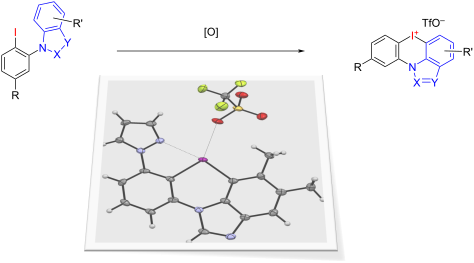
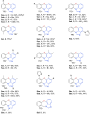
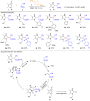
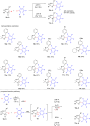
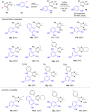
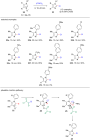
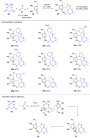
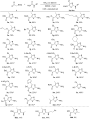
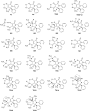
- ; c) I: PhNH2, Cu(OAc)2·H2O, Na2CO3, iPrOH, 40 °C, 17 h, II: CuI, Cs2CO3, DMF, 120 °C, 40 h; d) TsNH2, (CH2OH)2, iPrOH, Na2CO3, 100 °C, 24 h, e) KX, H2O, EtOH, reflux; f) CuI, DMEDA, 1,4-dioxane, TBAI, rt, 24 h; g) MeOTf, DMF, 40 °C, 24 h. Post-functionalization of mono- and dicationic iodonium salts




Continuous flow synthesis of 6-monoamino-6-monodeoxy-β-cyclodextrin
Beilstein J. Org. Chem. 2023, 19, 294–302, doi:10.3762/bjoc.19.25
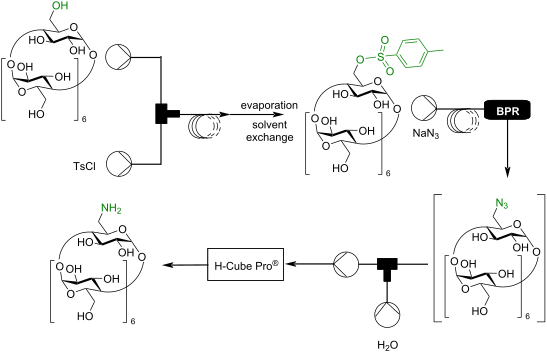
- the other hand, sodium azide in N,N-dimethylformamide (DMF) reacts with mono-6-O-tosyl-CDs to give CD monoazides in high yields. The obtained mono(6-azido-6-deoxy)-CDs (N3-CDs) are valuable precursors that can be used as starting materials in azide–alkyne click reactions; furthermore, they can be
- industrial processes. Batch synthesis of 6A-azido-6A-deoxy-β-CD (N3-β-CD) (3) Substitution of the p-toluenesulfonyl group of Ts-β-CD (2) by azide can be carried out in water [40][41], DMF [14][42], or in their combination [43][44] at elevated temperatures. Water is preferred over DMF due to its lower cost
- 60–80% can be achieved. Partial hydrolysis can be avoided by using anhydrous DMF and purifying the starting Ts-β-CD (2) by crystallization. In this case, a lower amount of NaN3 (1–2 equiv) is required and only purification by precipitation from acetone is necessary. In order to prepare N3-β-CD (3) in


Synthesis, α-mannosidase inhibition studies and molecular modeling of 1,4-imino-ᴅ-lyxitols and their C-5-altered N-arylalkyl derivatives
Beilstein J. Org. Chem. 2023, 19, 282–293, doi:10.3762/bjoc.19.24
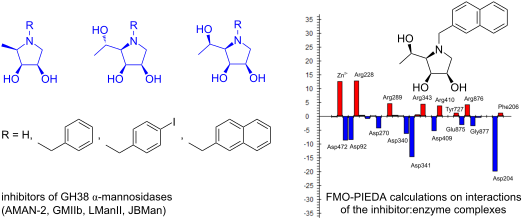
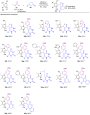
- ) BnNH2, 120 °C, 7 h, quant.; (c) PTSA·H2O, CH2Cl2/MeOH 30:1, rt, 24 h, 69%; (d) TsCl, DMAP, CH2Cl2, 0 °C–rt, overnight, 88%; (e) LiBHEt3, THF, 0–40 °C, overnight, 83%; (f) 20% HCl, MeOH, rt, 72 h, 70%; (g) 1. H2, Pd/C, MeOH, rt, 48 h; 2. conc. HCl, 0–40 °C, 2 h, 3. ArCH2Br, K2CO3, DMF, 0 °C–rt, overnight
- ) 1. DMP, CH2Cl2, rt, 1 h; 2. MeMgBr, Et2O, 0 °C–rt, 1 h, 63% over two steps; (d) 1. H2, Pd/C, MeOH, rt, 2 h; 2. ArCH2Br, K2CO3, DMF, 0 °C–rt, overnight; (e) 20% HCl, MeOH, rt, 72 h; (f) H2, Pd/C, MeOH, rt, 5 h, then, conc. HCl, 0 °C, 76%. Synthesis of the target pyrrolidines 26–29. Reagents and
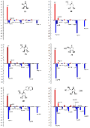
- conditions: (a) Tf2O, pyridine, CH2Cl2, 0 °C, 1.5 h, 64%; (b) 10% aq NaOH, EtOH, reflux, 24 h, 67%; (c) ArCH2Br, K2CO3, DMF, 0 °C–rt, overnight; (d) 20% HCl, MeOH, rt, 72 h; (e) H2, Pd/C, MeOH, rt, 5 h, then, conc. HCl, 0 °C, 86%. Inhibition (IC50, Ki values and selectivity index, SI) of class II GH38 α


An efficient metal-free and catalyst-free C–S/C–O bond-formation strategy: synthesis of pyrazole-conjugated thioamides and amides
Beilstein J. Org. Chem. 2023, 19, 231–244, doi:10.3762/bjoc.19.22
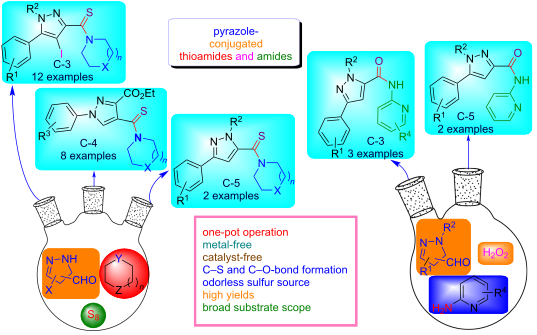
- . Encouraged by these preliminary results, we next assembled the model reactants in DMF as a solvent in the presence of β-CD at 60 °C. It was learned that the outcome of the reaction was slightly better (reaction time was reduced and the yield of the product 1C was increased to 70%, entry 10, Table 1), which
- indicated the superiority of DMF over other solvents. Subsequently, we examined the effects of La(OTf)3 as a catalyst in combination with DMF as a solvent. However, the targeted prototype 1C was obtained only in 20% yield at 60 °C after 24 hours of reaction time (entries 11 and 12, Table 1). Next, ZnO
- , we concluded that CH3CN and DMF were the ideal solvents for this transformation towards the effective formation of the product. As per literature reports, K2CO3 shows remarkable efficacy in various organic transformations [82]. Hence, this reaction was also examined under the influences of K2CO3 (2


Investigation of cationic ring-opening polymerization of 2-oxazolines in the “green” solvent dihydrolevoglucosenone
Beilstein J. Org. Chem. 2023, 19, 217–230, doi:10.3762/bjoc.19.21
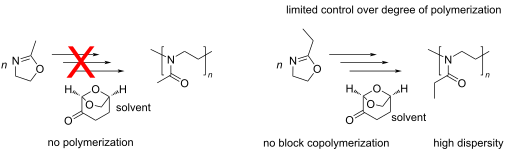
- -dimethylformamide (DMF), N-methyl-2-pyrrolidone (NMP), acetonitrile (MeCN), etc., have been added to the registration, evaluation, authorization and restriction of chemicals (REACH) list because of their negative environmental impact [1][2]. Therefore, the search for suitable solvents for the synthesis of synthetic
- product or process to have the least environmental impact throughout its life cycle [28][29]. Generally, DMF, NMP, and MeCN, or, more recently benzonitrile are solvents of choice for the 2-oxazoline polymerization and copolymerization. However, none of these are benign from a safety or environmental point
- bio-based solvent obtained from cellulose [36][37], commercially known as CyreneTM, and has been introduced as a new "green" solvent marketed specifically as an alternative to solvents such as DMF or NMP, which are particularly interesting for CROP of POx. It is reported that DLG is safe to handle


Revisiting the bromination of 3β-hydroxycholest-5-ene with CBr4/PPh3 and the subsequent azidolysis of the resulting bromide, disparity in stereochemical behavior
Beilstein J. Org. Chem. 2023, 19, 91–99, doi:10.3762/bjoc.19.9
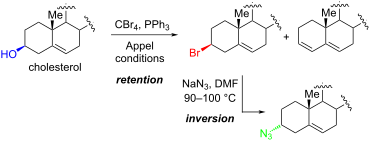
- from the stereochemistry of the standard Appel mechanism due to participation of the Δ5 π-electrons. In contrast, the subsequent azidolysis (NaN3/DMF) of 3β-bromocholest-5-ene proceeds predominantly by Walden inversion (SN2) affording 3α-azidocholest-5-ene. The structures of all relevant products were
- assignment of 4 was unequivocally confirmed by X-ray crystal structure determination. Compound 4 was erroneously reported to have the α-configuration at C3 [10]. Now, the NMR chemical shift data of 4 are in full agreement with those reported earlier [12]. The reaction of 3-bromocholest-5-ene with NaN3 in DMF
- . Stereospecific reaction of 11 with bromide as nucleophile leads to 4, in which the halo substituent is located on the β-side of the molecule. Treatment of 4 with NaN3 in DMF at 90–100 °C provides predominantly azide 5 [23]. This reaction has a high stereospecificity as well, proceeding mostly with inversion of




Rhodium-catalyzed intramolecular reductive aldol-type cyclization: Application for the synthesis of a chiral necic acid lactone
Beilstein J. Org. Chem. 2022, 18, 1642–1648, doi:10.3762/bjoc.18.176
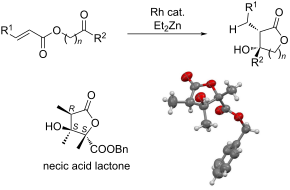
- ) moieties (Table 1, entry 7). Interestingly, using the higher coordinating solvents, DMF or DMPU, preferentially gave the opposite diastereomer, i.e., the major product being the anti-form with regard to CH3 (Cα) and OH (Cβ) moieties (anti-2a, Table 1, entries 10 and 11). For stereochemistry assignment, the
- −C bonds at the α-position, then providing the product syn-2a with high regioselectivity. On the other hand, the use of higher coordinating solvents such as DMF or DMPU might break the weak η6 binding of rhodium complex to give anti-2a, predominantly. Synthesis of a chiral necic acid lactone of


Preparation of β-cyclodextrin-based dimers with selectively methylated rims and their use for solubilization of tetracene
Beilstein J. Org. Chem. 2022, 18, 1596–1606, doi:10.3762/bjoc.18.170
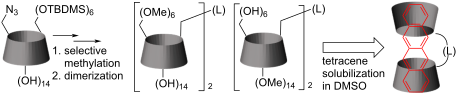
- according to the published procedure (Scheme 1) [26] with some modifications to achieve better results. We started with silylation of 6-azido-β-CD, using imidazole/DMF base/solvent mixture instead of pyridine, which gave higher yields and lower reaction time. Also, we found the recrystallization from the


Functionalization of imidazole N-oxide: a recent discovery in organic transformations
Beilstein J. Org. Chem. 2022, 18, 1575–1588, doi:10.3762/bjoc.18.168
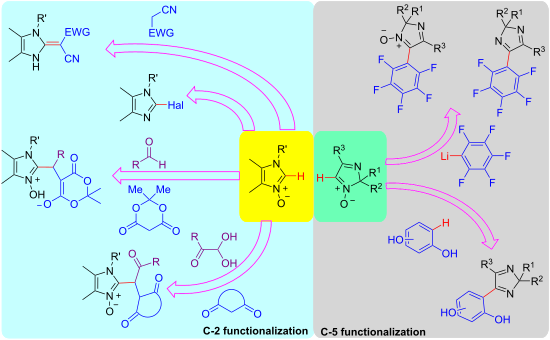
- to be a 1:1:1 ratio of 2-unsubstituted imidazole N-oxides as C-nucleophile, ethyl cyanoacetate as C–H acidic electrophile and 4-(methylsulfanyl)benzaldehyde as aldehyde catalyst, DMF as solvent at 100 °C for 5 h. Under the optimized conditions, malononitrile providing the products 4i,j (36–45%), 2





Efficient synthesis of aziridinecyclooctanediol and 3-aminocyclooctanetriol
Beilstein J. Org. Chem. 2022, 18, 1539–1543, doi:10.3762/bjoc.18.163
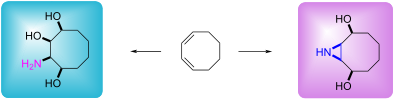
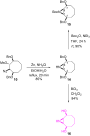
- cis,cis-1,3-cyclooctadiene. Results and Discussion The synthesis of the diol 5, which was prepared by reduction of the endoperoxide 4 with zinc was carried out as described in the literature [18]. Treatment of the diol 5 with benzyl bromide and NaH in DMF gave the corresponding (dibenzyloxy
- . This difference is due to the occurrence of dynamic balance when the system is heated. A general and versatile method for the synthesis of azides involves the reaction of a mesylate with sodium azide. Therefore, the dimesylate 8 was first reacted with an excess of sodium azide in DMF at 105 °C to give
- milligrams to grams), the azido alcohol 11 was obtained during purification of the crude product from DMF. When the crude product 10 remains on the silica gel column with EtOAc/n-hexane 2:8 followed by methanol as the eluent for 48 hours to remove DMF, we determined from the NMR spectra that the mesylate


One-pot synthesis of 2-arylated and 2-alkylated benzoxazoles and benzimidazoles based on triphenylbismuth dichloride-promoted desulfurization of thioamides
Beilstein J. Org. Chem. 2022, 18, 1479–1487, doi:10.3762/bjoc.18.155

- contrast, THF, toluene, DMF, and DMSO were inefficient reaction solvents (entries 11–14). Thus, 1,2-DCE was the best solvent for the reaction in terms of the product yield of 8a (99%), while chloroform posed a concern of acid contamination. Examination of the optimum amount of reagents 2a and 6a toward 1a


Preparation of an advanced intermediate for the synthesis of leustroducsins and phoslactomycins by heterocycloaddition
Beilstein J. Org. Chem. 2022, 18, 1385–1395, doi:10.3762/bjoc.18.143
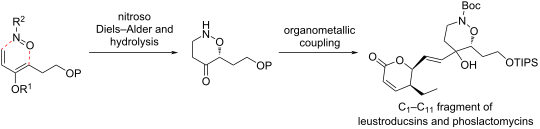
- under argon. Acetonitrile, dichloromethane, DMSO, DMF and toluene were distilled over calcium hydride under argon. All other reagents were used as received. Chromatographic purifications refer to flash chromatography on silica gel. 1H NMR spectra were measured at 250, 300, 360 or 400 MHz using CDCl3 as


Synthesis of C6-modified mannose 1-phosphates and evaluation of derived sugar nucleotides against GDP-mannose dehydrogenase
Beilstein J. Org. Chem. 2022, 18, 1379–1384, doi:10.3762/bjoc.18.142
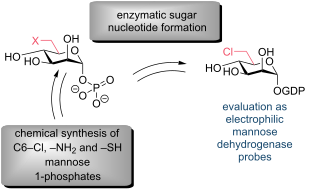
- completed a selective anomeric deacetylation on a gram-scale using ammonium acetate in DMF, to afford hemi-acetal 15 in good yield (80%) [11]. This was followed by phosphorylation of the anomeric position using diphenylphosphoryl chloride as the phosphorous electrophile, following deprotonation of 15 using
- if GMD activity fully restored (or probe 19 was not an inhibitor). Syntheses of C6-modified mannose 1-phosphates 13 and 17. Conditions a) PPh3, CBr4, DCM, rt, 75%; b) NaN3, DMF, 75 °C, 64%; c) HO(O)P(OBn)2, NIS, AgOTf, DCM, rt, 65%; d) Pd/C, Pd(OH)2, H2, HCl, EtOH, THF, 24 h, 90%; e) NH4OAc, DMF, 30


Cyclodextrin-based Schiff base pro-fragrances: Synthesis and release studies
Beilstein J. Org. Chem. 2022, 18, 1346–1354, doi:10.3762/bjoc.18.140
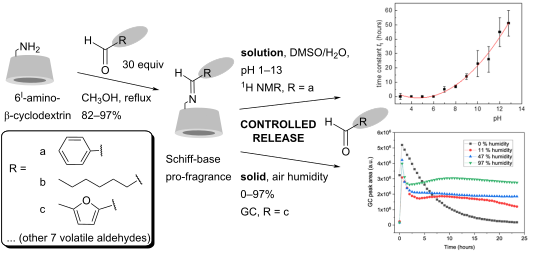
- for TLC. Anhydrous DMF was prepared by distillation with P2O5 at reduced pressure and was stored over molecular sieves 3 Å under argon atmosphere. Organic solvents were distilled before use. β-CD was purchased from WAKO Chemicals (Germany). Other reagents were purchased from common commercial sources
Ferrocenoyl-adenines: substituent effects on regioselective acylation
Beilstein J. Org. Chem. 2022, 18, 1270–1277, doi:10.3762/bjoc.18.133
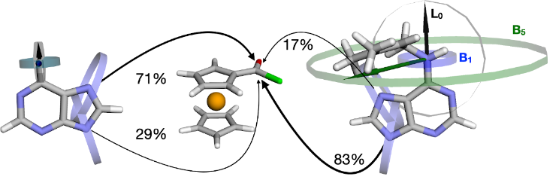
- kinetic and thermodynamic control of the acylation reaction. Results and Discussion It was shown that the reaction between the pyrimidine anion (uracil, thymine, or 5-fluorouracil) and FcCOCl in N,N-dimethylformamide (DMF) proceeded in a full regiospecific mode [19]. In the purine series, however, the
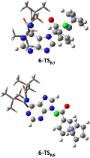
- different regioisomers, 1-N7 and 1-N9, were formed simultaneously in the course of the reaction between adenine anion 1 and FcCOCl in DMF (Scheme 1). According to the 1H NMR spectrum (Figure 1) of a reaction aliquot, the ratio of N9/N7 isomers is 1.5:1, i.e. 60% regioselectivity is reached. The formation of
- translated into a regiospecific process, i.e., only the N9-regioisomer appeared as a product in the ferocenoylation reaction. 1H NMR spectrum (downfield region) of the reaction mixture (adenine anion 1 and FcCOCl) in DMF, taken after 10 minutes (see numbering in Scheme 1) at 25 °C. The DMF signal was



Modular synthesis of 2-furyl carbinols from 3-benzyldimethylsilylfurfural platforms relying on oxygen-assisted C–Si bond functionalization
Beilstein J. Org. Chem. 2022, 18, 1256–1263, doi:10.3762/bjoc.18.131
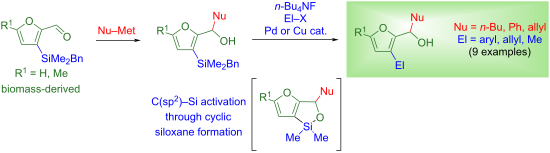
- P(OEt)3 (1.5 equiv) in DMF at room temperature delivered, after hydrolysis, the cross-coupling compound 21 in 68% yield, along with 9% of protodesilylation product 22 (Table 1, entry 1). As indicated by Takeda et al., the amount and source of TBAF proved crucial: use of either 1.2 equiv of TBAF⋅(t
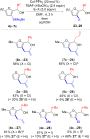
- 21 in an even better 78% yield (Table 1, entry 9). It should also be mentioned that the use of THF instead of DMF as solvent led to worse results (Table 1, entries 7 and 8). Investigating the scope of this transformation (Scheme 8), we established that the reaction performed well with other 5
- tube, the appropriate C3-benzyldimethylsilyl-substituted 2-furyl carbinol (0.3 mmol, 1 equiv) was dissolved in CH2Cl2 (1 mL), concentrated under reduced pressure, and placed under argon. DMF (3.0 mL) was then added, and the solution was degassed in three freeze–pump–thaw cycles. TBAF⋅(t-BuOH)4 [38


A one-pot electrochemical synthesis of 2-aminothiazoles from active methylene ketones and thioureas mediated by NH4I
Beilstein J. Org. Chem. 2022, 18, 1249–1255, doi:10.3762/bjoc.18.130
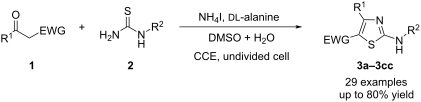
- other solvents, such as aqueous DMF, aqueous MeCN or aqueous EtOH (Table 1, entries 4–6). Owing to the tedious workup process in using a large amount of DMSO as solvent, we decided to increase the proportion of H2O and disclosed that the yield of 3a improved from 52% to 61% when the ratio of DMSO to H2O




From amines to (form)amides: a simple and successful mechanochemical approach
Beilstein J. Org. Chem. 2022, 18, 1210–1216, doi:10.3762/bjoc.18.126
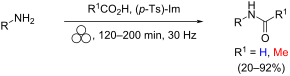
- mechanochemical conditions. In the solvent-based procedure, imidazole has already been used in combination with DMF, which works as a solvent and source of a formyl group [23]. In that paper, the authors assumed the formation of formylimidazole as an intermediate in the formylation reaction. However, the
Derivatives of benzo-1,4-thiazine-3-carboxylic acid and the corresponding amino acid conjugates
Beilstein J. Org. Chem. 2022, 18, 1195–1202, doi:10.3762/bjoc.18.124
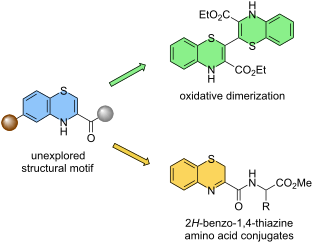
- diethyl ether at 0 °C for 1 h gave acid 10aa in 75% yield, while complete decomposition was observed at reflux temperature after only 10 min (Table 1, entries 1 and 2). Acid 10aa did not form when the reaction was performed in ethanol, CH2Cl2, THF, DMF, or ethyl acetate at different temperatures under
- classical conditions as well as under MWI. The acid 10aa could not be formed even when 2,2'-disulfanediyldianiline was used as the starting material in DMF or ethanol at room temperature or under reflux. Thiol 8a reacted with the keto ester 9c in ethanol to form the ester 10ac with a yield of 51% and 29
Reductive opening of a cyclopropane ring in the Ni(II) coordination environment: a route to functionalized dehydroalanine and cysteine derivatives
Beilstein J. Org. Chem. 2022, 18, 1166–1176, doi:10.3762/bjoc.18.121
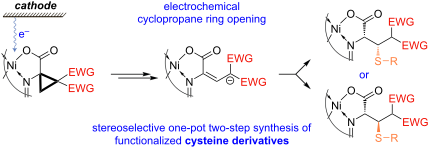
- the chemical step following the first reduction process. Preparative electrolysis Based on the voltammetry results, complexes 3 and 4 were chosen as the models for the preparative study. The electrolysis was performed in a two-compartment electrochemical cell in DMF using a glassy carbon plate as a
- as described above (two-compartment cell, DMF, Bu4NBF4, a glassy carbon WE, an iron wire as a CE). After 2 F/mol amount of electricity passed and subsequent protonation with PhNEt2·HCl, aryl- or benzylthiol was added. The reaction mixture was kept overnight and then the products were isolated using
- yielding the most thermodynamically stable cysteine derivative [58]. The suggestion was proven by the control experiment. An equimolar mixture of the diastereomeric cysteine complexes 10 were dissolved in DMF containing Et3N and TolSH (1:1) and left overnight at room temperature under argon. As a result



Synthesis of tryptophan-dehydrobutyrine diketopiperazine and biological activity of hangtaimycin and its co-metabolites
Beilstein J. Org. Chem. 2022, 18, 1159–1165, doi:10.3762/bjoc.18.120
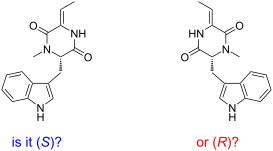
- /mL), a MIC of 128 mg/mL was achieved (Figure 3C). We also investigated whether the reported inhibition of glutathione S-transferase [11] is a result of a Michael addition of glutathione to TDD. However, no reaction occurred between glutathione and TDD in DMF/H2O (1:1) under prolonged stirring at room


Experimental and theoretical studies on the synthesis of 1,4,5-trisubstituted pyrrolidine-2,3-diones
Beilstein J. Org. Chem. 2022, 18, 1140–1153, doi:10.3762/bjoc.18.118
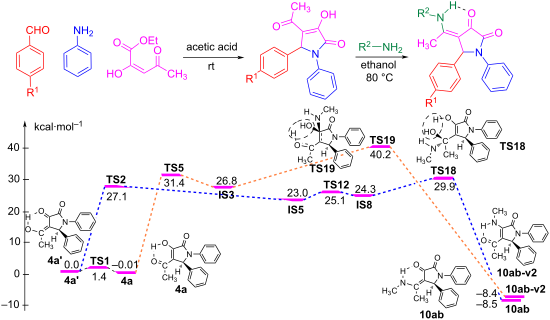
- yield. The yield of 10aa could be increased to 62% when substrate 4a was reacted with the amine 9a in DMF at 95 °C (Table 4), meaning that the reaction does not require an acidic medium. Ethanol was also used as green solvent to test the above model reaction. As compared to CH3COOH, heating compounds 4a


Electrogenerated base-promoted cyclopropanation using alkyl 2-chloroacetates
Beilstein J. Org. Chem. 2022, 18, 1116–1122, doi:10.3762/bjoc.18.114
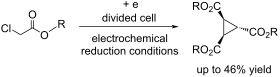
- -chloroacetates in Bu4NBr/DMF using a divided cell equipped with Pt electrodes to produce the corresponding cyclopropane derivatives in moderate yields were discovered. The reaction conditions were optimized, the scope and limitations, as well as scale-up reactions were investigated. The presented method for the
- same chemical yield was obtained by using a catalytic amount of tetrahydro-2H-thiopyran (0.2 equiv) in the process [10]. Furthermore, de Meijere and colleagues in 2003 demonstrated that the reaction of diethyl fumarate and ethyl 2-chloroacetate in DMF at 40 °C with K2CO3 and TEBACl
- cathodic chamber, 1 (0.5 mmol) was dissolved in 0.3 M Bu4NBr in DMF (4.0 mL) and 0.3 M Bu4NBr in DMF (4.0 mL) was introduced to the anodic chamber. Constant current electrolysis at 12 mA until 1.0 F/mol was consumed in the cathode yielded the corresponding compound 2 in a 46% yield (Table 1, entry 1


Scope of tetrazolo[1,5-a]quinoxalines in CuAAC reactions for the synthesis of triazoloquinoxalines, imidazoloquinoxalines, and rhenium complexes thereof
Beilstein J. Org. Chem. 2022, 18, 1088–1099, doi:10.3762/bjoc.18.111
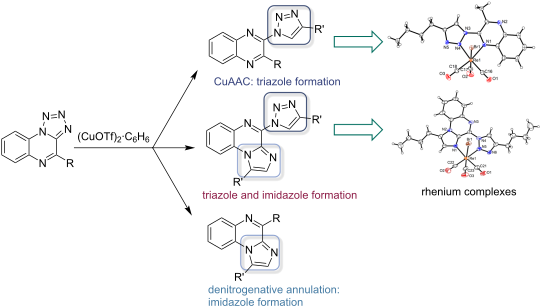
- [10][11][12]. Synthesis of tetrazolo[1,5-a]quinoxalines. Reaction conditions: (a) 9, THF or 4 M HCl, 70–110 °C, 2–3 h; (b) POCl3, 100 °C, 2–4 h, yields over two steps are given above; (c) NaN3, DMF, 60–80 °C, 2–26 h; (d) H2NNH2·H2O, EtOH, 25 °C, 21 h; (e) NaNO2, AcOH/H2O, 0 °C, 3 h; (f) diverse
- conditions, see Supporting Information File 1 for details. Synthesis of 1,2,3-triazole-substituted quinoxalines via CuAAC from tetrazolo[1,5-a]quinoxaline (11a). aSynthesis of 14j* from 14j = Et2NH, K2CO3, DMF, 70 °C, 1 d. Mechanism of CuAAC vs denitrogenative annulation. Synthesis of bis(tetrazolo)[1,5-a:5


Synthesis of N-phenyl- and N-thiazolyl-1H-indazoles by copper-catalyzed intramolecular N-arylation of ortho-chlorinated arylhydrazones
Beilstein J. Org. Chem. 2022, 18, 1079–1087, doi:10.3762/bjoc.18.110
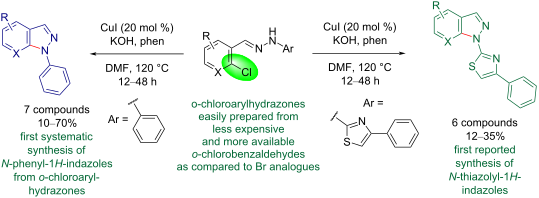
- -phenyl derivatives and a series of six novel N-thiazolyl derivatives was obtained in 10–70% and 12–35% yield, respectively, after stirring the o-chlorinated arylhydrazones, CuI, KOH, and 1,10-phenantroline for 12–48 hours in DMF at 120 °C. The products were isolated by column chromatography on silica gel
- effect on the reaction yield was evaluated employing other aprotic solvents, but no improvement was observed compared to when DMF was used (Table 1, entries 5–7). When the reaction was carried out in NMP (N-methyl-2-pyrrolidone), the 1H NMR spectrum of the crude mixture obtained after extraction did not
- Sigma-Aldrich or Oakwood Chemicals and were used as supplied without further purification. The solvents were purchased from Synth. DMF was distilled over 4 Å molecular sieves and degassed by sparging with nitrogen for 30 min before use. Reactions for the synthesis of 1H-indazoles were performed in a





