


Search results
Search for "acylation" in Full Text gives 355 result(s) in Beilstein Journal of Organic Chemistry. Showing first 200.
Unexpected loss of stereoselectivity in glycosylation reactions during the synthesis of chondroitin sulfate oligosaccharides
- Teresa Mena-Barragán,
- José L. de Paz and
- Pedro M. Nieto
Beilstein J. Org. Chem. 2019, 15, 137–144, doi:10.3762/bjoc.15.14
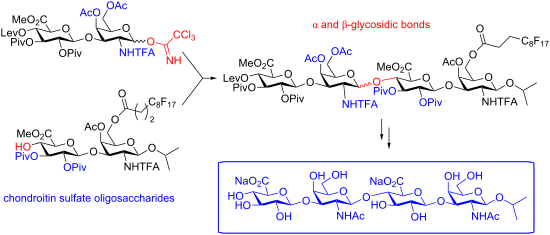
- intermediates by simple fluorous solid-phase extraction (F-SPE). Interestingly, the fluorous tag would be introduced by acylation using commercially available heptadecafluoroundecanoyl chloride and its deprotection would not involve any additional step at the end of the synthesis. N-Trifluoroacetyl (N-TFA

Graphical Abstract

Scheme 1: Retrosynthetic analysis for the preparation of CS oligosaccharides. Lev = levulinyl; Piv = pivaloyl...

Scheme 2: Reagents and conditions: a) TMSOTf, CH2Cl2, 0 °C, 30 min, 97%; b) (HF)n·Py, THF, 0 °C, 20 h, 90%; c...

Scheme 3: Reagents and conditions: a) C8F17CH2CH2COCl, Et3N, DMAP, DMF/CH2Cl2, 0 °C to rt, 6 h, 70%; b) Ac2O,...

Scheme 4: Reagents and conditions: a) TMSOTf, CH2Cl2, 0 °C, 30 min, 25% (14α) + 33% (14β).

Scheme 5: Reagents and conditions: a) LiOH, H2O2, THF, −5 °C to rt, 24 h, then NaOH, MeOH, 72 h, then Ac2O, Et...

Scheme 6: Reagents and conditions: a) 2-propanol, TMSOTf, CH2Cl2, 0 °C, 30 min, 73%; b) NH2NH2·H2O, Py/AcOH, ...

Scheme 7: Reagents and conditions: a) NH2NH2·H2O, Py/AcOH, CH2Cl2, 1 h, 55%; b) TMSOTf, CH2Cl2, 0 °C, 30 min,...

Scheme 8: Reagents and conditions: a) 4-Methoxyphenol, TMSOTf, CH2Cl2, 0 °C, 50 min, 92%; b) NH2NH2·H2O, Py/A...
N-Acylated amino acid methyl esters from marine Roseobacter group bacteria
- Hilke Bruns,
- Lisa Ziesche,
- Nargis Khakin Taniwal,
- Laura Wolter,
- Thorsten Brinkhoff,
- Jennifer Herrmann,
- Rolf Müller and
- Stefan Schulz
Beilstein J. Org. Chem. 2018, 14, 2964–2973, doi:10.3762/bjoc.14.276
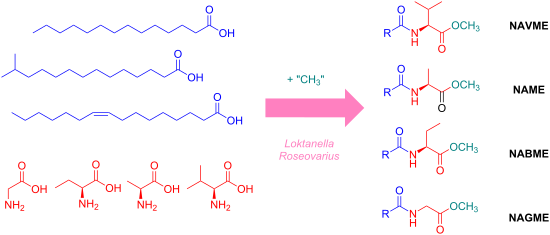
- verified by synthesis according to Scheme 2. Palmitoleic acid was synthesized in g-scale by standard procedures as shown in the Supporting Information File 1, Scheme S1. This acid and palmitic acid were converted into the respective chlorides and standard acylation delivered 2-aminobutyric acid derivatives

Graphical Abstract

Figure 1: N-Acylhomoserine lactones 1 (Z7-C14:1-AHL) and N-acylalanine methyl esters 2 (Z9-C16:1-NAME) occurr...

Figure 2: Total ion chromatogram (TIC) of an XAD extract of Roseovarius sp. D12_1.68. AHLs, NAMEs and related...

Scheme 1: Synthesis of iso-C15:0-NAME (6). DMAP: 4-dimethylaminopyridine, EDC: 1-ethyl-3-(3-dimethylaminoprop...

Figure 3: Mass spectrum of natural compound D, N-(13-methyltetradecanoyl)alanine methyl ester (iso-C15:0-NAME...
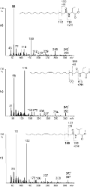
Figure 4: Mass spectra of natural compounds a) K (7, C16:0-NABME), b) J (8, C16:1-NABME), and c) N (9, C16:1-...

Scheme 2: Synthesis of N-acylated amino acid methyl esters 7–11. AAME: amino acid methyl ester.

Figure 5: TIC of an XAD extract of Loktanella sp. F14. Compound S is a minor component within the broad peak.
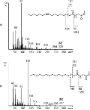
Figure 6: Mass spectra of natural compounds a) R (11, C16:1-NAGME) and b) S (10, C16:0-NAGME).

Figure 7: EI mass spectrometric fragmentation of N-acylated amino acid derivatives. The ions w–z allow identi...
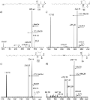
Figure 8: MS2 spectra in ESI positive mode of a) Z9-16OH-C16:1-NAME with [M + H − H2O]+ 356, b) Z9-C16:1-NABM...
Synthesis of pyrrolidine-based hamamelitannin analogues as quorum sensing inhibitors in Staphylococcus aureus
- Jakob Bouton,
- Kristof Van Hecke,
- Reuven Rasooly and
- Serge Van Calenbergh
Beilstein J. Org. Chem. 2018, 14, 2822–2828, doi:10.3762/bjoc.14.260
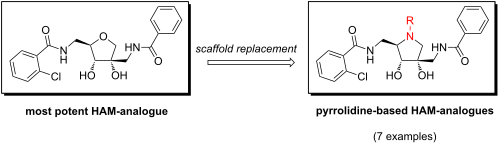
- -propanediol (16), which was selectively monoprotected in high yield as TBS ether (Scheme 3) [25]. The remaining alcohol was then substituted for a phthalimide via Mitsunobu reaction. Phthalimide deprotection, acylation with benzoic acid, and removal of the silyl protecting group furnished 10. Fragments 9 and

Graphical Abstract

Figure 1: Structures of hamamelitannin (1), lead compound 2 and target compounds 3.

Scheme 1: Proposed strategy for the synthesis of the target analogues.

Scheme 2: Synthesis of fragment 9. Reagents and conditions: a) phthalimide, Pd2(allyl)2Cl2, ligand 15, Na2CO3...

Scheme 3: Synthesis of fragment 10. Reagents and conditions: a) TBSCl, NaH, THF, rt; b) phthalimide, PPh3, DE...

Scheme 4: Coupling of 9 and 10 and attempted ring-closing metathesis. Reagents and conditions: a) PPh3, DEAD,...

Scheme 5: Synthesis of alternative eastern fragment 23. Reagents and conditions: a) TBSCl, imidazole, CH2Cl2,...

Scheme 6: Synthesis of 4. Reagents and conditions: a) PPh3, DEAD, THF, 0 °C to rt; b) Grubbs–Hoveyda II (5 mo...

Scheme 7: Late stage functionalization of the pyrrolidine nitrogen. Reagents and conditions: A) (masked) alde...

Figure 2: Molecular X-ray structure of 3a, showing thermal displacement ellipsoids at the 50% probability lev...
An overview on recent advances in the synthesis of sulfonated organic materials, sulfonated silica materials, and sulfonated carbon materials and their catalytic applications in chemical processes
- Hashem Sharghi,
- Pezhman Shiri and
- Mahdi Aberi
Beilstein J. Org. Chem. 2018, 14, 2745–2770, doi:10.3762/bjoc.14.253
- amount of HPW on silica decreased the yield of reaction [62]. The silica sulfuric acid (SSA) catalyst was synthesized by the treatment of silica gel with sulfuryl chloride under room temperature stirring. The catalyst was used in the acylation of amines with 1,3-diketones via C–C bond cleavage. Various

Graphical Abstract

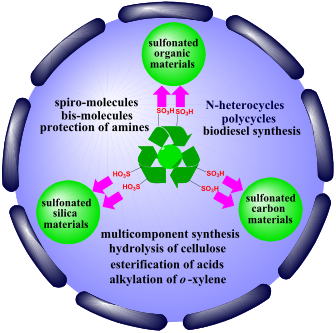
Figure 1: Different types of sulfonated materials as acid catalysts.

Scheme 1: Synthetic route of 3-methyl-1-sulfo-1H-imidazolium metal chloride ILs and their catalytic applicati...

Scheme 2: Synthetic route of 1,3-disulfo-1H-imidazolium transition metal chloride ILs and their catalytic app...
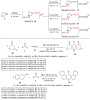
Scheme 3: Synthetic route of 1,3-disulfoimidazolium carboxylate ILs and their catalytic applications in the s...

Scheme 4: Synthetic route of [BiPy](HSO3)2Cl2 and [Dsim]HSO4 ILs and their catalytic applications for the syn...

Scheme 5: The catalytic applications of (C4(DABCO-SO3H)2·4Cl) IL for the synthesis of spiro-isatin derivative...

Scheme 6: The catalytic applications of (C4(DABCO-SO3H)2·4Cl) IL for the synthesis of bis 2-amino-4H-pyran de...

Scheme 7: The synthetic route of N,N-disulfo-1,1,3,3-tetramethylguanidinium carboxylate ILs and their catalyt...

Scheme 8: The catalytic application of 1-methyl-3-sulfo-1H-imidazolium tetrachloroferrate IL in the synthesis...

Scheme 9: The synthetic route of 3-sulfo-1H-imidazolopyrimidinium hydrogen sulfate IL and its catalytic appli...

Scheme 10: The results for the synthesis of bis(indolyl)methanes and di(bis(indolyl)methyl)benzenes in the pre...

Scheme 11: The catalytic applications of 1-(1-sulfoalkyl)-3-methylimidazolium chloride acidic ILs for the hydr...
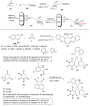
Scheme 12: The synthetic route of immobilized 1,4-diazabicyclo[2.2.2]octanesulfonic acid chloride on SiO2 and ...

Scheme 13: The catalytic application of a silica-bonded sulfoimidazolium chloride for the synthesis of 12-aryl...

Scheme 14: The synthetic route of the SBA-15-Ph-SO3H and its catalytic applications for the synthesis of 2H-in...

Scheme 15: The synthetic route for heteropolyanion-based ionic liquids immobilized on mesoporous silica SBA-15...

Scheme 16: Some mechanism aspects of SSA catalyst for the protection of amine derivatives.

Scheme 17: The synthetic route for MWCNT-SO3H and its catalytic application for the synthesis of N-substituted...
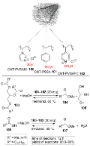
Scheme 18: The sulfonic acid-functionalized polymers (P-SO3H) covalently grafted on multi-walled carbon nanotu...

Scheme 19: The transesterification reaction in the presence of S-MWCNTs.
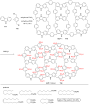
Scheme 20: The synthetic route for the new hypercrosslinked supermicroporous polymer via the Friedel–Crafts al...

Scheme 21: The synthetic route for a new microporous copolymer via the Friedel–Crafts alkylation reaction of t...

Scheme 22: The synthetic route for sulfonated polynaphthalene and its catalytic application for the amidoalkyl...

Scheme 23: The synthetic route of the acidic carbon material and its catalytic application in the etherificatio...

Scheme 24: The synthetic route of the acidic carbon materials and their catalytic applications for the esterif...

Scheme 25: The sulfonated MWCNTs.

Scheme 26: The sulfonated nanoscaled diamond powder for the dehydration of D-xylose into furfural.

Scheme 27: The synthetic route and catalytic application of the GR-SO3H.
Synthesis of functionalised β-keto amides by aminoacylation/domino fragmentation of β-enamino amides
- Pavel Yanev and
- Plamen Angelov
Beilstein J. Org. Chem. 2018, 14, 2602–2606, doi:10.3762/bjoc.14.238

- Pavel Yanev Plamen Angelov Department of Organic Chemistry, University of Plovdiv Paisii Hilendarski, 24 Tsar Asen Str., 4000 Plovdiv, Bulgaria 10.3762/bjoc.14.238 Abstract Ethylenediamine-derived β-enamino amides are used as equivalents of amide enolate synthons in C-acylation reactions with N
- -protected amino acids. Domino fragmentation of the obtained intermediates leads to functionalised β-keto amides, bearing a protected amino group in their side chain. Keywords: amino acids; C-acylation; domino reaction; enamines; enaminones; keto amides; retro-Mannich; Introduction The acylation of amide
- necessitates either a double deprotonation to ambident 1,3-dianions [10] or proper masking of the amide functionality prior to deprotonation [11][12]. Consequently, there are very few published reagents that are synthetically equivalent to primary or secondary amide enolate synthons. With regard to acylation

Graphical Abstract

Scheme 1: Preparation of α-C-acylated β-enamino amides 3 and 4. Reagents and conditions: 2, NMM, EtOCOCl, CH2...

Scheme 2: Domino fragmentation of 3 to β-keto amides 5 with competing cyclisation to pyrrolin-4-ones 6. Reage...

Scheme 3: Proposed mechanism for the formation of side products 6.

Scheme 4: Proposed mechanism for the formation of the target β-keto amides 5.

Scheme 5: Reactivity of analogues 9, lacking the auxiliary amino group [34].

Scheme 6: Domino fragmentation of compounds 4 (R2 = R3 = H) to N-protected ω-amino-β-keto amides 11.

Scheme 7: Ring–chain tautomerism in compounds 11b,c,f,j (n = 2) and reduction to the corresponding β-hydroxy ...
Microwave-assisted synthesis of biologically relevant steroidal 17-exo-pyrazol-5'-ones from a norpregnene precursor by a side-chain elongation/heterocyclization sequence
- Gergő Mótyán,
- László Mérai,
- Márton Attila Kiss,
- Zsuzsanna Schelz,
- Izabella Sinka,
- István Zupkó and
- Éva Frank
Beilstein J. Org. Chem. 2018, 14, 2589–2596, doi:10.3762/bjoc.14.236
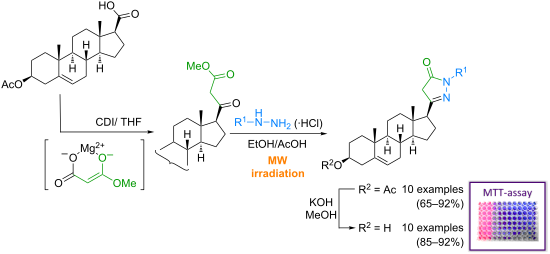
- magnesium enolate of malonic acid half ester, prepared in situ from potassium methyl malonate, MgCl2 and triethylamine in acetonitrile, was added [24][25]. The acylation of magnesium methyl malonate by the preformed imidazole 3 led to the desired bifunctional starting material 4 in good yield (79

Graphical Abstract

Scheme 1: Multistep synthesis of steroidal β-ketoesters 4 and 4' from pregnenolone acetate (1) and pregnadien...

Scheme 2: Cyclization of compound 4 with hydrazine hydrate (5a), phenylhydrazine (5b) and methylhydrazine (5c...

Figure 1: 1H NMR spectra of compound 7f in CDCl3 (top; # solvent signal) and in DMSO-d6 (bottom; # solvent si...
Quinolines from the cyclocondensation of isatoic anhydride with ethyl acetoacetate: preparation of ethyl 4-hydroxy-2-methylquinoline-3-carboxylate and derivatives
- Nicholas G. Jentsch,
- Jared D. Hume,
- Emily B. Crull,
- Samer M. Beauti,
- Amy H. Pham,
- Julie A. Pigza,
- Jacques J. Kessl and
- Matthew G. Donahue
Beilstein J. Org. Chem. 2018, 14, 2529–2536, doi:10.3762/bjoc.14.229

- 8-positions would require a different strategy due to regioselectivity issues encountered in the Grignard acylation step (5b→4b). As part of an ongoing research program investigating new assays toward integrase inhibition, we desired to synthesize quinoline derivatives such as 2 with substitution in
- synthesis method through the one-pot acylation of ethyl acetoacetate with isatoic anhydrides followed by dehydrative intramolecular cyclization to access the desired quinoline scaffold 10 [18]. We replaced sodium hydride as the base required to generate the enolate of ethyl acetoacetate with sodium

Graphical Abstract

Figure 1: Investigational non-catalytic HIV-1 Integrase inhibitors.

Scheme 1: Boehringer Ingelheim retrosynthesis of quinoline 1.

Scheme 2: Quinoline ring condensation strategies.
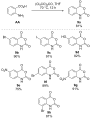
Scheme 3: Isatoic anhydrides from anthranilic acids with triphosgene.
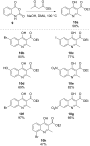
Scheme 4: Substituted 2-methyl-4-hydroxyquinolines from isatoic anhydrides and ethyl acetoacetate.
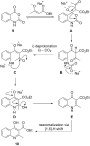
Scheme 5: Mechanistic hypothesis for the cyclocondensation reaction.

Scheme 6: Quinoline synthesis with ethyl acetylpyruvate.
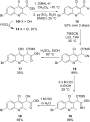
Scheme 7: Elaboration of the benzoic acid ethyl ester to the acetic acid residue.

Scheme 8: Umpolung addition of ethoxycarbonyl via a MAC strategy.
Synthesis of dihydroquinazolines from 2-aminobenzylamine: N3-aryl derivatives with electron-withdrawing groups
- Nadia Gruber,
- Jimena E. Díaz and
- Liliana R. Orelli
Beilstein J. Org. Chem. 2018, 14, 2510–2519, doi:10.3762/bjoc.14.227

- by cyclodehydration allowed for a straightforward and efficient synthesis of 3,4-dihydroquinazolines with N-aryl substituents bearing electron-withdrawing groups. The sequence involves an initial SNAr displacement, N-acylation and MW-assisted ring closure. Remarkably, the uncatalyzed N-arylation of 2
- involving an intermediate nitrilium ion. Reaction conditions screening for the synthesis of compounds 2. Selective N-acylation of N-aryl-2-ABAs 2. Synthesis of N-aryl-3,4-dihydroquinazolines 1. Supporting Information Supporting Information File 452: Experimental procedures and characterization of new

Graphical Abstract

Figure 1: N-Aryl-3,4-dihydroquinazolines 1.

Scheme 1: Synthetic pathway leading to N-aryl-3,4-dihydroquinazolines 1.

Scheme 2: Synthesis of compounds 2.

Figure 2: Reaction intermediate in the synthesis of compound 2a.

Scheme 3: Addition–elimination mechanism for the heterocyclization.

Scheme 4: Proposed mechanism involving an intermediate nitrilium ion.
Comparative cell biological study of in vitro antitumor and antimetastatic activity on melanoma cells of GnRH-III-containing conjugates modified with short-chain fatty acids
- Eszter Lajkó,
- Sarah Spring,
- Rózsa Hegedüs,
- Beáta Biri-Kovács,
- Sven Ingebrandt,
- Gábor Mező and
- László Kőhidai
Beilstein J. Org. Chem. 2018, 14, 2495–2509, doi:10.3762/bjoc.14.226
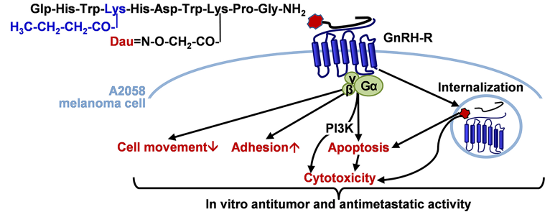
- in this study. After acylation of the free amino group on the side chain of 4Lys using either acetic or butyric anhydride, the Mtt protecting group was detached. Though the application of bis-Boc-aminooxyacetic acid to incorporate the Aoa moiety provided better results (10–15% better yield according

Graphical Abstract

Figure 1: Schematic structure of Dau-conjugated GnRH-III or its derivatives containing 4Lys with acetyl or bu...

Figure 2: Cellular uptake of Dau–GnRH-III conjugates and free daunorubicin (Dau) by A2058 cells. Cellular upt...

Figure 3: Short-term growth inhibitory effects of the conjugates and daunorubicin (Dau) on A2058 cells. The m...

Figure 4: Effects of conjugates and daunorubicin (Dau) on cell cycle progression of A2058 melanoma cells. The...

Figure 5: Effects of the conjugates and daunorubicin (Dau) on melanoma cell adhesion. The Delta CI (Delta Cel...

Figure 6: Chemotactic effects of Dau–GnRH-III conjugates on A2058 cell line. The ‘Chemotaxis index’ (Chtx. in...

Figure 7: Effects of GnRH-III(Dau=Aoa) (a–c), [4Lys(Ac)]-GnRH-III(Dau=Aoa) (d–f) and [4Lys(Bu)]-GnRH-III(Dau=...

Figure 8: Schematic representation of the proposed mechanisms of the effects of GnRH-III conjugates containin...
Synthesis of a leopolic acid-inspired tetramic acid with antimicrobial activity against multidrug-resistant bacteria
- Luce Mattio,
- Loana Musso,
- Leonardo Scaglioni,
- Andrea Pinto,
- Piera Anna Martino and
- Sabrina Dallavalle
Beilstein J. Org. Chem. 2018, 14, 2482–2487, doi:10.3762/bjoc.14.224
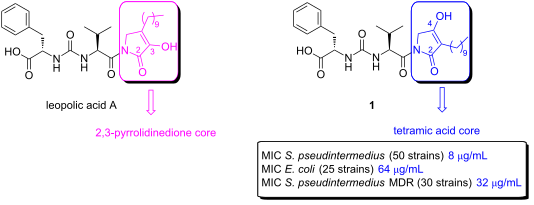
- hand, we finally accomplished the N-acylation reaction using n-BuLi in THF at −60 °C [15] in 60% yield. Removal of both protecting groups by catalytic hydrogenation, gave the desired compound 1 in 72% yield (Scheme 3). Compound 1 was subjected to a preliminary study to evaluate the antimicrobial

Graphical Abstract

Figure 1: Structures of leopolic acid A and compound 1.

Scheme 1: Synthesis of 3-decyltetramic intermediate 13. Reagent and conditions: a) TEA, THF, 0 °C to rt, 2.5 ...

Scheme 2: Synthesis of dipeptide L-Phe-L-Val intermediate 20. Reagents and conditions: a) PTSA·H2O, benzyl al...

Scheme 3: Synthesis of compound 1. Reagents and conditions: a) n-BuLi, THF, −60 °C, 220 min, 60%; b) H2, Pd/C...
Synthesis of spirocyclic scaffolds using hypervalent iodine reagents
- Fateh V. Singh,
- Priyanka B. Kole,
- Saeesh R. Mangaonkar and
- Samata E. Shetgaonkar
Beilstein J. Org. Chem. 2018, 14, 1778–1805, doi:10.3762/bjoc.14.152
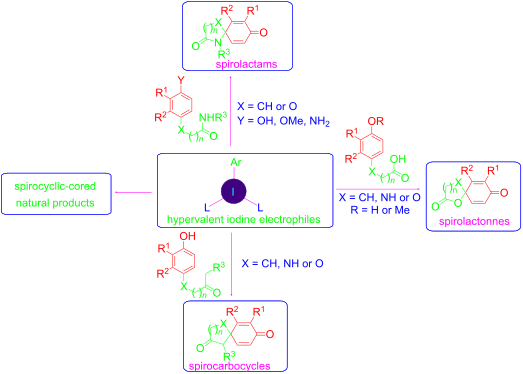
- -acylation, wherein various homotyramine sulfonamides were treated with electrophile PIDA (15) in hexafluoroisopropanol to give the spirocyclic products 123 in high yields (Scheme 45). However, the similar spirocyclization could not successfully applied for the construction of six-membered spiropiperidine

Graphical Abstract

Figure 1: The structures of biologically active natural and synthetic products having spirocyclic moiety.

Scheme 1: Iodine(III)-mediated spirocyclization of substituted phenols 7 and 11 to 10 and 13, respectively.

Scheme 2: PIDA-mediated spirolactonization of N-protected tyrosine 14 to spirolactone 16.

Figure 2: The structures of polymer-supported iodine(III) reagents 17a and 17b.

Scheme 3: Spirolactonization of substrates 14 to spirolactones 16 using polymer-supported reagents 17a and 17b...

Scheme 4: PIDA-mediated spirolactonization of 1-(p-hydroxyaryl)cyclobutanols 18 to spirolactones 19.

Scheme 5: Iodine(III)-mediated spirocyclization of aryl alkynes 24 to spirolactones 26 by the reaction with b...

Scheme 6: Bridged iodine(III)-mediated spirocyclization of phenols 27 to spirodienones 29.

Scheme 7: Iodine(III)-mediated spirocyclization of arnottin I (30) to its spirocyclic analogue arnottin II (32...

Scheme 8: Iodine(III)-catalyzed spirolactonization of p-substituted phenols 27 to spirolactones 29 using iodo...

Scheme 9: Iodine(III)-catalyzed oxylactonization of ketocarboxylic acid 34 to spirolactone 36 using iodobenze...

Scheme 10: Iodine(III)-mediated asymmetric oxidative spirocyclization of naphthyl acids 37 to naphthyl spirola...

Scheme 11: Oxidative cyclization of L-tyrosine 14 to spirocyclic lactone 16 using PIDA (15).

Scheme 12: Oxidative cyclization of oxazoline derivatives 41 to spirolactams 42 using PIDA (15).

Scheme 13: Oxidative cyclization of oxazoline 43 to spirolactam 44 using PIDA 15 as oxidant.

Scheme 14: PIFA-mediated spirocyclization of amides 46 to N-spirolactams 47 using PIFA (31) as an electrophile....

Scheme 15: Synthesis of spirolactam 49 from phenolic enamide 48 using PIDA (15).

Scheme 16: Iodine(III)-mediated spirocyclization of alkyl hydroxamates 50 to spirolactams 51 using stoichiomet...

Scheme 17: PIFA-mediated cyclization of substrate 52 to spirocyclic product 54.

Scheme 18: Synthesis of spiro β-lactams 56 by oxidative coupling reaction of p-substituted phenols 55 using PI...

Scheme 19: Iodine(III)-mediated spirocyclization of para-substituted amide 58 to spirolactam 59 by the reactio...

Scheme 20: Iodine(III)-mediated synthesis of spirolactams 61 from anilide derivatives 60.

Scheme 21: PIFA-mediated oxidative cyclization of anilide 60 to bis-spirobisoxindole 61.

Scheme 22: PIDA-mediated spirocyclization of phenylacetamides 65 to spirocyclic lactams 66.

Scheme 23: Oxidative dearomatization of arylamines 67 with PIFA (31) to give dieniminium salts 68.

Scheme 24: PIFA-mediated oxidative spirocarbocyclization of 4-methoxybenzamide 69 with diphenylacetylene (70) ...

Scheme 25: Synthesis of spiroxyindole 75 using I2O5/TBHP oxidative system.

Scheme 26: Iodine(III)-catalyzed spirolactonization of functionalized amides 76 to spirolactones 77 using iodo...

Scheme 27: Intramolecular cyclization of alkenes 78 to spirolactams 80 using Pd(II) 79 and PIDA (15) as the ox...

Scheme 28: Iodine(III)-catalyzed spiroaminocyclization of amides 76 to spirolactam 77 using bis(iodoarene) 81 ...

Scheme 29: Iodine(III)-catalyzed spirolactonization of N-phenyl benzamides 82 to spirolactams 83 using iodoben...

Scheme 30: Iodine(III)-mediated asymmetric oxidative spirocyclization of phenols 84 to spirolactams 86 using c...

Scheme 31: Iodine(III)-catalyzed asymmetric oxidative spirocyclization of N-aryl naphthamides 87 to spirocycli...

Scheme 32: Cyclization of p-substituted phenolic compound 89 to spirolactam 90 using PIDA (15) in TFE.

Scheme 33: Iodine(III)-mediated synthesis of spirocyclic compound 93 from substrates 92 using PIDA (15) as an ...

Scheme 34: Iodine(III)-mediated spirocyclization of p-substituted phenol 48 to spirocyclic compound 49 using P...

Scheme 35: Bridged iodine(III)-mediated spirocyclization of O-silylated phenolic compound 96 in the synthesis ...

Scheme 36: PIFA-mediated approach for the spirocyclization of ortho-substituted phenols 98 to aza-spirocarbocy...

Scheme 37: Oxidative cyclization of para-substituted phenols 102 to spirocarbocyclic compounds 104 using Koser...

Scheme 38: Iodine(III)-mediated spirocyclization of aryl alkynes 105 to spirocarbocyclic compound 106 by the r...

Scheme 39: Iodine(III)-mediated spirocarbocyclization of ortho-substituted phenols 107 to spirocarbocyclic com...

Scheme 40: PIFA-mediated oxidative cyclization of substrates 110 to spirocarbocyclic compounds 111.

Scheme 41: Iodine(III)-mediated cyclization of substrate 113 to spirocyclic compound 114.

Scheme 42: Iodine(III)-mediated spirocyclization of phenolic substrate 116 to the spirocarbocyclic natural pro...

Scheme 43: Iodine(III)-catalyzed spirocyclization of phenols 117 to spirocarbocyclic products 119 using iodoar...

Scheme 44: PIFA-mediated spirocyclization of 110 to spirocyclic compound 111 using PIFA (31) as electrophile.

Scheme 45: PIDA-mediated spirocyclization of phenolic sulfonamide 122 to spiroketones 123.

Scheme 46: Iodine(III)-mediated oxidative spirocyclization of 2-naphthol derivatives 124 to spiropyrrolidines ...

Scheme 47: PIDA-mediated oxidative spirocyclization of m-substituted phenols 126 to tricyclic spiroketals 127.

Figure 3: The structures of chiral organoiodine(III) catalysts 129a and 129b.

Scheme 48: Iodine(III)-catalyzed oxidative spirocyclization of substituted phenols 128 to spirocyclic ketals 1...

Scheme 49: Oxidative spirocyclization of para-substituted phenol 131 to spirodienone 133 using polymer support...

Scheme 50: Oxidative cyclization of bis-hydroxynaphthyl ether 135 to spiroketal 136 using PIDA (15) as an elec...

Scheme 51: Oxidative spirocyclization of phenolic compound 139 to spirodienone 140 using polymer-supported PID...

Scheme 52: PIFA-mediated oxidative cyclization of catechol derived substrate 142 to spirocyclic product 143.

Scheme 53: Oxidative spirocyclization of p-substituted phenolic substrate 145 to aculeatin A (146a) and aculea...

Scheme 54: Oxidative spirocyclization of p-substituted phenolic substrate 147 to aculeatin A (146a) and aculea...

Scheme 55: Oxidative spirocyclization of p-substituted phenolic substrate 148 to aculeatin D (149) using elect...

Scheme 56: Cyclization of phenolic substrate 131 to spirocyclic product 133 using polymer-supported PIFA 150.

Scheme 57: Iodine(III)-mediated oxidative intermolecular spirocyclization of 7-methoxy-α-naphthol (152) to spi...

Scheme 58: Oxidative cyclization of phenols 155 to spiro-ketals 156 using electrophilic species PIDA (15).

Scheme 59: Iodine(III)-catalyzed oxidative spirocyclization of ortho-substituted phenols 158 to spirocyclic ke...
One hundred years of benzotropone chemistry
- Arif Dastan,
- Haydar Kilic and
- Nurullah Saracoglu
Beilstein J. Org. Chem. 2018, 14, 1120–1180, doi:10.3762/bjoc.14.98

Graphical Abstract

Scheme 1: Tropone (1), tropolone (2) and their resonance structures.

Figure 1: Natural products containing a tropone nucleus.

Figure 2: Possible isomers 11–13 of benzotropone.

Scheme 2: Synthesis of benzotropones 11 and 12.

Scheme 3: Oxidation products of benzotropylium fluoroborate (16).

Scheme 4: Oxidation of 7-bromo-5H-benzo[7]annulene (22).

Scheme 5: Synthesis of 4,5-benzotropone (11) using o-phthalaldehyde (27).

Scheme 6: Synthesis of 4,5-benzotropone (11) starting from oxobenzonorbornadiene 31.

Scheme 7: Acid-catalyzed cleavage of oxo-bridge of 34.

Scheme 8: Synthesis of 4,5-benzotropone (11) from o-xylylene dibromide (38).

Scheme 9: Synthesis of 4,5-benzotropone (11) via the carbene adduct 41.

Scheme 10: Heck coupling strategy for the synthesis of 11.

Scheme 11: Synthesis of benzofulvalenes via carbonyl group of 4,5-benzotropone (11).

Figure 3: Some cycloheptatrienylium cations.

Scheme 12: Synthesis of condensation product 63 and its subsequent oxidative cyclization products.

Figure 4: A novel series of benzo[7]annulenes prepared from 4,5-benzotropone (11).

Scheme 13: Preparation of substituted benzo[7]annulene 72 using the Mukaiyama-Michael reaction.

Figure 5: Possible benzo[7]annulenylidenes 73–75.

Scheme 14: Thermal and photochemical decomposition of 7-diazo-7H-benzo[7]annulene (76) and the trapping of int...

Scheme 15: Synthesis of benzoheptafulvalene 86.

Scheme 16: Synthesis of 7-(diphenylmethylene)-7H-benzo[7]annulene (89).

Scheme 17: Reaction of 4,5-benzotropone (11) with dimethyl diazomethane.

Scheme 18: Synthesis of dihydrobenzomethoxyazocine 103.

Scheme 19: Synthesis and reducibility of benzo-homo-2-methoxyazocines.

Scheme 20: Synthesis of 4,5-benzohomotropones 104 and 115 from 4,5-benzotropones 11 and 113.

Scheme 21: A catalytic deuterogenation of 4,5-benzotropone (11) and synthesis of 5-monosubstituted benzo[7]ann...

Scheme 22: Synthesis of methyl benzo[7]annulenes 131 and 132.

Scheme 23: Ambident reactivity of halobenzo[7]annulenylium cations 133a/b.

Scheme 24: Preparation of benzo[7]annulenylidene–iron complexes 147.

Scheme 25: Synthesis of 1-ethynylbenzotropone (150) and the etheric compound 152 from 4,5-benzotropone (11) wi...

Scheme 26: Thermal decomposition of 4,5-benzotropone (11).

Scheme 27: Reaction of 4,5-benzotropone (11) with 1,2-ethanediol and 1,2-ethanedithiol.

Scheme 28: Conversions of 1-benzosuberone (162) to 2,3-benzotropone (12).

Scheme 29: Synthesis strategies for 2,3-bezotropone (12) using 1-benzosuberones.

Scheme 30: Oxidation-based synthesis of 2,3-benzotropone (12) via 1-benzosuberone (162).

Scheme 31: Synthesis of 2,3-benzotropone (12) from α-tetralone (171) via ring-expansion.

Scheme 32: Preparation of 2,3-benzotropone (12) by using of benzotropolone 174.

Figure 6: Benzoheptafulvenes as condensation products of 2,3-benzotropone (12).

Scheme 33: Conversion of 2,3-benzotropone (12) to tosylhydrazone salt 182 and gem-dichloride 187.

Figure 7: Benzohomoazocines 191–193 and benzoazocines 194–197.

Scheme 34: From 2,3-benzotropone (12) to carbonium ions 198–201.

Scheme 35: Cycloaddition reactions of 2,3-benzotropone (12).
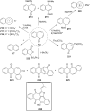
Scheme 36: Reaction of 2,3-benzotropone (12) with various reagents and compounds.

Figure 8: 3,4-Benzotropone (13) and its resonance structure.

Scheme 37: Synthesis of 6,7-benzobicyclo[3.2.0]hepta-3,6-dien-2-one (230).

Figure 9: Photolysis and thermolysis products of 230.

Figure 10: Benzotropolones and their tautomeric structures.

Scheme 38: Synthesis strategies of 4,5-benzotropolone (238).

Scheme 39: Synthesis protocol for 2-hydroxy-4,5-benzotropone (238) using oxazole-benzo[7]annulene 247.

Figure 11: Some quinoxaline and pyrazine derivatives 254–256 prepared from 4,5-benzotropolone (238).

Scheme 40: Nitration product of 4,5-benzotropolone (238) and its isomerization to 1-nitro-naphthoic acid (259)....

Scheme 41: Synthesis protocol for 6-hydroxy-2,3-benzotropone (239) from benzosuberone (162).
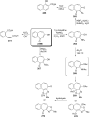
Scheme 42: Various reactions via 6-hydroxy-2,3-benzotropone (239).

Scheme 43: Photoreaction of 6-hydroxy-2,3-benzotropone (239).

Scheme 44: Synthesis of 7-hydroxy-2,3-benzotropone (241) from benzosuberone (162).

Scheme 45: Synthesis strategy for 7-hydroxy-2,3-benzotropone (241) from ketone 276.

Scheme 46: Synthesis of 7-hydroxy-2,3-benzotropone (241) from β-naphthoquinone (280).

Scheme 47: Synthesis of 7-hydroxy-2,3-benzotropone (241) from bicyclic endoperoxide 213.

Scheme 48: Synthesis of 7-hydroxy-2,3-benzotropone (241) by ring-closing metathesis.

Figure 12: Various monosubstitution products 289–291 of 7-hydroxy-2,3-benzotropone (241).

Scheme 49: Reaction of 7-hydroxy-2,3-benzotropone (241) with various reagents.

Scheme 50: Synthesis of 4-hydroxy-2,3-benzotropones 174 and 304 from diketones 300/301.

Scheme 51: Catalytic hydrogenation of diketones 300 and 174.

Scheme 52: Synthesis of halo-benzotropones from alkoxy-naphthalenes 306, 307 and 310.

Figure 13: Unexpected byproducts 313–315 during synthesis of chlorobenzotropone 309.

Figure 14: Some halobenzotropones and their cycloadducts.

Scheme 53: Multisep synthesis of 2-chlorobenzotropone 309.

Scheme 54: A multistep synthesis of 2-bromo-benzotropone 26.

Scheme 55: A multistep synthesis of bromo-2,3-benzotropones 311 and 316.

Scheme 56: Oxidation reactions of 8-bromo-5H-benzo[7]annulene (329) with some oxidants.

Scheme 57: Synthesis of 2-bromo-4,5-benzotropone (26).

Scheme 58: Synthesis of 6-chloro-2,3-benzotropone (335) using LiCl and proposed intermediate 336.

Scheme 59: Reaction of 7-bromo-2,3-benzotropone (316) with methylamine.

Scheme 60: Reactions of bromo-2,3-benzotropones 26 and 311 with dimethylamine.

Scheme 61: Reactions of bromobenzotropones 311 and 26 with NaOMe.

Scheme 62: Reactions of bromobenzotropones 26 and 312 with t-BuOK in the presence of DPIBF.

Scheme 63: Cobalt-catalyzed reductive cross-couplings of 7-bromo-2,3-benzotropone (316) with cyclic α-bromo en...

Figure 15: Cycloadduct 357 and its di-π-methane rearrangement product 358.

Scheme 64: Catalytic hydrogenation of 2-chloro-4,5-benzotropone (311).

Scheme 65: Synthesis of dibromo-benzotropones from benzotropones.

Scheme 66: Bromination/dehydrobromination of benzosuberone (162).

Scheme 67: Some transformations of isomeric dibromo-benzotropones 261A/B.

Scheme 68: Transformations of benzotropolone 239B to halobenzotropolones 369–371.

Figure 16: Bromobenzotropolones 372–376 and 290 prepared via bromination/dehydrobromination strategy.

Scheme 69: Synthesis of some halobenzotropolones 289, 377 and 378.

Figure 17: Bromo-chloro-derivatives 379–381 prepared via chlorination.

Scheme 70: Synthesis of 7-iodo-3,4-benzotropolone (382).

Scheme 71: Hydrogenation of bromobenzotropolones 369 and 370.

Scheme 72: Debromination reactions of mono- and dibromides 290 and 375.

Figure 18: Nitratation and oxidation products of some halobenzotropolenes.
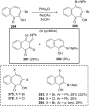
Scheme 73: Azo-coupling reactions of some halobenzotropolones 294, 375 and 378.

Figure 19: Four possible isomers of dibenzotropones 396–399.

Figure 20: Resonance structures of tribenzotropone (400).

Scheme 74: Two synthetic pathways for tribenzotropone (400).

Scheme 75: Synthesis of tribenzotropone (400) from dibenzotropone 399.

Scheme 76: Synthesis of tribenzotropone (400) from 9,10-phenanthraquinone (406).

Scheme 77: Synthesis of tribenzotropone (400) from trifluoromethyl-substituted arene 411.

Figure 21: Dibenzosuberone (414).

Figure 22: Reduction products 415 and 416 of tribenzotropone (400).

Figure 23: Structures of tribenzotropone dimethyl ketal 417 and 4-phenylfluorenone (412) and proposed intermed...

Figure 24: Structures of benzylidene- and methylene-9H-tribenzo[a,c,e][7]annulenes 419 and 420 and chiral phos...

Figure 25: Structures of tetracyclic alcohol 422, p-quinone methide 423 and cation 424.

Figure 26: Structures of host molecules 425–427.

Scheme 78: Synthesis of non-helical overcrowded derivatives syn/anti-431.

Figure 27: Hexabenzooctalene 432.

Figure 28: Structures of possible eight isomers 433–440 of naphthotropone.

Scheme 79: Synthesis of naphthotropone 437 starting from 1-phenylcycloheptene (441).

Scheme 80: Synthesis of 10-hydroxy-11H-cyclohepta[a]naphthalen-11-one (448) from diester 445.

Scheme 81: Synthesis of naphthotropone 433.

Scheme 82: Synthesis of naphthotropones 433 and 434 via cycloaddition reaction.

Scheme 83: Synthesis of naphthotropone 434 starting from 452.

Figure 29: Structures of tricarbonyl(tropone)irons 458, and possible cycloadducts 459.

Scheme 84: Synthesis of naphthotropone 436.

Scheme 85: Synthesis of precursor 465 for naphthotropone 435.

Scheme 86: Generation of naphthotropone 435 from 465.

Figure 30: Structures of tropylium cations 469 and 470.

Figure 31: Structures of tropylium ions 471+.BF4−, 472+.BF4−, and 473+.BF4−.

Scheme 87: Synthesis of tropylium ions 471+.BF4− and 479+.ClO4−.

Scheme 88: Synthesis of 1- and 2-methylanthracene (481 and 482) via carbene–carbene rearrangement.

Figure 32: Trapping products 488–490.

Scheme 89: Generation and chemistry of a naphthoannelated cycloheptatrienylidene-cycloheptatetraene intermedia...

Scheme 90: Proposed intermediates and reaction pathways for adduct 498.

Scheme 91: Exited-state intramolecular proton transfer of 505.

Figure 33: Benzoditropones 506 and 507.

Scheme 92: Synthesis of benzoditropone 506e.

Scheme 93: Synthetic approaches for dibenzotropone 507 via tropone (1).

Scheme 94: Formation mechanisms of benzoditropone 507 and 516 via 515.

Scheme 95: Synthesis of benzoditropones 525 and 526 from pyromellitic dianhydride (527).

Figure 34: Possible three benzocyclobutatropones 534–536.

Scheme 96: Synthesis of benzocyclobutatropones 534 and 539.

Scheme 97: Synthesis attempts for benzocyclobutatropone 545.

Scheme 98: Generation and trapping of symmetric benzocyclobutatropone 536.

Scheme 99: Synthesis of chloro-benzocyclobutatropone 552 and proposed mechanism of fluorenone derivatives.

Scheme 100: Synthesis of tropolone analogue 559.

Scheme 101: Synthesis of tropolones 561 and 562.

Figure 35: o/p-Tropoquinone rings (563 and 564) and benzotropoquinones (565–567).

Scheme 102: Synthesis of benzotropoquinone 566.

Scheme 103: Synthesis of benzotropoquinone 567 via a Diels–Alder reaction.

Figure 36: Products 575–577 through 1,2,3-benzotropoquinone hydrate 569.

Scheme 104: Structures 578–582 prepared from tropoquinone 567.

Figure 37: Two possible structures 583 and 584 for dibenzotropoquinone, and precursor compound 585 for 583.
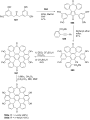
Scheme 105: Synthesis of saddle-shaped ketone 592 using dibenzotropoquinone 584.
Mechanochemistry of nucleosides, nucleotides and related materials
- Olga Eguaogie,
- Joseph S. Vyle,
- Patrick F. Conlon,
- Manuela A. Gîlea and
- Yipei Liang
Beilstein J. Org. Chem. 2018, 14, 955–970, doi:10.3762/bjoc.14.81
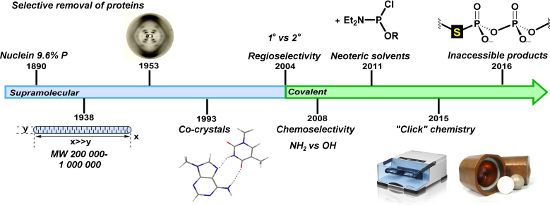
- nucleoside analogues with photoreactive materials. Thus, liquid-assisted grinding of the N-hydroxysuccinimidyl esters of o-, m- or p-phenylazobenzoic acids with excess D-threoninol or of the para isomer with an aminonucleoside in the presence of DMAP and ethyl acetate engendered chemoselective N-acylation
- -fluorouracil (5FU) and nucleoside analogue prodrugs subject to mechanochemical co-crystal or polymorph transformation. Nucleoside tritylation effected by hand grinding in a heated mortar and pestle. Persilylation of ribonucleoside hydroxy groups (and in situ acylation of cytidine) in a MBM. Nucleoside amine
- and carboxylic acid Boc protection using an improvised attritor-type mill. Nucleobase Boc protection via transient silylation using an improvised attritor-type mill. Chemoselective N-acylation of an aminonucleoside using LAG in a MBM. Azide–alkyne cycloaddition reactions performed in a copper vessel

Graphical Abstract

Figure 1: Examples of equipment used to perform mechanochemistry on nucleoside and nucleotide substrates (not...

Figure 2: Ganciclovir.

Scheme 1: Nucleoside tritylation effected by hand grinding in a heated mortar and pestle.

Scheme 2: Persilylation of ribonucleoside hydroxy groups (and in situ acylation of cytidine) in a MBM.

Scheme 3: Nucleoside amine and carboxylic acid Boc protection using an improvised attritor-type mill.

Scheme 4: Nucleobase Boc protection via transient silylation using an improvised attritor-type mill.

Scheme 5: Chemoselective N-acylation of an aminonucleoside using LAG in a MBM.

Scheme 6: Azide–alkyne cycloaddition reactions performed in a copper vessel in a MBM.

Figure 3: a) Custom-machined copper vessel and zirconia balls used to perform CuAAC reactions (showing: upper...

Scheme 7: Thiolate displacement reactions of nucleoside derivatives in a MBM.

Scheme 8: Selenocyanate displacement reactions of nucleoside derivatives in a MBM.

Scheme 9: Nucleobase glycosidation reactions and subsequent deacetylation performed in a MBM.

Scheme 10: Regioselective phosphorylation of nicotinamide riboside in a MBM.

Scheme 11: Preparation of nucleoside phosphoramidites in a MBM using ionic liquid-stabilised chlorophosphorami...

Scheme 12: Preparation of a nucleoside phosphite triester using LAG in a MBM.

Scheme 13: Internucleoside phosphate coupling linkages in a MBM.

Scheme 14: Preparation of ADPR analogues using in a MBM.

Scheme 15: Synthesis of pyrophosphorothiolate-linked dinucleoside cap analogues in a MBM to effect hydrolytic ...

Figure 4: Early low temperature mechanised ball mill as described by Mudd et al. – adapted from reference [78].

Scheme 16: Co-crystal grinding of alkylated nucleobases in an amalgam mill (N.B. no frequency was recorded in ...

Figure 5: Materials used to prepare a smectic phase.

Figure 6: Structures of 5-fluorouracil (5FU) and nucleoside analogue prodrugs subject to mechanochemical co-c...

Scheme 17: Preparation of DNA-SWNT complex in a MBM.
Synthesis and in vitro biochemical evaluation of oxime bond-linked daunorubicin–GnRH-III conjugates developed for targeted drug delivery
- Sabine Schuster,
- Beáta Biri-Kovács,
- Bálint Szeder,
- Viktor Farkas,
- László Buday,
- Zsuzsanna Szabó,
- Gábor Halmos and
- Gábor Mező
Beilstein J. Org. Chem. 2018, 14, 756–771, doi:10.3762/bjoc.14.64
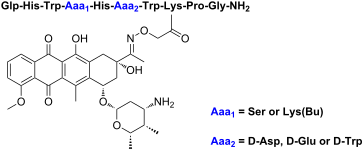
- breast adenocarcinoma cancer cells (MCF-7) and on hormone independent human colon carcinoma cells (HT-29) were analyzed [22][25][27][28]. Thereby, it has been exposed, that an exchange of 4Ser by 4Lys followed by acylation of the ε-amino group with short chain fatty acids (SCFA) improved the cellular

Graphical Abstract

Scheme 1: Syntheses of GnRH-III–[(4Lys(Bu)/4Ser, 6Aaa, 8Lys(Dau=Aoa)] bioconjugates. a) (1) 2% hydrazine in D...

Figure 1: Far-UV ECD spectra of GnRH-III and its drug conjugates in water (GnRH-III solid, K1 dash, K2 dot, 1...

Figure 2: Degradation of the GnRH-III bioconjugates by rat liver lysosomal homogenate. A) Cleavage sites prod...

Figure 3: Cytostatic effect of the GnRH-III bioconjugates at different concentrations on A) HT-29 and B) MCF-...

Figure 4: Cellular uptake of the GnRH-III bioconjugates at different concentrations on A) HT-29 and B) MCF-7 ...
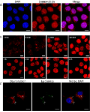
Figure 5: Cellular uptake of bioconjugate K2 (40 µM) visualized by confocal laser scanning microscopy (CLSM) ...

Figure 6: Competitive inhibition of the GnRH-R on MCF-7 cells. Cellular uptake of the GnRH-III bioconjugate K2...
Enzyme-free genetic copying of DNA and RNA sequences
- Marilyne Sosson and
- Clemens Richert
Beilstein J. Org. Chem. 2018, 14, 603–617, doi:10.3762/bjoc.14.47
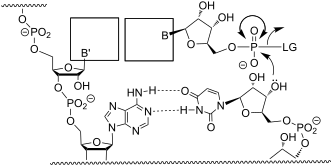
- small heterocycles, such as pyridine, can increase the rate of the reaction [60]. Most probably, this effect was organocatalytic in nature, being caused by a pyridinium species that forms in the reaction medium, an effect known from the acceleration of DCC-induced acylation reactions with

Graphical Abstract

Figure 1: Enzyme-free template-directed extension of an RNA primer by one nucleotide. B = nucleobase, LG = le...

Figure 2: Oligomerization of the 2-methylimidazolide of guanosine-5'-monophosphate on a poly(C) template.

Figure 3: Structures of backbone linkages produced in enzyme-free primer extension reactions: the phosphorami...

Figure 4: System used for studying the template effect with all 64 possible triplets at the extension site (B...

Figure 5: Interactions attracting the incoming nucleotide to the extension site. Besides base pairing via hyd...

Figure 6: Three possible fates of activated nucleotides in aqueous buffer that result from hydrolysis, primer...

Figure 7: Steps and equilibria considered in our quantitative model of chemical primer extension [34]. The model ...

Figure 8: Binding equilibrium between mononucleotides and hairpins representing primer–template duplexes, as ...

Figure 9: Template-directed primer extension on an RNA template performed with OAt-GMP at 1.8 mM (orange), 3....

Figure 10: Copying of four nucleotides on an immobilized RNA duplex, as reported by Deck et al. [32].

Figure 11: Extension cycle of aminoterminal primer with N-protected nucleotides on solid support, as described...

Figure 12: Formation of a highly reactive methylimidazolium bisphosphate from methylimidazolides of nucleotide...

Figure 13: 31P NMR spectrum (161.9 MHz) of crude MeIm-GMP in D2O. The resonance of the imidazolium bisphosphat...

Figure 14: Imidazolium bisphosphate as intermediate in the primer extension reaction, as described by Szostak ...

Figure 15: Proposed steps of enzyme-free primer extension with in situ activation, using the "general condensa...
Aminosugar-based immunomodulator lipid A: synthetic approaches
- Alla Zamyatina
Beilstein J. Org. Chem. 2018, 14, 25–53, doi:10.3762/bjoc.14.3
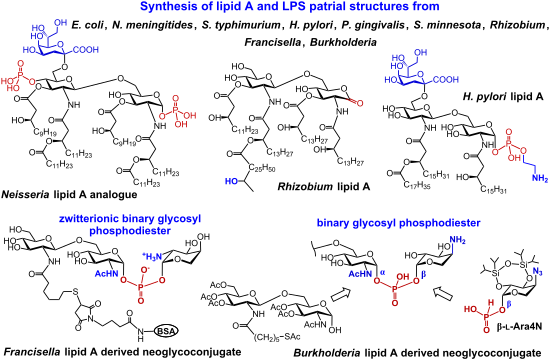
- content of LPS comprises a complex mixture of structural homologs varying in the acylation pattern, the length of the (R)-3-hydroxyacyl- and (R)-3-acyloxyacyl long-chain residues and in the phosphorylation status of the β(1→6)-linked diglucosamine backbone. The structural heterogeneity of the lipid A
- lengths usually comprising 12–16 carbon atoms [16][17]. The endotoxic activity of lipid A depends on numerous factors such as acylation and phosphorylation pattern [18], the length of lipid chains, and the tertiary 3D structure of the MD-2 bound βGlcN(1→6)GlcN backbone [19][20]. The most profoundly
- 4B) [42][64]. Thus, lipid A directly participates in the formation of an active multimeric ligand–receptor complex, whereas the tightness and efficiency of dimerization strongly depends on specific structural characteristics such as the acylation pattern and the number of negative charges (e.g

Graphical Abstract

Figure 1: (A) Gram-negative bacterial membrane with LPS as major component of the outer membrane; (B) structu...
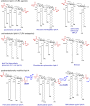
Figure 2: Structures of representative TLR4 ligands: TLR4 agonists (E. coli lipid A, N. meningitidis lipid A ...

Figure 3: (A) Co-crystal structure of the homodimeric E. coli Ra-LPS·hMD-2∙TLR4 complex (PDB code: 3FXI); (B)...

Figure 4: Co-crystal structures of (A) hybrid TLR4·hMD-2 with the bound antagonist eritoran (PDB: 2Z65, TLR4 ...

Scheme 1: Synthesis of E. coli and S. typhimurium lipid A and analogues with shorter acyl chains.

Scheme 2: Synthesis of N. meningitidis Kdo-lipid A.

Scheme 3: Synthesis of fluorescently labeled E. coli lipid A.
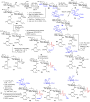
Scheme 4: Synthesis of H. pylori lipid A and Kdo-lipid A.

Scheme 5: Synthesis of tetraacylated lipid A corresponding to P. gingivalis LPS.

Scheme 6: Synthesis of pentaacylated P. gingivalis lipid A.

Scheme 7: Synthesis of monophosphoryl lipid A (MPLA) and analogues.

Scheme 8: Synthesis of tetraacylated Rhizobium lipid A containing aminogluconate moiety.

Scheme 9: Synthesis of pentaacylated Rhizobium lipid A and its analogue containing ether chain.

Scheme 10: Synthesis of pentaacylated Rhizobium lipid A containing 27-hydroxyoctacosanoate lipid chain.

Scheme 11: Synthesis of zwitterionic 1,1′-glycosyl phosphodiester: a partial structure of GalN-modified Franci...

Scheme 12: Synthesis of a binary 1,1′-glycosyl phosphodiester: a partial structure of β-L-Ara4N-modified Burkh...
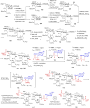
Scheme 13: Synthesis of Burkholderia lipid A containing binary glycosyl phosphodiester linked β-L-Ara4N.
Vinylphosphonium and 2-aminovinylphosphonium salts – preparation and applications in organic synthesis
- Anna Kuźnik,
- Roman Mazurkiewicz and
- Beata Fryczkowska
Beilstein J. Org. Chem. 2017, 13, 2710–2738, doi:10.3762/bjoc.13.269

- synthesis of resonance-stabilized phosphorus ylides 81 (Scheme 51). The obtained ylides underwent further cyclization by the intramolecular acylation of the primary amino group to give the final bicyclic products 82 in 85–90% yields [67]. The synthesis of resonance-stabilized phosphorus ylides via the

Graphical Abstract

Scheme 1: Generation of phosphorus ylides from vinylphosphonium salts.

Scheme 2: Intramolecular Wittig reaction with the use of vinylphosphonium salts.

Scheme 3: Alkylation of diphenylvinylphosphine with methyl or benzyl iodide.

Scheme 4: Methylation of isopropenyldiphenylphosphine with methyl iodide.

Scheme 5: Alkylation of phosphines with allyl halide derivatives and subsequent isomerization of intermediate...

Scheme 6: Alkylation of triphenylphosphine with vinyl triflates in the presence of (Ph3P)4Pd.

Scheme 7: Mechanism of alkylation of triphenylphosphine with vinyl triflates in the presence of (Ph3P)4Pd as ...

Scheme 8: β-Elimination of phenol from β-phenoxyethyltriphenylphosphonium bromide.

Scheme 9: β-Elimination of phenol from β-phenoxyethylphosphonium salts in an alkaline environment.

Scheme 10: Synthesis and subsequent dehydrohalogenation of α-bromoethylphosphonium bromide.

Scheme 11: Synthesis of tributylvinylphosphonium iodides via Peterson-type olefination of α-trimethylsilylphos...

Scheme 12: Synthesis of 1-cycloalkenetriphenylphosphonium salts by electrochemical oxidation of triphenylphosp...

Scheme 13: Suggested mechanism for the electrochemical synthesis of 1-cycloalkenetriphenylphosphonium salts.

Scheme 14: Generation of α,β-(dialkoxycarbonyl)vinylphosphonium salts by addition of triphenylphosphine to ace...

Scheme 15: Synthesis of 2-(N-acylamino)vinylphosphonium halides by imidoylation of β-carbonyl ylides with imid...

Scheme 16: Imidoylation of β-carbonyl ylides with imidoyl halides generated in situ.

Scheme 17: Synthesis of 2-benzoyloxyvinylphosphonium bromide from 2-propynyltriphenylphosphonium bromide.

Scheme 18: Synthesis of 2-aminovinylphosphonium salts via nucleophilic addition of amines to 2-propynyltriphen...

Scheme 19: Deacylation of 2-(N-acylamino)vinylphosphonium chlorides to 2-aminovinylphosphonium salts.

Scheme 20: Resonance structures of 2-aminovinylphosphonium salts and tautomeric equilibrium between aminovinyl...

Scheme 21: Synthesis of 2-aminovinylphosphonium salts by reaction of (formylmethyl)triphenylphosphonium chlori...

Scheme 22: Generation of ylides by reaction of vinyltriphenylphosphonium bromide with nucleophiles and their s...

Scheme 23: Intermolecular Wittig reaction with the use of vinylphosphonium bromide and organocopper compounds ...

Scheme 24: Intermolecular Wittig reaction with the use of ylides generated from vinylphosphonium bromides and ...

Scheme 25: Direct transformation of vinylphosphonium salts into ylides in the presence of potassium tert-butox...

Scheme 26: A general method for synthesis of carbo- and heterocyclic systems by the intramolecular Wittig reac...

Scheme 27: Synthesis of 2H-chromene by reaction of vinyltriphenylphosphonium bromide with sodium 2-formylpheno...

Scheme 28: Synthesis of 2,5-dihydro-2,3-dimethylfuran by reaction of vinylphosphonium bromide with 3-hydroxy-2...

Scheme 29: Synthesis of 2H-chromene and 2,5-dihydrofuran derivatives in the intramolecular Wittig reaction wit...

Scheme 30: Enantioselective synthesis of 3,6-dihydropyran derivatives from vinylphosphonium bromide and enanti...

Scheme 31: Synthesis of 2,5-dihydrothiophene derivatives in the intramolecular Wittig reaction from vinylphosp...

Scheme 32: Synthesis of bicyclic pyrrole derivatives in the reaction of vinylphosphonium halides and 2-pyrrolo...

Scheme 33: Stereoselective synthesis of bicyclic 2-pyrrolidinone derivatives in the reaction of vinylphosphoni...

Scheme 34: Stereoselective synthesis of 3-pyrroline derivatives in the intramolecular Wittig reaction from vin...

Scheme 35: Synthesis of cyclic alkenes in the intramolecular Wittig reaction from vinylphosphonium bromide and...

Scheme 36: Synthesis of 1,3-cyclohexadienes by reaction of 1,3-butadienyltriphenylphosphonium bromide with eno...

Scheme 37: Synthesis of bicyclo[3.3.0]octenes by reaction of vinylphosphonium salts with cyclic diketoester.

Scheme 38: Synthesis of quinoline derivatives in the intramolecular Wittig reaction from 2-(2-acylphenylamino)...

Scheme 39: Stereoselective synthesis of γ-aminobutyric acid in the intermolecular Wittig reaction from chiral ...

Scheme 40: Synthesis of allylamines in the intermolecular Wittig reaction from 2-aminovinylphosphonium bromide...

Scheme 41: A general route towards α,β-di(alkoxycarbonyl)vinylphosphonium salts and their subsequent possible ...

Scheme 42: Generation of resonance-stabilized phosphorus ylides via the reaction of triphenylphosphine with di...

Scheme 43: Synthesis of resonance-stabilized phosphorus ylides in the reaction of triphenylphosphine, dialkyl ...

Scheme 44: Synthesis of resonance-stabilized phosphorus ylides via the reaction of triphenylphosphine with dia...

Scheme 45: Generation of resonance-stabilized phosphorus ylides in the reaction of acetylenedicarboxylate, tri...

Scheme 46: Synthesis of resonance-stabilized phosphorus ylides via the reaction of dialkyl acetylenedicarboxyl...

Scheme 47: Synthesis of resonance-stabilized ylides derived from semicarbazones, aromatic amides, and 3-(aryls...

Scheme 48: Synthesis of resonance-stabilized ylides via the reaction of triphenylphosphine with dialkyl acetyl...

Scheme 49: Synthesis of resonance-stabilized ylides in the reaction of triphenylphosphine, dialkyl acetylenedi...

Scheme 50: Synthesis of N-acylated α,β-unsaturated γ-lactams via resonance-stabilized phosphorus ylides derive...

Scheme 51: Synthesis of resonance-stabilized phosphorus ylides derived from 6-amino-N,N'-dimethyluracil and th...

Scheme 52: Generation of resonance-stabilized phosphorus ylides in the reaction of triphenylphosphine, dialkyl...

Scheme 53: Synthesis of resonance-stabilized phosphorus ylides via the reaction of triphenylphosphine with dia...

Scheme 54: Synthesis of 1,3-dienes via intramolecular Wittig reaction with the use of resonance-stabilized yli...

Scheme 55: Synthesis of 1,3-dienes in the intramolecular Wittig reaction from ylides generated from dimethyl a...

Scheme 56: Synthesis of 4-(2-quinolyl)cyclobutene-1,2,3-tricarboxylic acid triesters and isomeric cyclopenteno...

Scheme 57: Synthesis of 4-arylquinolines via resonance-stabilized ylides in the intramolecular Wittig reaction....

Scheme 58: Synthesis of furan derivatives via resonance-stabilized ylides in the intramolecular Wittig reactio...

Scheme 59: Synthesis of 1,3-indanedione derivatives via resonance-stabilized ylides in the intermolecular Witt...

Scheme 60: Synthesis of coumarin derivatives via nucleophilic displacement of the triphenylphosphonium group i...

Scheme 61: Synthesis of 6-formylcoumarin derivatives and their application in the synthesis of dyads.

Scheme 62: Synthesis of di- and tricyclic coumarin derivatives in the reaction of pyrocatechol with two vinylp...

Scheme 63: Synthesis of mono-, di-, and tricyclic derivatives in the reaction of pyrogallol with one or two vi...

Scheme 64: Synthesis of 1,4-benzoxazine derivative by nucleophilic displacement of the triphenylphosphonium gr...

Scheme 65: Synthesis of 7-oxo-7H-pyrido[1,2,3-cd]perimidine derivative via nucleophilic displacement of the tr...

Scheme 66: Application of vinylphosphonium salts in the Diels–Alder reaction with dienes.

Scheme 67: Synthesis of pyrroline derivatives from vinylphosphonium bromide and 5-(4H)-oxazolones.

Scheme 68: Synthesis of pyrrole derivatives in the reactions of vinyltriphenylphosphonium bromide with protona...

Scheme 69: Synthesis of dialkyl 2-(alkylamino)-5-aryl-3,4-furanedicarboxylates via intermediate α,β-di(alkoxyc...

Scheme 70: Synthesis of 1,4-benzoxazine derivatives from acetylenedicarboxylates, phosphines, and 1-nitroso-2-...
A Brønsted base-promoted diastereoselective dimerization of azlactones
- Danielle L. J. Pinheiro,
- Gabriel M. F. Batista,
- Pedro P. de Castro,
- Leonã S. Flores,
- Gustavo F. S. Andrade and
- Giovanni W. Amarante
Beilstein J. Org. Chem. 2017, 13, 2663–2670, doi:10.3762/bjoc.13.264

- and Mannich acceptors [20][21][22][23]. Enolate anions derived from azlactone are effective intermediates for the functionalization of α-amino acids. However, the acylation of the enolate ion by another azlactone has been less reported in the literature [24][25][26]. This transformation affords an

Graphical Abstract

Figure 1: Structure of an azlactone dimer.
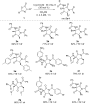
Scheme 1: Diastereoselective dimerization of azlactones. Reactions were carried out using 0.45 mmol of 1 and ...

Figure 2: X-ray crystallographic structure of 2a (30% ellipsoids probability).

Scheme 2: Sterically bulky azlactone enol derivatives.
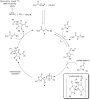
Figure 3: Plausible mechanism for the dimerization of azlactone.

Figure 4:
Plot of ![[Graphic 5]](/bjoc/content/inline/1860-5397-13-264-i10.svg?max-width=637&scale=1.18182) vs time for the dimerization of azlactone 1a.
vs time for the dimerization of azlactone 1a.

Scheme 3: Reduction of 2c.
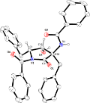
Figure 5: X-ray crystallographic structure of 6 (30% ellipsoids probability).
Recent progress in the racemic and enantioselective synthesis of monofluoroalkene-based dipeptide isosteres
- Myriam Drouin and
- Jean-François Paquin
Beilstein J. Org. Chem. 2017, 13, 2637–2658, doi:10.3762/bjoc.13.262
- the asymmetric synthesis of a monofluoroalkene using a chiral auxiliary (Scheme 13) [43]. The synthesis started with the alcohol protection of known compound 65 followed by chiral auxiliary removal and acylation of the resulting carboxylic acid. A HWE olefination was performed in two steps on 66 to

Graphical Abstract

Figure 1: Selected amide bond isosteres.

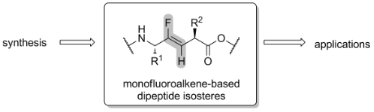
Figure 2: Monofluoroalkene as an amide bond isostere.

Scheme 1: Synthesis of Cbz-Gly-ψ[(Z)-CF=CH]-Gly using a HWE olefination by Sano and co-workers.

Scheme 2: Synthesis of Phth-Gly-ψ[CF=CH]-Gly using the Julia–Kocienski olefination by Lequeux and co-workers.

Scheme 3: Synthesis of Boc-Nva-ψ[(Z)-CF=CH]-Gly by Taguchi and co-workers.

Figure 3: Mutant tripeptide containing two different peptide bond isosteres.

Scheme 4: Chromium-mediated synthesis of Boc-Ser(PMB)-ψ[(Z)-CF=CH]-Gly-OMe by Konno and co-workers.

Scheme 5: Synthesis of Cbz-Gly-ψ[(E)-CF=C]-Pro by Sano and co-workers.

Scheme 6: Synthesis of Cbz-Gly-ψ[(Z)-CF=C]-Pro by Sano and co-workers.

Scheme 7: Stereoselective synthesis of Fmoc-Gly-ψ[(Z)-CF=CH]-Phe by Pannecoucke and co-workers.

Scheme 8: Ring-closure metathesis to prepare Gly-ψ[(E)-CF=CH]-Phg by Couve-Bonnaire and co-workers.

Scheme 9: Stereoselective synthesis of Fmoc-Gly-ψ[(Z)-CF=CH]-Phe by Dory and co-workers.

Scheme 10: Diastereoselective addition of Grignard reagents to sulfinylamines derived from α-fluoroenals by Pa...

Scheme 11: NHC-mediated synthesis of monofluoroalkenes by Otaka and co-workers.

Scheme 12: Stereoselective synthesis of Boc-Tyr-ψ[(Z)-CF=CH]-Gly by Altman and co-workers.

Scheme 13: Synthesis of the tripeptide Boc-Asp(OBn)-Pro-ψ[(Z)-CF=CH)-Val-CH2OH by Miller and co-workers.

Scheme 14: Copper-catalyzed synthesis of monofluoralkenes by Taguchi and co-workers.

Scheme 15: One-pot intramolecular redox reaction to access amide-type isosteres by Otaka and co-workers.

Scheme 16: Copper-mediated reduction, transmetalation and asymmetric alkylation by Fujii and co-workers.

Scheme 17: Synthesis of (E)-monofluoroalkene-based dipeptide isostere by Fujii and co-workers.

Scheme 18: Diastereoselective synthesis of MeOCO-Val-ψ[(Z)-CF=C]-Pro isostere by Chang and co-workers.

Scheme 19: Asymmetric synthesis of Fmoc-Ala-ψ[(Z)-CF=C]-Pro by Pannecoucke and co-workers.

Scheme 20: Synthesis of Fmoc-Val-ψ[(E)-CF=C]-Pro by Pannecoucke and co-workers.

Figure 4: BMS-790052 and its fluorinated analogue.

Figure 5: Bioactivities of pentapeptide analogues based on the relative maximum agonistic activity at 10 nM o...

Figure 6: Structures and affinities of the Leu-enkephalin and its fluorinated analogue. The affinity towards ...

Figure 7: Activation of the opioid receptor DOPr by Leu-enkephaline and a fluorinated analogue.
Conjugated nitrosoalkenes as Michael acceptors in carbon–carbon bond forming reactions: a review and perspective
- Yaroslav D. Boyko,
- Valentin S. Dorokhov,
- Alexey Yu. Sukhorukov and
- Sema L. Ioffe
Beilstein J. Org. Chem. 2017, 13, 2214–2234, doi:10.3762/bjoc.13.220
- -hydroxytryptophan derivative 79 using aminolysis and reduction with (CH3)3N·BH3 complex [47][49][69]. Acylation of 79 with pyruvoyl chloride gave amide 80, which was converted into dioxopiperazine 81 upon the action of trifluoroacetic acid. Subsequent water elimination furnished the title neoechinulin B analogue 77

Graphical Abstract

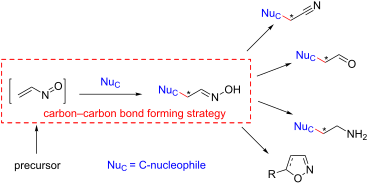
Scheme 1: Precursors of nitrosoalkenes NSA.

Scheme 2: Reactions of cyclic α-chlorooximes 1 with 1,3-dicarbonyl compounds.

Scheme 3: C-C-coupling of N,N-bis(silyloxy)enamines 3 with 1,3-dicarbonyl compounds.

Scheme 4: Reaction of N,N-bis(silyloxy)enamines 3 with nitronate anions.

Scheme 5: Reaction of α-chlorooximes TBS ethers 2 with ester enolates.

Scheme 6: Assembly of bicyclooctanone 14 via an intramolecular cyclization of nitrosoalkene NSA2.

Scheme 7: A general strategy for the assembly of bicyclo[2.2.1]heptanes via an intramolecular cyclization of ...

Scheme 8: Stereochemistry of Michael addition to cyclic nitrosoalkene NSA3.

Scheme 9: Stereochemistry of Michael addition to acyclic nitrosoalkenes NSA4.

Scheme 10: Stereochemistry of Michael addition to γ-alkoxy nitrosoalkene NSA5.

Scheme 11: Oppolzer’s total synthesis of 3-methoxy-9β-estra(1,3,5(10))trien(11,17)dione (25).

Scheme 12: Oppolzer’s total synthesis of (+/−)-isocomene.

Figure 1: Alkaloids synthesized using stereoselective Michael addition to conjugated nitrosoalkenes.

Scheme 13: Weinreb’s total synthesis of alstilobanines A, E and angustilodine.

Scheme 14: Weinreb’s approach to the core structure of apparicine alkaloids.

Scheme 15: Weinreb’s synthesis of (+/−)-myrioneurinol via stereoselective conjugate addition of malonate to ni...

Scheme 16: Reactions of cyclic α-chloro oximes with Grignard reagents.

Scheme 17: Corey’s synthesis of (+/−)-perhydrohistrionicotoxin.

Scheme 18: Addition of Gilman’s reagents to α,β-epoxy oximes 53.

Scheme 19: Addition of Gilman’s reagents to α-chlorooximes.

Scheme 20: Reaction of silyl nitronate 58 with organolithium reagents via nitrosoalkene NSA12.

Scheme 21: Reaction of β-ketoxime sulfones 61 and 63 with lithium acetylides.

Scheme 22: Electrophilic addition of nitrosoalkenes NSA14 to electron-rich arenes.

Scheme 23: Addition of nitrosoalkenes NSA14 to pyrroles and indoles.

Scheme 24: Reaction of phosphinyl nitrosoalkenes NSA15 with indole.

Scheme 25: Reaction of pyrrole with α,α’-dihalooximes 70.

Scheme 26: Synthesis of indole-derived psammaplin A analogue 72.

Scheme 27: Synthesis of tryptophanes by reduction of oximinoalkylated indoles 68.

Scheme 28: Ottenheijm’s synthesis of neoechinulin B analogue 77.

Scheme 29: Synthesis of 1,2-dihydropyrrolizinones 82 via addition of pyrrole to ethyl bromopyruvate oxime.

Scheme 30: Kozikowski’s strategy to indolactam-based alkaloids via addition of indoles to ethyl bromopyruvate ...

Scheme 31: Addition of cyanide anion to nitrosoalkenes and subsequent cyclization to 5-aminoisoxazoles 86.

Scheme 32: Et3N-catalysed addition of trimethylsilyl cyanide to N,N-bis(silyloxy)enamines 3 leading to 5-amino...

Scheme 33: Addition of TMSCN to allenyl N-siloxysulfonamide 89.

Scheme 34: Reaction of nitrosoallenes NSA16 with malodinitrile and ethyl cyanoacetic ester.

Scheme 35: [4 + 1]-Annulation of nitrosoalkenes NSA with sulfonium ylides 92.

Scheme 36: Reaction of diazo compounds 96 with nitrosoalkenes NSA.

Scheme 37: Tandem Michael addition/oxidative cyclization strategy to isoxazolines 100.
Enzymatic separation of epimeric 4-C-hydroxymethylated furanosugars: Synthesis of bicyclic nucleosides
- Neha Rana,
- Manish Kumar,
- Vinod Khatri,
- Jyotirmoy Maity and
- Ashok K. Prasad
Beilstein J. Org. Chem. 2017, 13, 2078–2086, doi:10.3762/bjoc.13.205
- hydroxy groups present in different sugars and sugar moieties of synthetic or naturally occurring glycosides, nucleosides, etc. Gotor et al. [11] have reported a lipase-mediated acylation of an equimolecular mixture of D/L-thymidine with acetonoxime levulinate as acylating agent and Pseudomonas cepacia

Graphical Abstract

Scheme 1: Formation of a 1:1 epimeric mixture of 3a and 3b.

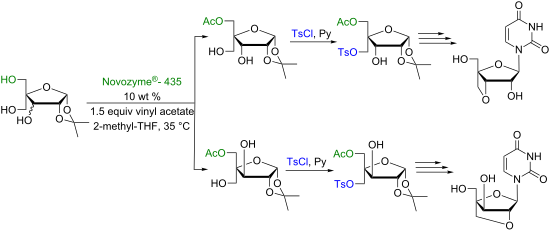
Scheme 2: Lipase-catalysed separation of a mixture of ribo- and xylotrihydroxyfuranosides.

Figure 1: Screening of Novozyme®-435 and Lipozyme TL IM in different organic solvents at 35 °C for regioselec...

Figure 2: ORTEP diagram of tosylated sugar derivatives 5 and 10.

Scheme 3: Convergent synthesis of 3′-O,4′-C-methyleneuridine.

Scheme 4: Convergent synthesis of 2′-O,4′-C-methylene-xylouridine.

Figure 3: ORTEP diagram and preferential N-type sugar ring puckering of 2′-O,4′-C-methylene-xylouridine (14).
NHC-catalyzed cleavage of vicinal diketones and triketones followed by insertion of enones and ynones
- Ken Takaki,
- Makoto Hino,
- Akira Ohno,
- Kimihiro Komeyama,
- Hiroto Yoshida and
- Hiroshi Fukuoka
Beilstein J. Org. Chem. 2017, 13, 1816–1822, doi:10.3762/bjoc.13.176
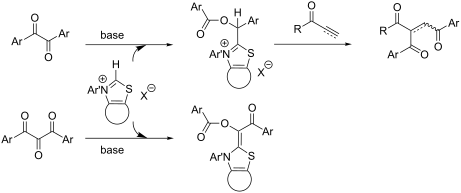
- -diketones and 1,2,3-triketones with enones and ynones have been investigated. The diketones gave α,β-double acylation products via unique Breslow intermediates isolable as acid salts, whereas the triketones formed stable adducts with the NHC instead of the coupling products. Keywords: Breslow intermediate
- = C(O)R1) reacted with enones III in the presence of thiazolium carbene catalysts to give double acylation products IV in good yields [15]. If enones can be replaced by ynones III in the reaction with benzils, alkenes IV having three acyl moieties would be formed directly. Related products were
- recently obtained by the dimsyl anion-promoted double acylation of enones with benzils, followed by dehydrogenation of the resulting alkanes in one pot [16]. Moreover, if the reaction of cyclic 1,2-diketone I (G = C(O)R1) with activated alkenes may take place similarly, this reaction could be utilized as a

Graphical Abstract

Scheme 1: Reaction process.

Figure 1: ORTEP drawing of Z-4ai.

Scheme 2: Reaction mechanism.

Scheme 3: Isomerization of the stereochemistry of 4ai.

Scheme 4: Reaction of cycloalkane-1,2-diones with phenyl vinyl ketone (6a).

Scheme 5: Preparation and reactivity of the bisacylated Breslow intermediate 10.
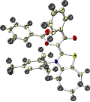
Figure 2: ORTEP drawing of 10.

Scheme 6: Preparation of the iminium salt 12 and its reactivity.

Scheme 7: Resting state of the monoacylated Breslow intermediate C.
Mechanochemical enzymatic resolution of N-benzylated-β3-amino esters
- Mario Pérez-Venegas,
- Gloria Reyes-Rangel,
- Adrián Neri,
- Jaime Escalante and
- Eusebio Juaristi
Beilstein J. Org. Chem. 2017, 13, 1728–1734, doi:10.3762/bjoc.13.167

- applications on a large scale [45][46]. Very recently, Hernández, Frings, and Bolm developed a method to carry out the kinetic resolution of secondary alcohols through selective acylation using Candida antarctica lipase B, under solvent-free ball-milling conditions [47][48]. Inspired by this ground-breaking

Graphical Abstract

Scheme 1: Enantioselective enzymatic hydrolysis of racemic β3-amino ester rac-1a using CALB in solution [52] (top...

Figure 1: X-ray crystallographic structure of product (R)-2a (50% of probability ellipsoids). CCDC registry n...
The chemistry and biology of mycolactones
- Matthias Gehringer and
- Karl-Heinz Altmann
Beilstein J. Org. Chem. 2017, 13, 1596–1660, doi:10.3762/bjoc.13.159
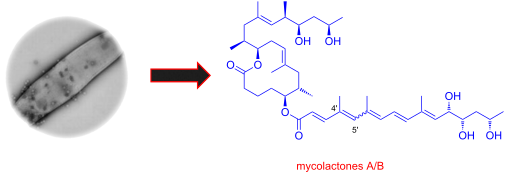

Graphical Abstract

Figure 1: Initial proposal for the core macrolactone structure (left) and the established complete structure ...
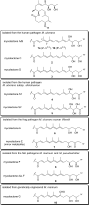
Figure 2: Mycolactone congeners and their origins.

Figure 3: Misassigned mycolactone E structure according to Small et al. [50] (11) and the correct structure (6) f...

Figure 4: Schematic illustration of Kishi’s improved mycolactone TLC detection method exploiting derivatizati...

Figure 5: Fluorescent probes derived from natural mycolactone A/B (1a,b) or its synthetic 8-desmethyl analogs...

Figure 6: Tool compounds used by Pluschke and co-workers for elucidating the molecular targets of mycolactone...

Figure 7: Synthetic strategies towards the extended mycolactone core. A) General strategies. B) Kishi’s appro...

Scheme 1: Kishi’s 1st generation approach towards the extended core structure of mycolactones. Reagents and c...

Scheme 2: Kishi’s 2nd generation approach towards the extended core structure of mycolactones. Reagents and c...

Scheme 3: Kishi’s 3rd generation approach towards the extended core structure of mycolactones. Reagents and c...

Scheme 4: Negishi’s synthesis of the extended core structure of mycolactones. Reagents and conditions: a) (i) ...

Scheme 5: Burkart’s (incomplete) 1st generation approach towards the extended core structure of mycolactones....
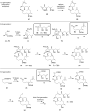
Scheme 6: Burkart’s (incomplete) 1st, 2nd and 3rd generation approach towards the extended mycolactone core s...

Scheme 7: Altmann’s synthesis of alkyl iodide 91. Reagents and conditions: a) (i) PMB-trichloroacetimidate, T...

Scheme 8: Final steps of Altmann’s synthesis of the extended core structure of mycolactones. Reagents and con...

Scheme 9: Basic principles of the Aggarwal lithiation–borylation homologation process [185,186].

Scheme 10: Aggarwal’s synthesis of the C1–C11 fragment of the mycolactone core. Reagents and conditions: a) Cl...

Scheme 11: Aggarwal’s synthesis of the linear C1–C20 fragment of the mycolactone core. Reagents and conditions...

Figure 8: Synthetic strategies towards the mycolactone A/B lower side chain.

Scheme 12: Gurjar and Cherian’s synthesis of the C1’–C8’ fragment of the mycolactone A/B pentaenoate side chai...

Scheme 13: Gurjar and Cherian’s synthesis of the benzyl-protected mycolactone A/B pentaenoate side chain. Reag...

Scheme 14: Kishi’s synthesis of model compounds for elucidating the stereochemistry of the C7’–C16’ fragment o...

Scheme 15: Kishi’s synthesis of the mycolactone A/B pentaenoate side chain. (a) (i) NaH, (EtO)2P(O)CH2CO2Et, T...

Scheme 16: Feringa and Minnaard's incomplete synthesis of mycolactone A/B pentaenoate side chain. Reagents and...

Scheme 17: Altmann’s approach towards the mycolactone A/B pentaenoate side chain. Reagents and conditions: a) ...

Scheme 18: Negishi’s access to the C1’–C7’ fragment of mycolactone A. Reagents and conditions: a) (i) n-BuLi, ...

Scheme 19: Negishi’s approach to the C1’–C7’ fragment of mycolactone B. Reagents and conditions: a) (i) DIBAL-...

Scheme 20: Negishi’s synthesis of the C8’–C16’ fragment of mycolactone A/B. Reagents and conditions: a) 142, BF...

Scheme 21: Negishi’s assembly of the mycolactone A and B pentaenoate side chains. Reagents and conditions: a) ...

Scheme 22: Blanchard’s approach to the mycolactone A/B pentaenoate side chain. a) (i) Ph3P=C(Me)COOEt, CH2Cl2,...

Scheme 23: Kishi’s approach to the mycolactone C pentaenoate side chain exemplified for the 13’R,15’S-isomer 1...

Scheme 24: Altmann’s (unpublished) synthesis of the mycolactone C pentaenoate side chain. Reagents and conditi...

Scheme 25: Blanchard’s synthesis of the mycolactone C pentaenoate side chain. Reagents and conditions: a) (i) ...

Scheme 26: Kishi’s synthesis of the tetraenoate side chain of mycolactone F exemplified by enantiomer 165. Rea...

Scheme 27: Kishi’s synthesis of the mycolactone E tetraenoate side chain. Reagents and conditions: a) (i) CH2=...

Scheme 28: Wang and Dai’s synthesis of the mycolactone E tetraenoate side chain. Reagents and conditions: a) (...

Scheme 29: Kishi’s synthesis of the dithiane-protected tetraenoate side chain of the minor oxo-metabolite of m...

Scheme 30: Kishi’s synthesis of the mycolactone S1 and S2 pentaenoate side chains. Reagents and conditions: a)...

Scheme 31: Kishi’s 1st generation and Altmann’s total synthesis of mycolactone A/B (1a,b) and Negishi’s select...

Scheme 32: Kishi’s 2nd generation total synthesis of mycolactone A/B (1a,b). Reagents and conditions: a) 2,4,6...

Scheme 33: Blanchard’s synthesis of the 8-desmethylmycolactone core. Reagents and conditions: a) (i) TsCl, TEA...

Scheme 34: Altmann’s (partially unpublished) synthesis of the C20-hydroxylated mycolactone core. Reagents and ...

Scheme 35: Altmann’s and Blanchard’s approaches towards the 11-isopropyl-8-desmethylmycolactone core. Reagents...

Scheme 36: Blanchard’s synthesis of the saturated variant of the C11-isopropyl-8-desmethylmycolactone core. Re...

Scheme 37: Structure elucidation of photo-mycolactones generated from tetraenoate 224.

Scheme 38: Kishi’s synthesis of the linear precursor of the photo-mycolactone B1 lower side chain. Reagents an...

Scheme 39: Kishi’s synthesis of the photo-mycolactone B1 lower side chain. Reagents and conditions: a) LiTMP, ...

Scheme 40: Kishi’s synthesis of a stabilized lower mycolactone side chain. Reagents and conditions: a) (i) TBD...
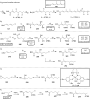
Scheme 41: Blanchard’s variation of the C12’,C13’,C15’ stereocluster. Reagents and conditions: a) (i) DIBAL-H,...

Scheme 42: Blanchard’s synthesis of aromatic mycolactone polyenoate side chain analogs. Reagents and condition...

Scheme 43: Small’s partial synthesis of a BODIPY-labeled mycolactone derivative and Demangel’s partial synthes...

Scheme 44: Blanchard’s synthesis of the BODIPY-labeled 8-desmethylmycolactones. Reagents and conditions: a) (i...
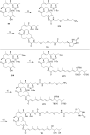
Scheme 45: Altmann’s synthesis of biotinylated mycolactones. Reagents and conditions: a) (i) CDI, THF, rt, 2 d...

Figure 9: Kishi’s elongated n-butyl carbamoyl mycolactone A/B analog.
A novel approach to oxoisoaporphine alkaloids via regioselective metalation of alkoxy isoquinolines
- Benedikt C. Melzer and
- Franz Bracher
Beilstein J. Org. Chem. 2017, 13, 1564–1571, doi:10.3762/bjoc.13.156

- -substituted isoquinolines at C-1, followed by reaction with iodine. Subsequent Suzuki cross-coupling of the resulting 1-iodoisoquinolines to methyl 2-(isoquinolin-1-yl)benzoates and intramolecular acylation of the corresponding carboxylic acids with Eaton’s reagent afforded five alkaloids of the
- starting from an isoquinoline bearing an ester group at C-8. In a photoredox-catalyzed direct C–H arylation a 4-methoxyphenyl residue from a methoxyphenyldiazonium salt was introduced at C-1, and after ester hydrolysis intramolecular Friedel–Crafts acylation afforded menisporphine (2). In continuation of
- acylation following Kunitomo’s strategy. Main advantage of this approach should be that the laborious introduction of the carboxy residue at a late stage of the total synthesis is circumvented. Alternatively, quenching of the 1-magnesiated alkoxyisoquinolines with iodine should lead to 1-iodoisoquinolines

Graphical Abstract
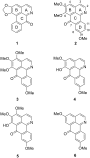
Figure 1: Prominent oxoaporphine and oxoisoaporphine alkaloids: liriodenine (1), menisporphine (2), dauriporp...

Scheme 1: Previously reported [7,17] and new approach to oxoisoaporphine alkaloids.

Scheme 2: Synthesis of iodinated isoquinolines 8a–c from alkoxy-substituted isoquinolines 7a–c.

Scheme 3: Synthesis of methyl 2-(isoquinolin-1-yl)benzoates 10a–c from 1-iodoisoquinolines 8a–c.

Scheme 4: Synthesis of the alkaloids 6-O-demethylmenisporphine (4), dauriporphinoline (5), and bianfugecine (6...

Scheme 5: Attempted synthesis of bianfugecine (6) via directed remote metalation and subsequent trapping of t...

Scheme 6: Outcome of a D2O quenching experiment after metalation of amide 12.

Scheme 7: Synthesis of 1-arylnaphthalene analogues 15 and 16.

Scheme 8: Outcome of a D2O quenching experiment after metalation of amide 16 with LDA.

Scheme 9: Synthesis of the alkaloids menisporphine (2) and dauriporphine (3) by O-methylation of the alkaloid...



