Search results
Search for "alkaloids" in Full Text gives 319 result(s) in Beilstein Journal of Organic Chemistry. Showing first 200.
Recent applications of chiral calixarenes in asymmetric catalysis
Beilstein J. Org. Chem. 2018, 14, 1389–1412, doi:10.3762/bjoc.14.117
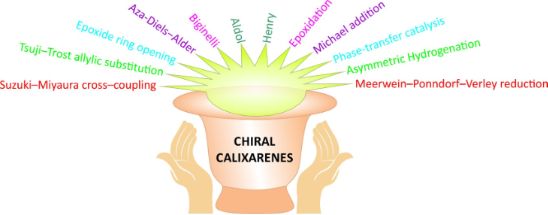
- catalytic amounts of chiral phase-transfer agents [32][33][34]. Although the literature contains examples of calixarene derivatives used as phase-transfer catalysts (PTCs) [35], the first asymmetric quaternary ammonium salts derived from cinchona alkaloids based on the calixarene skeleton were prepared by


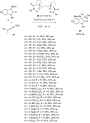
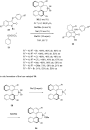
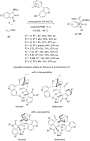
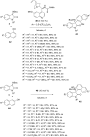
Synthesis of chiral 3-substituted 3-amino-2-oxindoles through enantioselective catalytic nucleophilic additions to isatin imines
Beilstein J. Org. Chem. 2018, 14, 1349–1369, doi:10.3762/bjoc.14.114

- products were converted into useful intermediates for the synthesis of pyrroloindoline alkaloids and related drugs, such as psychotrimine and (+)-folicanthine. Later in 2016, Trivedi et al. reported the synthesis of chiral 3-amino-2-oxindoles through the Mannich reaction of N-Boc-isatin imines 3 with 1,3
- ligands and organocatalysts. For example, remarkable enantioselectivities of up to 94 to >99% ee have been reported in recent examples of Mannich reactions promoted by organocatalysts, as varied as cinchona-alkaloids, squaramides, phosphoric acids, simple primary amines and L-diphenylprolinol
- organocatalyzed by cinchona-alkaloids, and unprecedented Friedel–Crafts reactions of isatin imines with naphthols and hydroxyquinolines promoted by cinchona-alkaloid-derived thioureas and cinchona-alkaloid-derived squaramides. Slightly lower enantioselectivity levels of up to 94% ee were described in aza-Henry








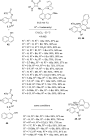


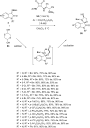

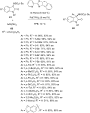
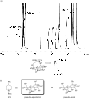
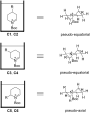
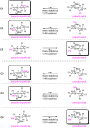
Stereoselective nucleophilic addition reactions to cyclic N-acyliminium ions using the indirect cation pool method: Elucidation of stereoselectivity by spectroscopic conformational analysis and DFT calculations
Beilstein J. Org. Chem. 2018, 14, 1192–1202, doi:10.3762/bjoc.14.100
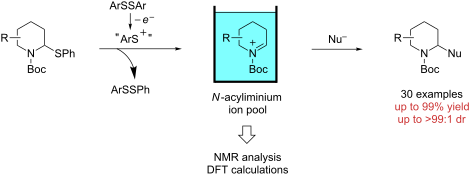
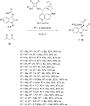
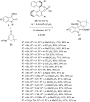
- -piperidines are attractive intermediates because they easily can be transformed to a variety of alkaloids having a piperidine skeleton. In our preliminary study, we found the indirect cation pool method suitable for the generation and accumulation of N-acyliminium ions. Therefore, the reaction of N-Boc-4






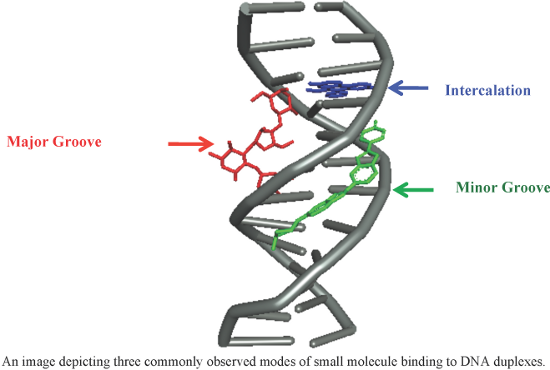
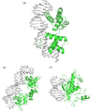
An overview of recent advances in duplex DNA recognition by small molecules
Beilstein J. Org. Chem. 2018, 14, 1051–1086, doi:10.3762/bjoc.14.93






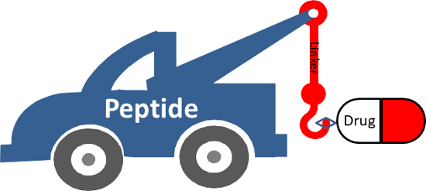
On the design principles of peptide–drug conjugates for targeted drug delivery to the malignant tumor site
Beilstein J. Org. Chem. 2018, 14, 930–954, doi:10.3762/bjoc.14.80
- , promoting mitotic halt and consequently cell death [93]. The difference with other known drugs that act on microtubules (vinca alkaloids) is that paclitaxel does not induce the disassembly of microtubules but boosts the polymerization of tubulin [94]. Sites available in PTX for the formation of PDCs are


Diastereoselective auxiliary- and catalyst-controlled intramolecular aza-Michael reaction for the elaboration of enantioenriched 3-substituted isoindolinones. Application to the synthesis of a new pazinaclone analogue
Beilstein J. Org. Chem. 2018, 14, 593–602, doi:10.3762/bjoc.14.46

- -transfer catalyst; 3-substituted isoindolinones; Introduction Isoindolinones I (Figure 1), e.g., 2,3-dihydro-1H-isoindol-1-ones, also called phthalimidines are bicyclic lactams whose molecular structure is the basis of a wide range of alkaloids and biologically active compounds [1][2][3][4][5][6][7][8][9


Mannich base-connected syntheses mediated by ortho-quinone methides
Beilstein J. Org. Chem. 2018, 14, 560–575, doi:10.3762/bjoc.14.43
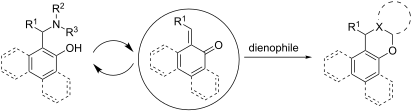
- compounds. Wilson et al. successfully achieved the total synthesis of xyloketals 17 and 18, including cycloaddition of substituted dihydrofurans and 1-(2,4-dihydroxy-3-(morpholinomethyl)phenyl)ethanone via o-QM intermediates [69]. Osyanin et al. reported the synthesis of Uvaria scheffleri alkaloids
- of Evodia rutaecarpa alkaloids, starting from 6-methoxy-4,9-dihydro-β-carboline and various substituted 1-aminoalkyl-2-naphthols [84] (Scheme 5). Reactions with electron rich aromatic compounds The formation of aza-o-QMs is also possible, if the initial phenolic Mannich base bears an aromatic moiety


Novel amide-functionalized chloramphenicol base bifunctional organocatalysts for enantioselective alcoholysis of meso-cyclic anhydrides
Beilstein J. Org. Chem. 2018, 14, 309–317, doi:10.3762/bjoc.14.19

- stereocontrol in alcoholytic catalytic asymmetric desymmetrizations of meso-cyclic anhydrides is of special interest [1][2][3][4][5][6][7]. Major families originating from natural products include cinchona alkaloids [8][9][10][11][12][13][14][15][16][17] and proteinogenic α-amino acids such as proline [18][19


Transition-metal-free [3 + 3] annulation of indol-2-ylmethyl carbanions to nitroarenes. A novel synthesis of indolo[3,2-b]quinolines (quindolines)
Beilstein J. Org. Chem. 2018, 14, 194–202, doi:10.3762/bjoc.14.14
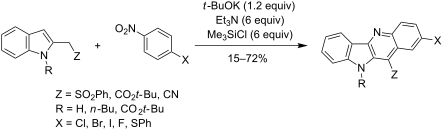
- (quindoline) system is present in numerous alkaloids of plant origin representing several biological activities and used in traditional tropical medicine for the treatment of various diseases, particularly malaria [1][2][3][4][5]. Further development revealed the potential of synthetic quindoline derivatives


Nucleophilic fluoroalkylation/cyclization route to fluorinated phthalides
Beilstein J. Org. Chem. 2018, 14, 182–186, doi:10.3762/bjoc.14.12
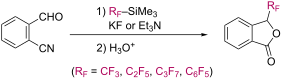
- ). Previously, Shibata et al. reported a cinchona alkaloid/Me4NF-catalyzed nucleophilic enantioselective trifluoromethylation of carbonyl compounds [33][34][35]. Initially, we tried to conduct the reaction of 2-cyanobenzaldehyde (2) with CF3–SiMe3 in the presence of cinchona alkaloids 9/TMAF combination (Table




Aminomethylation/hydrogenolysis as an alternative to direct methylation of metalated isoquinolines – a novel total synthesis of the alkaloid 7-hydroxy-6-methoxy-1-methylisoquinoline
Beilstein J. Org. Chem. 2018, 14, 130–134, doi:10.3762/bjoc.14.8
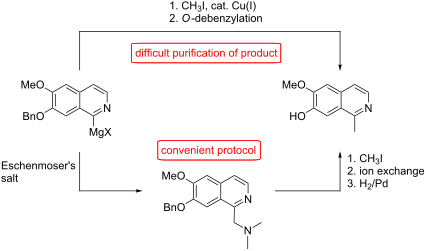
- considerable relevance in drug development, since it is found in both complex [1] and “simple” alkaloids (variously substituted derivatives of the native isoquinoline) isolated from different plants [2], and antiviral and antimicrobial activities have been found for numerous isoquinoline alkaloids [3]. Further
- of the direct methylation of electron-deficient N-heterocycles have been reviewed [9]. In a project aimed at the synthesis of tri- and tetracylic alkaloids containing the isoquinoline scaffold, we were interested in isoquinoline building blocks which bear a methyl group at C1, since this group should
- , due to its intrinsic C–H acidity, open opportunities for further functionalization. Since most isoquinoline alkaloids bear hydroxy and/or methoxy substituents at the positions 6 and 7, we regarded 7-hydroxy-6-methoxy-1-methylisoquinoline (1) as well as analogues containing a protected 7-hydroxy group


A permutation approach to the assignment of the configuration to diastereomeric tetrads by comparison of experimental and ab initio calculated differences in NMR data
Beilstein J. Org. Chem. 2017, 13, 2478–2485, doi:10.3762/bjoc.13.245

- Cinchona alkaloids 1–4 obtained in our laboratory were analyzed (Figure 1, for references, see Supporting Information File 1). The configurations of these derivatives were established based on previous X-ray studies for compounds 2a and 3d, NOESY experiments combined with molecular modeling for compounds


Conjugated nitrosoalkenes as Michael acceptors in carbon–carbon bond forming reactions: a review and perspective
Beilstein J. Org. Chem. 2017, 13, 2214–2234, doi:10.3762/bjoc.13.220
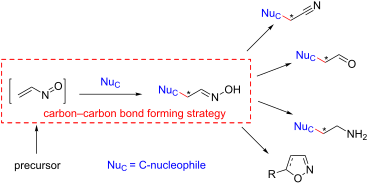
- 29 into isocomene failed (Scheme 12) [32]. Recently, Weinreb’s group used the advantage of nitrosoalkenes as Michael acceptors to accomplish total syntheses of several alkaloids, such as (+/−)-alstilobanines A and E, (+/−)-angustilodine [33] and (+/−)-myrioneurinol [34][35] (Figure 1). In the total
- , which served as a direct precursor of target alkaloids alstilobanines A, E and angustilodine. The same strategy was employed to construct the tetracyclic core of the apparicine class of indole alkaloids (see Scheme 14) [36]. Here, coupling of indole dianion 40 with chlorooxime 35 (via nitrosoalkene NSA8
- indolactam-based alkaloids 84 (activators of protein kinase C) as shown in Scheme 30. Employing the same strategy, Webb [76] and Resnick [77] prepared analogues of teleocidin and later Quick [78] accomplished the synthesis of indolactam V. Tandem C-nucleophile addition/cyclization processes involving


Regiodivergent condensation of 5-alkoxycarbonyl-1H-pyrrol-2,3-diones with cyclic ketazinones en route to spirocyclic scaffolds
Beilstein J. Org. Chem. 2017, 13, 2179–2185, doi:10.3762/bjoc.13.218
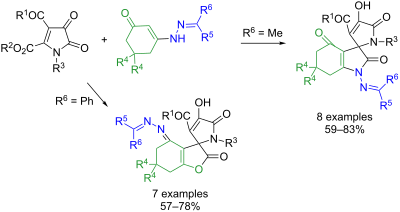
- in the target-oriented synthesis of pyrrole-based natural alkaloids [34][35][36][37][38]. Herein we wish to report a new synthetic route towards spirocyclic scaffolds possessing partially hydrogenated indole or benzofuran cores. The featured approach is based on the highly efficient regiodivergent





Accessing simply-substituted 4-hydroxytetrahydroisoquinolines via Pomeranz–Fritsch–Bobbitt reaction with non-activated and moderately-activated systems
Beilstein J. Org. Chem. 2017, 13, 1871–1878, doi:10.3762/bjoc.13.182
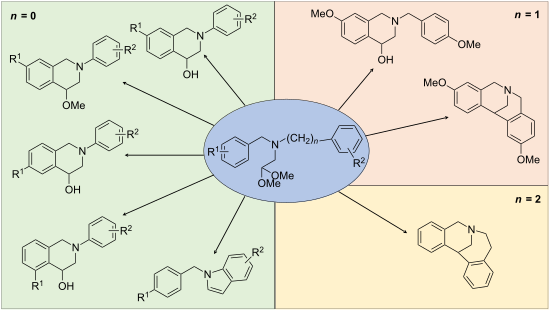
- , Oxford, OX1 3QT, UK 10.3762/bjoc.13.182 Abstract Background: 1,2,3,4-Tetrahydroisoquinolines (THIQs) are common motifs in alkaloids and in medicinal chemistry. Synthetic access to THIQs via the Pomeranz–Fritsch–Bobbit (PFB) methodology using mineral acids for deactivated, electron-poor aromatic systems
- ; steroidomimetic; synthesis; tetrahydroisoquinoline; Introduction 1,2,3,4-Tetrahydroisoquinoline (THIQ) motifs are present in many natural alkaloids [1]. THIQ derivatives have also been investigated as potential therapeutics in a wide range of diseases and recent studies have explored their potential as


Chiral phase-transfer catalysis in the asymmetric α-heterofunctionalization of prochiral nucleophiles
Beilstein J. Org. Chem. 2017, 13, 1753–1769, doi:10.3762/bjoc.13.170
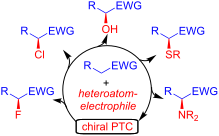
- , cinchona alkaloids remained the preferred chiral backbones for novel phase-transfer catalysts and applications thereof until the beginning of the 21st century. Pioneering contributions with these powerful catalysts were reported by the groups of O’Donnell [27], Lygo [28], and Corey [29]. The turn of the
- cinchona-based PTCs A for such α-fluorination reactions was reported in 2013 by the groups of Meng and Lu [76]. By screening a variety of differently modified ammonium salts A, they found that the introduction of sterically demanding 1-adamantoyl esters in the 9-position of the cinchona alkaloids in
- alkaloid-based organocatalysts to carry out the α-trifluoromethylthiolation of β-ketoesters 1 by using the hypervalent iodine-based CF3S-transfer reagent 36 in an asymmetric fashion. Very interestingly, they realized that for indanone-based ketoesters 1 (with n = 1) simple cinchona alkaloids themselves


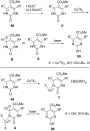
Oxidative dehydrogenation of C–C and C–N bonds: A convenient approach to access diverse (dihydro)heteroaromatic compounds
Beilstein J. Org. Chem. 2017, 13, 1670–1692, doi:10.3762/bjoc.13.162
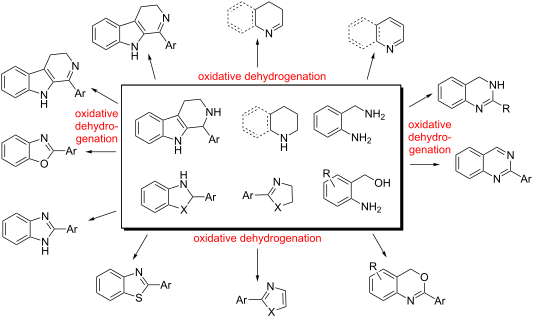
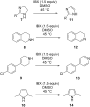
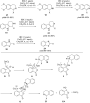
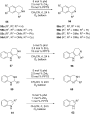
- alkaloids such as luotonin A, tryptanthrin and many more (Figure 1) [11][12]. Quinazoline derivatives work as potential inhibitors of epidermal growth factor (EGF) and tyrosine kinase receptors and also display antibacterial, antitubercular and antiviral properties [13][14][15][16]. Last but not the least










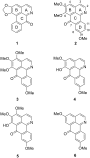
A novel approach to oxoisoaporphine alkaloids via regioselective metalation of alkoxy isoquinolines
Beilstein J. Org. Chem. 2017, 13, 1564–1571, doi:10.3762/bjoc.13.156

- Benedikt C. Melzer Franz Bracher Department für Pharmazie - Zentrum für Pharmaforschung, Ludwig-Maximilians Universität München, Butenandtstr. 5-13, D-81377 Munich, Germany 10.3762/bjoc.13.156 Abstract Oxoisoaporphine alkaloids are conveniently prepared via direct ring metalation of alkoxy
- -substituted isoquinolines at C-1, followed by reaction with iodine. Subsequent Suzuki cross-coupling of the resulting 1-iodoisoquinolines to methyl 2-(isoquinolin-1-yl)benzoates and intramolecular acylation of the corresponding carboxylic acids with Eaton’s reagent afforded five alkaloids of the
- oxoisoaporphine type. The yield of the cyclization step strongly depends on the electrophilic properties of ring B. An alternative cyclization protocol via directed remote metalation of ester and amide intermediates was investigated thoroughly, but found to be not feasible. Two of the alkaloids showed strong



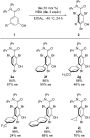
Bifunctional organocatalysts for the asymmetric synthesis of axially chiral benzamides
Beilstein J. Org. Chem. 2017, 13, 1518–1523, doi:10.3762/bjoc.13.151

- solvent (Table 1, entries 4–7). Other brominating reagents (Figure 1) were also investigated; however, NBA (4a) still afforded the best enantioselective results (Table 1, entries 8–10). In addition, other bifunctional organocatalysts derived from easily available cinchona alkaloids exhibited similarly




A speedy route to sterically encumbered, benzene-fused derivatives of privileged, naturally occurring hexahydropyrrolo[1,2-b]isoquinoline
Beilstein J. Org. Chem. 2017, 13, 1413–1424, doi:10.3762/bjoc.13.138
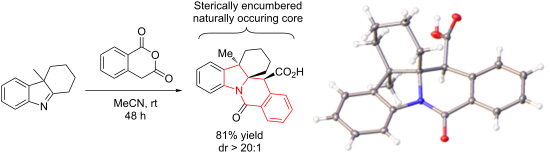
- deliver hexahydropyrrolo[1,2-b]isoquinolones 4. The hexahydropyrrolo[1,2-b]isoquinoline core in general is ubiquitous to many natural products exemplified by tylophorine (5) [18], lycorine (6) [19] and its entire family of alkaloids, including zephyranthine (7) [20] and galantine (8) [21]. Considering the
- plethora of biological activities displayed by the lycorine and tylophorine alkaloids (such as pro-apoptotic [22], antiviral [23], hypoxia-inducible factor-1 inhibitory [24]), the scaffold can be confidently regarded as privileged [25]. Recently, we [26] and others [27] reported the use of indolenines as


Characterization of non-heme iron aliphatic halogenase WelO5* from Hapalosiphon welwitschii IC-52-3: Identification of a minimal protein sequence motif that confers enzymatic chlorination specificity in the biosynthesis of welwitindolelinones
Beilstein J. Org. Chem. 2017, 13, 1168–1173, doi:10.3762/bjoc.13.115
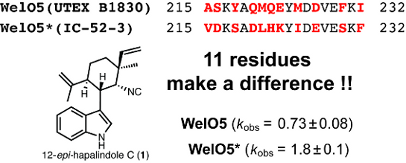
- molecules. Although the initially characterized WelO5 has a restricted substrate scope [17], we have recently shown its homolog, AmbO5, in the biogenesis of ambiguines is capable of modifying seven structurally distinct hapalindole-type alkaloids [18]. The biochemical characterizations of WelO5/AmbO5
- basis for the altered structural diversity of hapalindole-type alkaloids between the two welwitindolinone producers. The extreme sequence similarity (95% identical) between WelO5* and WelO5 allowed us to trace the origin of this observed specificity difference to 11 amino acid residues at a C-terminal
- application. Results and Discussion H. welwitschii IC-52-3 and UTEX B1830 are two known welwitindolinone producers that were reported to produce identical sets of hapalindole-type alkaloids [20], albeit the detailed metabolite analysis from the latter was never published. During our recent effort to define


A strategic approach to [6,6]-bicyclic lactones: application towards the CD fragment of DHβE
Beilstein J. Org. Chem. 2017, 13, 988–994, doi:10.3762/bjoc.13.98
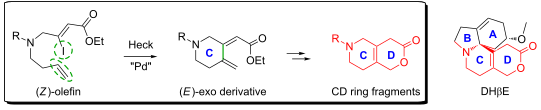
- tetracyclic Erythrina alkaloids which were isolated from Erythrina species in the end of the 19th century; the majority of this family possesses neuromuscular blocking effects [2]. DHβE is one of the most potent nAChR antagonists of this class and displays prominent selectivity for the α4β2 subtype (Ki = 0.82
- CD fragment of DHβE. Previously, the aromatic CD fragments were straightforwardly synthesized due to the advantageous reactivity of the aromatic D ring [10]. However, the syntheses of the lactonic Erythrina alkaloids are more complex [11][12] as illustrated by more than 150 total syntheses reported




A practical and efficient approach to imidazo[1,2-a]pyridine-fused isoquinolines through the post-GBB transformation strategy
Beilstein J. Org. Chem. 2017, 13, 817–824, doi:10.3762/bjoc.13.82
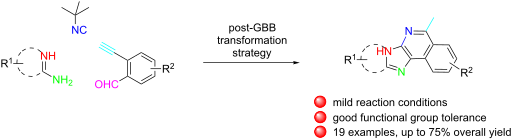
- (Figure 1) [6]. Furthermore, the isoquinoline motif represents a privileged medicinal skeleton widely found in a number of natural alkaloids and pharmaceutically active compounds [7]. Some of them exhibit diversified biological properties, including anti-inflammatory [8], antibacterial [9], antiviral [10
- ], and antitumor activities [11]. For example, the natural alkaloids berberine (IV) and narciclasine (V) possess antiplasmodial and antiviral activity, respectively [12][13]. Indotecan (VI) and its analog idimitecan (VII) were identified as topoisomerase I inhibitors, and were promoted into phase I
- to structurally complex polycyclic ring systems [33]; an Ugi/aza-Wittig process allowed for the synthesis of 2,5-disubstituted 1,3,4-oxadiazoles [34]; the Ugi/Pictet–Spengler sequence provided a rapid and efficient approach to polycyclic natural product-like alkaloids [35]. Accordingly, the


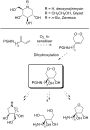
Exploring endoperoxides as a new entry for the synthesis of branched azasugars
Beilstein J. Org. Chem. 2017, 13, 644–647, doi:10.3762/bjoc.13.63

- hydrolysis transition states as well as having many other interesting properties. They are found in nature as pyrrolidines, piperidines, indolizidines, pyrrolizidines or nortropane alkaloids with a variety of ring substituents, typically hydroxy groups, carboxylic acids and amides [1]. The ability of



Biosynthetic origin of butyrolactol A, an antifungal polyketide produced by a marine-derived Streptomyces
Beilstein J. Org. Chem. 2017, 13, 441–450, doi:10.3762/bjoc.13.47
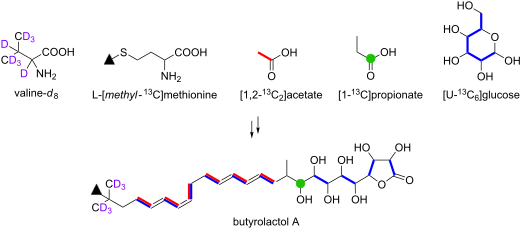
- diverse secondary metabolites with pharmaceutically useful bioactivities. Importantly, members of the genus Streptomyces have been the main source of drug discovery programs due to their high capacity in secondary metabolism including polyketides, peptides, terpenoids, alkaloids, and amino acid