


Search results
Search for "anions" in Full Text gives 403 result(s) in Beilstein Journal of Organic Chemistry. Showing first 200.
The reaction of arylmethyl isocyanides and arylmethylamines with xanthate esters: a facile and unexpected synthesis of carbamothioates
Beilstein J. Org. Chem. 2020, 16, 159–167, doi:10.3762/bjoc.16.18
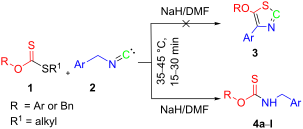
- that could be supported by quantum chemical calculations. Of course, other alternative mechanisms that can be envisioned include one in which the thiolate anions, which were generated, could also either a) regenerate dimethylamide anions from the surrounding DMF solvent; and/or b) possibly add to the


Halogen-bonding-induced diverse aggregation of 4,5-diiodo-1,2,3-triazolium salts with different anions
Beilstein J. Org. Chem. 2020, 16, 78–87, doi:10.3762/bjoc.16.10
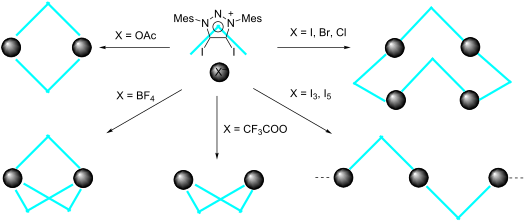
- Xingyu Xu Shiqing Huang Zengyu Zhang Lei Cao Xiaoyu Yan Department of Chemistry, Renmin University of China, Beijing 100872, People’s Republic of China 10.3762/bjoc.16.10 Abstract The synthesis of 4,5-diiodo-1,3-dimesityl-1,2,3-triazolium salts with different anions have been developed. These
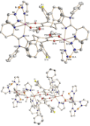
- triazolium salts show diverse aggregation via halogen bonding between C–I bonds and anions. Triazolium with halide anions exists as a tetramer with saddle conformation. Triazolium tetrafluoroborate exists as a trimer with Chinese lantern shape conformation. Triazolium trifluoroacetate and acetate exist as
- aldehydes [44]. Despite a variety of XB donors based on 1,2,3-triazole have been reported, no 4,5-diido-1,2,3-triazolium salts have been reported for an XB interaction. Herein, we report the synthesis and characterization of 4,5-diido-1,2,3-triazolium D with different anions. The crystal structures of these




A green, economical synthesis of β-ketonitriles and trifunctionalized building blocks from esters and lactones
Beilstein J. Org. Chem. 2019, 15, 2930–2935, doi:10.3762/bjoc.15.287
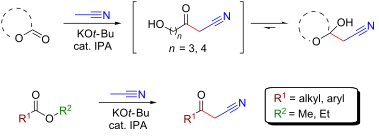
- environmentally unfriendly transition-metal-based reactions. Acylations of in situ-generated nitrile anions with esters to produce β-ketonitriles were first reported long ago, for example by using sodium methoxide [2], sodium ethoxide [3] or sodium amide [4][5]. The reaction was found to proceed more efficiently
- -pentoxide or potassium tert-butoxide) acylation of substituted nitrile anions with esters under ambient conditions, as published by Ji et al. (2006) [9] and Kim et al. (2013) [10]. The large excess of ester and expensive base (potassium tert-pentoxide) required in the former method, in our opinion rendered
- alkoxide anions. This reduces the occurrence of undesirable side-reactions, e.g., intermolecular aldol reaction, lactone/ketonitrile product dimerization and ring-opening polymerization. The application of this method to produce the analogous hemiketal 6 from γ-butyrolactone was not as efficient. Although


Preparation of anthracene-based tetraperimidine hexafluorophosphate and selective recognition of chromium(III) ions
Beilstein J. Org. Chem. 2019, 15, 2847–2855, doi:10.3762/bjoc.15.278
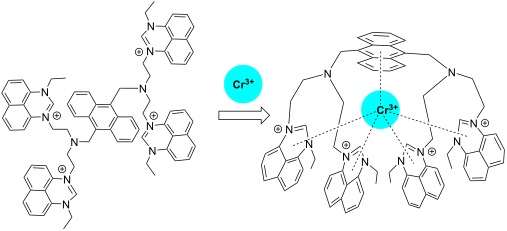
- Cr3+ selectively while neglecting other cations, with no remarkable interference being caused in the presence of the latter. In order to probe whether the anions of the chromium(III) salts had effects on the binding of 3 and Cr3+, other chromium(III) salts, CrCl3, CrBr3, Cr2(SO4)3, Cr(NO3)3, and Cr


A chiral self-sorting photoresponsive coordination cage based on overcrowded alkenes
Beilstein J. Org. Chem. 2019, 15, 2767–2773, doi:10.3762/bjoc.15.268
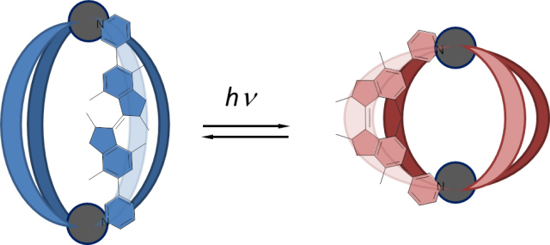
- structure determination [13][14] and stabilization of reactive species [15][16][17]. The use of reversible metal–ligand coordination bonds gives rise to systems that allow for adaption to external stimuli such as pH, anions, electric potential, concentration and light [4][8][18][19][20][21]. Using light to
- dynamically control the shape and function of SCCs is a very promising strategy as it is a noninvasive stimulus that can be easily applied with high spatiotemporal control, without producing any waste. Systems have been reported where photoisomerization of azobenzene-derived anions encapsulated in
- amounts of HCl. The additional anions required to balance the charge of the tetracationic Pd2L4 cage could not be unambiguously located in the difference Fourier map (see Supporting Information File 1 for details). The structure belongs to the P4/n space group and the unit cell is occupied by a pair of


A review of asymmetric synthetic organic electrochemistry and electrocatalysis: concepts, applications, recent developments and future directions
Beilstein J. Org. Chem. 2019, 15, 2710–2746, doi:10.3762/bjoc.15.264
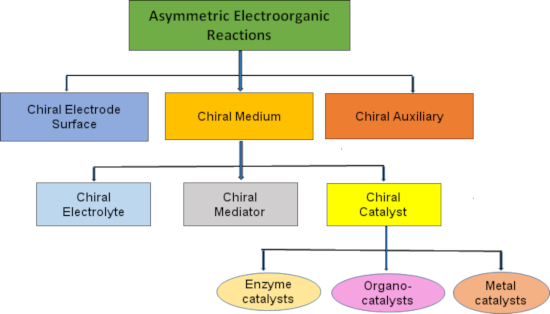
- 79. The complex 79 consisting of diols and a chiral copper catalyst Cu–L* easily gets deprotonated by cathodically generated MeO− to afford alkoxide anions 80, which reacts with anodically generated Br+ to form O-brominated intermediates 81. Finally, MeO− removed HBr from 81 to afford products 75/78






Arylisoquinoline-derived organoboron dyes with a triaryl skeleton show dual fluorescence
Beilstein J. Org. Chem. 2019, 15, 2612–2622, doi:10.3762/bjoc.15.254
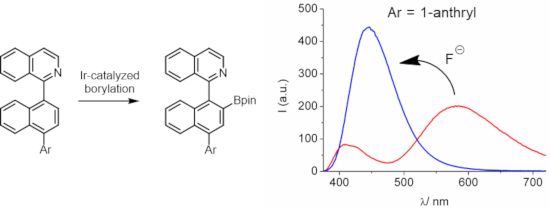
- of 0.2–0.4, reaching in some cases values as high as 0.5–0.6. Laser-flash photolysis provided evidence for the existence of excited triplet states. The dyes form fluoroboronate complexes with fluoride anions, leading to the observation of the quenching of the long-wavelength emission band and
- ratiometric response by the build-up of a hypsochromically shifted emission signal. Keywords: anions; dyes; fluorescence; laser-flash photolysis; organoboron; Introduction Boron-containing tri- and tetra-coordinated chromophores have attracted considerable interest due to their often peculiar and highly
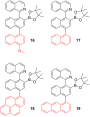
- dye 18 is insensitive to oxygen and was tentatively attributed to the formation of a pyrene-based radical cation, resulting from photoionization [46]. Interaction with fluoride anions The presence of the boronic acid ester moiety does not only contribute to significant changes in the fluorescence



Formation of alkyne-bridged ferrocenophanes using ring-closing alkyne metathesis on 1,1’-diacetylenic ferrocenes
Beilstein J. Org. Chem. 2019, 15, 2534–2543, doi:10.3762/bjoc.15.246

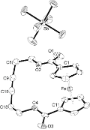
- –Ct11 178.11(3). 1H NMR (200.1 MHz, 298 K) spectrum of top: 2a in CDCl3; bottom: 5 in THF-d8 – signals for solvate THF occur at 3.80 ppm and 1.95 ppm. ORTEP diagram of 5(thf) with thermal displacement drawn at 50% probability; hydrogens atoms, [SbF6]− anions are omitted for clarity, only the main




Anion-driven encapsulation of cationic guests inside pyridine[4]arene dimers
Beilstein J. Org. Chem. 2019, 15, 2486–2492, doi:10.3762/bjoc.15.241
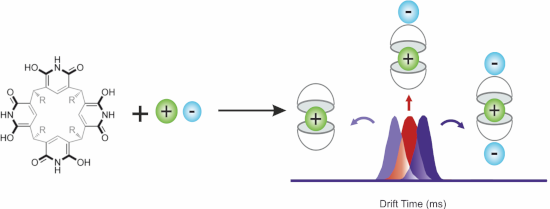
- could not be verified and the anions were assumed to interact with the pyridinearene cavity. Inclusion complexes of anions within pyridinearene dimers were also theoretically studied by DFT calculations, but using a truncated pyridinearene dimer model [8]. However, previous studies have also shown that
- the π-acidic character of pyridine rings, such as 2-oxo-6-oxypyridine, is rather weak [9][10]. Thus, pyridine[4]arenes may be expected to show a dual binding behavior towards anions and cations [8]. In addition to anion complexes also 2:1 complex formation with neutral carboxylic acids and amides have
- been previously detected by ESI-MS [7]. Very recently, with the help of ion mobility mass spectrometry (IM-MS), we showed that pyridine[4]arenes favor encapsulation of neutral molecules over anionic species and anions are in fact complexed in an exo-position (exclusion complexation) between the lower




Self-assembled coordination thioether silver(I) macrocyclic complexes for homogeneous catalysis
Beilstein J. Org. Chem. 2019, 15, 2465–2472, doi:10.3762/bjoc.15.239
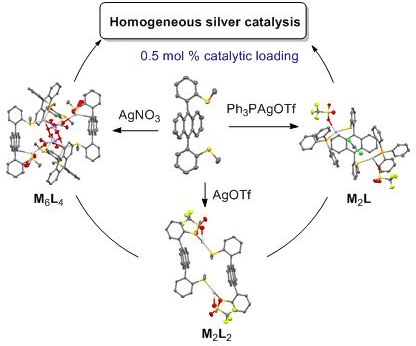
- three different batches of silver complexes prepared by the same procedure (see Supporting Information File 1, Figure S9). The complex formed with AgNO3 had a different stoichiometry, due to the multidentate nitrate anions. The X-ray structure of 1c appeared as a large (R,S-1)4·(AgNO3)6 complex with
- three nitrate anions as coordinating bridges between the two symmetric M3L2 units (Figure 2). The resulting coordinated macrocycle M6L4 had a globular shape that displayed the polyaromatic ligands towards the exterior and fully encapsulated two nitrate anions and the silver(I) cations. This silver
- with three nitrate anions as coordinating bridges. Hydrogen atoms are omitted for clarity. X-ray structure of complex 1d, as a racemic mixture of (R,R)- and (S,S)-(syn-1)·(PPh3AgOTf)2. Variable temperature 1H NMR of complex 1a in CDCl3 (7 mM) from −30 °C to 60 °C. Synthesis of ligand 1, as its syn


Photochromic diarylethene ligands featuring 2-(imidazol-2-yl)pyridine coordination site and their iron(II) complexes
Beilstein J. Org. Chem. 2019, 15, 2428–2437, doi:10.3762/bjoc.15.235
- ions connected by a so far unprecedented trimethoxypyrazolylborate bridging group. The periphery Fe ions reveal an octahedral coordination environment with two H2B(pz)21− anions and two methoxy groups of the bridging moiety. The Fe–N bond distances ranging from 2.1361(19) to 2.1631(19) Å in 9 appear


Sugar-derived oxazolone pseudotetrapeptide as γ-turn inducer and anion-selective transporter
Beilstein J. Org. Chem. 2019, 15, 2419–2427, doi:10.3762/bjoc.15.234
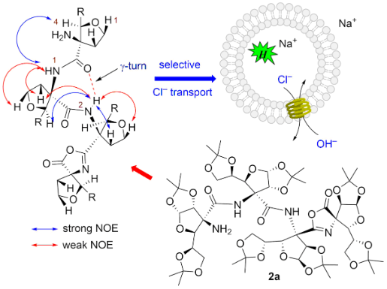
- cation and anion transport across lipid bilayer membranes plays a crucial role in various biological processes [31][32]. Amongst these, the transport of anions is useful in regulating intracellular pH, membrane potential, cell volume, and fluid transport [33]. Any dysfunction in these processes led to
- different types of cyclic peptides as anion transporters. Gale, Luis, and co-workers [41] have separately reported the linear pseudopeptides as receptors and transporters of chloride and nitrate anions. Inspired by our recent ion transport studies with fluorinated acyclic and cyclic sugar derived peptides
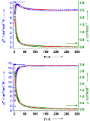
- value of 1.26 indicated that one molecule of 2a is involved in the formation of the active transporter. The promising ion transport activity of 2a encouraged us to explore its cation and anion selectivity study by varying either cations (for MCl, M+ = Li+, Na+, K+, Rb+, and Cs+) or anions (for NaA, A


![[Graphic 2]](/bjoc/content/inline/1860-5397-15-234-i4.svg?max-width=637&scale=1.18182) lucigenin (A). Conce...
lucigenin (A). Conce...
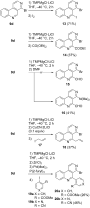
Functionalization of 4-bromobenzo[c][2,7]naphthyridine via regioselective direct ring metalation. A novel approach to analogues of pyridoacridine alkaloids
Beilstein J. Org. Chem. 2019, 15, 2304–2310, doi:10.3762/bjoc.15.222
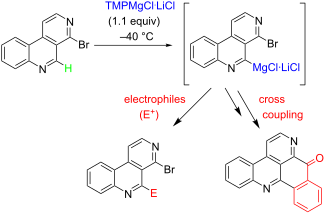
- , phenolates), acyl anions (generated by umpolung of aldehydes with imidazolium salts) and by palladium-catalyzed cross-coupling reactions (Suzuki, Stille) [10]. A related Stille cross coupling of a benzo[c][2,7]naphthyridine bearing a triflate group at C-5 gave an intermediate for the total synthesis of




1,2,3-Triazolium macrocycles in supramolecular chemistry
Beilstein J. Org. Chem. 2019, 15, 2142–2155, doi:10.3762/bjoc.15.211
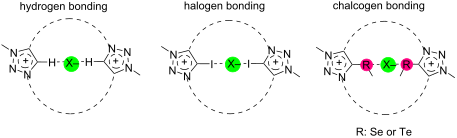
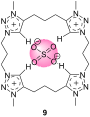
- candidates for amide bond surrogates. Interestingly, 1,2,3-triazole units can act as sensors for both anions and cations via different binding mechanisms [16][17]. The heterocyclic ring N2 and N3 atoms could realize the selective recognition of the cations whereas the C5–H···anions electrostatic interaction
- results in the sensing of anions. In fact, strictly speaking this interaction is not a hydrogen bonding interaction seen as there is no X···H–Y unit (X, Y = O, N, F) but these interactions are often referred to as such in the literature. The anion binding can be enhanced by the alkylation of 1,2,3
- -triazole units to more electrophilic 1,2,3-triazolium units by influencing both hydrogen bonding-like and anion–π interactions. Moreover, halogen bond (XB) and chalcogen bond (ChB) interactions (see Figure 1) also been applied for the selective detection of anions by exchanging C5–H protons with halogens




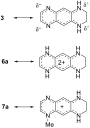
1,2,3,4-Tetrahydro-1,4,5,8-tetraazaanthracene revisited: properties and structural evidence of aromaticity loss
Beilstein J. Org. Chem. 2019, 15, 2059–2068, doi:10.3762/bjoc.15.203
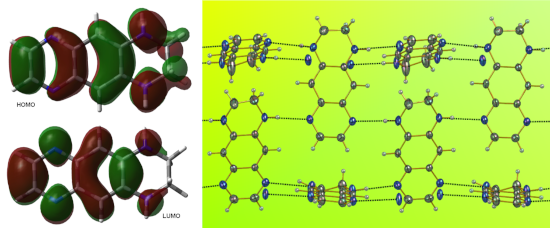
- -positions (Figure 3). The distances between both >N–H and =N–H groups from the chlorine anions are shortened (2.410 and 2.194 Å, respectively, Figure 2). Examination of the bond distances within the N2–C1–C14–C13–N12 and N5–C6–C7–C8–N9 atom chains of 6a reveals almost full delocalization of the positive
- : infinite chains of the N–H···N=C shortened distances (N(2)···N(3) distance 3.047 Å, (Figure 11). The iodine anions are not involved in the intermolecular interactions. Conclusion Unlike previously described, 1,2,3,4-tetrahydro-1,4,5,8-tetraazaanthracene (3) is a thermally stable compound and can be




Naphthalene diimides with improved solubility for visible light photoredox catalysis
Beilstein J. Org. Chem. 2019, 15, 2043–2051, doi:10.3762/bjoc.15.201
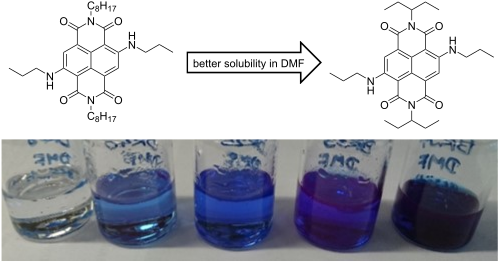
- fluorescence quantum yields are rather low and fluorescence lifetimes are rather short due to ISC into the triplet state [50][51]. NDIs are reversibly reducible and their stable radical anions absorb in the visible to NIR light range [37]. The aromatic core of NDIs can be easily modified by substituents in



Synthesis and anion binding properties of phthalimide-containing corona[6]arenes
Beilstein J. Org. Chem. 2019, 15, 1976–1983, doi:10.3762/bjoc.15.193
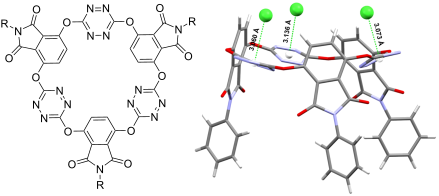
- adopt the conformation in which three phthalimide units are cis,trans-orientated. Acting as electron-deficient macrocyclic hosts, the synthesized O6-corona[3]arene[3]tetrazines self-regulated conformational structures to complex anions in the gas phase and in the solid state owing to the anion–π
- noncovalent interactions between anions and the tetrazine rings. Keywords: anion–π interactions; coronarenes; host–guest complexation; N-functionalized phthalimides; O6-corona[3]arene[3]tetrazines; Introduction Synthetic macrocycles [1][2] are always attractive and important because they are unique
- cavities [22]. We have also shown that the combination of and the interplay between heteroatoms and para-(het)arylenes produce diverse macrocycles with coarse- and fine-tunable cavity shapes and sizes. The resulting coronarenes exhibit interesting molecular recognition properties towards anions, cations


Halide metathesis in overdrive: mechanochemical synthesis of a heterometallic group 1 allyl complex
Beilstein J. Org. Chem. 2019, 15, 1856–1863, doi:10.3762/bjoc.15.181
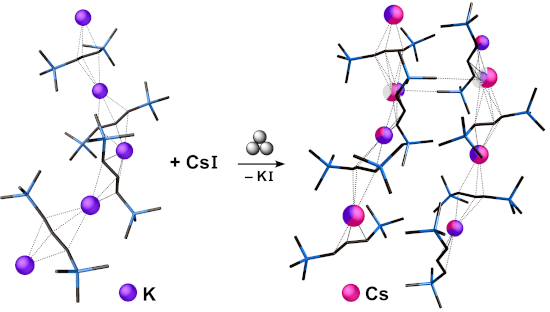
- depiction of a single chain is provided in Figure 1, and a partial packing diagram is given in Figure 2. The asymmetric unit contains three alkali metal cations and three substituted allyl anions, all in general positions. Each of the three metal sites is modeled as a site disorder of atoms types K and Cs
- the only recoverable material; extracted with toluene, it crystallized from solution as the solvate. A single crystal X-ray study analysis reveals bent polymeric chains of alternating K+ cations and [A']− anions. Each potassium is capped with a toluene molecule, bonded through cation–π interactions


Recent advances on the transition-metal-catalyzed synthesis of imidazopyridines: an updated coverage
Beilstein J. Org. Chem. 2019, 15, 1612–1704, doi:10.3762/bjoc.15.165
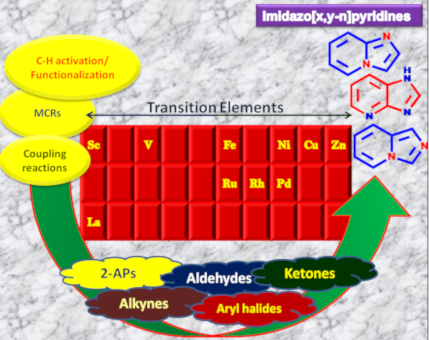
- ) as a solvent without any additive (Scheme 43). A good yield of the product was obtained by using benzyl cyanide substituted with EDG (4-OMe) rather than with an EWG due to the favourable oxidative release of cyanide anions from benzyl cyanide that favored the substitution of the iodide ion


An azobenzene container showing a definite folding – synthesis and structural investigation
Beilstein J. Org. Chem. 2019, 15, 1534–1544, doi:10.3762/bjoc.15.156
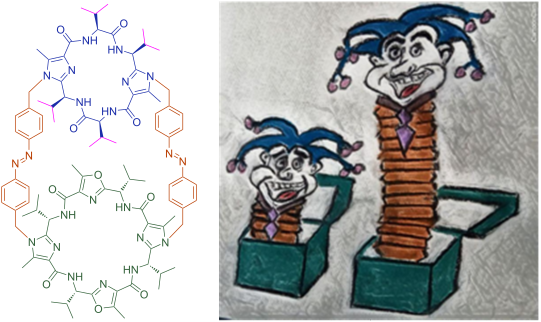
- ][22]. Beside the usage of the side chains of the amino acids and the azole rings for molecular recognition, the functional groups of the scaffolds of these cyclopeptides have also been applied as receptors for Y-shaped anions [23] and as ligands for copper(II) complexes [24][25]. Of special interest


Synthesis of pyrrolo[1,2-a]quinolines by formal 1,3-dipolar cycloaddition reactions of quinolinium salts
Beilstein J. Org. Chem. 2019, 15, 1480–1484, doi:10.3762/bjoc.15.149
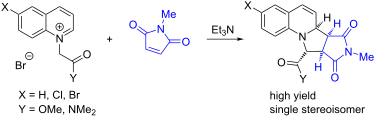
- types of products. Conclusion In conclusion, we have found that carboxylic ester and amide-stabilised anions derived from quinolinium salts react with arylidenemalononitriles and N-methylmaleimide to give adducts in good yields and with very high stereoselectivity (single isomer products were isolated


Borylation and rearrangement of alkynyloxiranes: a stereospecific route to substituted α-enynes
Beilstein J. Org. Chem. 2019, 15, 1416–1424, doi:10.3762/bjoc.15.141

- Shimizu [6][7], and our experience on the metalation of alkynyloxiranes and reactivity studies of the so-formed alkynyloxirane anions [12][13], we explored the reaction of such anions with various boron derivatives in order to produce stereodefined α-enynes after Matteson-type rearrangement [14] and
- avoid any silyl migration [12]. As already shown [12][13], n-butyllithium proved to be very efficient, although stronger or complex bases are usually required to produce oxiranyl anions [1][2][24][25][26][27][28]. Upon deprotonation, the corresponding oxiranyllithium was sufficiently stable at −78 °C


Reversible end-to-end assembly of selectively functionalized gold nanorods by light-responsive arylazopyrazole–cyclodextrin interaction
Beilstein J. Org. Chem. 2019, 15, 1407–1415, doi:10.3762/bjoc.15.140
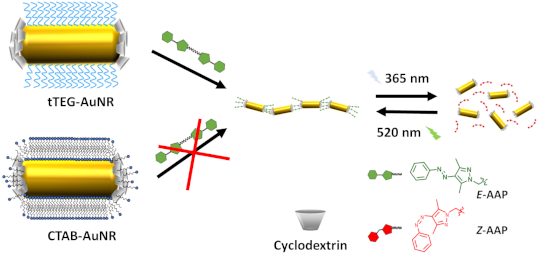
- , the high negative ζ-potential evidences electrostatic repulsion between the particles and thus good colloidal stability against uncontrolled aggregation. It is well known that PEGylated surfaces and particles show a negative ζ-potential in water due to the preferential absorption of hydroxide anions


Enantioselective Diels–Alder reaction of anthracene by chiral tritylium catalysis
Beilstein J. Org. Chem. 2019, 15, 1304–1312, doi:10.3762/bjoc.15.129
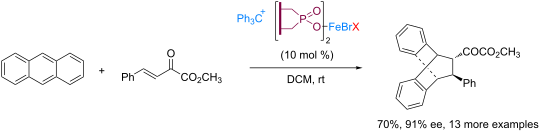
- (Scheme 1b). In our further explorations, we noticed that the dissociation of trityl phosphate was generally sluggish, thus limiting its applicability. To expand its utility, we report herein a metal-complexed phosphate anion for chiral carbocation catalysis. Weakly coordinating anions [22][23] have been
- widely used in inorganic and organic chemistry [24][25][26][27] as well as in polymer chemistry [28][29][30][31][32][33]. Although tritylium salts with various types of these counter anions based on B(III), Al(III), Ga(III), Fe(III), Nb(III), Ta(III), Y(III) and La(III) centers and ligands have been
- investigated in Lewis acid catalysis over the past decades, a chiral counter anion [34][35] with metal elements as the central atom, however, was seldom reported. Typically, the tritylium salts with weakly coordinating anions can be synthesized through a simple halide abstraction from the trityl halide in the


Bambusuril analogs based on alternating glycoluril and xylylene units
Beilstein J. Org. Chem. 2019, 15, 1268–1274, doi:10.3762/bjoc.15.124
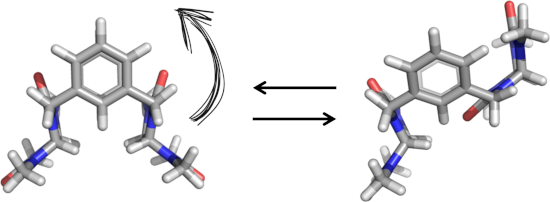
- bind inorganic anions with high binding affinity and selectivity in both organic media and water [13][14]. Previously we used bambusurils to recognize and quantify anions in their complex mixtures at sub-micromolar concentrations by means of NMR [15]. However, sensing of anions by less expensive UV–vis
- of one molecule and methine and methylene hydrogen atoms of neighboring macrocycles. Finally, we investigated the affinity of the newly prepared bambusuril analogs 1a and 1b towards anions. The addition of halide anions in form of their tetrabutylammonium salts to the solutions of 1a and 1b did not
- induced any change in the NMR spectra of the macrocycles. This indicates that these macrocycles do not bind the studied anions. We assume that the cavity of the macrocycles is too small to be able to include any anions. Indeed the conformer 1b-1 with two facing glycolurils resembles the bambus[4]uril





