Search results
Search for "dimerization" in Full Text gives 292 result(s) in Beilstein Journal of Organic Chemistry. Showing first 200.
An air-stable bisboron complex: a practical bidentate Lewis acid catalyst
Beilstein J. Org. Chem. 2018, 14, 618–625, doi:10.3762/bjoc.14.48

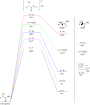
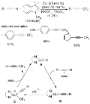
- procedure for the synthesis of bisboron compound A via a dimerization requires a high reaction temperature (Scheme 3, top). Due to the use of volatile BCl3, the dimerization reaction is usually carried out in a sealed pressure tube. Using Schlenk technique, the procedure affords compound A in good yield
- optimized procedure, BBr3 was used to replace BCl3 and the dimerization reaction can be carried out in a normal Schlenk tube without any solvent. The methylation reagent, AlMe3 can be added in situ followed by the complexation with pyridazine. The one-pot procedure is also applicable to the synthesis of


Mannich base-connected syntheses mediated by ortho-quinone methides
Beilstein J. Org. Chem. 2018, 14, 560–575, doi:10.3762/bjoc.14.43
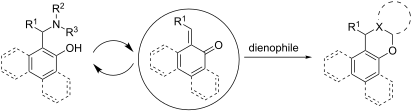
- dimers formed in a Diels–Alder dimerization process by heating the corresponding Mannich bases under reflux in dichloromethane for 2 hours. In the synthesis of 3,4-dihydro-2-aryl-2H-benzo[f]chromenes and 2-aryl-6,7-dimethylchromans starting from substituted styrenes and 1-dimethylaminomethyl-2-naphthol
- unexpected side products. As mentioned above [71], Osyanin et al. reported the synthesis of Uvaria scheffleri alkaloid (±)-schefflone. In this publication, the dimerization of the o-QM resulting in intermediate 41 is a key step in the synthesis of the final natural trimer compound. Reactions with C=N
- various conditions applied in the synthesis of amidoalkylnaphthols 4. Formation and substrate scope of phenolic Mannich bases. Reactions of o-QMs with different dienophile species. Dimerization of o-QMs. Acknowledgements The authors thank the Ministry of National Economy, National Research Development


Oxidative cycloaddition of hydroxamic acids with dienes or guaiacols mediated by iodine(III) reagents
Beilstein J. Org. Chem. 2018, 14, 531–536, doi:10.3762/bjoc.14.39
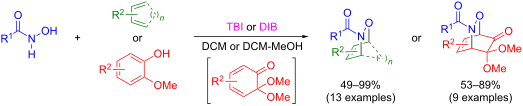
- of 1a with simple dienes or guaiacols, benzoyl anhydride was detected as a byproduct. Since benzoyl anhydride is known to be formed via the dimerization of benzoylnitroso compounds [35], these results suggest that acylnitroso species would be generated from 1a by iodine(III) reagents. Therefore, the


Progress in copper-catalyzed trifluoromethylation
Beilstein J. Org. Chem. 2018, 14, 155–181, doi:10.3762/bjoc.14.11
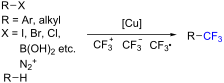
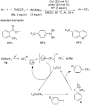
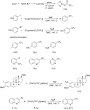
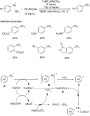
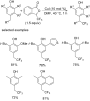
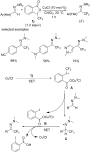
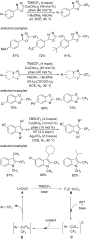
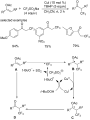
- catalytic amount of copper salt was required in this reaction. The hydrogens on the ortho and para positions of phenols have higher reactivity. Thus, undesired side reactions were often involved in the trifluoromethylation of less substituted phenols, including oxidative dimerization and oligomerization













Aminosugar-based immunomodulator lipid A: synthetic approaches
Beilstein J. Org. Chem. 2018, 14, 25–53, doi:10.3762/bjoc.14.3
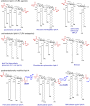
- -inflammatory signaling cascade. The lipid A portion of hexaacyl LPS (e.g., in E. coli LPS) is recognized and bound by a co-receptor protein MD-2 which is physically asssociated with TLR4. The binding of lipid A initiates dimerization of two copies of the TLR4∙MD-2–LPS complexes which results in the formation
- -inflammatory signaling and activation of the host innate immunity (Figure 3B) [42][45][46]. Compounds which compete with LPS in binding to the same site on MD-2 are capable of inhibiting the induction of the signal transduction pathway by preventing the LPS-induced receptor complex dimerization (Figure 3C
- 4B) [42][64]. Thus, lipid A directly participates in the formation of an active multimeric ligand–receptor complex, whereas the tightness and efficiency of dimerization strongly depends on specific structural characteristics such as the acylation pattern and the number of negative charges (e.g






From dipivaloylketene to tetraoxaadamantanes
Beilstein J. Org. Chem. 2018, 14, 1–10, doi:10.3762/bjoc.14.1

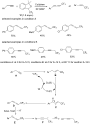
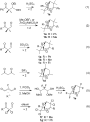
- and phenyl-substituted tetraoxaadamantanes 1a and 1b were obtained by Arnold [1] and Almqvist [2] through the dimerization of β-ketoaldehydes (reactions 1 and 2 in Scheme 1). This was confirmed by Opitz et al., but the attempted synthesis of further analogs by these procedures failed [3]. Takeda et al
- . performed the dimerization of β-ketoaldehydes with SO2Cl2 (reaction 3 in Scheme 1) [4], and the X-ray crystal structure of 1b was reported [5]. Chekalov et al. described the preparation of the tetramethyl derivative 1d by dimerization of acetylacetone induced by SiF4 (reaction 4 in Scheme 1) [6] and also
- dimerization of dipivaloylketene (2), itself obtained in high yield by FVP of furan-2,3-dione 6 (Scheme 3). Ketene 3 reacts with a variety of nucleophiles in an addition reaction to the ketene function, thereby transforming the ketene to enol derivatives 14 or 9 of 1,3-dioxin-4-ones. Subsequently, these enols





A Brønsted base-promoted diastereoselective dimerization of azlactones
Beilstein J. Org. Chem. 2017, 13, 2663–2670, doi:10.3762/bjoc.13.264

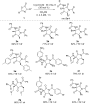
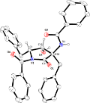
- Brønsted base system for the diastereoselective dimerization of azlactones using trichloroacetate salts and acetonitrile has been developed. Desired products were obtained in good yields (60–93%) and with up to >19:1 dr after one hour of reaction. Additionally, the relative stereochemistry of the major
- analogue of streptopyrrolidine was accomplished in 65% overall yield. Keywords: azlactones; dimerization; diasteoreselective synthesis; kinetics; streptopyrrolidine analogue; Findings Azlactones have been acknowledged as a common nucleophilic reagent to introduce a quaternary carbon stereocenter in the α
- azlactone dimer, which is a versatile heterocycle containing two stereogenic centers (Figure 1). Kobayashi and co-workers demonstrated the rich reactivity of azlactones conducting the dimerization reaction using strong bases as catalysts; however, higher temperatures and long reaction times were required




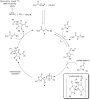

![[Graphic 5]](/bjoc/content/inline/1860-5397-13-264-i10.svg?max-width=637&scale=1.18182) vs time for the dimerization of azlactone 1a.
vs time for the dimerization of azlactone 1a.

Dialkyl dicyanofumarates and dicyanomaleates as versatile building blocks for synthetic organic chemistry and mechanistic studies
Beilstein J. Org. Chem. 2017, 13, 2235–2251, doi:10.3762/bjoc.13.221
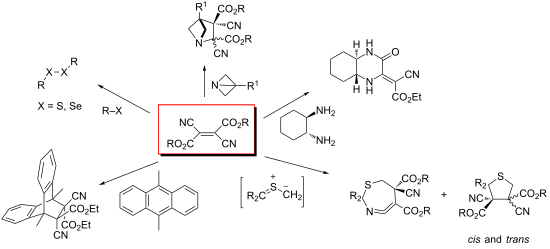
- . The dimerization of the same carbene leading to a mixture of E- and Z-1a was observed when ethyl dibromocyanoacetate was treated with equimolar amounts of LiI in DMF at room temperature with the highest reported yield of 83% [12]. The dimethyl ester E-1b was also obtained selectively by treatment of


A mechanochemical approach to access the proline–proline diketopiperazine framework
Beilstein J. Org. Chem. 2017, 13, 2169–2178, doi:10.3762/bjoc.13.217
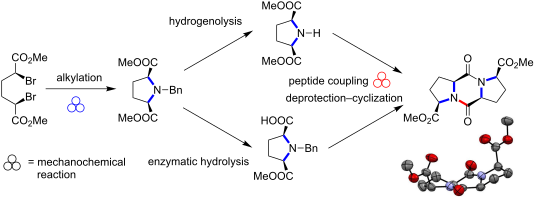
- a scaffold for the preparation of small compound libraries [15]. The Pro–Pro diketopiperazine can be prepared directly by dimerization of unprotected proline in a one-pot transformation, generally under harsh conditions [16]. Good results were indeed reported, although this procedure gives access


Pd(OAc)2/Ph3P-catalyzed dimerization of isoprene and synthesis of monoterpenic heterocycles
Beilstein J. Org. Chem. 2017, 13, 1807–1815, doi:10.3762/bjoc.13.175
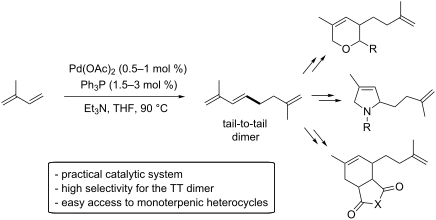
- -catalyzed dimerization of isoprene is a practical approach of synthesizing monoterpenes. Though several highly selective methods have been reported, most of them still required pressure or costly ligands for attaining the active system and desired selectivity. Herein, we present a simple and economical
- heterocyclic terpenes by subsequent (hetero)-Diels–Alder or [4 + 1]-cycloadditions with nitrenes is also depicted. Keywords: dimerization; heterocycles; isoprene; monoterpene; palladium catalysis; Introduction The dimerization of conjugated dienes represents a useful, highly atom economic and straightforward
- reaction for the construction of important olefinic substituted synthetic building blocks [1][2]. Despite the high value of this type of compounds, there are only few robust methodologies that have led to commercial processes such as the Kuraray telomerization – dimerization with a nucleophile – of 1,3


Ni nanoparticles on RGO as reusable heterogeneous catalyst: effect of Ni particle size and intermediate composite structures in C–S cross-coupling reaction
Beilstein J. Org. Chem. 2017, 13, 1796–1806, doi:10.3762/bjoc.13.174

- and Ni/RGO-60) were also tested (Table 1). All reactions were carried out under a N2 atmosphere to avoid oxidative dimerization of thiols to disulfide [50]. Solvent optimization was started with water (Table 1, entry 1) followed by toluene (Table 1, entry 2) and isolating diaryl sulfide only 6–8
- suppressing the overall yield of the thioether (Table 1, entries 5 and 6). Without using any base, the yield was 74%, while the use of KOH as a base afforded the thioether in 83% yield (Table 1, entries 7 and 8). Formation of the diphenyl disulfide via oxidative dimerization of benzenethiol was noticed (15




1-Imidoalkylphosphonium salts with modulated Cα–P+ bond strength: synthesis and application as new active α-imidoalkylating agents
Beilstein J. Org. Chem. 2017, 13, 1446–1455, doi:10.3762/bjoc.13.142
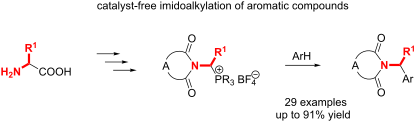
- side reactions (for example Kolbe-dimerization), the yields were only poor (10–35%) [33][34]. According to our previously reported procedure for the electrochemical decarboxylative α-methoxylation of N-acyl-α-amino acids [18], amino acid derivatives 6 were converted to N-(1-methoxyalkyl)imides 7. The


Aqueous semisynthesis of C-glycoside glycamines from agarose
Beilstein J. Org. Chem. 2017, 13, 1222–1229, doi:10.3762/bjoc.13.121

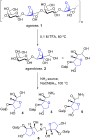
- , enolization and dimerization are among the drawbacks that can be encountered during the transformation of mono- or oligosaccharides directly into glycamines. Considering (a) the potential of AnGal as starting material for the synthesis of glycamines structurally related to muscarine, (b) the suitability of



Chemoselective synthesis of diaryl disulfides via a visible light-mediated coupling of arenediazonium tetrafluoroborates and CS2
Beilstein J. Org. Chem. 2017, 13, 903–909, doi:10.3762/bjoc.13.91

- of a carbon sulfide [11]. The active radical intermediate III can transform into three types of products through different pathways. Firstly, diaryl disulfide 3 is obtained through a dimerization of radical intermediates III, whereas the reaction of radical III with phenyl radical I is leading to


Continuous-flow processes for the catalytic partial hydrogenation reaction of alkynes
Beilstein J. Org. Chem. 2017, 13, 734–754, doi:10.3762/bjoc.13.73
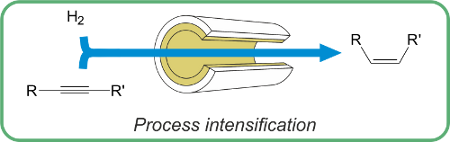
- . Selectivity in partial hydrogenation is ruled by the relative rates of the first and second hydrogenation steps, as well as by the adsorption strengths of alkyne and alkene over the metal catalyst surface. Other side-products may include those due to dimerization and isomerization reactions, depending on the








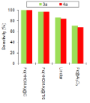
Synthesis of 1-indanones with a broad range of biological activity
Beilstein J. Org. Chem. 2017, 13, 451–494, doi:10.3762/bjoc.13.48
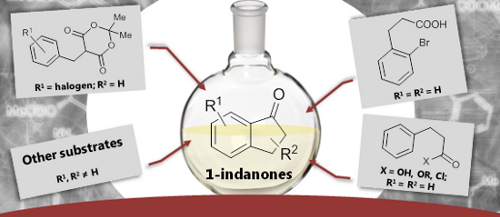
- Meldrum’s acids 70 have been used for the synthesis of 1-indanones 71 [48]. The reaction was catalyzed by Sc(OTf)3 and proceeded in very good yields (up to 94%) (Scheme 24). 1.1.4 From aldehydes and dialdehydes: The stereoselective dimerization reaction of phthalaldehydes 72, catalyzed by a N-heterocyclic


Dimerization reactions of aryl selenophen-2-yl-substituted thiocarbonyl S-methanides as diradical processes: a computational study
Beilstein J. Org. Chem. 2017, 13, 410–416, doi:10.3762/bjoc.13.44

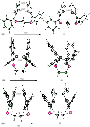
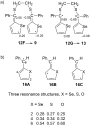
- , Winterthurerstrasse 190, CH-8057 Zurich, Switzerland 10.3762/bjoc.13.44 Abstract An intriguing stepwise diradical mechanism of the dimerization of the reactive intermediate (thiocarbonyl S-methanide) appearing in the reaction of phenyl selenophen-2-yl thioketone with diazomethane was studied by means of
- computational methods. The preferred formation of the unusual macroheterocycle, competitive with the 1,3-ring closure leading to a thiirane and the head-to-head dimerization yielding a 1,4-dithiane derivative, respectively, was explained based on the analysis of the structure of the favored conformer of the
- located at the terminal C-atoms of the 1,3-dipole. In the case of polar groups, such as sulfonyl or phosphonyl moieties, the dimerization leads to five-membered 1,3-dithiolane derivatives 4 (sulfoniumylides) [7][8]. Diaryl-substituted thiocarbonyl S-methanides 1 react in the absence of a dipolarophile


Diastereoselective anodic hetero- and homo-coupling of menthol-, 8-methylmenthol- and 8-phenylmenthol-2-alkylmalonates
Beilstein J. Org. Chem. 2017, 13, 33–42, doi:10.3762/bjoc.13.5
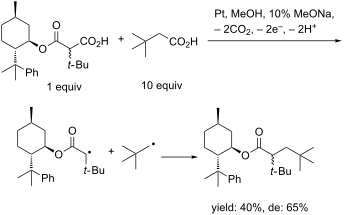
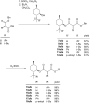
- auxiliary in the esters is not yet resolved. Without a coacid succinic acid derivatives 26a/b/c–29a/b/c were obtained by dimerization of the half-ester radicals with yields of up to 50% and a facial diastereoselectivity of up to 87.5:12.5. Products that are similar to these of the anodic coupling can be




Identification, synthesis and mass spectrometry of a macrolide from the African reed frog Hyperolius cinnamomeoventris
Beilstein J. Org. Chem. 2016, 12, 2731–2738, doi:10.3762/bjoc.12.269
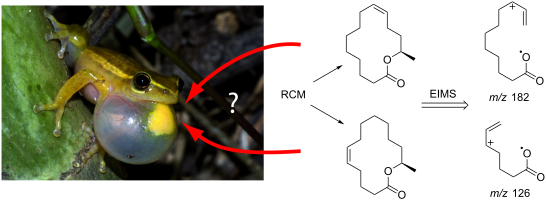
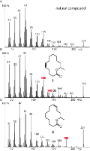
- -dodecenolides, 12-tridecenolides and isomerized 13-tetradecenolides were obtained. In addition, ring expanded 14-pentadecenolides were observed. The latter can be explained by dimerization of esters 9 or 17, isomerization of the double bond, and final ring closure, leading to either ring-contracted or expanded



A new protocol for the synthesis of 4,7,12,15-tetrachloro[2.2]paracyclophane
Beilstein J. Org. Chem. 2016, 12, 2443–2449, doi:10.3762/bjoc.12.237
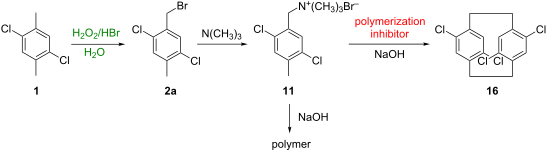
- precursor of parylene D, from 2,5-dichloro-p-xylene. In the first bromination step, with H2O2–HBr as a bromide source, this procedure becomes organic-waste-free and organic-solvent-free and can appropriately replace the existing bromination methods. The Winberg elimination–dimerization step, using aqueous
- sodium hydroxide solution instead of silver oxide for anion exchange, results in a significant improvement in product yield. Furthermore, four substituted [2.2]paracyclophanes were also prepared in this convenient way. Keywords: bromination; dimerization; H2O2–HBr system; paracyclophane; polymerization
- prepare tetrachloroparacyclophane, but a pure polysubstituted product is difficult to obtain by electrophilic substitution without repeated crystallization or chromatographic purification [9]. Thus, we report an improved synthesis method using the Winberg dimerization of 2,5-dichloro-(4-methylbenzyl


Combined experimental and theoretical studies of regio- and stereoselectivity in reactions of β-isoxazolyl- and β-imidazolyl enamines with nitrile oxides
Beilstein J. Org. Chem. 2016, 12, 2390–2401, doi:10.3762/bjoc.12.233

- protons of the vinyl fragment in the 1H NMR spectra. Hydroxamoyl chlorides are known as masked nitrile oxides and the latter could easily be generated by reaction of the former with a base [31][32][33]. Nitrile oxides, apart from the expected cycloaddition reaction, could undergo dimerization affording




Synthesis of medronic acid monoesters and their purification by high-performance countercurrent chromatography or by hydroxyapatite
Beilstein J. Org. Chem. 2016, 12, 2145–2149, doi:10.3762/bjoc.12.204
- unreported problem in the chlorination reaction of trimethyl methylene-BP with oxalyl chloride, i.e., we observed that the triester readily formed a dimer with itself during the chlorination reaction according to the 1H and 31P NMR spectra. Dimerization has been previously observed with clodronic acid
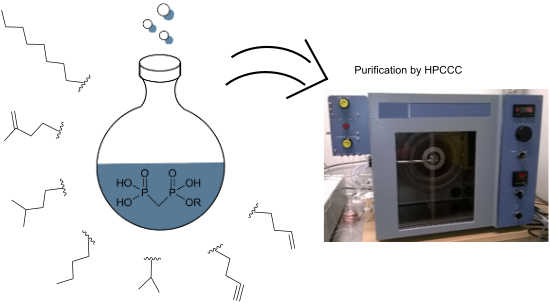
- trimethyl ester but not with medronic acid trimethyl ester [34]. In our case the dimerization led to low and unpredictable yields and therefore it was decided to develop an alternative method for the synthesis of mixed tetraesters. Here we describe a convenient method with good yields for the synthesis of


Thiophene-forming one-pot synthesis of three thienyl-bridged oligophenothiazines and their electronic properties
Beilstein J. Org. Chem. 2016, 12, 2055–2064, doi:10.3762/bjoc.12.194
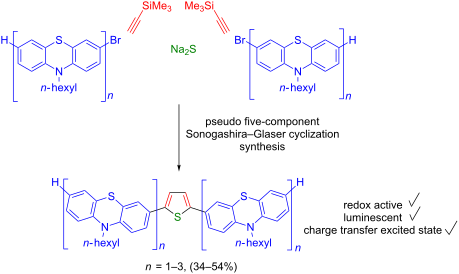
- by a Sonogashira–Glaser sequence [74] also for probing delicate oxidative dimerization conditions with easily oxidizable phenothiazinyl moieties. According to our recent study on the formation of butadiynyl-bridged diphenothiazines [54] we were optimistic to probe this unusual approach. First, three


Rearrangements of organic peroxides and related processes
Beilstein J. Org. Chem. 2016, 12, 1647–1748, doi:10.3762/bjoc.12.162





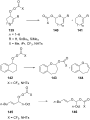


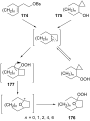


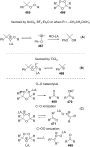


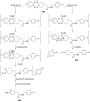


On the cause of low thermal stability of ethyl halodiazoacetates
Beilstein J. Org. Chem. 2016, 12, 1590–1597, doi:10.3762/bjoc.12.155

- bimolecular dimerization leading to azines; and 3) a reaction of the diazo compound with the solvent or a reactant prior to nitrogen extrusion. The fact that the decomposition rate of all halodiazoacetates showed first order kinetics and that t1/2 for 2b is independent of its concentration indicates that