Search results
Search for "donor" in Full Text gives 881 result(s) in Beilstein Journal of Organic Chemistry. Showing first 200.
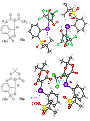
Using the phospha-Michael reaction for making phosphonium phenolate zwitterions
Beilstein J. Org. Chem. 2024, 20, 41–51, doi:10.3762/bjoc.20.6
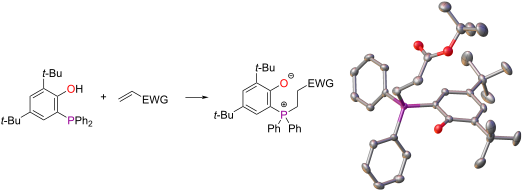
- primary adduct A (see Scheme 2) is too short-lived that an intramolecular hydrogen transfer toward 2a (C, in Scheme 2) is occurring [48]. Instead, in case of acrylonitrile another hydrogen bond donor, which is the solvent methanol [49], is necessary to trap intermediate A forming the ion pair D. Finally
- acceptor methyl acrylate reacts much faster in chloroform than acrylonitrile. A likely explanation is the preorganization of the Michael acceptor and donor by hydrogen bonding between the phosphine’s hydroxy group and the carbonyl group of the ester B’. Such a preorganization facilitates the proton
- for the conversion of acrylamide, which is probably disturbed when the hydrogen bond donor solvent methanol is interacting with the amide group and/or the hydroxy group. Conclusion The conjugate addition of 2,4-di-tert-butyl-6-(diphenylphosphino)phenol to Michael acceptor molecules allows for a facile


Beyond n-dopants for organic semiconductors: use of bibenzo[d]imidazoles in UV-promoted dehalogenation reactions of organic halides
Beilstein J. Org. Chem. 2023, 19, 1912–1922, doi:10.3762/bjoc.19.142
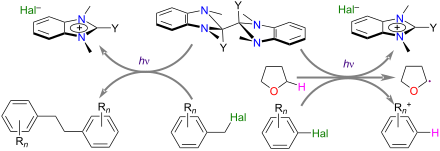
- ) and favor formation of bibenzyl over toluene (up to 52% yield at 18 h). [BnBr]•– presumably cleaves to afford Bn•, which can react further to form Bn2 (see following section) or can form toluene through reaction with THF, which is known to have a reasonably weak α-CH bond and act as a H• donor towards


Biphenylene-containing polycyclic conjugated compounds
Beilstein J. Org. Chem. 2023, 19, 1895–1911, doi:10.3762/bjoc.19.141
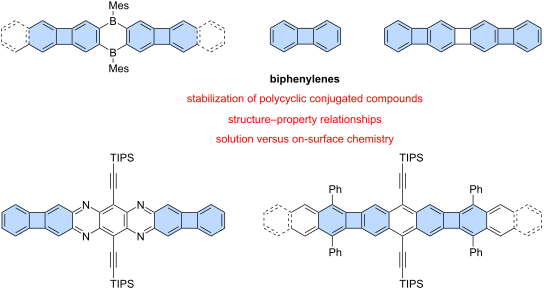
- nearly identical absorption profiles with a maximum absorption at λmax = 515 nm, the incorporation of donor groups in compound 34c led to a noteworthy bathochromic shift with a maximum absorption at λmax = 534 nm. Additionally, it was reported that all three compounds, 34a–c, demonstrated remarkable



Anion–π catalysis on carbon allotropes
Beilstein J. Org. Chem. 2023, 19, 1881–1894, doi:10.3762/bjoc.19.140
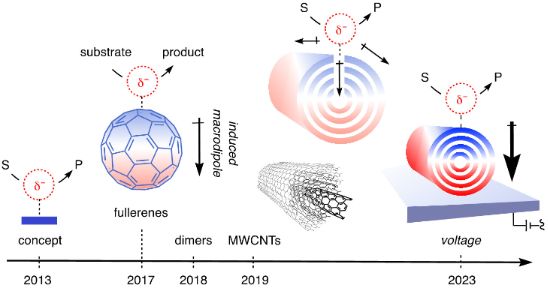
- control 12, a secondary Bingel amide in 13 caused a drop to A/D13/12 = 1.6. Similarly, low A/D14/12 = 1.5 for an ester in 14 supported that removal of the hydrogen-bond donor in 5 rather than steric constraints account for the decrease in anion–π catalysis. Elongation of the tether in the ester series 14


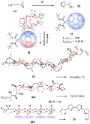


Aromatic systems with two and three pyridine-2,6-dicarbazolyl-3,5-dicarbonitrile fragments as electron-transporting organic semiconductors exhibiting long-lived emissions
Beilstein J. Org. Chem. 2023, 19, 1867–1880, doi:10.3762/bjoc.19.139
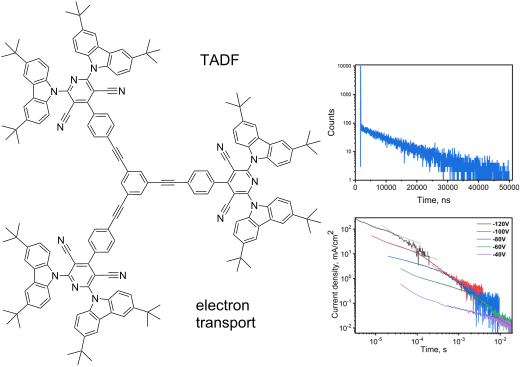
- -dicarbazolyl-3,5-dicarbonitrile. The compounds are synthesized by Sonogashira coupling reactions and characterized by steady-state and time-resolved luminescence spectroscopy. The compounds show efficient intramolecular charge transfer (ICT) from the donor to the acceptor. The photoluminescence (PL) spectra of
- emitter based on a pyridine-3,5-dicarbonitrile scaffold (to serve as an electron acceptor) directly linked to a carbazole moiety (to serve as an electron donor) was reported by the groups of Dong and Zhang in 2015 [4]. 2,6-Di(9H-carbazol-9-yl)-4-phenylpyridine-3,5-dicarbonitrile (CPC) showed an extremely
- of pyridine-3,5-dicarbonitrile-derived electron-acceptor and acridine electron–donor moieties. The films of molecular mixtures of these emitters with the hosts exhibited excellent photophysical properties [6]. They showed PLQY of up to 91%, tiny singlet–triplet energy gaps of 0.01 eV, and ultrashort


Controlling the reactivity of La@C82 by reduction: reaction of the La@C82 anion with alkyl halide with high regioselectivity
Beilstein J. Org. Chem. 2023, 19, 1858–1866, doi:10.3762/bjoc.19.138
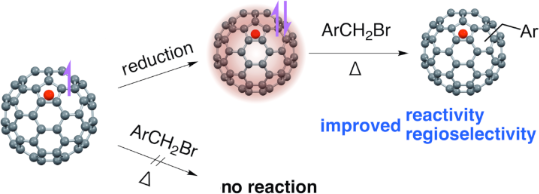
- produced chemically or electrochemically. C602− is a strong electron donor and potential nucleophile that reacts with electrophiles [6][7][8][9][10][11]. The mechanism for the reaction of C602− with alkyl halides has been studied in detail by Fukuzumi et al., who found that the reaction occurs via electron
- 3a was confirmed by the SC-XRD analysis, which showed that the addition site of addendum was indeed at the C10 position of La@C2v-C82 (Figure 5). The La@C2v-C82 anion can act as an electron donor and a nucleophile. To confirm the reaction mechanism, charge density and the p-orbital axis vector (POAV


Thienothiophene-based organic light-emitting diode: synthesis, photophysical properties and application
Beilstein J. Org. Chem. 2023, 19, 1849–1857, doi:10.3762/bjoc.19.137
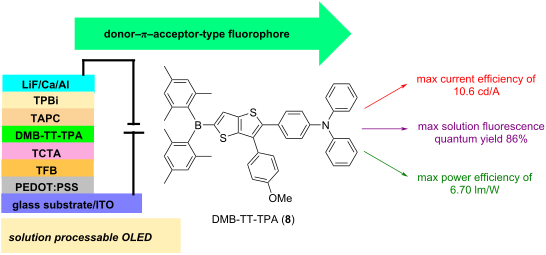
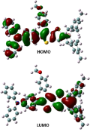
- Recep Isci Turan Ozturk Department of Chemistry, Istanbul Technical University, 34469, Maslak, Istanbul, Turkey TUBITAK UME, Chemistry Group Laboratories, 41470, Gebze, Kocaeli, Turkey 10.3762/bjoc.19.137 Abstract A donor–π–acceptor (D–π–A)-type pull–push compound, DMB-TT-TPA (8), comprising
- triphenylamine as donor and dimesitylboron as acceptor linked through a thieno[3,2-b]thiophene (TT) π-conjugated linker bearing a 4-MeOPh group, was designed, synthesized, and fabricated as an emitter via a solution process for an organic light-emitting diode (OLED) application. DMB-TT-TPA (8) exhibited
- for organic electronic applications [12][35]. Dimesitylboron (DMB), with its unoccupied p-orbital, is an electron-acceptor organoboron compound used in several donor–acceptor systems to provide the system with pull–push interaction [36][37]. In this work, we have designed and synthesized a D–π–A model


Recent advancements in iodide/phosphine-mediated photoredox radical reactions
Beilstein J. Org. Chem. 2023, 19, 1785–1803, doi:10.3762/bjoc.19.131
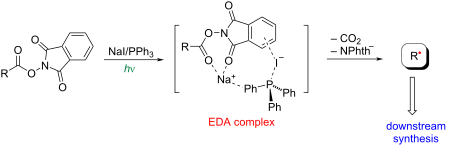
- smoothly delivered an electron donor–acceptor (EDA) complex II via coulombic interactions. Upon 456 nm blue LED light irradiation, the EDA complex II underwent a single electron transfer (SET) process, followed by subsequent decarboxylation to produce the alkyl radical intermediate A, accompanied by
- amount of ammonium iodide under irradiation in the absence of triphenylphosphine (Scheme 12). The generation of alkyl radicals was attributed to the photoactivation of a transient electron donor–acceptor complex formed between iodide and N-(acyloxy)phthalimide, in line with earlier findings. These




Active-metal template clipping synthesis of novel [2]rotaxanes
Beilstein J. Org. Chem. 2023, 19, 1776–1784, doi:10.3762/bjoc.19.130
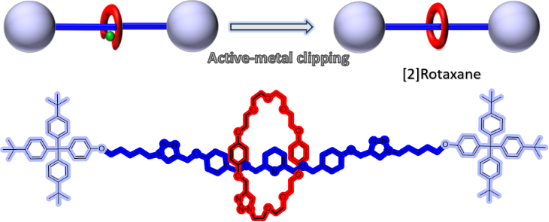
- ) [30][31], metal-ion template (coordination bonds [22][32], ion-dipol [16], donor–acceptor (charge transfer, π–π stacking) [30][33], and oligoamide macrocycle-hydrogen acceptors (hydrogen bonding) [20][34]. In active-metal template methods (Figure 1) the metal ion acts both as template and catalyst for


Selectivity control towards CO versus H2 for photo-driven CO2 reduction with a novel Co(II) catalyst
Beilstein J. Org. Chem. 2023, 19, 1766–1775, doi:10.3762/bjoc.19.129
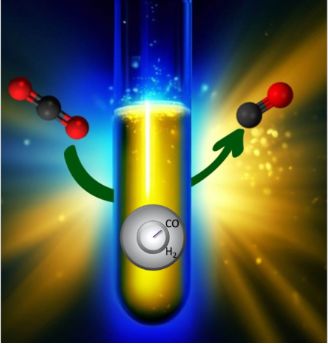
- purpose, three main components are needed: a photosensitizer (PS), which acts like a light-antennae harvesting system in natural photosynthesis, a catalyst (Cat.), reacting directly with CO2 after being reduced, and a sacrificial electron donor (SeD). When the involved (photo)catalysts are homogeneous
- developing the major components of a photocatalytic system for CO2 reduction, such as the photosensitizer (PS), the catalyst, and the sacrificial electron donor (SeD). Nevertheless, the solvent and eventual additives play an important role too [6], as they can influence the (photo)redox properties of the
- [20][21][41]. In addition, the benzimidazolidine derivative, BIH (1,3-dimethyl-2-phenyl-benzo[d]imidazolidine) (shown in Figure 1) suited well as a sacrificial electron donor, because of its high reducing power [47]. The photocatalytic experiments were performed under 420 nm light irradiation unless


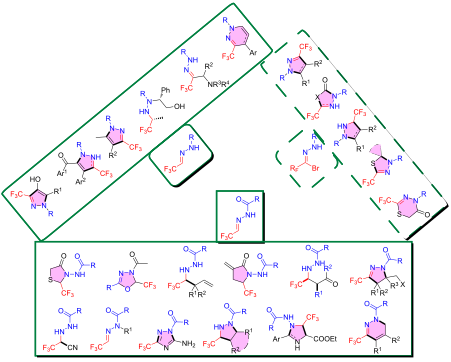
Trifluoromethylated hydrazones and acylhydrazones as potent nitrogen-containing fluorinated building blocks
Beilstein J. Org. Chem. 2023, 19, 1741–1754, doi:10.3762/bjoc.19.127
- indispensable role in drug discovery and design since the hydrogen atom can act as lipophilic hydrogen-bond donor and act as a bioisostere for the alcohol moiety [81][82][83]. Thus, many effective difluoromethylation strategies have been developed in recent years. Difluoroacetohydrazonoyl bromides were chosen


Effects of the aldehyde-derived ring substituent on the properties of two new bioinspired trimethoxybenzoylhydrazones: methyl vs nitro groups
Beilstein J. Org. Chem. 2023, 19, 1713–1727, doi:10.3762/bjoc.19.125
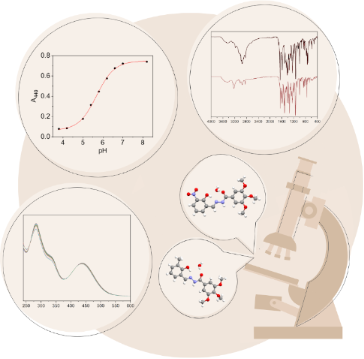
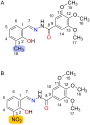
- derived from the same 3,4,5-trimethoxybenzoic acid hydrazide, but differ with respect to the carbonyl precursors: herein, 3-substituted salicylaldehydes (Scheme 1) are used, which assure for a harder donor-atoms set in order to target trivalent metal ions such as aluminum(III), which has been proposed to
- different space groups. The methyl-containing hdz-CH3 crystallized in the monoclinic system, C2/c space group, while the nitro derivative hdz-NO2 belongs to the group, from the triclinic system. In both cases, a moderate to strong intramolecular H-bond involving the phenol oxygen O1 as H-donor and the
- protonated at N1, which constitutes the first step in the mechanism. Overall, the N-acylhydrazones presented in this work are pure, well-characterized from structural and spectroscopic points of view, stable at physiological pH, and contain an ONO set of donor atoms potentially able to target trivalent metal





Quinoxaline derivatives as attractive electron-transporting materials
Beilstein J. Org. Chem. 2023, 19, 1694–1712, doi:10.3762/bjoc.19.124
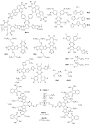
- ]thiophene in different ratios to produce three copolymers, Qx1a, Qx1b and Qx1c (Figure 2). This strategy reduced aggregation and improved the performance and stability of copolymers, with Qx1c achieving a PCE of 4.81% with PTB7-Th donor in an all-PSC device. Moreover, the broadened absorption band indicated
- separation by reducing Coulomb attraction and exciton binding energy. The resulting enhancement in exciton dissociation and reduced charge recombination contribute to the improved performance of polymer acceptors, especially Qx2 which achieved PCE of 5.32% with PBDB-T donor in an all-PSC device [20]. In a
- % in an all-PSC device with the PBDB-T donor, whereas Qx8 showed poor charge transport, severe charge recombination, and a PCE of 1.62%. This highlighted the significance of side chain engineering in achieving high-performance polymer acceptors [22]. In addition to the importance of side-chain




A deep-red fluorophore based on naphthothiadiazole as emitter with hybridized local and charge transfer and ambipolar transporting properties for electroluminescent devices
Beilstein J. Org. Chem. 2023, 19, 1664–1676, doi:10.3762/bjoc.19.122
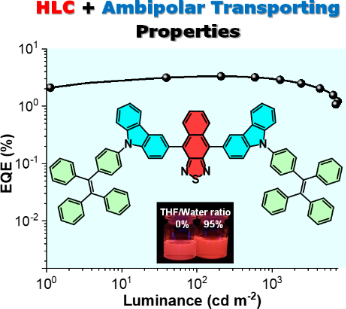
- Frontier Research Center, Vidyasirimedhi Institute of Science and Technology, Wangchan, Rayong 21210, Thailand 10.3762/bjoc.19.122 Abstract Herein, we report the synthesis and characterization of an efficient ambipolar charge-carrier-transporting deep-red fluorophore (TPECNz) based on a donor–acceptor
- –donor (D–A–D)-type molecule and its application as a non-doped emitter in an organic light-emitting diode (OLED). The fluorophore TPECNz contains naphtho[2,3-c][1,2,5]thiadiazole (Nz) as a strong acceptor unit symmetrically functionalized with N-(4-(1,2,2-triphenylvinyl)phenyl)carbazole as a donor and
- extended π-conjugation lengths which eventually favor the undesired formation of poorly emissive molecular aggregates must be overcome. Alternatively, donor–acceptor (D–A)-type organic fluorophores have been introduced and successfully exploited for the development of fluorophores with DR/NIR emissions


Benzoimidazolium-derived dimeric and hydride n-dopants for organic electron-transport materials: impact of substitution on structures, electrochemistry, and reactivity
Beilstein J. Org. Chem. 2023, 19, 1651–1663, doi:10.3762/bjoc.19.121
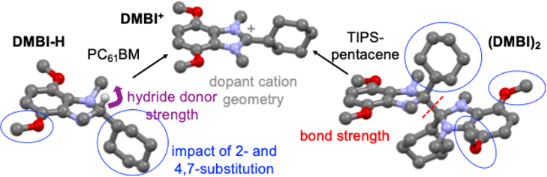
- -donating than 4-dimethylaminophenyl, at least according to NMR and DFT data for molecules in which the (hetero)aryl group is more or less coplanar with a π-acceptor [56], although some tabulated Swain–Lupton substituent constants do suggest phenyl can be a stronger π-donor than thienyl towards another aryl
- •+/1H and 12•+/12 potentials are relevant to the air stability of the hydrides and dimers, respectively, as well as to other processes in which 1H or 12 acts as an electron donor, such as the initation step proposed for the radical-chain dehalogenation of α-dihaloketones by a 1H derivative [58] and
- and when comparing R' = H and R' = OMe examples, do correlate with the expected stability of the resultant 1+ cations, which is also expected to correlate with the hydride donor strength of 1H. This is consistent with previous findings that the first and rate-determining step of several 1H/SC


Tying a knot between crown ethers and porphyrins
Beilstein J. Org. Chem. 2023, 19, 1630–1650, doi:10.3762/bjoc.19.120
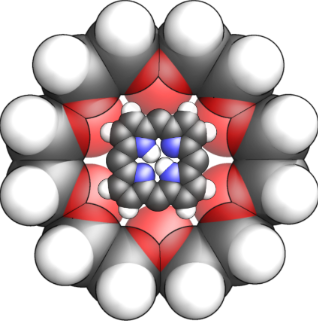
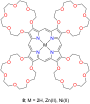
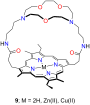
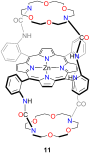
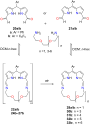
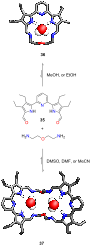
- geometry with the cobalt(II) positioned slightly above the N4 donor plane. The X-ray structure of 18b-Co exhibited a similar Pacman motif as its palladium analogue, with the cobalt(II) cation residing in a square-planar environment. The exploitation of a similar synthetic methodology allowed for preparing









A series of perylene diimide cathode interlayer materials for green solvent processing in conventional organic photovoltaics
Beilstein J. Org. Chem. 2023, 19, 1620–1629, doi:10.3762/bjoc.19.119
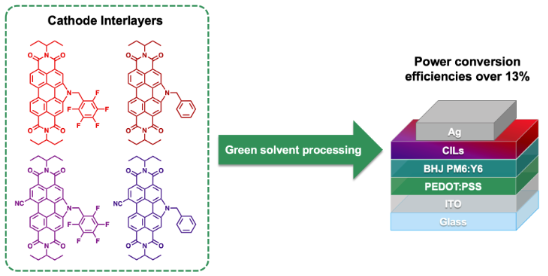
- the donor material in the BHJ from coming in contact with the cathode, thus blocking holes and reducing recombination processes. Fourth, CILs can provide smooth surface morphologies for better contact with the cathode, as otherwise defects in the BHJ, such as pinholes, can occur [10][11][12
- investigation of the processes involved in the formation of the interfacial layer between the donor–acceptor and the charge transport layer. Nevertheless, based on all the optoelectrical characterization, proposed N-annulated perylene diimides-based CILs are suitable candidates for CILs that can be replaced
- respective HOMO/LUMO level energies determined from CV E1/2 values. b) Corresponding CVs for PDIN-FB, PDIN-B, CN-PDIN-FB, and CN-PDIN-B with E1/2 values. a) Chemical structures of BHJ donor material PM6 and acceptor material Y6, b) conventional OPV device structure used in this study, and c) the work


Synthesis of 5-arylidenerhodanines in L-proline-based deep eutectic solvent
Beilstein J. Org. Chem. 2023, 19, 1537–1544, doi:10.3762/bjoc.19.110

- donor (HBD) and an H-bond acceptor (HBA) in appropriate molar ratios, generally at moderate temperature. A wide variety of DES is discussed in the literature depending on the individual components chosen. Several reviews on DES were published during the last years and clearly demonstrate the high


Application of N-heterocyclic carbene–Cu(I) complexes as catalysts in organic synthesis: a review
Beilstein J. Org. Chem. 2023, 19, 1408–1442, doi:10.3762/bjoc.19.102
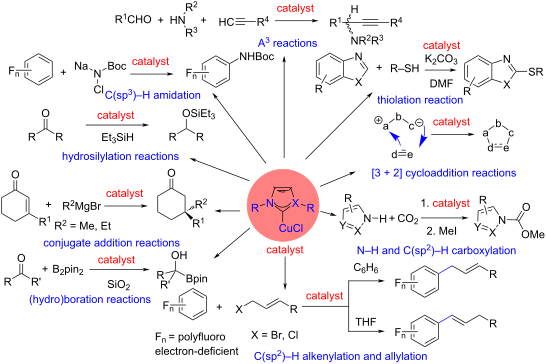
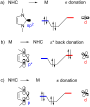
- caused by its structural features. NHCs constitute a well-established class of new ligands in organometallic chemistry. Although initially NHCs were regarded as pure σ-donor ligands, later experimental and theoretical studies established the presence of a significant back donation from the d-orbital of
- ligands in organometallic chemistry. After the first synthesis of stable monomeric NHCs, spectroscopic studies promptly revealed their similarity with phosphines. Indeed, both these classes of ligands are σ-donor ligands with low π-backdonating character [16][17]. In the beginning, the NHCs were perceived
- as σ-donor ligands only. However, subsequent experimental [18] and theoretical [19] studies revealed that a simultaneous back donation from the d-orbital of the metal to the π*-orbital of the NHC occurs in these species, which was also corroborated by energy decomposition analysis (EDA) calculations








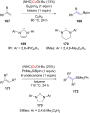


Visible-light-induced nickel-catalyzed α-hydroxytrifluoroethylation of alkyl carboxylic acids: Access to trifluoromethyl alkyl acyloins
Beilstein J. Org. Chem. 2023, 19, 1372–1378, doi:10.3762/bjoc.19.98
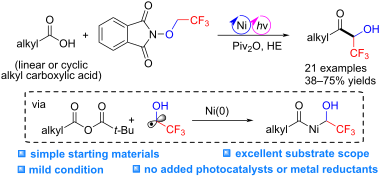
- ., Zibo 256401, China 10.3762/bjoc.19.98 Abstract A visible-light-induced nickel-catalyzed cross coupling of alkyl carboxylic acids with N-trifluoroethoxyphthalimide is described. Under purple light irradiation, an α-hydroxytrifluoroethyl radical generated from a photoactive electron donor–acceptor
- -difluoroethoxyphthalimide as the fluoroalkylating reagent failed to afford the desired product. According to our previous work [39] and literature precedent [27][35][38], a possible mechanism is proposed in Figure 2. The interaction between 2 and HE generates an electron donor–acceptor (EDA) complex A, which undergoes a


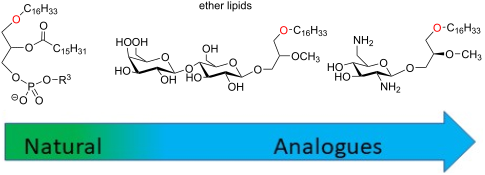
Synthesis of ether lipids: natural compounds and analogues
Beilstein J. Org. Chem. 2023, 19, 1299–1369, doi:10.3762/bjoc.19.96






Organic thermally activated delayed fluorescence material with strained benzoguanidine donor
Beilstein J. Org. Chem. 2023, 19, 1289–1298, doi:10.3762/bjoc.19.95
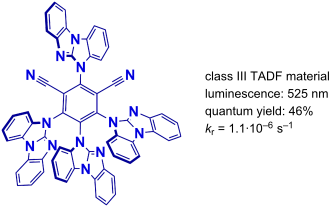
- benzoguanidine donor and compare it with the benchmark carbazole-based material (4CzIPN). Extended π-conjugation in 4BGIPN material results in yellow-green luminescence at 512 nm with a fast radiative rate of 5.5 × 10⁻⁵ s−1 and a photoluminescence quantum yield of 46% in methylcyclohexane solution. Such a
- performance in OLED devices [1]. 4CzIPN is a donor–acceptor-type system where carbazole donor ligands are bound to the benzonitrile acceptor core moiety. In this work we have substituted the carbazole donors with 5H-benzo[d]benzo[4,5]imidazo[1,2-a]imidazole (benzoguanidine) ligands to give 4BGIPN, see Figure
- , and 1H/13C NMR spectroscopy. Proton NMR shows a complicated set of overlapping multiplets indicating that the reaction results in the formation of various isomers (rotamers) which are different by relative orientation of the benzoguanidine donor moieties with respect to each other (Figure 2, see


Enabling artificial photosynthesis systems with molecular recycling: A review of photo- and electrochemical methods for regenerating organic sacrificial electron donors
Beilstein J. Org. Chem. 2023, 19, 1198–1215, doi:10.3762/bjoc.19.88
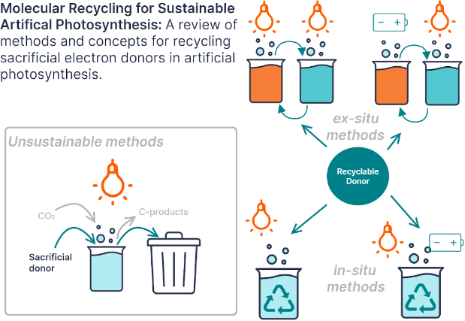
- Grace A. Lowe van ’t Hoff Institute for Molecular Sciences (HIMS), Universiteit van Amsterdam (UvA), Science Park 904, Amsterdam, 1098 XH, The Netherlands 10.3762/bjoc.19.88 Abstract This review surveys advances in the literature that impact organic sacrificial electron donor recycling in
- artificial photosynthesis. Systems for photocatalytic carbon dioxide reduction are optimized using sacrificial electron donors. One strategy for coupling carbon dioxide reduction and water oxidation to achieve artificial photosynthesis is to use a redox mediator, or recyclable electron donor. This review
- sacrificial electron donors, and for researchers interested in designing new redox mediator and recyclable electron donor species. Keywords: artificial photosynthesis; photocatalysis; redox couple; sacrificial electron donor; solar fuels; Introduction Artificial photosynthesis research has resulted in the


Exploring the role of halogen bonding in iodonium ylides: insights into unexpected reactivity and reaction control
Beilstein J. Org. Chem. 2023, 19, 1171–1190, doi:10.3762/bjoc.19.86
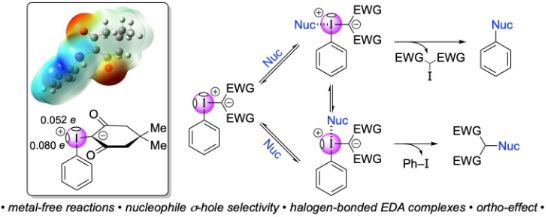
- include nucleophile σ-hole selectivity, and how ylide structural modifications and intramolecular halogen bonding (e.g., the ortho-effect) can improve ylide stability or solubility, and alter reaction outcomes. Keywords: electron donor–acceptor complex; halogen bonding; σ-holes; iodonium ylides; ortho
- pattern shown in Figure 1, where R is the host atom or functional group to which the halogen is covalently bound, where X is the halogen atom possessing the σ-hole (halogen bond donor), and where Y is the Lewis base (halogen bond acceptor) [31]. σ-Holes arise from anisotropic covalent bonds between the
- –180° [39][49][50], and with halogen bond lengths that are typically less than or equal to the sum of the atomic Van der Waals radii of the engaged atoms [33]. The strength of a subsequent halogen bond is influenced by the magnitudes of the positive electrostatic potential (VS,max) of the donor and the








Selective and scalable oxygenation of heteroatoms using the elements of nature: air, water, and light
Beilstein J. Org. Chem. 2023, 19, 1146–1154, doi:10.3762/bjoc.19.82
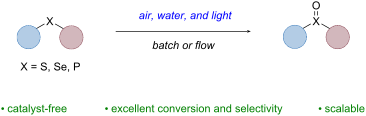
- retardants [14]. Sulfoxides are prominent pharmaceutical ingredients, while phosphine oxides improve solubility of corresponding compounds [15] and have applications in catalysis and materials science [16]. Selenoxides find use as oxygen transfer agents and donor ligands in metal catalysis and organic