


Search results
Search for "metal complexes" in Full Text gives 276 result(s) in Beilstein Journal of Organic Chemistry. Showing first 200.
Synthesis of oligonucleotides on a soluble support
- Harri Lönnberg
Beilstein J. Org. Chem. 2017, 13, 1368–1387, doi:10.3762/bjoc.13.134
- needed. Spectroscopic studies on structure, dynamics and recognition of ONs by other biopolymers, small molecules or metal complexes, for example, may consume ONs in amounts that cannot be conveniently reached by lab-scale solid-phase synthesizers. In addition to synthesis on a soluble support

Graphical Abstract

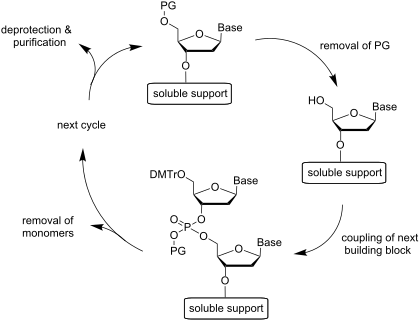
Figure 1: General principle of oligonucleotide synthesis.
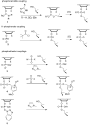
Scheme 1: Alternative coupling methods used in the synthesis of oligonucleotides.

Scheme 2: Synthesis of ODNs on a precipitative PEG-support by phosphotriester chemistry using MSNT/NMI activa...

Scheme 3: Synthesis of ODNs on a precipitative tetrapodal support by phosphotriester chemistry using 1-hydrox...

Scheme 4: Synthesis of ODNs on a precipitative PEG-support by conventional phosphoramidite chemistry [51].

Scheme 5: Synthesis of ODNs on a precipitative tetrapodal support by conventional phosphoramidite chemistry [43].

Scheme 6: Synthesis of ODNs by an extractive strategy on an adamant-1-ylacetyl support [57].

Scheme 7: Synthesis of ODNs by a combination of extractive and precipitative strategy [58].

Scheme 8: Synthesis of ODNs by phosphoramidite chemistry on a N1,N3,N5-tris(2-aminoethyl)benzene-1,3,5-tricar...
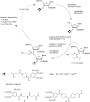
Scheme 9: Synthesis of ORNs by phosphoramidite chemistry on a hydrophobic support [61].

Scheme 10: Synthesis of ORNs by the phosphoramidite chemistry on a precipitative tetrapodal support using 2´-O...

Scheme 11: Synthesis of ORNs by phosphoramidite chemistry on a precipitative tetrapodal support from commercia...

Scheme 12: Synthesis of ODNs on a precipitative PEG-support by H-phosphonate chemistry [65].

Scheme 13: Synthesis of 2´-O-methyl ORN phosphorothioates by phosphoramidite chemistry by making use of nanofi...
Continuous-flow processes for the catalytic partial hydrogenation reaction of alkynes
- Carmen Moreno-Marrodan,
- Francesca Liguori and
- Pierluigi Barbaro
Beilstein J. Org. Chem. 2017, 13, 734–754, doi:10.3762/bjoc.13.73
- ], in the presence of 2.5–30% amine additives. A variety of other single alkyne substrates have been hydrogenated under continuous-flow conditions using packed catalysts consisting of immobilized metal complexes. We refer the readers to the specific literature for these systems [178][179]. Substrate

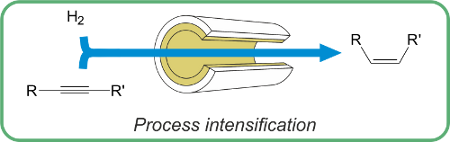
Graphical Abstract

Scheme 1: Common reaction pathways for alkyne hydrogenation reactions.

Figure 1: Schematic representation of most common reactor types for batch and continuous-flow partial hydroge...
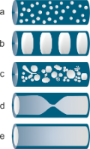
Figure 2: Schematic representation of flow regimes in microchannels; (a) bubbly flow, (b) slug/Taylor or segm...

Figure 3: Sketch of typical continuous flow apparatus for liquid-phase catalytic alkynes hydrogenation reacti...
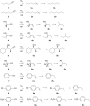
Scheme 2: Hydrogenation reactions of terminal alkynes with potential products and labelling scheme.

Figure 4: Structure of Pd@mpg-C3N4 (a), Pd(HHDMA)@C (b), Pd(Pb)@CaCO3 (c) and Pd@Al2O3 (d) catalysts. The str...

Figure 5: Sketch of composition (left) and optical image of Pd@MonoBor monolithic reactor (right). Adapted wi...

Figure 6: X-ray tomography 3D-reconstruction image of MonoBor [133]. Unpublished image from the authors.
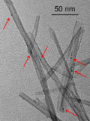
Figure 7: Representative TEM image of titanate nanotubes with immobilized PdNP (arrows). Adapted with permiss...

Figure 8: Conversion and selectivity vs. time-on-stream for the continuous-flow hydrogenation of 6 over Pd@Mo...
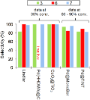
Figure 9: Continuous-flow hydrogenation of 3, 6 and 7 over different catalytic reactor systems. Data from ref...

Scheme 3: Hydrogenation reactions of internal alkynes with potential products and labelling scheme.

Figure 10: Continuous-flow hydrogenation of 11 over Pd@MonoBor catalyst. a) Conversion and selectivity as a fu...

Figure 11: Conversion and selectivity vs time-on-stream for the continuous-flow hydrogenation of 11 over Pd@Mo...

Figure 12: Continuous-flow hydrogenation reaction of 11 over packed-bed catalysts. Adapted with permission fro...

Figure 13: Images of the bimodal TiO2 monolith with well-defined macroporosity: (a, b) optical; (c) X-ray tomo...
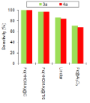
Figure 14: Selectivity of the continuous-flow partial hydrogenation reaction of 3 and 4 over packed-bed Pd cat...
Synthesis of 1-indanones with a broad range of biological activity
- Marika Turek,
- Dorota Szczęsna,
- Marek Koprowski and
- Piotr Bałczewski
Beilstein J. Org. Chem. 2017, 13, 451–494, doi:10.3762/bjoc.13.48
- diesters: In 1951, Gilmore has demonstrated that use of esters, rather than free arylpropionic acids in phosphoric acid, in the presence of phosphorus pentoxide also led to 1-indanones in equally good or even better yields [32]. Transition metal complexes have been used by Negishi et al. as catalysts in
- using lithium, nickel and palladium catalysts (Scheme 15). A general mechanism illustrating the role of transition metal complexes and CO in this reaction is shown in Scheme 15. Cyclic esters were also used in the syntheses of 1-indanones. Thus, by adding β-propiolactone to aluminum chloride in benzene

Graphical Abstract

Figure 1: Biologically active 1-indanones and their structural analogues.

Figure 2: Number of papers about (a) 1-indanones, (b) synthesis of 1-indanones.

Scheme 1: Synthesis of 1-indanone (2) from hydrocinnamic acid (1).

Scheme 2: Synthesis of 1-indanone (2) from 3-(2-bromophenyl)propionic acid (3).

Scheme 3: Synthesis of 1-indanones 5 from 3-arylpropionic acids 4.

Scheme 4: Synthesis of kinamycin (9a) and methylkinamycin C (9b).

Scheme 5: Synthesis of trifluoromethyl-substituted arylpropionic acids 12, 1-indanones 13 and dihydrocoumarin...

Scheme 6: Synthesis of 1-indanones 16 from benzoic acids 15.

Scheme 7: Synthesis of 1-indanones 18 from arylpropionic and 3-arylacrylic acids 17.

Scheme 8: The NbCl5-induced one-step synthesis of 1-indanones 22.

Scheme 9: Synthesis of biologically active 1-indanone derivatives 26.

Scheme 10: Synthesis of enantiomerically pure indatraline ((−)-29).

Scheme 11: Synthesis of 1-indanone (2) from the acyl chloride 30.

Scheme 12: Synthesis of the mechanism-based inhibitors 33 of coelenterazine.

Scheme 13: Synthesis of the indane 2-imidazole derivative 37.

Scheme 14: Synthesis of fluorinated PAHs 41.

Scheme 15: Synthesis of 1-indanones 43 via transition metal complexes-catalyzed carbonylative cyclization of m...

Scheme 16: Synthesis of 6-methyl-1-indanone (46).

Scheme 17: Synthesis of 1-indanone (2) from ester 48.

Scheme 18: Synthesis of benzopyronaphthoquinone 51 from the spiro-1-indanone 50.

Scheme 19: Synthesis of the selective endothelin A receptor antagonist 55.

Scheme 20: Synthesis of 1-indanones 60 from methyl vinyl ketone (57).

Scheme 21: Synthesis of 1-indanones 64 from diethyl phthalate 61.

Scheme 22: Synthesis of 1-indanone derivatives 66 from various Meldrum’s acids 65.

Scheme 23: Synthesis of halo 1-indanones 69.

Scheme 24: Synthesis of substituted 1-indanones 71.

Scheme 25: Synthesis of spiro- and fused 1-indanones 73 and 74.

Scheme 26: Synthesis of spiro-1,3-indanodiones 77.

Scheme 27: Mechanistic pathway for the NHC-catalyzed Stetter–Aldol–Michael reaction.

Scheme 28: Synthesis of 2-benzylidene-1-indanone derivatives 88a–d.

Scheme 29: Synthesis of 1-indanone derivatives 90a–i.

Scheme 30: Synthesis of 1-indanones 96 from o-bromobenzaldehydes 93 and alkynes 94.

Scheme 31: Synthesis of 3-hydroxy-1-indanones 99.

Scheme 32: Photochemical preparation of 1-indanones 103 from ketones 100.

Scheme 33: Synthesis of chiral 3-aryl-1-indanones 107.

Scheme 34: Photochemical isomerization of 2-methylbenzil 108.

Scheme 35: Synthesis of 2-hydroxy-1-indanones 111a–c.

Scheme 36: Synthesis of 1-indanone derivatives 113 and 114 from η6-1,2-dioxobenzocyclobutene complex 112.

Scheme 37: Synthesis of nakiterpiosin (117).

Scheme 38: Synthesis of 2-alkyl-1-indanones 120.

Scheme 39: Synthesis of fluorine-containing 1-indanone derivatives 123.

Scheme 40: Synthesis of 2-benzylidene and 2-benzyl-1-indanones 126, 127 from the chalcone 124.

Scheme 41: Synthesis of 2-bromo-6-methoxy-3-phenyl-1-indanone (130).

Scheme 42: Synthesis of combretastatin A-4-like indanones 132a–s.

Figure 3: Chemical structures of investigated dienones 133 and synthesized cyclic products 134–137.

Figure 4: Chemical structures of 1-indanones and their heteroatom analogues 138–142.

Scheme 43: Synthesis of 2-phosphorylated and 2-non-phosphorylated 1-indanones 147 and 148 from β-ketophosphona...

Scheme 44: Photochemical synthesis of 1-indanone derivatives 150, 153a, 153b.

Scheme 45: Synthesis of polysubstituted-1-indanones 155, 157.

Scheme 46: Synthesis of 1-indanones 159a–g from α-arylpropargyl alcohols 158 using RhCl(PPh3)3 as a catalyst.

Scheme 47: Synthesis of optically active 1-indanones 162 via the asymmetric Rh-catalyzed isomerization of race...

Scheme 48: Mechanism of the Rh-catalyzed isomerization of α-arylpropargyl alcohols 161 to 1-indanones 162.

Figure 5: Chemical structure of abicoviromycin (168) and its new benzo derivative 169.

Scheme 49: Synthesis of racemic benzoabicoviromycin 172.

Scheme 50: Synthesis of [14C]indene 176.

Scheme 51: Synthesis of indanone derivatives 178–180.

Scheme 52: Synthesis of racemic pterosin A 186.

Scheme 53: Synthesis of trans-2,3-disubstituted 1-indanones 189.

Scheme 54: Synthesis of 3-aryl-1-indanone derivatives 192.

Scheme 55: Synthesis of 1-indanone derivatives 194 from 3-(2-iodoaryl)propanonitriles 193.

Scheme 56: Synthesis of 1-indanones 200–204 by cyclization of aromatic nitriles.

Scheme 57: Synthesis of 1,1’-spirobi[indan-3,3’-dione] derivative 208.

Scheme 58: Total synthesis of atipamezole analogues 211.

Scheme 59: Synthesis of 3-[4-(1-piperidinoethoxy)phenyl]spiro[indene-1,1’-indan]-5,5’-diol hydrochloride 216.

Scheme 60: Synthesis of 3-arylindan-1-ones 219.

Scheme 61: Synthesis of 2-hydroxy-1-indanones 222.

Scheme 62: Synthesis of the 1-indanone 224 from the THP/MOM protected chalcone epoxide 223.

Scheme 63: Synthesis of 1-indanones 227 from γ,δ-epoxy ketones 226.

Scheme 64: Synthesis of 2-hydroxy-2-methylindanone (230).

Scheme 65: Synthesis of 1-indanone derivatives 234 from cyclopropanol derivatives 233.

Scheme 66: Synthesis of substituted 1-indanone derivatives 237.

Scheme 67: Synthesis of 7-methyl substituted 1-indanone 241 from 1,3-pentadiene (238) and 2-cyclopentenone (239...

Scheme 68: Synthesis of disubstituted 1-indanone 246 from the siloxydiene 244 and 2-cyclopentenone 239.

Scheme 69: Synthesis of 5-hydroxy-1-indanone (250) via the Diels–Alder reaction of 1,3-diene 248 with sulfoxid...

Scheme 70: Synthesis of halogenated 1-indanones 253a and 253b.

Scheme 71: Synthesis of 1-indanones 257 and 258 from 2-bromocyclopentenones 254.

Scheme 72: Synthesis of 1-indanone 261 from 2-bromo-4-acetoxy-2-cyclopenten-1-one (260) and 1,2-dihydro-4-viny...

Scheme 73: Synthesis of 1-indanone 265 from 1,2-dihydro-7-methoxy-4-vinylnaphthalene (262) and bromo-substitut...

Scheme 74: Synthesis of 1-indanone 268 from dihydro-3-vinylphenanthrene 266 and 4-acetoxy-2-cyclopenten-1-one (...

Scheme 75: Synthesis of 1-indanone 271 from phenylselenyl-substituted cyclopentenone 268.

Scheme 76: Synthesis of 1-indanone 272 from the trienone 270.

Scheme 77: Synthesis of the 1-indanone 276 from the aldehyde 273.

Scheme 78: Synthesis of 1-indanones 278 and 279.

Scheme 79: Synthesis of 1-indanone 285 from octa-1,7-diyne (282) and cyclopentenone 239.

Scheme 80: Synthesis of benz[f]indan-1-one (287) from cyclopentenone 239 and o-bis(dibromomethyl)benzene (286)....

Scheme 81: Synthesis of 3-methyl-substituted benz[f]indan-1-one 291 from o-bis(dibromomethyl)benzene (286) and...

Scheme 82: Synthesis of benz[f]indan-1-one (295) from the anthracene epidioxide 292.

Scheme 83: Synthesis of 1-indanone 299 from homophthalic anhydride 298 and cyclopentynone 297.

Scheme 84: Synthesis of cyano-substituted 1-indanone derivative 301 from 2-cyanomethylbenzaldehyde (300) and c...

Scheme 85: Synthesis of 1-indanone derivatives 303–305 from ketene dithioacetals 302.

Scheme 86: Synthesis of 1-indanones 309–316.

Scheme 87: Mechanism of the hexadehydro-Diels–Alder (HDDA) reaction.

Scheme 88: Synthesis of 1-indenone 318 and 1-indanones 320 and 321 from tetraynes 317 and 319.

Scheme 89: Synthesis of 1-indanone 320 from the triyn 319.

Scheme 90: Synthesis 1-indanone 328 from 2-methylfuran 324.

Scheme 91: Synthesis of 1-indanones 330 and 331 from furans 329.

Scheme 92: Synthesis of 1-indanone 333 from the cycloadduct 332.

Scheme 93: Synthesis of (S)-3-arylindan-1-ones 335.

Scheme 94: Synthesis of (R)-2-acetoxy-1-indanone 338.

Figure 6: Chemical structures of obtained cyclopenta[α]phenanthrenes 339.

Scheme 95: Synthesis of the benzoindanone 343 from arylacetaldehyde 340 with 1-trimethylsilyloxycyclopentene (...
The reductive decyanation reaction: an overview and recent developments
- Jean-Marc R. Mattalia
Beilstein J. Org. Chem. 2017, 13, 267–284, doi:10.3762/bjoc.13.30
- removal of a beneficial functional group. The electron-withdrawing properties of the nitrile functional group appear beneficial in a variety of reactions [1][2]. This group coordinates metal complexes and can be used as a directing group for C–H bond activation reactions catalyzed by transition metals [3

Graphical Abstract

Scheme 1: Mechanism for the reduction under metal dissolving conditions.

Scheme 2: Example of decyanation in metal dissolving conditions coupled with deprotection [30]. TBDMS = tert-buty...

Scheme 3: Preparation of α,ω-dienes [18,33].

Scheme 4: Cyclization reaction using a radical probe [18].

Scheme 5: Synthesis of (±)-xanthorrhizol (8) [39].

Scheme 6: Mechanism for the reduction of α-aminonitriles by hydride donors.

Scheme 7: Synthesis of phenanthroindolizidines and phenanthroquinolizidines [71].

Scheme 8: Two-step synthesis of 5-unsubstituted pyrrolidines (25 examples and 1 synthetic application, see be...

Scheme 9: Synthesis of (±)-isoretronecanol 19. DBU = 1,8-diazabicyclo[5.4.0]undec-7-ene [74].

Scheme 10: Proposed mechanism with 14a for the NaBH4 induced decyanation reaction (“BH3” = BH3·THF) [74].

Scheme 11: Reductive decyanation by a sodium hydride–iodide composite (26 examples) [81].

Scheme 12: Proposed mechanism for the reduction by NaH [81].

Scheme 13: Reductive decyanation catalyzed by nickel nanoparticles. Yields are given in weight % from GC–MS da...

Scheme 14: Decyanation of 2-cyanobenzo[b]thiophene [87].

Scheme 15: Simplified pathways involved in transition-metal-promoted reductive decyanations [93,95].

Scheme 16: Fe-catalyzed reductive decyanation. Numbers in square brackets represent turnover numbers. The TONs...

Scheme 17: Rh-catalyzed reductive decyanation of aryl nitriles (18 examples, 2 synthetic applications) [103].

Scheme 18: Rh-catalyzed reductive decyanation of aliphatic nitriles (15 examples, one synthetic application) [103].

Scheme 19: Ni-catalyzed reductive decyanation (method A: 28 examples and 2 synthetic applications; method B: 3...

Scheme 20: Reductive decyanation catalyzed by the nickel complex 58 (method A, 14 examples, yield ≥ 20% and 1 ...

Scheme 21: Proposed catalytic cycle for the nickel complex 58 catalyzed decyanation (method A). Only the cycle...

Scheme 22: Synthesis of bicyclic lactones [119,120].

Scheme 23: Reductive decyanation of malononitriles and cyanoacetates using NHC-boryl radicals (9 examples). Fo...

Scheme 24: Proposed mechanism for the reduction by NHC-boryl radicals. The other possible pathway (addition of ...

Scheme 25: Structures of organic electron-donors. Only the major Z isomer of 80 is shown [125,127].

Scheme 26: Reductive decyanation of malononitriles and cyanoacetates using organic electron-donors (method A, ...

Scheme 27: Photoreaction of dibenzylmalononitrile with 81 [128].

Scheme 28: Examples of decyanation promoted in acid or basic media [129,131,134,135].

Scheme 29: Mechanism proposed for the base-induced reductive decyanation of diphenylacetonitriles [136].

Scheme 30: Reductive decyanation of triarylacetonitriles [140].
The synthesis of α-aryl-α-aminophosphonates and α-aryl-α-aminophosphine oxides by the microwave-assisted Pudovik reaction
- Erika Bálint,
- Ádám Tajti,
- Anna Ádám,
- István Csontos,
- Konstantin Karaghiosoff,
- Mátyás Czugler,
- Péter Ábrányi-Balogh and
- György Keglevich
Beilstein J. Org. Chem. 2017, 13, 76–86, doi:10.3762/bjoc.13.10
- use of many types of catalysts, such as acids (HCOOH) [15] or bases (NaOH [16], 1,8-diazabicyclo[5.4.0]undec-7-ene (DBU) [17], tetramethylguanidine (TMG) [18][19]), p-toluenesulfonyl chloride [20], metal salts (MgSO4) [21], CdI2 [22]), metal complexes (BF3·EtO2 [23][24], t-PcAlCl [15]), and phase

Graphical Abstract

Scheme 1: Synthesis of starting N-benzylideneamines 1.

Scheme 2: Addition of diethyl phosphite to N-benzylidene(butyl)amine in acetonitrile.

Figure 1: IR spectra of the reaction components in acetonitrile solution.

Figure 2: A segment of the time-dependent IR spectrum for the addition of diethyl phosphite to N-benzylidene(...

Figure 3: Concentration profiles of the reaction components in the addition reaction at 80 °C in acetonitrile....

Figure 4: Atomic numbering with anisotropic displacements plot of 5b at −100 °C.

Figure 5: Atomic numbering with anisotropic displacements plot of 5d at −100 °C.

Figure 6: The energy diagram for the reaction with dimethyl phosphite.

Figure 7: The energy diagram for the reaction with diphenylphosphine oxide.
Extrusion – back to the future: Using an established technique to reform automated chemical synthesis
- Deborah E. Crawford
Beilstein J. Org. Chem. 2017, 13, 65–75, doi:10.3762/bjoc.13.9
- interactions upon mixing, but these did not involve the formation of a covalent bond. However, James et al. report on the formation of covalent bonds in metal-organic frameworks (MOFs) and discrete metal complexes by TSE, under solvent-free conditions or in the presence of stoichiometric amounts of MeOH [2
- prepared in batch. PXRD analysis also indicated that highly crystalline materials were produced from the extrusion process, prior to any post process purification [2]. Two discrete metal complexes have been synthesised by extrusion, involving the reaction between salenH2 and nickel acetate dihydrate as

Graphical Abstract

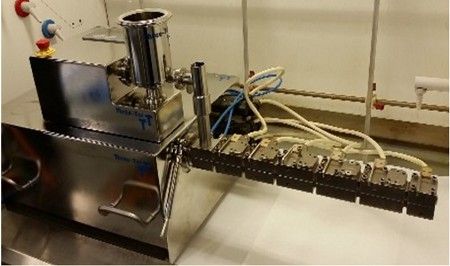
Figure 1: Typical pilot scale single screw extruder (left) and a laboratory scale twin screw extruder (right)....

Figure 2: PTFE screw employed in single screw extrusion, with increasing root diameter (RD) from 45 mm to 95 ...

Figure 3: Modulated stainless steel intermeshing co-rotating screws employed typically in twin screw extrusio...

Scheme 1: Polymerisation of styrene using s-BuLi as an initiator.

Scheme 2: Telescoping process of the formation of polystyrene, followed by post polymerisation functionalisat...

Scheme 3: Proposed mechanism for the branching of polylactide. Adapted from [23].

Scheme 4: Chemical reaction between isocyanate and an alcohol to form polyurethane.

Figure 4: Representative diagram explaining the process involved in step growth polymerisation, which involve...

Scheme 5: Generic polycondensation reaction to produce polyamides.

Figure 5: Comparison of choline chloride/D-fructose DES prepared via twin screw extrusion (left) and conventi...

Scheme 6: Synthesis of HKUST-1, ZIF-8 and Al(fumarate)OH by twin screw extrusion. Adapted from [2].

Figure 6: Synthesis of Ni(NCS)2(PPh3)2 and [Ni(salen)] by twin screw extrusion. Adapted from [2].
Protonated paramagnetic redox forms of di-o-quinone bridged with p-phenylene-extended TTF: A EPR spectroscopy study
- Nikolay O. Chalkov,
- Vladimir K. Cherkasov,
- Gleb A. Abakumov,
- Andrey G. Starikov and
- Viacheslav A. Kuropatov
Beilstein J. Org. Chem. 2016, 12, 2450–2456, doi:10.3762/bjoc.12.238

- in trianion radical metal complexes. The character of the spin-density distribution in this species is similar as it was observed for its monoprotonated analogue (1·)H. The EPR spectrum is centered at giso = 2.0060 and it was also interpreted as a triplet of triplets (both 1:2:1) of doublets (Figure

Graphical Abstract

Figure 1: The structural formula of acceptor–donor–acceptor triad 1.

Figure 2: The EPR spectrum of (1·)H in CHCl3, 293 K: a) experimental and b) experimental + D2O.

Scheme 1: Disproportionation of the protonated semiquinones in solution.

Scheme 2: Paramagnetic reduced protonated derivatives of the quinone 2.

Figure 3: The EPR spectrum of (1·)H3 in CHCl3, 293 K: a) experimental, b) simulated, c) experimental + D2O an...

Figure 4: The EPR spectrum of (1·−)H2 THF, 293 K: a) experimental and b) experimental + D2O). Magnified side ...

Figure 5: The well-resolved EPR spectrum of (1·−)H2 in dimethoxyethane (diluted solution), 273 K: a) experime...
Organometallic chemistry
- Bernd F. Straub,
- Rolf Gleiter,
- Claudia Meier and
- Lutz H. Gade
Beilstein J. Org. Chem. 2016, 12, 2216–2221, doi:10.3762/bjoc.12.213
- studied the electronic structure of organo-transition metal complexes by extended Hückel model calculations [14][17][20][28][39][49][50][54][57]. In 1978, he completed his habilitation in Erlangen, mentored by Paul von Ragué Schleyer, and was promoted to professor in 1980. Following a three-month visiting
- the very few chemists with a history of research and teaching in theoretical, organic and inorganic chemistry. His research interests combined all three fields, with a focus on homogeneous catalysis with transition metal complexes. Bidentate donor ligands with a small bite angle such as bis(di-tert

Figure 1: Peter Hofmann.
Synthesis and characterization of fluorinated azadipyrromethene complexes as acceptors for organic photovoltaics
- Forrest S. Etheridge,
- Roshan J. Fernando,
- Sandra Pejić,
- Matthias Zeller and
- Geneviève Sauvé
Beilstein J. Org. Chem. 2016, 12, 1925–1938, doi:10.3762/bjoc.12.182
- reduction potentials (more positive), allowed for air-stable fabrication of organic field effect transistors (OFETs), and showed promise in solar cells [13][32]. Some homoleptic metal complexes, such as Ir(III) phenylpyridine-based complexes, are favored for their use in light-emitting devices and the

Graphical Abstract

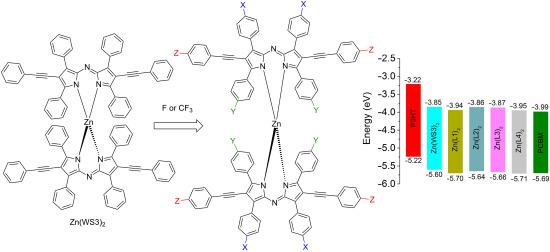
Figure 1: a) Azadipyrromethene ligand labeling positioning; b and c) chelates; d) estimated HOMO/LUMO energy ...

Figure 2: Chemical structures of the fluorinated ADP derivatives of WS3 explored in the study.

Scheme 1: Generic synthetic scheme for fluorinated free ligands, where L# corresponds to the desired ligand n...

Scheme 2: Generic chelation scheme yielding WS3-based BF2+ and zinc(II) complexes.

Figure 3: TGA spectra for the zinc(II) complexes.
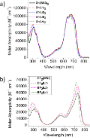
Figure 4: Molar absorptivities in chloroform solutions of a) zinc(II) chelates b) BF2+ chelates.
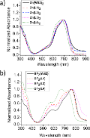
Figure 5: Normalized absorbance from spun-coat chloroform solution on microscope glass of a) zinc(II) chelate...

Figure 6: Cyclic voltamograms of zinc(II) chelates in 0.1 M TBAPF6 dichloromethane solution with Fc/Fc+ as an...

Figure 7: Cyclic voltamograms of BF2+ chelates in 0.1 M TBAPF6 dichloromethane solution with Fc/Fc+ as an int...

Figure 8: Estimated HOMO and LUMO energy levels obtained by cyclic voltammetry from the E1/2 values in dichlo...

Figure 9: ORTEP drawing of Zn(L2)2 with ellipsoids drawn at the 50% probability level and a partial labeling ...
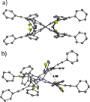
Figure 10: ORTEP drawing of Zn(L2)2 with ellipsoids drawn at the 50% probability level and a partial labeling ...
Experimental and theoretical investigations on the high-electron donor character of pyrido-annelated N-heterocyclic carbenes
- Michael Nonnenmacher,
- Dominik M. Buck and
- Doris Kunz
Beilstein J. Org. Chem. 2016, 12, 1884–1896, doi:10.3762/bjoc.12.178
- to stabilize low coordinated metal fragments in higher oxidation states, for example intermediates of catalytic reactions. Experimental General information. All reactions were carried out under an inert argon atmosphere in dried and degassed solvents using standard Schlenk techniques. All metal
- complexes were handled in an MBraun glovebox with a nitrogen atmosphere. Solvents were dried according to standard procedures. [Rh(dipiy)Cl(cod)] (1a), [Rh(dipiytBu)Cl(cod)] (1b) [56] and the dipyridoimidazolium salt dipiytBu*HBF4 [41] were prepared according to literature procedures. NMR spectra were

Graphical Abstract

Figure 1: Left: resonance hybrid of the dipyrido carbenes dipiy and dipiytBu. Right: two canonical forms of t...

Scheme 1: Preparation of the 13CO substituted rhodium complexes 2 bearing the dipyrido-annelated carbenes dip...

Figure 2: 13C NMR spectra (carbonyl region, 125 MHz) of the reaction of 1a with 13CO under variable pressure ...

Scheme 2: Proposed mechanism for the preferred exchange of the cis-CO ligand based on DFT-calculations (BP86 ...

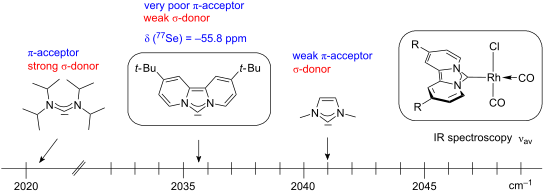
Figure 3: IR scale (cm−1) to determine the overall electron-donor capacity of various N-heterocyclic carbenes...

Figure 4: Highest occupied molecular orbitals for the dipyrido-annelated carbene dipiy. The σ-type carbene lo...

Figure 5: Molecular orbitals of the Rh complexes II-Rh, III-Rh and 2a that show ligand-metal π-bonds.
TMSBr-mediated solvent- and work-up-free synthesis of α-2-deoxyglycosides from glycals
- Mei-Yuan Hsu,
- Yi-Pei Liu,
- Sarah Lam,
- Su-Ching Lin and
- Cheng-Chung Wang
Beilstein J. Org. Chem. 2016, 12, 1758–1764, doi:10.3762/bjoc.12.164

- -unsatuated glycosides. This constitutes the major competitive reaction pathway in acid-catalysed 2-deoxyglycosylation of glycals [52][57][59]. Besides, unfavourable conditions involving the use of expensive or toxic metal complexes, high temperatures, and long reaction times are usually required in most of

Graphical Abstract

Scheme 1: Iterative synthesis of trisaccharide 66.

Scheme 2: Proposed mechanisms for TMSBr-mediated synthesis of 2-deoxyglycosides in the presence of TPPO.
Rearrangements of organic peroxides and related processes
- Ivan A. Yaremenko,
- Vera A. Vil’,
- Dmitry V. Demchuk and
- Alexander O. Terent’ev
Beilstein J. Org. Chem. 2016, 12, 1647–1748, doi:10.3762/bjoc.12.162
- . Finally, the decomposition of 62 gives esters 59a–f. A number of other modern oxidizing systems are based on transition metal-peroxo complexes. The use of transition metal complexes were also used as catalysts for the Baeyer–Villiger reaction and the first example was documented in 1978 [196][214]. For
- example, Mo(VI) peroxo complexes 64 and 65 were employed as the catalysts and 90% H2O2 served as the oxidizer (Table 5). The results obtained from the reactions using molybdenum systems have stimulated the search for new catalysts based on transition metal complexes. The usage of the platimum complex
- [(dppb}Pt(µ-OH)]22+, where dppb is butane-1,4-diylbis(diphenylphosphane) (Scheme 19) [208]. The oxidation mechanism of ketones 67 is displayed in Scheme 20. The use of variable-valence metal complexes opened up a new field of application of the Baeyer–Villiger oxidation and there are now dozens of

Graphical Abstract
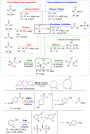
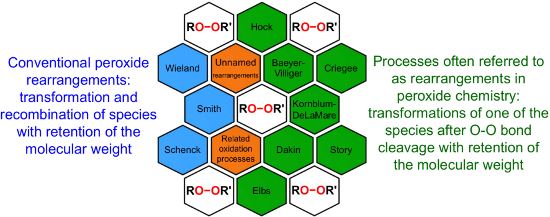
Figure 1: The named transformations considered in this review.

Scheme 1: The Baeyer–Villiger oxidation.

Scheme 2: The general mechanism of the peracid-promoted Baeyer–Villiger oxidation.

Scheme 3: General mechanism of the Lewis acid-catalyzed Baeyer–Villiger rearrangement.

Scheme 4: The theoretically studied mechanism of the BV oxidation reaction promoted by H2O2 and the Lewis aci...

Scheme 5: Proton movements in the transition states of the Baeyer–Villiger oxidation.

Scheme 6: The dependence of the course of the Baeyer–Villiger oxidation on the type of O–O-bond cleavage in t...
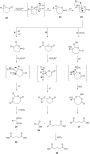
Scheme 7: The acid-catalyzed Baeyer–Villiger oxidation of cyclic epoxy ketones 22.

Scheme 8: Oxidation of isophorone oxide 29.

Scheme 9: Synthesis of acyl phosphate 32 from acyl phosphonate 31.

Scheme 10: Synthesis of aflatoxin B2 (36).

Scheme 11: The Baeyer–Villiger rearrangement of ketones 37 to lactones 38.

Scheme 12: Synthesis of 3,4-dimethoxybenzoic acid (40) via Baeyer–Villiger oxidation.

Scheme 13: Oxone transforms α,β-unsaturated ketones 43 into vinyl acetates 44.

Scheme 14: The Baeyer–Villiger oxidation of ketones 45 using diaryl diselenide and hydrogen peroxide.

Scheme 15: Baeyer–Villiger oxidation of (E)-2-methylenecyclobutanones.

Scheme 16: Oxidation of β-ionone (56) by H2O2/(BnSe)2 with formation of (E)-2-(2,6,6-trimethylcyclohex-1-en-1-...

Scheme 17: The mechanism of oxidation of ketones 58a–f by hydrogen peroxide in the presence of arsonated polys...

Scheme 18: Oxidation of ketone (58b) by H2O2 to 6-methylcaprolactone (59b) catalyzed by Pt complex 66·BF4.

Scheme 19: Oxidation of ketones 67 with H2O2 in the presence of [(dppb}Pt(µ-OH)]22+.

Scheme 20: The mechanism of oxidation of ketones 67 in the presence of [(dppb}Pt(µ-OH)]22+ and H2O2.

Scheme 21: Oxidation of benzaldehydes 69 in the presence of the H2O2/MeReO3 system.

Scheme 22: Oxidation of acetophenones 72 in the presence of the H2O2/MeReO3 system.

Scheme 23: Baeyer–Villiger oxidation of 2-adamantanone (45c) in the presence of Sn-containing mesoporous silic...

Scheme 24: Aerobic Baeyer–Villiger oxidation of ketones 76 using metal-free carbon.

Scheme 25: A regioselective Baeyer-Villiger oxidation of functionalized cyclohexenones 78 into a dihydrooxepin...

Scheme 26: The oxidation of aldehydes and ketones 80 by H2O2 catalyzed by Co4HP2Mo15V3O62.

Scheme 27: The cleavage of ketones 82 with hydrogen peroxide in alkaline solution.

Scheme 28: Oxidation of ketones 85 to esters 86 with H2O2–urea in the presence of KHCO3.

Scheme 29: Mechanism of the asymmetric oxidation of cyclopentane-1,2-dione 87a with the Ti(OiPr)4/(+)DET/t-BuO...

Scheme 30: The oxidation of cis-4-tert-butyl-2-fluorocyclohexanone (93) with m-chloroperbenzoic acid.

Scheme 31: The mechanism of the asymmetric oxidation of 3-substituted cyclobutanone 96a in the presence of chi...

Scheme 32: Enantioselective Baeyer–Villiger oxidation of cyclic ketones 98.

Scheme 33: Regio- and enantioselective Baeyer–Villiger oxidation of cyclic ketones 101.

Scheme 34: The proposed mechanism of the Baeyer–Villiger oxidation of acetal 105f.

Scheme 35: Synthesis of hydroxy-10H-acridin-9-one 117 from tetramethoxyanthracene 114.

Scheme 36: The Baeyer–Villiger oxidation of the fully substituted pyrrole 120.

Scheme 37: The Criegee rearrangement.

Scheme 38: The mechanism of the Criegee reaction of a peracid with a tertiary alcohol 122.

Scheme 39: Criegee rearrangement of decaline ethylperoxoate 127 into ketal 128.

Scheme 40: The ionic cleavage of 2-methoxy-2-propyl perester 129.

Scheme 41: The Criegee rearrangement of α-methoxy hydroperoxide 136.
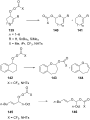
Scheme 42: Synthesis of enol esters and acetals via the Criegee rearrangement.

Scheme 43: Proposed mechanism of the transformation of 1-hydroperoxy-2-oxabicycloalkanones 147a–d.

Scheme 44: Transformation of 3-hydroxy-1,2-dioxolanes 151 into diketone derivatives 152.

Scheme 45: Criegee rearrangement of peroxide 153 with the mono-, di-, and tri-O-insertion.

Scheme 46: The sequential Criegee rearrangements of adamantanes 157a,b.

Scheme 47: Synthesis of diaryl carbonates 160a–d from triarylmethanols 159a–d through successive oxygen insert...

Scheme 48: The synthesis of sesquiterpenes 162 from ketone 161 with a Criegee rearrangement as one key step.

Scheme 49: Synthesis of trans-hydrindan derivatives 164, 165.

Scheme 50: The Hock rearrangement.

Scheme 51: The general scheme of the cumene process.

Scheme 52: The Hock rearrangement of aliphatic hydroperoxides.
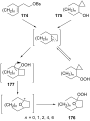
Scheme 53: The mechanism of solvolysis of brosylates 174a–c and spiro cyclopropyl carbinols 175a–c in THF/H2O2....

Scheme 54: The fragmentation mechanism of hydroperoxy acetals 178 to esters 179.

Scheme 55: The acid-catalyzed rearrangement of phenylcyclopentyl hydroperoxide 181.

Scheme 56: The peroxidation of tertiary alcohols in the presence of a catalytic amount of acid.

Scheme 57: The acid-catalyzed reaction of bicyclic secondary alcohols 192 with hydrogen peroxide.

Scheme 58: The photooxidation of 5,6-disubstituted 3,4-dihydro-2H-pyrans 196.

Scheme 59: The oxidation of tertiary alcohols 200a–g, 203a,b, and 206.

Scheme 60: Transformation of functional peroxide 209 leading to 2,3-disubstitued furans 210 in one step.

Scheme 61: The synthesis of carbazoles 213 via peroxide rearrangement.

Scheme 62: The construction of C–N bonds using the Hock rearrangement.

Scheme 63: The synthesis of moiety 218 from 217 which is a structural motif in the antitumor–antibiotic of CC-...

Scheme 64: The in vivo oxidation steps of cholesterol (219) by singlet oxygen.

Scheme 65: The proposed mechanism of the rearrangement of cholesterol-5α-OOH 220.

Scheme 66: Photochemical route to artemisinin via Hock rearrangement of 223.

Scheme 67: The Kornblum–DeLaMare rearrangement.

Scheme 68: Kornblum–DeLaMare transformation of 1-phenylethyl tert-butyl peroxide (225).

Scheme 69: The synthesis 4-hydroxyenones 230 from peroxide 229.

Scheme 70: The Kornblum–DeLaMare rearrangement of peroxide 232.

Scheme 71: The reduction of peroxide 234.

Scheme 72: The Kornblum–DeLaMare rearrangement of endoperoxide 236.

Scheme 73: The rearrangement of peroxide 238 under Kornblum–DeLaMare conditions.

Scheme 74: The proposed mechanism of rearrangement of peroxide 238.

Scheme 75: The Kornblum–DeLaMare rearrangement of peroxides 242a,b.

Scheme 76: The base-catalyzed rearrangements of bicyclic endoperoxides having electron-withdrawing substituent...

Scheme 77: The base-catalyzed rearrangements of bicyclic endoperoxides 249a,b having electron-donating substit...

Scheme 78: The base-catalyzed rearrangements of bridge-head substituted bicyclic endoperoxides 251a,b.

Scheme 79: The Kornblum–DeLaMare rearrangement of hydroperoxide 253.

Scheme 80: Synthesis of β-hydroxy hydroperoxide 254 from endoperoxide 253.

Scheme 81: The amine-catalyzed rearrangement of bicyclic endoperoxide 263.

Scheme 82: The base-catalyzed rearrangement of meso-endoperoxide 268 into 269.

Scheme 83: The photooxidation of 271 and subsequent Kornblum–DeLaMare reaction.

Scheme 84: The Kornblum–DeLaMare rearrangement as one step in the oxidation reaction of enamines.

Scheme 85: The Kornblum–DeLaMare rearrangement of 3,5-dihydro-1,2-dioxenes 284, 1,2-dioxanes 286, and tert-but...

Scheme 86: The Kornblum–DeLaMare rearrangement of epoxy dioxanes 290a–d.

Scheme 87: Rearrangement of prostaglandin H2 292.

Scheme 88: The synthesis of epicoccin G (297).

Scheme 89: The Kornblum–DeLaMare rearrangement used in the synthesis of phomactin A.

Scheme 90: The Kornblum–DeLaMare rearrangement in the synthesis of 3H-quinazolin-4-one 303.

Scheme 91: The Kornblum–DeLaMare rearrangement in the synthesis of dolabriferol (308).

Scheme 92: Sequential transformation of 3-substituted 2-pyridones 309 into 3-hydroxypyridine-2,6-diones 311 in...

Scheme 93: The Kornblum–DeLaMare rearrangement of peroxide 312 into hydroxy enone 313.

Scheme 94: The Kornblum–DeLaMare rearrangement in the synthesis of polyfunctionalized carbonyl compounds 317.

Scheme 95: The Kornblum–DeLaMare rearrangement in the synthesis of (Z)-β-perfluoroalkylenaminones 320.

Scheme 96: The Kornblum–DeLaMare rearrangement in the synthesis of γ-ketoester 322.

Scheme 97: The Kornblum–DeLaMare rearrangement in the synthesis of diterpenoids 326 and 328.

Scheme 98: The synthesis of natural products hainanolidol (331) and harringtonolide (332) from peroxide 329.

Scheme 99: The synthesis of trans-fused butyrolactones 339 and 340.

Scheme 100: The synthesis of leucosceptroid C (343) and leucosceptroid P (344) via the Kornblum–DeLaMare rearra...

Scheme 101: The Dakin oxidation of arylaldehydes or acetophenones.

Scheme 102: The mechanism of the Dakin oxidation.

Scheme 103: A solvent-free Dakin reaction of aromatic aldehydes 356.

Scheme 104: The organocatalytic Dakin oxidation of electron-rich arylaldehydes 358.

Scheme 105: The Dakin oxidation of electron-rich arylaldehydes 361.

Scheme 106: The Dakin oxidation of arylaldehydes 358 in water extract of banana (WEB).

Scheme 107: A one-pot approach towards indolo[2,1-b]quinazolines 364 from indole-3-carbaldehydes 363 through th...

Scheme 108: The synthesis of phenols 367a–c from benzaldehydes 366a-c via acid-catalyzed Dakin oxidation.

Scheme 109: Possible transformation paths of the highly polarized boric acid coordinated H2O2–aldehyde adduct 3...

Scheme 110: The Elbs oxidation of phenols 375 to hydroquinones.

Scheme 111: The mechanism of the Elbs persulfate oxidation of phenols 375 affording p-hydroquinones 376.

Scheme 112: Oxidation of 2-pyridones 380 under Elbs persulfate oxidation conditions.

Scheme 113: Synthesis of 3-hydroxy-4-pyridone (384) via an Elbs oxidation of 4-pyridone (382).

Scheme 114: The Schenck rearrangement.

Scheme 115: The Smith rearrangement.

Scheme 116: Three main pathways of the Schenck rearrangement.

Scheme 117: The isomerization of hydroperoxides 388 and 389.

Scheme 118: Trapping of dioxacyclopentyl radical 392 by oxygen.

Scheme 119: The hypothetical mechanism of the Schenck rearrangement of peroxide 394.

Scheme 120: The autoxidation of oleic acid (397) with the use of labeled isotope 18O2.

Scheme 121: The rearrangement of 18O-labeled hydroperoxide 400 under an atmosphere of 16O2.

Scheme 122: The rearrangement of the oleate-derived allylic hydroperoxides (S)-421 and (R)-425.

Scheme 123: Mechanisms of Schenck and Smith rearrangements.

Scheme 124: The rearrangement and cyclization of 433.

Scheme 125: The Wieland rearrangement.

Scheme 126: The rearrangement of bis(triphenylsilyl) 439 or bis(triphenylgermyl) 441 peroxides.

Scheme 127: The oxidative transformation of cyclic ketones.

Scheme 128: The hydroxylation of cyclohexene (447) in the presence of tungstic acid.

Scheme 129: The oxidation of cyclohexene (447) under the action of hydrogen peroxide.

Scheme 130: The reaction of butenylacetylacetone 455 with hydrogen peroxide.

Scheme 131: The oxidation of bridged 1,2,4,5-tetraoxanes.

Scheme 132: The proposed mechanism for the oxidation of bridged 1,2,4,5-tetraoxanes.

Scheme 133: The rearrangement of ozonides.

Scheme 134: The acid-catalyzed oxidative rearrangement of malondialdehydes 462 under the action of H2O2.
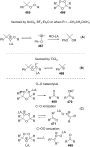
Scheme 135: Pathways of the Lewis acid-catalyzed cleavage of dialkyl peroxides 465 and ozonides 466.

Scheme 136: The mechanism of the transformation of (tert-butyldioxy)cyclohexanedienones 472.

Scheme 137: The synthesis of Vitamin K3 from 472a.

Scheme 138: Proposed mechanism for the transformation of 478d into silylated endoperoxide 479d.

Scheme 139: The rearrangement of hydroperoxide 485 to form diketone 486.

Scheme 140: The base-catalyzed rearrangement of cyclic peroxides 488a–g.

Scheme 141: Synthesis of chiral epoxides and aldols from peroxy hemiketals 491.

Scheme 142: The multistep transformation of (R)-carvone (494) to endoperoxides 496a–e.

Scheme 143: The decomposition of anthracene endoperoxide 499.

Scheme 144: Synthesis of esters 503 from aldehydes 501 via rearrangement of peroxides 502.

Scheme 145: Two possible paths for the base-promoted decomposition of α-azidoperoxides 502.

Scheme 146: The Story decomposition of cyclic diperoxide 506a.

Scheme 147: The Story decomposition of cyclic triperoxide 506b.

Scheme 148: The thermal rearrangement of endoperoxides A into diepoxides B.

Scheme 149: The transformation of peroxide 510 in the synthesis of stemolide (511).

Scheme 150: The possible mechanism of the rearrangement of endoperoxide 261g.

Scheme 151: The photooxidation of indene 517.

Scheme 152: The isomerization of ascaridole (523).

Scheme 153: The isomerization of peroxide 525.

Scheme 154: The thermal transformation of endoperoxide 355.

Scheme 155: The photooxidation of cyclopentadiene (529) at a temperature higher than 0 °C.

Scheme 156: The thermal rearrangement of endoperoxides 538a,b.

Scheme 157: The transformation of peroxides 541.

Scheme 158: The thermal rearrangements of strained cyclic peroxides.

Scheme 159: The thermal rearrangement of diacyl peroxide 551 in the synthesis of C4-epi-lomaiviticin B core 553....

Scheme 160: The 1O2 oxidation of tryptophan (554) and rearrangement of dioxetane intermediate 555.

Scheme 161: The Fe(II)-promoted cleavage of aryl-substituted bicyclic peroxides.

Scheme 162: The proposed mechanism of the Fe(II)-promoted rearrangement of 557a–c.

Scheme 163: The reaction of dioxolane 563 with Fe(II) sulfate.

Scheme 164: Fe(II)-promoted rearrangement of 1,2-dioxane 565.

Scheme 165: Fe(II) cysteinate-promoted rearrangement of 1,2-dioxolane 568.

Scheme 166: The transformation of 1,2-dioxanes 572a–c under the action of FeCl2.

Scheme 167: Fe(II) cysteinate-promoted transformation of tetraoxane 574.

Scheme 168: The CoTPP-catalyzed transformation of bicyclic endoperoxides 600a–d.

Scheme 169: The CoTPP-catalyzed transformation of epoxy-1,2-dioxanes.

Scheme 170: The Ru(II)-catalyzed reactions of 1,4-endoperoxide 261g.

Scheme 171: The Ru(II)-catalyzed transformation as a key step in the synthesis of elyiapyrone A (610) from 1,4-...

Scheme 172: Peroxides with antimalarial activity.

Scheme 173: The interaction of iron ions with artemisinin (616).

Scheme 174: The interaction of FeCl2 with 1,2-dioxanes 623, 624.

Scheme 175: The mechanism of reaction 623 and 624 with Fe(II)Cl2.

Scheme 176: The reaction of bicyclic natural endoperoxides G3-factors 631–633 with FeSO4.

Scheme 177: The transformation of terpene cardamom peroxide 639.
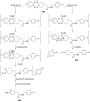
Scheme 178: The different ways of the cleavage of tetraoxane 643.

Scheme 179: The LC–MS analysis of interaction of tetraoxane 646 with iron(II)heme 647.

Scheme 180: The rearrangement of 3,6-epidioxy-1,10-bisaboladiene (EDBD, 649).

Scheme 181: Easily oxidized substrates.

Scheme 182: Biopathway of synthesis of prostaglandins.

Scheme 183: The reduction and rearrangements of isoprostanes.

Scheme 184: The partial mechanism for linoleate 658 oxidation.

Scheme 185: The transformation of lipid hydroperoxide.

Scheme 186: The acid-catalyzed cleavage of the product from free-radical oxidation of cholesterol (667).

Scheme 187: Two pathways of catechols oxidation.

Scheme 188: Criegee-like or Hock-like rearrangement of the intermediate hydroperoxide 675 in dioxygenase enzyme...

Scheme 189: Carotinoides 679 cleavage by carotenoid cleavage dioxygenases.
Ring-whizzing in polyene-PtL2 complexes revisited
- Oluwakemi A. Oloba-Whenu,
- Thomas A. Albright and
- Chirine Soubra-Ghaoui
Beilstein J. Org. Chem. 2016, 12, 1410–1420, doi:10.3762/bjoc.12.135
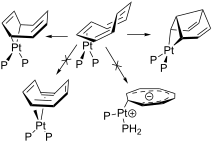
- , octafluorooctatetraene, 6-radialene, pentalene, phenalenium+, naphthalene and octafluoronaphthalene. The HOMO of a d10 ML2 group (with b2 symmetry) interacting with the LUMO of the polyene was used as a model to explain the occurrence of minima and maxima on the potential energy surface. Keywords: d10 metal complexes
- ; density functional theory (DFT); hapototropic rearrangements; HOMO–LUMO interactions; polyene-ML2 complexes; ring-whizzing; Introduction Polyene–transition metal complexes were found to undergo fluxional rearrangements as early as 1956 with the preparation of Cp2Fe(CO)2 [1]. The migration of an MLn unit
- from 35, as well as, η1, 36, and η3, 37. Unfortunately none of these produced new stationary points. We will return to this Ni versus Pt issue later. C. Polycyclic examples Pentalene metal complexes have been the subject of a number of investigations [61], as well as, theoretical explorations of

Graphical Abstract

Figure 1: The four coordination geometries for d10 polyene-ML2 complexes along with their hapto numbers and e...

Figure 2: The important valence orbitals of a d10 ML2 group, 5–7, along with the computed structures of Pt(PH3...

Figure 3: The empty degenerate set of π orbitals in the cyclopropenium cation is shown on the left side. On t...

Figure 4: Two unoccupied MOs for Cp+ are shown on the left side. The two stationary points for Cp–Pt(dpe)+ ar...

Figure 5: The half-filled degenerate π orbitals in cyclobutadiene. The computed ground state (15) and transit...
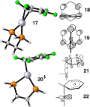
Figure 6: The ground and transition state for ring whizzing in F6C6–Pt(dpe), 17 and 20, respectively. The dom...
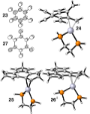
Figure 7: The LUMO, 23, and HOMO, 27, in 6-radialene. The optimized η2 ground states are shown in 24 and 25 w...

Figure 8: Two representations for the half-filled e2u set of π orbitals in cyclooctatetraene.

Figure 9: The stationary points found on the potential energy surface of C8F8–Pt(dpe). For clarity the groups...

Figure 10: The two important bonding interactions for transition state 31 are drawn in 33 and 34.

Figure 11: Three other coordination geometries that did not lead to new stationary points are shown in 35–37.

Figure 12: The LUMO and LUMO+1 shown in 38 and 39, respectively. The four stationary points found for pentalen...
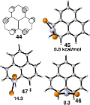
Figure 13: The LUMO of the phenalenium cation is given in 44. The structures of the three stationary points fo...

Figure 14: A top view of two stationary points found for F8C10–Pt(dpe); 48 is the ground state and 50, represe...

Figure 15: At top view of the η4, 52, and η4, 54, transition states along with the η2, 53, intermediate.
On the mechanism of imine elimination from Fischer tungsten carbene complexes
- Philipp Veit,
- Christoph Förster and
- Katja Heinze
Beilstein J. Org. Chem. 2016, 12, 1322–1333, doi:10.3762/bjoc.12.125
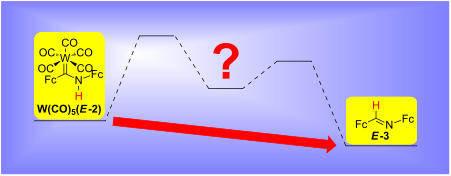
- spectrum of W(CO)5(E-2) (Supporting Information File 1) is similar to that of Cr(CO)5(E-2) [27] and to those of carbene(pentacarbonyl)metal complexes (Cr, W) [60][61]. Thermolysis of W(CO)5(E-2) in refluxing toluene gives imine E-3 [43] after ca. 24 h in almost quantitative yield, as monitored by 1H NMR

Graphical Abstract

Scheme 1: Imine formation and isomerization reactions from NH carbene complexes Cr(CO)5(E-2) (a) [27], Cr(CO)5(E/Z...

Scheme 2: Synthesis of W(CO)5(E-2) from W(CO)5(1Et) [20,21] and aminoferrocene [40,41] with concomitant formation of E-1,2-...

Scheme 3: Reaction pathways 1a/1b (migration–elimination) and 2a/2b (elimination–migration) for the formation...
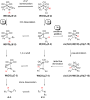
Scheme 4: Reaction pathways 3a/3b/3c (CO dissociation) for the formation of imine E-3 from W(CO)5(E-2).

Figure 1: DFT calculated oxidative addition/pseudorotation/reductive elimination pathway 3c from W(CO)4(E-2) ...

Figure 2: DFT calculated geometries of the two hydrido intermediates cis(N,H)-W(CO)4(H)(Z-15) and cis(C,H)-W(...

Scheme 5: Proposed reaction sequence from W(CO)5(E-2) to W(CO)5(PPh3) in the presence of triphenylphosphane.
Artificial Diels–Alderase based on the transmembrane protein FhuA
- Hassan Osseili,
- Daniel F. Sauer,
- Klaus Beckerle,
- Marcus Arlt,
- Tomoki Himiyama,
- Tino Polen,
- Akira Onoda,
- Ulrich Schwaneberg,
- Takashi Hayashi and
- Jun Okuda
Beilstein J. Org. Chem. 2016, 12, 1314–1321, doi:10.3762/bjoc.12.124
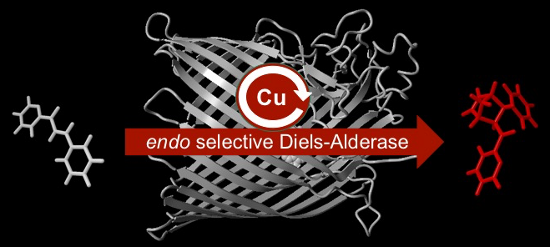
- metal complexes As the protein host, the FhuA ΔCVFtev variant of the Ferric hydroxamate uptake protein component A (FhuA) was chosen [31]. This protein was shown to be suitable to harbor Grubbs–Hoveyda type catalysts for olefin metathesis [17][18]. To anchor Cu(I) in the protein FhuA ΔCVFtev that

Graphical Abstract

Scheme 1: Syntheses to Cu(I) complex bearing a NHC ligand.

Scheme 2: Synthesis of Cu(II) terpyridyl complexes.

Scheme 3: Anchoring and refolding of the biohybrid copper complexes.

Figure 1: CD spectra of refolded catalysts 17–19 (red: 17, black: 18, blue: 19).

Figure 2: Temperature-dependent CD spectra of catalyst 17.

Figure 3: MALDI–TOF mass spectra (black: 17, red: FhuAΔCVFtev).
Synthesis, fluorescence properties and the promising cytotoxicity of pyrene–derived aminophosphonates
- Jarosław Lewkowski,
- Maria Rodriguez Moya,
- Anna Wrona-Piotrowicz,
- Janusz Zakrzewski,
- Renata Kontek and
- Gabriela Gajek
Beilstein J. Org. Chem. 2016, 12, 1229–1235, doi:10.3762/bjoc.12.117
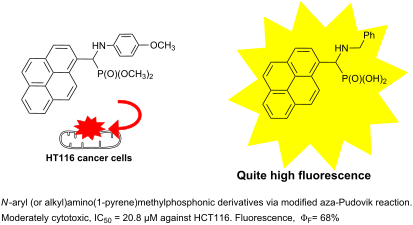
- preliminary form [9], fluorescence emission of their azomethine precursors was reported for pyrene-1-carboxaldehyde thiosemicarbazone and Schiff bases as well as their metal complexes [16][17][18][19][20][21]. Such properties were described for, e.g., ruthenium(II) complexes of (5-chloropyridin-2-yl)-(pyren-1

Graphical Abstract

Scheme 1: Synthesis of aminophosphonates 3Aa–j, 3Ba–e, 3Ca–d, 3Cg, aminophosphonic acids 4a, 4c and hydroxyph...

Figure 1: Normalized electronic absorption and emission spectra of 3Aj and pyrene in chloroform (c = 1 μM).

Figure 2: Emission spectra of compound 3Aj in various solvents. The spectra are normalized at ≈378 nm (pyrene...

Figure 3: IC50 values of studied compounds.
Chiral cyclopentadienylruthenium sulfoxide catalysts for asymmetric redox bicycloisomerization
- Barry M. Trost,
- Michael C. Ryan and
- Meera Rao
Beilstein J. Org. Chem. 2016, 12, 1136–1152, doi:10.3762/bjoc.12.110
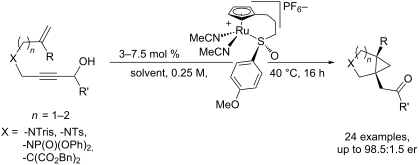
- relative to substrate. Diastereomeric metal complexes formed after alcohol coordination. Divergent behavior of the palladium and ruthenium-catalyzed Alder–ene reaction. Some asymmetric enyne cycloisomerization reactions. Synthesis of p-anisyl catalyst 1. Using norephedrine-based oxathiazolidine-2-oxide 7

Graphical Abstract

Scheme 1: Divergent behavior of the palladium and ruthenium-catalyzed Alder–ene reaction.

Scheme 2: Some asymmetric enyne cycloisomerization reactions.
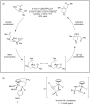
Figure 1: (a) Mechanism for the redox biscycloisomerization reaction. (b) Ruthenium catalyst containing a tet...

Scheme 3: Synthesis of p-anisyl catalyst 1.

Figure 2: Failed sulfinate ester syntheses.

Scheme 4: Using norephedrine-based oxathiazolidine-2-oxide 7 for chiral sulfoxide synthesis.

Scheme 5: (a) General synthetic sequence to access enyne bicycloisomerization substrates (b) Synthesis of 2-c...

Figure 3: Failed bicycloisomerization substrates. Reactions performed at 40 °C for 16 hours with 3 mol % of c...

Scheme 6: Deprotection of [3.1.0] bicycles and X-ray crystal structure of 76.

Scheme 7: ProPhenol-catalyzed addition of zinc acetylide to acetaldehyde for the synthesis of a chiral 1,6-en...

Figure 4: Diastereomeric metal complexes formed after alcohol coordination.

Scheme 8: Curtin–Hammitt scenario of redox bicycloisomerization in acetone.
Catalytic asymmetric synthesis of biologically important 3-hydroxyoxindoles: an update
- Bin Yu,
- Hui Xing,
- De-Quan Yu and
- Hong-Min Liu
Beilstein J. Org. Chem. 2016, 12, 1000–1039, doi:10.3762/bjoc.12.98
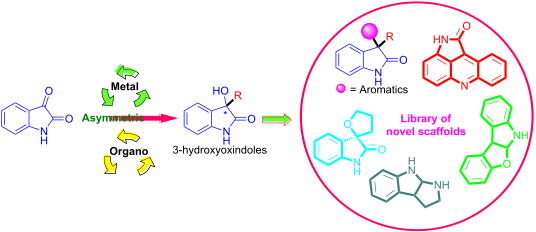
- metal-catalyzed synthesis The chiral ligand/metal complexes have been widely employed in catalytic asymmetric synthesis of enantioenriched 3-hydroxyoxindoles, achieving good to excellent enantioselectivities and high yields. Pd-catalyzed allylation of isatins The palladium catalyst is widely used in

Graphical Abstract

Figure 1: 3-Hydroxyoxindole-containing natural products and biologically active molecules.

Scheme 1: Chiral CNN pincer Pd(II) complex 1 catalyzed asymmetric allylation of isatins.

Scheme 2: Asymmetric allylation of ketimine catalyzed by the chiral CNN pincer Pd(II) complex 2.

Scheme 3: Pd/L1 complex-catalyzed asymmetric allylation of 3-O-Boc-oxindoles.

Scheme 4: Cu(OTf)2-catalyzed asymmetric direct addition of acetonitrile to isatins.

Scheme 5: Chiral tridentate Schiff base/Cu complex catalyzed asymmetric Friedel–Crafts alkylation of isatins ...

Scheme 6: Guanidine/CuI-catalyzed asymmetric alkynylation of isatins with terminal alkynes.

Scheme 7: Asymmetric intramolecular direct hydroarylation of α-ketoamides.

Scheme 8: Plausible catalytic cycle for the direct hydroarylation of α-ketoamides.

Scheme 9: Ir-catalyzed asymmetric arylation of isatins with arylboronic acids.

Scheme 10: Enantioselective decarboxylative addition of β-ketoacids to isatins.

Scheme 11: Ruthenium-catalyzed hydrohydroxyalkylation of olefins and 3-hydroxy-2-oxindoles.

Scheme 12: Proposed catalytic mechanism and stereochemical model.

Scheme 13: In-catalyzed allylation of isatins with stannylated reagents.

Scheme 14: Modified protocol for the synthesis of allylated 3-hydroxyoxindoles.

Scheme 15: Hg-catalyzed asymmetric allylation of isatins with allyltrimethylsilanes.

Scheme 16: Enantioselective additions of organoborons to isatins.

Scheme 17: Asymmetric aldol reaction of isatins with cyclohexanone.

Scheme 18: Enantioselective aldol reactions of aliphatic aldehydes with isatin derivatives and the plausible t...

Scheme 19: Enantioselective aldol reaction of isatins and 2,2-dimethyl-1,3-dioxan-5-one.

Scheme 20: Asymmetric aldol reactions between ketones and isatins.

Scheme 21: Phenylalanine lithium salt-catalyzed asymmetric synthesis of 3-alkyl-3-hydroxyoxindoles.

Scheme 22: Aldolization between isatins and dihydroxyacetone derivatives.

Scheme 23: One-pot asymmetric synthesis of convolutamydine A.

Scheme 24: Asymmetric aldol reactions of cyclohexanone and acetone with isatins.

Scheme 25: Aldol reactions of acetone with isatins.

Scheme 26: Aldol reactions of ketones with isatins.

Scheme 27: Enantioselective allylation of isatins.

Scheme 28: Asymmetric aldol reaction of trifluoromethyl α-fluorinated β-keto gem-diols with isatins.

Scheme 29: Plausible mechanism proposed for the asymmetric aldol reaction.
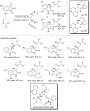
Scheme 30: Asymmetric aldol reaction of 1,1-dimethoxyacetone with isatins.

Scheme 31: Enantioselective Friedel-Crafts reaction of phenols with isatins.

Scheme 32: Enantioselective addition of 1-naphthols with isatins.

Scheme 33: Enantioselective aldol reaction between 3-acetyl-2H-chromen-2-ones and isatins.

Scheme 34: Stereoselective Mukaiyama–aldol reaction of fluorinated silyl enol ethers with isatins.

Scheme 35: Asymmetric vinylogous Mukaiyama–aldol reaction between 2-(trimethylsilyloxy)furan and isatins.

Scheme 36: β-ICD-catalyzed MBH reactions of isatins with maleimides.

Scheme 37: β-ICD-catalyzed MBH reactions of 7-azaisatins with maleimides and activated alkenes.

Scheme 38: Enantioselective aldol reaction of isatins with ketones.

Scheme 39: Direct asymmetric vinylogous aldol reactions of allyl ketones with isatins.

Scheme 40: Enantioselective aldol reactions of ketones with isatins.

Scheme 41: The MBH reaction of isatins with α,β-unsaturated γ-butyrolactam.

Scheme 42: Reactions of tert-butyl hydrazones with isatins followed by oxidation.

Scheme 43: Aldol reactions of isatin derivatives with ketones.

Scheme 44: Enantioselective decarboxylative cyanomethylation of isatins.

Scheme 45: Catalytic kinetic resolution of 3-hydroxy-3-substituted oxindoles.

Scheme 46: Lewis acid catalyzed Friedel–Crafts alkylation of 3-hydroxy-2-oxindoles with electron-rich phenols.

Scheme 47: Lewis acid catalyzed arylation of 3-hydroxyoxindoles with aromatics.

Scheme 48: Synthetic application of 3-arylated disubstituted oxindoles in the construction of core structures ...

Scheme 49: CPA-catalyzed dearomatization and arylation of 3-indolyl-3-hydroxyoxindoles with tryptamines and 3-...

Scheme 50: CPA-catalyzed enantioselective decarboxylative alkylation of β-keto acids with 3-hydroxy-3-indolylo...

Scheme 51: BINOL-derived imidodiphosphoric acid-catalyzed enantioselective Friedel–Crafts reactions of indoles...

Scheme 52: CPA-catalyzed enantioselective allylation of 3-indolylmethanols.

Scheme 53: 3-Indolylmethanol-based substitution and cycloaddition reactions.

Scheme 54: CPA-catalyzed asymmetric [3 + 3] cycloaddtion reactions of 3-indolylmethanols with azomethine ylide...

Scheme 55: CPA-catalyzed three-component cascade Michael/Pictet–Spengler reactions of 3-indolylmethanols and a...

Scheme 56: Acid-promoted chemodivergent and stereoselective synthesis of diverse indole derivatives.

Scheme 57: CPA-catalyzed asymmetric formal [3 + 2] cycloadditions.

Scheme 58: CPA-catalyzed enantioselective cascade reactions for the synthesis of C7-functionlized indoles.

Scheme 59: Lewis acid-promoted Prins cyclization of 3-allyl-3-hydroxyoxindoles with aldehydes.

Scheme 60: Ga(OTf)3-catalyzed reactions of allenols and phenols.

Scheme 61: I2-catalyzed construction of pyrrolo[2.3.4-kl]acridines from enaminones and 3-indolyl-3-hydroxyoxin...

Scheme 62: CPA-catalyzed asymmetric aza-ene reaction of 3-indolylmethanols with cyclic enaminones.

Scheme 63: Asymmetric α-alkylation of aldehydes with 3-indolyl-3-hydroxyoxindoles.

Scheme 64: Organocatalytic asymmetric α-alkylation of enolizable aldehydes with 3-indolyl-3-hydroxyoxindoles a...
Enantioselective carbenoid insertion into C(sp3)–H bonds
- J. V. Santiago and
- A. H. L. Machado
Beilstein J. Org. Chem. 2016, 12, 882–902, doi:10.3762/bjoc.12.87
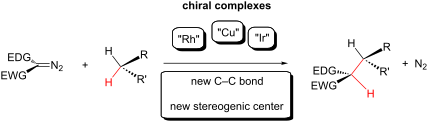
- regarding the regiochemistry of carbenoid insertion into C(sp3)–H bonds, and also the steric and electronic factors related to this insertion. The first example of an enantioselective carbenoid insertion reaction in chemical bonds catalyzed by chiral metal complexes was introduced in 1966 by Noyori and

Graphical Abstract

Figure 1: Singlet carbene, triplet carbene and carbenoids.

Figure 2: Classification of the carbenoid intermediates by the electronic nature of the groups attached to th...

Figure 3: Chiral bis(oxazoline) ligands used in enantioselective copper carbenoid insertion.

Scheme 1: Pioneering work of Peter Yates on the carbenoid insertion reaction into X–H bonds (where X = O, S, ...

Scheme 2: Copper carbenoid insertion into C(sp3)–H bond of a stereogenic center with full retention of the as...

Scheme 3: Carbenoid insertion into a C(sp3)–H bond as the key step of the Taber’s (+)-α-cuparenone (8) synthe...

Scheme 4: First enantioselective carbenoid insertion into C–O bonds catalyzed by chiral metallic complexes.

Figure 4: Chemical structures of complexes (R)-18 and (S)-18.

Scheme 5: Asymmetric carbenoid insertions into C(sp3)–H bonds of cycloalkanes catalyzed by chiral rhodium car...

Scheme 6: First diastereo and enantioselective intermolecular carbenoid insertion into tetrahydrofuran C(sp3)...

Scheme 7: Simplified mechanism of the carbenoid insertion into a C(sp3)–H bond.

Scheme 8: Nakamura’s carbenoid insertion into a C(sp3)–H bond catalytic cycle.

Scheme 9: Investigation of the relationship between the electronic characteristics of the substituent X attac...

Scheme 10: Empirical model to predict the stereoselectivity of the donor/acceptor dirhodium carbenoid insertio...

Scheme 11: Asymmetric insertion of copper carbenoids in C(sp3)–H bonds to prepare trans-γ-lactam.

Figure 5: Iridium catalysts used by Suematsu and Katsuki for carbenoid insertion into C(sp3)–H bonds.

Scheme 12: Chiral porphyrin iridium complex catalyzes the carbenoid insertion into bis-allylic C(sp3)–H bonds.

Scheme 13: Chiral porphyrin iridium complex catalyzes the carbenoid insertion into tetrahydrofuran C(sp3)–H bo...

Scheme 14: Chiral porphyrin–iridium complex catalyzes the intramolecular carbenoid insertion into C(sp3)–H bon...

Scheme 15: Chiral bis(oxazoline)–iridium complex catalyzes the carbenoid insertion into bis-allylic C(sp3)–H b...

Scheme 16: New cyclopropylcarboxylate-based chiral catalyst to enantioselective carbenoid insertion into the e...

Scheme 17: Regio- and enantioselective carbenoid insertion into the C(sp3)–H bond catalyzed by a new bulky cyc...

Scheme 18: Regio and diastereoselective carbenoid insertion into the C(sp3)–H bond catalyzed by a new bulky cy...

Scheme 19: 2,2,2-Trichloroethyl (TCE) aryldiazoacetates to improve the scope, regio- and enantioselective of t...

Scheme 20: Sequential C–H functionalization approach to 2,3-dihydrobenzofurans.

Scheme 21: Enantioselective intramolecular rhodium carbenoid insertion into C(sp3)–H bonds to afford cis-disub...

Scheme 22: Enantioselective intramolecular rhodium carbenoid insertion into C(sp3)–H bonds to afford cis-2-vin...

Scheme 23: First rhodium porphyrin-based catalyst for enantioselective carbenoid insertion into C(sp3)–H bond.

Scheme 24: Rhodium porphyrin-based catalyst for enantioselective carbenoid insertion into benzylic C(sp3)–H bo...
Bi- and trinuclear copper(I) complexes of 1,2,3-triazole-tethered NHC ligands: synthesis, structure, and catalytic properties
- Shaojin Gu,
- Jiehao Du,
- Jingjing Huang,
- Huan Xia,
- Ling Yang,
- Weilin Xu and
- Chunxin Lu
Beilstein J. Org. Chem. 2016, 12, 863–873, doi:10.3762/bjoc.12.85
- [1][2][3][4][5][6][7][8][9][10][11][12]. A number of transition metal complexes of NHCs containing pyridine [13], pyrimidine [14], pyrazole [15][16], naphthyridine [17], pyridazine [18], and phenanthroline [19][20] donating groups have been studied in metal-catalyzed organic transformations. Recently
- , the easy synthesis and versatile coordination ability of 1,2,3-triazoles have led to an explosion of interest in coordination chemistry [21] and homogeneous catalysis [22][23][24][25][26]. Although a number of metal complexes containing 1,4-disubstituted-1,2,3-triazole ligands were well studied

Graphical Abstract

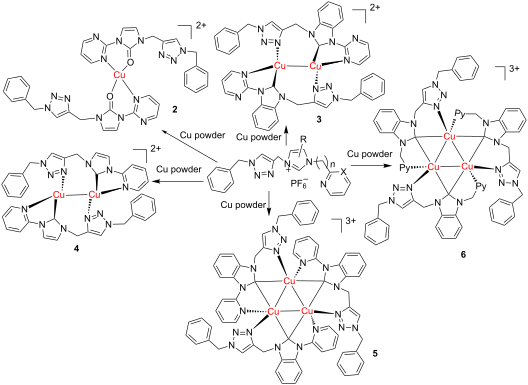
Scheme 1: Synthesis of copper complexes 2–6.

Figure 1: X-ray diffraction structure of copper(II) complex 2 with thermal ellipsoids drawn at 30% probabilit...

Figure 2: ORTEP the cationic section of [Cu2(L2)2](PF6)2 (3). Thermal ellipsoids are drawn at the 30% probabi...

Figure 3: ORTEP drawing of [Cu2(L3)2](PF6)2 (4). Thermal ellipsoids are drawn at the 30% probability level. H...

Figure 4: ORTEP drawing of [Cu3(L4)3](PF6)3 (5). Thermal ellipsoids are drawn at the 30% probability level. H...
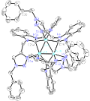
Figure 5: ORTEP drawing of [Cu3(L5)3](PF6)3 (6). Thermal ellipsoids are drawn at the 30% probability level. H...

Figure 6: Yield vs reaction time of different copper complex. The reaction was carried out in acetonitrile-d3...
A modular approach to neutral P,N-ligands: synthesis and coordination chemistry
- Vladislav Vasilenko,
- Torsten Roth,
- Clemens K. Blasius,
- Sebastian N. Intorp,
- Hubert Wadepohl and
- Lutz H. Gade
Beilstein J. Org. Chem. 2016, 12, 846–853, doi:10.3762/bjoc.12.83
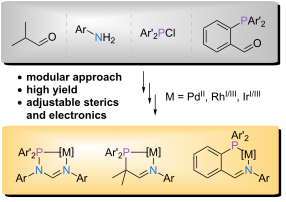
- have a significant influence on the binding geometry und coordination properties of these bidentate P,N-donors. Keywords: P,N-ligands; phosphanylformamidines; phosphine imines; transition metal complexes; Introduction P,N-ligands have been applied in a wide variety of chemical reactions ranging from
- folded, whereas complexes of L3 exhibit a strong deviation from planarity. In summary, these results may be utilized for the design, preparation and structural elucidation of novel late transition metal complexes. Investigations into their potential as precatalysts for organic transformations are
- compound numbering and the preparation of ligand 7, see Supporting Information File 1. General procedure for the preparation of metal complexes: A solution of the ligand (100 µmol, 1.0 equiv) in 5 mL of DCM was added to the metal precursor [M]–X (100 µmol, 1.0 equiv) and the mixture was stirred for 30

Graphical Abstract

Figure 1: P,N-ligand frameworks studied in this work.

Scheme 1: Synthesis of N-phosphanylformamidines 2 and 3. Reaction conditions: (i) t-BuLi, THF, −78 °C to rt, ...

Scheme 2: Synthesis of phosphanylformamidines 5 and 7. Reaction conditions: (i) t-BuLi, THF, −78 °C to rt, 1 ...

Scheme 3: Synthesis of complexes [2-M(cod)]X, [3-M(cod)]X, [5-M(cod)]X and [7-M(cod)]X. M = Rh, Ir; X = BF4− ...

Figure 2: Molecular structures of [2a-Rh(cod)]+ (A), [5-Ir(cod)]+ (B), and [7-Rh(cod)]+ (C,D). Anisotropic di...

Figure 3: Coordination of ligands 2a and 5 to Rh(III) and Ir(III) precursors. Yields: [2a-Cp*RhCl]BF4 = 87%, [...

Figure 4: Molecular structures of [2a-Cp*IrI]+ (left) and [5-Cp*IrI]+ (right). Anisotropic displacement ellip...

Figure 5: Formation of palladium complexes of ligands 2a, 5 and 7. (A) Formation of [2a-PdCl2] and [2a-PdCl]2...

Figure 6: Molecular structures of [2a-PdCl2] (left) and [5-Pd(2-Me-allyl)]+ (right). Anisotropic displacement...
The aminoindanol core as a key scaffold in bifunctional organocatalysts
- Isaac G. Sonsona,
- Eugenia Marqués-López and
- Raquel P. Herrera
Beilstein J. Org. Chem. 2016, 12, 505–523, doi:10.3762/bjoc.12.50
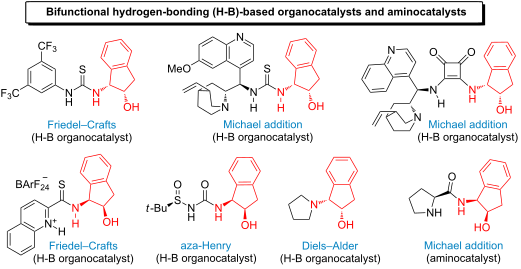
- through an organocatalyzed asymmetric domino-Michael addition/Henry reaction (Scheme 8) [36]. These heterocyclic products are important chiral building blocks for the synthesis of organocatalytic frameworks and ligands for chiral metal complexes, both with the potential ability to induce chirality. They

Graphical Abstract

Figure 1: Different configurations of 1,2-aminoindanol 1a–d.

Scheme 1: Asymmetric F–C alkylation catalyzed by thiourea 4.

Figure 2: Results for the F–C reaction carried out with catalyst 4 and the structurally modified analogues, 4'...

Figure 3: (a) Transition state TS1 originally proposed for the F–C reaction catalyzed by thiourea 4 [18]. (b) Tra...

Scheme 2: Asymmetric F–C alkylation catalyzed by thiourea ent-4 in the presence of D-mandelic acid as a Brøns...

Figure 4: Transition state TS2 proposed for the activation of the thiourea-based catalyst ent-4 by an externa...

Scheme 3: Friedel–Crafts alkylation of indoles catalyzed by the chiral thioamide 6.

Scheme 4: Scalable tandem C2/C3-annulation of indoles, catalyzed by the thioamide ent-6.

Scheme 5: Plausible tandem process mechanism for the sequential, double Friedel–Crafts alkylation, which invo...

Scheme 6: One-pot multisequence process that allows the synthesis of interesting compounds 14. The pharmacolo...

Scheme 7: Reaction pathway proposed for the preparation of the compounds 14.

Scheme 8: The enantioselective synthesis of cis-vicinal-substituted indane scaffolds 21, catalyzed by ent-6.

Scheme 9: Asymmetric domino procedure (Michael addition/Henry cyclization), catalyzed by the thioamide ent-6 ...

Scheme 10: The enantioselective addition of indoles 2 to α,β-unsaturated acyl phosphonates 24, a) screening of...

Figure 5: Proposed transition state TS7 for the Friedel–Crafts reaction of indole and α,β-unsaturated acyl ph...

Scheme 11: Study of aliphatic β,γ-unsaturated α-ketoesters 26 as substrates in the F–C alkylation of indoles c...

Figure 6: Possible transition states TS8 and TS9 in the asymmetric addition of indoles 2 to the β,γ-unsaturat...

Figure 7: Transition state TS10 proposed for the asymmetric addition of dialkylhydrazone 28 to the β,γ-unsatu...

Scheme 12: Different β-hydroxylamino-based catalysts tested in a Michael addition, and the transition state TS...

Scheme 13: Enantioselective addition of acetylacetone (36a) to nitroalkenes 3, catalyzed by 37 and the propose...

Scheme 14: Addition of 3-oxindoles 39 to 2-amino-1-nitroethenes 40, catalyzed by 41.

Scheme 15: Michael addition of 1,3-dicarbonyl compounds 36 to the nitroalkenes 3 catalyzed by the squaramide 43...

Scheme 16: Asymmetric aza-Henry reaction catalyzed by the aminoindanol-derived sulfinyl urea 50.

Figure 8: Results for the aza-Henry reaction carried out with the structurally modified catalysts 50–50''.

Scheme 17: Diels–Alder reaction catalyzed by the aminoindanol derivative ent-41.

Scheme 18: Asymmetric Michael addition of 3-pentanone (55a) to the nitroalkenes 3 through aminocatalysis.

Scheme 19: Substrate scope extension for the asymmetric Michael addition between the ketones 55 and the nitroa...

Scheme 20: A possible reaction pathway in the presence of the catalyst 56 and the plausible transition state T...
Self and directed assembly: people and molecules
- Tony D. James
Beilstein J. Org. Chem. 2016, 12, 391–405, doi:10.3762/bjoc.12.42
- concentration of MeSiCN, with reactive metal complexes, but was independent of the concentration of the dienyl salt. With deactivated 2-methoxy substituted dienyl salts, a change in the rate-limiting step was observed. Coupling my new found love of North America and research, I decided to look for a PhD and as

Graphical Abstract

Scheme 1: Reaction of trimethylsilyl cyanide with tricarbonyl (η5-cyclohexadienyl)iron(1+) salts. Reproduced ...

Figure 1: (a) Supramolecular pore formers. Reproduced with permission from [6]. Copyright 1990 Elsevier. (b) Uni...

Figure 2: An intelligent liquid crystal to read out saccharide structure as a color-change. Picture provided ...

Scheme 2: Polymeric boronic acid receptor units developed by Wulff. Reproduced from [16]. Copyright 1982 Internat...
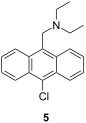
Figure 3: Fluorescence photoinduced electron transfer (PET) pH sensor developed by A. P. De Silva.

Figure 4: Fluorescence PET sensor for saccharides.

Figure 5: (a) Glucose selective PET system. (b) Chiral discriminating PET system.

Figure 6: (a) Fluorescence photoinduced electron transfer (PET) cation sensors developed by A. P. De Silva. (...

Figure 7: (a) Pyrene diboronic acids (n = 3–8). (b) Pyrene monoboronic acid. (c) Block chart showing the rela...

Figure 8: Glysure Continuous Intravascular Glucose Monitoring (CIGM) System. Image provided by Nicholas P. Ba...

Figure 9: Chiral discrimination of D- and L-tartaric acid by (R)-8 at pH 5.6. [(R)-8] = 5.0 × 10⁻⁶ mol dm−3, ...
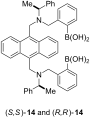
Figure 10: Chiral discriminating sensor (relative stereochemistry shown) constructed using a good fluorophore ...

Figure 11: Fluorescence emission intensity-pH profile of: (a) Sensor 15: 1.0 × 10⁻⁶ mol dm−3 (λex 370 nm, λem ...

Figure 12: Modular chiral discriminating d-PET systems (relative stereochemistry shown).

Figure 13: With Matthew Davidson and Steven Bull during “World Cup” lecture tour of Japan in 2002. (Left) Priv...

Figure 14: Preparation of chiral boron reagent and use as catalyst for aza-Diels–Alder reactions.

Figure 15: Chiral three component self-assembling system.
Enabling technologies and green processes in cyclodextrin chemistry
- Giancarlo Cravotto,
- Marina Caporaso,
- Laszlo Jicsinszky and
- Katia Martina
Beilstein J. Org. Chem. 2016, 12, 278–294, doi:10.3762/bjoc.12.30
- recognition have been performed [27]. We prepared heptakis(6-O-TBDMS-2,3-O-methyl)-β-CDs with a second CD unit in the 2 position or a (R)-Mosher acid moiety [28]. Preparation of second generation CD derivatives: dimers, and CD hybrids Bis-CDs and their metal complexes have been extensively studied as

Graphical Abstract

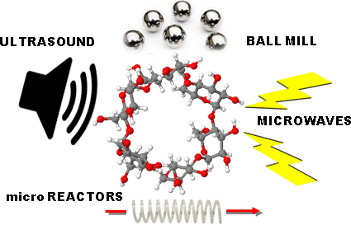
Figure 1: (a) Multihorn-flow US reactor, (b) Cavitational turbine, (c) Pilot-scale BM, (d) High-pressure MW r...

Figure 2: Trends in CD papers and CD use in green chemical processes.

Figure 3: Distribution of energy efficient methods in CD publications.

Figure 4: Document type dealing with CD chemistry under non-conventional techniques (conference proceedings a...

Figure 5: Document type dealing with sustainable technologies in CD publications.

Scheme 1: Synthesis of 6I-(p-toluenesulfonyl)-β-CD.

Scheme 2: Example of CuAAC with 6I-azido-6I-deoxy-β-CD and phenylacetylene.

Scheme 3: Synthesis of 6I-benzylureido-6I-deoxy-per-O-acetyl-β-CD.

Scheme 4: Synthesis of 3I-azido-3I-deoxy-altro-α, β- and γ-CD.

Scheme 5: Synthesis of 2-2’ bridged bis(β-CDs). Reaction conditions: 1) TBDMSCl, imidazole, dry pyridine, sti...

Scheme 6: Insoluble reticulated CD polymer.

Scheme 7: CD-HDI cross linked polymers.
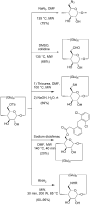
Scheme 8: Derivatization of 6I-(p-toluenesulfonyl)-β-CD by tosyl displacement.
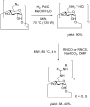
Scheme 9: Synthetic scheme for the preparation of heptakis(6-amino-6-deoxy)-β-CD, heptakis(6-deoxy-6-ureido)-...
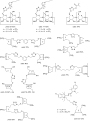
Scheme 10: Structure of CD derivatives obtained via MW-assisted CuAAC.

Scheme 11: Preparation of SWCN CD-DOTA carrier.
Scope and limitations of the dual-gold-catalysed hydrophenoxylation of alkynes
- Adrián Gómez-Suárez,
- Yoshihiro Oonishi,
- Anthony R. Martin and
- Steven P. Nolan
Beilstein J. Org. Chem. 2016, 12, 172–178, doi:10.3762/bjoc.12.19
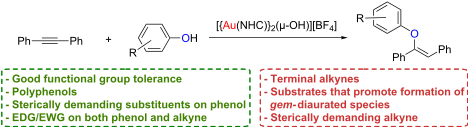
- metal and main-group chemistry [10][11][12][13]. We have been interested in exploring the use of NHC ligands in transition metal complexes for the development of highly active and well-defined catalysts. One of our main interests during the last decade has been to study the use of gold–NHC species as

Graphical Abstract

Scheme 1: Dual-gold-catalysed hydrophenoxylation of alkynes.
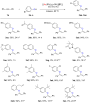
Scheme 2: Exploring the functional group tolerance. Reaction conditions: 1a (0.50 mmol, 1 equiv), 2a–o (0.55 ...

Scheme 3: Hydrophenoxylation using polyphenols. Reaction conditions: 1a (1 mmol, 2 equiv), 2p–s (0.50 mmol, 1...

Scheme 4: Hydrophenoxylation of (un)symmetrical alkynes. Reaction conditions: 1b–k (0.50 mmol, 1 equiv), 2t (...

Scheme 5: Regioselective hydrophenoxylation of unsymmetrical alkynes. Reaction conditions: 1l–p (1 equiv), 2a...



