


Search results
Search for "nucleophilic addition" in Full Text gives 288 result(s) in Beilstein Journal of Organic Chemistry. Showing first 200.
Recent advances in synthetic approaches for medicinal chemistry of C-nucleosides
Beilstein J. Org. Chem. 2018, 14, 772–785, doi:10.3762/bjoc.14.65
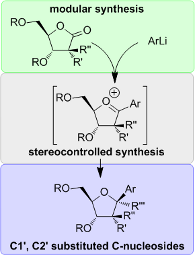
- that is also based on the nucleophilic substitution of ribonolactone. Review Nucleophilic addition to D-ribonolactone and its stereochemistry Two prominent methods of C-nucleoside syntheses involve either i) the linear construction of a (hetero)aryl moiety on a C1'-functionalized ribose or ii) coupling


Mannich base-connected syntheses mediated by ortho-quinone methides
Beilstein J. Org. Chem. 2018, 14, 560–575, doi:10.3762/bjoc.14.43
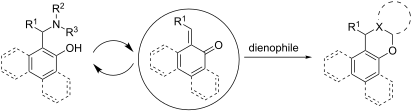
- and the aldehyde yields a Schiff base and then the latter reacts with 2-naphthol in the second nucleophilic addition step. The other theory assumes the formation of an ortho-quinone methide (o-QM) intermediate by the reaction of 2-naphthol and benzaldehyde. Re-aromatization, the driving force of the
- transformation, takes place in the second step by the nucleophilic addition of the amine component. The class of o-QMs has recently been investigated from many aspects. They are known as short-lived species playing an important role as key intermediates in numerous synthetic pathways. Reviews have recently been
- the desired 1-amidoalkyl-2-naphthol derivatives. This second step can also be considered as a nucleophilic addition of the amide to the o-QM component. Various catalysts and conditions were used to optimize reaction conditions considering economical and environmental aspects. These include microwave


Functionalization of N-arylglycine esters: electrocatalytic access to C–C bonds mediated by n-Bu4NI
Beilstein J. Org. Chem. 2018, 14, 499–505, doi:10.3762/bjoc.14.35

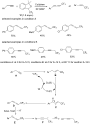
- homogeneous reaction with N-arylglycine esters, N-iodo intermediate 4 was generated. Eliminating a molecule of HI affords imine intermediate 5. In the presence of acetic acid, the protonated 5-H+ undergoes nucleophilic addition with C–H nucleophiles 2 to give the desired products 3. Conclusion In summary, an


Recent developments in the asymmetric Reformatsky-type reaction
Beilstein J. Org. Chem. 2018, 14, 325–344, doi:10.3762/bjoc.14.21
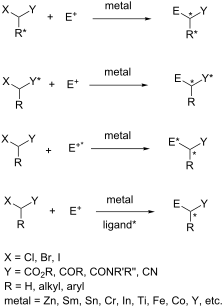
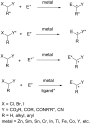
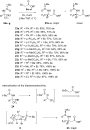
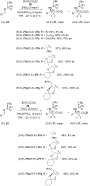
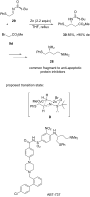
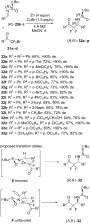
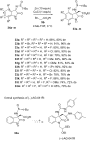
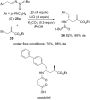
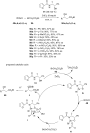
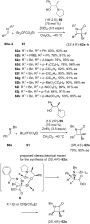
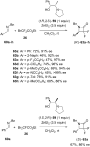
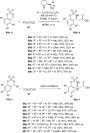
- nucleophilic addition of ethyl iodoacetate to the Si face of the cyclic imine 67 affording the final β-amino ester 68 and regenerating dimer M. In 2017, a related chiral ligand 69 employed at only 10–20 mol % of catalyst loading was reported by the same authors to be capable of catalyzing in combination with











Nucleophilic fluoroalkylation/cyclization route to fluorinated phthalides
Beilstein J. Org. Chem. 2018, 14, 182–186, doi:10.3762/bjoc.14.12
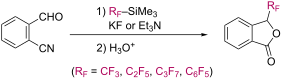
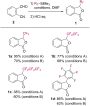
- practical method for the synthesis of C3-perfluoroalkyl-substituted phthalides in a one-pot manner. Upon treatment of KF or triethylamine, 2-cyanobenzaldehyde reacted with (perfluoroalkyl)trimethylsilanes via nucleophilic addition and subsequent intramolecular cyclization to give perfluoroalkylphthalides in




Progress in copper-catalyzed trifluoromethylation
Beilstein J. Org. Chem. 2018, 14, 155–181, doi:10.3762/bjoc.14.11
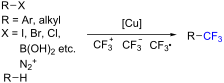
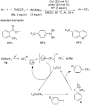
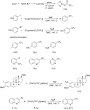
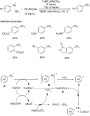
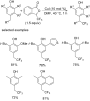
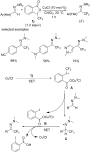
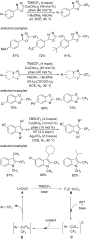
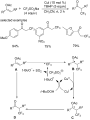
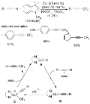
- tetrahydroisoquinoline with DDQ generates dihydroquinoline salt A. Next, CuCF3, generated by the reaction of CuI and CF3TMS/KF, undergoes a nucleophilic addition with A affording the desired products and the copper salt. The generated copper salt would be reused to form CuCF3 in the nucleophilic step again. So, only a













Gram-scale preparation of negative-type liquid crystals with a CF2CF2-carbocycle unit via an improved short-step synthetic protocol
Beilstein J. Org. Chem. 2018, 14, 148–154, doi:10.3762/bjoc.14.10
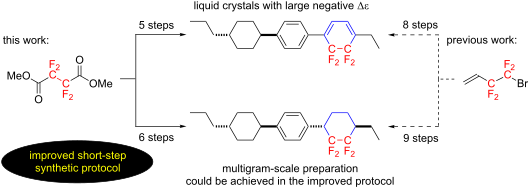
- . The latter could be constructed through ring-closing metathesis of the corresponding precursor, e.g., 4,4,5,5-tetrafluoroocta-1,7-diene 5, using a Grubbs' catalyst. The octa-1,7-diene 5 could be obtained through a nucleophilic addition of a vinylic Grignard reagent to the γ-keto ester 6. Lastly, the γ
- afford the corresponding octa-1,7-diene 5a in only 46% yield. In this case, the 5-membered lactol derivative 8a was also obtained in 42% yield as a side-product. A proposed reaction mechanism for the formation of 5a and 8a is shown in Scheme 3. Thus, the nucleophilic addition reactions of vinylmagnesium


Conformational preferences of α-fluoroketones may influence their reactivity
Beilstein J. Org. Chem. 2017, 13, 2915–2921, doi:10.3762/bjoc.13.284
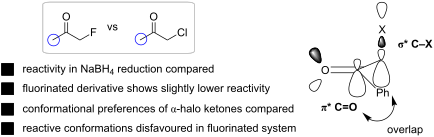
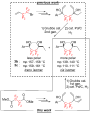
- ; Introduction α-Halogenated ketones are widely used electrophiles in organic synthesis, being highly reactive in both nucleophilic addition to the carbonyl group and in SN2 nucleophilic displacements [1]. Our research group has recently been exploring the synthesis and reactivity of α-fluorinated ketones [2][3
- electrophiles available to synthetic chemists for SN2 substitution [5]. The orbital overlap in α-halogenated ketones also provides activation to the carbonyl group, making it more reactive towards nucleophilic addition than non-halogenated carbonyl compounds [6]. However, relatively little work has been
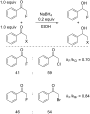
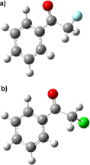
- reactivity we wished to measure the relative reactivity of various α-halogenated ketones towards nucleophilic addition. As these are highly reactive systems obtaining rate profiles can be difficult due to the short time-scales for measurements, so instead relative reactivity was measured through a series of





Reagent-controlled regiodivergent intermolecular cyclization of 2-aminobenzothiazoles with β-ketoesters and β-ketoamides
Beilstein J. Org. Chem. 2017, 13, 2739–2750, doi:10.3762/bjoc.13.270

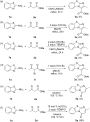
- -aminobenzothiazole (1a) via an Ortoleva–King type of reaction forms B [96][97]. This is followed by a nucleophilic addition and dehydration to form C. Upon deprotonation of the acidic proton at C by KOt-Bu, the desired product 3a is formed with release of KBr and tert-butanol. As proposed by Zeitler’s group, the




Vinylphosphonium and 2-aminovinylphosphonium salts – preparation and applications in organic synthesis
Beilstein J. Org. Chem. 2017, 13, 2710–2738, doi:10.3762/bjoc.13.269

- in their structures. Keywords: 2-aminovinylphosphonium salts; nucleophilic addition; phosphorus ylides; vinylphosphonium salts; Wittig reaction; Introduction Vinylphosphonium salts have been known for a long time, although significant interest in these compounds dates back to 1964, when Schweizer
- and Appleyard only postulated that the reaction between the benzoate anion and 2-propynyltriphenylphosphonium bromide (24) led to a 2-benzoyloxyvinylphosphonium salt 26 (Scheme 17) [32]. Several years later, Schweizer et al. discovered that the nucleophilic addition of amines to 2
- -benzoyloxyvinylphosphonium bromide from 2-propynyltriphenylphosphonium bromide. Synthesis of 2-aminovinylphosphonium salts via nucleophilic addition of amines to 2-propynyltriphenylphosphonium bromide. Deacylation of 2-(N-acylamino)vinylphosphonium chlorides to 2-aminovinylphosphonium salts. Resonance structures of 2


Electrophilic trifluoromethylselenolation of terminal alkynes with Se-(trifluoromethyl) 4-methylbenzenesulfonoselenoate
Beilstein J. Org. Chem. 2017, 13, 2626–2630, doi:10.3762/bjoc.13.260
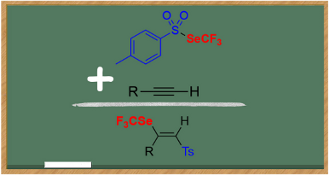
- the nucleophilic addition of Se-(trifluoromethyl) 4-methylbenzenesulfonoselenoate, a stable and easy-to-handle reagent, to alkynes is described. This reaction provides trifluoromethylselenylated vinyl sulfones with good results and the method was extended also to higher fluorinated homologs. The
- obtained compounds are valuable building blocks for further syntheses of fluoroalkylselenolated molecules. Keywords: alkynes; nucleophilic addition; perfluoroalkylselenolation; Se-(trifluoromethyl) 4-methylbenzenesulfonoselenoate; trifluoromethylselenolation; Introduction Over the last decades


Regioselective decarboxylative addition of malonic acid and its mono(thio)esters to 4-trifluoromethylpyrimidin-2(1H)-ones
Beilstein J. Org. Chem. 2017, 13, 2617–2625, doi:10.3762/bjoc.13.259
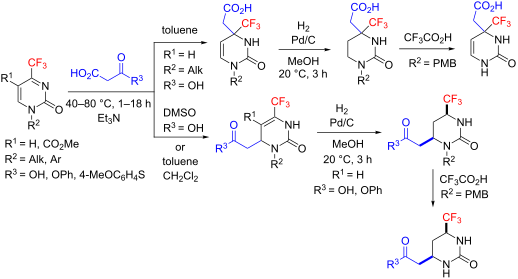
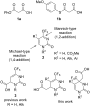
- preparation of acid 3 homologues (with a methylene linker between the carboxylic group and the pyrimidine ring) and their isomers resulting from two alternative regioselective pathways for the decarboxylative nucleophilic addition of malonic acid and its mono(thio)esters. Results and Discussion We first
- -step mechanism of the decarboxylative nucleophilic addition which is characterized by a faster decarboxylation of kinetically-controlled Michael-type intermediates in high-polar solvents. Though malonic monoester 1a appears to be similar to malonic acid in reactivity towards compounds 2, it produces



Asymmetric synthesis of propargylamines as amino acid surrogates in peptidomimetics
Beilstein J. Org. Chem. 2017, 13, 2428–2441, doi:10.3762/bjoc.13.240
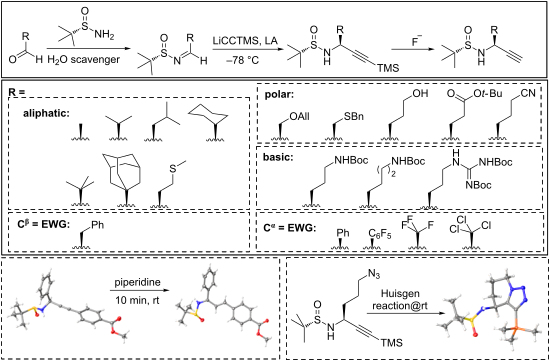
- propargylamines by nucleophilic addition. The synthesis of propargylamines by diastereoselective reductive amination requires alkynyl ketones, which are difficult to prepare and are unstable towards reductive conditions. In approach I, organometallic nucleophiles are added to N-sulfinyl propargylimines, derived
- adjacent protons considerably. In the precursor sulfinylimines 5 of the target propargylamines the acidity of the protons of the methylene moiety is further increased by the electron-withdrawing effect of the adjacent sulfinyl imino moiety. Thus, the nucleophilic addition of (trimethylsilyl)ethynyllithium
- structure of fluorinated propargylamines occurs in important drugs, like HIV protease inhibitor DPC 961 and its analogues [78][79][80][81][82][83], particular effort was put on the synthesis of N-sulfinyl propargylamine 7k. Because of the poor electrophilicity of imines 5, the nucleophilic addition of


Is the tungsten(IV) complex (NEt4)2[WO(mnt)2] a functional analogue of acetylene hydratase?
Beilstein J. Org. Chem. 2017, 13, 2332–2339, doi:10.3762/bjoc.13.230
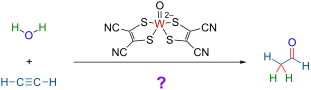
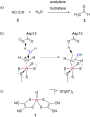
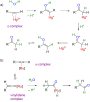
- recent works favor nucleophilic addition of water to tungsten-coordinated 2 with assistance of a catalytic carboxylate as key-step (Scheme 1b), followed by protonation of the intermediary 2-hydroxyethenyltungstate to release vinyl alcohol [10][11][12]. In 1997, Sarkar et al. reported that the oxidation
- the strongly alkaline reaction medium [18]. Base-mediated hydration is possible for π-acceptor substituted alkynes, but nucleophilic addition of secondary amines followed by acidic hydrolysis to the carbonyl compound is usually preferred [18]. The discovery of a tungsten-based enzyme with ethyne



Conjugated nitrosoalkenes as Michael acceptors in carbon–carbon bond forming reactions: a review and perspective
Beilstein J. Org. Chem. 2017, 13, 2214–2234, doi:10.3762/bjoc.13.220
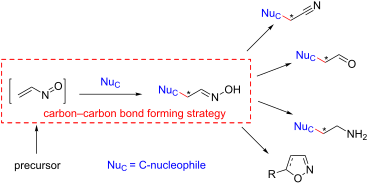
- nucleophilic addition of C-substituted malonic esters 17 to 4-tert-butylnitrosocyclohexene NSA3 (generated either from TBS ether 18 or free oxime 19) proceeds with high stereoselectivity and affords mainly or exclusively the trans-isomers of adducts 20 (Scheme 8) [29]. Expectedly, the stereoselectivity of the


Phosphonic acid: preparation and applications
Beilstein J. Org. Chem. 2017, 13, 2186–2213, doi:10.3762/bjoc.13.219
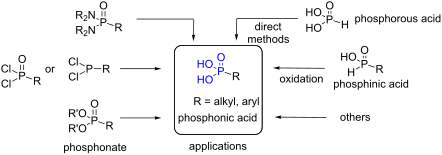
- is illustrated by the recent works reporting the reaction of bis(diethylamino)chlorophosphine (95) with the acetal 96 in the presence of a Lewis acid to yield the phosphonodiamide 97. Then the nucleophilic addition of adenine and the hydrolysis of the phosphonodiamide function in phosphonic acid
- produce compound 98 [213] (Figure 28A). A second example corresponds to the nucleophilic addition of N-heterocyclic phosphine 99 to a nitroalkene (phospho-Michael reaction) as shown in Figure 28B. The thiourea unit in 99 plays a crucial role by assuming intramolecular interaction with the nitro function
- functionalized with three phosphonic acid groups (Figure 29) [24]. The sequence requires the preparation of the 4-fluorophenylphosphonodiamide 107 which is prepared by nucleophilic addition of an aryllithium intermediate (from 105) on chlorophosphadiamide 106. In the last step, the tris(phenylphosphonodiamide


NHC-catalyzed cleavage of vicinal diketones and triketones followed by insertion of enones and ynones
Beilstein J. Org. Chem. 2017, 13, 1816–1822, doi:10.3762/bjoc.13.176
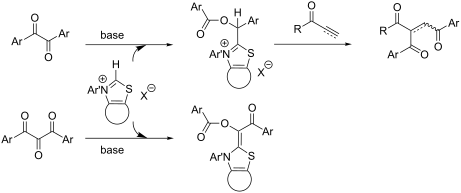
- the 9- and 14-membered 1,4-diketones 7b and 7c at elevated temperature, respectively. Next, we investigated the NHC-catalyzed reaction of 1,2,3-triketone 9 with enone 6a. Since the central carbonyl group of 9 could be more electrophilic than the others at 1- and 3-positions, nucleophilic addition of




Effect of uridine protecting groups on the diastereoselectivity of uridine-derived aldehyde 5’-alkynylation
Beilstein J. Org. Chem. 2017, 13, 1533–1541, doi:10.3762/bjoc.13.153

- organometallic reagents onto nucleoside aldehyde (Table 1), we decided to investigate the influence of the protecting groups of the uridine aldehyde on the stereochemical outcome of the nucleophilic addition of a Grignard reagent and we wish to report herein the results of our study. Results and Discussion We
- 5a [51], R1 = TIPS). Some compounds were also N3-allylated (1b, 4b and 5b) to evaluate the possible influence of R2 on the diastereoselectivity of the nucleophilic addition (Scheme 1). Primary alcohols 1–5 were submitted to an oxidation/Grignard addition sequence leading to the corresponding


Syntheses of 3,4- and 1,4-dihydroquinazolines from 2-aminobenzylamine
Beilstein J. Org. Chem. 2017, 13, 1470–1477, doi:10.3762/bjoc.13.145

- functionalized 2-aminobenzylamines [36][37] such as the cyclization of N-(2-aminobenzyl)amides, which in general requires drastic conditions or long reaction times [17][18][21][22][29][38][39][40]. Miscellaneous methods include the nucleophilic addition of secondary amines to carbodiimides followed by an


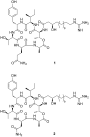
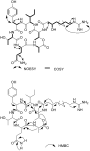
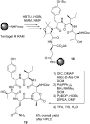
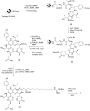
A new member of the fusaricidin family – structure elucidation and synthesis of fusaricidin E
Beilstein J. Org. Chem. 2017, 13, 1430–1438, doi:10.3762/bjoc.13.140
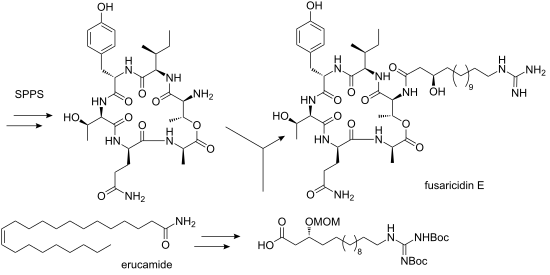
- should be generated by nucleophilic addition of an allyl anion equivalent to the resulting aldehyde 5. Guanidine formation and ozonolysis with subsequent oxidation to the carboxylic acid would then furnish the protected GHPD side chain building block 3 which can then be coupled to the cyclodepsipeptide



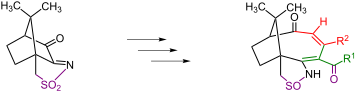
Synthesis of alkynyl-substituted camphor derivatives and their use in the preparation of paclitaxel-related compounds
Beilstein J. Org. Chem. 2017, 13, 1230–1238, doi:10.3762/bjoc.13.122
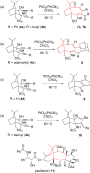
- the sultam before the second equivalent undergoes the desired nucleophilic addition to the carbonyl group. All attempts to re-oxidise the sultam 15 to the sulfonimide 13, using Cl2/pyridine [37] or N-tert-butylphenylsulfinimidoyl chloride/DBU [38] under literature conditions, were unsuccessful due to




DMAP-assisted sulfonylation as an efficient step for the methylation of primary amine motifs on solid support
Beilstein J. Org. Chem. 2017, 13, 806–816, doi:10.3762/bjoc.13.81
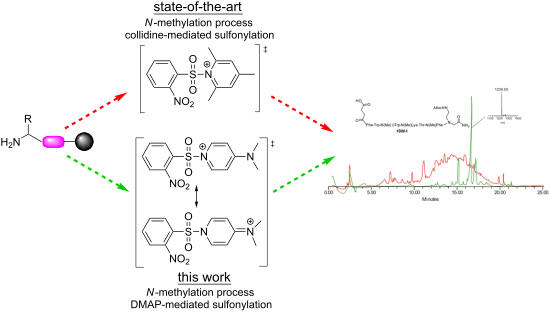
- proved highly efficient in solid-phase synthesis of a somatostatin analogue bearing three Nα-methylation sites that could not be synthesized using the previously described state-of-the-art methods. Keywords: N-methylation; nucleophilic addition; solid phase; somatostatin; sulfonylation; Introduction
- calculations provide an explanation to the observed superiority of DMAP over collidine as the lower energy barrier of the DMAP intermediate compared to that of the collidine intermediate is essential for a sulfonylation that proceeds through a nucleophilic addition type mechanism (Figure 1C and 1D). In
- the amine in which the additive acts as a base. The second being a nucleophilic addition type mechanism, in which a stable intermediate is formed between the sulfonyl and the additive. We hypothesized that if the sulfonylation goes through a nucleophilic addition-type mechanism, replacing collidine



Effect of the ortho-hydroxy group of salicylaldehyde in the A3 coupling reaction: A metal-catalyst-free synthesis of propargylamine
Beilstein J. Org. Chem. 2017, 13, 552–557, doi:10.3762/bjoc.13.53

- activate the terminal acetylene primarily, which then undergoes a nucleophilic addition to the iminium electrophile generated from the aldehyde and the amine. Among different transition metals, copper metal has been mostly explored as the catalyst to activate the terminal acetylene, though there is a
- , which then undergoes nucleophilic addition at the electrophilic iminium ion 4, eventually providing the A3 coupled product (Scheme 3). In the absence of the metal catalyst, the sp carbon (C–H) of the alkyne is less nucleophilic in nature. However, after the formation of the iminium ion 4 (as it happens


(Z)-Selective Takai olefination of salicylaldehydes
Beilstein J. Org. Chem. 2017, 13, 323–328, doi:10.3762/bjoc.13.35

- )-product (Scheme 6). Our proposed mechanism commences with nucleophilic addition of gem-dichromium species to the aldehyde moiety via a six membered pseudo-chair transition state, as is generally accepted [5][7]. However, rather than proceeding via the transition state which places most groups in a pseudo


Regiochemistry of cyclocondensation reactions in the synthesis of polyazaheterocycles
Beilstein J. Org. Chem. 2017, 13, 257–266, doi:10.3762/bjoc.13.29
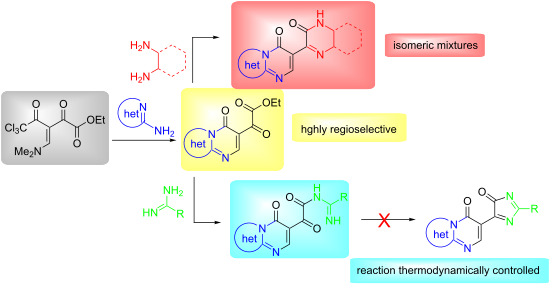
- times ranging from 0.5 to 20 h, was not effective in forming the imidazolone of interest. The only product observed was the acylated amidine generated through a nucleophilic addition of the amidine to the ester carbonyl. For the latter compound the best result was obtained for the reaction in ethanol





