Search results
Search for "Diels–Alder" in Full Text gives 369 result(s) in Beilstein Journal of Organic Chemistry. Showing first 200.
5-Aminopyrazole as precursor in design and synthesis of fused pyrazoloazines
Beilstein J. Org. Chem. 2018, 14, 203–242, doi:10.3762/bjoc.14.15
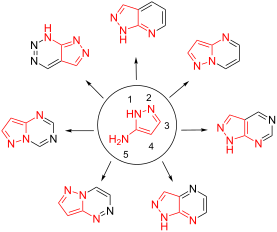
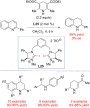
- CaCO-2. Lin et al. [52] developed the synthesis of pyrazolo[3,4-b]pyridine derivatives 45 via aza-Diels–Alder reaction of pyrazolylimines 43 with maleimides 44 (Scheme 8). Pyrazolylimines 43 were in turn obtained from the reaction of 5-aminopyrazole 16 with diisopropylformamide dimethyl acetal (R
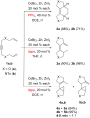
- -arylmaleimides 44 in a solvent-free methodology based on microwave-assisted (80 W, 80 °C, 1.5 h) hetero-Diels–Alder reaction for the synthesis of pyrazolo[3,4-b]pyridine derivatives 45 (Scheme 8). Jiang et al. [54] described the synthesis of macrocyclane-fused pyrazolo[3,4-b]pyridine derivatives 49 by the


Nucleophilic dearomatization of 4-aza-6-nitrobenzofuroxan by CH acids in the synthesis of pharmacology-oriented compounds
Beilstein J. Org. Chem. 2017, 13, 2854–2861, doi:10.3762/bjoc.13.277
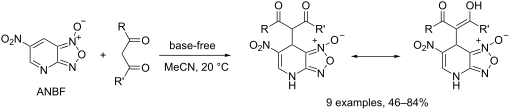
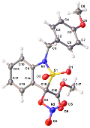
- base to give the σ-adducts. Earlier it was found that an aza analog of DNBF – 4-aza-6-nitrobenzofuroxan (1, ANBF) ranks among the most electrophilic heteroaromatics known to date [17][18]. Compound 1 gives a remarkably stable hydrate in aqueous solution and forms Diels–Alder cycloadduts 2 with dienes


Synthetic mRNA capping
Beilstein J. Org. Chem. 2017, 13, 2819–2832, doi:10.3762/bjoc.13.274
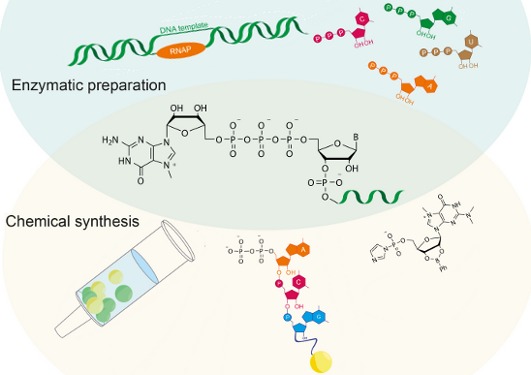
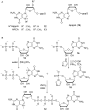
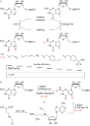
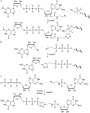
- structure of Ecm1 which forms a substrate binding cleft rather than a pocket [94]. Vinylbenzyl-modified cap analogues (bearing the modification at either the N7 or N2-position) provided a platform for inverse electron-demand Diels–Alder reactions with tetrazine conjugates and for photo-click reactions using



Reagent-controlled regiodivergent intermolecular cyclization of 2-aminobenzothiazoles with β-ketoesters and β-ketoamides
Beilstein J. Org. Chem. 2017, 13, 2739–2750, doi:10.3762/bjoc.13.270

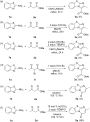
- -Diels–Alder reaction [87]. Coupling between alkynoic acid and 2-aminobenzothiazole and the use of ionic liquids have also been developed [88]. Heterogeneous catalysts such as kaolin and hydrotalcites have been employed in the synthesis of benzo[4,5]thiazolo[3,2-a]pyrimidin-4-ones [89][90




Vinylphosphonium and 2-aminovinylphosphonium salts – preparation and applications in organic synthesis
Beilstein J. Org. Chem. 2017, 13, 2710–2738, doi:10.3762/bjoc.13.269

- vinylphosphonium salts can be used in the Diels–Alder reaction with dienes such as isoprene, 1,3-butadiene, 2,3-dimethyl-1,3-butadiene, cyclopentadiene, and 1,3-cyclohexadiene, resulting in cyclic phosphonium salts 115 in yields of 90–96% (Scheme 66) [78]. Gelmi et al. showed that vinylphosphonium bromide 8 in
- )vinylphosphonium salt. Synthesis of 7-oxo-7H-pyrido[1,2,3-cd]perimidine derivative via nucleophilic displacement of the triphenylphosphonium group in intermediate α,β-di(methoxycarbonyl)vinylphosphonium salt. Application of vinylphosphonium salts in the Diels–Alder reaction with dienes. Synthesis of pyrroline


Preparation and isolation of isobenzofuran
Beilstein J. Org. Chem. 2017, 13, 2659–2662, doi:10.3762/bjoc.13.263

- laboratory scale with high yields, from affordable, commercially available starting materials. Keywords: [4 + 2] cycloaddition; Diels–Alder; isobenzofuran; trapping reagent; Introduction Isobenzofurans have been described as the most reactive dienes for Diels–Alder reactions [1][2][3][4][5]. Their high
- reactivity is mainly due to the resonance energy gained by formation of a benzene ring in the cycloaddition product (Scheme 1) [6]. Isobenzofurans have been extensively used as 4 electron (diene) components in Diels–Alder reactions, and moreover in other cycloaddition reactions such as [4 + 3], [4 + 4], [8
- the majority of the reported methods is a retro Diels–Alder reaction [6][13][15][16][17]. Fieser and Haddadin [17] describe IBF as a transient intermediate and Warrener and Wege [13][15] isolated IBF at −80 °C on a cold finger. The disadvantages of these methods are high reaction temperatures during


Asymmetric synthesis of propargylamines as amino acid surrogates in peptidomimetics
Beilstein J. Org. Chem. 2017, 13, 2428–2441, doi:10.3762/bjoc.13.240
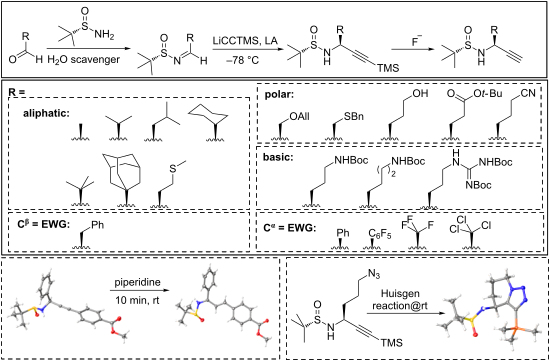
- cycloaddition, CuAAC and RuAAC), the thiol–yne reaction, Diels–Alder reactions and the Sonogashira cross-coupling. While amino acids with a terminal alkyne in the side chain are well-known, the synthesis of their correlates where the carboxy group is replaced by a terminal alkyne is still tedious. Nevertheless
- acid function of amino acids can be easily converted into amides or esters (Figure 1), propargylamines have been converted into acids, alcohols [12] or olefins in order to obtain natural products like angustureine and cuspareine [13]. Intramolecular Pauson–Khand reaction [14], Diels–Alder reaction [15
- ) Intramolecular Pauson–Khand reaction, R = (S)-tert-butylsulfinyl, R’ = CH2CH2OTBDPS [14]. b) Diels–Alder reaction, R = pTs, R’ = H, R’’ = Me [15]. c) Gold-catalyzed intramolecular reaction to azetidin-3-ones, R = tert-butylsulfonyl, R’ = aromatics, aliphatics [16]. d) Sonogashira cross-coupling, R = tert


Dialkyl dicyanofumarates and dicyanomaleates as versatile building blocks for synthetic organic chemistry and mechanistic studies
Beilstein J. Org. Chem. 2017, 13, 2235–2251, doi:10.3762/bjoc.13.221
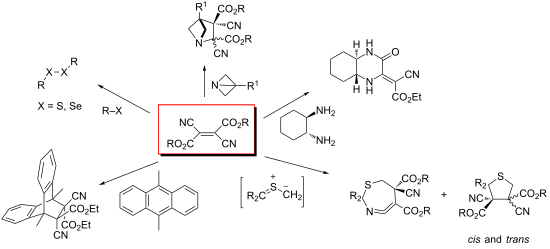
- product [30] (Scheme 6). The analogous reaction with phenyl vinyl sulfide (22) gave the expected cyclobutane 23 exclusively. However, in the absence of ZnCl2, a mixture of 23 and 3,4-dihydro-2H-pyran 24 was obtained, with the latter compound formed through a competitive hetero-Diels–Alder reaction [30
- isomeric homo-Diels–Alder adducts were found in the mixture. [3 + 2]-Cycloadditions (1,3-dipolar cycloadditions) Electron-rich 1,3-dipoles such as thiocarbonyl S-methanides and azomethine ylides react with dipolarophiles E-1 and Z-1 to give five-membered cycloadducts through stepwise zwitterionic reaction
- changes to non-concerted stepwise processes, which can involve zwitterionic or diradical intermediates. [4 + 2]-Cycloadditions (Diels–Alder reactions) In analogy to reactions with tetracyanoethene (TCNE), the first [4 + 2]-cycloadditions (Diels–Alder reactions) of E-1a were performed using typical 1,3


Synthesis of benzannelated sultams by intramolecular Pd-catalyzed arylation of tertiary sulfonamides
Beilstein J. Org. Chem. 2017, 13, 1932–1939, doi:10.3762/bjoc.13.187

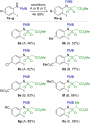
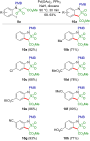
- , sultams have been prepared employing Diels–Alder reactions, radical cyclizations, reductions of sulfonylimines, ring-closing metatheses, nucleophilic aromatic substitutions and Heck cyclizations [14][15][16]. Earlier on, our group has developed versatile syntheses of sultams based on the transformation of




Pd(OAc)2/Ph3P-catalyzed dimerization of isoprene and synthesis of monoterpenic heterocycles
Beilstein J. Org. Chem. 2017, 13, 1807–1815, doi:10.3762/bjoc.13.175
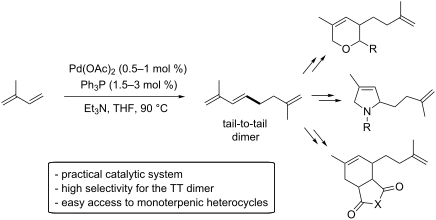
- heterocyclic terpenes by subsequent (hetero)-Diels–Alder or [4 + 1]-cycloadditions with nitrenes is also depicted. Keywords: dimerization; heterocycles; isoprene; monoterpene; palladium catalysis; Introduction The dimerization of conjugated dienes represents a useful, highly atom economic and straightforward
- increase of the reactivity (86% yield), delivering the TT-linear terpene as the main product in a 16:1 ratio of 2-TT vs other dimeric isomers 2, along with Diels–Alder-generated cyclic monoterpene byproducts (Table 1, entry 4). Interestingly, the dimerization did not take place at temperatures below 90 °C
- - and N-heterocycles The different dimers of isoprene can be transformed into a large number of derivatives such as terpene-alcohols or ethers [38]. Moreover, some isoprene dimers have been submitted to Diels–Alder reactions with olefins such as maleic acid anhydride or methacrolein to form products


Total synthesis of elansolids B1 and B2
Beilstein J. Org. Chem. 2017, 13, 1280–1287, doi:10.3762/bjoc.13.124
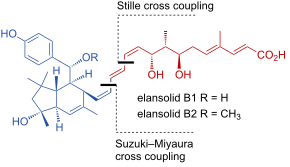
- intramolecular Diels–Alder (IMDA) cycloaddition as key step to construct the tetrahydroindane unit (Scheme 1) [7]. An enone, derived from allylic alcohol 8 served as precursor to yield tetrahydroindane 9 with excellent diastereocontrol at −25 °C. The major drawback of our first total synthesis of elansolid B1 (2


An eco-compatible strategy for the diversity-oriented synthesis of macrocycles exploiting carbohydrate-derived building blocks
Beilstein J. Org. Chem. 2017, 13, 1106–1118, doi:10.3762/bjoc.13.110
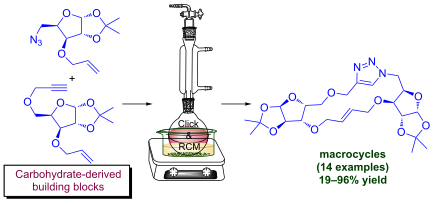
- the synthesis. The cyclization of the linear precursor is usually achieved by utilizing various ring-closing reactions such as Diels–Alder reactions, [15] aldol reactions, [16] copper-catalyzed azide–alkyne cycloaddition, [17][18] macrolactonization, macrolactamizations, Staudinger ligation or


A practical and efficient approach to imidazo[1,2-a]pyridine-fused isoquinolines through the post-GBB transformation strategy
Beilstein J. Org. Chem. 2017, 13, 817–824, doi:10.3762/bjoc.13.82
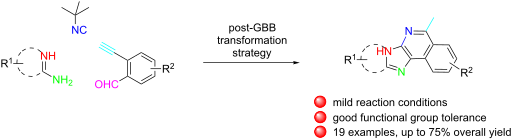
- ][30]. Although the Ugi-4CR generates linear α-acylamino-amides, a wide range of heterocycles are accessible through the combination with other transformations (post-transformation strategy) [31]. For example, the Ugi/Diels–Alder process leads to the formation of benzofurans and indoles [32] as well as


Sulfamide chemistry applied to the functionalization of self-assembled monolayers on gold surfaces
Beilstein J. Org. Chem. 2017, 13, 648–658, doi:10.3762/bjoc.13.64

- formation [12][13][14], Diels–Alder reaction [15][16] or the imine/oxime condensation [17][18]. These reactions tend to produce strong covalent interactions between the surface and the molecules in solution which ensure a stable immobilization. One limitation of the covalent strategy lies in the




Unpredictable cycloisomerization of 1,11-dien-6-ynes by a common cobalt catalyst
Beilstein J. Org. Chem. 2017, 13, 639–643, doi:10.3762/bjoc.13.62
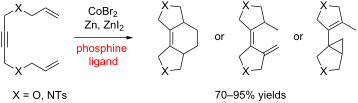
- formation of meta/para-products of Diels–Alder reactions [28][29][30][31][32], linear/branched products of hydrovinylation reactions [33][34], [2 + 2] cycloadditions vs Alder-ene reactions [35], E/Z isomerizations of alkenes [36][37] and other processes [38][39][40][41][42]. Herein, we report the




Secondary metabolome and its defensive role in the aeolidoidean Phyllodesmium longicirrum, (Gastropoda, Heterobranchia, Nudibranchia)
Beilstein J. Org. Chem. 2017, 13, 502–519, doi:10.3762/bjoc.13.50
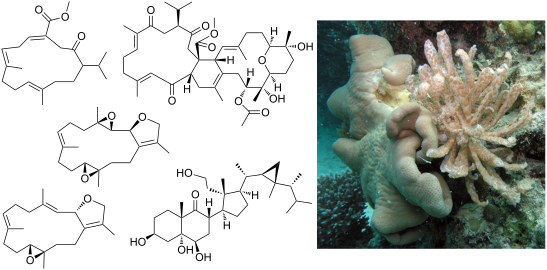
- biscembranoids are believed to originate as products from Diels–Alder cycloaddition between two cembranoid units. Besides methyl sarcoate, only methyl tetrahydrosarcoate and isosarcophytonolide D are reported to act as dienophile (western part) in over 60 described biscembranoids [49]. The western parts in the



Synthesis of 1-indanones with a broad range of biological activity
Beilstein J. Org. Chem. 2017, 13, 451–494, doi:10.3762/bjoc.13.48
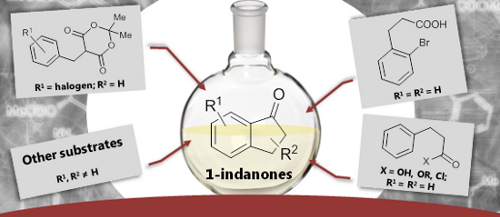
- neurodegenerative diseases and as effective insecticides, fungicides and herbicides. Keywords: biological activity; Diels–Alder reaction; Friedel–Crafts reaction; 1-indanones; Nazarov reaction; Introduction In the last few years, 1-indanone derivatives and their structural analogues have been widely used in
- provide the biggest number of carbon atoms during the synthesis of the 1-indanone benzene ring. For instance, 1,3-dienes in the Diels–Alder reaction provide 4 carbon atoms of the six ones needed to construct the benzene ring of 1-indanone compared to dienophiles which deliver only two of them. 2.1 From
- 1,3-dienes Wolf and Xu have synthesized 7-methyl substituted 1-indanone 241 utilizing 1,3-pentadiene (238) and 2-cyclopentenone (239) as starting compounds [96]. 7-Methyl substituted 1-indanone 241 has been obtained in the Diels–Alder reaction between 1,3-pentadiene (238) and 2-cyclopentenone (239


NMR reaction monitoring in flow synthesis
Beilstein J. Org. Chem. 2017, 13, 285–300, doi:10.3762/bjoc.13.31
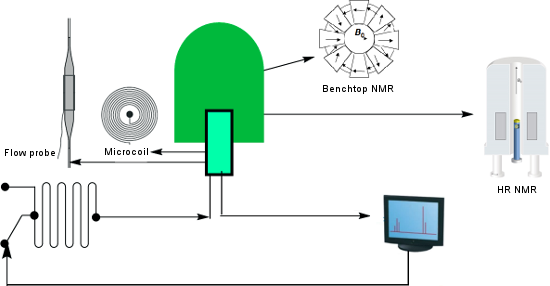
- to analyze NMR (via Labview software) data and optimize the reaction conditions. They performed a range of reactions including imine formation (Figure 14), electrophilic fluorinations and Diels–Alder reactions. This system was employed to perform kinetic studies, in-line structural characterization
- including DEPT spectra, 2D-NMR spectroscopy, 19F NMR spectroscopy and monitoring of the stereoselectivity in Diels–Alder reactions and self-optimization of flow conditions using a modified version of the Nelder–Mead algorithm. For the NMR integral data for each experiment, the algorithm (Figure 15) selects


The reductive decyanation reaction: an overview and recent developments
Beilstein J. Org. Chem. 2017, 13, 267–284, doi:10.3762/bjoc.13.30
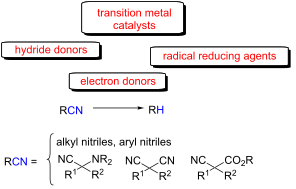
- decyanation reaction depends on the structure of the α-aminonitrile, stereoelectronic effects and internal strain of the molecule [68]. Chuang et al. prepared a set of α-aminoacrylonitriles 11 by a cyano-promoted aza-Diels–Alder cycloaddition [71]. The cyano groups were then removed in high yields by


Diels–Alder reactions of myrcene using intensified continuous-flow reactors
Beilstein J. Org. Chem. 2017, 13, 120–126, doi:10.3762/bjoc.13.15
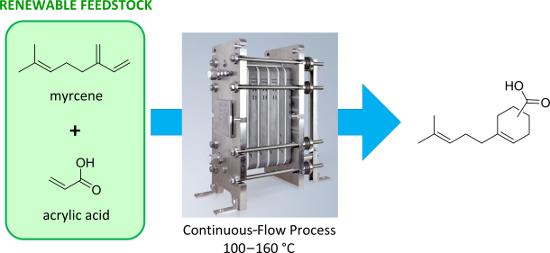
- Christian H. Hornung Miguel A. Alvarez-Dieguez Thomas M. Kohl John Tsanaktsidis CSIRO Manufacturing, Bag 10, Clayton South, Victoria 3169, Australia 10.3762/bjoc.13.15 Abstract This work describes the Diels–Alder reaction of the naturally occurring substituted butadiene, myrcene, with a range of
- different naturally occurring and synthetic dienophiles. The synthesis of the Diels–Alder adduct from myrcene and acrylic acid, containing surfactant properties, was scaled-up in a plate-type continuous-flow reactor with a volume of 105 mL to a throughput of 2.79 kg of the final product per day. This
- fragrances are based on myrcene, such as geraniol, nerol, linalool, menthol, citral, citronellol or citronellal [3]. The terminal diene moiety present in myrcene allows for a reaction with a suitable dienophile following the Diels–Alder reaction mechanism. Dahill et al. describe the synthesis of the Diels


Diastereoselective anodic hetero- and homo-coupling of menthol-, 8-methylmenthol- and 8-phenylmenthol-2-alkylmalonates
Beilstein J. Org. Chem. 2017, 13, 33–42, doi:10.3762/bjoc.13.5
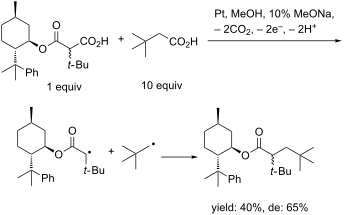
- as a chiral auxiliary [27] to control the stereochemistry in Diels–Alder reactions [28], [2 + 2]- and [3 + 2]-cycloadditions and asymmetric ene reactions [29]; furthermore, it has been applied in 1,4-cuprate additions [30], Grignard additions [31], in supramolecular chemistry [32] and in alkylation




New approaches to organocatalysis based on C–H and C–X bonding for electrophilic substrate activation
Beilstein J. Org. Chem. 2016, 12, 2834–2848, doi:10.3762/bjoc.12.283
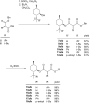
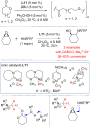
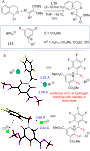
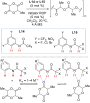
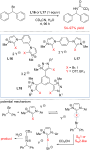
- catalysts for aza-Diels–Alder reactions of Danishefsky’s diene with imines (Scheme 5) [52]. A variety of ammonium salts (L7–L10) including chiral cinchonidine derivatives L7 and catalyst L10 were found to promote the reaction in low-to-good yields albeit with no enantioselectivity. Although it is perhaps
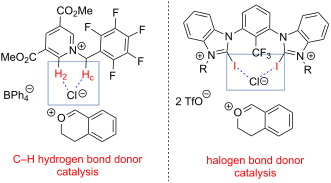
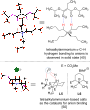
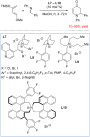
- atoms covalently bonded to a benzylic carbon (Scheme 8). In 2016 Maruoka and Shirakawa followed up the aforementioned studies by demonstrating that tetraalkylammonium salts L5, L6, L11 and L12 as well as TBAI could activate imines toward aza-Diels–Alder reaction with Danishefsky’s diene (Scheme 9) [51
- coordinating TfO− anion did not accelerate the cycloaddition. In 2015, Takeda, Minakata and co-workers demonstrated that 2-iodoimidazolium salt L24 could serve as an efficient catalyst of the aza-Diels−Alder reaction of aldimines and Danishefsky diene (Scheme 19) [90]. Other organohalides such as










Synthesis of polyhydroxylated decalins via two consecutive one-pot reactions: 1,4-addition/aldol reaction followed by RCM/syn-dihydroxylation
Beilstein J. Org. Chem. 2016, 12, 2602–2608, doi:10.3762/bjoc.12.255
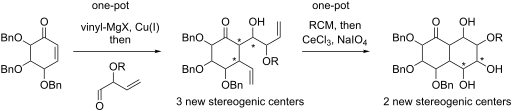
- -decalins and trans-hydrindanes (Scheme 1) [22][23][24][25]. It relies on the use of sugar-derived allyltin (such as 5) followed by ZnCl2-induced fragmentation into dienoaldehyde 6, subsequent Horner–Wadsworth–Emmons olefination, and intramolecular Diels–Alder reaction. In this paper, we explore the


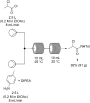
Development of a continuous process for α-thio-β-chloroacrylamide synthesis with enhanced control of a cascade transformation
Beilstein J. Org. Chem. 2016, 12, 2511–2522, doi:10.3762/bjoc.12.246
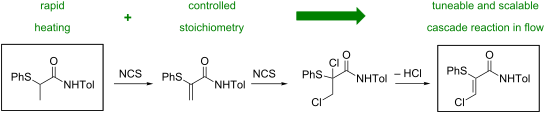
- compounds has been well documented [3]. The predominant site of reactivity is at the electrophilic β-carbon, which results from the combined influence of the amide and chloro substituents, mitigating the electron-donating effect of the sulfide moiety. Nucleophilic substitution [4], Diels–Alder reactions [5




Radical polymerization by a supramolecular catalyst: cyclodextrin with a RAFT reagent
Beilstein J. Org. Chem. 2016, 12, 2495–2502, doi:10.3762/bjoc.12.244
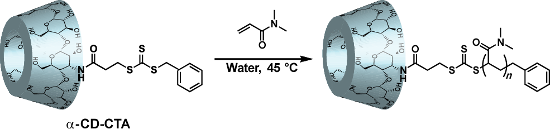
- , including hydrolysis reactions [10][11][12][13][14][15], C–H bond activation [34][35][36], olefin epoxidation [37][38][39], Diels–Alder reactions [40][41][42], 1,3-dipole cycloadditions [43][44], and polymerizations [45][46][47], among others. Selective substrate recognition and activation are essential