


Search results
Search for "RNA" in Full Text gives 183 result(s) in Beilstein Journal of Organic Chemistry.
Enantioselective supramolecular devices in the gas phase. Resorcin[4]arene as a model system
Beilstein J. Org. Chem. 2012, 8, 539–550, doi:10.3762/bjoc.8.62
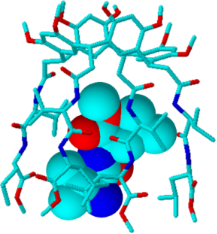
- are the elementary units of the RNA and DNA biomacromolecules, and their physiological importance at many different levels [52][53][54] makes them potential candidates as anticancer drugs. The gas-phase study of the intimate interactions between the resorcin[4]arene V and several pyrimidine




Multicomponent synthesis of artificial nucleases and their RNase and DNase activity
Beilstein J. Org. Chem. 2011, 7, 1135–1140, doi:10.3762/bjoc.7.131

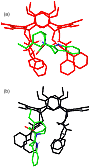
- activity of the new compounds towards single-stranded RNA and double-stranded circular DNA. Keywords: DNA; isocyanide; multicomponent reaction; organocatalysis; peptidomimetic; RNA; Introduction RNA cleavage can serve as a molecular tool for biological research [1], as well as for development of
- anticancer drugs [2][3] and new therapeutics against RNA-containing viruses. Recently, a number of synthetic RNA-cleaving molecules (artificial ribonucleases) had been developed and tested in vitro [4][5][6][7][8][9][10][11]. Among numerous artificial ribonucleases, peptidomimetics showed evident advantages
- centers of natural RNases A and T1 have been described [13][14][15]. RNA cleavage was shown to be more efficient in the presence of aliphatic hydrophobic linkers [16]. However, the potential role of the alkyl chain of the catalyst remains unclear. Interaction of hydrophobic residues in peptides was


Chiral gold(I) vs chiral silver complexes as catalysts for the enantioselective synthesis of the second generation GSK-hepatitis C virus inhibitor
Beilstein J. Org. Chem. 2011, 7, 988–996, doi:10.3762/bjoc.7.111
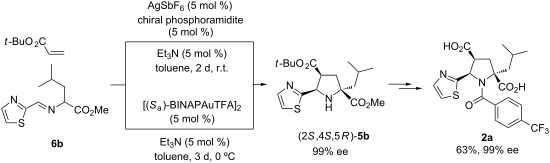
- ; phosphoramidite; silver; viral inhibitor; Introduction The prevalence of chronic hepatitis C virus (HCV) infection is such that it is estimated to be suffered by around 200 million people worldwide [1]. This enveloped single-stranded RNA virus (belonging to the Flaviviridae family) is present in six major
- as NS2, NS3 (which bear serine proteinase, helicase, and NTPase activities), NS4A, NS4B, NS5A (regulators of RNA replication), and NS5B (the RNA-dependent RNA polymerase) are generated [2][3] and, in fact, constitute the main targets. At the moment, there are many drugs under clinical trial
- inhibit the RNA-dependent RNA polymerase of the virus responsible for hepatitis C (genotype 1g) [5]. Thus, their high replication rates (billions of copies per day) can be drastically suppressed by the inhibition of the NS5B RNA-dependent RNA polymerase enzyme, which is the primary target for oral




Chemical aminoacylation of tRNAs with fluorinated amino acids for in vitro protein mutagenesis
Beilstein J. Org. Chem. 2010, 6, No. 40, doi:10.3762/bjoc.6.40
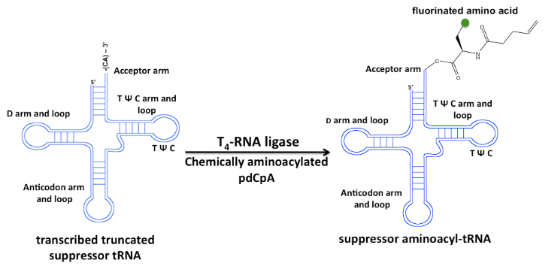
- ][25][26][27]. We chose a combination of chemical and enzymatic aminoacylation which relies on the hybrid dinucleotide pdCpA and the T4-RNA ligase-mediated coupling to it to give a truncated suppressor tRNA. The Nα-amino groups of the amino acids were protected with the 4-pentenoyl group and the amino
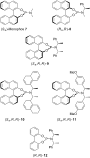
- and incorporated into proteins [29][30]. pdCpA bearing Abu or the fluorinated amino acid analogue were efficiently ligated to the truncated suppressor tRNAPheCUA by treatment with T4-RNA ligase and were analyzed using denatured acidic PAGE (Figure 3) [31]. Thus, both our mono- and bis-acylated tRNAs
- . (RS)-2-amino-2-methyl-3,3,3-trifluoropropanoic acid. Denaturing PAGE of ligation products of truncated suppressor tRNA and fluorinated aminoacyl-pdCpAs and Abu-pdCpA. Lane 1: RNA Marker 100 bp, Lane 2: transcribed full-length tRNACUA, Lane 3: transcribed truncated tRNACUA-COH, Lane 4: Abu-tRNACUA


(Pseudo)amide-linked oligosaccharide mimetics: molecular recognition and supramolecular properties
Beilstein J. Org. Chem. 2010, 6, No. 20, doi:10.3762/bjoc.6.20
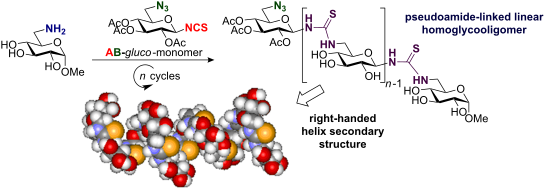
- other, a high degree of diversity can be achieved by employing only a small set of different SDAs. Moreover, oligomeric SDAs with unprotected groups represent a novel type of aminoglycoside mimetics with potential recognition properties towards new RNA targets emerging in the post-genome era. Cyclic SAA
- negatively charged functional groups such as phosphate or carboxylate groups in DNA, RNA and proteins. Tóth and co-workers [90] synthesised a series of guanidine-linked sugars as a new class of oligosaccharide mimics to study their interactions with proteins. Thus, reaction of the carbodiimide-linked
- [83][84]. Numerous structural analogues of DNA/RNA designed to be effective antisense/antigene agents have been reported. An interesting approach involves replacing the negatively charged phosphodiester linkages of RNA/DNA by positively charged guanidinium linkages. The guanidinium linkage is



A hydrogen- bonded channel structure formed by a complex of uracil and melamine
Beilstein J. Org. Chem. 2007, 3, No. 17, doi:10.1186/1860-5397-3-17
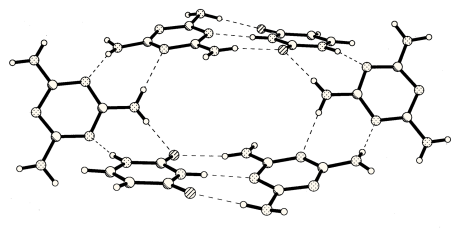
- channel structure with 4,4'-bipyridyl. [5] Although hydrogen bonding aspects of cyanuric acid have been studied in detail, similar structures formed by uracil possessing two imide groups has not been studied adequately, except for its hydrogen bonding with adenine in RNA. [6] In RNA, uracil forms cyclic




An efficient synthesis of tetramic acid derivatives with extended conjugation from L-Ascorbic Acid
Beilstein J. Org. Chem. 2006, 2, No. 24, doi:10.1186/1860-5397-2-24

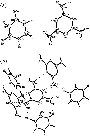
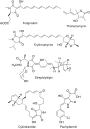
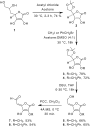
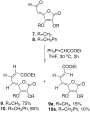
- natural products of terrestrial and marine origin. [1][2][3][4][5][6] They exhibit a wide range of biological activities including antibiotic, antiviral, antifungal, cytotoxic and enzyme inhibitory activities against bacterial DNA-directed RNA polymerases. [7][8][9] A few of the recently discovered



The first salen- type ligands derived from 3',5'-diamino- 3',5'-dideoxythymidine and -dideoxyxylothymidine and their corresponding copper(II) complexes
Beilstein J. Org. Chem. 2006, 2, No. 17, doi:10.1186/1860-5397-2-17

- containing three (DNA nucleosides) and four (RNA nucleosides) chiral centers respectively. Though the coordination of metal ions to nucleosides is well known, mostly the nucleobase interacts with the metal centre, and the chiral part of the nucleoside is not involved in the coordination. [1][2] Although a


Other Beilstein-Institut Open Science Activities



