Search results
Search for "acetylene" in Full Text gives 187 result(s) in Beilstein Journal of Organic Chemistry.
Synthesis of novel photochromic pyrans via palladium- mediated reactions
Beilstein J. Org. Chem. 2009, 5, No. 25, doi:10.3762/bjoc.5.25
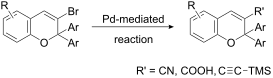
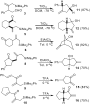
- THF, (trimethylsilyl)acetylene was reacted with 1 for 45 h to yield 4 in 53% after work-up and purification by flash chromatography (Scheme 5). The Zn(CN)2-based cyanation protocol was also successfully utilized in the transformation of the sterically demanding vinyl bromides 2a/b, affording 5a and 5b




A biphasic oxidation of alcohols to aldehydes and ketones using a simplified packed- bed microreactor
Beilstein J. Org. Chem. 2009, 5, No. 17, doi:10.3762/bjoc.5.17
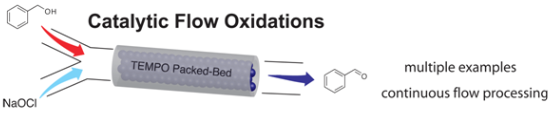
- catalysts functionalized with an acetylene moiety can be tethered to AO using a Huisgen cycloaddition [39]. Azide-functionalized AO resin (AO-N3, 2) was prepared by treating AO with sodium azide (Scheme 1) [41]. The coupling of 4-hydroxy-TEMPO 3 with propargyl bromide (4) using sodium hydride yielded the
- acetylene-modified TEMPO species 5 [33][34][37]. TEMPO derivative 5 was then covalently bound to AO-N3 using copper(I) iodide [42][43][44][45], yielding the TEMPO-functionalized resin (AO-TEMPO, 6, Scheme 2, 0.46 mmol TEMPO/g resin). Using a simplified procedure developed by ourselves and others [39][46][47




(−)-Complanine, an inflammatory substance of marine fireworm: a synthetic study
Beilstein J. Org. Chem. 2009, 5, No. 12, doi:10.3762/bjoc.5.12
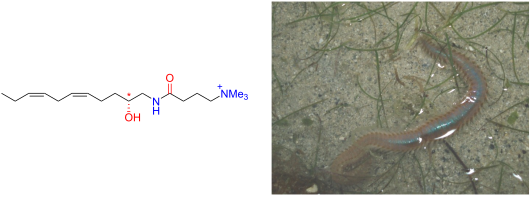
- acetylene 4 in 51% yield [7]. The bromomagnesium salt of 4 generated with EtMgBr was successively treated with 1-iodopent-2-yne in the presence of CuI to give the corresponding diyne compound 5 in 43% yield [8]. The partial reduction was achieved by using Lindlar catalyst to give the desired Z olefin, which
- ) of both enantiomers are under consideration at the present time. In conclusion, (−)-complanine was successfully synthesized from (R)-malic acid by acetylene coupling and catalytic hydrogenation as key steps. The absolute configuration of the natural product was determined to be R. Experimental


Convenient methods for preparing π-conjugated linkers as building blocks for modular chemistry
Beilstein J. Org. Chem. 2009, 5, No. 11, doi:10.3762/bjoc.5.11
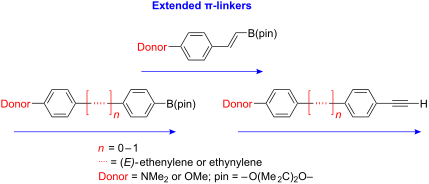
- π-conjugated linkers are described. Either unsubstituted or 4-donor substituted π-linkers bearing a styryl, biphenyl, phenylethenylphenyl, and phenylethynylphenyl π-conjugated backbone are functionalized with boronic pinacol esters as well as with terminal acetylene moieties allowing their further
- moieties is usually accomplished by cross-coupling reactions, in particular by the Suzuki–Miyaura [26][27] or the Sonogashira [28] reactions. Consequently, the availability of the suitably substituted π-conjugated linkers of various lengths bearing boronic ester functionality or terminal acetylene is
- the commercially available terminal acetylene 2c with catecholborane was examined. Despite all attempts to optimize the reaction conditions, 3c could not be prepared this way and was not even detected in the crude reaction mixture. Thus the above hydroboration reported by Perner and co-workers [33


Recent progress on the total synthesis of acetogenins from Annonaceae
Beilstein J. Org. Chem. 2008, 4, No. 48, doi:10.3762/bjoc.4.48
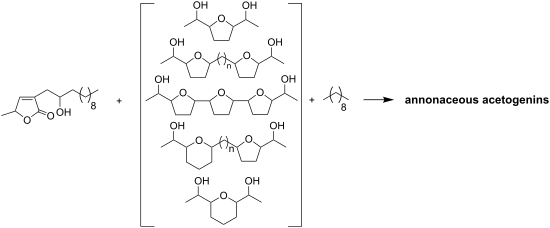
- enantioselectively controlled manner (Scheme 30) [85]. The appropriate bis-THF ring system 227 was constructed using a Williamson type etherification reaction on a functionalized bis-mesylate intermediate. A Sonogashira cross-coupling reaction of the terminal acetylene 228 with vinyl iodide 229 followed by


Facile synthesis of two diastereomeric indolizidines corresponding to the postulated structure of alkaloid 5,9E- 259B from a Bufonid toad (Melanophryniscus)
Beilstein J. Org. Chem. 2008, 4, No. 6, doi:10.1186/1860-5397-4-6
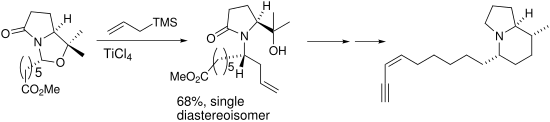
- periodinane, 77%. (b) Ph3P+CH2I I-, NaN(SiMe3)2 51%. (c) TMS acetylene, CuI, Pd(Ph3P)3, Et3N then K2CO3 MeOH, 69%. Supporting Information Supporting Information File 28: Experimental. Details of experimental procedures and data for characterisation of new compounds. Acknowledgements We would like to thank


Shape- persistent macrocycle with intraannular alkyl groups: some structural limits of discotic liquid crystals with an inverted structure
Beilstein J. Org. Chem. 2008, 4, No. 1, doi:10.1186/1860-5397-4-1
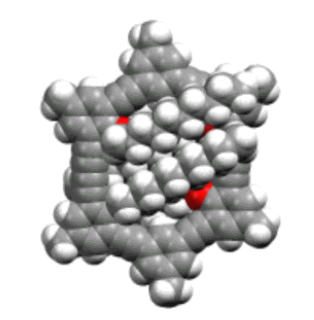
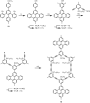
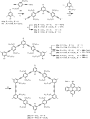
- interior in the nanometer regime has considerably increased. From the structural point of view, most compounds are based on the phenylene, phenylene acetylene or phenylene butadiynylene backbone, or they contain a mixture of these structural elements. However, apart from meeting the synthetic challenge
- compared to macrocycle 1. 3,5-Diiodo-4-methylbenzene (2) was treated with trimethylsilyl(TMS)acetylene under standard Hagihara-Sonogashira coupling conditions and subsequently deprotected with K2CO3 in MeOH/THF. As expected, the Pd-catalyzed coupling reaction runs under milder conditions and with higher
- yields compared to the preparation of 3 from the corresponding dibromo compound [27]. Reaction of 4 with an excess of 5 [28], coupling of 6 with TMS-acetylene and deprotection, again with K2CO3 in MeOH/THF, gave the bisacetylenic half-ring 7. The oxidative dimerization of 7 was performed by slow addition



An asymmetric synthesis of all stereoisomers of piclavines A1-4 using an iterative asymmetric dihydroxylation
Beilstein J. Org. Chem. 2007, 3, No. 37, doi:10.1186/1860-5397-3-37
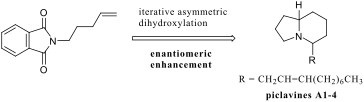
- ])-16 in 94%. It is impossible to utilize hydrogenolysis due to reactivity of the acetylene unit. Indeed, the N-protecting group exchange of benzyloxycarbonyl (Cbz) for 2,2,2-trichloroethoxycarbonyl (Troc) in 17 was examined. The use of basic reagents such as Ba(OH)2[11] and KOH[12] failed to afford



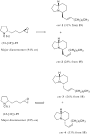
Flexible synthesis of poison- frog alkaloids of the 5,8-disubstituted indolizidine- class. II: Synthesis of (-)-209B, (-)-231C, (-)-233D, (-)-235B", (-)-221I, and an epimer of 193E and pharmacological effects at neuronal nicotinic acetylcholine receptors
Beilstein J. Org. Chem. 2007, 3, No. 30, doi:10.1186/1860-5397-3-30
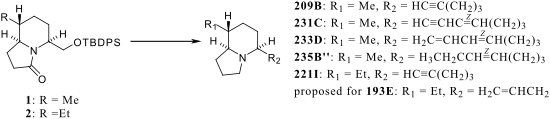
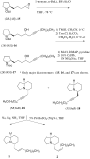
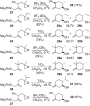
- the resulting aldehyde under Stork's conditions [11] provided the Z-iodoolefin 5 in a highly stereoselective manner. The Sonogashira coupling reaction [12] of 5 with TMS-acetylene followed by cleavage of the trimethylsilyl group with K2CO3 afforded (-)-231C. Although the rotation of the natural


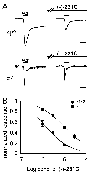
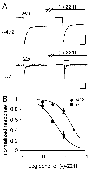
Flexible synthetic routes to poison- frog alkaloids of the 5,8-disubstituted indolizidine- class I: synthesis of common lactam chiral building blocks and application to the synthesis of (-)-203A, (-)-205A, and (-)-219F
Beilstein J. Org. Chem. 2007, 3, No. 29, doi:10.1186/1860-5397-3-29
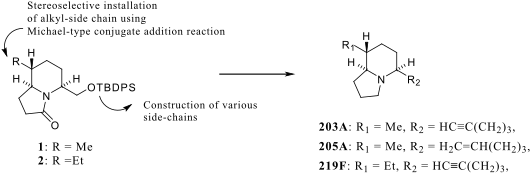
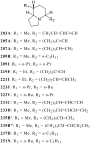
- reaction of the resulting aldehyde under Stork's reaction conditions, [25] gave the olefin. Purification by silica gel column chromatography afforded pure 15 in 60% isolated yield. The coupling reaction of 15 with TMS-acetylene under Sonogashira's conditions [26] gave rise to the product 16. Finally



Allylsilanes in the synthesis of three to seven membered rings: the silylcuprate strategy
Beilstein J. Org. Chem. 2007, 3, No. 16, doi:10.1186/1860-5397-3-16
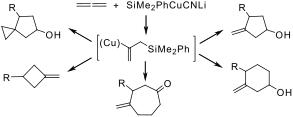
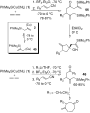
- key step is the syn addition of the tin cuprate to the acetylene, which controls the cis stereochemistry required for cyclization. [23] Seven Membered Carbocycles The use of nitriles and imines as electrophiles in the silylcupration of allene provides new alternatives for carbocyclization. Recently







Trapping evidence for the thermal cyclization of di-(o-acetylphenyl)acetylene to 3,3'-dimethyl- 1,1'-biisobenzofuran
Beilstein J. Org. Chem. 2005, 1, No. 18, doi:10.1186/1860-5397-1-18
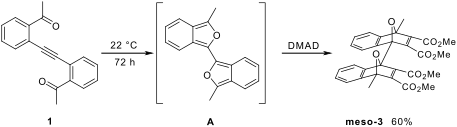
- Charles P. Casey Neil A. Strotman Ilia A. Guzei University of Wisconsin-Madison, Madison, WI 53706 10.1186/1860-5397-1-18 Abstract The reaction of di-(o-acetylphenyl)acetylene (1) with excess dimethyl acetylenedicarboxylate (DMAD) produced bis-DMAD adducts meso-3 and rac-3. This transformation is
- of the alkyne di-(o-acetylphenyl)acetylene (1) (Scheme 2). The addition of alkyne 1 to a solution of Cp(CO)2Re(THF) produced Cp(CO)2Re[η2-(di-(o-acetylphenyl)acetylene)] (2), which was detected by 1H NMR spectroscopy [δ 5.60 (Cp), 2.25 (Me)] (Scheme 2). However, we were unable to isolate 2. In the
- ] (Scheme 4) and to the related photoinduced bicyclization observed by Nakatani and Saito[9] (Scheme 5). Since suspected intermediate A proved too reactive to isolate, we sought to trap it with DMAD through Diels-Alder reactions with the isobenzofuran units. Acetylene 1 was dissolved in neat DMAD and the